What's inside
- Where to buy
- Key Takeaways
- Quick Picks
- How did we decide where the usable floor actually sits?
- The picks in detail: best and cheapest android phones still worth owning
- What do you actually give up at the very bottom of the market?
- How do you check a bargain phone in its first week?
- Cheap new or cheap renewed: which strategy suits you?
- How do you keep a cheap phone feeling fast for years?
- What will a cheapest-tier phone cost to run?
- Which cheap phone suits which kind of owner?
- What does the second year of a cheapest-tier phone look like?
- How do carriers and plans change the cheapest-phone maths?
- What accessories does a cheapest-tier phone actually need?
- How do you hand a cheap phone down without handing down problems?
- How do the six picks handle a genuinely hard day?
- What is the kindest way to set up a floor-priced phone for a relative?
- When should a cheap phone be replaced rather than repaired?
- How do you spot a floor-priced phone that is cheap in the wrong way?
- One last check before you order any of these six
- Comparison table
- What mistakes do buyers make when hunting the absolute cheapest phone?
- Final Recommendation
- Frequently Asked Questions
- Related Guides
As an Amazon Associate I earn from qualifying purchases. This post may contain affiliate links at no extra cost to you.
gizmoverdict.com is reader-supported. When you buy through links on our site, we may earn an affiliate commission.
Where to buy
Amazon’s cheapest Android listings change constantly, and several picks here are renewed units or carrier-specific models, so the listing in front of you deserves a slow read: check the network wording, the storage size and the return terms before the price tempts you into haste. At this end of the market, the details in the small print are the product.
This guide takes the phrase best and cheapest android phones literally, and that distinguishes it from our broader affordable coverage. Affordable phones are the sensible middle — the ones we recommend to most people. This page hunts the floor: the least money that still buys a phone a person can genuinely use for calls, messages, maps, photos and the apps daily life now demands. Every pick here sits at the bottom of its maker’s range or arrives as a renewed older model at a floor-level price, and each one is labelled with the trade-offs that the low price quietly includes.
Those trade-offs are the real content of this guide, because the cheapest phone is only a bargain if you walk in knowing what you surrendered. Processing speed, camera ambition, update years and screen finesse all shrink at the floor. What must not shrink — and what filtered this list — is basic dependability: a battery that finishes the day, software that runs current apps without freezing, and a screen you can read at a bus stop. Anything failing those tests was excluded however little it cost, because a phone that cannot be relied on is not cheap at any price; it is merely inexpensive to acquire and expensive to own.
Key Takeaways
- The Galaxy A16 5G is the cheapest phone here that still feels like a long-term answer, with Samsung’s update support stretching years beyond the floor’s usual offering.
- Motorola’s Moto G 2025 delivers the cleanest software at the bottom of the market, free of the bloatware that plagues ultra-cheap handsets.
- The Galaxy A15 5G undercuts its successor slightly and keeps the same big battery and expandable storage, making it the value hunter’s Samsung.
- The TCL 50 XL 5G offers a huge screen for very little money, but only makes sense for buyers on T-Mobile and its networks.
- The Galaxy S10e and Pixel 4a are the renewed wildcards: yesterday’s flagships at floor prices, superb in the hand, finished in software support.
- At this level, always keep the return window in mind and test the battery in week one — condition matters as much as model choice.
Quick Picks
| Pick | Badge | Why it is here |
|---|---|---|
| Samsung Galaxy A16 5G | Cheapest Phone With a Future | It costs floor money yet carries Samsung’s unusually long update promise for this class, so it stays safe and current long after rivals are abandoned. |
| Motorola Moto G 2025 | Cleanest Software at the Bottom | Near-stock Android, a two-day battery and almost no bloatware make it the cheapest phone that never feels like it is working against its owner. |
| Samsung Galaxy A15 5G | The Value Hunter’s Samsung | It delivers the A-series formula — AMOLED screen, big battery, expandable storage, years of patches — for slightly less than its successor. |
| TCL 50 XL 5G (T-Mobile) | Biggest Screen for the Least Money | A huge, smooth display and a large battery for very little outlay — provided your SIM belongs to T-Mobile or one of its networks. |
| Samsung Galaxy S10e | Yesterday’s Flagship, Floor Price | Renewed pricing puts a water-resistant, wireless-charging former flagship in reach of the tightest budgets — with an honesty warning about its age. |
| Google Pixel 4a | The Camera Bargain of the Floor | No phone near this money photographs as reliably; its single lens and superb processing make it the photographer’s minimum viable phone. |
How did we decide where the usable floor actually sits?
We set the floor by tasks, not by price tags. A candidate had to run the essential modern stack — messaging, maps with live navigation, a banking app, a browser with several tabs, video calls and a camera that focuses without a negotiation — without the pauses that make owners abandon cheap phones in drawers. It needed 128GB of storage or a microSD slot, because 64GB phones in 2026 spend their lives apologising for being full, and it needed a battery of around 5,000mAh, since the buyers of these phones are the least likely to carry a charger.
We also weighed the maker’s behaviour at the bottom of its range. Some brands treat their cheapest phone as an embarrassment, loading it with advertising and abandoning it within a year; others, notably Samsung and Motorola in this list, keep the software respectable and the updates coming. A final filter was honesty about condition: where a pick is an older model sold renewed, we say so in its section and describe the checks to run, because at the floor the difference between a great unit and a tired one is the whole purchase.
The picks in detail: best and cheapest android phones still worth owning

Samsung Galaxy A16 5G — Cheapest Phone With a Future
The Galaxy A16 5G is the answer for buyers who want the lowest price without the usual expiry date. Samsung committed this model to an update schedule that would flatter phones three times its price — years of Android versions and even longer security coverage — and that single fact rewrites the value calculation. A phone that stays patched can hold banking apps, work email and a family’s messaging for the long haul, which is precisely what buyers at this level need, since they are the least able to replace a phone on a whim.
The hardware respects the same long view. The large AMOLED screen is bright and kind to ageing eyes, the 5,000mAh battery treats a day of ordinary use as a light workout, and storage expands by microSD when the photo library outgrows the internal space. Performance is honest rather than exciting: the processor handles the essential stack smoothly and asks only that you not mistake it for a gaming machine. Splash resistance adds a little insurance against kitchen and weather accidents. If the brief is the cheapest phone you can buy once and keep, this is the strongest candidate in the guide.
- Display: large Super AMOLED, 90Hz
- Battery: 5,000mAh with fast charging
- Storage: internal plus microSD expansion
- Software: multi-year Android and security updates
- Build: splash-resistant design
- Network: unlocked US version with 5G
Strengths
- Update commitment unmatched at the floor
- Bright AMOLED screen suits older eyes
- Battery and expansion slot suit long ownership
Trade-offs
- Processor is tuned for essentials, not games
- Camera system is competent rather than ambitious
- Charger may be sold separately — check the box contents
Best for: buyers purchasing one phone for many years: relatives, first phones, and anyone whose budget forbids repeat purchases.
Not suited for: mobile gamers or photographers wanting zoom and night heroics.

Motorola Moto G 2025 — Cleanest Software at the Bottom
Cheap phones usually pay for their price in software: duplicate apps, notification adverts, mysterious pre-installed games. The Moto G 2025 refuses that bargain. Its Android installation is close to Google’s own, its few additions are genuinely useful gestures, and the home screen belongs to the owner from the first minute. For the non-technical buyers who dominate this end of the market, that cleanliness is worth more than a benchmark point — the phone simply never does anything confusing, which is the highest praise a floor-level handset can earn.
The fundamentals are equally unembarrassed. The 6.7-inch screen is large and smooth, the 5,000mAh battery stretches light use across two days, and the 50-megapixel main camera produces pleasant daylight photos and serviceable night ones. Storage expands by microSD and a headphone jack survives. The renewed listings deepen the discount further, though they also make the first-week battery check in our guidance below genuinely important. Memory is the honest limit: 4GB means busy multitaskers will see apps reload, and Motorola’s update window is shorter than Samsung’s. For messaging, maps, photos and calls — the floor’s actual job description — it is a delightfully straightforward tool.
- Display: 6.7-inch LCD, 120Hz
- Battery: 5,000mAh, up to two days light use
- Storage: 128GB plus microSD expansion
- Software: near-stock Android with gesture shortcuts
- Camera: 50MP main with night mode
- Extras: headphone jack, side fingerprint reader
Strengths
- Almost no bloatware or advertising
- Battery endurance forgives forgetful charging
- Simple interface suits non-technical owners
Trade-offs
- 4GB of RAM shows under heavy multitasking
- Update timeline trails Samsung’s A series
- Renewed condition varies — test on arrival
Best for: first-time smartphone owners and anyone buying for a relative who values calm software over raw speed.
Not suited for: app jugglers and buyers wanting the longest update runway.

Samsung Galaxy A15 5G — The Value Hunter’s Samsung
The Galaxy A15 5G was the phone that reset expectations for the bottom of Samsung’s range, and renewed listings now push it to genuinely floor-level money while the hardware remains thoroughly modern. The Super AMOLED screen is the standout: at this price most rivals use LCD panels, and the Samsung’s contrast and outdoor legibility make everything from maps to grandchildren’s photos look a class above. The 5,000mAh battery, 128GB of storage with microSD expansion and a headphone jack complete a specification that reads like a checklist of what budget buyers actually ask for.
Two cautions belong in bold. First, this listing is an international version sold renewed, so confirm the network bands suit your carrier and test the battery promptly, as our first-week routine describes. Second, Samsung’s update promise for the A15, while generous for its era, is a step behind the A16’s exceptional commitment. Neither caution dents the core proposition for a buyer who checks carefully: a bright-screened, long-lasting, patch-supported Samsung for the kind of money that used to buy phones with apologetic screens and abandoned software. That is the floor, properly furnished.
- Display: 6.5-inch Super AMOLED, 90Hz
- Battery: 5,000mAh with fast charging
- Storage: 128GB plus microSD expansion
- Camera: 50MP main, ultrawide and macro companions
- Extras: headphone jack, side fingerprint reader
- Listing note: international version, renewed — verify bands
Strengths
- AMOLED screen embarrasses similarly priced rivals
- Long battery life and expandable storage
- Samsung’s patch support for its generation
Trade-offs
- International version needs a band check for your carrier
- Renewed battery condition varies by unit
- Performance is adequate rather than brisk
Best for: value hunters comfortable checking a listing carefully in exchange for the best screen at the floor.
Not suited for: buyers who want a US-version warranty and zero homework.
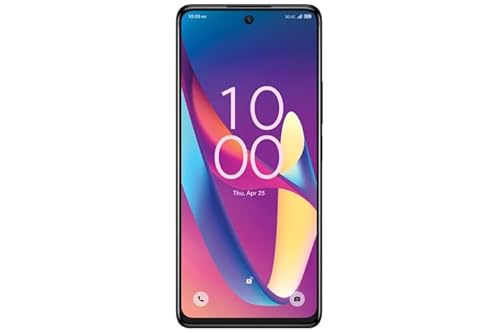
TCL 50 XL 5G (T-Mobile) — Biggest Screen for the Least Money
TCL built its name on televisions, and the 50 XL 5G applies that heritage to the floor of the phone market: the screen is the product. At 6.78 inches with a 120Hz refresh rate and TCL’s NXTVISION tuning, it is the most enjoyable display here for video, reading and photo review, and buyers who consume media on their phone rather than merely communicating through it will feel the difference daily. The 50-megapixel camera handles daylight scenes willingly, and the 5,010mAh battery keeps the big panel fed through a full day of honest use.
The condition attached to this pick is absolute, and the listing states it plainly: this model is built for T-Mobile and the networks that run on it, such as Metro and Mint. On those carriers it is a remarkable amount of phone for the money. On any other carrier it is a paperweight with an excellent screen, so the first step is checking your SIM, not your wallet. Performance is tuned for media and messaging rather than gaming, and TCL’s update cadence is modest. Within its network fence, though, it offers something the floor rarely does — a phone that feels generous every time you look at it.
- Display: 6.78-inch FHD+, 120Hz, NXTVISION
- Battery: 5,010mAh
- Camera: 50MP main camera
- Network: T-Mobile and its MVNO networks only
- Storage: generous internal with expansion on most variants
- Extras: stereo speakers, side fingerprint reader
Strengths
- Largest, smoothest screen in this guide
- Strong battery sized for the big display
- Excellent value for video and reading
Trade-offs
- Locked to T-Mobile-family networks
- Processor is a media chip, not a gaming chip
- Update schedule is shorter than Samsung’s
Best for: T-Mobile and Mint or Metro customers who watch, read and browse more than they game.
Not suited for: anyone on AT&T or Verizon networks — it will not serve you.

Samsung Galaxy S10e — Yesterday’s Flagship, Floor Price
There are two ways to buy cheap: purchase a new phone built down to a price, or purchase an older phone that was built up to a flagship standard and has since depreciated. The Galaxy S10e is the second strategy in its most attractive form. Its aluminium-and-glass body, water resistance, wireless charging, headphone jack and bright compact AMOLED screen all belong to a class the floor’s new phones cannot touch, and its twelve-megapixel main camera with an ultrawide companion still produces photos with genuine polish. In the hand, it feels like the expensive phone it once was, because it is.
The warning label matters as much as the praise. This generation’s software support has finished, so the S10e should not become the keeper of a family’s banking credentials and password resets, and renewed batteries vary enough that the first-week test routine in this guide is mandatory rather than advisory. Its small battery was sized for a smaller, more efficient era. Chosen knowingly — as a compact phone for calls, photos, music and messaging, perhaps for a teenager or a careful older user on a home network — it delivers flagship manners at floor money. Chosen as a five-year main phone, it will eventually disappoint, and the price does not excuse hiding that.
- Display: 5.8-inch AMOLED, compact flat screen
- Cameras: 12MP main plus ultrawide
- Build: IP68 water resistance, glass and aluminium
- Extras: wireless charging, headphone jack, microSD
- Storage: 128GB internal
- Software: support finished — light duties advised
Strengths
- Flagship build and water resistance at floor money
- Compact size modern phones have abandoned
- Camera pair still produces polished photos
Trade-offs
- No further security updates are coming
- Small battery, and renewed units vary
- Older processor shows its age in heavy apps
Best for: buyers who prize feel, size and camera polish for light duties over software longevity.
Not suited for: anyone needing a secure main phone for many years.

Google Pixel 4a — The Camera Bargain of the Floor
If the budget is absolute and photography matters at all, the Pixel 4a is the floor’s most interesting resident. Its single twelve-megapixel camera, powered by the generation of Google processing that embarrassed flagships, produces the most trustworthy photos in this guide: faces exposed correctly, indoor light handled gracefully, night scenes rescued by a night mode that still impresses. There is exactly one lens and the phone makes no apology for it, because for the family album duties these phones actually perform, one excellent camera beats three mediocre ones every single week.
The supporting hardware suits the minimalist brief. The body is small and light, the OLED screen is pleasant, the headphone jack and rear fingerprint reader are present, and 128GB of storage holds years of photos. The honesty paragraph is the same shape as the S10e’s: this is an older phone sold renewed, its updates have ended, and its battery was modest when new, so it belongs in light-duty roles — a camera-forward handset for a careful user, a child’s first phone, a travel spare — rather than as a security-critical main device. Within those limits, nothing at the floor touches its camera, and few phones at any price are as likeable.
- Camera: single 12.2MP with night mode
- Display: 5.8-inch OLED, compact body
- Storage: 128GB internal
- Extras: headphone jack, rear fingerprint reader
- Listing note: renewed — check battery health promptly
- Software: updates finished; light duties advised
Strengths
- Best photo reliability at this level
- Small, light and genuinely pocketable
- Clean software with no bloatware
Trade-offs
- Security support has ended
- Battery capacity is modest and ageing
- Single lens means no ultrawide or zoom
Best for: photography lovers on an absolute budget, and light-duty roles where camera quality outranks longevity.
Not suited for: buyers needing a patched, banking-safe main phone for years.
What do you actually give up at the very bottom of the market?
Four things, in descending order of how much they matter. First, time: cheap phones receive fewer years of updates, and the two renewed flagships here receive none at all, which quietly limits how long they should hold your most sensitive accounts. Second, speed in reserve: every pick runs today’s essential apps well, but none has headroom for tomorrow’s heavier versions, so these phones age by slowing rather than by breaking. Third, camera range: expect one good lens and supporting acts of variable quality, not the telephoto reach of expensive phones.
Fourth, and least importantly, glamour: plastic replaces glass, water resistance becomes splash resistance or vanishes, and charging slows down. Notice what is not on the list — the ability to communicate, navigate, photograph a birthday, watch a video or run a banking app. The floor in 2026 is historically high, and the real skill in buying here is not finding a phone that works, but identifying which of the four sacrifices your life can absorb. A phone for a delivery driver lives or dies by battery and updates; a phone for a grandparent’s photos lives or dies by camera and simplicity. Spend your compromise where it costs you least.
How do you check a bargain phone in its first week?
Treat the return window as part of the product and use it like an inspector. On the first day, insert your own SIM and make real calls from the places you actually live and work, because a cheap phone with weak reception in your kitchen is not cheap, it is broken for your purposes. Run the battery through two ordinary days and compare the result with your expectations; a renewed unit that fades by mid-afternoon has a tired battery and should go back while returning is free.
Then audit the details listings gloss over. Photograph a plain wall to reveal camera spots, record a minute of video to check the microphone, enrol a fingerprint and test it with damp hands, and confirm the storage figure in settings matches the listing. Download your heaviest everyday app — often a maps or social app — and use it properly rather than admiring the home screen. Finally, check for software updates and install what exists. A bargain phone that passes this week of scrutiny will usually serve for years; one that fails early is telling you the truth while you can still act on it.
Cheap new or cheap renewed: which strategy suits you?
The renewed flagship strategy buys quality you can feel: better screens, better cameras, water resistance and materials from a higher class. Its costs are time and certainty — support has ended, batteries have lived a life, and condition varies by unit. The new budget strategy buys the opposite bundle: modest hardware wrapped in years of updates, a fresh battery and a full warranty. Neither strategy is universally correct, and this guide deliberately includes both because the right answer depends on the phone’s job.
A practical rule emerges from the picks. If the phone will hold banking, work accounts and password resets, buy new and favour the longest update promise — the Galaxy A16 5G exists precisely for this buyer. If the phone is for photos, messaging, music and light duties, or for a user whose threat model is a lost handset rather than a hacked one, the renewed flagships offer a quality of life the new floor cannot match. And if the phone is a gift, weigh the receiver’s technical confidence: a new phone with a warranty generates fewer family helpdesk calls than a renewed bargain, however charming.
How do you keep a cheap phone feeling fast for years?
Cheap phones slow down for fixable reasons. Storage is the first: a phone whose drive is nearly full manages its memory badly and stutters everywhere, so keep a fifth of the storage free, let photos back up to the cloud, and delete the downloaded videos every streaming app quietly hoards. The second reason is app accumulation — every cheap phone in a family eventually carries three weather apps and a torch app from 2023. A twice-yearly clear-out of anything unused restores a surprising amount of dignity.
Battery habits matter at this level too, because replacement is rarely economical. Avoid leaving the phone on a hot dashboard, do not fear charging overnight on a modern device, and replace a failing cable rather than blaming the phone for slow charging. Keep the software updated, restart the phone occasionally, and resist the booster and cleaner apps that promise speed while delivering adverts — they are the one category of software that reliably makes a cheap phone worse. Treated this way, the floor’s phones routinely outlast the expectations their prices set.
What will a cheapest-tier phone cost to run?
The handset is only the first line of the budget. A case and screen protector are close to mandatory at this level, not as fashion but as arithmetic: a cracked screen on a floor-priced phone often costs a large fraction of the phone’s value to repair, which converts a small accident into a replacement decision. Budget for both on day one, along with a spare charging cable for the bag or car, because cheap phones are disproportionately owned by people who cannot afford downtime.
Running costs then divide by plan rather than by phone. These handsets suit inexpensive prepaid and SIM-only plans, and pairing a floor-priced phone with a modest plan is where the real saving compounds — the difference over two years dwarfs anything saved by shaving the handset price further. Insurance, by contrast, rarely makes sense at this level: the premiums approach the phone’s value, and the picks here are cheap precisely so that loss is survivable. The one upgrade worth funding is storage headroom, whether a larger internal tier or a microSD card, because running out of space is the everyday frustration that makes a cheap phone feel cheap.
Which cheap phone suits which kind of owner?
The floor serves different masters, and naming them sharpens every recommendation in this guide. The first owner is the relative — the parent or grandparent whose phone is bought by someone else and must simply work, visibly and audibly, for years. For them the Galaxy A16 5G is the standout: its bright screen, long updates and Samsung’s familiar interface minimise both their confusion and your future helpdesk duties. Buy it, set it up kindly, and the phone disappears into their life the way good tools do.
The second owner is the worker whose phone is equipment: the driver, the carer, the market trader, the site worker whose handset must survive days away from sockets and hold the apps their income runs on. Battery and durability rule here, and the Moto G 2025’s two-day endurance and clean software suit the role, while the A15’s bright screen helps outdoors. The third owner is the young person with their first phone, where the renewed flagships earn their place: the S10e and Pixel 4a offer quality and cameras that make a first phone feel like a prize rather than a ration, within households that understand their software limits.
The fourth owner is the household itself — the spare phone in the drawer that becomes a child’s media player, a travel handset, a backup when the main phone meets a pavement. Floor-priced phones serve this role better than any other purchase in technology, because the cost of the insurance is so low and the day it pays out is so miserable without it. Whichever owner you are buying for, the method is the same: name the job, then let the job eliminate five of the six picks for you.
What does the second year of a cheapest-tier phone look like?
Year two is where cheap phones separate into the bought-well and the bought-badly. A bought-well phone — a current Samsung or Motorola from this guide, storage half full, software updated — feels in year two almost exactly as it did in year one, because its workload grew no faster than its headroom. Its battery has lost a little endurance, its case carries the year’s stories, and its owner has stopped thinking about it, which is the highest state a tool can reach.
A bought-badly phone tells a different story by month fourteen. Its storage filled during year one, so updates began failing quietly; its maker stopped patching it, so a banking app began warning and then refusing; its battery, small or tired from the start, now shapes its owner’s day around sockets. None of that was caused by the price alone — the renewed flagships in this guide are old, yet their owners’ second years can be perfectly happy in light roles. The difference is the match between the phone’s remaining life and the job it was given.
The practical lesson is to buy year two at the same time as year one. Ask of any floor-priced candidate: will it still be patched, will its storage still breathe, will its battery still finish my day, twenty-four months from now? The picks in this guide were chosen because they answer yes — or, in the renewed flagships’ case, because their intended roles make the question smaller. A cheap phone that answers yes is the best value in the entire market; one that answers no is a subscription to frustration, billed in small daily instalments.
How do carriers and plans change the cheapest-phone maths?
The handset price is the loudest number in a cheap-phone purchase and rarely the largest. A phone bought on a carrier plan with a modest monthly difference can cost more over its contract than a flagship bought outright on a cheap SIM-only deal, and floor-priced phones are disproportionately sold through exactly those plans to exactly the buyers least served by them. The discipline is to price the whole arrangement — handset plus twenty-four months of service — before admiring any individual figure.
Unlocked phones, which dominate this guide, protect the buyer here. An unlocked handset lets you move between inexpensive prepaid and SIM-only plans as prices shift, keeps the phone useful if you change networks, and retains resale and hand-me-down value that a locked phone loses. The exception proves the rule: the TCL 50 XL is a fine bargain precisely for households committed to T-Mobile’s networks, where its lock-in costs nothing because the plan was never going to change. Lock-in is only a trap when it is a surprise.
There is a final, quieter economy: the hand-me-down cascade. A floor-priced phone bought unlocked and kept in a case tends to serve a second owner — a child, a relative, a spare drawer — after its first life ends, and that second life is pure value that never appears in any comparison table. Cheap phones bought well do not really get replaced; they get promoted sideways through a family’s ecosystem until they retire with honours. Buy with the cascade in mind and the floor’s economics improve again.
What accessories does a cheapest-tier phone actually need?
Three, and the order matters. A case comes first, because the economics of the floor are brutal about screens: a repair can approach the phone’s replacement cost, which converts a dropped phone from an annoyance into a budget event. The case need not be beautiful; it needs raised edges around the screen and corners that forgive concrete. A screen protector rides along for the same reason at trivial cost, and together they are the cheapest insurance in this entire guide.
A second charger comes next — one that lives where the phone sleeps and one that travels — because cheap phones are owned disproportionately by people whose days cannot pause for a flat battery, and a forgotten charger is the commonest cause of that flatness. The third accessory depends on the owner: a microSD card for the photographer and the music keeper, whose libraries will otherwise colonise the internal storage; or a simple stand for the relative whose video calls prop the phone against a teapot.
Everything beyond those is decoration, and the floor’s buyers should feel licensed to skip it. Wireless chargers for phones that lack the feature, premium cables with braided promises, camera lens kits that clip over a perfectly good lens — the accessory industry aims its imagination at the anxious, and the correct response at this budget is a short list, bought once. Spend the savings on the plan, the storage, or the next phone’s head start.
How do you hand a cheap phone down without handing down problems?
The hand-me-down is the floor’s finest tradition, and doing it properly takes twenty minutes. Begin with the giver’s data: back up photographs and messages that matter, sign out of accounts rather than merely deleting their apps, and only then perform the factory reset that returns the phone to a clean beginning. A phone handed down with a previous life still logged into it is not a gift but a liability wearing a bow, and the reset is the line between the two.
Then prepare the phone as its new owner deserves. Update everything the reset leaves behind, charge the battery fully and watch it behave for a day if the phone has been in a drawer, and fit a fresh case if the old one carries its years visibly — a small cosmetic kindness that makes a second-hand phone feel chosen rather than inherited. Load the new owner’s accounts with them present, because passwords entered by the wrong hands have a way of resurfacing as confusion months later.
Finally, set the expectations the phone’s age requires. If it is one of the renewed flagships from this guide, say plainly that its updates have finished and it should live a light-duty life; if it is a current budget model, say how long its support runs and when its battery might want replacing. A hand-me-down given with honest instructions serves for years. The floor’s phones, bought well and passed on kindly, are how whole families stay connected on budgets that would otherwise forbid it — which is, in the end, the best thing cheap technology does.
How do the six picks handle a genuinely hard day?
Test the floor by its worst day rather than its average one. Imagine the delivery driver’s Saturday: navigation running for hours in bright sun, calls and messages interleaved, photographs of doorsteps, a banking check at lunch, and no socket until evening. The Galaxy A16 and A15 pass that day on battery and screen brightness, their AMOLED panels readable in the glare that washes out lesser displays. The Moto G 2025 passes on endurance above all, its two-day battery treating the hard day as an ordinary one, though its screen works harder in direct sun.
The TCL, on its home networks, passes with the largest canvas for maps and manifests, provided the driver’s routes stay within its carrier’s coverage — the one condition that can turn its day from triumph to silence. The renewed flagships face the hardest version of the test: the S10e’s small battery will want a vehicle charger by mid-afternoon, and the Pixel 4a likewise, though both reward the top-up with cameras and responsiveness the new floor cannot match. A hard day does not disqualify any pick here; it assigns each one its honest shift pattern, which is what a buyer at this level most needs to know.
What is the kindest way to set up a floor-priced phone for a relative?
The setup is the gift; the phone is merely its container. Start by removing everything that will ever confuse: the duplicate apps, the promotional widgets, the news feed that arrives shouting. What remains on the home screen should be the relative’s actual life — calls, messages, camera, photographs, the clock, the weather where they live — arranged large and labelled plainly. Set the text size for their eyes, not yours, and test it by handing them the phone and watching where their fingers hesitate.
Then wire the safety nets invisibly. Photo backup on, so the pictures protect themselves. Their important contacts starred, so a call from family announces itself. The phone’s location sharing agreed and enabled, if that is your family’s custom, while the phone is still in your hands and the conversation is easy. A charger placed where the phone will sleep, because a phone charged nightly is a phone that never has the emergency this preparation exists to prevent.
Finish by writing three things on paper: how to answer and end a call, how to take and send a photograph, and your own number described as the first call for any confusion. Paper outlives every interface redesign. A floor-priced phone set up this way delivers something expensive phones often fail to — a relative who feels more connected and less managed — and that outcome, not the handset, is what the money was for.
When should a cheap phone be replaced rather than repaired?
The floor has its own repair arithmetic, and it turns on proportion. A screen replacement that costs half the phone’s current value is rarely the right purchase, because the other half of the phone — its battery, its storage, its update clock — has aged alongside the screen and keeps none of the repair’s freshness. A battery replacement, by contrast, is often the floor’s best-value repair: modest in cost, transformative in daily life, and available for the popular models in this guide through any competent local technician.
The update clock is the second judge. A phone whose security support has ended should not be repaired into a longer life as a main device, however fond its owner has grown; its remaining years belong to lighter duties, where a cheaper replacement for the main role is the safer spend. A phone still patched, with storage breathing and a tired battery, deserves its repair and another two years. Judge the whole animal, not the broken part.
There is an environmental sentence in this arithmetic too, and the floor honours it better than any other tier. A cheap phone repaired once, handed down once and retired last has delivered more communication per gram of electronics than a flagship replaced annually. Buying at the floor, repairing with proportion and replacing without sentiment is not merely thrift; it is the most sustainable pattern of phone ownership available, and this guide’s picks were chosen to sustain it.
How do you spot a floor-priced phone that is cheap in the wrong way?
The wrong kind of cheap announces itself in the listing, if you know where it hides. It hides in the storage variant named in small type beneath a headline model, in the network bands that omit the carrier you use, in the Android version described by its dessert-era nickname rather than its number, and in the maker whose support pages cannot be found. It hides in reviews that praise the unboxing and say nothing about the third month. A phone can be inexpensive because its maker is efficient, like the Samsungs and Motorolas here, or because its maker has quietly withdrawn every promise that costs money — updates, parts, support, honesty — and only one of those is a bargain.
The test that separates them takes five minutes. Find the model’s update policy on the maker’s own site; if it cannot be found, that is the answer. Find the phone’s launch date and count its remaining patched years against your intended ownership. Find one independent review that used the phone for a fortnight rather than a day. Then compare its price per expected year against the picks in this guide, and let that single figure arbitrate. Cheap done wrong is the most expensive purchase in the market, because it is bought twice — once at the till, and once in the replacement that arrives a year early, carrying the lesson with it.
The floor done right, by contrast, is almost boring: known makers, current software, honest storage, a battery that finishes the day, and a listing that hides nothing because it has nothing to hide. Every pick in this guide passed that five-minute test before it passed any other, and a buyer who applies the same test to any listing the internet shows them will rarely be fooled — at the floor, or anywhere above it.
One last check before you order any of these six
Before the order goes in, spend five minutes as the phone’s future owner rather than its present bargain hunter. Read the listing’s network wording once more and match it against the SIM that will actually live in the phone. Confirm the storage variant being sold at the price you are admiring, because floor-priced listings love a headline configuration. Check whether a charger is included, and if it is not, add a decent one to the same order rather than discovering the omission at midnight. For renewed units, note the return deadline in a place you will actually see it, and plan the first-week inspection as part of the purchase rather than an afterthought. Finally, price the whole arrangement — phone, case, charger, and the plan it will run on — as one figure, because that figure, not the handset’s headline, is what cheap actually costs. A bargain verified in these five minutes stays a bargain for years; a bargain assumed becomes a story told at the replacement’s purchase, and the floor is full of both kinds of story. Choose which one you are buying.
Comparison table
| Pick | Badge | Standout trait | Main compromise |
|---|---|---|---|
| Samsung Galaxy A16 5G | Cheapest Phone With a Future | Years of updates at a floor price | Essential-level performance only |
| Motorola Moto G 2025 | Cleanest Software at the Bottom | Bloat-free software, two-day battery | Limited RAM, shorter updates |
| Samsung Galaxy A15 5G | The Value Hunter’s Samsung | AMOLED quality at renewed-floor money | Band and condition checks required |
| TCL 50 XL 5G (T-Mobile) | Biggest Screen for the Least Money | A near-tablet screen at floor money | One network family only |
| Samsung Galaxy S10e | Yesterday’s Flagship, Floor Price | Flagship hardware for a floor outlay | Finished updates, small battery |
| Google Pixel 4a | The Camera Bargain of the Floor | Flagship-grade photos at floor money | Age, battery and finished support |
What mistakes do buyers make when hunting the absolute cheapest phone?
The deepest mistake is buying below the floor — choosing a phone with 64GB of storage, 3GB of memory or an unknown maker purely because it undercuts everything else. Those phones freeze, fill up and lose app support quickly, and their owners buy twice. The picks here mark the genuine floor: below them, the savings are an illusion billed monthly in frustration.
A second mistake is ignoring the network line in the listing. Carrier-specific bargains such as the TCL in this guide are excellent on their intended networks and useless elsewhere, and international versions may miss bands your carrier relies on. Read the compatibility wording as carefully as the price, and confirm your carrier before ordering, not after the parcel arrives.
Third, buyers of renewed phones skip the first-week inspection because the phone seems fine on day one. Batteries and cameras reveal themselves over days, not minutes, and the return window is the only leverage a bargain buyer has. Run the checks while returning costs nothing.
Finally, people load a cheap phone like an expensive one — every social app, every game, every notification — then blame the hardware. A floor-priced phone run with a little discipline feels brisk for years; the same phone run carelessly feels broken in months. At this level, the owner’s habits are a specification too.
Final Recommendation
For most buyers hunting the floor, the Galaxy A16 5G is the recommendation to beat: it is the cheapest phone here that an owner can keep safely for years, and that longevity is the truest form of cheap. The Moto G 2025 is the pick for calm software and two-day battery life, the Galaxy A15 5G rewards careful listing-readers with the best screen per pound or dollar spent, and the TCL 50 XL 5G serves T-Mobile households wanting a big display. The S10e and Pixel 4a remain the connoisseur’s bargains — flagship manners and a wonderful camera respectively, bought with eyes open about their age.
The floor of the phone market is not a place of shame; it is where value is most honestly tested, and every phone here passes the only test that matters — it will do the job today without embarrassing you — so pick the compromise you can live with, inspect the unit like you mean it, and enjoy keeping the change.
Frequently Asked Questions
What is the cheapest Android phone that is still worth buying?
The Galaxy A16 5G is our answer for most people: it pairs floor-level pricing with an unusually long update commitment, a bright AMOLED screen and a big battery. The Moto G 2025 runs it close for buyers who prefer cleaner software, and renewed Galaxy A15 5G listings can undercut both for careful shoppers.
Is it better to buy a cheap new phone or a renewed old flagship?
It depends on the phone’s job. For banking, work accounts and long ownership, a new budget phone with years of updates is safer. For photography, build quality and light duties, a renewed flagship such as the Galaxy S10e or Pixel 4a offers quality the new floor cannot match, provided you accept finished software support and check the battery.
How much storage does a cheap phone need?
Treat 128GB as the practical minimum in 2026, or insist on a microSD slot. Apps, photos and messaging media grow relentlessly, and 64GB phones spend their lives warning about space. Every pick in this guide meets the 128GB standard or expands beyond it.
Will a cheapest-tier phone run banking and payment apps?
The current models here — the Samsung A series and the Moto G — run banking apps happily and will keep receiving the security patches those apps increasingly demand. The older renewed flagships still run most such apps today, but with support ended they are better kept away from your most sensitive accounts.
How long will a phone at this level last?
A new budget phone from Samsung or Motorola should serve three to five years with a battery replacement unlikely to be needed before year three. The renewed flagships can serve for years in light roles, but their remaining life depends heavily on the individual unit’s battery, which is why first-week testing matters.
Why do some cheap phones feel slow after a few months?
Usually because storage fills up and background apps accumulate, not because the hardware changed. Keeping storage headroom, removing unused apps, staying updated and restarting occasionally restores most of the lost speed. Avoid so-called booster apps, which typically add advertising and background load of their own.
The cheapest phone in any household eventually becomes its most instructive one, because it proves how little of a flagship’s price was ever about communication. Calls arrive, maps guide, photographs delight and messages land exactly as they do on phones costing five times more, and the difference that remains — speed in reserve, years of polish, camera reach — is a difference of degree that many owners will never once miss in a day of honest use.
Related Guides
If your budget stretches a little further, our neighbouring guides cover the sensible middle of the market and the best-value 5G handsets: best affordable android phones best 5g affordable phones best affordable android phones unlocked



[…] further with our guide to the best 48-megapixel camera phones, compare screens in the 1440p Android phone round-up, or browse our picks of the best Android […]