What's inside
- Key Takeaways
- Quick Picks
- How Was This Shortlist Assembled Across the Band?
- What Changes as a Touch Laptop Grows From 14 to 16 Inches?
- Can a Laptop in This Band Handle Creative Work or Games?
- What Should You Expect From Hinges, Batteries and Years of Folding?
- Lining the Six Up by the Numbers That Matter
- Which Buying Errors Haunt This Size Band?
- How Do You Arrange a Desk Around a Large Touch Laptop?
- What About Ports, Docks and the Second-Monitor Question?
- How Does Annotation Actually Work at This Size?
- What Does Touch Itself Cost in Weight, Money and Glare?
- Which Working Life Points at Which Diagonal?
- Final Recommendation
- Frequently Asked Questions
- Related Guides
As an Amazon Associate I earn from qualifying purchases. This post may contain affiliate links at no extra cost to you.
gizmoverdict.com is reader-supported. When you buy through links on our site, we may earn an affiliate commission.
Where to buy: The six machines below each link to a listing confirmed in this site’s verified pool, and each review leads with its laptop’s measured diagonal — because this keyword’s band, 14 to 15 inches, is exactly where marketing rounds sizes in the seller’s favour.
The best 14 to 15 inch touch screen laptops occupy the working heartland of the laptop market: big enough for a full day of documents without a second monitor, small enough to remain a laptop rather than a desktop that folds. Touch at this size stops being a novelty and becomes a working tool — a screen you reach for to scroll long reports, annotate drawings, sign documents and drive presentations from tent mode. This guide’s six picks span the band honestly, and honesty requires a confession up front: two of them measure 16 inches, a step above the band’s ceiling, and they are labelled as such wherever they appear rather than rounded down into compliance.
Why include them at all? Because the 15-inch class as sold today is thin — several famous 15-inch lines have migrated to 16-inch panels inside barely larger chassis, following the industry’s shift to taller 16:10 screens. A guide that excluded every 16-inch machine on principle would omit two of the strongest touch laptops a 15-inch shopper will actually be offered, while a guide that hid their size would be lying. The compromise chosen here is inclusion with labelling: the true 14- and 15.6-inch machines form the core, the 16-inch pair stand as declared step-ups, and the comparison table prints every diagonal in the same type size.
Form splits the six as much as size does. Four fold a full circle into tent and tablet postures; one is a premium 16-inch convertible carrying a famous name; one — the IdeaPad at the end — is a straightforward clamshell whose touchscreen serves seated work, included so buyers who never fold a screen can see what the same money buys without the hinge.
Read the guide in the order your decision actually runs. Size first, because it is the constraint your bag and your desk impose before any preference is consulted. Hinge second, because the folding question divides the class into different ownership lives. Only then do the processors, panels and storage tiers deserve attention — and readers who reach the reviews with the first two answers settled will find that each verdict reads less like a ranking and more like a confirmation.
Key Takeaways
- The true in-band picks measure 14, 14 and 15.6 inches; two declared step-ups measure 16 inches and are labelled everywhere they appear.
- Samsung’s Galaxy Book4 360 at 15.6 inches is the band’s natural centre — AMOLED, folding hinge, mainstream specification.
- The Spectre x360 16 and Yoga 7i 16 are the premium pair for buyers whose desks forgive the extra inch.
- At this size, tablet posture means desk annotation, not sofa reading — every folder here is a two-handed tablet.
- The IdeaPad Slim 3 proves the clamshell case: 15.6 inches of touch without paying for postures you may never use.
Quick Picks
| Pick | Badge | Why it earns its place |
|---|---|---|
| Samsung Galaxy Book4 360 (15.6-inch) | The band’s centre | A 15.6-inch folding AMOLED machine with a Core 7 and balanced specification — the pick this keyword describes most literally. |
| HP Spectre x360 16 | The premium step-up | A 16-inch WQXGA convertible from HP’s flagship line — above the band, declared, and aimed at desk-first professionals. |
| Lenovo Yoga 7i 16 | The big mainstream folder | A 16-inch 2K touch convertible with a terabyte drive — Lenovo’s mainstream formula at the larger canvas. |
| HP Envy x360 14 | The band’s floor | A 14-inch convertible at the gentlest price posture here — the portable end of the keyword’s range. |
| Dell 14 2-in-1 | The Ryzen alternative | A 14-inch Dell folder built around AMD’s Ryzen 7 8840HS, for buyers who want Dell’s ecosystem with AMD inside. |
| Lenovo IdeaPad Slim 3 15.6 Touch | The non-folding 15.6 | A 15.6-inch touch clamshell — no postures, no hinge premium, just a big touchscreen laptop at a mainstream tier. |
Six machines, three diagonals, two hinge philosophies. The reviews that follow keep the size of each machine in its first paragraph, because in this band the tape measure is a buying decision, not a detail.
How Was This Shortlist Assembled Across the Band?
Selection began with the verified pool’s touch machines between 14 and 16 inches and applied a coverage rule: the finished six had to include the band’s floor, its centre and its ceiling, at least one declared step-up worth a shopper’s consideration, and one clamshell to represent the non-folding majority of the market. Machines were then ranked inside each slot by the unglamorous ownership factors — memory adequacy, hinge reputation, panel suitability for long documents — rather than by launch-day benchmarks.
Size was treated as a spectrum of working styles, not a contest. Fourteen inches is the traveller’s end, where the machine still rides in a slim bag and opens fully on a train tray. Fifteen-point-six is the desk-anchored end, where split-screen work stops being a compromise. Sixteen inches, the step-up, buys a taller 16:10 canvas that shows more of every document — the reason the industry drifted there — at the price of bags and trays sized for the older world. Each review states which working style its machine serves, so a reader can shop by life rather than by diagonal.
Pen support was checked per machine rather than assumed per class. The convertibles all support active pens for annotation; the clamshell’s touch is finger-led, and its review says so. Where pen inclusion varies by listing, the spec boxes flag it, because a buyer planning to mark up drawings on day one needs the stylus question settled before the box arrives, not after.
Finally, every pick had to stand as a sensible purchase without a promotion running. Large touch laptops are discounted on a rotating calendar, and a machine that only makes sense during one retailer’s event week is a trap for readers arriving in a different week. The six below justify themselves at their ordinary tiers — the Envy by value, the Spectre by finish, the Book4 by balance — so the guidance survives the calendar.
A last word about what was excluded, since exclusion is where shortlists earn trust. Several capable 15.6-inch touch clamshells from the pool’s wider shelves were passed over because they duplicated the IdeaPad’s argument with weaker memory configurations, and one premium 14-inch folder was omitted because its mainstream sibling already represents that family’s case at this band. A guide of six near-identical machines would be longer on logos and shorter on help; the six that remain each change the recommendation for somebody, which is the only test a shortlist should have to pass.
What Changes as a Touch Laptop Grows From 14 to 16 Inches?
Workspace changes first, and it changes by area rather than by diagonal, which is why two inches feel like more than two inches. A 16-inch 16:10 screen holds roughly a third more content than a 14-inch panel — several more spreadsheet rows, a document page beside its comments, a timeline under its preview. For buyers whose work is fundamentally two-window work, that area is the single largest productivity variable in this guide, larger than any processor gap between the picks.
Keyboards change with the chassis. At 14 inches, makers squeeze; at 15.6 and 16, there is room for fuller key travel, larger touchpads and, on some models, a number pad that accountants and data-entry workers treat as non-negotiable. None of the six here should be bought for a number pad without checking the specific layout, but the general rule holds: hands that type all day are happier as the band ascends.
Portability changes in the opposite direction, and not only in weight. A 16-inch machine needs a 16-inch bag, opens awkwardly in economy seats, and turns tablet posture into a desk-only arrangement. The 14-inch picks remain genuine travellers. The 15.6-inch centre is the honest compromise — carried daily by millions, opened anywhere, folded onto desks for annotation — and buyers who cannot decide should usually let that centre decide for them.
Battery behaviour shifts subtly. Bigger chassis hold bigger batteries, but bigger panels spend more power, and at this size the two effects roughly cancel across the class. What actually separates a long day from a short one is panel technology and brightness habits: OLED and AMOLED screens sipping at moderate brightness in document work, and any screen draining quickly at full brightness on video calls. The reviews note each machine’s temperament rather than quoting laboratory hours.
Price behaviour shifts too, and not linearly. The step from 14 to 15.6 inches within the same family is usually modest — the industry builds its volume there — while the step into the premium 16-inch flagships buys finish and resolution more than it buys screen. A buyer mapping a budget across this guide should therefore expect the centre to feel like the bargain, the floor to feel like the compromise, and the ceiling to feel like the indulgence, and should be suspicious of any listing that rearranges those feelings, since it usually signals a configuration quietly missing memory or storage.
Can a Laptop in This Band Handle Creative Work or Games?
Light creative work, comfortably. Photo editing on the AMOLED and high-resolution panels here is genuinely good — colour is rich, screens are large enough to judge a frame, and the processors handle catalogues and moderate edits without drama. Video editing is a matter of ambition: short projects and social-length timelines render acceptably on the stronger silicon, particularly the Ryzen 7 8840HS and the Core Ultra 7 machines, while long-form 4K timelines will make every pick in this guide feel its integrated graphics. The honest line is that these are document-and-media laptops with creative range, not workstations with a touch bonus.
Gaming follows the same curve. Integrated graphics across the six handle esports titles, older libraries and cloud gaming services well, especially where the panel’s resolution can be lowered gracefully. Demanding modern titles at native resolution are beyond the brief, and no review here pretends otherwise. Buyers whose week is half gaming should be reading a gaming-laptop guide and accepting its weight; buyers who game occasionally will find these machines perfectly willing partners.
Thermals explain the pattern. Thin touch chassis — and convertibles especially, whose components share space with a 360-degree hinge — are engineered for quiet bursty work rather than sustained wattage. Under a long render or a heavy game, fans arrive and clocks settle. That is not a defect in any pick; it is the physics of the category, and it is why the guide weighs these machines on documents, calls, media and annotation, where their engineering is aimed.
What Should You Expect From Hinges, Batteries and Years of Folding?
The hinge is this category’s defining mechanical risk, and the mature lines in this guide have largely engineered it into a non-issue for normal ownership: rated for tens of thousands of cycles, designed to hold angles without drift, and covered by the same warranty culture as the rest of the machine. The realistic ageing pattern is a gradual softening after years of daily posture changes — noticeable, rarely disabling. Owners who fold thoughtfully, by the screen’s centre rather than by one corner, extend that grace considerably, because corner-folding twists a large panel against its hinge thousands of times.
Batteries age on chemistry’s schedule, not the hinge’s. A large touch laptop used daily will typically hold a comfortable working day when new and a shorter one by year four; the practical defences are ordinary — avoid permanent full-charge storage on a dock where the maker offers a charge limit, use it, and treat a year-four battery service as maintenance rather than failure. The mainstream lines here benefit from volume: replacement batteries and screens for Yoga, Envy, Inspiron and IdeaPad models circulate through ordinary channels long after boutique machines become unrepairable.
Screens deserve a sentence of their own. Touch panels are the machine’s most exposed surface and its most expensive component, and at 15.6–16 inches a cracked panel is a serious repair. A padded sleeve is not an accessory at this size; it is insurance with a zip. Owners who buy one on day one rarely regret it, and owners who buy one on day two know exactly why.

Samsung Galaxy Book4 360 (15.6-inch) — The band’s centre
If this keyword had a postal address, it would be this machine: 15.6 inches, a folding hinge, an AMOLED touchscreen and a mainstream specification built around Intel’s Core 7 with 16GB of memory and a 512GB drive. The Book4 360 is Samsung’s previous-generation flagship convertible, which in practice means flagship panel technology at a post-flagship price posture — the stage of a product’s life that value hunters watch for. Its successor sits in a neighbouring guide at 16 inches; this 15.6-inch original is the one that fits the band as written.
The AMOLED screen is the headline and earns it. Samsung manufactures the panels half the industry buys, and its own laptops show the home advantage: contrast that makes documents crisp and films cinematic, colour that flatters photo work, and touch response tuned for both fingers and Samsung’s S Pen. Annotation at 15.6 inches is a genuinely paper-like experience — a full page at readable size, marked up at a desk — and for teachers, reviewers and anyone whose work is other people’s documents, that canvas is the argument for the whole category.
Folded flat, the Book4 is a large tablet and behaves like one: superb on a desk or a lectern, plausible on a lap with a cushion, implausible in one hand. Tent mode earns its keep for presentations and shared viewing, and the hinge holds its angles with the confidence a 15.6-inch panel demands. Galaxy phone owners get Samsung’s ecosystem cooperations as a bonus; everyone else gets a well-sorted Windows convertible whose charms do not depend on a phone brand.
The generation gap deserves one honest paragraph. The Book5 line brings newer silicon and refinements, and buyers who want the newest should read that guide. What the Book4 offers instead is maturity: a design whose quirks are known, whose accessories exist, and whose price posture reflects its elder status. For the band’s centre pick, maturity is a feature.
- Real size and hinge: 15.6 inches — the band’s centre; full 360-degree convertible
- Display: AMOLED touch with S Pen support for full-page annotation
- Processor: Intel Core 7 in the verified configuration
- Memory and storage: 16GB RAM and 512GB SSD
- Ecosystem: Galaxy integrations reward Samsung phone owners; Windows life is complete without them
- Generation note: Previous-generation flagship — maturity and price posture over newest silicon
Strengths
- AMOLED canvas makes annotation and media the best in the band’s mainstream
- Specification has no weak line for document-centred work
- Post-flagship pricing on a flagship panel
Trade-offs
- Tablet posture is desk-bound at this size and weight
- Newer silicon lives in the Book5 line for buyers who prioritise it
- 512GB asks media-heavy owners to manage storage actively
Best for: teachers, reviewers and document workers who annotate at a desk and want the band’s most literal answer.
Not suited for: one-handed tablet readers and travellers counting every gram.

HP Spectre x360 16 — The premium step-up
The label first, in the same ink as the praise: this Spectre measures 16 inches, above the band’s stated ceiling. It is here because HP’s flagship convertible line now lives at this size, and because a 15-inch shopper comparing premium touch laptops will meet this machine on every shelf — better to meet it here, measured, than elsewhere, rounded down. What the extra inch buys is a 16-inch WQXGA touchscreen in a 16:10 shape, Intel Core Ultra 7 power, 16GB of memory and a terabyte of storage, wrapped in the most design-conscious chassis in this guide.
The Spectre name has always signalled HP’s willingness to spend money where owners touch and look: hinge action, keyboard feel, speaker tuning, the fit of every panel seam. This generation continues the tradition, and the result is the convertible a professional carries into rooms where the laptop is part of the presentation. The WQXGA resolution at 16 inches renders text with a smoothness that makes long documents measurably easier on the eyes across a day, and the panel’s size turns split-screen work from a feature into a default.
As a folding machine it is desk aristocracy. Tent mode presents beautifully; tablet mode is a lectern activity; the lap is tolerated rather than enjoyed. Buyers should purchase it as a desktop that occasionally travels, not as a traveller that occasionally desks, and on those terms its size stops being a caveat and becomes the point.
Against the Yoga 7i beside it, the Spectre trades a measure of value for finish and screen resolution; against the Book4, it trades price for presence. Flagship money should buy exactly those things, and here it does.
- Real size and hinge: 16 inches — ABOVE the band, declared; full 360-degree convertible
- Display: WQXGA touch in a tall 16:10 shape
- Processor: Intel Core Ultra 7
- Memory and storage: 16GB RAM and 1TB SSD
- Character: HP’s flagship finish — hinge, keyboard, speakers and seams all premium
- Posture reality: Tent and presentation modes shine; tablet mode is a desk arrangement
Strengths
- The most polished ownership experience in this guide
- Large, tall, sharp screen transforms two-window work
- Terabyte storage matches the flagship brief
Trade-offs
- Size breaks the band and some bags with it
- Flagship pricing for finish that mainstream picks approximate
- Weight makes tablet posture a table-only idea
Best for: desk-first professionals who present from their laptop and want flagship finish at a large canvas.
Not suited for: strict 15-inch shoppers, daily commuters and value-led buyers.

Lenovo Yoga 7i 16 — The big mainstream folder
Lenovo’s Yoga 7i 16 takes the mainstream convertible formula — the same family as the 14-inch Yoga 7 in the companion guide — and stretches it over a 16-inch 2K touch panel, with an Intel Core Ultra 7 155U, 16GB of memory and a terabyte of storage. It is the second of this guide’s declared step-ups, and its argument is value at size: flagship-scale canvas and storage without flagship pricing, from the maker with the deepest convertible lineage in the business.
The 2K resolution suits the diagonal honestly. At 16 inches it renders documents and spreadsheets sharply at normal viewing distances, and the panel’s size does the rest — more rows, more columns, more of the reference material visible while the main document stays open. For analysts, writers working against sources, and anyone whose screen is a desk covered in paper, that visible surplus is the feature they will thank daily.
Ownership texture is pure mainstream Yoga: a hinge that holds the big panel steady in tent mode for presentations, a keyboard with room to breathe, pen support for annotation at a desk, and tablet posture that should be understood as a lectern mode rather than a reading mode. The machine travels between desks — home, office, client site — far better than it travels on trains, and its buyers should be people whose laptop’s journeys are measured in buildings rather than in miles.
Between this and the Spectre, the choice is finish against value at the same diagonal. Between this and the Book4, it is a newer platform and a terabyte against an AMOLED panel and a generation’s price advantage. All three are defensible; the Yoga 7i is the one a spreadsheet would choose, which at this size is often the right electorate.
- Real size and hinge: 16 inches — ABOVE the band, declared; full 360-degree convertible
- Display: 2K touch panel sized for two-window document work
- Processor: Intel Core Ultra 7 155U
- Memory and storage: 16GB RAM and 1TB SSD — storage-rich for the tier
- Pen: Supported for desk annotation and markup
- Travel character: Building-to-building portability, not train-tray portability
Strengths
- Terabyte storage and 16-inch canvas at a mainstream price posture
- Lenovo’s convertible hinge experience shows at this demanding size
- Specification suits document-and-data work for years
Trade-offs
- Exceeds the band and the bags sized for it
- Panel is LCD-class rather than the Book4’s AMOLED
- Tablet posture is nominal — a presentation stand, not a slate
Best for: analysts and writers who work between desks and want the largest sensible canvas without flagship pricing.
Not suited for: commuters, cabin-baggage travellers and AMOLED devotees.

HP Envy x360 14 — The band’s floor
At exactly 14 inches, the Envy x360 anchors the small end of this keyword’s range, and its presence is a useful perspective check: everything else in this guide is bigger, heavier and more desk-bound than this. HP’s mid-tier convertible pairs a Full HD touch panel with Intel’s Core 5 120U and a 512GB drive, and its defining compromise is printed in its verified configuration — 8GB of memory, fixed at purchase. That figure suits the Envy’s natural life as a portable second machine, a student’s folding laptop or a household’s shared touchscreen; it does not suit a professional planning to run heavy multitasking for five years, and such buyers should step to a 16GB pick in this guide without hesitation.
Within its limits, the Envy delivers the full convertible repertoire at the friendliest price posture on this page. The hinge folds through tent and stand modes for films, recipes and calls; tablet posture at 14 inches is the most plausible in the guide, still two-handed but genuinely usable for reading and annotation in an armchair. The chassis feels a tier above bargain convertibles, because the Envy line is deliberately positioned there — HP’s bridge between its budget folders and the premium OmniBook and Spectre ranges.
Efficiency is the Envy’s quiet virtue. The Core 5 120U is tuned for cool, quiet running, and in the browsing-and-documents workload that fills most laptop days, the machine stays silent and stretches its battery. Owners upgrading from older, louder laptops often name the silence as the change they notice most.
Buy it as the band’s portable value pick and it will not disappoint. Buy it as a five-year professional workstation and the memory ceiling will eventually argue back — the review’s job is to make sure that argument happens here, in print, rather than in year three.
- Real size and hinge: 14 inches — the band’s floor; full 360-degree convertible
- Display: Full HD touch LCD — serviceable and glare-tolerant
- Processor: Intel Core 5 120U, tuned for quiet efficiency
- Memory and storage: 8GB RAM (fixed — the figure to weigh) and 512GB SSD
- Positioning: HP’s mid-tier folder, above Pavilion and below the premium lines
- Pen: Supported across the line; inclusion varies by listing
Strengths
- The complete folding experience at this guide’s gentlest price posture
- Most plausible tablet posture here thanks to the smallest diagonal
- Cool, quiet running for shared spaces
Trade-offs
- 8GB of fixed memory caps heavy multitasking permanently
- LCD panel lacks the AMOLED and OLED richness of pricier picks
- Full HD resolution is the band’s baseline, not its showcase
Best for: students and households wanting a portable folding touchscreen without premium spending.
Not suited for: professionals planning five years of heavy multitasking on one machine.

Dell 14 2-in-1 — The Ryzen alternative
Dell’s simply-named 14 2-in-1 is the guide’s AMD entry at the band’s floor, built around a Ryzen 7 8840HS — a processor with more sustained muscle than the efficiency chips elsewhere at 14 inches — behind an FHD+ touch panel, with 16GB of memory in the verified listing. The combination gives the machine a distinct temperament: this is the small convertible for buyers whose work occasionally leans on the processor — larger spreadsheets, heavier tab loads, light development or data work — and who prefer Dell’s support ecosystem to the alternatives.
The FHD+ panel’s 16:10 shape returns vertical space to documents, and at 14 inches the machine remains a genuine traveller: full-size keys, a hinge that holds tent and tablet postures, and a chassis that tolerates being carried daily. Pen support covers annotation duties. Dell’s mainstream 2-in-1 design language is conservative — this laptop will not be mistaken for the Spectre across the room — and for workplace buyers that conservatism is often the point.
The Ryzen’s appetite is the honest counterweight. An HS-series chip delivers its performance with more fan presence under load than the efficiency silicon in the Envy, and its battery behaviour in light work, while respectable, is not the class’s longest. Owners whose days are bursty — documents, calls, browsing — will rarely notice either fact; owners running sustained workloads will notice the performance first and the fans second, which is the correct order of noticing.
Against the Envy at the same diagonal, the Dell trades a little quiet and price gentleness for memory headroom and processor strength. Against the bigger picks, it trades canvas for portability. Both trades are coherent; the buyer’s workload chooses between them.
- Real size and hinge: 14 inches — the band’s floor; full 2-in-1 convertible
- Display: FHD+ touch in a taller 16:10 shape
- Processor: AMD Ryzen 7 8840HS — the strongest sustained silicon at this size here
- Memory: 16GB in the verified configuration
- Ecosystem: Dell support and parts network behind a conservative design
- Temperament: Performance-leaning; fans audible under sustained load
Strengths
- Processor headroom the efficiency-chipped rivals cannot match
- 16GB of memory removes the Envy’s ceiling concern
- Workplace-friendly design and support story
Trade-offs
- Fan presence under load is part of the HS bargain
- Design polish trails the premium picks by intention
- Battery endurance is respectable rather than class-leading
Best for: Dell loyalists and data-leaning users who want real processor muscle in a portable folder.
Not suited for: silence seekers and buyers who prize design flair over support networks.
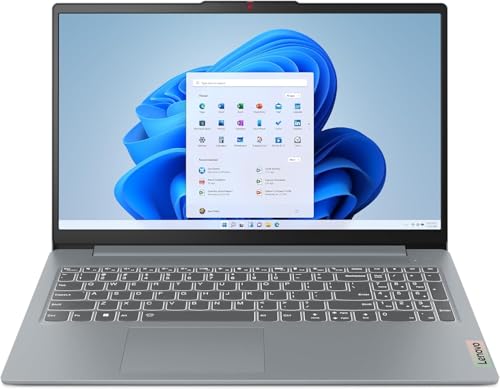
Lenovo IdeaPad Slim 3 15.6 Touch — The non-folding 15.6
The final pick refuses the fold entirely, and its inclusion is a question posed to every reader: at 15.6 inches, do you actually want a convertible? The IdeaPad Slim 3 answers with a straightforward clamshell — a 15.6-inch Full HD touchscreen, AMD’s Ryzen 7 5825U, 16GB of memory and a 512GB drive — at a mainstream tier that undercuts the folders. Its touchscreen serves the seated interactions most owners use daily: scrolling, tapping, zooming, the occasional signature. What it will not do is tent, stand or flatten, and its review treats that absence as a legitimate design rather than a missing feature.
The case for the clamshell at this size is stronger than convertible marketing admits. Tablet posture at 15.6 inches is a desk novelty for most owners; tent mode matters mainly to presenters. A buyer whose week contains neither is paying the folders’ hinge premium for postures that will be demonstrated to relatives once and forgotten. The IdeaPad redirects that money into the basics — adequate memory, a capable processor, a big touch panel — inside Lenovo’s high-volume mainstream line, with the parts and accessory availability that volume guarantees.
The Ryzen 7 5825U is an older-generation chip, and the review should say what that means in practice: entirely sufficient for the office, browsing and media workload this machine targets, a step behind the newest silicon in efficiency and integrated graphics, and priced accordingly. The panel is an LCD of mainstream character — bright enough for ordinary rooms, honest rather than lush. Nothing here is a showcase; everything here is sorted.
For a family laptop, a small office’s paperwork machine, or a student whose “touch laptop” need means tapping through learning platforms at a desk, the IdeaPad is the guide’s reminder that the best 14 to 15 inch touch screen laptop for many buyers is the one that spends its budget on being a laptop.
- Real size and hinge: 15.6 inches — in-band; clamshell, does NOT fold
- Display: Full HD touch LCD for seated finger interaction
- Processor: AMD Ryzen 7 5825U — older generation, sufficient for mainstream work
- Memory and storage: 16GB RAM and 512GB SSD
- Pen: Finger-led touch; not an annotation machine
- Role: The budget-honest big touchscreen for desks and households
Strengths
- Big touch canvas and full memory at a mainstream price posture
- No hinge premium spent on unused postures
- High-volume line means easy parts, cases and chargers
Trade-offs
- No tent, stand or tablet modes at any price
- Older silicon trails the newest picks in efficiency
- Panel and finish are honest rather than lush
Best for: families, small offices and desk-based students who tap and scroll but never fold.
Not suited for: annotators, presenters and anyone whose workflow needs the screen flat or tented.
Lining the Six Up by the Numbers That Matter
| Pick | Real size | Hinge | Panel | Memory / storage |
|---|---|---|---|---|
| Galaxy Book4 360 | 15.6″ | 360° convertible | AMOLED touch | 16GB / 512GB |
| Spectre x360 16 | 16″ — above band | 360° convertible | WQXGA touch | 16GB / 1TB |
| Yoga 7i 16 | 16″ — above band | 360° convertible | 2K touch | 16GB / 1TB |
| Envy x360 14 | 14″ | 360° convertible | FHD touch LCD | 8GB / 512GB |
| Dell 14 2-in-1 | 14″ | 360° convertible | FHD+ touch | 16GB / varies |
| IdeaPad Slim 3 15.6 | 15.6″ | Clamshell — no fold | FHD touch LCD | 16GB / 512GB |
Two rows break the band upward, one row refuses to fold, and the memory column contains the guide’s only genuine caution. Everything else is a matter of matching diagonal to desk.
Which Buying Errors Haunt This Size Band?
Rounding is the first. Sellers know that “15-inch class” searches catch 16-inch machines, and listings lean on that fog. Every diagonal in this guide is printed from the specification rather than the title; extend the same suspicion to any machine you meet elsewhere, and measure your bag against the number you find.
The second error is buying tablet posture at a size where it cannot be used. A 16-inch convertible folded flat is furniture, not a tablet, and owners who imagined sofa reading discover the truth in the first evening. At this band, fold for tent and presentation value; annotate at desks; read on something smaller.
The third error is underbuying memory to reach a larger screen. The Envy’s 8GB is this guide’s standing exhibit: a beautiful folding machine whose ceiling is set forever by one line of its configuration. Screen inches can be supplemented by a monitor later; soldered memory cannot be supplemented at all.
The fourth error is ignoring the pen’s fine print. Support is universal among the convertibles here; inclusion is not. An annotator’s budget should include the stylus line item from the start, verified on the exact listing, rather than discovering it at unboxing.
How Do You Arrange a Desk Around a Large Touch Laptop?
Give the hinge its room. A convertible at this size needs desk depth behind it to fold into tent mode without meeting a wall, and a clear arc for the screen’s rotation — arrange the desk so the machine’s postures are one motion rather than a rearrangement. Position a pen holder or the pen’s magnetic home on the side of your writing hand; annotation habits die when the pen lives in a drawer.
Set the display scaling deliberately. Windows’ default scaling on a 15.6- or 16-inch panel is conservative, and many owners can reclaim workspace by stepping scaling down one notch — text stays legible at these diagonals, and the two-window life the size was bought for becomes real. Conversely, owners who find themselves leaning in should step scaling up without guilt; the canvas serves the eyes, not the specification.
Finally, plan the second screen honestly. A large touch laptop beside an external monitor creates a natural division — reference and pen work on the laptop’s touch panel, primary work on the monitor — that many owners find better than either screen alone. A USB-C dock bought once makes that arrangement a single-cable habit, and at this size the laptop earns its place on the desk even when it is not the biggest screen on it.
Sound belongs in the desk plan too. Convertibles in tent mode fire their speakers from unexpected angles, and several of these machines sound noticeably better in one posture than another; a week of calls will reveal your machine’s favourite arrangement, and a small external speaker or a headset kept at the desk removes the variable entirely for owners whose voices travel for a living. The desk, arranged once with the hinge, the pen, the scaling and the sound all considered, is what turns a large touch laptop from a purchase into a workstation.
What About Ports, Docks and the Second-Monitor Question?
Large laptops earn desk space, and desk space invites connections. Across these six, the modern pattern is USB-C at the centre — charging, data and video through one or two ports — supplemented unevenly by full-size USB, HDMI and card readers depending on model and tier. The buyer’s task is an inventory, not a judgement: list the projector, monitor, wired network, camera cards and legacy drives your week actually touches, then match the list against the specific machine’s sides on its product page. A laptop that matches your inventory feels elegant; a technically superior one that needs three dongles feels like a subscription.
Docking deserves its own paragraph because this band’s owners are the likeliest to build a desk station. A single USB-C dock driving a monitor, keyboard, mouse and power turns any of these machines into a desktop in one motion and back into a laptop in the next, and the convertibles add a trick no desktop can copy: folded into tent mode beside the monitor, the laptop’s own touchscreen becomes a pen-enabled second display for annotation and reference. Owners who discover that arrangement rarely return to a single screen.
Wireless is the solved layer — current Wi-Fi and Bluetooth across the six — with one caveat for presenters: wireless display casting to meeting-room screens varies in reliability by venue, and the professional who presents for a living should keep an HDMI-capable cable or adapter in the bag regardless of what any specification promises. At this size, the bag has room; the embarrassment of a failed connection has none.
How Does Annotation Actually Work at This Size?
Buyers new to pen computing often imagine the workflow and discover a better one. The natural unit of annotation at 15.6 inches is the full page: a PDF at reading size, marked in the margins, initialled at the foot, without the pinch-and-zoom dance smaller screens demand. Teachers grade whole worksheets; reviewers mark whole proofs; managers sign whole contracts. The page-sized canvas is the entire argument for pen support at this band, and it is why the Book4 and the big convertibles’ reviews return to desks so often — the desk is where pages live.
Software decides whether the hardware sings. Choose one annotation application and standardise on it across your documents, because markups trapped in three incompatible apps are markups lost. Set the pen’s button to the eraser — annotation is a medium of second thoughts — and establish the filing habit on day one: annotated copies saved beside originals, named consistently. None of this is technical; all of it is the difference between owners who annotate daily and owners who tried it during the first week.
Finger touch has its own quieter workflow at this size, and the IdeaPad’s existence honours it: scrolling long documents in a chair, tapping through presentation slides, pinching a map or a photograph to the detail that matters. Owners who work this way should not let convertible enthusiasm talk them into a hinge; the seated tap is a complete touch philosophy, and at 15.6 inches it is a comfortable one.
What Does Touch Itself Cost in Weight, Money and Glare?
Every feature in this guide is bought with something, and touch’s price list is worth reading once. The digitiser layer and the reinforced glass it requires add weight that non-touch equivalents of the same machines do not carry — a modest figure per machine that compounds with the larger batteries and hinges of this band. They add cost that shows up when the same model is sold in touch and non-touch variants. And they add gloss: touch panels are almost universally glossy, which in bright rooms means reflections that matte business screens avoid, and under office lighting means a visible fingerprint record of every interaction.
None of that argues against touch; it argues for buying it deliberately. The owners who benefit — annotators, presenters, scrollers, signers — receive value daily that dwarfs the costs. The owners who do not benefit are those who bought touch because the listing had it, and who spend five years carrying a heavier, glossier screen they touch only to wipe. The IdeaPad and the convertibles in this guide are all touch machines, so the question here is not touch or not, but which touch philosophy — folding, seated, premium, mainstream — matches the hands that will actually reach for the screen.
There is one more cost, easily missed: touch changes how a screen ages cosmetically. A panel that is handled daily shows micro-wear and cleaning marks that a never-touched display avoids, which matters to owners who resell. A screen protector on a pen machine is a judgement call — it can soften pen feel — but on a finger-led machine like the IdeaPad it is cheap protection for a surface that will be touched ten thousand times.
Which Working Life Points at Which Diagonal?
The teacher moving between classrooms lives at the band’s floor or its centre. A 14-inch Envy or Dell rides in a tote between rooms and opens on any desk; a 15.6-inch Book4 earns its size back every time a worksheet is annotated at full-page scale in front of a class. The deciding question is whether the machine’s screen is a private workspace or a shared teaching surface — private points down the band, shared points up it.
The analyst or accountant lives at the ceiling and beyond. Spreadsheets are area-hungry in a way documents are not, and the 16-inch step-ups — the Yoga 7i’s value or the Spectre’s finish — repay their size every working hour. For this buyer the guide’s size labels are not warnings but directions: the band’s stated ceiling is the one rule in this guide they are explicitly invited to break.
The hybrid professional, splitting a week between a home desk, an office and a client site, is the Book4 360’s natural owner, with the Dell as the muscle-leaning alternative at 14 inches for those whose travel is on foot. The pattern to notice is that journey type, not job title, picks the diagonal: carried in a hand or a tote, stay low; carried in a car between desks, go large.
The family buying one machine for the household should resist the convertibles’ charm unless presentations or annotation genuinely feature in the family’s week. The IdeaPad’s clamshell honesty — big touch screen, full memory, no hinge premium — matches how households actually compute, and the money saved buys the sleeve, the mouse and the external drive the family will use daily.
Final Recommendation
Shop the band by working style. Desk-anchored annotators should start with the Galaxy Book4 360, whose AMOLED canvas is the keyword’s most literal fulfilment. Buyers tempted upward should choose between the Spectre’s finish and the Yoga 7i’s value, eyes open about the extra inch both carry. Travellers belong at the floor, with the Envy for value or the Dell for muscle. And buyers who never fold a screen should let the IdeaPad save them the hinge premium entirely. The band rewards honesty about size and posture more than any other laptop category — measure both before ordering, and the machine that arrives will be the machine you meant to buy.
A closing note on verification, offered because this band’s listings are the foggiest in the laptop market. Before ordering any machine here, match three lines between the review’s spec box and the product page: the diagonal, the memory, and whether a pen rides in the box. Those three lines carry every disappointment this category produces, and they take under a minute to confirm. The six machines above were chosen so that a buyer who performs that single minute of diligence gets exactly the laptop the review described — in the band, above it by declaration, or proudly outside the folding fashion altogether.
Frequently Asked Questions
Why are 16-inch laptops in a 14 to 15 inch guide?
Because the industry’s 15-inch class has largely migrated to 16-inch panels in similar chassis, and shoppers meet these machines on every shelf. They are included as declared step-ups with their true size printed everywhere — never rounded down into the band.
Is a 15.6-inch convertible usable as a tablet?
On a desk or lectern, yes — annotation and presentation work well at that canvas size. In the hand or on a sofa, no: the weight and width make it a two-handed, supported arrangement. Buy the fold for tent and desk modes, not for reading. Owners who genuinely read in tablet posture for hours should drop to the 14-inch picks or to a detachable, where the posture the purchase imagines actually exists.
Which pick suits a student best?
The Envy x360 14 for portability and price, with the memory caveat understood, or the IdeaPad Slim 3 if the student’s touch use is seated and the budget prefers a bigger screen. Pen-led courses should look at the Book4 360’s annotation canvas. Students who carry the machine between lectures all day should also weigh the Dell’s processor headroom, since a student laptop is opened, closed and carried more in a week than most office machines manage in a month.
Do all these laptops support pens?
The four convertibles support active pens, with inclusion varying by listing. The IdeaPad clamshell is a finger-touch machine and is labelled as such; buyers who ink should choose among the folders.
Should I buy a previous-generation model like the Book4 360?
Often, yes. A previous-generation flagship offers a mature design, a known accessory ecosystem and a gentler price posture, in exchange for older silicon whose limits mainstream work rarely reaches. The Book4’s review makes that case in full; the general rule is to buy the older flagship when its panel or price is the attraction, and the current model when processor longevity leads.
How do I verify a listing’s real screen size?
Ignore the title and read the specification table or the manufacturer’s model page, where the diagonal is stated precisely — 14, 15.6 or 16 inches in this guide’s terms. Sellers write titles for search engines; specifications are written for the record, and the record is what your bag will have to accommodate. The same check, applied to the memory line, prevents the other classic disappointment of this band, since one model name routinely covers both 8GB and 16GB configurations.
AMOLED, OLED or LCD at this size — which should I pick?
Samsung’s AMOLED in the Book4 leads for annotation and media richness. The LCD panels in the mainstream picks are kinder in bright rooms and often cheaper. At this size the difference shows most in dark-room media and least in document work. Buyers who split the difference — bright office by day, films by night — will be served by any panel here and should let hinge, memory and price make the decision instead.
Is a 15 inch touch screen laptop practical to use as a tablet?
Only in short bursts, and it helps to be honest about that before buying. A 15 or 16 inch convertible in tablet mode is a lap or table device: it is excellent for annotating a document propped on a desk, presenting to two colleagues, or sketching with the machine resting on your knees, but nobody holds one in the air like a paperback. The hinge earns its keep in tent and stand modes — video calls, kitchen counters, cramped train tables — far more often than in true tablet mode. Buyers who genuinely want a hand-held tablet half the time should pair a smaller convertible from the 14 inch class with this size class only if the large screen is the point of the purchase.
Related Guides
Adjacent shelves to browse next: best 13 touch screen laptops for smaller bags, best laptops with solid state drives and touch screens, and best 10 inch touch screen laptops and what replaced them.
Related guides
- Best 1440p 165Hz Monitors: One Native 165Hz Pick, Three 180Hz Upgrades, an Overclock Headline and a 160Hz Ultrawide
- Best 13×19 Professional Printers
- Best 3rd Party MacBook Chargers: 96W-Class Alternatives, the 100W Cable Rule, and the Apple Benchmark
- Best Built PC: Six Prebuilt Gaming PCs Judged on Parts, Power and Upgrades


