Our Top Picks



What's inside
- Defining the Job Precisely
- Shock Resistance and How It Is Built
- Water Resistance Translated Into Real Life
- Crystals at Beater Prices
- Quartz, Battery, and Solar Power
- Legibility When Conditions Are Awful
- Straps Are Consumables, Plan Accordingly
- Size, Snag Profile, and Physical Work
- Digital, Analogue, or Both for Timed Work
- Total Cost of Ownership, Honestly Counted
- When a Cheap Smartwatch Is the Better Beater
- Setting Up a Beater for Its First Week
- Hazards That Specifications Rarely Mention
- Matching a Beater to Four Kinds of Life
- Reading a Beater Listing With Suspicion
- The Secondhand Beater and the Borrowed Beater
- Teaching a Beater to a New Owner
- How Long a Beater Should Last, and What Ends One
- Beaters for Hands That Work Differently
- Check prices on Amazon
- A Short Decision Sequence
As an Amazon Associate I earn from qualifying purchases. This post may contain affiliate links at no extra cost to you.
Every collection, however small, benefits from one watch whose job is to suffer. A beater watch is bought deliberately to absorb the knocks, splashes, dust, sweat, and carelessness of physical life so that better watches never have to. It goes into the garden, under the car, onto the building site, through airport security in a tray, and around the gym at hours when nobody is being gentle with anything. Choosing one well is not about finding the cheapest object that ticks. It is about understanding which forms of damage a watch will actually meet, which construction features answer those threats, and where the line sits between a tool that can be replaced without grief and a false economy that fails at the first serious impact.
Defining the Job Precisely
A beater earns its place by being expendable and dependable at the same time, a pairing that sounds contradictory until the work is specified. Expendable means that if the watch is crushed, lost in a lake, or scarred beyond politeness, the loss stings for an evening rather than a season. Dependable means that until such a moment arrives, it keeps accurate time, stays on the wrist, remains readable through sweat and dust, and does not demand attention in the middle of a task. A watch that is cheap but stops when a doorframe catches it has failed the second half of the bargain, and a watch that is tough but precious has failed the first.
Start by naming your own hazards honestly. Yard work brings impacts against stone and timber, soil worked into every seam, hose water, sun cream, and insect repellent that can attack resin and printing. Gym training adds chalk dust, metal bar contact, repeated flexing of the wrist under load, and showers taken without removing the watch. Travel introduces loss and theft risk, trays and scanners, swimming in unfamiliar water, and the simple fact that a watch may be worn for twenty hours straight. Site work is the harshest common environment: vibration from power tools, abrasive dust, sparks in some trades, gloves that catch on crowns, and impacts that arrive without any warning at all.
One Beater or Two
Some owners discover that a single beater cannot cover both wet work and dusty work gracefully, because a strap perfect for swimming holds grit against the skin on a site, while a fabric strap that breathes beautifully in dust stays damp for hours after a swim. Splitting the role between a resin digital for wet and violent days and a simple quartz analogue for travel and lighter chores is not indulgence; each watch then faces the hazards it was built for, and both together still cost less than repairing one good watch after a single bad afternoon. Others prefer one watch and a small wardrobe of straps, which achieves much of the same flexibility with a single movement to maintain.
Shock Resistance and How It Is Built
Shock resistance is not a coating or a promise; it is architecture. Inside a conventional watch the movement sits rigidly in the case, so an impact travels through the case wall straight into delicate pivots and balance components. Resin cased sport watches interrupt that path. The case material itself flexes slightly and absorbs energy, the bezel stands proud of the crystal so the glass rarely takes the first contact, and raised guards surround buttons that would otherwise be struck directly.
The Pattern Set by Rugged Digital Watches
The best known approach suspends the movement inside the case rather than bolting it hard against the walls. In the classic rugged digital pattern, the module floats within a hollow case structure, contacting it at limited points, often with cushioning material at those points, so a blow to the outside is blunted before it reaches the timing components. The crystal sits recessed below a raised resin bezel, the case back is protected, and the strap attaches in a way that lets the whole assembly flex on the wrist instead of transmitting a lever force into the case. This layered thinking, rather than any single material, explains why such watches survive drops onto concrete that would stop a dress watch permanently.
Analogue beaters cannot float a mechanical movement quite so freely, which is one reason quartz dominates this category. A quartz movement has fewer fragile moving parts, no balance wheel swinging on fine pivots, and far greater tolerance of vibration. When an analogue beater adds a resin case, a recessed crystal, and crown guards, it borrows most of the digital pattern’s protection while keeping hands that can be read at a glance across a room or a yard.
What Shock Resistance Does Not Cover
No shock system makes a watch immortal. A direct strike on an exposed crystal, a fall onto a pointed stone, or a crush injury under machinery defeats designs at any modest price. Shock resistance also says nothing about water, heat, or chemicals. A watch can survive being dropped from a ladder and still fog internally after a hot shower if its seals have aged, because those are separate engineering problems solved by separate parts. Reading a beater’s specification as a set of distinct defences, each with limits, prevents the expensive assumption that toughness in one direction implies toughness in all.
Water Resistance Translated Into Real Life
Water resistance ratings are expressed in metres, atmospheres, or bar, and they describe a laboratory pressure test on a new watch, not a depth guarantee for your swimming. The translation that matters runs roughly as follows. A watch marked water resistant with no depth figure, or rated at 30 metres, tolerates splashes, rain, and hand washing, but should not be showered in or swum in despite what the number seems to suggest. At 50 metres, showering and brief shallow swimming become reasonable for most makers’ guidance. At 100 metres, swimming, snorkelling at the surface, and waterside work are comfortably within the rating. At 200 metres, the watch is built for serious recreational diving territory, with the case, crown, and seals designed accordingly, well beyond what most beater duties require.
The gap between the printed number and the activity surprises many buyers because dynamic pressure is higher than static pressure. Striking the water in a dive, pressing buttons underwater, or directing a shower jet or tap stream at the seals all load the gaskets harder than still water at the same depth. Hot water adds another stress, since heat expands materials at different rates and soap reduces surface tension, helping water find paths that cold clean water would not. This is why conservative makers advise against hot showers even in watches rated for swimming, and why a beater intended for daily showering should carry at least a 100 metre rating to keep a margin in hand.
Gaskets Age Whether You Swim or Not
Seals are rubber or silicone rings compressed between case parts, and they harden, shrink, and take a set over the years. Sunlight, solvents, and simple time all move them toward failure, and a watch that passed its rating when new may admit moisture half a decade later during an ordinary swim. Warning signs include condensation under the crystal after a temperature change, a crown that turns grittily, or a case back that a previous battery change left imperfectly seated. Battery replacement is the moment of greatest risk for many beaters, because opening the case breaks the original seal; a careful technician cleans the groove, inspects or replaces the gasket, lubricates it lightly, and closes the case to the correct pressure. A hurried battery swap in a market stall may keep the watch ticking while quietly ending its swimming career.
For a beater, the practical response is to treat water resistance as a consumable quality. If the watch swims often, have its seals checked every couple of years, or accept a simpler bargain: once the watch reaches an age where a flood would not surprise you, retire it from immersion and let it serve dry duties while a younger beater takes over in the water.
best and cheapest smartwatches
Crystals at Beater Prices
The crystal is the watch’s window and its most exposed surface, and at beater prices the choice narrows to three materials with distinct personalities. Each fails differently, and knowing how yours fails tells you how to live with it.
Acrylic: The Polishing Bargain
Acrylic, a clear plastic, is light, warm to the touch, and remarkably resistant to shattering; it tends to dent or crack rather than explode into fragments. Its softness invites scratches from doorframes, masonry, and even coarse dust, yet those scratches can be polished away at home with a suitable plastic polish and a soft cloth, restoring clarity in minutes. Vintage styled field watches and some budget classics still use acrylic for exactly this forgiving character. For a beater that meets abrasive surfaces daily, the ability to renew the window repeatedly, without parts or a workshop, is a genuine strategic advantage rather than a compromise to apologise for.
Mineral Glass: Harder, Less Forgiving
Mineral crystal is ordinary glass hardened by heat or chemical treatment. It resists the casual scratching that clouds acrylic, shrugging off contacts that would mark plastic, but when it does scratch, home repair is impractical, and when it breaks it can crack across the dial or shatter. Most mid range beaters choose mineral because their owners would rather accept a rare serious injury than a constant haze of fine marks. A recessed setting beneath a raised bezel improves mineral’s odds considerably, since the bezel intercepts the flat impacts, walls, worktops, gym rigs, that account for most real world crystal damage.
Why Sapphire Rarely Appears Here
Sapphire, synthetic corundum, sits near the top of the hardness scale and resists almost every scratch short of diamond or certain industrial abrasives. It is also costlier to produce and shape, and its hardness brings brittleness: a sharp impact that acrylic would absorb by flexing can chip or shatter sapphire. In an expensive watch the trade makes sense because replacement, though dear, protects a valuable whole. In a beater, sapphire usually breaks the economics, pushing the price toward territory where the watch is no longer cheerfully expendable. A few makers do offer sapphire at surprising prices, and such a watch can be an excellent beater for scratch heavy but impact light work, such as warehousing or gardening among brambles, provided its water seals and case match the crystal’s ambition.
Quartz, Battery, and Solar Power
Quartz regulation, in which a battery drives current through a quartz crystal vibrating thousands of times per second, delivers accuracy measured in seconds per month rather than per day. For timed work, medication schedules, site coordination, or simply trusting the watch on your wrist over the clock on a wall, that reliability is the beater’s quiet superpower. Mechanical movements, charming as they are, drift more, dislike vibration and magnetism from power tools and speakers, and ask for servicing that can exceed a beater’s entire value.
Battery Life as a Planning Tool
Common beater movements run two to five years on a cell, and some digital models stretch far beyond that, with makers advertising decade long battery designs built around efficient displays and modest backlight use. Long battery life matters beyond convenience: every opening of the case is a risk to the seals, as described earlier, so a watch that opens rarely keeps its water resistance longer. Note the battery type your watch uses and keep a record of when it was changed, because a cell that dies mid trip or mid season is an avoidable irritation, and cells left dead in a case for years can leak and destroy the movement they once powered.
Many quartz watches warn of their ending through an end of life indicator, where the seconds hand jumps in two or four second steps while still keeping correct time. Learning that signal for your model turns a surprise stoppage into a scheduled errand. Digital models may dim, flash, or display a low battery icon, though heavy backlight and alarm use in the final weeks can finish a weakening cell abruptly.
Solar Charging and Its Trade-Offs
Solar watches feed light through a translucent dial to a rechargeable cell, removing routine battery changes and the seal disturbances that come with them. Worn outdoors, as beaters usually are, they stay charged almost without thought, and many hold months of reserve in darkness once full. Their weaknesses appear at the edges: a watch kept under long sleeves in a dark workplace may run lean through winter, the rechargeable cell itself ages over a decade or so and eventually needs replacement by someone who understands the system, and a deeply discharged solar watch can need days of bright light to recover full function. For site workers outdoors and travellers in sunny climates, solar is often the most set and forget power a beater can have; for night shift workers, a conventional long life battery may prove the steadier servant.
Legibility When Conditions Are Awful
A beater is read in the worst conditions a watch ever faces: through sweat running into the eyes, in rain, under harsh site lighting, at a glance while carrying something awkward, or in the dark at the bottom of a tent. Legibility therefore begins with contrast. Bold hands against a matte dial, generous luminous material, and numerals large enough to resolve without focusing all outperform decorative finishes. Polished hands on a polished dial may gleam beautifully in a shop and vanish completely against a bright sky, a failure no specification sheet will warn you about.
Digital displays trade that glanceable sweep for precision. A large digit field can be read through safety glasses and gives stopwatch and countdown functions to the hundredth of a second, but some displays fade at oblique angles or under polarised sunglasses, and a display that requires a button press for its backlight is a two handed instrument in the dark. Analogue dials show the shape of remaining time, how much of the hour is left, in a way digits cannot, which some people find calmer for pacing physical work.
Crowns, Pushers, Sweat, and Gloves
Controls must work with the hands the job gives you. A beater’s crown should be large enough to grip with wet or gloved fingers, guarded enough not to be bent by a knock, and positioned so it does not saw at the back of the hand when the wrist flexes under a load. Screw down crowns improve sealing but slow every adjustment and can cross thread when hurried with gritty fingers; for many beater roles a well gasketed push crown at a high water rating is the better compromise. Digital pushers should respond to a firm, deliberate press, ideally with gloves, without being so proud of the case that a flexed wrist or a tight cuff triggers them accidentally. Recessed or guarded pushers, and a lockout function on some models, prevent the classic mishap of a stopwatch reset by a jacket sleeve at the exact moment it mattered.
Backlight design deserves a moment of attention. A light that illuminates the whole dial evenly, stays on long enough to read, and can be operated by feel alone transforms night usability. On analogue models, luminous paint quality varies enormously; strong, long lasting lume applied generously to hands and hour markers keeps working through a night shift, while thin decorative lume fades before midnight and leaves the watch guessing.
Straps Are Consumables, Plan Accordingly
In beater service the strap is a wearing part, closer in spirit to a tyre than to a jewel. It flexes millions of times, absorbs sweat and sunscreen, grinds against cuffs and gloves, and holds the watch against every impact’s attempt to throw it off. Accepting its mortality in advance leads to better choices than mourning its decline later.
Resin Straps
Moulded resin straps arrive fitted to most rugged digitals and many quartz sport watches. They tolerate water completely, wipe clean, and their holes and buckle handle gloves reasonably well. Their failure mode is familiar: after a year or three of sun, heat, and flexing, the material stiffens and cracks begin at the hole in daily use or where the strap bends around the lug, until one day it parts without ceremony. Proprietary resin straps that curve into the case can be replaced only with the maker’s own part, which may be discontinued while the watch still runs perfectly. Before buying a resin beater, confirm that replacement straps exist for that model and consider ordering a spare while they are plentiful, storing it away from sunlight.
Nylon and Perlon
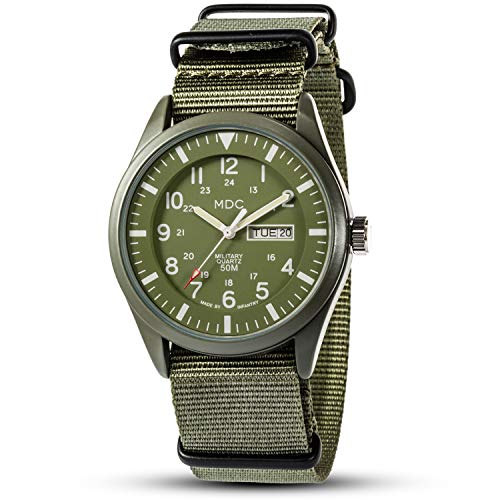
Woven nylon straps, including the pass through style that slides under the case between the spring bars, bring a decisive safety feature: if one spring bar fails, the watch remains captive on the other bar and on your wrist, rather than dropping into soil, water, or machinery. That redundancy alone justifies their popularity for physical work. Nylon adjusts finely, survives abrasion well, and can be washed, though it dries slowly and can chafe when loaded with grit unless rinsed. Perlon, a braided synthetic with a distinctive woven texture, fastens at effectively any point along its length through its buckle, dries faster than flat nylon, and stretches slightly under load for comfort; its edges can fray with heavy abuse, and its lighter build suits smaller cases best.
Rubber and silicone straps occupy the middle ground: fully waterproof, quick to dry, and secure with a conventional buckle, but capable of tearing at a hole under a sudden load and of trapping sweat against the skin unless vented or textured underneath. Leather, for all its comfort in gentle roles, is generally the wrong material for a true beater, since water, sweat, and chemicals shorten its life dramatically and a soaked leather strap stays clammy for a day.
Spring Bars: The Small Part That Decides Everything
Spring bars are slender steel pins with sprung tips that seat into holes inside the lugs, and they carry the entire watch. Standard bars bend under a hard snag, their tips wear, and corrosion weakens them in salt water service. Heavy duty bars with thicker bodies and deeper seating give a beater a stronger foundation for little money, and replacing bars whenever a strap is changed is cheap insurance, because a strap in perfect condition cannot save a watch whose bar has just surrendered. Shoulderless bars used with drilled lugs offer the most secure seating of all, though they demand the right tool and technique to remove. Whatever the type, inspect bars for straightness and spring action at every strap swap, and never reuse a bar that feels gritty or weak.
Size, Snag Profile, and Physical Work
A beater should be big enough to read and small enough to forget. Oversized cases catch on doorframes, scaffolding, seatbelts, and the edges of machinery, and every catch is an impact delivered to the watch and a jar delivered to the wrist. A moderate case, roughly in the high thirties to mid forties in millimetres depending on the design, with a low profile and rounded resin edges, slides past obstacles that would stop a tall, sharp edged case. Thickness matters more than diameter for snagging; a watch that stands high invites contact, and its crown becomes a lever waiting for a blow.
Weight plays into fatigue across a long shift. A heavy steel watch on a bracelet may feel reassuring for an evening, yet by hour ten of physical work its swing and pressure announce themselves constantly. Resin and titanium cased beaters, and fabric straps that distribute load, keep the watch present without becoming a topic of thought. Consider also where the watch sits during your specific tasks: wrist flexion in climbing, weightlifting with straps, or operating vibrating tools can make a prominent crown genuinely painful, favouring models with the crown at a four o’clock position or with substantial guards.
best android smartwatches fitness trackers under 100
Digital, Analogue, or Both for Timed Work
Timed work separates the formats cleanly. Digital watches own the stopwatch, the countdown timer with an audible alarm, lap memory, dual time zones, and alarms that can be set for odd hours without squinting at a subdial. Coaches, medics timing observations, kitchen workers, and anyone running intervals will feel those functions as necessities rather than garnish. A countdown that vibrates or beeps at zero, heard over site noise or felt through a glove, can structure an entire work rhythm.
Analogue watches answer with instant orientation. The position of the hands communicates time remaining before the hour, before a shift ends, before a dose is due, in a single peripheral glance, and there are no modes to be lost inside. A rotating bezel on an analogue diver performs simple timing elegantly: align the marker with the minute hand and read elapsed time thereafter, even with wet hands and no buttons at all. Hybrid models with hands plus a small digital window attempt both worlds and can succeed, provided the window remains legible and the hands never hide it at the moment you need it.
Battery behaviour differs subtly too. A digital watch’s functions all draw from one cell, and heavy use of light, alarms, and sensors shortens its span, while a simple three hand quartz sips power so slowly that its battery life approaches the shelf life of the cell itself. For a beater bought to be forgotten between adventures, that simplicity carries real value.
Total Cost of Ownership, Honestly Counted
The purchase price of a beater is merely its first instalment. Over a realistic five year life, a hard used watch may consume two or three straps, one or two battery changes, fresh spring bars at each strap swap, perhaps a replacement crystal or a set of gaskets, and the occasional professional reseal if it swims. None of these items is large, but together they can approach or exceed the original price of a budget watch, which is not an argument against the watch; it is an argument for choosing a model whose consumables are standard, available, and easy to fit. A watch using a common lug width accepts straps from dozens of makers. A watch using a common battery can be revived in almost any town. A watch with a proprietary strap, an unusual cell, and a case back that needs a specialist tool accumulates friction at every service until owners stop bothering, and an unmaintained beater dies early for want of small change.
When Replacement Beats Repair
Repair logic for a beater differs from repair logic for a treasured watch. If a quartz movement fails outside its battery and gasket checks, replacing the whole watch often costs less than a movement swap once labour is counted, and it renews the seals, crystal, and strap in the same stroke. Sentiment can overturn that arithmetic, and there is no shame in repairing a beater that accompanied years of work; just make the decision with open eyes. A useful threshold is to compare the repair estimate with the price of an equivalent new watch and to ask what else the repair leaves old. A new movement inside a case with tired gaskets and a cracked strap is only partly renewed, whereas a fresh watch resets every clock at once.
Conversely, do not discard a beater for cosmetic injuries. Scratches on resin, a polished acrylic crystal’s hundredth haze, faded printing, and a strap that looks seasoned are the uniform of the job, not failures. Replace parts when function is threatened: straps near cracking, bars that feel weak, seals past their interval, batteries near their term. That discipline keeps spending aligned with survival rather than appearance.
When a Cheap Smartwatch Is the Better Beater
There are jobs where a modest smartwatch outworks every traditional beater. Notifications delivered as a vibration on the wrist matter when a phone lives in a locker, a bag, or a waterproof pouch; a timer that can be started by voice while hands are covered in flour, soil, or paint is genuinely liberating; and health or activity tracking during training gives feedback no dumb watch can offer. For travel, a smartwatch that shows a second time zone, finds a misplaced phone, and pays for a coffee at a gate can simplify a day built from small transactions. If those functions serve your actual routine, a previous generation or entry level smartwatch, priced so its loss would not ruin a trip, is a rational beater choice.
When It Is the Worse One
The same device becomes the wrong beater when its weaknesses meet your hazards. Charging is the first: a traditional beater asks for attention every few years, while a smartwatch asks every day or two, and a beater that is dead on the charger during the one rough morning you needed it has failed its defining test. Screen fragility is the second; large, bright, edge exposed glass is the opposite of a recessed crystal under a resin guard, and screen replacement commonly costs more than an entire traditional beater. Water ratings on smartwatches can be respectable, yet their speakers, microphones, and charging contacts introduce vulnerabilities that a sealed quartz watch simply does not have, and software support ends on a manufacturer’s schedule, turning a healthy device into an insecure or incompatible one while its hardware still works.
Heat, cold, and gloves complete the case. Touchscreens respond poorly to wet fingers and not at all to many gloves, battery capacity shrinks in freezing weather, and a dark screen in bright sun can be harder to read than bold analogue hands. For site work, winter work, and water work, those are not edge cases; they are Tuesday. Choose the smart beater for connected, timer heavy, notification driven days, and the traditional beater for impact, immersion, and endurance, and do not ask either to pretend to be the other.
Setting Up a Beater for Its First Week
A few small preparations multiply a beater’s lifespan. Fit a strap that suits the dominant hazard rather than the one that merely arrived in the box, and keep the original as a spare. Set the time format, alarms, and hourly signal before the watch is needed in earnest, because learning a button sequence with muddy hands is nobody’s idea of preparation. If the watch is digital, practise starting and stopping the timer by feel, and discover whether the backlight can be operated without looking. Note the battery type, the strap or lug specification, and the date of purchase somewhere durable; that scrap of information will be gold in three years when a strap cracks on a Sunday.
Consider a screen or crystal protector only where it does not compromise the design. A thin film can sacrifice itself against abrasive dust on a mineral crystal, but on a watch whose bezel already recesses the glass, a poorly fitted protector mostly collects grit at its edges. A spare strap and spare spring bars stored with the watch’s box cost little and convert the most common beater emergency, a strap failure, from a shopping expedition into a two minute repair at the kitchen table.
Cleaning and Storage Between Duties
After muddy, salty, or dusty work, rinse the watch in clean fresh water if its rating permits, work the bezel and pushers gently under the rinse to clear grit from their seats, and dry it with a soft cloth before it goes into a bag or drawer. Salt left to dry crystallises in seams and under bezels, and site dust acts as grinding paste inside a rotating bezel if it is never flushed. Store the watch away from prolonged direct sun when it is off duty, since ultraviolet light ages resin straps and fades dials, and keep solar models somewhere they receive at least occasional light so their cells rest charged rather than empty. A beater thrives on rough use and gentle storage, in that order.
Hazards That Specifications Rarely Mention
Chemicals ambush beaters quietly. Insect repellent containing strong solvents can soften resin cases and straps and lift printed markings within a single summer evening, sunscreen degrades some plastics and leaves films that attract grit, and fuels, solvents, and cleaning agents on sites attack gaskets that water alone would never trouble. If your work involves such substances, rinse the watch after exposure, keep repellent application away from the wrist where possible, and favour metal or well sealed cases for the dirtiest chemical duties. A strap sacrificed to solvent is replaceable; a case whose button seals have swollen is a repair.
Vibration deserves respect as a slow hazard rather than a dramatic one. Hours on a mower, a grinder, or a vibrating compactor send continuous tremors through a movement, loosening screws over time and fatiguing components that a single sharp shock would leave unharmed. Quartz movements tolerate this environment far better than mechanical ones, and a snug strap that prevents the case from rattling against the wrist reduces the dose. Magnetism, by contrast, mostly threatens mechanical watches, whose hairsprings can be pulled into erratic timekeeping by motors, speakers, and magnetic clasps; a quartz beater may slow or step oddly while inside a strong field but generally recovers when removed from it, one more practical reason the beater category belongs to quartz.
Heat, Cold, and the Car Dashboard Test
Temperature extremes test batteries and seals together. A watch left on a hot dashboard or beside a sauna bench experiences expanded air inside the case, stressed gaskets, and accelerated battery ageing, while deep cold thickens lubricants in analogue movements and dims digital displays until they warm again. Most beaters survive ordinary seasons without complaint, but the owner who works in freezers, foundries, or desert sun should choose a model whose stated operating range covers the reality, keep the watch on the wrist where body temperature moderates the extremes, and never use a hot shower as the place to warm a frozen watch, because rapid change invites condensation exactly where it is least welcome.
Matching a Beater to Four Kinds of Life
For the gardener and smallholder, the ideal beater is a resin cased quartz with a 100 metre rating, an acrylic or well recessed mineral crystal, and a strap that can be hosed off with the tools. Soil will enter every seam regardless, so a design with few seams, a smooth case back, and pushers that can be rinsed clean earns its keep across seasons, and a light case will not bruise the wrist against spade handles and wheelbarrow grips.
For the gym and field sports, low profile and a secure strap dominate. A digital with a countdown timer, a strap with many adjustment points that stays put during sprints and lifts, and a case thin enough not to collide with wrist wraps or gloves covers the brief. Chalk and sweat demand regular rinsing, and a watch that can be worn into the shower afterwards, within its rating, saves the daily decision about where to leave it in a changing room.
For travel, priorities rearrange themselves. Loss and theft risk argue for the least showy watch you own, accuracy argues for quartz or a radio or satellite corrected model where available, and unfamiliar water argues for a rating with margin. A dual time display or an independently adjustable hour hand prevents the fumbling that loosens crowns in airport queues, and a strap that cannot be cut or unclasped casually adds a small, real layer of security in crowds.
For site and workshop work, the beater faces its sternest examination. Resin armour, guarded pushers, a recessed crystal, a fabric strap with spring bar redundancy, and controls that answer through gloves form the specification that survives. Workers in environments with snag hazards or rotating machinery should follow their employer’s rules about wrist worn items without exception, since in some settings the safest beater is the one left in a locker, its timing role taken by a clock on the wall or a device mounted safely away from moving parts.
Reading a Beater Listing With Suspicion
Marketing language inflates fastest exactly where prices are lowest, so translate every claim into a verifiable feature. Military style means a look, not a certification. Shockproof without a described construction usually means a thick case and optimism. A water figure printed on the dial deserves more trust than the same figure buried in promotional prose, because dial markings are harder to walk back, yet even then the maker’s own manual is the authority for which activities are approved. Look for the movement type, the crystal material named plainly, the battery designation, the lug width, and the strap replacement path. A listing that names those five things respects your intelligence; a listing that offers only adjectives is asking you to fund its vagueness.
Reviews can help if they are read for failures rather than praise. Search the comments of any model you shortlist for the words strap, fog, button, and battery, because beater owners report exactly the weaknesses this guide has catalogued, usually with dates that reveal how long the watch served before complaining. A model whose failures cluster at three years of strap cracking is behaving normally and can be planned around; a model whose case backs pop off or whose pushers fall out within months is telling a different story, and it should be believed the first time.
Warranty and the Real World
A warranty on a beater is worth reading for its exclusions rather than its length. Straps, crystals, and water damage after a battery change by an unauthorised hand are commonly excluded, and water resistance itself is often warranted only as tested at manufacture. None of that makes a warranty useless; movement defects in the first years are a genuine risk that a warranty answers well. It does mean the beater bargain rests mainly on sound construction and cheap consumables, not on paperwork, which is another reason to favour established models with long production runs. A watch that has been sold in the same form for a decade has a known failure record, available parts, and a community of owners whose experience can be found in minutes, advantages no newly launched design can match on the day it appears.
The Secondhand Beater and the Borrowed Beater
A used watch can make an outstanding beater because its cosmetic depreciation has already been paid by somebody else, leaving you a sound movement inside a case whose scratches no longer matter. The checks differ from buying new. Ask about battery age and water history, inspect the strap’s holes and lug junctions for the cracks that precede failure, look for fogging marks or tide lines inside the crystal that betray a past flood, and confirm that every pusher returns crisply rather than sticking in its tube. A watch that has lived gently in a drawer is a find; a watch that has already survived one drowning may carry corrosion that announces itself months later, mid task, without further warning.
Borrowing a beater, or lending yours, follows a simpler etiquette than borrowing a fine watch, but it still has rules. Lend it with its strap sized generously, mention any known weakness such as a strap due for replacement, and accept its return with new scars as the natural rent for its service. Many a household keeps a communal beater by the back door for whoever is mowing, digging, or taking the bins out in the rain, and such a watch, sized on a fabric strap that fits every wrist in the house, often becomes the most worn and most quietly appreciated watch the family owns.
Teaching a Beater to a New Owner
A first beater is often a person’s first watch of any kind, and the habits formed around it last. Show a new owner how to rinse grit from under a bezel, how to recognise the low battery stagger of a seconds hand, and how to change a fabric strap without launching a spring bar across the room. Those small competencies transform a watch from a disposable gadget into a maintained tool, and they generalise to every watch that follows. A teenager whose beater survives school sport, a first job, and summer work learns viscerally that objects last when their consumables are replaced on time, a lesson worth more than the watch itself.
How Long a Beater Should Last, and What Ends One
Expectations calibrate satisfaction. A resin digital beater worn daily for physical work commonly serves three to seven years before its strap system, seals, or case buttons begin to fail in ways that replacement parts no longer answer economically, while a simple quartz analogue on replaceable straps can continue far longer because almost everything that wears on it can be renewed one piece at a time. Neither lifespan is a verdict on quality; they reflect how integrated each design is. A highly integrated watch packs more function into a sealed whole and ages as a whole, whereas a modular watch ages as a collection of parts, each on its own clock.
The events that actually end beaters are rarely dramatic. More watches retire because a strap fitting was discontinued, a rechargeable cell faded, a pusher seal perished and let in the moisture that clouded the display, or a case lug cracked at a spring bar hole after years of strap tension, than because of any single heroic impact. This is why parts availability, discussed earlier, is not a footnote but the central predictor of service life. When you find a beater that suits you, buying its spare strap, a set of its gaskets if they are sold, and a spare set of spring bars while they are on the shelf is the closest thing to buying extra years.
There is also an honourable middle state between service and retirement. A beater whose water resistance is no longer trusted can become the dry land watch for dusty work where a flood is impossible. A watch whose backlight has failed can still time daylight jobs perfectly. A watch with a scarred crystal can become the loaner by the back door. Demoting a watch through roles as its abilities narrow extracts full value from its purchase and keeps younger beaters for the duties that genuinely demand everything they have. Only when timekeeping itself becomes unreliable, or a strap can no longer be attached safely, has a beater truly finished, and by then most owners find the decision has made itself.
Recording What the Watch Has Taught You
When a beater finally retires, a minute spent noting what failed, what lasted, and what annoyed you daily is an investment in its successor. Perhaps the case was perfect but the strap cracked every summer, or the crystal never marked while the crown chewed your wrist through every winter of glove wearing. Those observations, kept with the battery and strap records suggested earlier, turn replacement shopping from a fresh research project into a refinement of a specification you have already lived. Owners who keep such notes converge, within two or three beaters, on a personal pattern they can reorder with confidence whenever the need arises, and their spare parts box gradually becomes a small, well judged stock of exactly the consumables their life consumes.
Beaters for Hands That Work Differently
Accessibility belongs in any honest beater discussion, because physical work is done by every kind of hand. Wearers with limited grip strength or reduced sensation in their fingers benefit from large pushers with a positive click, crowns with deep, rounded knurling that can be turned with the side of a finger, and straps that fasten without fine pinching, such as fabric loops or magnetic clasps rated for the environment. A high contrast dial with unmistakable hands serves low vision far better than a fashionable skeleton display, and an audible alarm with a vibration option covers hearing differences during timed tasks. None of these features needs a specialist product line; they are choices available within ordinary beater ranges once a buyer knows to look for them, and a retailer who can describe pusher size and dial contrast in plain terms is worth returning to. Trying controls with the gloves, glasses, or other equipment of the actual job, before the first working day, reveals in thirty seconds what a month of frustrated use would otherwise teach slowly.
Seasonal rotation can extend all of this further. A beater rested for a winter while a second watch takes the cold, dark months returns in spring with its battery, seals, and strap no worse for the pause, provided it was stored clean, dry, and, if solar powered, somewhere light reaches it. Rotation also spreads the invisible wear of daily flexing across two straps and two sets of spring bars, delaying the day any single component reaches the end of its patience. Owners with two beaters often find each lasts far more than half again as long, because rest, like maintenance, is a form of care that costs nothing but a drawer and a habit.
Check prices on Amazon
Live listings for the shortlist in this guide are pulled from Amazon below, so prices and availability are always current at the moment you look.

A Short Decision Sequence
When the choices blur, decide in this order. Name the worst hazard the watch will meet regularly, and let that hazard choose the case construction and water rating. Decide whether timing functions or glanceable hands matter more to your tasks, and let that choose the format. Choose the crystal whose failure style you can live with, polishing acrylic, protecting mineral, or paying for sapphire where scratches are the main enemy. Select power, battery or solar, according to where the watch will live and how much attention you will honestly give it. Then, and only then, compare prices among the models that survived those filters, remembering to add a spare strap and a set of spring bars to the true cost of each. A beater chosen in that sequence rarely disappoints, because every decision was made by the work itself rather than by a photograph or a discount badge.
If two candidates remain tied after that process, pick the one with the longer production history and the easier strap replacement, even if its dial appeals slightly less on the first day. Familiarity grows on the wrist, while a discontinued strap fitting becomes more annoying with every passing season. The beater relationship is measured in years of unconsidered trust, and trust accumulates around the watch that can always be repaired at the kitchen table, restrung in minutes, and sent back out for another season of weather.
Some links in this guide lead to the retailer, and when readers buy through them this site may earn a commission from qualifying purchases, at no extra step for the reader beyond following the link as usual. That support funds the time spent translating specification sheets into plain guidance like the water ratings and crystal trade offs above. Always confirm the rating, crystal material, and strap fitting for the exact model on its listing before ordering, because small variations within a range can change all three.
Choose the watch you would not mourn, maintain the parts that quietly keep it alive, and one day its scarred case will read like a diary of every job it finished beside you.


