Our Top Picks
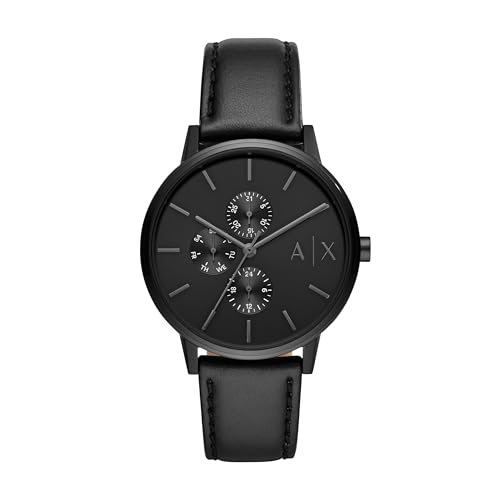
 A|X Armani Exchange Chronograph Watch for MenStandard5.51 x 5.51 x 5.51 inches0.3 poundsCheck on Amazon

What's inside
- Three Armani tiers, and why the distinction changes what you are buying
- How the range is organised: dial families before individual models
- The movement: Japanese quartz, and what that means in daily use
- Case size and thickness: reading the numbers against your own wrist
- Crystal, case materials, and finishing
- Straps, bracelets, and the lug width that decides your options later
- Water resistance: what 3, 5, and 10 ATM actually permit
- Reading the model code and the retail tag
- Choosing between the main designs: a specification led shortlist
- Fashion quartz or smartwatch: an honest fork in the road
- Warranty, authorised channels, and the official storefront question
- Common buying mistakes, and how each one is avoided
- Care, battery changes, and keeping the watch looking right
- Questions buyers ask most often
- Dial details that separate a good choice from a regret
- What to check on the day the watch arrives
- Disclosure and how this guide was put together
- Check prices on Amazon
- The short version
As an Amazon Associate I earn from qualifying purchases. This post may contain affiliate links at no extra cost to you.
An Emporio Armani men’s watch is bought first with the eyes and judged later on the wrist. The logo, the clean dial, and the polished case do the selling in a shop window, yet the details that decide whether the watch stays in daily rotation are quieter ones: how wide the case sits against your wrist bones, how thick it rides under a shirt cuff, how long the battery had already been running before the box reached you, and whether the strap can be replaced without a hunt for an unusual lug width. This guide works through those details in order, using the published specifications for the current Emporio Armani men’s range – case dimensions, movement type, crystal material, strap measurements, and stated water resistance – so that a shortlist can be built on fit and construction rather than on photography alone.
Scope matters here, because the Armani name covers more than one watch line and the differences are not cosmetic. Every watch discussed below is an Emporio Armani men’s model: a fashion dress or chronograph watch made under licence by Fossil Group. No women’s models are covered, and no other Armani label is treated as part of the range. Where a neighbouring label is named, it is named only to draw a boundary, so that a search result or a marketplace listing does not quietly pull a different product into your comparison under a similar name.
Three Armani tiers, and why the distinction changes what you are buying
Giorgio Armani sits at the top of the house. It is the main line founded by Giorgio Armani in 1975, the label attached to the highest positioned clothing and accessories, and the name under which the small number of Swiss made Giorgio Armani watches have appeared at far higher positioning than anything in this guide. Those pieces are not fashion licence products in the same sense, they are not produced in the same volumes, and they do not share the model code system described later in this article. If a listing uses the Giorgio Armani name for a quartz chronograph at a fashion watch level, that mismatch alone is a reason to read the rest of the listing with care.
Emporio Armani, launched in 1981, is the middle tier and the subject of this guide. Its emblem is the eagle logo, usually rendered on the dial in a small, restrained form and repeated on the crown or case back of many models. The watches are designed in the Emporio Armani design language – slim profiles, uncluttered dials, polished steel, black and brown leather, mesh bracelets on some references – and they are manufactured and distributed under licence by Fossil Group, the American watch group that also handles production for several other fashion houses. That licence arrangement is normal for fashion watches and it explains a great deal about the product: the movements, case construction, warranty handling, and service network all follow the Fossil Group pattern rather than a Milan atelier pattern.
Armani Exchange, often shortened to A|X, is the youngest and most youth oriented tier, launched in 1991 with a streetwear leaning and bolder, larger, more heavily branded designs. Its watches are also licence made, but they are a separate collection with separate model codes, separate design codes, and generally louder dials and cases. An Armani Exchange watch is not a cheaper version of an Emporio Armani watch in the way a smaller size might be; it is a different line aimed at a different wearer. Mixing the two in one shortlist leads to confused comparisons on size and finish, so keep the eagle logo and the Emporio Armani wording on the dial as your filter, and treat any listing that blurs the two names as a listing to leave.
The practical test is simple. Read the dial at twelve and six. An in-scope watch says Emporio Armani, carries the eagle, and carries a model code beginning with the letters AR followed by four or five digits on the case back and on the retail tag. If the dial carries a large A|X device instead, or the case back code follows a different pattern, you are looking at a different tier, whatever the seller headline claims.
How the range is organised: dial families before individual models
Emporio Armani men’s watches fall into three broad dial families, and choosing a family first narrows the field far faster than scrolling through colour variants. Colourways multiply quickly – the same case and movement may appear with a black dial on leather, a blue dial on steel, and a white dial on mesh – so counting colourways as separate watches inflates a shortlist without adding a single new decision.
Three-hand dress watches
The three-hand family is the core of the range and the closest to the house design code. A typical example shows hours, minutes, and seconds on slim baton or Roman numeral markers, sometimes with a small date window at three or six, and nothing else competing for space. Cases in this family tend toward the smaller and thinner end of the men’s range, commonly around 41 to 43 millimetres across with a profile that slips under a cuff. For a buyer who wants one watch for office wear, formal shirts, and quieter evening clothing, this is the family to start with, because the dial stays legible and the case does not fight the sleeve.
Chronograph watches
The chronograph family adds a stopwatch function, usually shown through three subdials, with a tachymeter scale printed on some bezels or chapter rings. These cases run larger, most often 43 to 46 millimetres, and thicker, because the movement and pushers need room. Two cautions belong here. First, on some fashion chronographs the subdials carry the stopwatch minutes, stopwatch seconds, and a 24-hour indicator rather than three stopwatch registers, so read the published description of the specific reference instead of assuming a layout from a photograph. Second, a chronograph that will never time anything still costs you dial space and case bulk every day, so choose it because you like the busier, sportier face, not because more dials sound like more watch.
Tonneau and shaped cases
A smaller part of the range uses a tonneau case – a barrel shaped case, wider in the middle and narrower at the ends – or other shaped cases that break from the round default. These wear differently from a round watch of the same stated width, because the stated dimension is measured across the widest point while the lugs curve away. They suit a wearer who finds round dress watches plain, but they are the hardest family to judge from a specification sheet alone, and strap choice is narrower because the case shape limits how a straight end strap sits. Treat shaped cases as a deliberate style decision, and pay extra attention to the lug width and strap form listed for that exact reference.
Within each family, Emporio Armani reuses familiar design names across seasons. Names such as Renato, Luigi, and Mario recur in the men’s collection for chronograph and three-hand designs with large Roman numerals or pronounced markers, while other references are sold mainly under their AR code with a colour and strap description. Names help you recognise a design you have seen, but the code is the identity. Two watches can share a family name and differ in case size, movement variant, or strap width from one season to the next, so every check in this guide – size, crystal, water rating, lug width – should be run against the code of the exact watch in front of you.
The movement: Japanese quartz, and what that means in daily use
Nearly every current Emporio Armani men’s watch runs on a Japanese quartz movement, most commonly a Miyota or Seiko calibre supplied through the Fossil Group production chain. Quartz means the timekeeping is regulated by a vibrating quartz crystal powered by a small silver oxide battery cell, not by a mainspring. The published accuracy for movements of this class is typically within a small number of seconds per month, far tighter than any mechanical watch at a comparable level, and the watch asks almost nothing of the wearer between battery changes.
That simplicity shapes the ownership experience. There is no winding routine, no power reserve to manage after a weekend in a drawer, and no positional variation worth thinking about. The trade-offs are equally clear. The seconds hand on most of these calibres ticks once per second rather than sweeping, the movement is a sealed unit that a service centre replaces or repairs as a module rather than a mechanism a watchmaker rebuilds part by part, and the long term value of the watch rests on design and brand rather than on movement rarity. None of that is a flaw in a fashion dress watch; it only becomes a problem when a buyer pays expecting mechanical watchmaking and receives a well finished quartz case.
Chronograph references use quartz chronograph calibres from the same Japanese movement makers. The central hand or a subdial hand handles the stopwatch seconds depending on the calibre, and the pushers above and below the crown start, stop, and reset the function. If a chronograph hand does not return exactly to zero after a reset, that is a calibration matter that the movement manual for that calibre addresses through a pusher and crown sequence, not a sign that the watch is broken. Keep the manual or download it by model code, because the reset sequence differs between calibres.
Battery life on the published figures for this class of movement is commonly around two to three years from a fresh cell, but the key phrase is from a fresh cell, not from the day you buy the watch. A watch may have been assembled, shipped, displayed, and stored with the movement running for a long stretch before sale. Some retailers pull the crown out during storage to halt the movement and save the cell, and some do not. A first battery change arriving sooner than expected is one of the most common ownership surprises in this category, and it is a storage story, not a defect story. Budget for it mentally, and treat a seller who states when the battery was fitted as a seller who understands the product.
A small number of references in the wider Emporio Armani catalogue over the years have used automatic mechanical movements, and older or limited pieces can differ from the quartz norm. That is one more reason the model code check matters: the movement type is part of the published specification for each reference, and a listing that cannot state the movement type for a coded watch is a listing that has not been written from the actual product.
Case size and thickness: reading the numbers against your own wrist
Men’s Emporio Armani cases cluster between 41 and 46 millimetres in diameter, with a few slimmer dress references at the lower edge of that span and the largest chronographs at the top. Diameter alone, though, is a poor guide to how a watch wears. Three further measurements decide the fit: the lug to lug length, which is the distance from the tip of one lug to the tip of the opposite lug and governs whether the case overhangs the edges of your wrist; the thickness, which governs cuff clearance; and the shape of the lugs, because downward curved lugs hug a smaller wrist while flat, extended lugs make the same diameter wear larger.
As a working guide drawn from the published dimensions across the range, a wrist circumference around 15 to 17 centimetres usually sits comfortably with a 41 or 42 millimetre case, a wrist around 17 to 19 centimetres can carry the 43 to 44 millimetre chronographs without the case swallowing the wrist, and the 45 to 46 millimetre references are best matched to broader wrists or to a wearer who deliberately wants a bold, oversized look. These are proportions, not rules, and a tape measure around your wrist plus the lug to lug figure of the specific reference will tell you more than any general chart. If the lug to lug length exceeds the flat width of your wrist, the strap will pull almost straight down from the lugs and the watch will feel perched, however much you like the dial.
Thickness in this range commonly falls between roughly 8 millimetres for slim three-hand dress models and 12 to 13 millimetres for chronographs. That difference is the difference between a watch that disappears under a fitted shirt cuff and one that pushes the cuff out of line. If the watch is meant for formal shirts with buttoned cuffs, hold the line at the thinner end and check the published thickness figure rather than judging from a side photograph, which flatters almost everything. If the watch is for open cuffs, knitwear, and short sleeves, thickness matters less and the chronograph bulk becomes a style asset rather than a daily irritation.
Weight follows the strap choice more than the case. The same 43 millimetre case feels light and flexible on leather and notably heavier on a full stainless steel bracelet, because the bracelet adds steel around the whole wrist. Mesh bracelets sit between the two, distributing weight evenly and adjusting finely, but they cannot be shortened link by link in the way a link bracelet can. None of these figures appears in a headline, and all of them appear in the specification table of a properly written product page, which is where your comparison should happen.
Crystal, case materials, and finishing
The standard crystal across the Emporio Armani men’s range is mineral glass. Mineral crystal is harder and more scratch resistant than acrylic, it keeps the cost of the watch in fashion territory, and it can shatter under a hard, sharp impact where acrylic would crack or flex. It is softer than sapphire, so keys, stone walls, and metal door frames can mark it over years of careless wear. That is the honest position: mineral is a sensible, expected material at this level, and a listing that promises sapphire for a standard AR coded reference should be checked against the published specification for that code, because upgrades of that kind are not how this range is built.
Cases are stainless steel in the great majority of references, offered in polished silver tone, black ion plated, gunmetal, and rose gold tone or yellow gold tone finishes. Plated and coated finishes deserve a clear eyed note. The colour layer on an ion plated case or bracelet wears at the edges and clasp first, and once it thins, the steel beneath shows through in a way that cannot be polished back to the original colour. A polished plain steel case, by contrast, can be lightly refinished. If you plan to wear the watch daily for years, plain polished steel is the forgiving choice; if the watch is an occasional piece, a black or gold tone finish will stay presentable for a long time and the colour may be the whole reason you want it.
Dial finishing is where the range earns its keep. Sunray brushed dials that shift tone as the wrist turns, matte black dials with polished markers, and blue dials with contrasting subdials are recurring treatments, and the applied eagle logo is usually kept small. Hands are typically simple dauphine or baton forms with polished facets. Lume is minimal or absent on many dress references, which is consistent with the design intent – these are not tool watches – but it does mean a three-hand dress model is a poor choice if you regularly need to read the time in the dark.
Straps, bracelets, and the lug width that decides your options later
Most Emporio Armani men’s watches ship on one of three fittings: a genuine leather strap with a pin buckle, a stainless steel link bracelet with a folding or push button clasp, or a mesh bracelet with an adjustable sliding clasp. Leather suits the dress end of the range and keeps a large case wearable, because the strap flexes where a bracelet holds its shape. Steel bracelets give the chronographs their sportier character and survive water and sweat better than leather. Mesh offers fine adjustment without tools and a clean, modern surface that pairs well with minimalist dials.
The measurement that matters for the future is the lug width: the distance between the inner faces of the lugs, which sets the width of strap the watch accepts. Common lug widths across this range include 20, 22, and 24 millimetres, with the larger chronograph cases more often taking the wider straps. That number, listed in the specification for each reference, decides whether you can later fit the wide world of standard replacement straps or whether you are limited to a narrow selection. Measure it yourself with a ruler or caliper between the lugs if a listing omits it, and never order a strap from the case diameter, because the two numbers do not move in a fixed ratio.
Some references use integrated or non-standard strap attachments, where the strap end is shaped to the case and a standard straight end strap leaves gaps or will not fit at all. Those designs look seamless when new and become a constraint when the original strap wears out, because the replacement has to come from the brand channel or from a maker who cuts that specific shape. If long term strap freedom matters to you – and for a leather strap watch worn daily, the strap is a consumable with a life of a year or two of regular wear – favour a reference with straight lugs, standard spring bars, and a common lug width, and confirm all three before buying.
Leather quality in this segment is genuine leather rather than the layered exotic materials of luxury watchmaking, and it behaves accordingly. It darkens with skin oils, softens at the holes used most, and should be kept out of water even when the watch head itself carries a higher resistance rating, because the rating belongs to the case, not to the strap. A steel bracelet removes that concern and can be rinsed, but it needs the right link adjustment: too loose and a heavy chronograph head slides toward the hand, too tight and the watch becomes uncomfortable by afternoon as the wrist swells slightly through the day. A half link or micro adjustment holes in the clasp, where fitted, are worth more than they sound.
Water resistance: what 3, 5, and 10 ATM actually permit
Emporio Armani men’s watches are published with water resistance ratings of 3 ATM, 5 ATM, or 10 ATM depending on the reference, and these numbers are widely misunderstood because the unit suggests depth. ATM stands for atmospheres of static pressure used in a laboratory test on a new watch with fresh seals. It is not a promise that the watch can be used at that depth, where movement through water raises the pressure on seals well beyond the static figure.
In practical terms, the published guidance for ratings of this kind runs as follows. A 3 ATM watch resists splashes, brief rain, and hand washing with care, and it should not be showered in, bathed in, or swum in. A 5 ATM watch tolerates showering and shallow, gentle swimming in many brand guidance tables, though hot water, soap, and steam all age the seals faster and many owners keep even a 5 ATM dress watch dry for the sake of the leather strap and the finish. A 10 ATM watch is the one in this range built with swimming and snorkelling in mind, within the limits of a watch without a screw down crown in most references. No rating in this range makes the watch a dive watch, and pressing chronograph pushers or pulling the crown while the watch is wet invites water past the seals on any of them.
Seals are perishable. The gaskets that deliver the stated rating harden and compress with age, heat, and chemical exposure from aftershave, sunscreen, and cleaning sprays. A battery change done without replacing or checking the case back gasket can quietly reduce a watch from its published rating to splash resistance only. When a battery is changed, ask for the gasket to be inspected and, where the service point offers it, for a pressure check afterwards. That small step preserves the number on the case back as a fact rather than a memory.
Also note where the rating is stated. It appears in the specification and often on the case back itself. If two listings for the same AR code state different ratings, one of them has been copied from a different reference, and that error is a useful signal about how carefully the rest of that listing was assembled.
Reading the model code and the retail tag
Every Emporio Armani men’s watch carries a model code in the form AR followed by digits – codes in the pattern of AR2434, AR2447, or AR11011 illustrate the shape, with four digit codes common on long running references and five digit codes on many newer ones. The code is stamped or printed on the case back and repeated on the swing tag and box label of a genuine retail unit. It is the single most useful string attached to the watch, because the published specification, the correct instruction manual, the strap width, and the warranty record all key off it.
A disciplined buying routine uses the code three times. First, search the code alone and confirm that the dial layout, case size, and strap in the results match the watch being offered to you; counterfeiters and careless sellers both attach codes to the wrong photographs. Second, confirm that the code on the case back of the unit you receive matches the code on its tag and box; a mismatch is a return reason on its own. Third, keep the code with your receipt, because a service centre will ask for it and because it identifies the correct battery and gasket set without opening the case.
The rest of the case back carries useful information too: the brand name, the movement type wording, the water resistance, and material markings such as stainless steel. Learn the look of a clean, evenly engraved case back, because shallow, uneven, or misspelled engraving is one of the oldest warning signs on fashion watches sold outside authorised channels. Spelling errors anywhere on the dial, case back, or packaging end the discussion – a licensed production line does not misspell its own brand.
Choosing between the main designs: a specification led shortlist
Rather than naming a single winner, our research groups the strongest buying cases by use. Each group below is defined by published specifications – case size, thickness, movement family, strap, and rating – so you can match a current reference to the group by its code and specification table, whichever colourway is in stock.
The slim office dress watch
Look for a three-hand reference around 41 to 42 millimetres, thickness at the lower end of the range, a leather strap or mesh bracelet, and a dial with baton markers and a date window. This is the watch for suits, blazers, and fitted cuffs. It should carry at least a 3 ATM rating, which is enough for the weather and hand washing of a working day. Roman numeral variants in this group read more formal and traditional, while plain baton dials read more modern and pair more easily with casual clothing after hours.
The steel chronograph as a statement piece
Look for a chronograph reference at 43 to 46 millimetres on a link bracelet, with three subdials and a tachymeter scale if you like the technical look. Check the lug to lug length against your wrist before anything else, because this group contains the references most often bought too large. A 5 ATM rating is common here and suits an active day better than a leather strapped dress model. This group also makes the clearest contrast with a digital alternative: a reader weighing a fashion chronograph against the field covered in best mens smartwatches is really choosing between a watch bought as an object and a device bought as a tool, and the wrist can only carry one of them at a time.
The black on black evening watch
Black ion plated cases with black dials recur through the range, on leather, silicone on some sportier references, and black bracelets. The look is sharp and deliberately monochrome, with legibility as the known compromise: black hands on a black dial read well in good light and poorly in dim rooms. Choose this group for the look with open eyes, remember the plating wear note from the materials section, and prefer it as a second watch rather than an only watch if you often need the time at a glance in low light.
The blue dial middle ground
Blue sunray dials on steel, in both three-hand and chronograph layouts, are the most versatile corner of the range. Blue reads as colour without shouting, works with navy and grey clothing that dominates many wardrobes, and hides minor dial reflections better than gloss black. If a single Emporio Armani watch has to cover office, weekend, and evening, the published specification to chase is a blue dial reference around 42 to 43 millimetres, on a bracelet that can be swapped for leather later thanks to a standard lug width.
The tonneau for a smaller or more particular wrist
A tonneau case can suit a slimmer wrist better than its width suggests, because the case narrows toward the lugs and the effective lug to lug span shrinks. The checks are stricter here: confirm the strap form, because shaped cases more often use fitted strap ends, and confirm the thickness, because some shaped designs sit higher than their round equivalents. For a buyer who already owns a round dress watch, this group offers a second silhouette rather than a duplicate.
Notice what none of these groups depends on: a star score, a headline discount, or a claim about how a watch felt on a wrist that is not yours. The groups depend on measurements and materials that you can verify from the published record for each code, and that is deliberate. Fashion watches are sold hard on imagery, and the specification table is the one part of a product page that imagery cannot improve.
Fashion quartz or smartwatch: an honest fork in the road
Many men reach this range while also considering a smartwatch, and the two products overlap only in the space they occupy on the wrist. An Emporio Armani quartz watch tells the time and, in chronograph form, times an interval. It does not count steps, show messages, or track sleep, and it will run for years on coin sized cells with no charging cable in sight. A smartwatch inverts every one of those points. The round up at best all around smartwatches shows how broad the connected category has become, and the training focused options at best activity smartwatches go further still into sport metrics that no fashion watch attempts.
The deciding questions are about your day, not about specifications. If you already carry a phone everywhere and dislike notifications on your body, a quartz dress watch adds calm and a finished look to formal clothing that a glowing screen cannot match. If you train with heart rate zones, navigate from the wrist, or pay with a tap, the fashion watch will sit in a drawer on exactly the days those features matter, and the comparison at best running smartwatches is the more relevant reading. Some wearers keep both and rotate by occasion, which works well precisely because the two products do different jobs. What does not work is buying a fashion chronograph while expecting it to behave like a connected device, then blaming the watch for a category difference that was visible before purchase.
Battery expectations underline the divide. A quartz Emporio Armani asks for a cell change every few years; a smartwatch asks for a charge every day or few days and its battery ages with every cycle.
Warranty, authorised channels, and the official storefront question
Emporio Armani watches sold through authorised channels carry a manufacturer warranty administered through the Fossil Group network, with a two year international warranty being the standard term published for the brand in most markets. The warranty covers manufacturing defects in the movement and materials under normal use. It does not cover the battery as a consumable in most terms, nor strap wear, nor crystal breakage from impact, nor water damage in a watch used beyond its rating or with aged seals. Keep the stamped or digitally recorded warranty document and the receipt together, because service centres ask for proof of purchase date to place a claim inside the term.
Authorised channels include the brand’s own boutiques and official online store, department stores and jewellers listed as authorised retailers, and the official brand storefronts that Fossil Group and the brand operate on major retail platforms. That last point needs care, because a platform listing that borrows brand imagery is not the same thing as the official storefront. Check the seller name on the listing against the brand’s own store locator or official store page, check that the model code, specification, and warranty wording match the published record, and be wary of a listing that offers an international warranty card blank or unstamped from a seller who is not an authorised dealer.
Service follows the same network. Battery changes, gasket replacement, bracelet adjustment, and warranty assessment are handled through brand service centres and authorised retailers, and a straightforward battery change at an authorised point has the added value of the seal check described earlier. Independent watch shops can also change a quartz cell competently, but a watch still inside its warranty term is usually better taken through the authorised route so that the record stays clean.
Common buying mistakes, and how each one is avoided
Buying grey market without pricing the risk
Grey market watches are genuine products sold outside the authorised network, often imported across markets. The watch itself may be identical, but the warranty may not be honoured in your market, the box and papers may be incomplete or from another region, and the route back to the seller in a dispute is weaker. A grey purchase can be a rational choice for an informed buyer who has verified the code, the seller history, and the returns process. It becomes a mistake when the buyer assumes the full authorised warranty and service experience is included, and discovers the difference only when a fault appears. Read the warranty statement on the specific listing, not the brand’s general warranty page, because the listing is what binds your seller.
Accepting a dead or dying battery as normal and ignoring it
A watch that arrives not running, or that stops within months, is usually carrying a cell that spent its life on display or in storage. The mistake is to leave a dead cell inside the case for a long period, because an exhausted cell can leak and damage the movement it sits in. Have a stopped watch opened promptly, the cell replaced, and the movement checked. The same logic applies to a watch you stop wearing: a stored quartz watch should either be kept running and checked, or have its cell removed by a service point before long storage.
Choosing case size from a photograph
Product photographs are shot close, lit flat, and shown without a wrist for scale, and wrist photographs in listings are taken on wrists that may be much broader or narrower than yours. The recurring result is a 46 millimetre chronograph bought for a 16 centimetre wrist, worn for a week, and then kept in a drawer because the lugs overhang and the crown digs into the back of the hand. Measure your wrist, note the lug to lug figure, and cut a paper template of the case outline if you are ordering unseen. Two minutes with paper and scissors prevents the most common return in this category.
Confusing the tiers at the point of payment
Search results, marketplace categories, and even some shop menus place Emporio Armani and the younger exchange label side by side under a shared Armani heading. Buyers who shop by headline alone can pay Emporio money for a different tier’s product, or dismiss a genuine Emporio reference because a neighbouring listing looked cheaper. The dial wording and the AR code settle the question in seconds. Make that check the last thing you do before paying, on the actual unit or listing in front of you, not on a similar one you viewed earlier.
Assuming the strap in the photograph is the strap you will live with
Leather colour deepens, white stitching soils, and a bracelet that looked bright in studio light shows desk scuffs on the clasp within weeks. None of this is a defect, but buyers who choose a watch for a pristine strap photograph can feel let down by ordinary wear. Choose the case and dial first, treat the strap as a replaceable component, and confirm the lug width so that a replacement in a different colour or material is an easy order rather than a research project.
Treating the water rating as a lifetime guarantee
As the seals section explained, the rating describes a new watch in a laboratory. A five year old watch that has had two battery changes without gasket work does not necessarily still meet the number on its case back. The mistake is swimming in an older dress watch on the strength of an old specification. If water use matters to you, have the watch pressure checked, or keep the fashion watch dry and use a dedicated sports watch in the water.
Care, battery changes, and keeping the watch looking right
Daily care for a fashion quartz watch is light but not zero. Wipe the case and crystal with a soft, dry or slightly damp cloth to remove skin oils and dust, and keep the watch away from prolonged contact with perfume, aftershave, and hair products, which attack plated finishes and leather. Store the watch away from strong magnets, such as bag clasps and speaker drivers; quartz movements are less magnet sensitive than mechanical ones, but a strong field can still disturb the stepping motor on some calibres, and distance costs nothing.
Rotating leather straps between wears extends their working life. If you sweat heavily in summer, a bracelet reference or a second strap for warm months extends the life of the leather considerably. Steel bracelets benefit from an occasional wash in lukewarm water with a drop of mild soap, worked gently with a soft brush between the links, then dried thoroughly – but only when the watch head rating and seal condition justify water contact, and never as a soak for a 3 ATM dress model.
When the seconds hand begins to jump in multi second steps on a calibre fitted with an end of life indicator, or the watch stops outright, the cell is due. Note the date of each battery change on the warranty card sleeve or a note in the box; a simple record turns the next change from a surprise into a schedule, and it helps a service centre judge whether an early stop points to a movement fault rather than a cell at the end of its life. If a freshly fitted cell runs down again within months, that pattern does suggest a movement or circuit drain, and it should be assessed under warranty if the term is still running.
Polishing deserves restraint. A polished case shows hairline marks quickly, and each polish removes a small amount of metal or, on a plated case, a small amount of the finish itself. Light cloth work at home is safe; repeated machine polishing to chase a mirror finish will soften case edges and shorten the life of coated references. Most owners are better served by accepting fine hairlines as the normal record of a watch that is actually worn.
Questions buyers ask most often
Is an Emporio Armani watch a real Armani product?
Yes, in the specific sense that matters for a purchase: it is an official product of the Emporio Armani line, designed under the brand and produced under a Fossil Group licence. It is not a Giorgio Armani main line product and it is not made in the same way or at the same level, and it should not be priced or judged as though it were. Within its own category – licensed fashion watches – it is one of the long established names, with a service and warranty network to match.
How long should the battery last?
For the Japanese quartz calibres fitted across this range, makers commonly publish an expected cell life in the region of a couple of years, stretching toward a third year in lighter use. The cell in a newly bought watch may not be fresh, because the watch may have run during shipping and display, so a shorter first interval is common and is not by itself evidence of a fault. A second short interval in a row is worth a service visit.
Can the strap be changed for a different style?
On references with standard straight lugs and spring bars, yes, and the lug width in the specification tells you which strap width to order. A leather strapped dress watch can take a mesh or steel bracelet of the correct width, and a bracelet watch can take leather, as long as the strap ends are standard. References with integrated or shaped strap ends are the exception and need a strap made for that case form.
Which size should a first time buyer choose?
Start with the middle of the range rather than the extremes. A 41 to 43 millimetre three-hand or slim chronograph reference suits the widest span of wrist sizes and clothing, slips under most cuffs, and avoids the overhang problem that ends many large watch purchases. Move up to 44 to 46 millimetres only when your wrist measurement and a paper template both say the case will sit within the width of your wrist.
Does a higher ATM rating make one model better than another?
No. It makes it more suitable for water exposure, and nothing more. A 3 ATM dress watch with the right case size, a standard lug width, and a dial you enjoy looking at is a better purchase for office wear than a 10 ATM model that is too large for your wrist. Match the rating to your habits – rain and hand washing, showering, or regular swimming – and then choose on fit and design among the models that clear that bar.
Dial details that separate a good choice from a regret
Two dials with the same case and movement can age very differently in your affections, and the reasons are in small printed and applied details. Marker style is the first. Applied metal batons catch light and stay crisp at an angle, printed markers sit flatter and read more quietly, and full Roman numerals give the traditional Renato and Luigi style references their formal character while crowding a smaller dial sooner than batons would. On a 41 millimetre dial, twelve Roman numerals plus a date window plus a logo is a great deal of furniture; on a 44 millimetre chronograph dial, the same numerals have room to breathe. Match the marker density to the case size you have already chosen, rather than falling for a numeral dial photographed at an enlargement no wrist will ever see.
Hand length is the second detail, and it is rarely discussed. On a well proportioned dress reference the minute hand should reach close to the marker track it points at; a visibly short hand makes quick reading harder and the dial look unfinished. Date windows deserve the same scrutiny. A window at three o’clock that replaces a marker keeps symmetry only if the dial balances it elsewhere, a window at six preserves the three o’clock marker and suits round dials neatly, and a white date wheel behind a black dial will draw the eye every time you glance down. None of these points appears in a headline specification, yet all of them are visible in a clear, straight on dial photograph, which is the one image worth studying closely before you buy.
Colour behaviour in real light is the third. Sunray blue and grey dials change character between office lighting and daylight, sometimes dramatically, while matte white and silver dials stay closest to their photographs.
What to check on the day the watch arrives
Set aside ten unhurried minutes before the returns window starts to feel short. Confirm the AR code on the case back against the tag and the box. Set the time and date, and note whether the date changes near midnight rather than near midday, which would simply mean the hands sit twelve hours out of phase. Run the chronograph, if fitted, through a full start, stop, and reset, and watch each hand return to its mark. Check that the crown screws or pushes home fully and that the strap or bracelet clasp closes with a positive action along its whole adjustment range. Look along the crystal under a lamp for chips at the edge, and look at the dial through the glass for dust or a misaligned marker.
Disclosure and how this guide was put together
This guide was assembled from published material: manufacturer specifications for case dimensions, movement type, crystal, strap measurements, and water resistance, together with the brand’s published warranty and care information. No product handling, wear trial, or bench measurement stands behind any statement in it, and where a figure varies between references, the guide says so and points you to the specification for the exact model code. This site is supported by referral fees paid by the retailer when a reader buys through a link on the page; that arrangement does not change which specifications are reported, and a model with weaker published figures is described as weaker regardless of any commercial relationship.
Check prices on Amazon
Live listings for the shortlist in this guide are pulled from Amazon below, so prices and availability are always current at the moment you look.


The short version
Filter by the eagle and the Emporio Armani dial wording, pick a dial family before a colour, let your wrist measurement and the lug to lug figure choose the case size, favour standard lug widths for future straps, read the ATM rating as a description of a new watch rather than a lifetime promise, verify the AR code in three places, and buy through a channel whose warranty you have actually read. A watch chosen that way is chosen on evidence that survives the unboxing. For the man who measures his cuff, his wrist, and his expectations before he measures a dial against a photograph, the right Emporio Armani is the one whose numbers he checked twice and whose face he still wants to see on an ordinary Tuesday.


