What's inside
- Where to buy
- Key Takeaways
- Quick Picks
- How did we grade cases whose main material cannot breathe?
- What does glass actually cost in degrees, and when is the price fair?
- How do the best all-glass PC cases compare side by side?
- How do you build and cool an all-glass case so it stays beautiful and alive?
- How should a glass case be moved, shipped or stored without drama?
- Which mistakes turn glass cases into cautionary tales?
- How does living with glass change across a year of seasons?
- What should a first-time glass builder know about cables and component colours?
- Final Recommendation
- Frequently Asked Questions
- When is a hybrid honestly the better purchase than true all-glass?
- Related Guides
As an Amazon Associate I earn from qualifying purchases. This post may contain affiliate links at no extra cost to you.
gizmoverdict.com is reader-supported. When you buy through links on our site, we may earn an affiliate commission.
Where to buy
The best all glass pc cases promise the most seductive object in computing — a machine with nothing to hide, components suspended in a vitrine — and they charge for the promise in the only currency a case can mint: air. This guide will sell you the dream honestly, which means its first act is a correction. True all-glass designs, with tempered glass across both the front and the side, exist and appear below as prose-only routes, because our verified pool currently contains no such case with a confirmed listing. What the pool does contain are two superb hybrids whose glass we describe with surveyor’s precision: the Fractal North TG Dark, whose left side panel is dark-tinted tempered glass while its front is walnut slats over open intake, and the Lian Li LANCOOL 216, whose left side is tempered glass while its front is breathing mesh. Neither is an all-glass case, and this guide will not call them that. They are here because most readers searching this phrase actually want the visible-build experience with thermals that survive the summer — and because the honest map of this category is a spectrum from those hybrids to the full aquariums, with a price in degrees at every step.
A note on vocabulary before the tour begins, because this category’s listings abuse it more than most. “Full view”, “panoramic”, “showcase” and “frameless” are marketing adjectives, not measurements; the measurements are the ones this guide insists on — which panels, of what material, in what tint, with air entering where. A listing that will not state its panel materials plainly is telling you something about the panels. Every description below therefore begins from the physical inventory rather than the poetry, and readers shopping beyond this guide should hold every other seller to the same standard: name the glass, or assume the glass is the least interesting thing about the case.
So let the bargain be stated in plain numbers of panels rather than prices. Every glass surface is a surface that cannot breathe. A side window costs a little air; a glass front costs the intake itself, and the full aquarium designs repay that cost with engineering — side and bottom intakes, chambered layouts, fans arranged like a wind tunnel wearing a display case as a disguise. The best of them, mapped below, genuinely work. The worst of them, which this guide excludes, are ovens with good photography. Read the picks as positions on that spectrum, note exactly which panels are glass on every single one, and choose the point where your hardware’s heat and your room’s admiration strike their personal balance. That balance, not the glass count, is the actual product being bought.
Key Takeaways
- All-glass means glass front and glass side; anything less is a hybrid, and this guide labels hybrids as hybrids.
- Our pool’s two linked picks are hybrids — glass on the left side only — and their fronts (walnut, mesh) are exactly why they run cool.
- True aquariums survive thermally by moving intake to the side, bottom and rear; a glass-front case without that engineering is an oven.
- Glass shows everything: cable discipline, dust and component colour-matching stop being hobbies and become the build.
- Dark-tinted glass forgives mixed component colours; clear panoramic glass forgives nothing at all.
- Tempered glass is strong in its face and fragile at its edges — handling and desk placement are part of the specification.
- A hybrid bought knowingly beats an aquarium bought accidentally, every summer of the machine’s life.
- Measure the desk and the doorway before the design: the window must face the room and the intakes must face open air.
Quick Picks
| Pick | Badge | Why it earns its place |
|---|---|---|
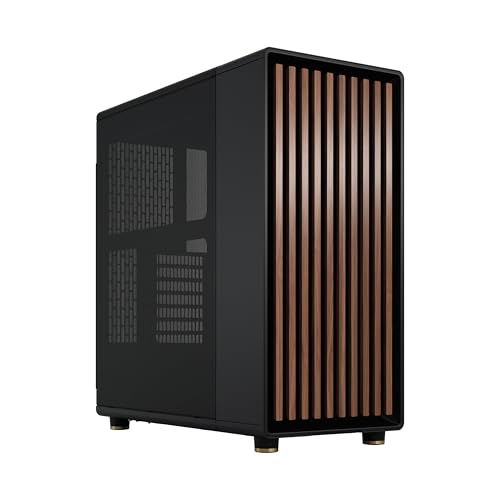
| Fractal Design North Charcoal TG Dark | The honest hybrid — linked | Tempered glass on the left side only; the walnut front still breathes, so the display costs almost nothing in degrees. |
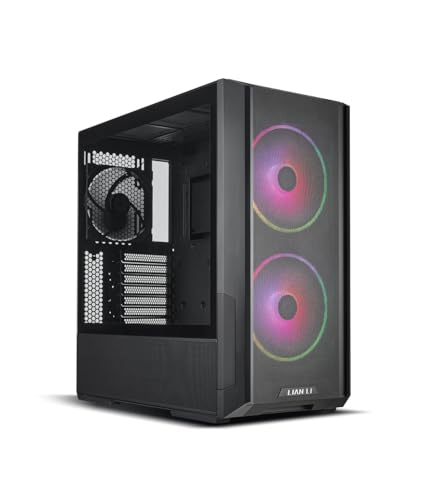
| Lian Li LANCOOL 216 RGB | The performance hybrid — linked | A tempered glass left side behind a fully meshed, twin-160mm-fan front — the window without the oven. |
| Lian Li O11-class dual-chamber | The original aquarium — prose-only | Glass front and side meeting at a frameless corner, with the PSU exiled to a rear chamber so the view stays architecture. |
| Hyte Y-series panoramic class | The cornerless showcase — prose-only | A wraparound glass corner that erases the pillar between front and side, built for vertical GPUs and exhibition builds. |
| NZXT H9-class dual-glass | The mainstream aquarium — prose-only | Glass front and side with a perforated top and a layout the average builder can actually cable-manage beautifully. |
| Corsair/Phanteks panoramic class | The wide-angle room — prose-only | Panoramic glass with reverse-blade fan ecosystems designed to be looked at as much as cooled through. |
How did we grade cases whose main material cannot breathe?
By refusing to grade the glass and grading everything around it instead. A glass panel is a known quantity — inert, flat, honest about what it is — so the engineering questions all live elsewhere: where does the air enter, along what path does it cross the graphics card, and where does it leave? Designs that answer with a relocated intake architecture — fans drawing from the side beside the motherboard, from the bottom beneath the card, exhausted through a perforated top — earned full consideration, because they treat the aquarium as a wind problem to be solved rather than a photograph to be staged. Designs whose intake story was a slit and a hope were excluded, however famous their silhouettes. We also graded the interior as an exhibit, because in this category it is one: cable channels, grommet placement, the PSU’s exile or concealment, and the colour of the chassis’s inner surfaces all decide whether the glass reveals a composition or a confession.
Finally, we graded candour — ours. The two linked picks are labelled hybrids in their table rows, their detailed sections and their specification lists, with the glass’s exact location stated every time, because a reader who buys a North believing its front is glass has been failed by somebody, and it will not be us. The prose-only aquariums are described as classes rather than linked as products for the mirror-image reason: they are the genuine all-glass article, and until our pool verifies a listing for one, they are mapped as destinations with inspection notes rather than sold as links. Between those two honesties — what the linked cases are, and what the true aquariums require — a reader can locate their own point on the spectrum with their eyes open, which is the only way glass should ever be bought.
What does glass actually cost in degrees, and when is the price fair?
It helps to picture the three architectures as three different contracts with physics. The hybrid signs the gentlest: glass where eyes go, mesh where air goes, and no clause surprises anyone. The dual-chamber aquarium signs the cleverest: it moves the entire power and cable apparatus out of the visible room and pays its air bill through walls the audience never watches — the side bank and the floor. The panoramic signs the boldest: it removes even the corner that used to separate the audience from the stage, and pays for the gesture with the strictest maintenance and handling terms in the category. None of these contracts is a trick. But they are contracts, and the rest of this section exists so that nobody signs one believing it was another.
The cost depends entirely on which panel surrenders. A glass side panel replaces what was, in a traditional case, a solid steel sheet that contributed nothing to airflow anyway — so a well-designed glass-side case with a mesh front, like our linked LANCOOL 216, pays essentially nothing for its window; the intake and exhaust architecture is untouched. The bill arrives with the glass front. A front panel is where a performance case drinks its air, and sealing it means the design must either sip through side slits — the classic oven recipe, adequate for office hardware and dishonest for gaming loads — or relocate its drinking entirely, as the aquarium class does, to side, bottom and rear intakes with the fans to match. Those relocations work, but they change the build’s physics in ways owners feel: bottom intake means the case wants hard floors and clearance, side intake means the desk’s wall side matters, and dust arrives from new directions that filters must be arranged to meet.
When is the price fair? When the build’s purpose includes being seen — a streamer’s backdrop, a desk’s centrepiece, a machine whose owner composes interiors the way others compose photographs — and when the hardware’s heat is either modest or matched by an aquarium design engineered for it. The price is unfair, always, when it is paid unknowingly: when a sealed-front case is bought for a flagship card because the listing’s photograph was beautiful, and the discovery is made across a summer of throttling. This guide’s spectrum exists to make the payment a decision. The hybrids charge almost nothing and show almost everything. The aquariums charge engineering, money and maintenance, and show absolutely everything, from two angles, without a frame. Both are legitimate purchases. Only one of them can be made by accident.

Fractal Design North Charcoal TG Dark — The honest hybrid
Precisely one panel of this case is glass, and it is the correct one. The left side — the side a desk presents to the room — is tempered glass with a dark tint, while the front remains the North’s signature walnut slats over an open intake, and the rest of the chassis is charcoal steel. The result is the display experience at a fraction of the aquarium’s thermal price: the components compose themselves behind smoked glass like objects in a gallery vitrine, the timber keeps the object furniture-calm in a living room, and the front keeps breathing the way a front should. The tint deserves its own praise as an aesthetic instrument. It deepens blacks, gentles the colour disagreements between components bought in different years, and makes modest interior lighting look deliberate — while requiring that lighting, since an unlit build behind dark glass is a shape in a cave.
Its limits are stated as precisely as its glass. There is no glass front and no wraparound corner, so the two-angle aquarium reveal is not on offer; the view is a portrait, not a panorama. Sustained heavy loads will run warmer here than in the mesh edition of the same case, because a glass side cannot contribute the breathing a mesh side does — for a rendering workstation, that sibling remains the right North. And the walnut’s warmth commits the build’s palette: cool-toned, blue-lit interiors fight the timber, where warm and neutral compositions settle beside it like they were chosen together, because they were. As the entry point to visible builds — the case for the reader who wants the window without reorganising their thermal life around it — nothing in this guide makes the case more persuasively.
- Form factor: ATX mid-tower
- Glass location: left side panel only — tempered, dark tint
- Front: real walnut slats over open intake (not glass)
- Cooling character: front-intake led; modest thermal cost for the window
- Interior: composed, cable-tidy Fractal layout
- Palette: charcoal, smoked glass, warm timber
Strengths
- The display experience at a near-zero thermal price.
- Dark tint unifies mixed component colours into one composition.
- Walnut front keeps it welcome in rooms aquariums would alarm.
Trade-offs
- One glass panel only — a portrait view, not a panorama.
- Warmer than its mesh sibling under sustained heavy loads.
- Needs interior lighting to justify the tinted glass.
Best for: living-room display builds that refuse the aquarium bargain. Not suited for: panorama seekers or sustained rendering workloads.

Lian Li LANCOOL 216 RGB — The performance hybrid
If the North is the hybrid as furniture, the LANCOOL 216 is the hybrid as engineering argument: a tempered glass left side — again, the side only, stated plainly — behind which sits one of the best-ventilated interiors in its class, fed by a front that is entirely mesh and two 160mm ARGB fans. The glass here costs nothing measurable, because the case never asked the side to breathe in the first place; its air enters through the front in volumes the sealed aquariums cannot approach, crosses the components on a short, honest path, and leaves. The window is, thermally speaking, free. What the 216 proves — and why it anchors this guide beside the North — is that the visible-build experience and flagship-grade cooling stopped being opposites the moment designers let the front be mesh and the side be glass, rather than insisting both be either.
The display it offers differs from the North’s in temperament. Where the tinted Fractal composes a dusk, the 216 presents a lit stage: clear glass, big glowing fans visible through the mesh front as lanterns, an interior meant to be seen in colour. Its cable channels and tray layout respect the window’s demands, and its reconfigurable airflow layout lets a builder privilege the graphics card’s fresh air or the processor’s, a flexibility the aquariums spend far more money achieving. The debits are genre debits: it reads as a gaming object in any room, its signature fans are an unusual size to replace, and owners who later tire of light can dim it but cannot make the case into furniture. Within its premise, though, it is close to a refutation of this entire category’s anxiety — proof that a buyer can have the window, the glow and the thermals, provided they let the front panel do the breathing and stop asking glass to do anything but be looked through.
- Format: ATX mid-tower
- Glass location: the left side panel only — tempered, clear
- Front: full mesh with two 160mm ARGB fans (not glass)
- Cooling character: among the strongest airflow in this guide
- Interior: display-ready, reconfigurable airflow layout
- Palette: black with full-spectrum addressable light
Strengths
- A glass window with no thermal bill attached.
- Enormous front fans glow like lanterns and cool like equipment.
- Interior discipline worthy of the clear glass it wears.
Trade-offs
- Side glass only — the front is mesh, not a second window.
- Unmistakably a gaming aesthetic in shared rooms.
- Signature fans are an uncommon size for like-for-like swaps.
Best for: gamers and streamers who want the window and the thermals. Not suited for: panorama purists or furniture-first rooms.
Lian Li O11-class dual-chamber — The original aquarium
Every all-glass case since owes this class its existence. The O11 formula rearranged the PC’s furniture before it glazed it: the power supply and drives exile to a second chamber behind the motherboard tray, the main chamber becomes an empty stage, and then the front and side panels are replaced with tempered glass meeting at a corner pillar so slim the two panes read as one continuous window. Air, denied the front, is recruited from the side — a bank of fans beside the motherboard drinking through a vented panel — and from the bottom, exhausting through the top, a vertical river of air that crosses the graphics card on its way. Properly fanned, the design does not merely survive its glass; it cools with a theatrical competence that silenced the first generation of sceptics. This class is prose-only in our guide because our pool holds no verified listing for it — hunt it through normal retail channels, where it remains a living product line with several sizes and revisions.
Buying into the class means buying its disciplines. The stage is empty, which means everything you place on it is exhibited: the cable run to the graphics card, the cooler’s silhouette, the colour of every connector. Owners budget for sleeved cables and matched fans the way aquarium keepers budget for lighting, because the case makes those things structural. The fan count is the other honest cost — the glass ships as a shell, and the wind river requires a fleet of fans that the purchase price does not include, a fact first-time buyers discover with the panels already off. Revisions multiply across the line’s long life, differing in fan support, front I/O and chamber dimensions, so the exact model’s manual is part of the purchase. Meet those terms and the O11 class remains what it has been since it redraw the map: the definitive aquarium, the case that made glass a genre.
- Form factor: dual-chamber ATX (class description)
- Glass location: front and left side, tempered, meeting at a slim corner
- Air path: side and bottom intake, top exhaust — no front intake
- Interior: PSU exiled to rear chamber; main chamber is a stage
- Fans: typically not included — budget a full fleet
- Buying note: revisions differ widely; buy the exact model’s manual facts
Strengths
- The frameless corner view that defined the aquarium genre.
- Dual-chamber layout hides PSU and cables by architecture, not effort.
- Vertical airflow path cools flagship hardware genuinely well.
Trade-offs
- Fans are an additional, substantial purchase on top of the shell.
- The empty stage exhibits every cable sin in high definition.
- Bottom intake wants hard floors and clearance beneath.
Best for: exhibition builds and custom-loop showcases. Not suited for: buyers expecting fans in the box or cables out of mind.
Hyte Y-series panoramic class — The cornerless showcase
Where the O11 class slimmed the corner pillar, this class abolished it. The Y-series design wraps a single panoramic sweep of tempered glass around the front corner of the case, so the interior is visible from the front and the side in one unbroken gaze — a design that treats the PC less like furniture with a window and more like a product on a launch stage. The composition is completed by a graphics card mounted vertically as standard theatre, displayed like a sculpture on its riser, and by a chassis architecture that, like the dual-chamber school, hides the power supply and cable mass behind the scenes. Air arrives from side and bottom intakes engineered into the design from the first sketch rather than apologised for later, and the better models in the class cool with the same vertical-river competence as their dual-chamber cousins.
The class’s demands are the aquarium’s demands at their most concentrated. A cornerless window is the least forgiving surface in computing: it shows dust from two directions, fingerprints from every handling, and any component whose colour or cable offends the composition, with no pillar to hide behind and no tint to soften the verdict. The vertical GPU presentation, while gorgeous, should be checked against the specific card’s cooler — some partner designs breathe best in the traditional orientation, and a riser-mounted card sits close to the glass by design. Availability and sizing vary across the class’s models, and the panoramic panel itself is a replacement part you never want to price, which argues for a desk position chosen like a gallery’s. For the builder whose machine is the room’s artwork and whose maintenance habits are a curator’s, no other shape in this guide competes.
- Form factor: panoramic ATX showcase (class description)
- Glass location: continuous wraparound across front corner and side
- Air path: side and bottom intake, engineered-in from the design stage
- Interior: vertical GPU presentation is the centrepiece
- PSU/cabling: concealed behind the motherboard chamber
- Buying note: verify your card’s cooler suits vertical mounting
Strengths
- The most dramatic view in the category — no corner, no frame.
- Vertical graphics presentation turns the card into sculpture.
- Cooling architecture designed for glass from the first sketch.
Trade-offs
- The least forgiving surface for dust, prints and colour clashes.
- Vertical mounting does not suit every graphics cooler equally.
- The panoramic panel is a part you must never need to replace.
Best for: curator-grade showcase builds and streaming backdrops. Not suited for: low-maintenance owners or horizontal-card traditionalists.
NZXT H9-class dual-glass — The mainstream aquarium
Not every aquarium buyer wants a stage; some want a well-made room with glass walls, and that is this class’s proposition. The H9 school pairs a tempered glass front with a glass side in a more conventional single-chamber layout than the dual-chamber designs, keeping the power supply in a basement shroud rather than a separate chamber and relying on a perforated top and side intake to keep the interior breathing. The effect is less theatre, more architecture — the build visible from two sides, the proportions familiar, the whole object calmer beside a desk than its panoramic cousins. For the mainstream builder graduating from a first glass-side case, this class is the natural next step: the full all-glass experience without the dual-chamber’s fan fleet or the panoramic’s curatorial demands, at prices that leave budget for the components being displayed.
Its compromises live where its conventionality lives. A basement shroud hides cables less completely than a rear chamber, so the visible interior rewards the same cable discipline while offering fewer places to cheat. The glass front still closes the traditional intake, so the side and top paths must be populated thoughtfully — fan positions are provided generously in this class, but a build that leaves them empty has bought a window and declined the ventilation that makes it habitable. Variants within the class differ in how much perforation and fan support they offer under similar names, so the specific model’s airflow story deserves reading before the order, exactly as with every case in this guide. Chosen knowingly and fanned properly, the H9 class is the aquarium for people whose lives contain other hobbies — glass everywhere it flatters, engineering everywhere it must be.
- Form factor: ATX mid-tower, single chamber (class description)
- Glass location: front and left side, tempered
- Air path: side intake and perforated top; front is sealed glass
- Interior: PSU basement shroud rather than a rear chamber
- Fans: generous positions; populating them is the owner’s job
- Buying note: variants differ in perforation — read the exact model
Strengths
- Full all-glass presence in a familiar, buildable layout.
- Calmer proportions than the panoramic showcases.
- Pricing leaves budget for the components on display.
Trade-offs
- Shroud hides cables less completely than a dual chamber.
- Sealed front makes side/top fan choices load-bearing.
- Similar names hide meaningfully different airflow variants.
Best for: mainstream builders graduating to full glass. Not suited for: anyone planning to leave the fan positions empty.
Corsair/Phanteks panoramic class — The wide-angle room
The newest school in the aquarium family widens the lens. These panoramic designs — Corsair’s dual-chamber entries and Phanteks’ NV school are its best-known dialects — stretch glass across front and side with the explicit intention of displaying not just the components but the cooling itself: ranks of fans, often reverse-bladed so their pretty faces point inward without strangling the airflow, become part of the exhibited composition. The engineering is the mature aquarium pattern, side and bottom intake beneath a vertical exhaust, executed with the fan ecosystems of two companies that treat lighting synchronisation as a native language. If the O11 class invented the aquarium and the Y class removed its corner, this class furnishes it — the view is wider, the interior more deliberately staged, the whole object aimed at the desk that wants a landscape rather than a portrait.
The costs scale with the ambition. Fan ecosystems are ecosystems: the full effect wants matched fans in numbers that belong in the budget from the start, ideally from the same family as the case’s own lighting language, and mixing brands across the visible ranks shows immediately through glass this wide. The cases themselves are broad objects that claim desk territory a mid-tower never would, and their interiors, being landscapes, demand composition across a wider canvas — a small motherboard or a short graphics card can look lost in the acreage. Replacement glass, cable discipline and dust all follow the aquarium rules already established in this guide, at panoramic scale. For the right build — large, matched, deliberately lit — this class is the current summit of the all-glass idea. For a modest build in a wide case, it is a frame in search of a painting, and the hybrids at the top of this guide will serve it better.
- Form factor: wide dual-chamber ATX (class description)
- Glass location: panoramic front and side, tempered
- Air path: side and bottom intake, top exhaust, fan-forward design
- Interior: built to exhibit matched fan ranks as part of the view
- Lighting: vendor ecosystems; matched fans strongly advised
- Buying note: budget the full fan fleet with the case, not after it
Strengths
- The widest, most staged view the category currently offers.
- Cooling displayed as part of the design, not hidden by it.
- Mature vertical airflow beneath the panorama.
Trade-offs
- Matched fan fleets are a serious second purchase.
- Broad footprint claims serious desk territory.
- Modest builds look lost inside the acreage.
Best for: large, matched, exhibition-grade builds. Not suited for: compact desks or component budgets already stretched.
How do the best all-glass PC cases compare side by side?
| Case / class | Glass, exactly | How it breathes | Maintenance burden | Buy it when |
|---|---|---|---|---|
| Fractal North TG Dark (linked) | Left side only, dark tint | Walnut front intake | Low — one panel, forgiving tint | You want the window without the bargain |
| LANCOOL 216 RGB (linked) | Left side only, clear | Full mesh front, twin 160mm fans | Low–moderate | You want glow and flagship airflow together |
| O11-class dual-chamber | Front + side, slim corner | Side/bottom intake river | High — fan fleet, staged interior | The build is an exhibition |
| Hyte Y-class panoramic | Wraparound corner + side | Side/bottom intake | Highest — nothing is hidden | The machine is the room’s artwork |
| NZXT H9-class | Front + side | Side intake, perforated top | Moderate–high | You want full glass, mainstream manners |
| Corsair/Phanteks panoramic | Panoramic front + side | Side/bottom intake, fan ranks | High — matched ecosystem care | The build is large and deliberately staged |
One pattern in that table rewards a second look: the maintenance column climbs in near-perfect step with the glass column, and it does so for a reason that has nothing to do with fragility. Glass is transparent to admiration and to evidence alike — the same pane that displays a composed interior displays the dust settling on it, the cable that slipped its channel in March, the fan whose lighting has drifted a shade from its neighbours. Steel forgives by hiding; glass instructs by showing. Owners who experience that instruction as care stay in love with the category for a decade. Owners who experience it as nagging sell the case within the year and buy mesh, and both responses are rational — which is why this guide keeps asking about habits with the same seriousness it asks about hardware. The case you can maintain is the case that stays beautiful, and no specification sheet prints that row.
Read the glass column as a contract and the breathing column as its price. The two are welded together in this category: every additional pane is purchased with intake relocated, fans multiplied and maintenance scheduled. A buyer who reads across a row and accepts both columns has chosen well at any point on the spectrum. A buyer who reads only the glass column is shopping for the category’s one guaranteed disappointment — a beautiful object whose interior is slowly cooking behind its own transparency.
How do you build and cool an all-glass case so it stays beautiful and alive?
One preparation belongs before all of that, and it is embarrassingly analog: measure the desk, the doorway and the shelf the case must pass and occupy. Panoramic and dual-chamber designs are wider than the mid-towers they replace, sometimes by enough to change which side of the desk they can live on — and orientation is destiny in this category, since a glass case placed with its window facing a wall is an expensive steel box with regrets. Confirm the window will face the room, the intakes will face open air, and the rear cables will reach without strain, and write those three confirmations into the purchase decision itself. Half the disappointment in this category is geometry discovered after delivery.
Plan the air before the aesthetics, because in glass the two are sequential rather than simultaneous. Choose the intake architecture your case believes in — side and bottom in the aquariums, front in the hybrids — and populate it completely before the first component is installed; an aquarium with half its fan positions filled is not a quieter build, it is an unfinished one. Give bottom intakes their due: hard flooring or a stand, clearance beneath, and filters checked on the schedule the floor demands. Set fan curves against the graphics card’s temperature as well as the processor’s, since in these layouts the card is both the main heat source and the main exhibit, and a curve that only watches the CPU will let the star of the show cook in silence. Then compose the interior as the glass insists: cables routed along the channels the designer provided, colours matched or deliberately contrasted, the cooler’s orientation chosen for the view as well as the airflow — in a panoramic case those two choices occasionally argue, and the honest resolution is a cooler whose both answers are good.
Commission the build like a gallery opening. Run the heaviest real workload with the panels on — panels off is not a configuration, it is a confession — and watch temperatures at the hour mark, when the interior air has become the system’s true environment. Photograph the finished machine in its real position and light, and fix what the photograph catches: the cable that sags across the composition, the fan whose colour temperature quarrels with its neighbours, the dust filter already filming over. Then institute the maintenance rhythm while motivation is high — glass wiped with microfibre, filters rinsed or brushed, the bottom intake’s surroundings vacuumed — on a calendar reminder rather than on guilt. An all-glass case does not ask for much. It asks for it regularly, forever, in exchange for being the most admired object in the room. Owners who accept that exchange in writing, before purchase, are the ones still admiring it in year three.
How should a glass case be moved, shipped or stored without drama?
Glass changes the logistics of ownership in ways worth one practical section. For a house move, the panels come off — always — and travel flat, separated by the foam or microfibre they shipped with, ideally in the case’s original box, which is why this guide’s unglamorous advice is to keep that box for exactly as long as you keep the case. The chassis itself travels upright and empty of its heaviest removable parts if the journey is long; a graphics card’s weight levering against its slot over a hundred miles of road is a risk no window justifies. Within the home, the rules shrink to habits: panels are set down on soft surfaces, never on their corners, never slid across a desk where a stray screw waits; they are carried by their frames with two hands; and they are stored, during upgrades, somewhere a chair leg cannot find them. None of this is fragility theatre — tempered glass in daily service is a durable material that survives years of handling by owners who respect its one weakness, the edge, and destroys itself only for owners who treat it like sheet steel.
There is a buying corollary for the second-hand market, where glass cases circulate attractively. Inspect any used aquarium in person if the price allows the journey, and inspect the glass first: edge chips that hide under frames, scratches that only appear against light, and mounting holes whose surrounding glass tells the story of overtightened screws. A panel with edge damage is not a bargain at any discount, because its failure is a matter of occasion rather than of probability. Check, too, that the case’s original fan and filter complements survived — an aquarium missing its filters and half its fans is a shell priced as a system. Bought carefully, a used dual-chamber case is one of the category’s genuine bargains, since its first owner often paid the fan fleet’s cost for you. Bought carelessly, it is somebody else’s maintenance backlog arriving by courier, in a box you will wish they had kept. Keep your own box, in other words, and be the seller your future self would trust, panel by panel.
Which mistakes turn glass cases into cautionary tales?
The original sin is the sealed-front bargain case: glass everywhere, intake nowhere, bought for a flagship graphics card on the strength of a photograph. Its story is always the same — a honeymoon of benchmarks, a summer of throttling, a side panel retired to lean against the wall, which is the precise moment an all-glass case becomes a no-glass case with extra steps. The second mistake is under-fanning an honest aquarium: buying a dual-chamber shell designed for a river of air and installing two fans and a hope. Third is handling — tempered glass carried by its edges over hard floors, panels laid face-down on screws, the corner tap against a desk leg that the material’s physics turns into a thousand cubes of safety glass and a memorable afternoon. Fourth is composition neglect: the rainbow memory, the mismatched fan families, the cable bundle zip-tied across the motherboard like a road across a painting, all exhibited at gallery scale. And fifth is placement — a panoramic case shoved against a wall on its intake side, starving the very architecture its price purchased. Every one of these is a failure to read the contract this guide’s comparison table prints: glass in one column, obligations in the other.
How does living with glass change across a year of seasons?
Summer is the audit. A glass build that cruised through spring meets its first hot room and reports, honestly, whether its intake architecture was engineering or optimism: fan curves climb, the graphics card’s voice rises, and the owner learns the difference between the hybrids’ comfort and a marginal aquarium’s negotiation. The correct responses are the unglamorous ones — clean filters before blaming design, verify the bottom intake’s clearance has not been colonised by stored boxes, and let the fan fleet run at the speeds the season asks rather than the silence winter allowed. Autumn and winter reverse the ledger: the same glass that taxed July now displays a machine running cool and quiet, lit against early evenings, and the maintenance rhythm relaxes into the occasional wipe. Owners who understand this calendar stop judging their case by its worst week and start judging it by whether the worst week was handled — by design, by fans fitted in advance, by filters that were clean when the heat arrived.
Dust writes the other calendar, and it writes it faster in glass than in any other material because glass reports it. A steel case hides a season of neglect; a panoramic case publishes it weekly, which owners come to read two ways — as a burden, or as the only honest reminder system in the house. The second reading is the sustainable one. A two-minute microfibre pass when the dust first becomes visible keeps the exhibit an exhibit, while the quarterly deep clean — panels off over a soft surface, filters rinsed, intakes vacuumed — resets the machine to its photograph. Place the case where that rhythm is easy: reachable panels, a floor that tolerates the work, light that shows the dust before guests do. The all-glass life is not high maintenance. It is regular maintenance, which is a different and much more livable thing.
What should a first-time glass builder know about cables and component colours?
That the window grades everything on a curve of visibility, and the syllabus is short. Cables first: the runs to the graphics card and the motherboard’s top edge are the composition’s horizon lines, and they should be routed once, slowly, with the panel on and off several times to check the view from the room’s actual seats — a build that looks tidy from the builder’s chair and chaotic from the sofa has been composed for the wrong audience. Extensions or sleeved cables in a single chosen colour are the category’s standard cheat, and there is no shame in it; every exhibition build in every photograph you admired used them. Component colours second: pick the build’s metal and its light temperature before ordering parts, let the motherboard set the base tone, and treat the graphics card — the largest object in the window — as the anchor everything else defers to. A card bought for its cooler design is not vanity in this category; it is interior design with a frame rate.
Lighting deserves the final word because it is where first glass builds most often overspend and under-think. The window multiplies whatever light it is given, so a little, placed well, outperforms a lot placed everywhere: light the card’s edge and the cooler’s face, let the rest of the interior fall into shade, and the composition gains the depth that flat, total illumination destroys. Choose one colour temperature and keep every fan, strip and component loyal to it. The rainbow is a screensaver, not a scheme, and through panoramic glass it reads as indecision at architectural scale. Restraint, in a case with nowhere to hide, is not the absence of style — it is the style, and the builds still being photographed in year three are the ones whose owners learned that in week one.
Final Recommendation
Decide which buyer you are, and this guide’s answer is immediate. If you want the visible build without reorganising your thermal life, buy one of the linked hybrids — the North TG Dark for warm, furnished rooms, the LANCOOL 216 for lit, high-airflow gaming desks — and enjoy the window at almost no cost in degrees. If you want the true aquarium, buy it as the engineered system it is: an O11-class or H9-class design with its fan fleet budgeted, its floor hard, its cables composed, and its maintenance scheduled, or the panoramic classes when the build is large enough to fill their stage. What no reader should do is drift into glass accidentally, through a listing that hid which panels breathe. Glass is a wonderful material for a computer case precisely when it is chosen as a bargain with open eyes — and a reader who can now state, panel by panel, what their chosen case is made of and how it breathes has already made the purchase correctly, whichever row of the table they land on. Choose the pane count your workload, your room and your habits can honour, and the glass will do the only job it ever promised: disappear, beautifully, between you and the machine you built. Few components repay honesty this directly: give glass the air, the fans and the cloth it asks for, and it gives back a machine that looks, every single day, like the one in the photograph that started the search.
Frequently Asked Questions
Is a glass-front case always bad for airflow?
No — a glass front with no alternative intake is bad for airflow, which is a different claim. The aquarium designs in this guide move intake to the side, bottom and rear and cool flagship hardware properly. Judge any glass-front case by where its air enters; if the answer is a decorative slit, walk away, and if it is an engineered fan bank, proceed.
Which panels are glass on the two linked picks in this guide?
Exactly one each: the left side panel. The Fractal North TG Dark’s front is walnut slats over open intake and its glass is dark-tinted; the LANCOOL 216’s front is full mesh behind its two large ARGB fans and its glass is clear. We label both as hybrids throughout, because that precision is the difference between a guide and an advertisement.
Does tempered glass break easily?
It is strong across its face and vulnerable at its edges and corners, where a knock against something hard can shatter it into small blunt cubes — by design, for safety. Handle panels by their frames over soft surfaces, never rest them on their corners, and keep the desk position clear of chair arms and swinging doors.
How much extra should I budget beyond an all-glass case itself?
For the aquarium classes, budget a full set of matched fans — the shells typically include few or none — plus the sleeved cables or extensions your composition will exhibit, and a microfibre habit. The hybrids at the top of this guide need none of that: their fans and manners arrive in the box.
Do I need a vertical GPU mount for an all-glass case?
Only where the design is built around one, as in the panoramic class, and even there it is a presentation choice with a thermal footnote — some graphics coolers breathe measurably better in the traditional orientation, and a card mounted close to glass should be one whose cooler tolerates the proximity. In the hybrids and the mainstream aquarium class, the standard horizontal mount displays the card’s top edge and backplate perfectly well, and no riser is required to justify the window.
Should a glass case sit on carpet or a hard floor?
Hard flooring, or a stand, whenever bottom intake is part of the design — which in the aquarium classes it almost always is. Carpet chokes the underside intake and feeds it fibres, quietly converting an engineered airflow path into a sealed one. The hybrids with front-led intake forgive flooring more readily, but even they breathe and shed heat better with clearance beneath.
Can an all-glass case be quiet?
Yes, with the same physics as any case: many large fans turning slowly beat few small fans turning quickly, and the aquarium’s fan fleets make that strategy natural. Glass itself neither adds nor removes noise, but it removes the sound-damping option that solid panels offer, so fan quality is the whole acoustic story.
When is a hybrid honestly the better purchase than true all-glass?
More often than the category’s marketing admits, and the honest cases cluster into three. The first is workload: a machine that renders, compiles or plays at flagship wattages for hours belongs behind mesh-led intake, and the hybrids deliver the window for that machine at no thermal cost — the view is a portrait rather than a panorama, and the work never notices the difference. The second is environment: households with toddlers, boisterous pets, tight desks or frequent moves are households where every additional pane is an additional liability, and a single side window concentrates the pleasure while halving the exposure. The third is temperament: owners who know, from long self-acquaintance, that the maintenance rhythm will not survive their calendar should buy the case whose beauty degrades gracefully — a hybrid with a little dust is a dusty computer, while a panoramic aquarium with a little dust is a neglected exhibit, and the difference is visible from the doorway. None of these is a lesser choice. The spectrum in this guide has no wrong end; it has only ends whose obligations differ, and the mature purchase is the one whose obligations you will still be honouring, cheerfully, in the third summer.
Related Guides
Compare the neighbouring philosophies in best aesthetic PC cases from walnut to minimalism, and plan the interior with best motherboards for the Ryzen 9 3950X and best motherboards for the Ryzen 7 2700X.