What's inside
- Key Takeaways
- Quick Picks
- How Did We Choose These Picks?
- What Is the Difference Between a Filter and a Mesh Front?
- How Do These Filtered Designs Stack Up Against Each Other?
- Why Does Positive Pressure Matter More Than Filter Fineness?
- How Often Should Each Filter Type Be Cleaned?
- What Mistakes Do Filtered-Case Buyers Keep Making?
- How Do Different Homes Load a Filter Differently?
- What Are Filters Actually Made Of, and How Should Each Be Treated?
- How Do You Deep-Clean a Filtered Case, Step by Step?
- How Do Radiators and Liquid Cooling Change the Dust Equation?
- Where Should a Filtered Case Sit in the Room?
- What Does a Year of Filter Discipline Actually Buy?
- How Can You Tell Whether Your Current Setup Is Winning or Losing?
- What Should Renters and Shared-Home Owners Do Differently?
- How Do Filters Interact With Silence?
- What About Open-Air and Wall-Mounted Builds?
- How Should You Choose Between Two Finalists?
- Final Recommendation
- Frequently Asked Questions
- Related Guides
As an Amazon Associate I earn from qualifying purchases. This post may contain affiliate links at no extra cost to you.
gizmoverdict.com is reader-supported. When you buy through links on our site, we may earn an affiliate commission.
Where to buy: The six cases below link to Amazon listings drawn from our verified pool. Filter designs differ sharply between models, so read each pick’s maintenance notes before deciding which routine fits your household.
The best air filtered PC cases solve a problem that announces itself slowly. A new build runs cool and quiet; six months later the same machine runs warmer and louder, and the owner blames the cooler, the paste, the graphics card, anything except the gray felt quietly upholstering every intake. Dust is the tax that air cooling pays to physics, and filtration is how a well-designed case collects that tax at the border, on a washable screen, instead of letting it settle across fins, blades, and boards where removal becomes a project.
Two filtration philosophies compete in this guide, and choosing between them matters more than choosing between brands. Dedicated filter systems place a fine mesh, often magnetic or sliding in a frame, across every intake path; they stop the finest particles and demand regular cleaning to keep breathing. Coarse mesh panels take the opposite bargain: the perforated front itself is the filter, stopping hair and large debris while passing fine dust, in exchange for airflow that barely notices the obstruction. Neither philosophy is wrong. They serve different homes, different animals, and different tolerances for maintenance rituals.
Every pick below was selected for how honestly it executes one of those philosophies and how gracefully it lets the owner perform the cleaning that all filtration eventually requires. A filter that needs a screwdriver and twenty minutes will be cleaned twice a year; a filter that slides out in five seconds gets cleaned monthly, and the monthly filter wins even if its mesh is theoretically coarser. Maintenance friction, in this category, is a performance specification.
Key Takeaways
- Dedicated fine filters catch the smallest dust but must be cleaned often or they strangle airflow.
- Perforated mesh fronts act as coarse filters with almost no airflow penalty, suiting low-maintenance homes.
- Positive internal pressure decides whether air enters through filters or through unfiltered seams and slots.
- Bottom-mounted power supply intakes are the most forgotten filter location in the entire category.
- Tool-less, front-accessible filters get cleaned; buried filters get neglected, regardless of owner intentions.
- Pet hair, carpet fibers, and workshop air each demand a different filtration strategy, detailed below.
Quick Picks
| Pick | Badge | Why it earns a place |
|---|---|---|
| be quiet! Silent Base 802 Black | Filter System Leader | Interchangeable fronts let you choose filtration density or airflow by season. |
| be quiet! Pure Base 600 Black | Proven Filtered All-Rounder | A long-serving design with filtered intakes and calm acoustics for dusty rooms. |
| be quiet! Pure Base 501 Black | Modern Filtered Value | Current-generation layout with large PWM fans behind a dust-conscious front. |
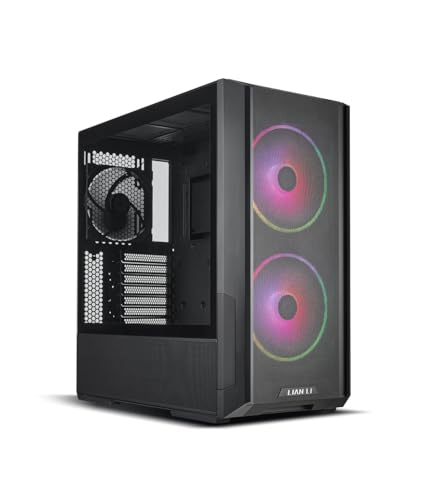
| Lian Li LANCOOL 216 RGB Black | Mesh-as-Filter Champion | The perforated front itself does the filtering with minimal cooling cost. |
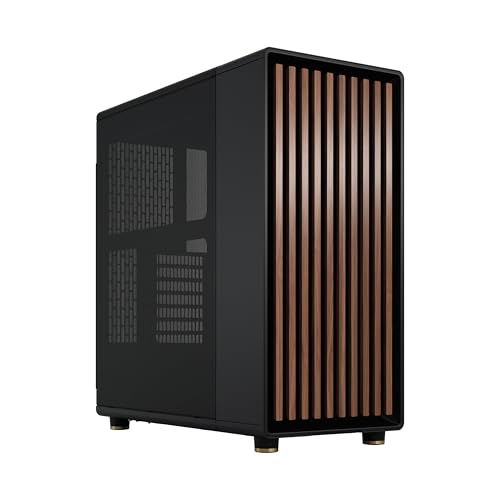
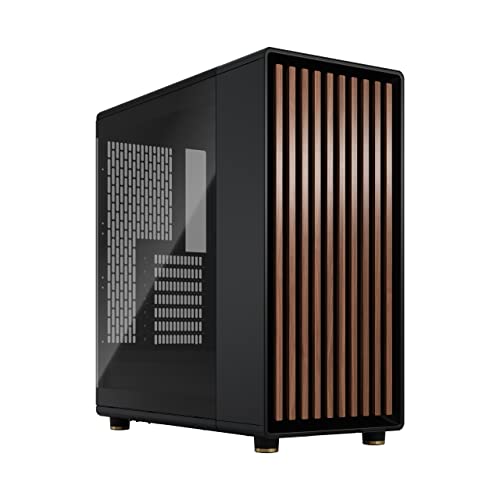
| Fractal Design North (Mesh Side) | Breathing Furniture Pick | Walnut and mesh panels that ventilate through their surfaces in a living room. |
| Corsair 4000D RS Frame Modular | Easy-Maintenance Pick | Removable panels and a deep parts ecosystem keep the cleaning routine painless. |
How Did We Choose These Picks?
Filtration quality was judged as a system, not a bullet point. We traced each case’s intake paths, front, bottom, and any side openings, and asked whether every path a fan can draw through is filtered, because a single unfiltered intake quietly defeats the rest. We then graded the cleaning procedure itself: how the filter releases, whether it survives washing, and whether the design invites the job or buries it behind panels and screws.
Cooling consequences carried equal weight. A filter is a controlled obstruction, and designs differ in how gracefully they pay for it, through larger intake areas, fans sized to work against mild resistance, or swappable fronts that let owners trade filtration for airflow when a heat wave or a rendering marathon demands it. Cases that pretend filtration is free were marked down; cases that engineer the trade honestly were marked up.
Finally, we considered the environments readers actually describe: apartments with cats, houses with wood stoves, workshops, carpeted bedrooms, and the occasional machine living in a garage. The six picks distribute across those realities rather than clustering at one ideal, because the best filtered case for a tiled, pet-free study is a genuinely different product from the best one for a carpeted room with a husky.
What Is the Difference Between a Filter and a Mesh Front?
A dedicated filter is a fine screen, nylon mesh or foam, mounted across an intake with the explicit job of trapping particles down to a small size. Its virtue is capture; its vice is resistance that grows as it loads with dust, so its performance curve is a story of maintenance kept or neglected. A clean fine filter in a well-sealed case can keep an interior astonishingly pristine for a year. The same filter, ignored for that year, becomes a blanket that raises temperatures more than the dust it excluded would have.
A perforated metal or plastic mesh front plays a different position. Its holes are far too large to catch fine dust, and it makes no such promise. What it catches is the debris that does the visible damage, hair, carpet fiber, insects, and the coarse grit that mats into fins, while letting air pass almost as if nothing were there. Fine dust still enters, but it tends to pass through or settle in a thin, easily blown-out layer rather than cementing itself into heatsinks.
The mature way to choose is to picture your cleaning personality honestly. Meticulous owners extract the full value of fine filtration. Relaxed owners, the majority of humanity, are better served by coarse mesh and positive pressure, a combination that forgives a forgotten quarter. This guide refuses to shame either reader; it simply refuses to sell the meticulous system’s benefits to the relaxed reader under false pretenses.

be quiet! Silent Base 802 Black — Filter System Leader
The Silent Base 802 is the connoisseur’s answer in this category because it refuses to choose a philosophy on your behalf. It ships with interchangeable front panels, one oriented toward maximum airflow and one toward silence and filtration, letting the same case serve a summer of rendering and a winter of quiet evenings. Beneath that flexibility sits a thoroughly filtered intake layout and the acoustic engineering that made its maker famous, three fans included in the listing configuration, all wrapped in a full-size chassis with room for serious hardware.
Ownership rewards the methodical. Filters release without drama, panels swap by hand, and the interior layout respects the reality that a filtered case will be opened for cleaning more often than most. If your environment swings between dusty and calm across the year, or if you simply enjoy a machine that adapts rather than compromises, this is the most complete filtration system in the roundup.
- Format: ATX midi tower, generous interior
- Front: interchangeable airflow and quiet panels
- Stock fans: three included per the listing
- Filtration: dedicated filters across intake paths
- Character: silence-first with an airflow escape hatch
Strengths
- Swappable fronts convert between filtration and airflow modes
- Filter access respects a regular cleaning routine
- Acoustic behavior is the calmest in this guide
Trade-offs
- Premium positioning among these six picks
- Size exceeds what compact desks welcome
- Full filtration benefits require the cleaning habit
Best for: methodical owners in dusty homes who also prize silence. Not suited for: buyers who know they will never clean a filter.

be quiet! Pure Base 600 Black — Proven Filtered All-Rounder
Longevity is a form of evidence, and the Pure Base 600 has been quietly serving in dusty rooms for years while trendier enclosures cycled through the market. Its filtered intakes, two included fans, and sound-damped panels form a coherent philosophy: keep the air clean, keep the noise down, and ask little of the owner beyond an occasional filter rinse. The design’s age shows mainly in small courtesies newer cases added, not in its fundamentals, which remain sound.
For a machine destined for a carpeted bedroom, a home office with a dog asleep under the desk, or any room where the vacuum cleaner visits less often than it should, the 600 is the steady recommendation. It will not win a cooling contest against the mesh champions here, and it does not try to; it wins the three-year contest, where the machine that was easy to keep clean is the machine still running cool.
- Format: ATX midi tower
- Stock fans: two included per the listing
- Filtration: filtered intake paths with damped panels
- Character: quiet, conservative, durable
- Positioning: proven design at a settled price tier
Strengths
- Years of owner reports confirm the filtration works
- Damped panels keep dusty-room machines discreet
- Simple layout makes cleaning day unmemorable
Trade-offs
- Cooling headroom trails the mesh-front picks
- Front connectivity reflects its design generation
- Two stock fans may want supplementing in hot builds
Best for: dusty, carpeted rooms and owners who value proven calm. Not suited for: maximum-performance builds in hot climates.

be quiet! Pure Base 501 Black — Modern Filtered Value
The Pure Base 501 brings the filtered, quiet formula into the current generation at a friendlier tier than its Silent Base sibling. Two 140mm PWM fans provide the airflow foundation, their size letting them work against the mild resistance of filtered intakes without spinning into audibility, and the case’s layout follows modern component shapes rather than the drive-cage era its predecessors remember.
Think of it as the filtration pick for a first serious build in a real home: a bedroom machine that must stay clean through semesters of neglect-adjacent student life, or a family system in a living room with a shedding pet. Its routine is simple, its manners are good, and its price leaves budget for the components that decide performance.
- Format: ATX mid-tower
- Stock fans: two 140mm PWM per the listing
- Filtration: dust-conscious front and intake design
- Control: PWM fans for temperature-linked behavior
- Character: modern, quiet, value-minded
Strengths
- Large fans suit filtered intakes without noise
- Current layout fits today’s long graphics cards
- Friendly tier for a first filtered build
Trade-offs
- Less elaborate filtration than the Silent Base 802
- Two fans is a foundation, not a finished hot build
- Styling is deliberately anonymous
Best for: bedrooms and family rooms wanting modern filtered value. Not suited for: enthusiasts wanting swappable front-panel systems.

Lian Li LANCOOL 216 RGB Black — Mesh-as-Filter Champion
The LANCOOL 216 represents the coarse philosophy executed brilliantly. Its perforated front, fed by two 160mm fans, stops the debris that actually mats heatsinks, pet hair and household fiber, while imposing so little resistance that cooling performance barely acknowledges a filter exists. Fine dust does enter over time, and this guide will not pretend otherwise; it settles as a light film that a twice-yearly blow-out clears in minutes, rather than the dense felt that fine-filter neglect produces inside components.
For the honest majority who clean a computer when it visibly needs it rather than by calendar, this may be the most rational filtration strategy on the page. There is no filter to forget because the front is the filter, and a soft brush across it during a monthly tidy restores it completely. Homes with heavy-shedding animals are the exception that should still look upward to the dedicated systems, since hair volume can bridge even generous mesh over a season.
- Format: ATX mid-tower
- Stock fans: two 160mm ARGB per the listing
- Filtration: perforated front as coarse filter
- Maintenance: brush the front; blow out interior seasonally
- Character: airflow-first, maintenance-light
Strengths
- Filtration with almost no cooling penalty
- No separate filter element to forget or damage
- Huge fans keep noise low at useful airflow
Trade-offs
- Fine dust passes and settles slowly inside
- Heavy pet hair can bridge the mesh over time
- RGB fans add controls some owners never use
Best for: relaxed maintainers in ordinary dusty homes. Not suited for: workshops or rooms with extreme fine-dust loads.

Fractal Design North (Mesh Side) — Breathing Furniture Pick
The North approaches ventilation as an architectural material. Its walnut front slats and, in this variant, a mesh side panel let the case exchange air through surfaces that look like furniture rather than machinery, which is precisely why it belongs in a filtration conversation: a case that breathes through distributed mesh presents an enormous effective intake area, so air velocity at any point stays low and debris accumulation spreads thin instead of caking at one choked filter.
Living-room machines and studio desks are its natural habitat, especially where a partner or a client audience judges the room. Dust management here is a gentle, frequent habit, a brush across the mesh, a seasonal interior clean, rewarded by an interior that never develops the neglected swamp of a sealed box. It asks for taste in both senses: an eye for its materials and a light, regular hand with maintenance.
- Format: ATX mid-tower, design-led
- Front: walnut slats over ventilated structure
- Side: mesh panel variant for distributed breathing
- Filtration: coarse, distributed across large surfaces
- Character: furniture first, quietly competent
Strengths
- Distributed mesh slows visible dust accumulation
- Materials suit living rooms and client-facing studios
- Low intake velocity keeps operation hushed
Trade-offs
- Coarse approach will not satisfy fine-filter purists
- Mesh side exposes the interior to room dust directly
- Design premium over purely functional rivals
Best for: living-room and studio machines in moderately dusty homes. Not suited for: garages, workshops, or heavy pet-hair environments.

Corsair 4000D RS Frame Modular High Airflow — Easy-Maintenance Pick
Corsair’s modular 4000D variant earns its place here on a maintenance argument: filtration only works when cleaning is easy, and this case’s removable panels, three included RS fans, and high-airflow front make the whole dust routine a few minutes of low-friction work. The frame-modular concept also means a damaged filter or panel is a replaceable part rather than a permanent wound, and Corsair’s parts ecosystem is the deepest in this guide.
It suits the household that runs several machines or rebuilds often, where maintenance time multiplies. A filter you can source, swap, and wash without improvising is a filter that stays effective for the case’s whole life, and a case whose maker still sells its small parts in five years is a case whose filtration system ages gracefully instead of expiring by attrition.
- Format: mid-tower, modular frame
- Stock fans: three RS fans per the listing
- Filtration: filtered high-airflow front path
- Parts: broad replacement availability
- Character: practical, serviceable, current
Strengths
- Panel and filter removal is genuinely quick
- Replacement parts keep the system alive for years
- Three fans establish healthy positive pressure easily
Trade-offs
- Filtration is competent rather than class-leading
- Airflow orientation favors cooling over silence
- Modular extras can tempt unnecessary spending
Best for: multi-machine homes and frequent upgraders. Not suited for: owners wanting the finest filtration available at any effort.
How Do These Filtered Designs Stack Up Against Each Other?
| Case | Filtration style | Cleaning effort | Cooling cost | Ideal environment |
|---|---|---|---|---|
| be quiet! Silent Base 802 | Dedicated, swappable fronts | Low, designed-in | Adjustable | Dusty and quiet rooms |
| be quiet! Pure Base 600 | Dedicated filters | Low | Moderate | Carpeted bedrooms |
| be quiet! Pure Base 501 | Filtered front design | Low | Low to moderate | Family rooms |
| Lian Li LANCOOL 216 | Mesh front as filter | Very low | Minimal | Ordinary homes, pets moderate |
| Fractal Design North Mesh | Distributed coarse mesh | Very low, frequent | Minimal | Living rooms, studios |
| Corsair 4000D RS Frame | Filtered airflow front | Very low | Low | Busy multi-PC homes |
Read the cleaning-effort column as a prediction about yourself, and the cooling-cost column as a prediction about your hardware. The right case is the one where both predictions come true comfortably at the same time.
Why Does Positive Pressure Matter More Than Filter Fineness?
Air is lazy and democratic: it enters a case through every available opening in proportion to the pressure difference, not through the openings the designer intended. When exhaust fans outpull intakes, the deficit is made up through expansion-slot gaps, panel seams, and port cutouts, none of them filtered, and the finest front filter in the world stands guard at a door while the windows hang open. This is why two otherwise similar builds can age so differently inside identical cases.
Achieving gentle positive pressure is arithmetic plus verification. More intake capacity than exhaust, with intake fans running slightly stronger, produces it, and fan curves let you hold it across load levels rather than only at idle. The tissue test at a rear seam, introduced in many a builder’s forum, remains the simplest verification: the tissue should drift outward. Recheck after any fan change, because a single added exhaust can quietly reverse the whole system’s breathing.
Filtered intakes make positive pressure doubly valuable, since the surplus air now enters pre-cleaned and leaks outward through the seams, carrying dust away from the gaps instead of inviting it in. In that configuration the entire case becomes a mildly pressurized clean-air vessel, and it is the closest a home machine gets to the data-center trick of keeping dirt outside by pressure rather than by sieves alone.
How Often Should Each Filter Type Be Cleaned?
Fine dedicated filters in an average home want attention monthly: a rinse or a thorough brush-out, fully dried before reinstallation, because a damp filter in a warm case is a mildew invitation. In pet households or during renovation dust, halve that interval and let the filter’s visible loading, not the calendar, have the final word. A filter that looks gray is already costing airflow; a filter that looks felted is costing temperatures.
Coarse mesh fronts forgive a quarterly rhythm in ordinary homes, with a monthly brush in shedding season. The bottom power-supply filter, wherever it lives, deserves the strictest schedule of all because it sits in the floor-level dust stream and its clogging starves the one component with no temperature readout on most systems. Sliding it out takes seconds on the picks here; the only real enemy is forgetting it exists.
Build the habit onto an existing anchor, the same morning as a household chore, the first weekend of the month, so the routine survives motivation’s natural decay. Filtration is a subscription service you pay in minutes, and the owners who automate the payment are the ones still praising their case in year three.
What Mistakes Do Filtered-Case Buyers Keep Making?
The leading mistake is sealing the front and forgetting the floor: a case placed directly on carpet can smother its bottom intake entirely, filter and all, which is why a stand or a hard surface belongs in every carpeted-room plan. The second is mixing philosophies carelessly, adding unfiltered side intake fans to a carefully filtered case and wondering why the interior still furs over. Every intake is a policy decision; make them consistently.
Third, owners wash foam filters with enthusiasm and reinstall them damp, or blast fine mesh with aggressive air until the weave distorts. Gentle washing, patient drying, and a soft brush preserve the media. Fourth, many buyers judge filtration by the front alone and never check whether the top panel’s openings are filtered, a real concern when a top exhaust is reconfigured as intake for a radiator. The manual’s airflow diagrams answer these questions before purchase; read them as carefully as the clearance tables.
Finally, do not let a filtered case excuse a filthy room indefinitely. Filtration manages ordinary dust gracefully, but a machine in a workshop or a smoker’s room is fighting an environment, and the honest fixes there are placement, a door, or a dedicated air purifier sharing the load.
How Do Different Homes Load a Filter Differently?
Dust is not one substance, and a filter’s life in one home predicts little about its life in another. Pet dander and hair form long fibers that mat on surfaces, which makes them easy to catch and dramatic to look at, but relatively kind to fine components because they announce themselves on the filter instead of infiltrating fins. A household with two shedding dogs may clean filters twice as often as a pet-free home while suffering less actual component fouling, a trade most owners accept happily.
Wood heat and candles produce the opposite profile: fine soot particles that pass coarse mesh as if it were a rumor, then plate onto every surface inside the machine as a dark, slightly greasy film. Homes heated with wood, or fond of candles and incense, are the strongest argument in this guide for genuine fine filtration, and for placing the machine away from the room’s combustion sources. The film also insulates, which is why soot-loaded machines run warm out of proportion to the visible dust.
Workshop and garage environments add abrasive grit, metal and wood particles that no computer should inhale as a lifestyle. A filtered case helps, but the honest advice for a machine that must live in a working shop is elevation, distance from the dust source, and cleaning intervals measured in weeks. Kitchens contribute cooking aerosols that behave like soot’s cousin, and open-plan homes spread them generously; a machine near a kitchen deserves the fine-filter treatment and a filter check tied to cooking frequency rather than to the calendar alone.
Seasonality overlays everything. Pollen season loads filters with a yellow tide in many regions, renovation work anywhere in the building can multiply dust for a month, and winter’s closed windows concentrate whatever the home generates. Owners who glance at the front filter whenever the season turns will catch these waves early, which is all that filtration asks: not perfection, just attention at the moments the environment changes its mind.
What Are Filters Actually Made Of, and How Should Each Be Treated?
Nylon mesh is the aristocrat of case filtration: a woven screen with consistent openings, washable for years, and quick to release its catch under a tap. Treat it gently anyway, because a stretched or torn weave develops highways that bypass the whole system, and inspect it against the light during each wash; pinholes of brightness where the mesh has thinned are the retirement announcement.
Foam filtration works by depth rather than by surface, trapping particles through a maze of pores, which gives it excellent capture and a cleaning ritual that must match: rinse until the water runs clear, press rather than wring, and dry completely, since foam holds water in its interior long after its surface feels dry. Foam also ages by crumbling, and a filter that leaves black crumbs on your fingers has ended its service regardless of how clean it looks.
Magnetic add-on filters and perforated metal panels occupy the durable end of the family. Metal mesh shrugs off washing, brushing, and years, at the price of coarser capture; magnetic sheets trade some sealing for the easiest removal in the business. Knowing which media your case uses converts cleaning from guesswork into a procedure, and the manual, once again, is where that knowledge lives. When a replacement is needed, buy by media and dimensions rather than by hope, and keep the retired filter until the new one is confirmed to fit, because filter frames are less standardized than fan sizes.
How Do You Deep-Clean a Filtered Case, Step by Step?
Begin powered down and unplugged, with the machine moved to a table near a door or outdoors if the weather allows, because the dust you liberate should leave the room rather than resettle in it. Remove filters first and set them aside for washing; they are the only parts that meet water in this entire procedure. Photograph the interior before touching anything, since the photograph documents cable routing and fan orientation for the reassembly you will otherwise reconstruct from memory and optimism.
Work from the top down with a soft brush and short bursts of air, holding fan blades still with a fingertip so they neither spin into generators nor shed their bearings’ lubricant under overspeed. The graphics card’s fin stack and the processor cooler’s tower hold the densest deposits and deserve the most patience. A vacuum cleaner stays outside the case in this method; its nozzle static and its appetite for loose screws have ended more builds than dust ever has, though a vacuum held near the work area to catch liberated dust is a reasonable compromise.
Wash the filters while the interior airs out, dry them thoroughly, and use the interval to inspect what the filters protected: fan blades for felt buildup at their roots, the power supply’s intake screen, and the bottom vents that everyone forgets. Reassemble in reverse order, confirm every fan spins at the first power-on, and record the date somewhere durable, a note in the machine’s folder or a sticker inside the side panel. The next cleaning will be easier for that record, because intervals reveal themselves only to people who write them down.
End by checking temperatures under a familiar load against your memory of the machine when new. A deep clean that restores the original thermal behavior has done its whole job; one that does not is diagnostic information, pointing at dried thermal paste or a tiring fan rather than at any failure of the cleaning itself.
How Do Radiators and Liquid Cooling Change the Dust Equation?
A radiator is a filter that cannot be removed, washed, or forgiven. Its fins are far denser than any case filter, spaced to exchange heat rather than to pass debris, and every particle that reaches a radiator tends to stay, building the gray mat that owners discover when a liquid-cooled machine mysteriously warms over a season. This is why intake radiators belong behind genuine filtration without exception, and why the filtered picks in this guide earn extra credit from liquid-cooling builders even though their marketing rarely mentions radiators at all.
Exhaust-mounted radiators live easier lives, breathing interior air that the intakes already cleaned, which is one more argument for the positive-pressure, filtered-intake architecture this guide keeps recommending. Builders planning a custom loop should treat the case’s filter system as part of the cooling budget, as real as pump choice, because a loop whose radiators clog is a loop whose expensive temperatures degrade on a schedule set by the room’s dust.
Maintenance access matters doubly here. A case that lets a front radiator’s filter slide out without draining or dismounting anything will have that filter cleaned; a design that buries it behind the radiator itself has effectively chosen an annual deep service as its rhythm. Neither is disqualifying, but the difference should be priced into the decision with open eyes, particularly in pet households where radiator mats form with discouraging speed.
Where Should a Filtered Case Sit in the Room?
Placement multiplies or divides everything the filters do. The floor is the dustiest stratum of any room, the settling layer where traffic resuspends particles in a permanent low cloud, and a case drinking from that layer can double its filter load compared with the same case on a desk. Elevation is therefore the single most effective filtration upgrade available, and it costs a sturdy stand or a shelf rather than a component.
Distance from sources runs second. A case beside a litter box, a wood stove, a craft bench, or a frequently opened exterior door lives in a different climate from the same case across the room, and no filter system fully repeals geography. Corners deserve suspicion too, since they collect still air and the dust that settles from it, while a position with gentle room circulation keeps the intake air representative rather than concentrated.
Finally, respect the exhaust. A filtered case pushed flush against a wall or into a closed cabinet cannot exhale, and its rising internal temperature will be misread as a filtration failure when it is actually a placement failure. Give the rear and top the breathing room the manual suggests, keep cabinet doors open during heavy use if the machine must live in furniture, and let the case’s own design, so carefully chosen, do the job it was bought for.
What Does a Year of Filter Discipline Actually Buy?
Quantifying cleanliness is difficult, but its effects announce themselves in the negative space of things that do not happen. Fan curves stay where you set them instead of creeping upward across seasons. Temperatures in the second summer match the first. The interior, when opened for an upgrade, looks like a machine that was assembled recently rather than excavated, and the upgrade itself takes minutes because nothing needs excavating first. Resale photographs, when the day comes, show a computer a stranger can trust.
There is also a diagnostic dividend. In a clean machine, a new noise or a new temperature is a signal, because the baseline is known and stable. In a dust-loaded machine, every symptom has an alibi, and troubleshooting degenerates into cleaning first and reasoning later. Owners of filtered, maintained systems consistently report that faults get found faster, and in a hobby where a failing fan can imitate a failing motherboard for weeks, that clarity is worth real money.
None of this requires zealotry. It requires a filter system matched to the home, a routine matched to the owner, and the modest calendar discipline described throughout this guide. The cases above were chosen to make all three matches easy to find, which is the entire secret of the category.
How Can You Tell Whether Your Current Setup Is Winning or Losing?
Three quick audits, performed twice a year, answer the question without instruments. First, the filter photograph: hold the front filter against a window and photograph it against the light before cleaning. Compared across seasons, those images show your home’s true dust rhythm and let you set intervals from evidence rather than from advice written for a different house. Second, the seam test: run a fingertip along the inside of a rear expansion slot cover and the lower panel seams. A fingertip that comes away clean says positive pressure is doing its quiet work; a gray fingertip names the leak.
Third, the temperature diary: one familiar game or render, one noted ambient temperature, one recorded peak for the processor and graphics card. Two entries a year build a trend line that separates slow dust creep from sudden faults with total clarity. Owners who keep these three habits stop guessing about filtration entirely, and their machines’ interiors tend to look like the advertisements, which is not vanity but maintenance made visible.
If an audit reveals losing, fix causes in order of leverage: placement first, pressure second, filter media third, and only then consider whether the case itself is the limitation. Most losing setups are good cases in bad positions with reversed pressure, and they recover completely without a purchase. The picks in this guide simply start their owners closer to winning, with systems designed so that the correct habits are also the easy ones.
What Should Renters and Shared-Home Owners Do Differently?
Not every reader controls their environment. Renters cannot always move a machine away from a radiator or refuse a carpeted room, and shared homes contain other people’s candles, pets, and cleaning schedules. Filtration advice for these readers should emphasize the portable levers: elevation on a stand that leaves no marks, a case whose filters clean at the sink in minutes, and a small room air purifier near the desk, which reduces the load on every filter downstream of it, including the ones in your lungs.
Communication is the other portable lever. A household that understands the five-minute monthly filter rinse often adopts it as casually as watering a plant, while a machine whose needs were never explained gets its vents blocked by a well-meaning stack of books. The filtered case, explained kindly, becomes shared furniture with a shared routine, and that social fact protects more computers than any mesh density ever measured.
How Do Filters Interact With Silence?
Filtration and acoustics are secretly the same project. A dust-loaded cooler needs faster fans; faster fans are louder; so the quietest machine in year two is usually the cleanest one, regardless of which cost more at purchase. This is why the be quiet! entries in this guide treat filtration as part of their silence system rather than as an accessory, and why a mesh case with modest fans can end up quieter in practice than a damped case whose neglected coolers scream through their felt.
The interaction also runs through fan selection. Fans designed to maintain pressure against resistance, the mild back-pressure a clean filter presents, hold their airflow with less speed and therefore less noise than fans tuned only for open air. When adding a fan to a filtered build, that pressure character matters more than the headline airflow figure, which is measured in conditions no filtered case ever experiences.
Owners chasing quiet should therefore sequence their efforts: filtration discipline first, fan curves second, damping and exotic materials last. The order feels anticlimactic and works completely, which is the signature of most real engineering advice. A clean, gently pressurized case with sensible curves is a quiet case, and it stays one, season after season, while neglected machines of every pedigree slowly raise their voices.
That, in the end, is the argument this whole guide has been circling: filtration is not a feature to admire on a specification list but a system to live with, and living with it well is what separates the machines that age gracefully from the ones that merely age.
What About Open-Air and Wall-Mounted Builds?
A small, devoted corner of the hobby runs computers on open frames and wall mounts, and those readers sometimes arrive at filtration guides wondering whether any of this applies to them. It does, inverted. An open build has no filters and needs none, because it also has no enclosed airflow to protect; its dust strategy is total exposure paired with frequent, effortless cleaning, since every surface is already accessible. The approach works beautifully for owners who genuinely enjoy that ritual and disastrously for owners who adopt the aesthetic and skip the discipline.
The comparison clarifies what a filtered case is really selling: not cleanliness in the abstract, but cleanliness with privacy, a machine that can be ignored for a month without consequence. Open builds trade that forgiveness for spectacle and access. Neither trade is superior in the abstract, but they are opposites, and a buyer should know which one is being signed. The six enclosed picks here all sit on the forgiveness side of the line, in different degrees, which is why this guide exists at all.
Wall mounting an enclosed filtered case is possible and occasionally brilliant in workshops, lifting the machine entirely out of the floor’s dust stratum. Respect weight, anchoring, and service access if you attempt it, because a filter that requires a ladder and a second person will quietly stop being cleaned, and gravity always collects its debts.
One more household pattern deserves naming before the verdict: the machine that migrates. Many systems begin at a desk, retire to a child’s room, then to a workshop or a media corner, meeting a new dust climate at every stage. A case with a real filtration system travels through those lives gracefully, needing only its routine adjusted, while a case that depended on one clean room tends to decline at its first relocation. Buying filtration is therefore also buying adaptability, the right to change the machine’s job without changing its enclosure.
When you do migrate a machine, give it a full cleaning at the border between lives, set new filter intervals for the new room, and note the change in your records. Machines, like people, do best in a new home when someone pays attention during the move.
How Should You Choose Between Two Finalists?
When the shortlist narrows to two, stop reading specifications and start simulating ownership. Imagine the fourth cleaning, not the first: where is the case standing, which hand holds the filter, where does the filter dry, and does the design make that small scene easy or faintly annoying? Imagine the hottest evening of the year with the machine under full load and a guest asleep in the next room. Imagine the upgrade in year three, a longer graphics card arriving, and ask which interior welcomes it without negotiation.
Those three scenes, honestly simulated, separate finalists more reliably than any benchmark, because they test the machine against your life rather than against a laboratory. The case that wins the scenes is the case whose filtration you will still be maintaining, gladly, when the product cycle has forgotten both models. Buy that one, set its first cleaning date before the box is recycled, and let the matter be settled.
Write that first cleaning date on the build’s record card, alongside the temperatures from the shakedown week, and the system this guide has described, filter, pressure, placement, and habit working as one, is fully in motion. Nothing else is required. The machine will do the rest quietly, which is the highest compliment a case can earn.
Share your cleaning interval and your home’s dust story with the next person who asks you about cases, because this category runs on exactly that kind of local knowledge. A filter schedule that works in a tiled, pet-free flat is fiction in a carpeted house with a wood stove, and the honest, specific report, my home, my animals, my interval, my results, is worth more to a stranger than any laboratory measurement either of you will ever read.
That is how the good cases in this guide built their reputations in the first place: not through launch coverage, but through thousands of owners reporting, season after season, that the interior stayed clean and the routine stayed easy. Joining that chorus with your own report is the final step of a well-bought case.
Until then, the work is simple and the standard is visible: open the case in a year, and let what you find, or gratefully fail to find, deliver the review.
Keep the spare filter, if your case’s maker offers one, in the accessory box from day one. A spare converts every wash day into a swap, wet filter out and dry filter in, with the machine never standing open and unprotected while foam dries on a rack. It is a small purchase that removes the last excuse the routine ever had, and owners who make it tend to describe their cleaning in the present tense rather than in the language of intentions. If no spare exists for your model, a second-best ritual works nearly as well: wash the filters in the morning, let them dry through the day with the machine’s panels closed and the system idle, and refit them in the evening before the day’s first real session.
Either way, the principle is the one this guide has repeated in every register available to it: design the routine so that doing it is easier than postponing it, and the hardware will take care of the rest.
It really is that unglamorous, and that is the good news: nothing in this category requires talent, expensive tools, or a free weekend. It requires a case designed by people who understood the assignment, a room placement chosen with half a minute of thought, and a recurring five minutes that any calendar can hold. Readers who supply those three modest things will own machines that look, sound, and run in year three the way they did in week one, which is a rarer achievement in this hobby than any benchmark crown.
Begin with whichever pick above matches your room’s honest description of itself, and let the first filter you pull out, weeks from now, gray with honest work, confirm that the system is doing exactly what you bought it to do.
That small gray harvest, rinsed away in a minute at the sink, is the entire philosophy made visible: the dust was always coming, and now it is leaving on your schedule instead of your components’.
Everything this guide recommends is in service of that one recurring minute, and of the quiet, cool years that a minute, repeated, can buy.
Set the first date now, while the intention is warm, and let the calendar carry the discipline from here.
Your future self, opening a clean case on some distant upgrade day, will be glad you did.
And the machine, which cannot speak, will say it in the only language it has: the same temperatures, the same quiet, year after year.
Listen for that steadiness the first time you clean yours; it is the sound of a plan working.
Plans that work deserve to be kept, and this one asks almost nothing to keep.
Keep it, and the dust stays a chore instead of becoming a diagnosis.
That is the whole ambition, stated plainly.
Plain, and entirely achievable.
Final Recommendation
Choose the Silent Base 802 if you want the most complete and adaptable filtration system and will honor its light cleaning routine; choose the Pure Base 600 or 501 for proven, quieter filtered value in ordinary dusty rooms. If you know your maintenance will be sporadic, the LANCOOL 216 and the mesh North are the honest picks, trading fine capture for forgiveness, while the Corsair 4000D RS suits homes where several machines make serviceability the deciding virtue.
Dust never negotiates and never leaves; it only waits to see whether your case has a plan, so pick the plan your future self will actually follow.
Frequently Asked Questions
Do fine filters reduce cooling performance noticeably?
A clean fine filter costs a small amount of airflow, which good designs offset with intake area and fan choice. A neglected fine filter costs far more, which is why the cleaning routine matters more than the specification.
Can I add filters to a case that shipped without them?
Magnetic aftermarket filters exist for common fan sizes and can civilize an unfiltered intake, though they rarely seal as well as a designed system. Measure the intake, mind the fan clearance, and treat it as an improvement rather than a transformation.
Is mesh or foam better for pet hair?
Fine mesh wins for hair because it stops fibers at the surface where they brush away cleanly. Foam traps hair deeper in its structure and needs washing to release it.
Where is the power supply filter and why does it matter?
It sits beneath the case over the supply’s intake. It matters because the supply has no voice in most monitoring software, so a clogged filter overheats it silently until protection circuits start ending your sessions.
Should top radiator intakes be filtered too?
Yes, if the top is configured as intake. Any path that draws room air inward belongs behind a filter, whatever its orientation, or it becomes the system’s unguarded door.
Can a filter be too fine for a gaming case?
Yes, in effect. An extremely fine filter on a small intake area forces fans to work hard for every breath, trading the dust problem for a noise and temperature problem. Generous intake area is what lets fine filtration and good cooling coexist.
How do I dry a washed filter safely?
Shake off excess water, then let it air-dry fully at room temperature, which takes hours for foam and minutes for nylon mesh. Never reinstall a damp filter, and never use high heat, which can warp frames and degrade foam.
Related Guides
Keep the clean-air theme going with our guide to fan curves that balance cooling and calm, the seasonal deep-clean walkthrough for gaming desktops, and our advice on placing a PC in pet-friendly homes.