What's inside
- Where to buy
- Key Takeaways
- Quick Picks
- How did we test each candidate against the four conditions?
- Why do these four conditions belong together?
- How do the four-condition picks compare with the two outsiders?
- How do you configure a certified 27-inch IPS panel for its best life?
- What mistakes do four-condition shoppers still manage to make?
- How does the IPS condition change shared and solo play?
- Why is 27 inches the size this intersection settled on?
- What does certification protect when frame rates collapse?
- How should the three LG ceilings be chosen between?
- What does a first week inside the intersection look like?
- How long does an intersection purchase stay current?
- How do you audition an IPS panel in a shop meaningfully?
- What accessories actually serve a four-condition desk?
- Why do so few brands appear inside the certified circle?
- How does this purchase interact with a future OLED temptation?
- What should be done with the monitor this one replaces?
- How do you keep four conditions from becoming four anxieties?
- What is the environmental ledger of a long-lived monitor?
- How should a gift buyer approach this exacting category?
- Final Recommendation
- Frequently Asked Questions
- Related Guides
As an Amazon Associate I earn from qualifying purchases. This post may contain affiliate links at no extra cost to you.
gizmoverdict.com is reader-supported. When you buy through links on our site, we may earn an affiliate commission.
Where to buy
Linked names in this guide lead to their Amazon listings, where size, panel type and sync certification can all be verified against the unit actually offered. The best 1440p monitors g sync 27 ips sit at the intersection of four separate demands, and the intersection is smaller than any of the demands alone. Quad HD resolution, a 27-inch screen, an IPS panel and NVIDIA-ecosystem variable refresh each describe thousands of products; require all four at once, in a single verified listing, and the shelf narrows to a handful of serious gaming monitors that this article examines one by one.
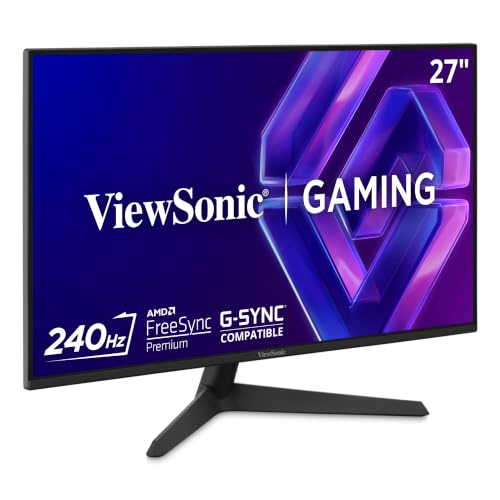
Four picks satisfy every condition and carry purchase links: three LG UltraGear models at 165Hz, 180Hz and 240Hz, and an ASUS TUF panel at 180Hz whose listing names G-SYNC alongside its Fast IPS panel. Two further screens are discussed in prose without links, because each fails exactly one condition while passing the other three so handsomely that shoppers will inevitably ask about them. The Gigabyte M27Q2 is positioned around FreeSync in this guide’s evidence rule for linked status in the narrow sense applied here, and Samsung’s Odyssey G5 is a FreeSync-only listing; both are 27-inch IPS-class Quad HD gaming screens, and both are labelled with the precise reason they stand outside the linked circle.
Why police an intersection this narrow with such care? Because buyers who specify four attributes have usually rejected the compromises on each axis already. They have decided against VA contrast, against smaller or larger glass, against uncertified sync and against lower resolution, and a guide that quietly substitutes any of those is not helping them shop; it is overruling them. This article’s loyalty is to the four conditions as stated, with the near-misses admitted only as clearly marked reference points.
Key Takeaways
- Four linked picks meet all four conditions: 1440p resolution, 27-inch size, IPS panel and G-Sync-ecosystem certification.
- LG supplies three of the four, at 165Hz, 180Hz and 240Hz, making ceiling the main choice inside the brand.
- The ASUS VG27AQ3A is the value member of the certified circle, with ELMB Sync and speakers included.
- The Gigabyte M27Q2 and Samsung Odyssey G5 appear prose-only because their sync positioning fails this guide’s strictest condition.
- IPS at this size means consistent angles and colour for shared desks, at the cost of the deep blacks VA panels offer.
- No linked pick is a native 144Hz screen; certified 27-inch IPS Quad HD now starts at 165Hz and climbs.
Quick Picks
| Pick | Badge | Why it earns its place |
|---|---|---|
| LG UltraGear 27GP850-B 165Hz | The certified centre | A Nano IPS panel with G-Sync Compatible status, FreeSync Premium and a complete ergonomic stand. |
| LG UltraGear 27GS75Q-B 180Hz | The current-generation step | Standard IPS glass at 180Hz with a 200Hz overclock, G-Sync Compatible certification and HDR10. |
| LG UltraGear 27GR83Q-B 240Hz | The competitive ceiling | A 240Hz IPS panel with HDMI 2.1, DisplayHDR 400 and both sync ecosystems listed. |
| ASUS TUF Gaming VG27AQ3A 180Hz | The accessible member | Fast IPS at 180Hz with G-SYNC named in its listing, ELMB Sync and built-in speakers. |
| Gigabyte M27Q2 200Hz (OC) | Prose only: sync condition unmet here | A SuperSpeed IPS screen with KVM and USB-C, discussed honestly outside the linked circle. |
| Samsung Odyssey G5 G51F 180Hz | Prose only: FreeSync only | A 27-inch Quad HD gaming staple at 180Hz whose listing promises FreeSync and nothing further. |
How did we test each candidate against the four conditions?
Condition by condition, from the verified listing of each model, with no credit for near misses. Resolution had to read as Quad HD 2560 by 1440 in the model’s own specification; size had to be the 27-inch class; the panel had to be an IPS implementation, including its Nano, Fast and SuperSpeed dialects; and sync had to be expressed in NVIDIA’s vocabulary, G-Sync or G-Sync Compatible, in the listing evidence. A candidate failing any single test was moved to the prose tier regardless of its other virtues, and two genuinely attractive monitors failed on sync alone, which is why the prose tier in this guide is unusually strong.
That strength is the point of including it. A shopper who discovers, midway through research, that certification matters less to them than a KVM switch or a particular retailer’s shelf has not wasted their reading: the two prose entries describe exactly what would be gained by relaxing the fourth condition, and what would be surrendered. Guides that hide their near-misses force readers to reconstruct the boundary from other sources; this one draws the boundary, names the guards, and shows the two travellers turned back at the gate with their luggage fairly described.
Refresh rate, notably, is not one of the four conditions, and the results show why it could not have been. Requiring 144Hz exactly would have emptied the linked list entirely, because this intersection’s current production runs at 165Hz and above. Each linked pick will operate at 144Hz when configured so, and each is labelled with its true ceiling in its heading, its specification list and the comparison table, so the reader’s fourth condition remains sync, honestly policed, rather than a number smuggled in through the title.
Why do these four conditions belong together?
Each condition answers a different complaint, and together they describe the desk of a player who has already experimented. Quad HD answers the softness of Full HD at this size. Twenty-seven inches answers both the cramped 24-inch gaming format and the sprawl of larger glass. IPS answers the washed angles and shifting colour of cheaper panel families when a chair is shared or a posture slouches. G-Sync-ecosystem sync answers the tearing and judder that variable frame rates inflict on uncertified or fixed-refresh screens. A buyer reciting all four is not being fussy; they are reading out a list of previous disappointments and declining to repeat them.
The intersection also happens to be where panel manufacturing matured earliest and deepest. Twenty-seven-inch Quad HD IPS glass has been produced at scale for years, yields are understood, and the same basic panel can be tuned for colour, speed or value by the electronics behind it. That maturity is visible in this guide’s linked list, where three generations of one brand and a value line from another all satisfy the same four demands with different emphases. Narrow intersections are usually deserts; this one is a neighbourhood.
There is a final, quieter synergy. IPS colour consistency makes the resolution’s detail trustworthy at the edges of the screen, the size makes the resolution’s density comfortable, and certified sync makes the whole assembly calm under the fluctuating frame rates that real games produce. Remove any one condition and a specific daily irritation returns. Keep all four, and the monitor stops being a topic of conversation at its own desk, which is the highest achievement available to a display.

LG UltraGear 27GP850-B 165Hz — The certified centre
The natural first name in any honest version of this list is LG’s 27GP850-B, a 27-inch Nano IPS monitor at Quad HD running 165Hz, with G-Sync Compatible certification and FreeSync Premium, a stated 1ms response and a stand that adjusts in every direction its owner will ever request. It satisfies the four conditions without strain or footnote, and its long presence in the market means its certified behaviour with GeForce systems is among the most thoroughly road-tested in the entire category.
Nano IPS is its dialect of the IPS condition, stretching colour coverage wider than standard implementations and giving games a saturated richness that standard glass does not attempt. That reach is the pick’s one demand for supervision: colour-critical work should use a restrained mode, and unmanaged content will look enthusiastic until it does. In exchange, the panel delivers the angles, consistency and motion manners that made IPS the condition in the first place, at a ceiling that still flatters current graphics cards at this resolution.
Newer siblings in this very guide add ceiling and ports, yet the GP850-B’s completeness keeps it central. It is the pick for the buyer who wrote the four conditions down, wants them met by the most proven candidate available, and intends to stop researching the moment they are. Few technology purchases still offer that kind of closure; this intersection, at this model, genuinely does.
At a glance:
- Panel: 27-inch Nano IPS, Quad HD 2560 by 1440
- Refresh: 165Hz native
- Response claim: 1ms as stated by LG
- Sync: G-Sync Compatible, FreeSync Premium
- Stand: tilt, height and pivot adjustment
- Status: meets all four conditions, linked
Strengths
- Most proven certified record in the set
- Complete stand, no ergonomic asterisk
- Nano IPS colour reach for games
Trade-offs
- HDMI generation trails its younger siblings
- Wide colour asks for a calm work mode
- Contrast remains the IPS compromise
Best for: a GeForce player who wants the four conditions met by the category’s most established candidate.
Not suited for: buyers chasing the newest ports or the highest ceiling, both available further down this list.

LG UltraGear 27GS75Q-B 180Hz — The current-generation step
LG’s second qualifying model updates the formula on standard IPS glass. The 27GS75Q-B is a 27-inch Quad HD IPS monitor at 180Hz natively, with an overclock toward 200Hz, G-Sync Compatible certification, FreeSync support, HDR10 acceptance and a stated 1ms response. Against its Nano IPS elder it trades colour reach for freshness and ceiling, a trade that will suit buyers who shop the current shelf and prefer their certification attached to the generation still in production.
The playing character is the class at its most straightforward: clean fast IPS motion, certified variable refresh across a generous range, and a stand handling height and tilt for the postures real desks demand. HDR10 should be interpreted in the dialect this guide has used throughout, as tidy tone mapping within desk-appropriate brightness rather than as a cinematic event. Nothing in the specification reaches for a headline beyond its competence, which makes the screen easy to recommend and easier to own.
Within the four conditions, its argument is currency. Panel tuning, firmware and retail availability all belong to the present moment, and a buyer who keeps screens for many years may prefer starting that long relationship with the youngest qualifying model that still respects the budget. The certification promise matches its elder’s; the ceiling exceeds it; the colour steps politely back. That is a coherent identity, and for many desks it will be the right one.
At a glance:
- Panel: 27-inch IPS, Quad HD 2560 by 1440
- Refresh: 180Hz native, overclock toward 200Hz
- Response claim: 1ms as stated by LG
- Sync: G-Sync Compatible and FreeSync listed
- Signal: HDR10 accepted
- Status: meets all four conditions, linked
Strengths
- Certification on current-generation glass
- Ceiling and overclock in reserve
- Uncomplicated, balanced specification
Trade-offs
- Standard IPS colour versus Nano sibling
- Stand omits pivot
- HDR is compatibility, tidily delivered
Best for: a buyer who wants the four conditions satisfied by the freshest mainstream LG in the class.
Not suited for: colour-led players who preferred Nano IPS, or competitors saving their ceiling budget for the 240Hz model.

LG UltraGear 27GR83Q-B 240Hz — The competitive ceiling
The intersection’s fastest citizen asks what happens when the four conditions are held constant and the ceiling is simply removed. LG’s 27GR83Q-B runs its 27-inch Quad HD IPS panel at 240Hz, states a 1ms response, lists G-Sync alongside FreeSync Premium, adds DisplayHDR 400 and HDMI 2.1, and completes its stand with pivot as well as height and tilt. For the competitive GeForce player who refuses to drop to Full HD in pursuit of speed, this is the monitor the category has been promising them for years.
Certified range behaviour matters more at this altitude than the ceiling itself, because real games at 1440p will spend their lives in the middle altitudes, surging and sagging with scene density. The G-Sync listing is therefore not decoration; it is the guarantee that the long descent from the ceiling stays graceful. HDMI 2.1 broadens the desk’s diplomacy, welcoming current consoles at their full signal ambitions even though they will use only part of the panel’s range, and the headphone output with DTS flavouring in its specification serves players who route audio through the screen.
The premium over its siblings buys speed and connectivity rather than a different picture, so the decision is really about the system roadmap. A graphics card purchased next year will find this panel waiting with its ceiling intact, while a system that will never leave the middle range pays for altitude it visits only in menus. Buy the ceiling as infrastructure for a written upgrade plan, and the 27GR83Q-B is the most future-proof way to satisfy the four conditions in this entire guide.
At a glance:
- Panel: 27-inch IPS, Quad HD 2560 by 1440
- Refresh: 240Hz native
- Response claim: 1ms as stated by LG
- Sync: G-Sync and FreeSync Premium listed
- Ports: HDMI 2.1 and DisplayPort
- Status: meets all four conditions, linked
Strengths
- Highest ceiling inside the intersection
- HDMI 2.1 for console diplomacy
- Full stand including pivot
Trade-offs
- Ceiling requires elite hardware to matter
- Premium buys speed, not new colour
- Overkill for story-first libraries
Best for: a competitive GeForce player upgrading screen and system together, with the card to honour 1440p speed.
Not suited for: mid-range systems whose frame rates will never introduce themselves to the ceiling they paid for.

ASUS TUF Gaming VG27AQ3A 180Hz — The accessible member
ASUS proves the intersection has a value tier. The TUF VG27AQ3A is a 27-inch Fast IPS Quad HD monitor at 180Hz, with G-SYNC named in its verified listing, FreeSync Premium, a stated 1ms response, HDR10 and built-in speakers. All four conditions are met, and met at the end of the market where most systems are actually built, which makes this pick the one most likely to convert the guide’s strict criteria from an aspiration into an order.
Fast IPS is its dialect of the panel condition, tuned toward transition behaviour while keeping the family’s viewing angles civilised for a shared chair. ELMB Sync adds the clarity mode the LG trio does not offer in the same form, strobing in concert with variable refresh for players whose titles reward it. The listing’s wide colour figure promises enthusiastic game worlds, with the familiar counsel to select a calmer mode before trusting the same screen with a photograph’s skin tones or a client’s palette.
TUF compromises live on the surface: assertive styling, a feature list without docking ambitions, and HDR that tidies rather than performs. The four conditions, however, are not surface, and they are all present and certified in the listing evidence. For the buyer who assumed the intersection would demand flagship money, this ASUS is the guide’s happiest paragraph, and its existence disciplines the pricing of everything above it.
At a glance:
- Panel: 27-inch Fast IPS, Quad HD 2560 by 1440
- Refresh: 180Hz native
- Response claim: 1ms as stated by ASUS
- Sync: G-SYNC named in listing, FreeSync Premium
- Clarity tech: ELMB Sync included
- Status: meets all four conditions, linked
Strengths
- Four conditions at a value tier
- Strobing that keeps sync company
- Speakers complete the household package
Trade-offs
- Styling will not flatter a quiet office
- No USB-C or KVM ambitions
- Colour defaults favour excitement
Best for: a GeForce player who wants the strict intersection satisfied without flagship expenditure.
Not suited for: design-led desks, or hybrid workers whose second machine needs the switching the prose tier offers.
Gigabyte M27Q2 200Hz (OC) — Prose only: sync condition unmet here
No link accompanies this entry, and in a guide defined by four conditions the reason must be stated with care. The Gigabyte M27Q2 is a 27-inch SuperSpeed IPS Quad HD monitor with a 200Hz overclock class in its listing, a 1ms GTG claim, USB-C connectivity and a KVM switch, a specification that passes the resolution, size and panel conditions with distinction. Its sync positioning in its verified material centres on FreeSync Premium, and under the strict evidence rule this particular guide applies, that leaves the fourth condition unproven for linked status, so the screen is discussed in prose as the intersection’s most capable outsider.
The outsider’s talents are real and, for some desks, decisive. The KVM and USB-C combination turns the monitor into a switchboard for two machines, a talent none of the linked four attempts, and hybrid workers may rationally decide that switching convenience outweighs a certification their AMD system cannot use anyway. SuperSpeed IPS motion at its ceiling is fully competitive with the linked circle’s, and the stand’s height and tilt support the blended working day the features imply.
What prose status protects is the meaning of the linked list. A buyer who requires NVIDIA-validated behaviour should not be led here by a hyperlink’s implication, however excellent the hardware. A buyer who does not require it has found, in this entry, the strongest available argument for relaxing the fourth condition, presented with its trade stated in daylight rather than discovered in a support forum after the return window closes.
At a glance:
- Panel: 27-inch SuperSpeed IPS, Quad HD
- Refresh: 200Hz overclock class as listed
- Response claim: 1ms GTG as stated by Gigabyte
- Sync: FreeSync Premium positioning for this guide
- Extras: USB-C connection, KVM switch
- Status: prose-only, fourth condition unmet here
Strengths
- Switching features lead the entire discussion
- Ceiling beyond every linked pick
- Hybrid-desk design from the ground up
Trade-offs
- Stands outside the certified circle here
- Headline rate is an overclock class
- No link, by this guide’s own rule
Best for: a two-machine or AMD-centred desk that values the KVM and USB-C talents above NVIDIA validation.
Not suited for: a GeForce buyer whose fourth condition is certification itself, which the linked four exist to satisfy.
Samsung Odyssey G5 G51F 180Hz — Prose only: FreeSync only
The second prose entry fails the same condition more simply. Samsung’s Odyssey G5 G51F is a 27-inch Quad HD gaming monitor at 180Hz with a stated 1ms, HDR10 and AMD FreeSync, and its listing makes no G-Sync promise of any dialect. Size and resolution qualify without argument, its gaming feature set is mainstream and complete, and the panel belongs to the same fast gaming generation as the linked circle. The fourth condition is absent, so the hyperlink is absent, and the symmetry of that rule is what allows readers to trust the links that remain.
Judged as the FreeSync screen it claims to be, the G5 is easy to respect. Black Equalizer assists dark scenes, a virtual aim point serves its audience, height adjustment is present, and Samsung’s retail reach lets buyers audition the picture in person, an advantage no specification can replicate. Odyssey styling gives the desk a gaming identity that the more corporate linked picks deliberately avoid, and for an AMD household the screen may be the most sensible purchase in this entire article, conditions or no conditions.
GeForce households face the familiar uncertified calculus: the panel will display beautifully, basic adaptive-sync behaviour may be available through the driver, and the validated guarantee that defines this guide will not be part of the purchase. Some owners accept that trade happily for price or availability. This guide’s duty is narrower and simpler, to keep the boundary legible so the acceptance is a decision rather than an accident, and the G5’s prose entry exists to make that decision fully informed.
At a glance:
- Panel: 27-inch, Quad HD 2560 by 1440
- Refresh: 180Hz as listed by Samsung
- Response claim: 1ms as stated by Samsung
- Sync: AMD FreeSync; no G-Sync promise in listing
- Gaming extras: Black Equalizer, virtual aim point
- Status: prose-only, fourth condition unmet
Strengths
- Complete mainstream gaming specification
- Height adjustment included
- Auditionable in ordinary shops
Trade-offs
- Fourth condition absent by its own listing
- Uncertified sync is a buyer’s gamble
- HDR10 remains a tidiness feature
Best for: an AMD household, or any buyer who has consciously priced certification and decided to spend elsewhere.
Not suited for: the GeForce owner who arrived with four conditions and intends to leave with all four intact.
How do the four-condition picks compare with the two outsiders?
| Model | Size and resolution | Refresh | Panel and sync | Standout trait |
|---|---|---|---|---|
| LG 27GP850-B | 27-inch, 1440p | 165Hz | Nano IPS, G-Sync Compatible | Linked: the proven centre |
| LG 27GS75Q-B | 27-inch, 1440p | 180Hz (OC 200Hz) | IPS, G-Sync Compatible | Linked: current generation |
| LG 27GR83Q-B | 27-inch, 1440p | 240Hz | IPS, G-Sync listed | Linked: ceiling and HDMI 2.1 |
| ASUS VG27AQ3A | 27-inch, 1440p | 180Hz | Fast IPS, G-SYNC listed | Linked: the value member |
| Gigabyte M27Q2 | 27-inch, 1440p | 200Hz (OC) | SuperSpeed IPS, FreeSync Premium | Prose: KVM and USB-C |
| Samsung Odyssey G5 G51F | 27-inch, 1440p | 180Hz | FreeSync listed | Prose: mainstream staple |
The table is this guide’s argument in miniature. Six screens share three conditions so completely that a careless roundup would link them all, and the fourth condition divides them into a certified circle of four and an honourable outer pair. Nothing about the division insults the outsiders; it merely refuses to let a hyperlink make a promise that a listing did not.
Inside the circle, the remaining choices are temperament and trajectory: Nano colour or standard glass, value or ceiling, this year’s card or next year’s. Those are pleasant decisions, and they can be made from the individual reviews without reopening the question of whether the intersection itself was the right destination.
How do you configure a certified 27-inch IPS panel for its best life?
Connect the gaming machine by DisplayPort, enable adaptive sync in the monitor’s menu, then enable G-Sync in the graphics control panel, confirming the display-specific checkbox that completes the handshake. Set the desktop to the panel’s native ceiling and verify the incoming signal on the monitor’s information page while a game runs, watching the reported rate breathe with the scene. That breathing is the fourth condition made visible, and seeing it once teaches more than any badge on the box.
Picture settings follow the IPS family’s shared logic. Choose the middle overdrive level, test it against a familiar fast scene, and adjust only if halos or smearing give evidence against it. Keep a restrained colour mode for working hours, particularly on the Nano IPS pick, and a native mode for games. Brightness belongs to the room: high enough to hold shadow detail against daylight, low enough that evening sessions do not feel like interrogation. Save the result as the default and let a fortnight of ordinary use deliver the verdict on it.
What mistakes do four-condition shoppers still manage to make?
Relaxing the wrong condition at the checkout leads the list, usually under price pressure applied to the sync requirement because it is the least visible of the four. The purchase that results is often a fine monitor and a permanent small regret, which is the most expensive kind. The second mistake is port carelessness: connecting through the input that does not carry the certified behaviour, or through a cable generation that quietly caps the signal, then blaming the panel for the paperwork’s revenge.
Third comes ceiling intoxication, paying the 240Hz premium for a system whose games live at ninety frames, when the same money spent on the graphics card would have improved every pick in this guide simultaneously. The fourth is neglecting the chair test: IPS was chosen partly for shared and slouched viewing, so judge the panel from the positions the household actually occupies, not from the centred pose of a product photograph. Conditions describe a screen; habits decide whether the household ever receives what the conditions promised.
How does the IPS condition change shared and solo play?
Solo players meet IPS as consistency: the picture at the screen’s left edge behaves like the picture at its right, colours do not reorganise themselves when the player leans into a tense moment, and a slouched posture costs nothing in image quality. Shared play turns those properties social. A second viewer on a pulled-up chair sees the same game the player sees, rather than a washed translation of it, and cooperative sessions, fighting games and film breaks all inherit the benefit without a single setting being touched.
The cost of the condition is paid in darkness. IPS panels render black as a deep grey under their backlight, and horror titles or space scenes in a dark room will show that compromise plainly, sometimes with a sheen at the corners known as glow. Owners who play mostly in lit rooms will rarely meet the issue at full strength; owners who play in darkness should weigh it honestly against the VA alternative they have, by specifying IPS, already decided to refuse. Every condition in this guide’s title is a trade wearing a uniform, and this one is no exception.
There is also a work dividend that the gaming framing hides. Colour consistency across the panel makes informal photo editing, presentation design and video calls more trustworthy than they are on shifting panels, and the 27-inch IPS format has become the default office recommendation for the same reason it anchors this gaming guide. A screen bought for certified play will spend most of its powered hours doing something else, and the IPS condition quietly serves all of those hours too.
Why is 27 inches the size this intersection settled on?
Because it is where the resolution’s density, the desk’s geometry and the player’s field of view stop arguing. Smaller glass wastes Quad HD’s detail or crowds its workspace; larger glass at the same pixel count softens text and pushes the frame’s edges beyond the single-glance territory competitive players protect. Twenty-seven inches at an arm’s length fills the useful visual field without annexing the neck’s range of motion, and it fits the stands, arms and desk depths that the furniture world already manufactures in abundance.
The size also disciplines the economics. Panels at this diagonal are produced in the largest volumes of any gaming format, which keeps the intersection’s prices honest and its replacement market deep. A buyer specifying 27 inches is not merely choosing a picture; they are choosing the format with the most competition, the most reviews, the most accessories and the longest expected support. In infrastructure, popularity is a feature, and no monitor size is more popular with serious desks than this one.
What does certification protect when frame rates collapse?
Every game eventually collapses somewhere: a crowded city, a weather change, an explosion budget spent all at once. In those seconds the monitor’s sync behaviour stops being a specification and becomes the difference between a dip and a stumble. Validated panels manage the descent through their range with tested grace, and supported systems double frames at the floor to keep delivery orderly. Uncertified panels improvise the same moments, sometimes beautifully and sometimes with flicker that owners then chase through forums for a month.
That difference explains why the fourth condition survives even in a guide full of otherwise identical panels. The first three conditions are visible in a shop within a minute; the fourth reveals itself across months, in the worst moments of the most demanding games, which is exactly when a buyer can no longer exchange the screen. Certification is insurance purchased against the unobservable, and like all insurance it looks unnecessary precisely until the evening it does not.
Players can still stack the odds in their favour. Keeping the system healthy, capping frames sensibly and choosing settings the hardware can hold through crowded scenes all reduce how often the floor is visited. Sync technology, certified or otherwise, smooths delivery; it does not manufacture performance, and the most satisfied owners in this category are the ones who never asked it to.
How should the three LG ceilings be chosen between?
By writing the system’s next two years down before shopping. A stable mid-range build with no upgrade plan belongs at the 165Hz centre, where its frame rates already live. A build expecting one graphics-card step belongs at 180Hz, whose ceiling will be waiting when the step lands. A build organised around competitive play and a flagship card belongs at 240Hz, the only ceiling here that such a system can genuinely interrogate at this resolution. The panels will not be offended by honesty; their prices simply sort themselves once the plan is admitted.
Consoles complicate the writing only slightly. Their 120Hz ceiling is met by every linked pick, so a console sharing the desk adds no argument for the higher ceilings, though the fastest LG’s HDMI 2.1 makes it the most diplomatic host. PC trajectory should therefore cast the deciding vote, with the console treated as a welcome guest whose requirements were satisfied before the debate began.
What does a first week inside the intersection look like?
It begins with verification, because this guide’s readers are, by construction, people who check. Confirm the resolution and size on the box against the order, enable the sync chain in both menu and driver, set the native ceiling, and watch the monitor’s own readout breathe during a fluctuating game. Then inspect the IPS conditions with equal rigour: a white page for uniformity, a dark scene for glow, a chair pulled to the side for the angles that justified the panel family in the first place.
End the week by playing the title that motivated the purchase and the title that will actually dominate the year, which are rarely the same. If both feel like the argument for the four conditions made visible, the research chapter closes. If a specific friction survives, name it precisely and consult the comparison table, because the intersection is small enough that a named friction usually points at exactly one alternative, including the honest possibility that the right answer was standing in the prose tier all along.
How long does an intersection purchase stay current?
Unusually long, because none of its four conditions is a fashion. Quad HD remains the desktop centre, 27 inches remains its natural size, IPS remains the consistency standard, and certified variable refresh remains the technology every serious panel is expected to carry. Panel technology will keep evolving at the contrast frontier, and ceilings will keep climbing at the competitive frontier, yet a screen satisfying these four conditions will not embarrass its desk for many years on either front.
That durability reframes the price differences inside the linked list. Spread across a realistic service life, the step from the value member to the proven centre, or from the centre to the ceiling, becomes a small annual sum, and buyers should choose by fit rather than by the month’s discount alone. The cheapest intersection purchase is the one that never needs to be corrected, and correction, in this category, almost always means buying the condition that was waived the first time.
How do you audition an IPS panel in a shop meaningfully?
Shops conspire against judgement with bright light and vivid demo loops, so impose your own test. Ask for a plain white page and a plain dark page, step to the side as a second viewer would, and lower the brightness toward the level a home evening would use. Glow and uniformity that hide under showroom glare reveal themselves under those conditions, and colour that looked exciting at full saturation can be checked for skin tones on any photograph the demo machine holds. Five deliberate minutes in a shop are worth five evenings of return-window anxiety.
Menus deserve the same audition. Raise the stand, tilt the panel, find the sync toggle and the overdrive control, and note whether the joystick or buttons make those journeys pleasant or punitive. A monitor’s menu is visited rarely but always at moments of mild frustration, and a hostile interface taxes exactly those moments. The linked picks here all come from makers with mature menu design, yet individual tolerance varies, and the shop is where that tolerance can be measured for free.
What accessories actually serve a four-condition desk?
A certified DisplayPort cable of honest length, first and nearly last. Beyond it, a VESA arm serves owners whose desks or postures defeat the included stands, though the linked LGs and ASUS all adjust well enough that many owners will never need one. A headphone hook, a modest bias light for evening contrast comfort and a surge protector complete the honest list. Everything else marketed to new monitor owners solves problems that should be confirmed to exist before money follows them out the door.
Software accessories cost nothing and pay steadily. A calibration profile built with a borrowed colorimeter, a settings note stored with the driver’s configuration, and a per-game habit of capping frames just under the ceiling together extract more from the four conditions than any purchasable gadget. The intersection’s buyers tend to be system-minded people; the system, properly kept, is the accessory.
Why do so few brands appear inside the certified circle?
Because the intersection rewards incumbency. Designing, validating and distributing a certified IPS Quad HD panel at scale is a game for manufacturers with panel supply, certification relationships and retail reach, and the same names therefore recur wherever the four conditions are enforced honestly. That concentration is not a conspiracy against variety; it is what a mature specification looks like from inside, and the prose tier’s presence in this guide is the standing proof that strong alternatives exist one condition away in every direction.
Buyers should read the concentration as information rather than limitation. A small circle means deep public knowledge about every member: firmware behaviour, menu quirks, panel variation and support quality are all documented by years of owners. Purchasing inside a well-mapped intersection trades novelty for certainty, and for an object intended to disappear into a desk for half a decade, certainty is the more valuable currency.
How does this purchase interact with a future OLED temptation?
Honestly, as a bridge rather than a rival. Emissive panels answer the IPS contrast compromise directly, and many owners of screens in this guide will eventually be tempted by them for evening play. The four-condition IPS purchase remains rational in the meantime because it costs a fraction of that future, carries no burn-in management habits, and will retire gracefully to a second desk when the temptation finally wins. Buying the intersection now is not a bet against better panels; it is a decision to be well served during the years while better panels become ordinary.
The sync and resolution conditions will also survive the transition intact, since any future emissive upgrade will be judged by the same certified, Quad HD-or-better standards this guide has enforced. Habits of verification outlive hardware. A buyer trained by this intersection to read listings literally, test ranges honestly and name their conditions before shopping will buy the next technology better too, which may be the most durable thing this article can sell them.
What should be done with the monitor this one replaces?
Promote it sideways before retiring it. A departing screen makes an excellent secondary display for the chat, documents and dashboards that currently crowd the main panel, and the four-condition desk becomes calmer the moment those duties emigrate. If the household has no second-desk work for it, a relative’s study or a child’s first computer will usually provide a more honourable second life than a listing site, and the labelled cable should travel with it as a parting courtesy.
Whatever its destination, wipe nothing and configure something: set the old panel to a sane brightness and refresh for its next owner, include its stand screws in a labelled bag, and pass along the settings note if one exists. Small acts of completeness are how good equipment stays good across owners, and a monitor that served one desk faithfully deserves to arrive at the next one ready rather than puzzling.
How do you keep four conditions from becoming four anxieties?
By remembering what each one was hired to do. Resolution serves the eyes, size serves the room, IPS serves the chair and certification serves the bad moments in demanding games. When a setting, a review or a forum thread stirs doubt, ask which employee is actually failing at their job; most doubts dissolve under that question, because most are really about a cable, a cap or a calibration rather than about a condition. The framework that chose the monitor can also troubleshoot it, which is a quiet argument for choosing by framework in the first place.
And when all four are plainly doing their jobs, stop auditing. A monitor that disappears into the life of its desk has passed the only examination that compounds, and the owner’s attention is better spent on the work and the games the screen was bought to present. Satisfaction in this category is not the absence of better products elsewhere; it is the presence, at home, of the right four promises being kept nightly.
What is the environmental ledger of a long-lived monitor?
Better than its packaging suggests. A screen kept for six or seven years, then handed down for several more, spreads its manufacturing footprint across a working life that few other electronics match, and the IPS LCD technology in this guide is among the most repairable and recyclable display families in ordinary service. Buying the correct intersection the first time is therefore an environmental act as well as a financial one, because the greenest monitor is reliably the one that does not need replacing, correcting or duplicating.
Owners can honour that ledger with small habits: repair rather than replace a failed stand, keep the panel out of standby waste with sensible power settings, and pass the complete kit, stand, screws, cable and notes, to its next desk when the time comes. None of this requires sacrifice. It is simply the four-condition mindset extended past the purchase, treating a well-chosen object as a long-term citizen of the household rather than as a seasonal visitor.
A last word about the pleasure specific to this intersection, because it is easy to miss among the conditions. There is a particular calm in sitting down to a screen whose size fits the room, whose colours stay honest from the slouched chair, whose detail rewards a lean-in and whose worst gaming moments remain graceful. None of those pleasures photographs well or trends anywhere, and together they are why owners of such monitors so rarely shop for monitors. The four conditions, kept together, manufacture that calm; this guide’s whole labour has been to keep them together in print as faithfully as the linked four keep them in glass.
Buy the calm deliberately, verify it in the first week with the same strictness that selected it, and then let the screen recede into the background of a well-run desk, which is where every great monitor has always wanted to live.
How should a gift buyer approach this exacting category?
With respect for the list. A four-condition search usually belongs to someone who has done their own research and will notice a substitution instantly, so the generous move is to buy the specified class exactly, from a seller whose returns the recipient can use without embarrassment. Where the exact model is unknown, the anchor pick in this guide is the safest interpretation of the brief, and a gift receipt is worth more than any upgrade improvised at the till. Precision, in this category, is the love language.
If the recipient’s conditions are unknown, resist guessing at an intersection this narrow. Ask, or give the means and let them choose, because the difference between the linked centre and the prose-tier hub is a difference in how a person works, not merely in what a screen costs. A monitor chosen by its owner against their own four promises will be kept; a monitor chosen for them against three of the four will be exchanged, politely, within the month.
The same respect applies when the buyer is you, six months from now, wondering whether the condition you are about to waive at a sale price was really essential. It was; you wrote it down for a reason, in a calm hour, with your old screen’s irritations still fresh. Trust that calmer self over the sale’s urgency, and the intersection will still be standing, certified and complete, when the urgency has passed.
Sales end weekly; a well-kept set of conditions serves for years, and the screens that honour all four tend to be remembered by their owners with unusual affection.
Affection, for a monitor, is earned in silence.
Choose the screen that can provide it.
Final Recommendation
Hold all four conditions and choose by temperament. The 27GP850-B is the intersection’s proven centre and the default for a buyer who wants closure; the 27GS75Q-B refreshes that centre for the current shelf; the 27GR83Q-B extends it upward for systems with a written future; and the ASUS VG27AQ3A proves the whole specification can be had at a value tier without surrendering any condition. Let the Gigabyte tempt you only if the fourth condition was negotiable all along, and let the Samsung tempt you only on the same honest terms. A four-condition search is a promise a buyer makes to their future self, and the linked four in this guide are the screens that keep it.
Frequently Asked Questions
Why does this guide insist on IPS when VA offers deeper blacks?
Because IPS is one of the four conditions the search itself specifies, and its virtues, consistent colour and angles for shared or shifting seating, are the reasons buyers specify it. VA contrast is a legitimate preference that belongs to a different guide; substituting it here would answer a question the reader did not ask.
Are Nano IPS and Fast IPS still IPS for the purposes of this list?
Yes. Both are IPS implementations tuned in different directions, Nano toward colour volume and Fast toward transition behaviour, while keeping the family’s viewing-angle and consistency character. The panel condition concerns the technology family and its lived properties, not a single vendor’s plainest recipe.
What refresh rate should a four-condition buyer expect?
Higher than older guides suggest. Certified 27-inch IPS Quad HD production now begins at 165Hz in this guide’s verified pool and climbs to 240Hz, with no native 144Hz member. Every linked pick will run at 144Hz when set to it, and the ceilings are printed honestly rather than rounded into the search term.
Can the prose-only monitors work with a GeForce card?
They will display perfectly well, and basic adaptive-sync behaviour may be available through the driver over DisplayPort. What they do not offer, under this guide’s evidence rule, is the NVIDIA-validated status that the fourth condition demands, which is why they are discussed without links and with their considerable other virtues stated fairly.
Is 27 inches right for competitive play at 1440p?
For most players, it is the competitive size of the current era: large enough for the resolution’s detail to register, compact enough for the whole frame to remain one glance. The 240Hz pick exists for players who want that format at full speed, while smaller Full HD screens remain the choice of the most specialised tournament niche.
Which linked pick suits a mixed work and gaming desk?
The 27GP850-B, by balance. Its stand, colour reach and certified sync cover both halves of the day without asking either to subsidise the other, and its restrained picture modes keep work honest. Desks dominated by a second computer should weigh the prose-only Gigabyte’s switching talents against the certification they would surrender.
Related Guides
The neighbouring cuts of this shelf each relax or tighten one condition: best 1440p monitors drops the sync and panel requirements for the full survey, best 1440p 144Hz 1ms G-Sync monitors keeps certification while widening the field, and best 1440p 165Hz monitors follows the ceiling of this guide’s anchor pick into its own category.
Related guides
- Best 1440p 165Hz Monitors: One Native 165Hz Pick, Three 180Hz Upgrades, an Overclock Headline and a 160Hz Ultrawide
- Best 144 Hz 27in Monitors: Six 27-Inch Screens That Go Beyond the Label
- Best 1440p IPS Monitors
- Best 1080p Monitors 120Hz: Two Native 120Hz Picks, a Labelled 100Hz Comfort Option and Honest Headroom Above the Rate

[…] the search with the specialist cuts of this shelf: best 1440p 165Hz monitors for the native gaming tier, best 1440p 144Hz 1ms G-Sync monitors when NVIDIA certification is the […]