Our Top Picks
 Yamaha HS7W 7-Inch Powered Studio Monitor Speaker7"14.41 x 12.6 x 19 inches18.1 poundsCheck on Amazon

What's inside
- Why the 7 inch size matters
- How we organized our research
- The six monitors at a glance
- ADAM Audio T7V Studio Monitor
- KRK ROKIT7G4 — single monitor, black
- KRK Rokit 7 G4 Studio Monitor Speaker Bundle — pair, black
- KRK Classic 7 Powered Two-Way Professional Studio Monitor (CL7G3-NA) — pair
- Yamaha HS7W 7-Inch Powered Studio Monitor Speaker, White
- DYNAUDIO LYD 7 7 Inches Powered Studio Monitor
- Placement: where seven inch monitors succeed or fail
- Connections and gain staging
- What seven inches cannot do
- Matching the monitor to the work
- Buying checklist before you order
- Frequently asked questions
- Check prices on Amazon
- Our verdict
As an Amazon Associate I earn from qualifying purchases. This post may contain affiliate links at no extra cost to you.
Choosing a studio monitor is really choosing how honestly you want to hear your own work. A 7 inch studio monitor sits in a useful middle ground for home producers, podcast editors, video editors, and small project studios. The woofer is large enough to give low frequencies a believable weight, yet the cabinet usually remains compact enough for a desk, a pair of stands, or a modest treated room. This guide looks at six purchasable options built around that 7 inch idea, explains what the size can and cannot do, and helps you match a model to your room, your workflow, and your listening habits.
Our research for this roundup focused on a narrow and practical question: if the woofer size is held at about seven inches, what else separates one monitor from another? The answer turns out to be a lot. Tweeter design, cabinet tuning, connection choices, room controls, finish, and whether you buy a single speaker or a matched pair all change the day to day experience. Two speakers can share a woofer diameter on paper and still suit very different rooms and very different kinds of work.
Why the 7 inch size matters
A woofer has to move air. A smaller woofer, such as the five inch drivers common in compact desktop monitors, can be quick, tidy, and very comfortable at close range. It also has physical limits when a kick drum, a bass guitar, a synth sub layer, or a film effect asks for depth. At the other end, an eight inch woofer can move more air and often reaches lower with less effort, but it can also overwhelm a small room, excite standing waves, and make a desk setup feel crowded. Between those poles, seven inches is a compromise that many engineers find easy to live with.
Think of the size as a balance of three things. First is bass extension: a well designed seven inch monitor can present the bottom octave of most popular music with enough authority that you are not constantly guessing. Second is midrange clarity: the woofer still has to reproduce much of the vocal range and the body of guitars, pianos, and synths, and a driver that grows too large can struggle to stay smooth higher up. Third is room fit: a seven inch cabinet usually fits on meter bridges, isolation pads, and stands without dominating the workspace.
That balance is especially valuable in bedrooms, spare rooms, and small commercial suites where treatment is partial and listening distance is modest. In those spaces, the goal is rarely maximum loudness. The goal is translation, meaning a mix that sounds sensible on headphones, in a car, on a television, and on a phone. A monitor that is too small can hide low end problems. A monitor that is too large for the room can invent low end problems that are really room problems. A seven inch design, placed carefully, often avoids both traps.
Seven inches compared with five inches
Five inch monitors remain a sensible choice for very close listening, spoken word editing, and desks where space is tight. They tend to be forgiving in untreated rooms simply because they produce less low energy to excite the room. The trade off appears when you work on bass heavy material. You may find yourself reaching for headphones to check the bottom end, or adding a subwoofer sooner than planned. A seven inch monitor reduces that uncertainty for many listeners, provided the room is not extremely small.
Seven inches compared with eight inches
Eight inch monitors can be excellent in larger, better treated rooms and at longer listening distances. They can also be the wrong tool for a narrow desk against a wall. More low frequency output near boundaries can turn into boom, masking the midrange you need for vocal and dialogue decisions. Cabinet depth matters too, because a larger box pushed close to a wall leaves less freedom to adjust distance and toe in. For a small to midsize room, the slightly smaller seven inch format often gives you more placement options and a cleaner working distance.
How we organized our research
We checked the manufacturer style information available in each product title, the configuration of each listing, and the practical details that affect setup. We did not treat a pair bundle as a separate acoustic design when it is the same speaker sold as a pair, and we did not merge two different product families just because they share a brand. That distinction matters in this list, because KRK appears here in two distinct lines and in both single and pair configurations.
Our research notes also separate facts from general guidance. Where a title states a specification, such as a frequency range, a power figure, a connection type, or a tweeter type, we report it as stated for that model. Where a title does not state such a figure, we do not invent one. General statements about placement, room acoustics, gain staging, and listening distance come from widely accepted studio practice and apply across brands.
The six monitors at a glance
- ADAM Audio T7V Studio Monitor — a 2-way design with a U-ART tweeter, a 7 inch woofer, XLR and RCA connections, and low and high shelf EQ controls, sold as a single monitor.
- KRK ROKIT7G4 KRK 7 inch Powered Monitor, Black — a single powered monitor from the Rokit G4 family in black.
- KRK Rokit 7 G4 Studio Monitor Speaker Bundle, Pair, Black — the pair bundle of that same Rokit 7 G4 line, useful when you want a matched stereo set in one purchase.
- KRK Classic 7 Powered Two-Way Professional Studio Monitor (CL7G3-NA), Pair — a pair from the separate Classic family, not a Rokit model.
- Yamaha HS7W 7-Inch Powered Studio Monitor Speaker, White — a single powered monitor in a white finish.
- DYNAUDIO LYD 7 7 Inches Powered Studio Monitor — a single powered monitor from Dynaudio and its LYD family.
That short list already tells a shopping story. Some readers need one speaker to replace a damaged unit or to build a center or surround position step by step. Others need a stereo pair on day one and would rather buy a bundle or a pair listing. Finish matters in a visible room, connection flexibility matters when sources change, and family matters because a Rokit and a Classic, while both from KRK and both built around a seven inch idea, are presented as different lines with different voicing philosophies in the wider market conversation.
ADAM Audio T7V Studio Monitor
The ADAM Audio T7V is the most specification rich entry in this group as presented in its title. It is described as a 2-way studio monitor with a U-ART tweeter, a 7 inch woofer, 70W, a 39Hz to 25kHz range, 110dB SPL per pair, XLR and RCA connections, and low and high shelf EQ. Each of those details points to a particular kind of buyer: someone working nearfield in a small or midsize room who wants extended high frequency information, flexible input choices, and simple room adjustment on the speaker itself.
The U-ART tweeter is the headline feature. In general terms, a folded ribbon style tweeter moves air differently from a conventional dome, and listeners often discuss this family of designs in terms of detail and transient clarity in the top octave. For editing work, that can mean breath noise, sibilance, reverb tails, and the edge of acoustic instruments are easier to notice at modest volume. For music mixing, it can help you judge whether a bright vocal is exciting or simply harsh. The stated extension to 25kHz sits above the range most listeners consciously hear as pitch, yet the design intent in this class is usually about smoothness and behavior through the audible top end rather than a party trick at the limit.
At the low end, the stated 39Hz figure is notable for a monitor of this size. Treat any such figure as a manufacturer stated boundary rather than a promise that every room will deliver flat bass to that point. Your walls, desk, and listening position will reshape the bottom end far more than a brochure line can. Still, on paper the T7V aims to cover the fundamentals of bass instruments and kick drums more completely than a smaller desktop speaker typically attempts, which fits the core promise of the seven inch format.
The connection set is practical. XLR is the connection most studio interfaces and monitor controllers provide for balanced runs, which can help reject interference over longer cable paths. RCA gives an unbalanced option that can be handy with consumer sources, DJ gear, or a simple desktop setup. Having both on the same monitor makes it easier to move the speaker between a formal interface based rig and a simpler listening setup without adapters becoming the whole project.
Low and high shelf EQ controls also suit real rooms. A monitor placed near a wall or on a desk often needs a modest low shelf adjustment to counter boundary reinforcement. A room with heavy soft furnishings may absorb top end, while a bare room with hard parallel surfaces may feel bright. Shelf controls do not fix a room, and they are no substitute for placement, but they give you a measured final adjustment after placement is sensible. Our research suggests that buyers who know their room is imperfect, which is most home studio owners, tend to value that kind of control.
Remember that the T7V listing here is for a single monitor. A stereo setup needs two. The stated 110dB SPL figure is expressed per pair, which is a reminder to think in pairs when you judge headroom for a working distance. In a nearfield setup you will normally listen far below maximum output, and that restraint is healthy for your ears and for your judgment, because fatigue rises quickly at high levels.
KRK ROKIT7G4 — single monitor, black
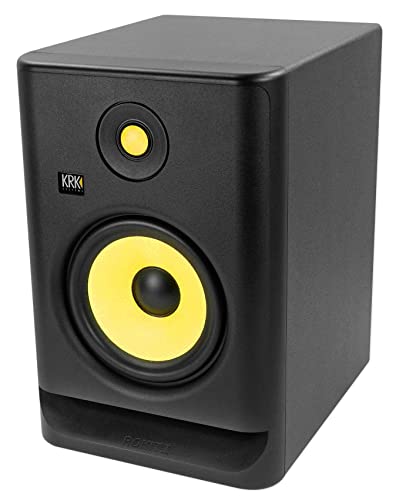
The KRK ROKIT7G4 listing describes a KRK 7 inch powered monitor in black, sold as a single unit. That single unit framing is important. If you already own one Rokit 7 G4 and need a second, or if you are building a system in stages, a single listing is the flexible route. If you are starting from nothing and need stereo immediately, compare this route carefully with the pair bundle covered next, because buying two singles and buying a pair bundle can differ in convenience and in how the purchase is packaged.
Rokit models occupy a familiar place in home and project studios. The family is widely associated with producers working on electronic, hip hop, pop, and other bass conscious styles, as well as with creators who simply want a powered monitor that fits a desk based workflow. We are careful here not to assign specifications that the title does not state. What the title does establish is the essentials for this comparison: powered operation, a seven inch format, the Rokit G4 generation, and a black finish.
Powered operation matters for simplicity. An active or powered monitor contains its amplification, so you connect a line level source rather than a speaker level amplifier output. That keeps a small rig tidy: interface or controller out, balanced or suitable line connection in, mains power to each speaker, and careful gain staging so the source is healthy and the monitor volume is set for a comfortable working level. In a seven inch system, that simplicity is part of the appeal for creators who move between music, video, and streaming work at the same desk.
As a single, this listing also suits mono checking and incremental expansion. Many editors keep a single monitor for dialogue or for checking how a stereo mix collapses, although a dedicated mono workflow needs thoughtful routing. Others start with one quality speaker for spoken word and add the second when budget allows. The risk in staged buying is delay: finishes and production runs can change over time, so if an exact visual and model match matters, do not assume a listing will remain available indefinitely.
KRK Rokit 7 G4 Studio Monitor Speaker Bundle — pair, black
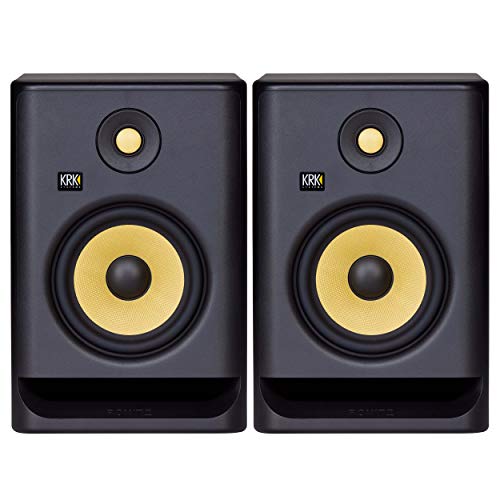
This is the pair bundle of the same Rokit 7 G4 line discussed above. We present it exactly that way on purpose. It is not a different acoustic model and it should not be read as a separate invention. Its value is configurational: two speakers, presented together as a bundle for a stereo setup, in black. For many buyers that is precisely the decision that matters, because stereo imaging, panning, reverb width, and balance judgments all require a left and a right speaker working as a team.
Buying as a pair can reduce friction. You receive the two units for a standard stereo triangle in one order, set them up together, and begin the placement process with both sides present. That matters more than it sounds. Placement is iterative: distance from the wall, distance between speakers, distance to your ears, toe in, and height all interact. Trying to judge those relationships with one speaker is like trying to judge a stereo reverb with one ear covered. A pair lets you hear the phantom center settle, hear whether a vocal sits in the middle, and notice when one side is closer to a corner and pulling the image.
A pair also invites disciplined matching of settings. Whatever controls a given unit provides, set both sides the same unless you have a measured reason to differ. Keep cable lengths and signal paths sensible, keep both speakers at the same height, and aim both tweeters toward the listening position in a symmetrical arrangement. Asymmetry is the silent enemy of stereo work in small rooms: a bookcase on one side, a corner on the other, and a desk reflection in the middle can do more harm than a modest difference between competing monitor models.
If you are choosing between two singles and this bundle, let availability, total convenience, and your expansion plans decide, not a mistaken belief that the bundle changes the underlying speaker family. It remains Rokit 7 G4. That clarity helps you read owner discussion, accessory listings, and setup advice correctly, because advice for the model applies to the model regardless of whether it arrived in a single box or as a pair purchase.
KRK Classic 7 Powered Two-Way Professional Studio Monitor (CL7G3-NA) — pair
The KRK Classic 7 is a different line from Rokit, and this listing is for a pair. The title identifies it as a powered two-way professional studio monitor, model CL7G3-NA, sold as a pair. Keeping Classic and Rokit separate is not pedantry. Product families exist because a maker wants to offer different voicing, styling, and feature emphases. A buyer who conflates them may order expecting one experience and receive another that is legitimate but different.
As a pair listing, the Classic 7 speaks to a buyer who wants to unbox a stereo system and get to placement and listening quickly. Two-way in the title simply means the frequency range is divided mainly between two drivers, the woofer handling lows and mids and the tweeter handling highs, with a crossover deciding where each driver works. That architecture is the norm in this entire roundup and in nearfield monitoring generally, because it balances cost, size, and coherence at close distance.
For program material, a Classic pair in a small studio can serve music production, video post, and general critical listening. The seven inch woofer size again is the anchor: enough cone area to give drums and bass a foundation at nearfield distance, without the cabinet bulk that makes a small desk feel like a loudspeaker warehouse. If your room is lively, budget time for placement experiments before judging any pair. Move the speakers a few inches, change toe in slightly, and listen to a familiar spoken recording and a familiar song after each change. Small moves in a small room are not small in effect.
Because this is a pair, think about stands or isolation early. Two cabinets on a resonant desk can couple energy into the furniture, blurring bass and adding a boxy color that is not in your mix. Stands that place tweeters near ear height, or good isolation pads on a solid desk, usually improve clarity more reliably than exotic cables. Symmetry, height, and decoupling are unglamorous, and they are where most home studio gains actually live.
Yamaha HS7W 7-Inch Powered Studio Monitor Speaker, White
The Yamaha HS7W is presented as a 7-inch powered studio monitor speaker in white, sold as a single unit. The finish is not a footnote for many buyers. A white monitor in a bright room, a video set, a design studio, or a home office can blend with the space or become an intentional visual element, while a black monitor can disappear against darker furniture. Since speakers are large objects that sit at eye level all day, appearance honestly affects whether a setup feels pleasant to work in.
Yamaha and its HS family carry a long association with the idea of a reference style monitor for project studios, a lineage that listeners often discuss in terms of plain spoken midrange presentation. We keep our claims here to what general reputation and the title support, and we encourage readers to judge with familiar material. For dialogue editors and vocal focused producers, midrange honesty is the daily currency: sibilance, nasal resonance, room echo on a voice recording, and the balance between a vocal and an accompaniment all live there. A seven inch woofer that keeps the mids clear while adding useful low support is exactly the compromise this category promises.
As a single listing, the HS7W follows the same staged buying logic as the other single monitors. Buy two for stereo. Match finish if the visual pair matters. Set both at equal height and distance. If you mix in a room that also serves as a living space, the white finish may make a larger seven inch cabinet feel less imposing, which can be a practical advantage when a setup shares a household room.
Powered operation keeps the signal chain simple for an interface based desk. It also means each speaker needs mains power, so plan cable routing that keeps power and audio runs tidy and separated where practical. Tidy routing is not cosmetic fussiness: it reduces trip hazards, makes troubleshooting faster, and discourages the hum and buzz mysteries that often trace back to a rushed nest of cables behind a desk.
DYNAUDIO LYD 7 7 Inches Powered Studio Monitor
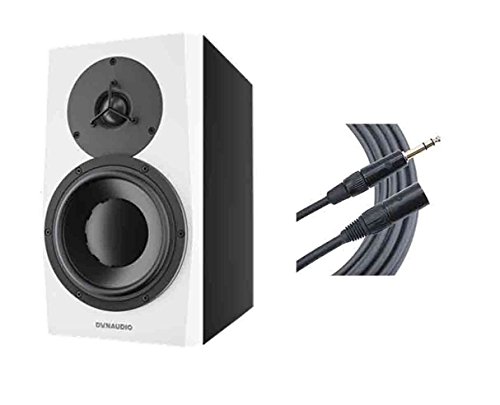
The DYNAUDIO LYD 7 is listed as a 7 inches powered studio monitor, sold as a single unit. Dynaudio is a name many audio readers associate with careful loudspeaker engineering across both professional and home listening products, and the LYD family is its offering aimed at modern project and professional workspaces. Within this roundup, the LYD 7 represents the step toward a more boutique choice while staying on the same seven inch axis that defines the comparison.
That positioning matters for expectations. A buyer considering the LYD 7 is often prioritizing refinement in presentation and build, and is prepared to spend time on placement to earn the benefit. In a small room, refinement can be wasted if the speakers are shoved into corners or aimed carelessly, while a modest speaker placed well can surprise you. Our research advice is consistent across price tiers: secure the geometry first. Equal distances, tweeters near ear level, a listening position that is not hard against the rear wall, and some thought about first reflections will do more for stereo focus than agonizing over tiny specification differences that a title does not even state.
As with the other singles, a stereo buyer needs two units. Consider also the long view: a monitor is a tool you may keep through several computers, interfaces, and rooms. A design you find comfortable at low and moderate levels, hour after hour, protects both your ears and your decisions. Listening fatigue is real, and it often shows up as a urge to keep turning up. Resist that urge with any model here. Work at a sensible level, take breaks, and check balances quietly, because a mix that reads at low volume usually has its priorities right.
Placement: where seven inch monitors succeed or fail
Placement is the cheapest upgrade in studio monitoring and the most commonly skipped. Start with the classic nearfield triangle: the two speakers and your head form roughly an equilateral triangle, with tweeters at about ear height when seated. Distances in a desk setup are often around a meter to a meter and a half, adjusted to the room and furniture. Toe the speakers inward so their axes cross near your head, then fine tune by ear with a familiar mono recording, which should image as a stable center rather than a vague wash.
Distance from the front wall shapes bass. A speaker very close to a wall gains low frequency reinforcement that can flatter bass light material and sabotage bass decisions. Pulling the speaker out usually cleans the low mids, but in a small room that move pushes you closer to the rear wall, which brings its own reflections. There is no universal inch count. Move in small steps, mark positions with tape, and compare the same short passages. Keep notes in plain language, such as tighter kick or less boxiness, so the comparison survives a coffee break.
Side walls and corners deserve equal respect. A corner is a bass trap in the worst sense, loading one speaker with extra low energy and bending the stereo image. If one speaker must be nearer a side wall than the other, expect image shift and tonal imbalance, and consider rearranging the whole desk rather than compensating endlessly with controls. Desks themselves reflect sound back to your ears, creating comb filtering that dulls clarity. A slightly higher speaker position, isolation pads that angle the cabinets correctly, and keeping the desk surface reasonably clear between speaker and listener all help.
Height, stands, and isolation
Tweeters near ear height is the rule of thumb because high frequencies are directional and because the crossover region between woofer and tweeter usually behaves best on the intended axis. Stands are ideal when space allows, because they decouple the cabinet from the desk and free you to position speakers independently of furniture edges. On a desk, isolation pads or purpose built supports reduce vibration transfer and let you set a slight angle. Avoid stacking speakers on wobbly piles of books or foam offcuts that can shift and, in the worst case, let a cabinet fall.
Listening position and the rear wall
Your chair is part of the system. Sitting against the rear wall places your ears in a zone of strong reflections and bass buildup. Sitting exactly in the center of a rectangular room can place you in a null for some low frequencies. When the room allows, experiment with moving the listening position forward or back by modest amounts and repeat a bass heavy passage at the same playback level. You are listening for evenness: notes in a bass line should sound like members of the same family, not a lottery where one note booms and the next disappears.
Connections and gain staging
Most readers will feed these powered monitors from an audio interface, a monitor controller, or a mixer. Use the balanced connection when your source offers it and the monitor accepts it, especially for longer runs. The T7V title explicitly lists XLR and RCA, which makes its flexibility concrete. For the other models, check the rear panel description on the listing you buy from before ordering cables, because cable needs are a dull reason for a setup to stall on delivery day.
Gain staging is simple when done in order. Set the monitor level controls to a sensible starting point recommended for the unit, play a familiar recording at your normal interface output level, and adjust so that your working volume is comfortable with headroom to spare. Avoid running a source extremely low and the speakers extremely high, which can raise the audibility of noise, and avoid the opposite extreme that risks a damaging blast if a program opens at full output. Mark your normal setting. Consistency of listening level is a mixing skill: balances judged at one level can feel different at another, particularly in the bass and treble extremes.
What seven inches cannot do
Honesty about limits improves results. A seven inch monitor in a small room will not reproduce the deepest sub bass of cinema effects or electronic music with the physical ease of a large system or a well integrated subwoofer. It can still reveal whether that sub layer exists, whether it overwhelms the kick, and whether a high pass decision is needed. If your work depends on sub frequency judgment, plan for careful headphone checks or a future subwoofer integrated with restraint, and remember that adding a sub to a small untreated room adds placement problems along with extension.
A monitor also cannot fix arrangement, performance, or recording problems. It can reveal them earlier, which is the point. Room echo on a vocal, a harsh guitar recording, a muddy overlap between bass and piano: a clear seven inch system makes those issues harder to ignore at the stage when fixing them is cheapest. That revealing quality is why buyers often describe a first good monitor as both exciting and slightly uncomfortable. Familiar songs show flaws you never noticed, and your own mixes do the same.
Matching the monitor to the work
Music production in a bedroom or project room
For beat making, songwriting, and general production, prioritize a pair, sensible placement, and a presentation you can trust at moderate volume for long sessions. The Rokit pair bundle and the Classic pair speak directly to that need for a ready stereo set, while two singles from ADAM Audio, Yamaha, or Dynaudio let you choose a family first and assemble the pair from single listings. None of those routes is automatically superior. The superior route is the one that leaves budget and attention for stands, pads, cables, and basic room adjustments.
Podcast, voice, and video editing
Spoken word work lives in the midrange and in the details of room sound, breaths, mouth noise, and sibilance. A seven inch monitor gives voices a natural body without the thinness that can make editing judgments timid. Editors who mainly cut dialogue in small rooms may value a clear, unhyped presentation and a setup that also works quietly, because much dialogue editing happens at low level. A single monitor can serve a simple voice setup, but stereo video work, music beds, and effects placement argue for a pair.
Media, gaming adjacent creation, and general listening
Creators who move between editing, streaming assets, and enjoying music at the same desk often prefer one versatile pair rather than separate systems. A seven inch powered pair fills that role comfortably in a small room, with enough scale for video sound and enough accuracy for content work. Keep the distinction clear, though: these are studio monitors intended to tell the truth, not party speakers intended to fill a hall. For filling a hall or a rehearsal space, a PA speaker is a different tool with different priorities.
best 100 dollar gaming monitors
Buying checklist before you order
- Count the units. Single listings require two purchases for stereo; pair and bundle listings already describe two speakers.
- Confirm the family. Rokit G4 and Classic are different KRK lines; the Rokit pair bundle is the same Rokit G4 line sold as a pair.
- Confirm finish. Black and white options change how a visible setup looks every day.
- Plan placement. Stands or isolation, tweeter height, distance from walls, and a symmetrical layout matter as much as model choice.
- Plan cables and power. Each powered speaker needs mains power and a line level audio connection from your interface, controller, or mixer.
- Plan the room. A modest amount of soft furnishing, sensible speaker distance from boundaries, and a listening position away from the rear wall improve any choice here.
- Protect your hearing. Set a comfortable working level, mark it, and take breaks during long sessions.
Frequently asked questions
Is a 7 inch monitor too big for a small bedroom studio?
Usually not, if you can keep some distance from walls, place the pair symmetrically, and listen at a modest nearfield distance. In a truly tiny or very reflective room, any monitor needs placement care, and a smaller speaker can be easier to accommodate. But for most bedroom and spare room setups, seven inches is a workable middle size rather than an excess.
Do I need a subwoofer with a 7 inch monitor?
Not to begin with. Learn the monitors in your room first, check low end decisions on headphones you know well, and see whether your material actually demands deeper extension. Many producers work for years on a good seven inch pair without a sub. If you later add one, integrate it carefully at a modest level so it extends the bottom rather than taking over the room.
Should I buy a pair bundle or two singles?
Buy whichever route gives you two units of the exact model and finish you want, with the least friction. A bundle or pair listing is convenient for a fresh stereo setup. Singles suit staged buying, replacement, or expansion. The important check is identity: same family, same model, same generation, so the left and right speakers behave as a team.
How loud should I listen while mixing or editing?
Quietly enough that you can work for hours without fatigue and hold a conversation without shouting. Brief louder checks can reveal how a mix holds together, but sustained high level listening dulls judgment and risks hearing damage. Consistency matters more than bravado: return to the same marked level for critical balance decisions.
Can I use these monitors without an audio interface?
You can feed powered monitors from many line level sources, but an interface or a proper monitor controller usually gives better level control, cleaner conversion, and the balanced outputs studio gear expects. If you start with a simple source, keep levels controlled, use suitable cables, and upgrade the source when the workflow demands it. The monitors will still be there, ready for the better chain.
Check prices on Amazon
Live listings for the shortlist in this guide are pulled from Amazon below, so prices and availability are always current at the moment you look.

Our verdict
There is no single winner here, because the six listings divide by configuration and family as much as by sound. The ADAM Audio T7V offers the richest stated specification in this group, with its U-ART tweeter, stated frequency range, dual XLR and RCA connections, and shelf EQ making it a strong candidate for a buyer who values flexibility and detail. The KRK Rokit 7 G4 as a single suits staged buying and replacement, while its pair bundle is the straightforward stereo route for the same line. The KRK Classic 7 pair serves buyers who prefer that separate Classic family in a ready made pair. The Yamaha HS7W in white suits a bright, visible workspace and a buyer who wants a single unit route into a respected HS family. The DYNAUDIO LYD 7 suits a buyer drawn to a more boutique single monitor choice within the same practical size class.
Whichever route you choose, spend as much care on the triangle, the stands, and the room as on the badge. A seven inch monitor rewards that care with a rare combination: bass you can make decisions about, mids you can trust for voices and instruments, and a cabinet size that still respects a real room where real people work. That is why this size endures, and why, for small to midsize studios, it is so often the right answer rather than merely the middle one.
As an Amazon Associate, this publication earns from qualifying purchases made through links in this guide, at no added cost to readers, which helps fund our ongoing research into studio gear.


