Our Top Picks
 Sony SS-CS5M2 3-Way 3-Driver Hi-Res Compact Bookshelf Speakers8.7 x 7 x 13.2 inches1 poundsCheck on Amazon
 Pioneer F-Series TS-F1634R 6.5" 2-Way Coaxial Car Speakers6.5”4.87 x 6.25 x 5.62 inches2.2 poundsCheck on Amazon
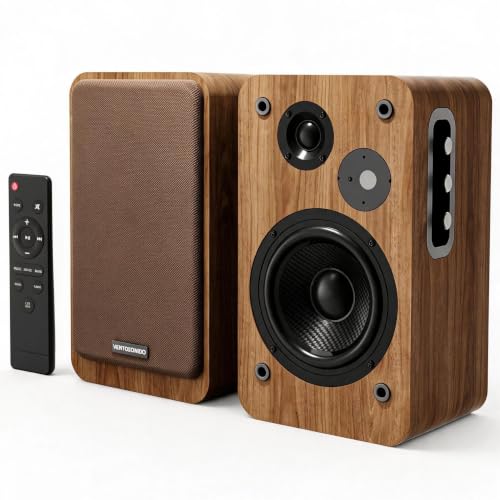 VENTOSONIDO Active Bookshelf Speakers 36W RMS Studio Monitor6.1x6.1x10.4 inches6.1 x 10.4 x 6.1 inchesCheck on Amazon


What's inside
- Best speakers for the Saxo: start with the car, not the catalogue
- What the factory system in a Saxo actually looks like
- Why sensitivity matters more than wattage on a factory head unit
- Mounting depth and the Saxo door: the measurement that decides fit
- Coaxial or component speakers in a car this small
- Impedance, polarity and the Saxo wiring you will actually find
- Door cards, vapor barriers and keeping water away from the new speakers
- Rear locations: what the small apertures can and cannot do
- Reading a spec sheet with a Saxo in mind
- Common mistakes Saxo owners make when choosing speakers
- Check prices on Amazon
- A pre-purchase checklist for the Saxo owner
As an Amazon Associate I earn from qualifying purchases. This post may contain affiliate links at no extra cost to you.
Best speakers for the Saxo: start with the car, not the catalogue
The Citroen Saxo was built from 1996 to 2003, and almost everything about choosing replacement speakers for one follows from that simple fact. This is a small, light hatchback from an era when factory audio was modest, door cavities were shallow, and trim levels changed the speaker layout more than most listings admit. A speaker that suits a modern family car with deep doors and a separate amplifier will often be a poor match here, even when its diameter looks right on paper. The Saxo rewards a different set of priorities: correct diameter for the aperture already cut into the door, shallow enough mounting depth to clear the window mechanism, high enough sensitivity to work with the low output of a factory head unit, and construction that tolerates heat, damp and vibration in a car that is now more than two decades old.
This guide stays on that narrow brief from start to finish. It covers speakers sized for the locations the Saxo actually provides, driven by the kind of head unit the car left the factory with or a like-for-like replacement of similar output. It does not wander into subwoofers, boot builds, high-power amplifiers or door pods that require cutting metal. If your goal is a Saxo that sounds clearer, fuller and less strained at ordinary listening levels, with speakers that physically fit behind the original grilles, the sections below work through the decisions in the order you will meet them: what is in the car now, what the published specifications really mean for low power, how to measure before ordering, and how to fit the new units without creating rattles, water leaks or wiring faults.
One disclosure belongs near the top rather than buried at the end. This guide was compiled from published specifications, manufacturer documentation and fitment references rather than from direct use of the products in a vehicle, so treat every recommendation here as a paper-based shortlisting method that you confirm against your own car before you buy.
What the factory system in a Saxo actually looks like
The Saxo shared its basic structure with the Peugeot 106, and its audio equipment followed the pattern of most European superminis of the period. Base models left the factory with a simple radio cassette or, on later cars, a radio CD unit, feeding a small number of full-range speakers. Higher trims added separate tweeters and sometimes rear speakers. Because the range ran for seven years and covered everything from a basic 1.0 litre runabout to the VTR and VTS performance versions, there is no single factory layout that describes every car, and assuming there is one is the first route to ordering the wrong speakers.
On many trims the front speakers live low in the front doors, behind a round or oval grille in the door card, and the aperture behind that grille is commonly sized for a 13 cm unit, which is the metric size sold in English-speaking markets as 5.25 inch. That figure describes the nominal cone diameter class, not the exact cut-out, and the distinction matters later in this guide. Some cars have a spacer or a moulded carrier behind the card that defines the mounting points, so the screw pattern and the depth available are set by that carrier as much as by the door skin itself. Before treating 13 cm as settled for your car, pull one door card or at least remove the grille where the design allows it, and measure what is really there.
Higher trim cars added a tweeter provision near the top of the dashboard or at the top of the door area, depending on year and specification. Where that provision exists, a component speaker set becomes a realistic option because the separate tweeter has somewhere sensible to live. Where it does not exist, the tweeter has to be surface mounted, set into a trim piece you are willing to modify, or omitted in favour of a coaxial design with the tweeter already mounted in front of the main cone. Neither answer is automatically better. The deciding factors are whether you want to alter visible trim on an aging car and whether the crossover unit supplied with a component set can be housed somewhere dry and secure inside the door or behind the dashboard.
Rear speaker provision varies more than front provision, and body style is the main reason. The three-door car has solid rear side panels beside the back seat, and some versions carry small speakers in those panels. The five-door car places rear provision differently because the rear doors and their cards enter the picture, and some versions rely on speakers near the parcel shelf area instead. Other Saxos left the factory with no rear speakers at all, even though the wiring or the panel moulding may hint at a location that was only populated on a better equipped version. A grille shape in a rear panel is not proof that a speaker, a full depth cavity or a complete pair of wires sits behind it.
Trim age matters as much as trim level. A Saxo built in 1996 and one built in 2003 may share a model badge while differing in head unit, connector type, speaker carrier and even the clips holding the door card. Cars that have passed through several owners often carry a mixture: a later head unit in an early car, aftermarket speakers wired with improvised joints, or a door card from a different version fitted during a repair. For that reason this guide keeps returning to one habit. Verify the apertures, depths and connectors on your own car, on both sides, before any order is placed. Ten minutes with a tape measure and a torch prevents the most common and most avoidable failure in this whole project, which is a box of correct-looking speakers that do not fit the holes in your doors.
The factory head unit deserves a clear description too, because it sets the electrical ceiling for everything else. Units fitted to cars of this class and period typically deliver modest continuous output per channel, far below the headline figures printed on the boxes of modern replacement speakers. They were designed to run efficient 4 ohm speakers at background and moderate listening levels, not to drive heavy cones with large magnets through long excursions. That is not a defect to work around with wishful thinking. It is the central design constraint of a Saxo speaker upgrade, and the next section explains why one specification, sensitivity, matters more than any other number on the box.
Why sensitivity matters more than wattage on a factory head unit
Sensitivity is the specification that tells you how much sound a speaker produces from a given amount of electrical power. It is usually published as a figure in decibels measured at one metre from the speaker with one watt of input, written as dB at 1W/1m, although some makers measure at 2.83 volts instead, which for a 4 ohm load is not the same thing as one watt and can flatter the figure. When you compare two speakers for a Saxo, first check that the ratings were produced the same way. A speaker rated at 91 dB at 1W/1m and another rated at 91 dB at 2.83V/1m are not equally loud on the same head unit, and the gap between measurement methods has caught out many buyers who compared headline numbers only.
The reason sensitivity dominates this particular decision is the limited power available. Doubling amplifier power adds roughly 3 dB of output, and 3 dB is a clearly noticeable step in loudness, though it is not a doubling of perceived loudness, which takes something closer to 10 dB. A factory head unit cannot double its power on request. It delivers what it delivers, and at the top of its range it simply distorts. So the practical way to gain clean volume in a Saxo is not to hunt for speakers that tolerate more power. It is to choose speakers that need less power to reach the level you listen at. A difference of 3 dB in sensitivity between two 13 cm speakers is equivalent, in output terms, to doubling the amplifier power feeding the less efficient one. On a low-power system that equivalence is the whole game.
Put concrete numbers on it. Suppose one speaker is rated at 88 dB at 1W/1m and another at 92 dB at 1W/1m. Fed with the same few watts from the same head unit, the second speaker plays noticeably louder at every volume setting, and it reaches your preferred listening level while the head unit is still working in the cleaner part of its range. The first speaker asks the head unit to work harder for the same result, so distortion arrives earlier and the sound hardens on voices and cymbals just when you turn it up for a motorway run. Neither speaker is faulty. The difference is efficiency, and in this car efficiency is worth more than a long list of other virtues.
This is also why high RMS power handling, on its own, tells you almost nothing useful here. RMS handling describes how much continuous power a speaker can accept without damage. It is a ceiling, not a promise of output. A heavy 13 cm speaker rated for a large RMS input but with sensitivity in the mid 80s is built for a system with a separate amplifier, and on factory power it will often sound quieter and less lively than the worn original it replaces. Owners then blame the head unit, turn it up further, and drive it into clipping, which produces the harsh, tiring sound they were trying to escape. The published specification predicted the outcome from the start: low sensitivity plus low available power equals low clean output.
Peak power figures deserve even less attention. A peak or maximum rating describes a brief burst under conditions defined by the maker, and makers define those conditions differently, so peak numbers cannot be compared across brands with any confidence. For a Saxo running on factory power, peak ratings are irrelevant in both directions. The head unit will never approach them in normal use, and the speaker will never be asked to handle them. Shortlist by sensitivity first, then by fit, then by frequency response and construction. Let power handling serve only as a sanity check that the speaker is not unusually fragile.
There is a second, quieter benefit to choosing efficient speakers for this car. Because the head unit reaches a given loudness at a lower setting, the whole system runs with more headroom, and headroom is what keeps transients clean: the crack of a snare, the attack of a plucked string, the consonants at the start of a spoken word. Speech intelligibility in a small, noisy hatchback cabin depends on those details more than on bass weight. A sensitive speaker will not turn a Saxo into a quiet car, but it makes the most of the power that is actually available behind the dashboard.
If you are comparing the Saxo door size with the larger format used in many other cars, a companion guide on that size is a useful reference point for how sensitivity figures are presented across brands.
best 5 25 car speakers with bass
Read it for the rating conventions rather than for fitment, because the Saxo decision always comes back to the 13 cm aperture and the shallow door behind it.
What a good sensitivity target looks like for this car
As a working rule drawn from published ranges for this size class, look for speakers rated around 90 dB at 1W/1m or above when the rating method is stated plainly, and treat figures in the high 80s as workable rather than ideal. Be sceptical of unusually high claims from unknown brands with no stated method, no stated impedance at the measurement voltage and no frequency range attached to the figure. A sensitivity number without its method is marketing copy, not a specification. Reputable makers publish the method, the nominal impedance and the frequency response in the same table, and that completeness is itself a useful signal when you are building a shortlist from listings and data sheets.
Mounting depth and the Saxo door: the measurement that decides fit
If sensitivity decides how a speaker will sound in a Saxo, mounting depth decides whether it can be fitted at all. Top-mount depth is the distance from the back of the mounting flange to the deepest part of the speaker, usually the back of the magnet assembly. It is published in millimetres or inches on the data sheet, and it must be compared with the depth available inside the door, measured from the mounting face to the nearest obstruction with the window fully down. That last condition is the one people forget. In many small cars the window glass or its regulator mechanism passes directly behind the speaker aperture as the window lowers, so a speaker that clears everything with the window up can foul the glass the first time the window is wound down.
The Saxo door is a shallow structure. It was designed for a light car with manual or simple electric windows, thin trim and a modest speaker, and there is little spare room behind the aperture. Replacement speakers in the 13 cm class vary a great deal in depth because magnet size, basket design and the shape of the rear assembly all differ. Two speakers with the same nominal diameter can differ in top-mount depth by a centimetre or more, and a centimetre is more than enough to decide between a clean fit and a magnet pressed against a regulator rail. Diameter gets the attention in listings because it is the headline size. Depth is the figure that determines whether the door card goes back on.
Measuring your own car removes the guesswork. With the door card removed and the window lowered, measure from the mounting face of the aperture straight back to the first obstruction, then repeat the measurement at several points around the circle because the obstruction is rarely parallel to the mounting face. Measure the aperture diameter itself, the distance between mounting holes, and the depth of any factory spacer or carrier that will remain in place. Write the figures down for both doors. Cars that have been repaired after a side impact can differ from one side to the other, and a speaker that fits the left door is not guaranteed to fit the right one.
Also measure the cut-out, not just the nominal size. A speaker sold as 13 cm or 5.25 inch needs a circular opening of a specific diameter, stated on the data sheet as the cut-out or mounting hole diameter, and that figure is smaller than the overall frame diameter. If the Saxo aperture or its carrier provides a slightly smaller opening, the basket may not seat flat, and forcing it distorts the frame and can affect how the cone moves. A speaker that does not sit flat also seals poorly against the mounting face, and a poor seal lets the sound produced behind the cone leak forward and cancel part of the bass the front of the cone is making. Fit, seal and sound quality are connected in ways that a diameter headline never reveals.
Spacer rings are the usual answer when depth or cut-out is slightly wrong, and they can work well in a Saxo if they are chosen carefully. A shallow spacer moves the speaker forward, gaining clearance behind the magnet at the cost of pushing the cone and surround closer to the door card and its grille. That trade has a limit. If the surround touches the card at high excursion, you gain a buzz that appears only on bass-heavy passages and is maddening to trace. Plastic spacers are light and easy to trim. Medium density fibreboard rings are stiffer but need protection from door moisture. Whichever material you choose, check the full stack: speaker, spacer, card and grille, with the window down, before any trim is finally clipped back into place.
Magnet diameter matters alongside depth. A wide magnet can foul parts of the door structure even when the published depth looks safe, because depth is measured at the centre and the obstruction may sit off-centre. When a data sheet gives magnet dimensions, compare them with the shape of the space you measured, not just its maximum depth. If a listing gives no depth figure at all, treat that absence as a reason to look elsewhere. For a car with this little room, a maker who does not publish top-mount depth is asking you to gamble with your door cards, your window mechanism and your return postage.
Coaxial or component speakers in a car this small
A coaxial speaker mounts the tweeter in the centre of the main cone, on a post or bridge, so one unit covers the full frequency range from a single location. A component set separates the two drivers: a woofer in the door and a tweeter mounted higher up, joined by a crossover that divides the signal between them. Both approaches are sold in the 13 cm size the Saxo needs, and both can work on factory power if the sensitivity is right. The choice in this car is less about abstract sound quality and more about tweeter location, crossover housing and how much original trim you are prepared to change.
The case for a coaxial in a Saxo is practical strength. There is one unit to fit in each door, no crossover box to house, no extra wire run to a tweeter position, and no hole to cut in a dashboard or pillar trim that is now difficult to replace if the work goes wrong. The tweeter sits low in the door, which is not the ideal height for imaging, but in a narrow cabin where the listeners sit close to the speakers and the glass area is large, the penalty is smaller than theory suggests. For a base or mid-trim car with no factory tweeter provision, a good coaxial with a silk dome tweeter and a high sensitivity rating is often the most sensible purchase: it fits the existing hole, uses the existing wiring and lifts clarity where the original full-range unit was weakest.
The case for a component set rests on the higher trims that already provide a tweeter location. A tweeter mounted near dashboard height raises the perceived position of voices and lifts detail out of the footwell, where trouser legs, seats and the transmission tunnel absorb and block high frequencies. If your car has the provision, using it costs no extra cutting, and the improvement in clarity for speech and acoustic music can be worthwhile. The costs arrive elsewhere. The crossover supplied with most sets is a box that needs a dry, secure home. Inside a Saxo door is neither reliably dry nor generous in space, so many fitters place the crossover behind the dashboard or under the door card on the dry side of the vapor barrier, with the wires passing through a sealed point. That is more work, more wire and more joints, each of which must be insulated and secured against vibration.
Tweeter material and aiming deserve attention in either format. Silk and other textile domes tend to present a smoother character on paper, with well controlled behaviour at the top of their range, while metal domes can offer extended response with a sharper edge that some listeners find tiring in a reflective small cabin. These are tendencies drawn from published response curves and material properties, not guarantees about a specific model. Where a coaxial tweeter can be angled or a component tweeter sits in an adjustable cup, small changes in aim toward the opposite listener make a real difference to how evenly the two seats are served. Set the aim before the cards go back on, because adjusting it afterwards means removing them again.
Owners sometimes look at the larger 16.5 cm format, sold as 6.5 inch, and wonder whether the Saxo door could be persuaded to accept it for the sake of extra bass. The honest answer for a standard car is that the aperture, the carrier and the depth are arranged for the smaller size, and enlarging the opening is irreversible work on a door that also has to keep water out and a window moving. If you want to understand what the larger coaxial format offers in cars built for it, that comparison is covered separately.
best 6 5 coaxial car speakers
For the Saxo itself, stay with the size the door was made for and gain your improvement from sensitivity and tweeter quality instead of cone area you cannot house properly.
Impedance, polarity and the Saxo wiring you will actually find
Car speakers for this application are built to a nominal impedance of 4 ohms, and the factory head unit in a Saxo expects that load. Impedance is not a fixed resistance; it varies with frequency, and the nominal figure is the reference value the amplifier was designed around. Fitting a speaker of much lower nominal impedance asks the head unit to deliver more current than its output stage was built to supply, which can bring heat, distortion and, in the worst case, a protective shutdown or damage. Fitting a much higher impedance unit is electrically gentle but wastes the little power available. For this car the correct decision is also the simple one: buy 4 ohm speakers, and be wary of listings that hide the impedance or quote it only for a different model in the same range.
Polarity sounds trivial and causes a disproportionate share of bad results. Each speaker has a positive and a negative terminal, and both front speakers must be wired with the same polarity relative to their channels. If one side is reversed, the two cones move in opposite directions for the same signal. Bass thins out, voices lose their centre and the sound seems to come from everywhere and nowhere at once. This error, called a phase reversal between channels, survives casual listening checks because each speaker still makes sound when faded to its own side. It only reveals itself when both play together. Mark the positive wire on each side before you disconnect anything, photograph the original connections, and after fitting, play a mono recording with the balance centred and listen for a solid central image and full low notes. A weak, hollow centre points straight back to one reversed pair.
Factory wire colours are a guide, not a guarantee, and they should never be the only evidence you rely on. Colours vary by year and market, previous owners may have altered the wiring, and a wire that looks original may have been rejoined in a different colour inside the loom. A multimeter can confirm continuity back to the head unit connector, and a careful check of the connector diagram for your head unit settles which pin serves which corner of the car. Where certainty is impossible from colours alone, test one side at a time and label everything as you go. Labels made during the work are worth more than memory a week later when a fault appears.
Adapter harnesses are the tidy way to connect new speakers to the factory loom. The Saxo may present a moulded speaker connector, bare spade terminals or wires joined directly, depending on year and history. A vehicle-specific adapter lead converts the factory plug to the standard spade sizes used on replacement speakers, which means no factory wire is cut and the original speakers could be refitted later. That reversibility matters on a car that may be sold, restored or returned to standard. Cutting the loom to save the small cost of an adapter is a poor trade, and twisted-together joints covered in tape are a predictable source of future crackles and dropouts.
Spade terminal sizes are a small detail that stops work when it is ignored. Replacement speakers commonly use two different widths of spade, the wider one for positive and the narrower for negative, which is a deliberate guard against reversal. Factory wires and generic adapter leads do not always match those sizes. A loose spade that slides on without grip will work loose with door vibration, and a tight one forced onto the wrong terminal can crack the terminal board on the speaker. Keep a small pack of insulated spades in the common sizes on hand, crimp them properly rather than squeezing them with pliers meant for other work, and give each finished joint a firm pull before the speaker goes into the door.
The same low-power logic that governs the front doors applies when owners compare speaker sizes for other vehicles, and a guide to the larger format on factory power shows how sensitivity and impedance arguments repeat at that size.
best 6 5 inch car speakers without amp
In the Saxo, though, the wiring task stays refreshingly small: two channels at the front on most cars, short wire runs, and connectors you can reach without removing the dashboard if you work patiently from the door side.
Door cards, vapor barriers and keeping water away from the new speakers
Fitting the speaker is only half the job in a Saxo door. The other half is returning the door to a state where it keeps water out of the cabin, holds its trim without rattles and lets the window and locks work as before. Door cards on a car of this age are held by a mixture of screws, often hidden behind the handle, the switch panel or a trim cap, and plastic clips around the edges that push into holes in the door frame. Those clips were flexible when the car was new. After more than twenty years of heat cycles they are brittle, and pulling a card straight outward without working around its edge will snap them. A wide trim tool, patience and a supply of replacement clips in the correct size turn a risky removal into a routine one.
Work the screws out first and keep them in order, because door cards of this era often use two or three different lengths and a long screw in a short hole can mark the outer skin or foul a mechanism. Lift the card upward at the end of the removal rather than pulling it straight off, since many designs hook over the top edge beside the window seal. If a card resists, stop and look for the fastener you missed. Force is how locating pegs break and how the hardboard or plastic backing of an old card cracks along its edge, damage that no speaker upgrade can justify.
Behind the card you will find the vapor barrier, a plastic sheet sealed to the door frame with a bead of tacky sealant. Its job is to keep the water that inevitably enters the door through the window seal on the wet side of the structure, draining out through holes at the bottom of the door, while the cabin side stays dry. Owners often tear this sheet for access and leave it hanging. The results arrive slowly: damp carpets, misted windows, a musty smell, corrosion at the bottom of the door and water tracking onto the back of the speaker. Peel the barrier back carefully, keep its sealant bead intact where you can, and reseal it fully when the work is done, pressing the bead closed around its whole perimeter and around every wire or rod that passes through it. Replacement sheet and butyl sealant tape are inexpensive compared with drying out a floor pan.
The speaker itself lives on the boundary between the wet and dry sides of the door, and it deserves some protection. Water running down inside the door can drip onto the top of the basket and reach the cone surround and the terminals. A foam baffle or a simple shield above the rear of the speaker deflects drips while leaving the speaker able to use the door volume behind it. Closed foam baffles that fully enclose the back of a small speaker can restrict its bass output by trapping it in too small an air volume, so many fitters use an open shield or trim the bottom of a baffle to let the speaker breathe into the door while still shedding water from above. Whichever approach you choose, confirm the drain holes at the bottom of the door are clear, because a door that holds standing water will defeat any shield eventually.
Rattles are the other long-term enemy, and a speaker upgrade is the perfect moment to deal with them. The usual sources in a Saxo door are a loose window regulator fixing, a wiring loom resting against the skin, a clip missing from the card, and the card itself vibrating against the frame at one corner. Small self-adhesive damping pads on the flat areas of the outer skin reduce panel resonance, and foam tape at contact points between card and frame stops buzzes that appear only on certain bass notes. Do not cover the whole door in heavy material. This is a light car, the doors are small, and a few well placed pads achieve most of the benefit. More important than any product is the method: after refitting, play music with strong low notes at moderate volume, press on panels and trim in turn, and note where the noise stops. That locates the source in a way guesswork never does.
Rear locations: what the small apertures can and cannot do
Rear speakers in a Saxo should be approached with modest expectations and a clear sense of purpose. The rear locations, where they exist, are smaller than the front door locations, the panels that hold them are lighter, and the listeners in the front seats sit far from them with seat backs in between. Rear speakers in this car are for fill: they add a sense of space, support passengers in the back seat and stop the sound stage from collapsing entirely into the footwells. They will not supply the main bass, they will not fix a weak front stage, and spending more on the rears than on the fronts is money pointed in the wrong direction.
On three-door cars the rear side panels beside the back seat are the usual home for factory rear speakers, and the apertures there are commonly in the 10 cm class, sold as 4 inch. Panel depth behind those apertures can be tight, and the panel itself is a trim piece rather than a rigid baffle, so a heavy speaker with a large magnet is both a fit risk and a rattle risk. On five-door cars and versions with provision near the parcel shelf, the exact size and depth differ again, which returns to the standing rule of this guide: measure your own car. A rear location that exists on a forum photograph of a VTS may not exist, or may exist in a different size, on your five-door Desire or your early base model.
If your car has no rear speakers and no wiring to the rear locations, think carefully before adding them. Running wires from the head unit to the back of a Saxo is not difficult in itself, but it means lifting trim, passing wires under carpets and through the area behind the rear seat, and connecting to the correct pins at the head unit. The gain for front seat listeners is small. The gain for regular rear passengers is larger, and families carrying children in the back may judge the work worthwhile for that reason alone. Decide based on who actually sits in the car, not on the idea that four speakers must automatically be better than two.
Owners researching the smaller rear size will find that the 10 cm class has its own conventions for sensitivity and depth, set out in a dedicated guide to that format.
best 4 inch car speakers
Apply its reading of the specifications to the Saxo rear panels with the same caution used at the front: confirm the rating method, confirm the depth against your panel, and favour efficiency over power handling because the rear channels of a factory head unit offer no more power than the front ones.
Setting up the finished system matters more than the rear speakers themselves. Start with the fader set so the front speakers carry the performance and the rears sit a few steps behind, audible as support rather than as a second source pulling voices toward the back of the car. Set the balance to centre, then adjust only if a fitting fault or a hearing preference on one side calls for it. Keep bass and treble controls close to flat at first and live with the result for a few journeys before reaching for them. Fresh speakers in old doors often sound brighter than the worn originals simply because the tweeters are working properly, and owners who add treble on day one frequently turn it back down within a week. If your head unit offers a loudness function, note that it boosts bass and treble at low volume and can make a small speaker work hard at frequencies it cannot reproduce cleanly. Many Saxo systems sound tidier with loudness off once efficient speakers are fitted.
Reading a spec sheet with a Saxo in mind
A speaker data sheet contains more numbers than any buyer needs, and a few that decide everything for this car. You have met the important ones already: nominal diameter and cut-out, top-mount depth, sensitivity with its measurement method, and nominal impedance. The remaining figures worth your attention are frequency response, cone and surround materials, and tweeter construction, each read with the limits of a 13 cm cone and a factory head unit firmly in mind.
Frequency response is usually quoted as a range, for example from a low figure in hertz to a high figure in kilohertz, sometimes with a tolerance in decibels and sometimes without. The tolerance is what makes the range meaningful. A range quoted without a tolerance, or with a very wide one, can claim deep bass that the speaker produces only at a level far below its midrange output. A 13 cm cone in a Saxo door will not reproduce the lowest octave of music with real weight, whatever the range on the box says, because cone area and excursion set physical limits that no rating method can repeal. Read the low figure as an indication of where the speaker begins to contribute, expect the useful bass of the system to sit well above it, and value a smooth, honest midrange over a heroic low number. The midrange is where voices, guitars and most of every song actually live, and it is the region a good replacement improves most clearly over a tired factory unit.
At the top end, the figure matters less than the tweeter design delivering it. A separate or coaxial dome tweeter of around 20 to 25 mm is typical in this class. Silk and textile domes are widely used where a smooth response is the aim. Mylar and other polymer domes appear on affordable models and can perform respectably within their limits. Metal domes extend high and sound detailed on paper, with the caveat about cabin reflections noted earlier. Piezo tweeters, found on some very cheap speakers, need no crossover and tolerate abuse, but their response can be uneven and their published figures are often sparse. In a shortlist built from paper evidence, prefer the speaker whose maker publishes a response graph or at least a tolerance, over one offering only a pair of end numbers.
Cone material shapes both sound and survival. Polypropylene cones are common in this size because the material is light, stiff enough for the duty, and indifferent to the damp air inside a car door, which makes it a sound default choice for a Saxo that lives outdoors. Treated paper cones can sound excellent and have a long history in good speakers, but the treatment and the door environment matter, and a paper cone in a door with a torn vapor barrier and blocked drain holes is living in the worst conditions its maker imagined. Woven and composite cones offer stiffness at low weight and appear at higher prices. For a factory-powered car, the differences between respectable cone materials are smaller than the differences made by sensitivity, fit and sealing, so let material break a tie between two otherwise equal speakers rather than drive the decision from the start.
The surround, the flexible ring that connects the edge of the cone to the frame, works hard in a hot car. Rubber surrounds generally age more gracefully than foam ones under heat and sunlight, and foam surrounds on older speakers are a familiar cause of failure as the material crumbles and the cone loses its controlled movement. When you remove the Saxo original speakers, look at their surrounds. If they are cracked or sticky, you have found one reason the old system sounded thin and distorted, because a failing surround lets the cone move unevenly and leak air. For the replacements, a butyl rubber surround is a practical point in favour of long service in a door that bakes in summer and freezes in winter.
Finally, weigh the completeness of the documentation itself. A maker who publishes cut-out diameter, depth, impedance curve or at least nominal impedance, sensitivity with method, response with tolerance, and the sizes of the terminals has given you everything needed to fit that speaker to a Saxo without guesswork. A listing that offers only a diameter, a peak power figure and a photograph has given you almost nothing. In a purchase made entirely from published evidence, the quality of the evidence is part of the quality of the product.
Common mistakes Saxo owners make when choosing speakers
The most frequent error is buying 16.5 cm speakers for 13 cm holes. It happens because the larger size is more common, more heavily promoted and often cheaper for its specification, and because a listing search for the car may return both sizes when a seller has tagged a product carelessly. The larger speaker does not fit the aperture, does not match the carrier and cannot be made to fit well by trimming the door card, because the card is not the structure that defines the opening. Check the size against your own measurement, not against a compatibility table alone, and treat any table that lists two different front sizes for the same car and year as a warning to measure rather than as permission to choose the bigger one.
Ignoring depth runs a close second. A speaker can match on diameter, impedance and sensitivity and still be unusable because its magnet meets the window mechanism. The failure is discovered at the worst moment, with the card off and the old speaker already disconnected. Measuring with the window down, as described earlier, costs nothing and prevents it entirely. Choosing by peak watts is the third classic error, and it leads buyers toward heavy, inefficient speakers that a factory head unit cannot drive properly. The shortlist method in this guide exists to reverse that instinct: sensitivity first, fit second, everything else after.
Reversing the polarity on one side is the mistake that hides. The system plays, each speaker sounds acceptable alone, and the owner concludes that car audio in a small hatchback is simply underwhelming. The mono check with the balance centred exposes it in seconds. Leaving the vapor barrier torn is the mistake that waits. Nothing sounds different on the day of the fitting, but the door begins its slow work of admitting water to places it should never reach, including the back of the new speaker and the floor of the car. Resealing the barrier is unglamorous, takes minutes and protects everything else you have just done.
Two further errors deserve mention because they waste money quietly. The first is replacing speakers to cure a fault that lives elsewhere: a failing head unit channel, a corroded connector at the back of the radio or a wire chafed where the loom passes from body to door inside the rubber gaiter. That gaiter area flexes every time the door opens, and wires inside it do break after two decades. If one speaker is silent or intermittent, swap the left and right connections at a safe point or test the suspect speaker on the other channel before ordering a pair. The second error is judging new speakers in the first five minutes with the doors open on a driveway. Doors open change the acoustic load completely, and a driveway judgement at low volume tells you little about the motorway listening the system was bought for. Refit the cards, close the doors and drive the car before deciding anything.
Check prices on Amazon
Live listings for the shortlist in this guide are pulled from Amazon below, so prices and availability are always current at the moment you look.

A pre-purchase checklist for the Saxo owner
Work through this list in order, with your own car providing the answers, and you will have settled every decision this guide has raised before any money moves. Measure the front aperture diameter, the cut-out and the mounting hole spacing on both doors. Measure how much clear depth sits behind each aperture before the window mechanism intrudes, checking with each window fully down, and note the height available in front of the mounting plane before the door card grille. Record whether your car has factory tweeters, where they sit and how they are wired. Confirm whether rear locations exist on your car, whether speakers and wiring are actually present behind the panels, and what size and depth those locations allow.
Then turn to the electrical facts. Confirm the head unit fitted to your car, its connector type and which pins serve which speakers. Photograph every original speaker connection before disturbing it, and mark the positive wire on each side. Decide whether adapter harnesses are available for your connectors or whether you will make up leads with the correct spade sizes. Shortlist only 4 ohm speakers in the measured size, with published top-mount depth inside your measured clearance, sensitivity around 90 dB at 1W/1m or better with the method stated, a rubber surround where the choice exists, and documentation complete enough to check every one of those points without contacting the seller.
Finally, prepare the fitting itself. Order spare door card clips, butyl sealant tape for the vapor barrier, insulated spades in the sizes your chosen speakers use, and a small quantity of damping pads and foam tape for the rattles you will find. Set aside unhurried time for one door at a time, so the car is never left with both doors stripped if the light fades or a clip order turns out to be wrong. Keep the original speakers until the new system has been driven, faded, balanced and lived with for a week, because a reversible change is a relaxed change. When every box on this list is ticked, the speakers you order for your Saxo will fit the doors, suit the head unit and still be earning their place long after the novelty of the fitting day has worn off.

