Our Top Picks
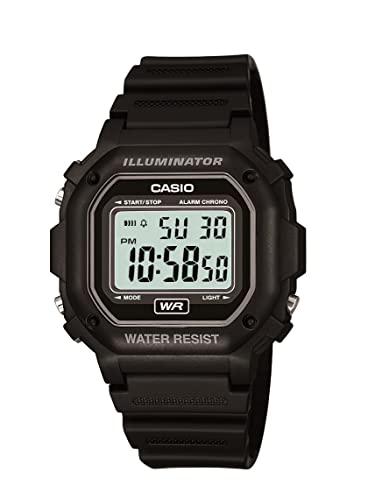 Casio Men's F108WH Illuminator Collection Black Resin Strap6 x 6 x 3 inches0.2 poundsCheck on Amazon

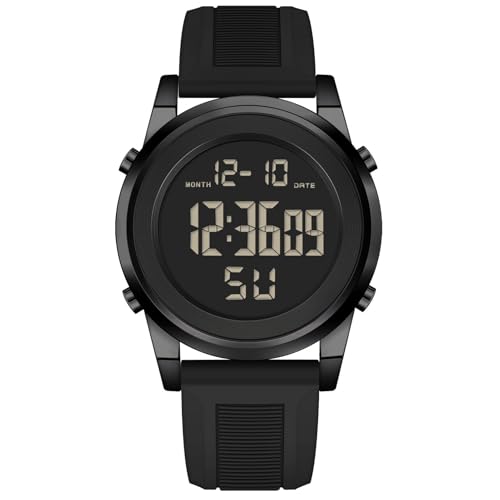

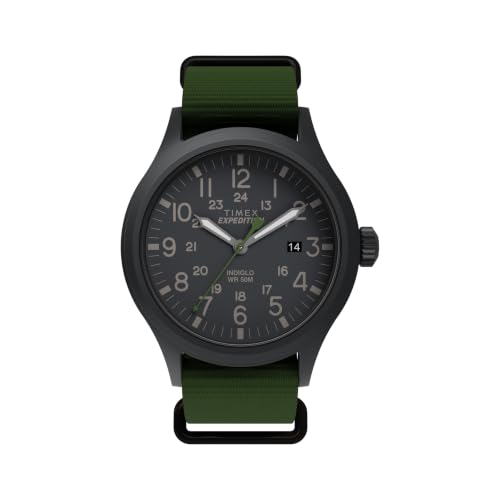

What's inside
- What duty rated claims actually rest on
- Legibility systems compared
- Timing functions for clinical tasks
- Alarms and notifications on shift
- Water resistance and chemical exposure
- Straps, hygiene, and glove friendly controls
- Battery life, solar options, and maintenance
- Smartwatch or traditional quartz duty watch
- Choosing by role: EMS, fire, and law enforcement
- Fit, snag profile, and care cycles
- Reading a duty watch specification sheet
- Common buying mistakes on shift work
- Night work, driving, and the ordinary hours
- Check prices on Amazon
- Accuracy, synchronisation, and trust in the reading
As an Amazon Associate I earn from qualifying purchases. This post may contain affiliate links at no extra cost to you.
A watch on duty fails in ordinary ways long before it fails dramatically. A strap softens after repeated disinfection and tears at a spring bar during a lift. A crown digs into the back of a gloved hand during chest compressions. A display that looked crisp in a shop washes out under ambulance bay lighting, or a backlight times out halfway through counting respirations. None of these problems appear in lifestyle photography, yet each one decides whether a watch earns its place on a wrist that cannot stop to troubleshoot it. First responders in emergency medical services, fire suppression, rescue, and law enforcement share that constraint, even though their exposures differ in detail.
Choosing well therefore starts with failure modes rather than features. Heat, impact, water, chemicals, darkness, noise, gloves, and time pressure all attack a watch at once, and a specification that helps in one setting can hinder in another. A large steel case that shrugs off a knock may snag on a cuff or a vehicle door. A bright audible alarm that works in a quiet station becomes useless beside a running engine and intrusive in a hospital corridor. A leather strap that feels comfortable on day one becomes a hygiene liability after a single contaminated call. This guide works through those trade-offs in the order they tend to matter on shift, using published specification classes rather than brand promises, so the reasoning transfers across models and price bands.
Readers who also track fitness or sleep around rotating shifts sometimes compare duty watches with broader consumer categories, and a survey of best mens smartwatches can show how general smartwatch design differs from equipment chosen primarily for legibility, sealing, and glove use. That contrast is useful, because a duty watch is not simply a tougher version of an everyday watch. Its priorities are narrower and more demanding: instant reading at a glance, timing that can be started without looking, silence when silence matters, and materials that can be washed clean and worn again on the next call without carrying the last one with them.
What duty rated claims actually rest on
Manufacturers use phrases such as duty ready, tactical, and professional without a single shared certification behind them, so the useful question is always which published standard, test method, or construction detail supports the claim. Shock resistance offers the clearest example. Some quartz duty watches are built around a resin case with internal cushioning that isolates the movement module, a design approach long associated with watches tested against drops onto hard surfaces and vibration exposure. Others rely on a solid case, a recessed crystal, and a raised bezel that takes the first contact instead of the glass. Both approaches can work, but they protect against different impacts, and neither should be read as proof that the watch survives every fall, strike, or crush load encountered around vehicles and equipment.
Case construction deserves close reading because small details compound. A screw-down case back generally seals better than a snap-fit back, and a screw-down crown adds a second barrier at the most vulnerable penetration in the case, though it also slows deliberate adjustment. Mineral glass resists scratching better than acrylic but can shatter under a sharp blow, while acrylic tends to deform and scratch yet rarely fractures into fragments. Sapphire is the hardest common crystal material and keeps a dial readable after abrasive contact, but hardness is not toughness, and a hard crystal can still crack at an edge if the bezel leaves it exposed. A recessed crystal inside a raised, replaceable bezel is often the more practical protection for work around door frames, stretchers, and tools.
Published water and dust ratings give another anchor, provided they are read as test conditions rather than lifetime guarantees. Seals age, crowns get opened for battery changes, and a watch that passed a pressure test when new may not pass after years of heat and chemical exposure. The same caution applies to temperature ratings, magnetic resistance, and low-temperature operation claims for digital modules, all of which describe performance inside a tested range. Treating every claim as a bounded statement about a new watch under stated conditions is not cynicism. It is the only way to compare two watches honestly when their marketing language sounds identical.
Weight and case geometry belong in this foundation section because they determine whether protection stays wearable. Published case diameters in duty lines commonly run from the high thirties to around fifty millimetres, with thickness and lug-to-lug length mattering more for comfort than diameter alone. A thick case with downturned lugs can sit securely under a cuff, while a thinner but flatter case can slide and rotate. Responders with smaller wrists often find that a mid-size resin case disappears during work in a way a flagship steel diver never will, regardless of which one carries the more impressive specification sheet.
Legibility systems compared
Legibility on duty is a system, not a single feature. Dial contrast comes first: large Arabic numerals or bold indices against a matte background, hands that differ clearly in length and shape, and a seconds hand or digital seconds readout that can be found without hunting. White markings on a black dial and black markings on a pale dial both achieve high contrast, but they behave differently under mixed lighting. Pale dials can glare under scene lights and floodlights, while dark dials depend more heavily on luminous material once ambient light drops. A matte finish that suppresses reflections usually matters more than a fashionable sunburst texture that flashes at certain angles.
Luminous compounds form the second layer. Modern watches overwhelmingly use non-radioactive photoluminescent pigments, most commonly strontium aluminate based materials sold under trade names, which charge from ambient light and then decay in brightness over hours. Better implementations use thicker applications, larger plots, and contrasting lume on the hour and minute hands so orientation survives partial fading. Older or specialised models may use self-powered tritium gas tubes, which glow continuously without charging and remain visible near the end of a long night shift, at the cost of a fixed brightness that cannot be boosted and a gradual decline over the tubes working life. Neither system is universally superior. Photoluminescent lume starts brighter after a strong charge, while tritium offers consistency in prolonged darkness such as rural night work or interior searches.
Active illumination solves the problem differently. Electroluminescent backlights in digital and ana-digital watches light the whole display evenly, which helps when reading small digits for elapsed time. LED illumination in analogue watches lights the dial from one or two positions and can leave shadows depending on hand position. Push-button activation matters more than the technology name: the button must be findable by touch, large enough for a gloved finger, and set to a duration long enough to finish a count. A backlight that extinguishes after one or two seconds forces repeated presses during a fifteen or thirty second observation window, which breaks concentration at exactly the wrong moment. Models that allow a longer illumination setting, or that light on a wrist turn that can be disabled, give the wearer control over that compromise.
Anti-reflective treatment and crystal shape complete the picture. A flat crystal with an internal anti-reflective coating reads cleanly under overhead fluorescent light, while a domed crystal can distort numerals at shallow angles even though it looks attractive. Digital displays bring their own legibility classes: negative displays, with pale digits on a dark background, look discreet but often read worse in dim light than positive displays with dark digits on a pale background. For clinical timing, where the seconds figure is the whole point, a positive display with large seconds digits is difficult to beat, and many experienced medics choose exactly that over more stylish alternatives.
Timing functions for clinical tasks
Pulse and respiration counting imposes a specific rhythm on a watch. The clinician finds a pulse, starts timing, counts beats over a set interval, and multiplies or records directly, all while watching the patient rather than the wrist. A stopwatch that starts and stops on a large, positive-feeling pusher supports that rhythm. A countdown timer set to fifteen, thirty, or sixty seconds supports it even better for some practitioners, because the end of the interval announces itself and removes the need to watch for a target second. Watches whose stopwatch measures in hundredths of a second look precise on paper, yet the clinically relevant figures are the whole seconds and the ease of starting them reliably with cold or gloved hands.
Memory and split functions have narrower but real uses. Split or lap timing can separate intervals during a structured assessment, during physical training assessments, or when timing successive stages of an extrication or a drill. Recall functions let a responder review recorded intervals after the moment has passed instead of transcribing numbers mid-task. Those conveniences only help if the button sequence is simple. Multi-press menu navigation that requires reading small labels will not be used under pressure, however capable the module is, so a straightforward two-button start, stop, and reset layout often outperforms a feature-rich interface in actual service.
Analogue timing deserves a fair hearing. A rotating bezel with a clear zero marker can time elapsed minutes without any electronics, and a central chronograph seconds hand can serve short intervals if its subdials remain legible. For many fire and law enforcement tasks measured in minutes rather than seconds, a bezel is entirely adequate and never runs out of battery. Its weakness appears in clinical work, where precise short intervals and a visible running seconds count matter, and where a bezel that has been knocked off its setting introduces silent error. Digital and ana-digital formats dominate medical use for that reason, not because analogue watches are lesser instruments in general.
Dual time, world time, and automatic calendar functions sit in the background of duty life but still earn their keep. Responders who deploy, travel for training, or coordinate with agencies in other zones benefit from a second time zone that does not disturb the primary display. A perpetual or auto calendar removes a small recurring chore and a small recurring error source at month ends during night shifts. Date windows, however, should stay subordinate to the time display. A date that competes visually with the hour numerals, or a day display that crowds the seconds readout, trades everyday clarity for information needed only occasionally.
Alarms and notifications on shift
Audible alarms fail on shift for predictable reasons. Around diesel engines, saws, sirens, and running water, a small piezo beep simply disappears. Inside a patient compartment, a ward, or a home during a night call, the same beep can startle a patient, interrupt a conversation, or announce itself at a moment that calls for discretion. Hearing protection compounds the problem for fire and industrial rescue work, sealing the ear against exactly the frequencies a watch alarm produces. The result is a feature that is either inaudible or inappropriate across much of the working day, which is why vibration has become the defining alarm characteristic for duty wear.
A vibrating alarm works through contact rather than air, so its effectiveness depends on fit and motor strength. A watch worn snugly on the wrist delivers a distinct pulse pattern that the wearer learns to recognise even through moderate activity, while a loose watch on a thick cuff may vibrate unnoticed. Better implementations offer multiple alarms, adjustable intensity on smartwatches, and patterns that distinguish a timer finish from a reminder. For medication rounds, timed reassessments, hydration reminders during prolonged incidents, and wake-ups in shared sleeping quarters, silent alerting is not a convenience. It is the difference between a reminder system that can be used openly and one that gets switched off.
Smartwatches extend this logic into notifications, call alerts, and incident paging integrations where agencies use them, and runners comparing training features in best running smartwatches will recognise the same vibration hardware serving a very different purpose. The duty question is filtering. A wrist that buzzes for every message trains its owner to ignore it, so notification discipline, per-app controls, and scheduled quiet periods matter as much as motor quality. Traditional quartz duty watches take the opposite approach, offering a handful of alarms and timers with no message traffic at all, which many responders experience as a genuine operational advantage rather than a missing feature.
Hourly signals, snooze behaviour, and alarm volume controls round out the practical detail. An hourly chime that cannot be disabled will eventually annoy a crew. A snooze that reactivates indefinitely can drain a small cell faster than expected. On analogue-digital combinations, confirming that an alarm is set should be possible at a glance, because an alarm that silently disengaged during button presses in a pocket or under a glove is worse than no alarm at all. Checking the alarm indicator belongs in the same mental routine as checking that a radio is on the right channel: brief, habitual, and done before it matters.
Water resistance and chemical exposure
Water resistance ratings are the most widely misunderstood numbers on any watch. A marking of 30 metres describes a static pressure test on a new watch, not a licence to swim, and in practice it suits splashes and rain rather than immersion. At 50 metres, brief immersion becomes reasonable for most manufacturers guidance, while 100 metres is the level commonly associated with swimming and repeated washing, and 200 metres indicates a watch built and tested for sustained water use, often with a screw-down crown. For responders, the relevant exposure is rarely depth. It is repeated hand washing, decontamination showers, hose spray, rain during extrication, and immersion while reaching into water, all applied to seals that are ageing between services.
That framing shifts the recommendation. A 100 metre rating with well-maintained gaskets generally covers decontamination washing and daily hygiene far better than a 30 metre fashion rating, even though neither wearer will ever approach those depths. Pushers and crowns should not be operated under water unless the manufacturer explicitly permits it, because actuation can draw moisture past a seal. After exposure to salt water, contaminated water, or cleaning chemicals, rinsing with clean fresh water and drying the case and strap reduces residue that would otherwise sit against gaskets and skin. The watch that survives a career is usually the one that gets rinsed and inspected, not the one with the largest number printed on its dial.
Chemical exposure widens the discussion beyond water. Disinfectant wipes, alcohol based hand rubs, bleach solutions used in station cleaning, fuels, and insect repellents can cloud certain plastics, harden rubber compounds, fade dial printing, and degrade strap keepers over time. Resin cases tolerate this environment well, which is one reason they dominate duty recommendations, but even resin benefits from rinsing after heavy exposure. Solvents and fuel deserve particular care around acrylic crystals and printed bezels, where cosmetic damage can become legibility damage if numerals or minute tracks soften or lift.
Steam and heat require separate judgement. Hot showers, sauna-like training environments, and the thermal load around fire work stress seals through expansion and pressure change in ways a cold static test never captures. No wristwatch should be treated as fireground instrumentation inside a structure fire environment, where turnout gear, gloves, and dedicated thermal tools govern what reaches the skin. A duty watch serves before entry, after exit, and across the many hours of an incident that happen outside the hottest zone. Keeping that boundary clear protects both the watch and the wearer from misplaced confidence in a consumer rating.
Straps, hygiene, and glove friendly controls
Strap material decides how a watch handles the hygiene cycle of response work. Resin and polyurethane straps rinse clean, dry quickly, tolerate alcohol based disinfectants better than most alternatives, and can be replaced cheaply when they eventually crack or tear. Silicone feels softer against skin during long shifts and resists water completely, though some silicone compounds attract lint and dust and can feel clammy in heat. Fluoroelastomer straps, often abbreviated FKM, sit at the premium end of the rubber family, with strong resistance to chemicals, ultraviolet light, and temperature extremes, and a denser feel that many wearers prefer for a heavier case. All three share the decisive advantage: none of them absorbs fluid.
Leather fails that test completely. It absorbs water and contaminants, dries slowly, stiffens and cracks under repeated disinfection, and can harbour odour long after the surface looks clean. Steel bracelets occupy a middle position: the metal itself cleans well and tolerates disinfectants, but the links, spring bars, and clasp create recesses where residue collects, and a bracelet adds weight and a harder snag profile. Fabric straps vary by weave and coating. A washable nylon strap can be practical if it is removed and laundered regularly, yet a damp strap worn for the rest of a shift is uncomfortable and slow to dry. For clinical and fire roles with frequent decontamination, smooth non-absorbent straps remain the straightforward answer.
Replacement strategy matters as much as material. Straps are consumables on a duty watch, and standard lug widths with quick release spring bars make replacement a two minute task rather than a service visit. Proprietary integrated straps can fit a case beautifully while locking the owner into a single supplier and a higher replacement cost, which is worth weighing before purchase. Keeping a spare strap in a kit bag converts a torn strap from a lost watch into a minor interruption. Inspecting the spring bars themselves during strap changes catches corrosion and bent bars before they release a case at an awkward moment.
Controls must work through gloves, which changes what good design means. A crown should be large enough to grip, knurled or fluted for purchase, and guarded enough that wrist flexion does not press it into the hand or change a setting. Pushers for backlight, stopwatch, and mode functions need clear travel and a firm click that can be felt through a nitrile or work glove, spaced far enough apart that one finger does not bridge two buttons. Touchscreens sit at the difficult end of this spectrum: many respond poorly to gloves and water unless a specific glove mode is offered, which is one reason physical buttons persist on watches designed for activity tracking such as those grouped under best activity smartwatches, and why responders who rely on timing functions often prefer buttons outright.
Battery life, solar options, and maintenance
Battery classes divide duty watches into distinct ownership patterns. A basic quartz watch on a common coin cell commonly runs for several years between changes, with published estimates varying by cell size and feature load, and heavy backlight or alarm use shortening real life below the headline figure. Digital resin watches with larger cells occupy the long end of the spectrum, where multi-year service is routine. Smartwatches invert the pattern entirely, needing a charge every day or few days depending on display settings, satellite use, and notification load, which introduces a charging routine that must survive rotating shifts, overtime, and sleeping away from home.
Solar charging softens but does not erase that divide. Solar quartz watches convert ambient light through the dial and store energy in a rechargeable cell, and in regular outdoor or bright indoor use they can run for years without a battery change, with power reserve indicators or low charge warnings on many models. Their weakness is storage: a solar watch kept in a dark locker or kit bag for months can discharge deeply, and recovery takes sustained light exposure. Responders who wear the same watch daily rarely face that problem. Those who rotate between several watches should store solar models where they receive light, a small habit that prevents an avoidable flat watch at shift start.
Maintenance beyond power is modest but not zero. Gaskets dry and compress with age, so a water resistance check at battery change is sensible for any watch that is washed daily or immersed regularly, and a case back opened without replacing the gasket quietly downgrades the rating on the dial. Buttons and crowns should be rinsed of grit, straps inspected for tearing at the holes and spring bar ends, and crystal damage assessed for whether it affects reading the dial. A watch that costs little still deserves this attention if it is trusted on duty, because failure usually announces itself during a call rather than during a quiet inspection at home.
End of life planning sounds excessive for an inexpensive watch until a favourite model is discontinued. Responders who find a case size, button layout, and strap that suit their work often buy a second identical watch when a sale or a clearance makes it easy, keeping one in service and one ready. That practice also solves the battery change gap, the lost watch problem, and the drying time after deep cleaning. Whether or not a spare makes sense, recording the exact model reference and strap size somewhere outside the watch itself saves guesswork years later, when markings have worn and memory of a purchase has faded.
Smartwatch or traditional quartz duty watch
The smartwatch case rests on integration. Notifications filtered to what matters, silent alarms with rich patterns, timers controlled by voice in some ecosystems, health tracking across shift work, and incident or fitness applications all live on one device that many responders already own. Sleep tracking in particular draws shift workers who want some record of fragmented rest, and the category surveyed in best smartwatches with sleep tracking shows how far those features have developed. Against that stand the costs: frequent charging, a touchscreen that struggles with gloves and water, a larger snag and impact profile on many models, software updates that change interfaces overnight, and a purchase price that makes a cracked screen a significant event rather than an inconvenience.
Traditional quartz duty watches argue from reliability and focus. They start instantly, run for years, present one stable interface that muscle memory masters completely, and can be washed, knocked, and lent without anxiety. Their timing, alarm, and illumination functions cover the clinical and operational core described throughout this guide. What they cannot do is communicate, record health data, or run applications, and for responders whose agencies or personal routines depend on those capabilities, a quartz watch will feel incomplete no matter how well it tells time. Neither position is a misunderstanding of the other. They optimise for different definitions of usefulness.
Hybrid arrangements resolve the tension for many people. Some responders wear a smartwatch off duty and for training, then switch to an inexpensive quartz watch for clinical or fire work where contamination, impact, and loss are realistic. Others wear a ruggedised smartwatch with physical buttons and accept the charging routine as the price of integration. A smaller group wears two devices during specific assignments, though most find that cumbersome beyond a single operation. The honest test is behavioural: a system that depends on a device being charged, clean, and present will fail if the owners actual routine does not reliably produce a charged, clean, present device at shift start.
Durability claims need the same honesty on the smartwatch side. Published ingress ratings such as IP68 describe dust and water behaviour under test conditions and do not certify resistance to disinfectants, steam, or impact, while some rugged models add military standard test language that covers a list of laboratory procedures rather than a guarantee against field damage. Screen protectors and bumper cases help and are widely used, but they add bulk and can interfere with gloves and cuffs. Comparing a protected smartwatch against a resin quartz watch on total bulk and total cost, rather than on headline specifications alone, usually clarifies the choice quickly.
Choosing by role: EMS, fire, and law enforcement
Emergency medical work places the highest premium on seconds visibility, countdown timing, and hygiene. A positive digital display with large seconds digits, a one-touch backlight with a usable duration, a resin or silicone strap that tolerates constant washing, and a case slim enough to sit under glove cuffs covers the core needs of most medics and EMTs. Vibration alarms support timed reassessment without disturbing a patient. Weight matters during compressions and lifting, where a heavy case migrates on the wrist and announces itself repeatedly. Many clinicians also prefer a watch that can be removed, washed, and refitted quickly between patients when local protocol calls for bare wrists or frequent decontamination.
Fire service priorities shift toward heat awareness, glove operation, and survivability around the station and the incident ground rather than inside the fire itself. Large pushers, a bezel that can be set with gloves, lume that survives long night incidents, and a strap that will not melt, absorb, or harden prematurely all rank highly. Audible alarms lose value around apparatus and tools, again favouring vibration. Because fire work alternates intense exposure with long station hours, a watch also has to be comfortable and legible for the ordinary parts of the shift: inspections, training, report writing, and night responses where the first need is simply to read the time instantly on waking.
Law enforcement adds discretion and retention to the list. A low profile case that does not catch on cuffs, seatbelts, or equipment, a dial that does not flash reflections unnecessarily, and a strap that holds the watch securely during physical exertion suit patrol work. Vibration alerting suits court, interviews, and night work where audible signals draw attention. Investigative and administrative roles may lean toward a cleaner analogue or smartwatch presentation, while tactical and custody roles tend to value the same resin durability as other field services. Across all three services, uniform and agency policy comes first: some employers restrict jewellery, smartwatch connectivity, or recording capable devices in specific settings, and no feature list overrides a standing order.
Dispatchers, rescue technicians, wildland crews, and hospital based responders can map their own needs onto the same framework by asking four questions. How often will the watch be washed or disinfected. How often must timing start without looking at the wrist. How dark, loud, or gloved is the typical working moment. And how painful would loss or breakage be, financially and operationally. Answers to those questions sort watches more reliably than any ranking, because they describe the job the watch will actually do rather than the job in an advertisement.
Fit, snag profile, and care cycles
Fit under cuffs and gloves is a practical geometry problem. A case that sits high on tall lugs catches on a glove cuff every time the wrist flexes, while a lower case with curved lugs and a flexible strap slides under fabric and stays put. Crown position matters too: a large crown at the traditional three o clock position can press into the back of the hand when the wrist bends, which is why some duty designs offset the crown or surround it with guards. Trying a watch with the actual gloves and sleeves of the role, even briefly in a shop or at home before committing, reveals more than any measurement table.
Snag profile extends beyond comfort into safety around moving equipment, ladders, and patients. Protruding pushers, sharp bezel edges, and metal bracelets that can catch or conduct heat deserve scrutiny in mechanical and rescue environments. A smooth resin case with recessed buttons presents fewer edges to the world. Breakaway thinking applies in some settings as well: a strap that releases under extreme load can be preferable to one that holds at all costs where entanglement is a recognised hazard, though most responders simply prioritise a secure fit and situational awareness over that specialised consideration.
Care cycles should be written into the ownership plan from the first week. Rinse after contamination and after heavy sweating, wash the strap separately when residue builds up, dry fully before storage, and inspect spring bars, strap holes, and keeper loops on a regular rhythm such as the start of each work block. Replace straps at the first sign of tearing rather than after failure, treat battery changes as gasket changes on watches that face water, and retire a watch from duty use when its crystal damage, button failure, or seal history makes its readings or reliability doubtful. A retired duty watch often serves perfectly well off duty, which softens the decision to replace it early.
Replacement timing also has a financial rhythm worth acknowledging without naming figures. Inexpensive quartz duty watches are commonly treated as semi-consumable equipment with a service life measured in a few hard years, while a well kept solar or higher grade quartz watch can serve far longer with periodic gasket and strap renewal. Smartwatches follow the replacement cadence of consumer electronics, driven by battery ageing and software support as much as by physical damage. Planning for that cadence in advance, rather than discovering it when a watch dies before a shift, is part of treating the watch as equipment instead of jewellery.
Reading a duty watch specification sheet
A specification sheet rewards a slow, sceptical reading in a fixed order. Start with case dimensions and weight, because those numbers predict comfort before any feature is considered, and note lug width and strap type alongside them so replacement options are clear. Move next to water resistance and crown construction, then to crystal material and bezel design, and only then to the feature list of alarms, timers, and illumination. Reversing that order, beginning with the longest feature list, is how buyers end up with a capable watch that is too thick for their cuffs or too fragile for their washing routine.
Certain omissions on a sheet carry information of their own. If a maker publishes a water rating but says nothing about operating pushers in water, assume the restriction applies. If battery life is quoted without stating how often the backlight and alarm are used, treat the figure as a best case under light use. If lume is described only with a trade name and no mention of which hands and indices are treated, expect variation across the dial. None of this makes a watch a poor choice. It simply marks the places where a question to the maker, a manual download, or a look at the full documentation will settle something the summary page left open.
Manuals deserve more attention than they usually receive, because they state the limits that marketing pages soften. A manual will say whether the countdown timer can be set in seconds or only in minutes, whether the stopwatch continues past an hour or stops, whether the vibration alarm applies to timers as well as alarms, and what illumination durations can be selected. For clinical timing, that level of detail is the product. Two watches with identical headline features can differ completely in whether a thirty second countdown with a vibration finish exists at all, and only the manual reveals it before purchase.
Certification language should be parsed word by word. A watch described as built to a standard, inspired by a standard, or tested to selected procedures within a standard makes three different claims, and only the wording in the full documentation distinguishes them. Ingress protection codes follow a defined structure in which the first digit addresses solid particles and the second addresses liquid, so a code can be checked rather than admired. Keeping that habit of checking codes against their definitions protects buyers across every category of equipment, not only watches, and it quickly becomes second nature.
Common buying mistakes on shift work
Buying for the photograph instead of the shift sits at the top of the mistake list. A large, dramatic case photographs well and feels substantial in the hand for a minute, then spends twelve hours catching on equipment and pressing under gloves. Closely related is buying for a single dramatic scenario, such as deep water or extreme impact, while ignoring the daily exposures of washing, disinfectant, darkness, and noise that will actually test the watch every week. Duty equipment should be chosen for the frequent case first and the extreme case second, because the frequent case is where dissatisfaction accumulates.
Ignoring the strap in the purchase decision causes a second wave of regret. Buyers compare cases and displays carefully, then discover that the fitted strap has too few adjustment holes, a keeper that slips, or a buckle that digs in during driving. Since the strap governs both hygiene and retention, it deserves the same scrutiny as the dial, including a plan for its replacement and a check that replacements remain available for that model. A watch abandoned in a locker because its strap became unpleasant is a total loss regardless of how well the movement still runs.
Overvaluing connectivity in restricted environments creates a different problem. Facilities, courts, secure units, and some agency settings limit cameras, microphones, or radios on the wrist, and a smartwatch that must be left behind for part of the working week delivers only part of its promised value. Checking workplace rules before purchase takes minutes and prevents an expensive mismatch. The same check applies to charging: a watch that needs a proprietary charger is only as reliable as the habit of keeping that charger where sleep actually happens, which for rotating shifts may be more than one place.
Finally, many buyers skip the return window rehearsal. The first days with a new watch should include wearing it with gloves, washing it, timing with it, and sleeping with its alarm set, precisely so that a poor fit is discovered while exchange remains simple. Sellers vary in how they handle returns of worn items, so reading those terms before the rehearsal matters. A careful buyer treats that first week as part of the purchase rather than as ownership already settled, and keeps packaging and paperwork until the watch has passed the ordinary tests of the job.
Night work, driving, and the ordinary hours
Most duty hours are not emergencies, and a watch has to serve those hours well or it will be left behind before the emergency arrives. Night driving between calls rewards a dial that can be read with a brief glance without a bright backlight that spoils dark adaptation, which is where moderate lume earns its keep. Station downtime rewards comfort, a strap that does not mark the wrist, and an alarm that can wake one person in a shared room without waking everyone. Report writing and screen work reward a case that does not clatter against a desk or catch on a keyboard. These mundane qualities sound minor in isolation and decisive in combination.
Seasonal change quietly alters the equation twice a year. Winter layers add cuffs and gloves that expose a tall case, while summer heat increases sweating, washing, and strap irritation, and can make a heavy watch feel heavier. Responders in hot climates often move to lighter resin cases and more breathable strap arrangements for the summer months, then return to a preferred watch in cooler weather. Planning for that rotation, rather than forcing one watch through every season, extends the life of both watches and keeps the wearer from quietly abandoning wrist timekeeping altogether during the hardest months.
Handover moments offer an underrated test of a watch. Times are quoted constantly in response work: time of call, time on scene, time of an intervention, time of arrival. A watch whose time can be read and stated instantly, without unlocking, waking, or interpreting a crowded screen, smooths every one of those exchanges. Twenty four hour time display, where available and permitted by personal preference, removes the ambiguity that twelve hour readings can introduce in documentation and verbal reports during night hours. Small clarity advantages like these compound across hundreds of repetitions in a way that feature lists rarely capture.
Longevity of interest matters as well. A watch with a stable interface, available straps, and a maker that keeps the model in production supports the wearer for years, while a novelty design that changes annually forces repeated relearning and rebuying. Responders tend to keep good duty watches for a long time precisely because the familiar position of every button becomes part of professional muscle memory. Protecting that familiarity, by choosing established designs and keeping a record of the exact reference, is a legitimate buying criterion alongside any specification, and often the one that best predicts satisfaction three years later.
Check prices on Amazon
Live listings for the shortlist in this guide are pulled from Amazon below, so prices and availability are always current at the moment you look.


Accuracy, synchronisation, and trust in the reading
Quartz duty watches are accurate enough for clinical and operational timing by a wide margin, with typical published tolerances measured in seconds per month rather than seconds per day, yet accuracy still deserves a place in selection because trust in the reading shapes behaviour. A responder who doubts a watch checks a phone or a wall clock instead, adding delay and distraction. Keeping a duty watch synchronised with the clock used for documentation, whether that is a dispatch clock, a monitor, or an agency time source, removes a small but recurring source of discrepancy in recorded times. Radio controlled and satellite synchronised models automate that alignment where reception allows, while manually set models simply need a periodic check built into routine.
Analogue quartz introduces one specific failure worth knowing: a low battery often announces itself through a seconds hand that advances in larger steps as an end of life indicator, a useful warning if the wearer recognises it and a confusing fault if they do not. Digital models may dim, flash, or display a low battery icon instead. Learning the particular warning behaviour of the chosen model, from its manual, turns a potential mid-shift surprise into a planned battery change during downtime. Solar models with charge indicators offer the same advantage in a different form, provided the indicator is checked occasionally rather than discovered empty.
Stopwatch accuracy and display accuracy are separate questions that buyers sometimes merge. The timing circuit in a digital watch counts far more precisely than a human thumb can start and stop it, so for pulse counts the limiting factor is reaction and technique, not the module. That realisation should steer attention away from hundredths of a second on the display and toward pusher feel and countdown flexibility, where human factors actually live. It also supports consistent technique: using the same interval, the same starting cue, and the same watch for repeated observations produces comparable results across a shift and across a team.
Documentation habits close the loop between a watch and the record. Times taken from a personal watch enter notes, reports, and handovers, so a watch that is easy to read and known to be synchronised quietly improves the quality of paperwork as well as bedside work. Where agencies issue specific guidance on time sources for records, that guidance governs, and a personal watch serves as the working tool that is later reconciled with the official source. Treating the watch as part of the documentation chain, rather than as a private convenience, explains why plain legibility and reliability outrank novelty for so many experienced responders, and why the same unremarkable models reappear on experienced wrists year after year.
A note on second watches and training use
Training environments expose watches to a different mix of abuse than operational work: repeated drills, water exercises, physical assessments, and long days in kit that is put on and removed far more often than on a normal shift. Many responders protect a preferred duty watch by using a second, simpler watch for training blocks, which also provides a natural backup when the main watch is awaiting a battery or a strap. The second watch need not duplicate every feature. It needs the same timing logic and a similar button layout, so that habits transfer between the two without conscious translation during an assessment or an exercise.
Physical training adds satellite positioning, heart rate, and interval features to the wish list for some responders, and those needs can pull selection toward a sports watch for off duty hours. Keeping training and duty roles separate often produces a better result in both places than forcing one device to excel at two jobs with conflicting priorities. A training watch can favour sensors and data, while the duty watch keeps its narrower promise of legibility, silence, sealing, and hygiene. Where budgets allow only one watch, the duty priorities should win for anyone whose clinical or operational tasks depend on them, and training features can be supplemented by a phone or a shared device.
Whatever combination a responder settles on, a brief written note of model references, strap sizes, battery types, and purchase dates pays for itself repeatedly. Such a note turns a future replacement from research into reordering, and it helps a colleague or family member source the right strap or cell without guesswork. Equipment that is documented gets maintained, and equipment that gets maintained tends to be present and working on the day it is needed most.
Colleagues remain an informal but valuable source in this category, provided their advice is read in context. A watch praised by a medic on twelve hour day shifts may suit a night based fire crew poorly, not because either judgement is wrong but because the exposures differ. Asking what a colleague washes the watch with, how the alarm wakes them, and whether the strap has been replaced tells a prospective buyer more than asking whether they like it. Specific answers reveal the ownership reality behind general approval, and they often surface the one drawback that matters for a different role while confirming strengths that transfer across every service and setting.
Price bands in this category span a wide range without changing the underlying logic of selection, because the core virtues of contrast, sealing, silent alerting, and washable materials appear at several levels and disappear at several levels too. Paying more should buy demonstrably better construction, clearer documentation, longer support for straps and parts, or meaningful refinements in comfort and illumination, and a buyer is entitled to ask which of those things the extra amount actually purchases before accepting that a higher band automatically means a better duty watch for their particular role, wrist, and working environment.
When a shortlist finally narrows to two or three models, the deciding exercise is a rehearsal rather than a comparison table: start the stopwatch with gloves on, read the seconds in a dark room after the lume has faded for an hour, wash and dry the strap, set and feel the vibration alarm, and wear the case under a real cuff for an afternoon, because the watch that passes those ordinary rehearsals without friction is the one that will still be on the wrist, working quietly and readably, when an unremarkable Tuesday call turns into the longest hour of the month.
Disclosure: This guide rests on published specifications and documentation from manufacturers and standards references, interpreted for duty use without any claim that products were worn on calls for evaluation. Links in this guide may earn a commission from the retailer at no added cost to the reader, which supports continued coverage of duty equipment topics. Specifications, ratings, and model availability change over time, so confirming the current published details for a specific watch before purchase remains the readers responsibility, as does following agency policy on wearable devices.


