Our Top Picks
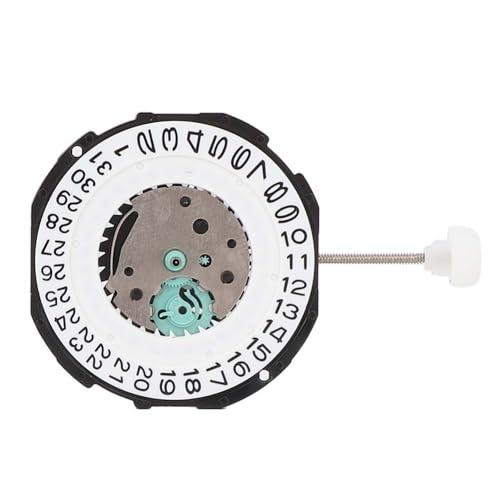 Chiffonade Three Hands Design Quartz Watch Movement Professional2.36 x 1.97 x 0.79 inchesCheck on Amazon
 Hemobllo Watch Movement Automatic Mechanical Movement Replacement Part4X2.7CM1.57 x 1.06 x 0.23 inches0.04 poundsCheck on Amazon


What's inside
- The movement family map
- What codes and jewel counts indicate
- The ST19 chronograph story
- Automatic families compared
- Finishing and decoration tiers
- Accuracy and regulation in practice
- Brands and market structure
- Service, parts, and longevity
- Reading a spec sheet listing
- Value positioning without disparagement
- Buying checks
- Hand wound ownership and daily rituals
- Case, crystal, and assembly around the calibre
- Check prices on Amazon
- For first time buyers and collectors alike
As an Amazon Associate I earn from qualifying purchases. This post may contain affiliate links at no extra cost to you.
Movement origin matters because a mechanical watch is, in a literal sense, its movement with a case and dial built around it. Two watches that look alike in photographs can behave very differently over five years if one carries a well documented calibre with available parts and the other carries an anonymous variant that no watchmaker can source components for. Chinese manufactured mechanical movements occupy a large and often misunderstood place in that picture. They power everything from inexpensive fashion watches to carefully finished pieces from specialist brands, and the family name and calibre code tell a knowledgeable buyer far more than the country label alone ever could.
Understanding those families changes how a purchase is judged. Instead of asking whether a Chinese movement is good or bad in the abstract, a buyer can ask which factory family it belongs to, whether it hacks and hand winds, what beat rate and power reserve its documentation states, how it is finished, and who will service it later. Those are answerable questions, grounded in published movement documentation rather than in reputation or rumour. This guide maps the major families, explains their codes, and works through accuracy, finishing, brands, service, and buying checks in that order, so that a specification sheet becomes a readable document instead of a list of impressive sounding numbers.
The contrast with electronic watches helps set expectations. A reader browsing best affordable android smartwatches is comparing software support and battery behaviour, where a product may be replaced within a few years by design. A mechanical watch built around a Chinese calibre is usually bought with a longer horizon in mind, which is exactly why movement documentation, parts availability, and serviceability deserve the attention given to them here. Longevity in mechanical watchmaking is never automatic. It is the product of a sound base design, decent manufacture, sensible regulation, and an owner who can find someone willing and able to maintain it.
The movement family map
Sea-Gull, produced by the Tianjin based watch group with roots in one of Chinas earliest watch factories, is the name most buyers encounter first, and its ST series covers the widest ground. The ST16 family is a workhorse automatic line, broadly comparable in layout philosophy to familiar Japanese automatic architectures, with hand winding and, in many variants, hacking seconds. The ST21 family is a higher beat automatic line whose design lineage traces to a well known Swiss automatic pattern, produced to tighter expectations and often found in better finished watches. The ST25 family adds complications, including variants with open heart displays, power reserve indications, and calendar arrangements, which makes the suffix letters and numbers after the base code genuinely important when comparing listings.
The ST19 stands apart from all of those because it is a hand wound chronograph family rather than a three hand automatic, and it receives its own section below. Alongside the ST families, Sea-Gull also produces tourbillon and other high complication movements in small numbers under related designations, demonstrating that the same industrial group spans commodity and showcase engineering. For a buyer, the practical lesson is that Sea-Gull on a listing is a starting point rather than a conclusion. ST16, ST21, ST25, and ST19 describe different architectures, different feature sets, and different service expectations, and a listing that names only the brand of the movement without the family has withheld the most useful information it could have given.
Hangzhou Watch Company movements, commonly identified by 7 series designations such as the 7000 family and its derivatives, form the second major pillar. These calibres appear in a wide range of watches from domestic Chinese brands and export oriented makers, in automatic and hand wound forms, sometimes with distinctive layouts that allow skeletonised or otherwise unusual dial designs. Documentation for Hangzhou variants can be thinner in export listings than for Sea-Gull equivalents, which places more weight on the seller identifying the exact calibre and variant. Where that identification is clear, these movements have a long production history and a correspondingly broad base of familiarity among watchmakers who work on Chinese calibres.
Shanghai movements carry the heritage of another historic centre of Chinese watchmaking, with families that include hand wound and automatic calibres used by the Shanghai brand itself and by other makers over decades. Dixmont-Guangzhou, usually shortened to DG, supplies the fourth widely encountered group: the DG28 and DG38 families and their relatives are compact automatic movements, broadly in the pattern of a classic Japanese automatic architecture, fitted with hand winding and hacking in many variants and used extensively in affordable mechanical watches worldwide. Mingzhu branding is often associated with these Guangzhou movements in listings. Between Sea-Gull, Hangzhou, Shanghai, and DG, a buyer can place the great majority of Chinese movement watches into a family, and that placement predicts more about ownership than any photograph of the dial.
What codes and jewel counts indicate
A calibre code compresses several facts into a short string, and learning its grammar pays off quickly. The letters usually identify the maker or family, the first digits identify the base architecture, and trailing digits or letters distinguish variants: a date complication here, a power reserve there, a different dial side arrangement somewhere else. Two listings that both say ST25 may therefore describe movements with visibly different functions, and the full code is the only reliable way to tell them apart. Reputable sellers publish the full designation. Vague listings that offer only a movement brand and a jewel count should be read as incomplete rather than as reassuringly simple.
Jewel counts describe the number of synthetic ruby bearings used at friction points in the movement, and they indicate architecture rather than quality in any simple sense. A basic hand wound three hand movement may function correctly with seventeen jewels, a modern automatic commonly sits in the low to mid twenties, and a chronograph such as the ST19 carries more because it contains more moving systems to support. A very high jewel count on a simple watch does not signal superiority, and a modest count on a simple movement is not a defect. What matters is whether the count matches the documented figure for that calibre and variant, because a mismatch suggests the listing describes a different movement from the one fitted.
Dimensions belong in the same reading. Movement diameter, often expressed in lignes in traditional documentation or in millimetres in modern listings, and movement height together explain case size and thickness. A slim hand wound calibre permits a thin dress case, while an automatic with a rotor and a date mechanism needs more vertical room, and a chronograph needs more again. When a watch seems surprisingly thick or surprisingly slim for its stated movement, the dimensions in the movement documentation usually explain why, and occasionally reveal that a listing has paired the wrong calibre name with the watch being sold.
Feature spread by family follows from architecture. Hacking, the ability to stop the seconds hand when setting the time, and hand winding, the ability to wind the mainspring through the crown as well as by rotor movement, are standard expectations in the ST21 class, common across DG28 and DG38 variants, present in many ST16 versions, and naturally central to the hand wound ST19, which has no rotor at all. Older or more basic variants in several families omit hacking, and some early automatics omitted hand winding, so neither feature should be assumed from the word automatic alone. The variant documentation, again, is where certainty lives.
The ST19 chronograph story
The ST19 earns its reputation from lineage and layout. Its design descends from the Venus 175 column wheel chronograph architecture, whose production equipment and design passed to Tianjin in the 1960s in connection with a project to build chronographs for military aviation use. The modern ST19 family revives that column wheel design in ongoing production, which makes it unusual in its price territory: most affordable mechanical chronographs, from any country, use a simpler cam actuated switching system rather than a column wheel. Enthusiasts value the column wheel for the precise, positive feel of its pusher action and for its historical continuity, and the ST19 delivers that architecture in watches that remain within reach of buyers who could never justify a Swiss column wheel chronograph.
Variants within the family change the experience considerably. Different ST19 versions arrange subdials differently, offer two or three register layouts, vary power reserve, and in some versions add a date or alter the display arrangement for specific watch designs. Beat rate for the family is commonly documented at 21,600 vibrations per hour, giving the seconds hand the slightly stepped advance characteristic of that frequency. Because the movement is hand wound, ownership includes a daily or near daily winding ritual and a crown feel that becomes part of the watches character. A buyer who dislikes winding should not be talked into an ST19 watch by its story, however good that story is.
Finishing on ST19 movements is frequently part of the purchase, since many watches fitted with it use exhibition casebacks that put the chronograph mechanism on view. Blued screws, Geneva style striping on bridges in better finished examples, and the visible column wheel reward that display. At the same time, a display back invites scrutiny: uneven decoration, fingerprints, or poorly finished components are easier to see than to forgive. Listings that show the actual movement through the caseback, rather than a generic photograph, give a buyer a fair chance to judge the finishing tier being offered.
Service expectations for the ST19 should be set honestly. A chronograph is the most complex common mechanical complication, and servicing one takes a watchmaker more time and care than servicing a three hand automatic, regardless of origin. Watchmakers familiar with the family exist, and parts availability for a movement in long production is materially better than for an orphan calibre, but a buyer should still expect chronograph service to cost more and take longer than basic movement service, and should confirm that a local or mail in watchmaker will accept the movement before assuming that support is in place.
Automatic families compared
Comparing the automatic families begins with beat rate. Movements documented at 21,600 vibrations per hour, including many ST16, DG, and Hangzhou variants, advance the seconds hand in six steps per second and generally offer a favourable balance between wear, service interval expectations, and power reserve. Families documented at 28,800 vibrations per hour, including the ST21 class, advance the hand in eight steps per second for a smoother visual sweep and can offer advantages in positional stability, at the cost of greater demand on lubrication and manufacture. Neither frequency is a verdict on quality. A well made and well regulated 21,600 calibre will keep better time than a poorly finished 28,800 calibre, every day of the week.
Power reserve classes are the second comparison point. Common documented reserves for these automatic families fall broadly in the region of forty hours, with variation by exact variant and condition, which in practical terms means a watch worn daily stays wound, and a watch left from Friday evening may or may not still be running on Monday morning depending on its reserve and its state of wind when set down. Hand winding at the crown, where fitted, removes the guesswork for a watch rotated with others. Buyers who rotate several watches often value a hand winding feature more than a small difference in headline reserve, because it makes restarting a stopped watch a ten second task.
Rotor behaviour and winding efficiency form a quieter third point. Some automatic architectures wind in both rotor directions and others in one, and real efficiency depends on the wearers activity as much as on design. A sedentary wearer may find that a watch which thrives on an active wrist loses reserve at a desk, which is a mismatch of use rather than a fault. Documentation rarely captures this, so owner reports for the specific family, read in aggregate rather than individually, can supplement the specification sheet. The same applies to rotor noise, which varies by bearing design and matters to some wearers in quiet rooms far more than any number could suggest.
Date and calendar implementations complete the comparison. Quickset date mechanisms, which allow the date to be advanced independently through the crown, are expected in modern families but should still be confirmed by variant, as should the safe hours during which the date should not be changed while the mechanism is already engaged near midnight. Watches with day and date, power reserve, or open heart variants of the ST25 and Hangzhou families add visual and functional interest while adding parts and service complexity in equal measure. Choosing the simplest variant that does what the wearer actually wants remains sound advice across every family in this guide.
Finishing and decoration tiers
Finishing tiers in Chinese movement production span a wider range than many buyers expect, and recognising the tiers prevents both overpaying and underappreciating. At the base sits bare industrial finishing: clean, functional plates and bridges with minimal decoration, honest machining, and no attempt at visual flourish. Such movements are usually hidden behind solid casebacks and judged purely on function, which is a legitimate and historically normal arrangement for a working watch. A large share of dependable affordable mechanical watches, from every producing country, have always been finished this way.
The middle tier adds visible decoration intended to be seen: striping on bridges or the rotor, polished screw heads, blued screws whether achieved by heat or by surface treatment, and engraved or signed rotors on automatics. Exhibition casebacks become common at this level, and the decoration is part of what the buyer is paying for. Quality within the tier varies, and the tells are consistency and cleanliness: stripes that run evenly and stop cleanly at edges, screws without damaged slots, and a movement that arrives free of fibres and fingerprints under the crystal of the caseback.
Higher tiers pursue finer hand finishing on selected components, more elaborate bridge shapes, skeletonisation in some Hangzhou and Sea-Gull based designs, and in showcase pieces, complications such as tourbillons that exist partly to demonstrate capability. These watches should be judged against their own ambitions. Skeletonisation, for example, trades dial legibility and sometimes structural simplicity for a view of the mechanism, which delights some owners and frustrates others within a week. An exhibition back on any tier also trades a small amount of case slimness and the simplicity of solid steel for that view, a trade worth making consciously rather than by default.
Dial side finishing deserves a mention because it is easy to overlook. Applied indices, polished hand sets, printed versus applied logos, and the alignment of date wheels in their windows all signal how much care a brand invested around the movement. A well documented calibre in a carelessly assembled watch can disappoint, while a modest calibre in a carefully assembled watch can satisfy for years. The movement is the heart of the purchase, but the case, dial, hands, and assembly are the parts the owner actually touches and reads, and listings that document both sides of that equation deserve preference.
Accuracy and regulation in practice
Published accuracy ranges for mechanical movements are stated as a span of seconds gained or lost per day, measured under defined conditions, and Chinese families follow the same convention as everyone else. Workhorse automatic families are commonly documented with wider tolerances, often in the region of minus twenty to plus forty seconds per day or a comparable band depending on variant and source, while better grades and better regulated examples perform well inside their stated band. Those figures describe a population of movements, not a promise about an individual watch, and the individual watch is what arrives in the post. This distinction explains much of the apparent contradiction in owner reports about the same calibre.
Regulation is the process that closes the gap between a tolerance band and an individual result. A watchmaker, or a careful brand before dispatch, adjusts the regulator while observing the movement on a timing machine in several positions, and a movement that left the factory near the edge of its band can often be brought to a consistently small daily rate without any parts being changed. Brands that state they regulate before shipping, and sellers who provide timing results for the specific watch, offer something measurably more valuable than a generic accuracy claim. Buyers should still expect a mechanical watch to vary with position, temperature, and state of wind, and to settle over its first weeks of wear.
Magnetism, shock, and ageing explain most sudden accuracy changes in service. A watch that begins gaining noticeably after behaving well may have become magnetised, a condition a watchmaker can diagnose and correct quickly, or it may have taken a knock that shifted regulation or damaged a component. Consistent fast or slow running from new usually indicates regulation rather than damage and can be addressed under warranty or at a first service. Keeping a simple log of daily rate against a reliable time source for a week gives a watchmaker useful evidence and gives the owner a realistic picture, replacing anxiety with data in the way this guide keeps recommending.
Expectations should be set against the category rather than against quartz. No mechanical movement in this guide, and none at many times the price, matches the effortless precision of even a basic quartz watch, a point worth stating plainly for first time mechanical buyers arriving from electronic devices and accessories such as those covered in best apple watch chargers. What a good Chinese calibre offers instead is respectable, stable timekeeping inside its documented class, in a movement that can be serviced and kept running for a long time. Judged on that basis, the better families have nothing to apologise for.
Brands and market structure
The brands building around these movements fall into recognisable groups. First come the house brands of the movement makers themselves and the historic Chinese watch brands, including Sea-Gull watches and Shanghai watches, which sell complete watches around their own calibres and often offer the clearest documentation of what is inside. Their ranges span from straightforward three hand models to elaborate complication pieces that function as national showcases, and buying from them shortens the chain between movement maker and watch brand to its minimum.
Second come the domestic and export oriented Chinese brands that build design led watches around bought in calibres from these families, competing on case design, dial work, and value. Third come the international microbrands, small independent companies in Europe, North America, Asia, and elsewhere that design a watch, source a Sea-Gull, Hangzhou, or DG movement for it, and sell directly to customers online. Microbrands brought the ST19 in particular to a wide international audience, pairing it with vintage inspired chronograph designs that larger brands had left unserved. Their documentation quality varies from excellent to minimal, and that variation, rather than their size, should guide a buyers confidence.
A fourth group, unbranded and fashion oriented sellers, uses the same movement families in watches sold mainly on appearance, often with listings that omit the exact calibre entirely. The movement inside may be a perfectly serviceable DG or ST variant, but without identification the buyer cannot verify features, accuracy class, or parts support, and warranty handling through such sellers is frequently the weakest part of the purchase. The category lesson is not to avoid a price band. It is to require identification and accountability at every price band, because the same calibre can sit inside a well supported watch or an anonymous one.
Market structure also explains why specifications must be checked per listing rather than assumed per brand. A single brand may use an ST21 in one model, an ST16 in another, and a bought in movement from a different family in a third, changing service and accuracy expectations across its own catalogue. Model level documentation is therefore the unit of trust. Buyers who build the habit of asking which exact calibre, in which variant, with which documented features, will find that reputable sellers at every level answer readily, because they already compete on exactly that transparency.
Service, parts, and longevity
Serviceability is where long production runs pay their dividend. A movement family produced in large numbers over many years generates a stock of spare parts, donor movements, and watchmaker familiarity that an obscure calibre cannot match. Sea-Gull automatics and the DG families benefit strongly from this effect, and the ST19 benefits within the chronograph world for the same reason. In practical terms, a watchmaker who services Chinese calibres can usually obtain components for mainstream families or, at worst, source an entire replacement movement at a cost that keeps repair rational for an affordable watch, an option that changes the economics of ownership considerably.
Access to that service is unevenly distributed, and honesty about geography matters. Some local watchmakers decline Chinese movements, whether from unfamiliarity, parts sourcing habits, or workshop policy, while others welcome them and independent specialists advertise the expertise directly. A buyer in a major city may have several choices, while a buyer elsewhere may rely on mail in services, which are well established in the watch world and entirely workable when the sender uses tracked, insured postage and agrees the scope of work in writing beforehand. Confirming a service route before purchase, as with the ST19 above, converts a theoretical advantage into a real one.
Service intervals follow the same logic as for Swiss or Japanese mechanical watches. Lubricants age, gaskets perish, and a movement run for many years without attention will wear in ways that a timely service would have prevented. Intervals of roughly five years are a common planning figure across the industry, adjusted for use, water exposure, and observed performance rather than treated as a deadline. For an affordable watch, an owner may rationally choose between a full service and a movement replacement when the time comes, and either choice, made deliberately, is better than running a dry movement into damage while assuming that a low purchase price made maintenance unnecessary.
Longevity also depends on the parts of the watch outside the movement. Crowns, tubes, gaskets, crystals, and clasps wear and suffer damage independently, and a brand that supports its watches with gaskets and crowns extends service life as surely as a movement maker stocking gears. Questions about those parts belong in pre purchase correspondence with any seller of a watch intended to be kept. Taken together, movement documentation, parts availability, and a confirmed service route form the real warranty on a mechanical watches future, outlasting any paper guarantee that expires in its second year.
Reading a spec sheet listing
A complete listing for a Chinese movement watch should state the calibre in full, the beat rate, the power reserve, the jewel count, the functions, and the features of hacking and hand winding, together with case dimensions, crystal material, and water resistance. Each element can be cross checked against published movement documentation, and the cross checking is quick once the habit forms. A calibre listed at 28,800 vibrations per hour should belong to a family documented at that rate. A power reserve far beyond the documented class for the named calibre is a question to raise, not a bonus to celebrate, because errors in listings usually reveal themselves as numbers that are too good for the movement named.
Beat rate deserves a plain explanation for readers new to the terminology. Vibrations per hour counts the oscillations of the balance wheel, and dividing by 3,600 gives the frequency in hertz: 21,600 vibrations per hour equals three hertz and six beats per second, while 28,800 equals four hertz and eight beats per second. That is why the higher rate looks smoother. It does not by itself promise better accuracy, longer life, or finer finishing, and a listing that presents beat rate as a simple score misleads its reader. Treat it as a characteristic, like case size, that suits some preferences and uses better than others.
Power reserve and winding details complete the functional picture. A reserve stated in hours tells the buyer how long a fully wound watch runs untouched, and whether the movement hand winds tells them how easily a stopped watch rejoins a rotation. Readers accustomed to devices that simply charge overnight, a world reflected in categories such as best fitness and music smartwatches, sometimes underestimate how much these two facts shape mechanical ownership. A hand wound ST19 in a daily rotation is a pleasure. The same watch as an occasional choice, stopped and needing winding and setting each time, suits only someone who genuinely enjoys that ritual.
Water resistance, crystal, and case material on the listing refer to the watch rather than the movement, and they should be read with the same care. A mechanical watch with a low water rating and a leather strap is a dress or casual piece that should be kept away from water regardless of how robust its movement is, while sapphire crystal and a screw down crown signal a watch intended for harder daily use. Confusing movement robustness with watch robustness is a common first purchase error, and the specification sheet, read whole, is the protection against it.
Value positioning without disparagement
Chinese movements compete most directly on access. They place a mechanical chronograph with a column wheel, a regulated automatic in a well finished case, or a first mechanical watch of sound architecture within budgets that Swiss movements cannot reach and that Japanese movements reach only in their most basic grades. That is a genuine contribution to watch culture, because many collectors began with an affordable Chinese powered watch and stayed for the hobby. Framing that contribution accurately requires no disparagement of anyone. Swiss movements bring finishing traditions, brand heritage, and in many cases vertical manufacture that their prices reflect, while Japanese movements from the major makers set standards for consistency and documentation that every producer can learn from.
The honest comparison is therefore specific rather than tribal. Against a basic Japanese automatic, a Sea-Gull ST16 or DG38 class movement offers a comparable feature set with a wider spread of outcomes between individual examples and, often, a greater need for the buyer to verify regulation and seller support. Against a Swiss automatic, an ST21 class movement offers a familiar architecture and respectable performance with less refined finishing and less extensive support networks in many countries. Against Swiss chronographs, the ST19 offers an architecture with real heritage at a fraction of the usual entry point, balanced against chronograph service costs that remain significant relative to the watches price.
Value also has a time dimension. A watch that can be serviced or re-movemented economically may deliver more years per unit of spending than a nominally finer watch whose service costs exceed what its owner will ever pay, leaving it to run until it stops. Conversely, a buyer who values finishing detail visible under magnification, or the history carried by a particular maker, receives real value for higher spending that a specification table cannot capture. The mature position, and the one this guide adopts, is that Chinese movements have earned a permanent, respectable place in the mechanical landscape on documented merit, and that buyers serve themselves best by judging each calibre and each watch on evidence rather than on origin in either direction.
Resale expectations belong in a value discussion for completeness. Watches powered by Chinese movements, including microbrand pieces, generally depreciate more steeply than watches from the most established Swiss brands, and buyers who care about resale should factor that in before purchase rather than after. Buyers buying for use, learning, and enjoyment over years will find that depreciation matters far less than serviceability and daily satisfaction. Knowing which kind of buyer one is, before money changes hands, prevents the common disappointment of judging a watch bought for pleasure by the standards of an asset.
Buying checks
Seller type is the first buying check, because it predicts documentation, warranty handling, and returns more reliably than any single specification. An authorised dealer or the brands own store offers the clearest accountability. An established specialist seller with a physical or long standing online presence and published policies comes next. Marketplace sellers can be entirely legitimate, but the buyer must do more verification: full calibre identification, real photographs of the actual watch and movement where a display back is fitted, stated accuracy expectations, and written warranty and return terms before payment. A listing that cannot answer those basics is asking the buyer to absorb risks that better sellers carry themselves.
Warranty norms in this category commonly run from one to two years through the seller or brand, covering movement defects rather than wear, water damage, or accidental damage, and international buyers should confirm who performs warranty work and who pays postage in each direction. Return handling deserves equal attention: the period allowed, whether a worn watch can be returned, and who bears return shipping all vary, and all are knowable in advance. Keeping the correspondence and the original listing details preserves the basis on which the purchase was made, which matters if the delivered watch carries a different variant from the one described.
On arrival, a calm inspection sequence catches most problems while remedies remain simple. Check that the calibre features match the listing by setting the time and feeling for hacking and hand winding where documented, run a chronograph through start, stop, and reset, confirm the date changes sensibly and the quickset works, and observe the watch over several days for a consistent daily rate rather than judging it by a single hour. Inspect a display back movement for cleanliness and obvious damage, and check case finishing, hand alignment, and date alignment in good light. Readers who approach ownership with the same broad view found in best all around smartwatches, where overall balance matters more than one headline feature, tend to buy mechanical watches well too.
Payment and shipping prudence complete the checks. Use payment methods that carry buyer protection, be cautious with unusually steep discounts from unknown sellers on models that legitimate sellers price consistently, and factor duties and taxes on international orders into the true cost before comparing across borders. For a pre owned purchase, add questions about service history, amplitude or timing information if the seller has it, and the condition of crown, crystal, and strap, recognising that an honest description of wear is a positive sign rather than a deterrent. A watch bought carefully from an accountable seller, around a documented calibre, is very likely to give the long and interesting service that drew its buyer to mechanical watchmaking in the first place.
Hand wound ownership and daily rituals
Hand wound movements create a different relationship with a watch from the one automatic owners know, and the ST19 is only the most prominent Chinese example of a wider hand wound tradition that includes slim dress calibres from Sea-Gull and Shanghai. Winding is best done with a steady, unhurried motion until a gentle resistance signals a fully wound mainspring, at roughly the same time each day so that the watch runs in a consistent state of wind. That consistency has a practical benefit beyond ritual: a movement kept near full wind generally delivers more stable timekeeping than one allowed to run down to the end of its reserve and then revived, because torque delivery stays in the range the regulation assumed.
The ritual also functions as an early warning system. A crown that suddenly feels gritty, a winding action that becomes unusually stiff or unusually free, or a watch that stops well before its expected reserve has elapsed all communicate a developing problem while it is still inexpensive to address. Automatic owners receive fewer of these signals, because the rotor keeps the watch running through gradual changes that a daily winder would notice within a week. Neither arrangement is superior in the abstract. They simply distribute attention differently, and buyers who know themselves to be observant often enjoy hand wound ownership more than they expected.
Setting behaviour differs between families in ways worth learning from the manual rather than by experiment. Some movements allow the hands to be moved backwards freely, others discourage it, and calendar mechanisms in several families should not be quickset during the late evening hours when the date change is engaged. A buyer who reads those cautions once and follows them thereafter will avoid the most common self inflicted mechanical faults in this category. The same manual will state whether the crown has multiple positions for winding, date setting, and time setting, knowledge that prevents the small panic of a new owner who cannot find the date position on a two position crown.
For a first mechanical watch, a hand wound Chinese calibre offers an educational advantage that is easy to undervalue. The owner learns what a mainspring feels like, hears the balance at work, and sees through a display back how winding energy enters the gear train. That literacy transfers to every mechanical watch owned afterwards, whatever its origin, and it explains why experienced collectors sometimes recommend a hand wound starter watch even to buyers whose eventual interest lies in automatics. The lesson costs little in this category and pays out for decades.
Case, crystal, and assembly around the calibre
A movement does not keep water out, resist scratches, or align its own hands, so the watch built around the calibre deserves a full share of a buyers attention. Case material and construction determine how the watch ages in daily wear: stainless steel cases can be refinished and resist corrosion well, plated base metal cases wear through at edges over time, and the difference matters greatly to a watch bought for long service. Listings should state case material plainly, and a listing that describes only a colour or a finish while avoiding the underlying material invites a direct question before purchase.
Crystal choice follows the familiar ladder of acrylic, mineral glass, and sapphire, each with a coherent case. Acrylic is warm in appearance, light, and polishable when scratched, and it suits vintage styled pieces built around hand wound movements particularly well. Mineral glass resists scratching better and is common across the middle of the market. Sapphire is the hardest and most scratch resistant, and at the level of many Chinese powered watches it has become widely available, though its presence says nothing by itself about the quality of the movement beneath it. Matching the crystal to the intended use matters more than automatically choosing the hardest option.
Assembly quality reveals itself in small alignments that photographs can show when a seller provides clear images. Hands should point precisely at their markers, a chronographs central hand should return to zero rather than near it, the date should sit centred in its window and change cleanly, and a rotating bezel, where fitted, should align at the top position. Crown action should feel positive in each position, and pushers should operate without sideways play. None of these checks requires expertise beyond patience and a magnified photograph, yet together they distinguish a carefully assembled watch from a careless one more reliably than any movement claim, because assembly is where even a good calibre can be let down.
Strap and bracelet quality completes the physical picture and is often where costs were quietly saved. A bracelet with solid links and a milled clasp wears and lasts differently from a folded link bracelet with a pressed clasp, and a genuine leather strap with clean stitching outlasts a bonded strap that resembles it in photographs. Since straps are replaceable, a modest strap on an otherwise sound watch is a minor matter, but a poor bracelet that is integral to the design is not. Buyers should weigh what can be changed later against what cannot, and spend their scrutiny accordingly.
Check prices on Amazon
Live listings for the shortlist in this guide are pulled from Amazon below, so prices and availability are always current at the moment you look.


For first time buyers and collectors alike
First time mechanical buyers benefit from choosing a mainstream family, a documented variant, and a seller who answers questions, even if that combination means passing over a more exotic design. The first watch teaches its owner what they actually value: whether they enjoy winding, whether a date matters, whether size or thickness bothers them, and whether accuracy within a mechanical tolerance feels acceptable in daily life. Those lessons are clearer when the watch itself is a known quantity, because confusion about the owner and confusion about the watch do not get mixed together. A DG or ST family automatic, or an ST19 chronograph for someone certain about the chronograph interest, provides exactly that known starting point.
Collectors approach the same families from the opposite direction, seeking specific variants, unusual complications, or the best finished examples of a line, and for them the documentation habits in this guide become tools for verifying rarity rather than for avoiding risk. A claimed limited variant should be traceable to a brand statement, a calibre designation, or a production detail that other examples share. Collectors also track changes within a family over time, since a calibre designation that remains in production for years may receive running changes to components or finishing that make early and late examples meaningfully different objects of interest.
Both groups share an interest in keeping records. A note of the calibre and variant, the seller and date of purchase, observed daily rate in the first month, and any service performed turns a watch into a documented object whose history supports its future service and its future sale alike. Photographs of the movement through a display back, taken on arrival, record the condition baseline. Such habits sound formal for an affordable watch, yet they take minutes and they are precisely the habits that separate watches which remain serviceable and saleable for decades from watches which become anonymous and are eventually discarded for want of a part number nobody wrote down.
Community knowledge, used carefully, supplements individual records. Owner forums and brand communities accumulate long threads on specific calibres, including regulation experiences, parts sources, and watchmakers who accept them, and that accumulated knowledge is one of the quiet strengths of buying into a widely produced family. The care required is statistical rather than social: a single dramatic complaint or a single glowing report describes one example, while patterns repeated across many owners over years describe the family. Reading for patterns, and discounting outliers in both directions, is the same discipline recommended throughout this guide for specification sheets and accuracy claims.
Storage, rotation, and keeping a movement healthy
Storage habits influence a mechanical watch more than many owners realise. A watch kept in a dry place at ordinary room temperature, away from strong magnetic sources such as speakers and magnetic clasps, asks little of its owner. A watch stored against a loudspeaker, in a damp bathroom, or in direct sun through a window accumulates risks that have nothing to do with its calibre. Magnetic exposure in modern life more often comes from bags, tablet covers, and phone accessories than from industrial sources, which is why a sudden change in rate should prompt a thought about what the watch has rested against recently before it prompts a conclusion about the movement itself.
Rotation raises a genuine choice between letting watches stop and keeping them wound. Allowing a watch to stop between wearings does it no harm in itself, and many owners prefer the simplicity of winding and setting on the day of wear. Watch winders keep automatics running and calendars current, which suits a wearer who rotates frequently and dislikes resetting complications, at the cost of continuous running wear. For the straightforward three hand and date watches that dominate this category, letting a watch rest is entirely reasonable, and the decision can be made on convenience alone. Hand wound pieces, by definition, rest whenever they are not chosen, and their owners tend to treat the winding and setting as part of the pleasure of choosing them.
Before any longer period of storage, a watch benefits from a gentle clean with a soft cloth, a check that the crown is in its normal closed position, and, for a watch that has been in water, confirmation that it is fully dry. Recording the date it was put away and its running state at that moment helps an owner interpret its behaviour when it returns to the wrist months later. These small disciplines, repeated across a collection, are what allow affordable mechanical watches to remain in service far beyond the lifespan their critics predict for them, and they cost nothing but attention.
A final distinction helps buyers interpret everything they read about these movements online. Comments about a family, comments about a variant, and comments about one individual watch are three different kinds of evidence, and much confusion in this category comes from treating them as interchangeable. A family earns its reputation across millions of examples and many years. A variant narrows that reputation to a specific architecture and feature set. An individual watch adds assembly, regulation, shipping, and ownership history on top of both. A careful buyer holds the three levels apart, credits each with only what it can show, and lets the specification sheet, the sellers answers, and the delivered watches own behaviour settle the questions that general reputation cannot.
That discipline also travels well beyond this category. A buyer who has learned to ask for a full calibre designation, to separate a documented tolerance from an individual result, and to confirm a service route before purchase will buy Swiss, Japanese, German, or Chinese mechanical watches with equal confidence, because the questions are the same everywhere and only the answers change. Skill in reading a watch, in that sense, is worth more than any single purchase it informs, and the accessibility of the families covered here makes them an unusually good classroom in which to acquire it without risking a large sum on the first lesson.
None of this requires specialist equipment or prior knowledge to apply. It requires only a few minutes with a listing, a willingness to ask one or two direct questions, and a preference for documented answers over attractive generalities. Buyers who give a purchase that small amount of structured attention, before rather than after paying, consistently end up with watches that suit them better and serve them longer, whatever family or variant they finally choose for their wrist.
Ultimately, a Chinese movement watch rewards the buyer who reads it the way a watchmaker would: family first, variant second, finishing and regulation next, and brand story last, because a calibre chosen on that evidence will still be keeping honest time, and still be serviceable by someone, long after the packaging and the purchase excitement have been forgotten entirely.
Disclosure: Prepared from published movement documentation, manufacturer literature, and established references on calibre families, this guide offers general information rather than any representation that individual watches were disassembled or timed for it. Where links in this guide lead to the retailer and a purchase follows, a commission may be received that helps fund future movement guides. Calibre variants, specifications, and seller terms change over time, so readers should confirm the exact movement designation and current terms for any watch under consideration before completing a purchase.


