Our Top Picks
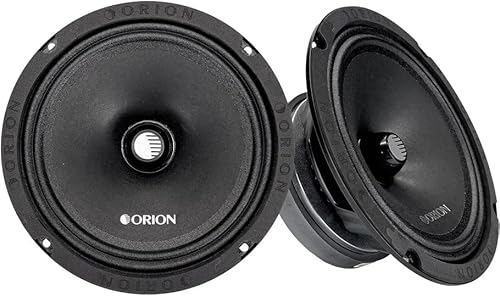 ORION Cobalt CM854 8" High Efficiency Mid-Range Speakers8" - 4 Ohm (Pack of 1)4.4 poundsCheck on Amazon


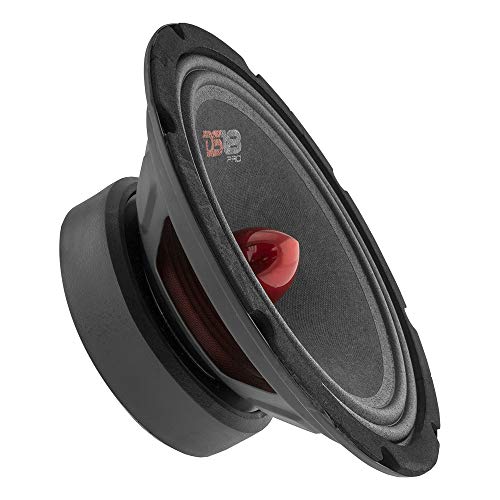
What's inside
- What round 8 inch means, and what it does not
- Cutout diameter and the screw circle
- Mounting depth, top-mount and bottom-mount
- Coaxial 8 inch designs versus pure midrange drivers
- RMS power, peak power, and honest headroom
- Sensitivity and why one decibel figure can mislead
- Impedance: 4 ohm norms and 2 ohm exceptions
- Frequency response and crossover points
- Cone materials and what they change
- Surrounds, spiders, and weather inside a door
- Factory 8 inch locations: where they actually appear
- Adapters, baffles, and sealing the door
- Why 8 inch car speakers are rarer than 6.5 inch models
- Amplifiers, wiring, and the factory head unit question
- Installation sequence that avoids the common damage
- Common buying mistakes, collected in one place
- Choosing by use case rather than by catalogue order
- Tuning expectations after the install
- Longevity, inspection, and replacement planning
- Questions buyers ask most often
- How this guide reached its conclusions
- Check prices on Amazon
- Disclosure
As an Amazon Associate I earn from qualifying purchases. This post may contain affiliate links at no extra cost to you.
Round 8 inch car speakers occupy a narrow corner of car audio, and that narrowness is exactly why buyers get them wrong. A driver with an 8 inch nominal frame promises more cone area than the familiar 6.5 inch door speaker, stronger midbass output from a single opening, and a fuller lower midrange without immediately turning to a separate subwoofer. Yet the same driver can fail to fit a door that looks large enough, bottom out against a window regulator, or sound thin because the amplifier, the crossover point, and the mounting surface were never matched to it. This guide works through the published dimensions and electrical figures that decide whether an 8 inch speaker belongs in a particular vehicle, and it separates three products that are often confused in listings: the round 8 inch full-range or midrange driver, the oval 6×8 speaker, and the 8 inch subwoofer.
The distinction matters before any brand name does. A round 8 inch speaker is built to reproduce a broad slice of the audible range from one circular opening, either as a coaxial design with a small tweeter mounted in front of the woofer cone, or as a dedicated midrange and midbass driver that needs a separate tweeter and a crossover network. An 8 inch subwoofer, by contrast, is built only for low frequencies, with a heavier cone, longer excursion, and a suspension tuned for bass below roughly 100 Hz. Putting a subwoofer driver in a door expecting vocals and cymbals from it will leave a large hole in the upper range. Putting a lightweight midrange driver in a small sealed box and feeding it deep bass at high power will overdrive its suspension. The drivers may share a nominal diameter, but they are not interchangeable.
What round 8 inch means, and what it does not
Nominal size is a marketing category, not a measurement a buyer can install by. When a maker labels a speaker 8 inch, that figure usually describes the approximate outside diameter of the frame or the nominal cone class, rounded to a familiar size step. Two speakers both sold as 8 inch can differ in outside diameter by several millimetres, and their mounting hole requirements can differ by considerably more. One shallow design might drop into a cutout near 7.25 inches, while a cast-frame midrange driver with a wide flange might need a cutout closer to 7.6 inches and a larger screw circle. The spec sheet fields that carry the real information are cutout diameter, mounting depth, overall diameter, and bolt pattern diameter, and those four numbers should be read together before a door panel comes off.
The oval comparison causes a separate kind of confusion. A 6×8 speaker measures roughly six inches by eight inches across an oval frame, so its longest dimension matches the nominal figure of a round eight, which tempts sellers and shoppers to group them together. The cone area, the cutout shape, the screw positions, and the basket geometry are all different, and an oval driver will not seal against a round opening without a fabricated plate covering the gaps. If your vehicle left the factory with oval openings, the comparison in best 6 by 8 speakers covers the drivers shaped for those apertures, while this page stays with circular drivers that need a circular hole and a flat circular mounting surface.
There is also a metric wrinkle worth knowing. Many European and competition-oriented drivers are described as 200 mm models, which converts to about 7.87 inches, and they compete directly with products labelled 8 inch in North American catalogues. A 200 mm label does not signal a smaller class in any practical sense. What matters is whether the published cutout and flange dimensions match the baffle you have. Buyers who sort listings by the headline size alone will miss good 200 mm options and will also collect a few nominally correct drivers whose baskets are too wide for the available flat surface.
Cutout diameter and the screw circle
The cutout is the hole the basket passes through, and it is the dimension most often skipped in favour of the headline size. Measure the existing opening at its narrowest point, because stamped door steel often has a rolled lip, a raised rib, or an off-centre flat that reduces the usable circle. A driver whose cutout requirement exceeds the hole by a quarter inch may still be workable if there is flat metal around the opening to trim, but trimming door steel is permanent, can expose bare edges to moisture, and may cut into a wiring route or a side-impact structure. On a classic vehicle with original sheet metal, enlargement is a decision to weigh carefully rather than a default step.
Screw circle diameter is the quiet companion specification. It describes the circle passing through the centres of the mounting holes in the flange. If that circle is wider than the flat ring of metal or adapter material around your cutout, the screws land on a curve or in empty air, and the flange cannot clamp evenly. Uneven clamping warps a stamped steel basket slightly, tilts the cone axis, and leaves a leak path that weakens midbass. Plastic adapter rings can solve a mismatched screw circle by offering a fresh flat surface with its own hole pattern, provided the ring itself is thick enough not to flex when the screws are tightened.
Flange thickness and gasket material complete the fit picture. A thick cast aluminium flange sits higher off the baffle than a thin stamped flange, which effectively adds to the height the door card must clear on the front side. Some drivers ship with a closed-cell foam gasket already bonded to the rear of the flange, and that gasket is part of the acoustic seal, not packaging. Reusing a torn factory gasket or mounting a driver metal-to-metal invites small air leaks and buzzing at resonant frequencies. Where no gasket is supplied, a strip of closed-cell foam tape around the flange, compressed evenly, does the same job without squeezing out into the cone surround the way soft sealants can.
Mounting depth, top-mount and bottom-mount
Mounting depth is measured from the underside of the mounting flange to the deepest point of the magnet and basket assembly. Top-mount depth assumes the driver sits on the front face of the baffle, which is the normal arrangement behind a door card. Bottom-mount depth applies when the driver is fastened from behind the panel, a method used on some rear decks and custom panels, and the relevant clearance then includes flange thickness in a different way. Spec sheets sometimes print only one of the two figures, so a buyer comparing a shallow-mount model against a conventional model should confirm both numbers come from the same mounting method before concluding that one is meaningfully slimmer.
Inside a front door, the obstacles behind the speaker opening are specific and unforgiving. The window glass travels down into the door shell, often passing within an inch or two of the speaker magnet. The regulator mechanism, the latch rods, the wiring loom, and the side-impact beam all compete for the same cavity. A practical check is to lower the window fully with the factory speaker removed and measure from the mounting face to the glass at the point where the magnet will sit. The new driver needs that clearance plus a small margin, because a magnet that nearly touches glass can still foul it when the door flexes or when the glass shifts slightly in its channels with age.
Magnet diameter matters alongside depth. A deep but narrow magnet may clear a window channel that a shallower but wider magnet cannot, because the wide magnet spreads into space occupied by the regulator arm. Ferrite magnets are generally larger for a given motor strength than neodymium magnets, which is why many shallow 8 inch designs use neodymium motors: the smaller motor package buys depth clearance, usually at a higher parts cost. Venting adds one more clearance item. Drivers with a vented pole piece need a little air space behind the magnet to breathe, and pressing such a driver hard against a foam block or a sheet of deadener can raise distortion and heat at high output.
Coaxial 8 inch designs versus pure midrange drivers
A coaxial 8 inch speaker places a tweeter on a post or bridge at the centre of the woofer, in front of the cone, and includes a simple built-in crossover, often just a capacitor feeding the tweeter. The attraction is simplicity: one opening, one pair of wires, and a full-range result that works with a factory head unit. The compromises are equally concrete. The tweeter sits low in the door, far off the listening axis, so high frequencies are aimed at ankles and seat cushions rather than ears. The small built-in crossover offers no adjustment, and the woofer typically runs without a proper low-pass filter, relying on its natural roll-off. For a work truck or a simple upgrade where the goal is fuller sound from existing openings, that trade can be entirely reasonable.
A pure midrange or midbass driver has no tweeter at all. Its published frequency range might run from about 60 Hz or 80 Hz up to 3,000 Hz, 4,000 Hz, or in some wideband designs higher, and it is meant to work inside a system: a tweeter handles the top octaves, a subwoofer handles the bottom, and an electronic or passive crossover divides the work. This arrangement costs more and takes longer to install, but it lets each driver operate in the band where its distortion is lowest. It also lets the tweeter live up high in a sail panel or A-pillar, where its placement does far more for perceived clarity than any tweeter specification printed on a box.
Between those poles sit two-way component sets with an 8 inch woofer, a separate tweeter, and an external passive crossover box. These are common in European sound-quality builds and in competition classes that allow larger door drivers. The crossover box needs a dry mounting spot inside the door or behind the kick panel, and its slope and tweeter attenuation settings become part of the tuning. Buyers moving from a coaxial habit to a component set should budget time for that extra hardware rather than treating the woofer diameter as the whole purchase.
Where the small dash speakers fit in
Many vehicles pair a door driver with a small speaker in the dash corner or door top, and that small driver influences how an 8 inch upgrade should be planned. If the factory system already has a working 3.5 inch dash speaker acting as the high-frequency source, adding a coaxial 8 inch door speaker duplicates the tweeter job and can thicken the upper midrange in an unhelpful way. In that layout a pure midbass driver in the door, crossed over below the dash speaker’s working band, is often the cleaner division of labour. The sizes covered in best 3 5 inch car speakers are the ones usually found in those dash locations, and their crossover needs should be planned together with the door driver rather than after it.
RMS power, peak power, and honest headroom
Peak power is the number printed largest on the box, and it is the number least connected to daily use. It describes a short burst a driver can survive under test conditions, not a level it can reproduce cleanly for the length of a song. RMS power, sometimes labelled continuous power, is the sustained thermal rating, and it is the figure that should be compared against the RMS output of the amplifier channel driving the speaker. A door driver rated at 75 watts RMS paired with an amplifier channel rated at 50 to 90 watts RMS is a sensible working match. A driver rated at 300 watts peak might carry an RMS rating of only 60 watts, and feeding it a genuine 150 watts continuously because the peak figure looked generous is a reliable route to a heated voice coil and rising distortion.
Underpowering carries its own misunderstanding. A modest amplifier does not damage a speaker merely by being modest; damage arrives when the listener demands more volume than the amplifier can deliver cleanly, the amplifier clips, and the resulting waveform dumps extra energy into the tweeter and heats the woofer coil. A clean 40 watt channel played within its limits is safer than a strained amplifier of any size pushed past them. For most factory head units, which commonly deliver somewhere in the range of 15 to 25 watts RMS per channel, an efficient 8 inch driver will play respectably, but the low-frequency advantage of the larger cone will only partly appear, because moving an 8 inch cone with authority at 70 Hz takes current that small internal amplifiers rarely supply.
Thermal ratings also assume air movement. A voice coil cools itself partly through its own motion and through vents in the motor, so a driver playing midrange material at moderate excursion may handle its rating comfortably, while the same driver asked to reproduce deep bass notes at long excursion in a hot door on a summer day lives closer to its limit. Published ratings are laboratory figures gathered under defined conditions. Treating them as a ceiling to stay visibly below, rather than a target to hit, is the habit that keeps door speakers alive for years.
Sensitivity and why one decibel figure can mislead
Sensitivity states how much sound pressure a speaker produces at a reference distance, usually one metre, from a reference input, usually one watt or 2.83 volts. The difference between those two reference inputs is a frequent source of inflated comparisons. A rating quoted at 2.83 volts into a 4 ohm load corresponds to two watts, not one, so it reads about 3 dB higher than a true 1 watt figure for the same speaker. Into a 2 ohm load, 2.83 volts corresponds to four watts. When two spec sheets use different reference inputs, the louder-looking speaker may simply be the one measured with more power. Our research treats a sensitivity figure as comparable only when the reference input and impedance are stated or can be converted.
In practical terms, a difference of 3 dB is the point where most listeners clearly hear one speaker as louder than another at the same amplifier setting, and doubling amplifier power buys roughly that same 3 dB. This is why a high-sensitivity 8 inch driver rated near 92 or 93 dB can suit a factory system better than a heavy competition midrange rated near 87 dB, even though the heavier driver may handle far more power and ultimately play louder on a large amplifier. The first driver does more with the power already available. The second driver needs an amplifier to justify itself. Neither is better in isolation; they are answers to different electrical situations.
Sensitivity also interacts with where the speaker sits. A door-mounted driver fires into a leaky, irregular enclosure and aims across the cabin at an angle, so the catalogue figure, measured on a test baffle in controlled conditions, will not be reproduced exactly at the driver’s seat. Published figures remain useful for comparing candidates against each other, which is their proper role. Expecting a spec sheet to predict the exact loudness in a particular truck cab overpromises what any single number can do.
Impedance: 4 ohm norms and 2 ohm exceptions
Most car speakers are nominally 4 ohm, and most head units and multi-channel amplifiers are designed around that load. A 2 ohm speaker draws more current from the same amplifier and can play louder on limited power, which is why some factory premium systems and a few aftermarket lines use 2 ohm door drivers. The risk appears when a 2 ohm driver is connected to a head unit or amplifier that is not stable or not rated into that load: the amplifier runs hotter, protection circuits may intervene, and in a parallel wiring arrangement the combined load can drop lower still. Impedance is also not a fixed value across frequency; a nominal 4 ohm driver may dip near 3 ohms at some frequencies and rise far higher at resonance. Nominal impedance is a category label, and amplifier makers allow margin for those swings, provided the nominal load stays within the stated range.
Mixing impedances across a pair is a subtler error. If the left door holds a 4 ohm driver and the right door a 2 ohm driver of a different model, the two sides will draw different power, image unevenly, and respond differently to the same equaliser settings. Stereo pairs should match in model, impedance, and ideally production era, because makers revise crossovers and cone treatments over a model’s life. When replacing a single damaged driver in an older install, matching the surviving partner’s specification matters more than pursuing a newer headline figure.
Frequency response and crossover points
A published frequency range such as 50 Hz to 20,000 Hz for a coaxial model, or 70 Hz to 4,500 Hz for a midrange driver, describes the span over which the maker claims usable output, not a promise of flat output across that span. The more informative documents give a tolerance, such as plus or minus 3 dB, or publish a response graph. Without a tolerance, the endpoints may sit far below the midrange level. An 8 inch woofer that lists response down to 45 Hz may be 10 dB down at that frequency, which the ear hears as a faint suggestion of the note rather than its full weight. This is normal physics for a door-mounted driver, and it is the reason a subwoofer remains part of a complete system even when the door drivers are large.
Crossover planning for an 8 inch door driver usually involves two boundaries. At the bottom, a high-pass filter protects the driver from deep bass it cannot reproduce cleanly. Points between about 60 Hz and 90 Hz are common starting positions when a subwoofer is present, with the subwoofer’s low-pass filter set to meet it. Without a subwoofer, the high-pass point may be set lower or left off at moderate volume, accepting that excursion and distortion rise as bass content increases. At the top, a midrange driver hands over to a tweeter somewhere between roughly 2,500 Hz and 4,500 Hz, depending on the tweeter’s lower limit and the woofer’s behaviour off axis. Large cones narrow their dispersion as frequency rises, a behaviour called beaming, so an 8 inch driver asked to play up to 6,000 Hz will sound different on axis than from the opposite seat. Crossing it over lower keeps the handover inside the range where its output spreads more evenly.
Filter slope shapes the overlap. A gentle 6 dB per octave slope lets both drivers share a wide band, which can smear detail if their outputs arrive out of phase. Steeper 12 or 24 dB per octave slopes confine each driver more tightly to its own band but demand more care with phase and delay settings in an active system. Factory systems with a simple capacitor on a small dash speaker use the gentlest approach of all, and replacing only the door driver in such a system changes the balance in ways the original tuning never anticipated. Knowing what filtering already exists in the vehicle is therefore part of choosing the replacement, not an afterthought.
Small full-range drivers in older dashboards
Classic vehicles complicate crossover planning because their dashboards often hold a single small speaker fed by a mono or simple stereo radio. Owners restoring such a car sometimes pair new 8 inch door or kick-panel drivers with a period-style dash speaker, and the overlap between them needs deliberate limiting so the dash unit is not fed deep bass. The compact sizes discussed in best 4 inch car speakers often serve as that dash or rear-fill element in older interiors, and a simple inline capacitor or an amplifier high-pass channel can protect them while the larger drivers carry the lower range.
Cone materials and what they change
Polypropylene is the most common cone material in this size class, and its popularity rests on consistency and moisture tolerance. A car door is a wet environment; water that passes the window seals runs down inside the door shell, and a cone that absorbs moisture changes mass and stiffness as it does so. Polypropylene shrugs off that exposure, keeps its properties across temperature swings, and can be moulded with ribs and curves that control flex. Its internal damping is relatively high, which tends to smooth breakup behaviour at the top of its range, though some listeners describe plain polypropylene cones as less vivid in the upper midrange than stiffer alternatives. Mica-filled and mineral-filled variants stiffen the base material while keeping most of its weather resistance.
Treated paper is the older technology and remains respected for good reason. Paper fibres give a favourable stiffness-to-weight ratio, and modern coatings seal the cone against humidity while damping treatments control resonances. Many sound-quality midrange drivers still use paper or paper-composite cones precisely because their breakup modes are gradual and easy to manage with a crossover. The caution with paper in a door is the quality of the treatment on both faces; an untreated rear face exposed to years of door moisture can soften. In a dry location such as a rear deck or a sealed kick-panel enclosure, that concern recedes.
Fibre-based cones, including woven glass fibre, aramid fibre, and carbon fibre constructions, aim for higher stiffness at low weight. A stiffer cone stays piston-like to a higher frequency, which can extend usable response and sharpen transient detail, but when it does break up the resonance can be sharper and needs firmer control from the crossover or a notch filter. Carbon fibre also carries a cost premium and, in thin weaves, can be less forgiving of a careless screwdriver slip during installation. None of these materials wins in every system. The published figures show how a given maker balanced the trade; the material name alone does not rank a driver.
Surrounds, spiders, and weather inside a door
The surround is the flexible ring connecting the cone edge to the frame, and its material governs both longevity and low-frequency behaviour. Butyl rubber surrounds are the durable default for door use: they resist ultraviolet light, ozone, and temperature extremes, and they commonly outlast the vehicle systems around them. Their damping is predictable, and they tolerate the long, slow flexing of midbass duty well. Foam surrounds are lighter and can offer slightly freer movement, which some older and some high-efficiency designs exploit, but foam degrades with heat, light, and time, and a foam surround in a hot climate door may need replacement years before the rest of the driver wears out. Cloth and treated-fabric surrounds appear on many pro-audio-derived midrange drivers; they are tough, control cone edge behaviour well, and suit drivers tuned for strong midbass and midrange rather than deep extension.
The spider, the corrugated disc centring the voice coil at the rear of the cone, rarely appears in marketing copy, yet its compliance sets part of the driver’s low-frequency character and its power behaviour at excursion. A stiff spider keeps the coil centred under hard use and suits high-output midrange work. A more compliant spider allows freer low-frequency movement. Buyers cannot easily compare spiders from a listing photograph, but the published resonant frequency and the recommended high-pass point quietly reflect those choices. A driver with a resonant frequency near 90 Hz is signalling that it wants a crossover at or above that region, whatever its cone diameter suggests about bass.
Factory 8 inch locations: where they actually appear
Genuine factory 8 inch door openings are uncommon, and knowing the common cases prevents hopeful mismeasurement. Large pickup trucks and full-size sport utility vehicles provide the deepest and widest door cavities, and several premium factory systems in those vehicles have used door woofers approaching this size class, sometimes in near-round openings behind generous trim. Some European cars with upgraded factory audio have likewise fitted larger door woofers in the front doors, paired with separate tweeters. In each case the trim panel usually hides the driver behind a grille that is smaller than the driver itself, so grille diameter is a poor guide to what sits behind it.
Classic American cars form the other natural home for this size, though usually through adaptation rather than a factory round hole. Wide, flat door structures and kick panels on older trucks and coupes offer the surface area that modern sculpted doors deny, and owners building a discreet system often choose an 8 inch driver behind a period-looking grille. Rear decks on older sedans also accept larger drivers with less structural protest than modern decks, which carry child-seat anchors and parcel-shelf bracing. The long oval openings found in many of those same classics are a different fitment again, and the drivers shaped for them are surveyed in best 4×10 car speakers, a format that shares the era but not the mounting geometry of a round eight.
Boats, side-by-side off-road vehicles, and workshop radios also use round drivers in this size neighbourhood, and marine listings sometimes surface in car searches. A marine speaker may share dimensions with a car model but use different materials, sealed construction, and corrosion-resistant terminals. It can work in a car door, and its weather resistance is genuinely useful there, but its tuning may assume open-air listening rather than a cabin. Cross-shopping is legitimate as long as the electrical figures and dimensions are compared on the same basis as any car model.
Adapters, baffles, and sealing the door
An adapter ring converts an existing opening to a new bolt pattern or diameter, and its material decides whether it helps or harms. Rigid rings in thick PVC, high-density polyethylene, or birch plywood hold the driver firmly and resist the flex that steals midbass energy. Thin, hollow plastic rings can drum against the door skin and should be stiffened, damped, or replaced. Stainless or coated fasteners are worth using inside a door, where bare steel screws corrode and eventually stain or seize. Where an adapter spaces the driver forward, check grille and door-card clearance again, because the ring’s thickness adds directly to the front-side height.
A baffle in the acoustic sense is the surface that separates the sound from the front of the cone from the sound at its rear. In a door, that separation is imperfect: the door shell has drain holes, wiring pass-throughs, and a large window slot at the top. When front and rear waves meet, they cancel most strongly at low frequencies, which is why a poorly sealed 8 inch install can sound thinner than the 6.5 inch speaker it replaced despite the larger cone. Foam speaker rings that press against the back of the door card help by channelling output through the grille instead of into the trim cavity. Covering the largest access holes in the inner door skin with sound-deadening material, while keeping drain holes and latch mechanisms clear, firms up the effective enclosure and is often the single change that lets a larger driver show its advantage.
Flexible foam baffles sold as speaker cups deserve a measured word. A cup behind the driver can shield it from dripping water, which is a real benefit in doors with tired window seals. A small sealed cup, however, also acts as a tiny enclosure that restricts cone movement and can thin the low end it was meant to protect. If a cup is used for weather protection, a generous size or a vented arrangement preserves more of the driver’s intended behaviour than a tight sealed pocket.
Why 8 inch car speakers are rarer than 6.5 inch models
The 6.5 inch size dominates car audio because vehicle makers converged on it. A 6.5 inch driver fits the door structures of compact cars, family sedans, crossovers, and trucks alike, so a speaker maker can sell one design into millions of vehicles, and a retailer can stock depth in a few models rather than breadth across many. Tooling, packaging, and adapter production all follow that volume. The 8 inch class, by contrast, serves a patchwork: a minority of factory locations, custom builds, classic restorations, and competition doors. Smaller production runs mean fewer models, less discount pressure, longer gaps between redesigns, and a higher chance that a listed model is a pro-audio midrange adapted to car use rather than a purpose-built car product.
Packaging physics reinforces the market logic. Door designs have moved toward sculpted inner panels, larger window mechanisms, curtain airbag hardware, and wiring density that leaves less flat, round, unobstructed space. An 8 inch circle needs a genuinely flat ring of support around its full circumference, and modern doors rarely offer that by accident. Even where the cavity depth exists, the flat mounting real estate often does not. This is why many large-cone door builds begin with fabricated pods or rebuilt door cards: the installer is manufacturing the flat surface the vehicle never provided.
The rarity has a practical consequence for buyers: comparison information is thinner. Popular 6.5 inch models accumulate years of published measurements and owner documentation, while an 8 inch model may have only a maker spec sheet and a handful of listings, some of which copy figures from a sibling model. That scarcity raises the value of reading the primary spec sheet carefully, confirming dimensions against the maker’s own drawing where one is published, and treating unsourced listing numbers as provisional. Our research weights maker documents over retailer summaries whenever the two disagree.
Amplifiers, wiring, and the factory head unit question
Deciding whether to add an amplifier is really deciding what the 8 inch driver is for. If the goal is modestly fuller sound at ordinary volume in a vehicle with factory 8 inch openings, an efficient coaxial model on head-unit power can meet it. If the goal is the midbass authority that justified choosing this size, an external amplifier with a proper high-pass filter is close to a requirement. Amplifiers in the 50 to 100 watts RMS per channel range cover most door drivers in this class, and a four-channel unit lets the rear speakers or a bridged subwoofer channel share the same chassis. Published amplifier ratings should be read with the same care as speaker ratings: RMS output at a stated impedance and distortion level is the comparable figure, while a large maximum output number is not.
Wiring deserves attention in proportion to power. Factory speaker wire is adequate for head-unit output and for modest amplifier channels over short door runs, which is why many mild builds reuse it through the factory loom. Higher-power builds benefit from thicker wire, but threading new cable through door jamb boots is labour that should be planned, not discovered mid-install. Polarity, meanwhile, is free performance: a door pair wired with one side reversed will cancel bass between the seats in a way no equaliser can repair. Checking both sides with the same polarity convention, and confirming with a known test tone or a polarity checker where available, takes minutes and protects the whole result.
Factory systems with active noise cancellation or engine-sound enhancement add a modern complication. Some vehicles route synthesised sound through the door speakers, and some cancellation systems react badly to changed driver impedance or added amplification. Owners of late-model trucks in particular should confirm how their specific trim behaves before replacing drivers, because the correct answer varies by model year and audio package. A driver swap that looks electrically simple can inherit a software behaviour that no speaker specification mentions.
Installation sequence that avoids the common damage
Work begins with power disconnected and trim removed in the order the vehicle maker intended, using panel tools rather than screwdrivers against painted or textured surfaces. Photographing each connector and clip location before removal is unglamorous and saves real time on reassembly. With the factory driver out, the opening should be measured again directly: cutout, flat ring width, depth to glass with the window down, and clearance to the regulator at its closest pass. Test-fitting the new driver or its adapter before any wire is cut keeps every later decision reversible.
Sound treatment is easiest while the door is open. Deadening material on the outer skin reduces panel resonance, treatment of the inner skin seals access holes, and a foam ring prepares the path through the door card. None of this needs to be exhaustive to be useful; coverage of the largest flat areas and the sealing of the biggest holes deliver most of the benefit. Care is needed around drain holes at the door bottom, which must stay open, and around moving mechanisms, which must stay unobstructed.
Electrical connection should be soldered and insulated, made with proper terminals, or completed with a vehicle-specific harness adapter that avoids cutting factory wire. Twist-and-tape joints corrode inside doors and become intermittent faults that mimic speaker failure. Before the door card returns, the driver should be played at moderate volume with the window raised and lowered through its full travel, the latch operated, and a bass-heavy passage used to listen for buzzes from loose trim or wiring resting against the cone’s moving parts. Finding a rattle with the panel off is a two-minute fix; finding it afterward means removing the panel again.
Common buying mistakes, collected in one place
The most frequent error is ordering by headline diameter alone and discovering a cutout mismatch on installation day. The second is ignoring depth until the magnet meets the window glass. Close behind comes confusing peak power with RMS power and pairing a driver with an amplifier whose honest output is a fraction of the number on its box, or several times the driver’s continuous rating. Sensitivity figures quoted at different reference inputs are compared as if they were equal, leading buyers to expect volume a driver cannot deliver on factory power. Impedance is overlooked when a factory system uses 2 ohm drivers, and the replacement 4 ohm model plays noticeably quieter on the same system, which is then misread as a defective speaker.
A second family of mistakes concerns role confusion. An 8 inch subwoofer is bought to replace a full-range door speaker, leaving no high frequencies in that location. A competition midrange with a published range starting near 100 Hz is expected to supply deep bass, and its owner concludes the driver is weak when it was never built for that band. A coaxial model is installed alongside a still-connected factory tweeter, stacking two high-frequency sources. Marine and pro-audio models are bought without checking whether their terminals, grilles, or mounting patterns suit a door at all. Each of these errors is visible in the published figures before money moves, which is why the figures, not the photographs, should lead the decision.
The final mistake is neglecting the pair. One new driver beside one tired factory driver produces a lopsided stage that no balance control fully corrects, because the two sides differ in sensitivity, response, and distortion, not merely in level. Door speakers in this size are sometimes sold singly, especially pro-audio-derived models, which makes the error easy. Confirm the unit of sale, and budget for a matched pair plus the adapter and sealing materials the install will consume.
Choosing by use case rather than by catalogue order
A daily-driven truck with factory 8 inch openings and no plans for an amplifier calls for a particular profile: sensitivity at the higher end of the class, a modest RMS rating that factory power can approach, a rubber surround, and a coaxial layout if the vehicle has no separate tweeter location in use. Depth should be checked against the shallowest point in that specific door, because truck doors vary by cab configuration and trim even within one model line. In this profile, exotic cone materials matter less than efficiency and fit, and money saved on the drivers is often better spent on deadening material and proper sealing rings.
A sound-quality build with an amplifier and a separate tweeter points the other way. Here a dedicated midbass driver with a lower sensitivity figure can be the right choice, because amplifier power is available to trade for control and extension. The published response graph, the recommended crossover band, and the driver’s behaviour at the top of its range matter more than its efficiency. Budget should include the crossover or digital signal processing that this layout assumes, plus tweeter placement work, because an excellent woofer paired with a poorly placed tweeter yields a system that measures its money in the wrong place.
A high-output build, the kind associated with competition doors and multiple drivers per side, uses pro-audio-derived midrange units with fabric surrounds, high sensitivity, and resonant frequencies that assume a firm high-pass filter and a separate subwoofer system carrying everything below. These drivers can be strikingly loud on modest amplifier power, but their published figures are honest about their limits: they are not deep bass devices, and they are often sold without grilles, without crossovers, and sometimes singly. A buyer drawn to their output figures should read the recommended filter settings as part of the product, not as optional advice.
A classic car restoration adds preservation to the electrical checklist. The preferred driver is the one that fits the existing opening or an adapter that bolts to factory holes, so the car can return to original specification later. Power demands should stay modest if a period-style radio or a modern head unit in a vintage dash is the source, and sensitivity again becomes the figure that decides satisfaction. Original trim and door cards in good condition are worth more than any single speaker upgrade, so any plan that requires cutting them should be treated as a last resort rather than a first step.
Tuning expectations after the install
An 8 inch door driver changes the balance of a system in ways that invite small adjustments rather than dramatic ones. Midbass output around the crossover to a subwoofer may need a level trim so kick drums sit with the rest of the kit instead of in front of it. The time alignment between a low door woofer and a high tweeter, where processing allows it, can pull a vocal image toward the centre of the dash. Equaliser cuts of a few decibels at a door resonance are usually more successful than boosts at frequencies the driver struggles to reproduce, because a boost spends amplifier headroom and excursion, while a cut returns both. Documenting the filter points and level trims chosen at this stage also gives a later owner, or a future you, a reliable starting point.
Longevity, inspection, and replacement planning
Door speakers live hard lives. They are slammed, heated, cooled, and misted with water that finds its way past ageing seals, and they vibrate for years in a panel that flexes. An annual look behind the door card is impractical for most owners, but listening for the early signs costs nothing: a buzz that appears only on bass notes, a channel that drops at low volume, or a rattle that follows road texture. Corroded terminals and a surround beginning to separate announce themselves through those symptoms before complete failure. Catching a failing foam surround early matters because a cone flapping on a torn surround can damage the coil former if it is driven hard in that state.
When one driver of a pair eventually fails, replacement planning returns to the matching principle covered earlier. Makers revise models, rename lines, and alter figures without much ceremony, so a same-named driver bought years later may not be an exact twin of the survivor. Replacing both sides together preserves stereo symmetry and resets the ageing clock evenly. Keeping the original spec sheet, or a note of the key figures and the adapter used, turns that future job from archaeology into ordering.
Questions buyers ask most often
Will an 8 inch speaker always sound better than a 6.5 inch speaker?
No. Cone area is one variable among several, and a well-installed 6.5 inch driver in a sealed, damped door, on adequate power, will outperform a larger driver mounted loosely in a leaky door on weak power. The larger cone offers potential in midbass output and low-frequency reach. Installation quality and system matching decide how much of that potential is heard. The honest comparison is between complete installations, not between diameter figures on a shelf.
Can an 8 inch midrange driver replace a subwoofer?
For listeners whose music and volume habits stay moderate, a pair of capable 8 inch door drivers can supply satisfying low end without a separate subwoofer, and many owners of large trucks run exactly that arrangement. The limits are physical: a door is a poor enclosure, the drivers must also reproduce midrange, and deep bass at high volume demands excursion that competes with clarity above it. A dedicated subwoofer in a proper enclosure still reaches lower, plays cleaner at volume, and relieves the door drivers through the high-pass filter. The published low-frequency figures of the door driver, read with their tolerance in mind, indicate where its honest contribution ends.
Do grilles and door cards change the sound?
Yes, in measurable and audible ways at high frequencies. A thick factory grille with small perforations absorbs and diffracts treble from a coaxial tweeter sitting behind it, and a door card pressed against a foam sealing ring behaves differently from one with an air gap. These effects are another argument for separate tweeters mounted clear of obstructions in serious builds, and for keeping expectations of a low coaxial tweeter realistic in simple ones. Midbass is far less affected by grille material, which is why the larger cone’s main benefit survives the door card largely intact.
How this guide reached its conclusions
The comparisons in this article rest on maker-published dimension drawings, spec sheets, and installation manuals for drivers in this size class, read alongside vehicle fitment documentation for the factory locations discussed. Where sources disagreed, the maker’s own document was treated as authoritative for that maker’s product, and retailer summaries were set aside. No driver was auditioned, measured on a bench, or fitted to a vehicle for this article, and no statement here should be read as a report of listening impressions. Figures quoted as typical ranges describe the class as published, and an individual model’s own sheet remains the document to trust for a specific purchase decision.
Check prices on Amazon
Live listings for the shortlist in this guide are pulled from Amazon below, so prices and availability are always current at the moment you look.


Disclosure
This article was prepared from publicly released manufacturer documents, dimension drawings, and specification sheets, and it reflects documentary research rather than any direct handling of the products named by category. The site that publishes it is supported in part by referral fees paid by the retailer when a reader follows a link from these pages and completes a purchase with that retailer; those payments keep the guides available to read without a subscription, and they do not change which specifications are quoted or how the fitment warnings above are worded. For a round driver that must clear window glass by millimetres and seal against a door skin that was never drawn flat, the spec sheet will always matter more than the size printed in bold on the carton.

