Our Top Picks
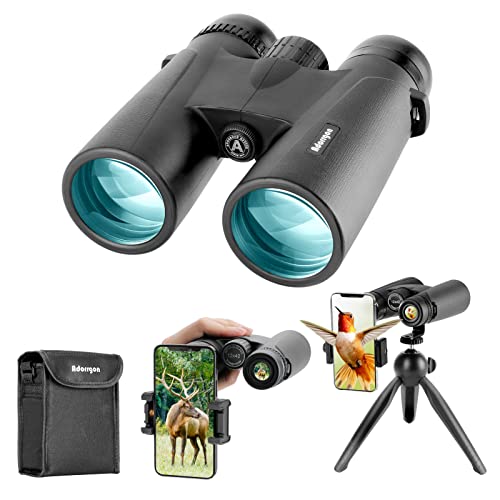 Adorrgon 12x42 High Powered Binoculars for Adults12x425.75 x 4.95 x 2.1 inches1.1 poundsCheck on Amazon
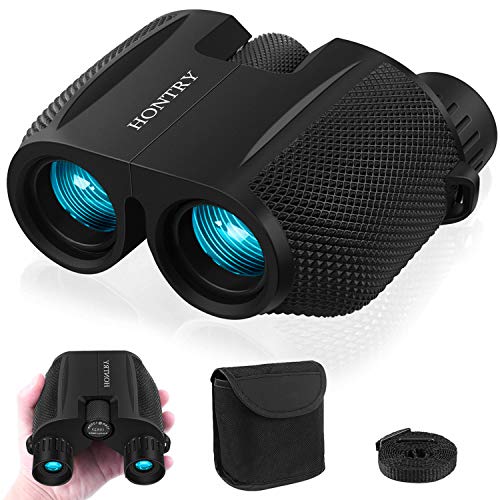
 12x32 Compact Binoculars for Adults High Powered12x324.5 x 2.1 x 0.1 inches0.75 poundsCheck on Amazon



What's inside
- Why sightseeing asks something different from a binocular
- Magnification, honestly weighed: the case for 8x on foot
- Exit pupil: the small calculation with large consequences
- Field of view: how much of the scene comes with you
- Three sizes, three philosophies of carrying
- Prisms, coatings and glass: reading the expensive words
- Close focus, eye relief and the fit numbers
- Sealing, fog and the weather you did not plan
- Straps, cases and caps: the ergonomics of a whole day
- Reading a specification sheet without being read by it
- Matching the glass to the trip you actually take
- Stability tricks, shared use and evening sightseeing
- Check prices on Amazon
- Care on the road and the long view of ownership
As an Amazon Associate I earn from qualifying purchases. This post may contain affiliate links at no extra cost to you.
Editorial note for this guide: every comparison below rests on published specification sheets, optical formulas and manufacturer documentation rather than on any claim of personal field use. Where a buying link appears on this site, a reader purchase through that link may earn the site a commission at no added cost to the reader, and that support helps keep these specification-led guides free to read.
Why sightseeing asks something different from a binocular
Sightseeing looks easy on an optic. The targets are large, the light is usually generous, and nobody is asking you to separate two nearly identical warblers in deep shade. That surface simplicity hides a distinct set of demands. A travel binocular spends its day hanging from a neck, riding in a daypack side pocket, coming up quickly when a viewpoint opens, a parade turns a corner, a harbour light catches your eye, or a guide points toward a distant tower. It must reward a two-second glance as readily as a ten-minute study of a cathedral facade, and it must do so hour after hour without turning into a burden.
Birding optics are optimised around a different problem. A birder often tracks a small, fast, camouflaged subject through clutter, values extremely close focus for insects and plants, and may accept extra weight because the birding itself is the activity. Hunting optics lean toward dawn and dusk brightness, long stationary glassing from a fixed position, and reticle or ranging considerations that sightseeing never needs. A sightseeing glass, by contrast, serves a moving observer. You walk, climb steps, board trains, lean on railings, and shift attention constantly between the naked-eye scene and the magnified view. Continuity between those two views matters more than squeezing out the last increment of low-light performance.
That continuity shapes every specification that follows. A moderate magnification that preserves a wide, steady field will usually serve a traveller better than a stronger glass that narrows the world and amplifies every tremor in the hands. A compact body that is actually carried beats a brighter body left in a hotel room. Generous eye relief matters because sunglasses go on and off all day. A close focus of two metres matters because sightseeing includes museum courtyards, fountains, carved doorways, market stalls and the near details of historic buildings, not only distant skylines. Reading a sightseeing specification sheet well means translating each number into a moment on a trip: a sunset over a river, a breezy clifftop, a crowded plaza where you have seconds to find a landmark before the group moves on.
Magnification, honestly weighed: the case for 8x on foot
Magnification is the first number in the familiar pairing, so an 8×42 magnifies eight times and a 10×42 magnifies ten times. The naive assumption is that ten must be better because the subject looks bigger. On a tripod, in still air, with a static subject, that can be true. Handheld, walking, slightly breathless from a hill climb, the arithmetic changes. Every involuntary movement of your hands is also magnified. A tremor that shifts the view by a small angle at 8x shifts it by a quarter more at 10x, and the practical result is a busier, less settled image that tires the eyes sooner. Detail you cannot hold still is detail you do not actually resolve.
Field of view narrows as magnification rises within the same eyepiece design family. A typical 8×42 offers a true field near 7.5 to 8.3 degrees, while a comparable 10×42 sits closer to 6.0 to 6.5 degrees. That difference decides how quickly you can find a subject after raising the binocular. With the wider glass you raise, recognise the scene, and settle on the target. With the narrower glass you raise, hunt, overshoot, correct, and sometimes lower the binocular to start again with the naked eye. Across a day of sightseeing, that friction repeats dozens of times, and it is the strongest practical argument for 8x as the default travel choice.
There are honest exceptions. Open landscapes, distant shorelines, mountain ridgelines viewed from a steady platform, and ship decks with a railing to brace against can all reward 10x, provided the observer accepts the narrower field and works to hold the glass steadily. Seated sightseeing, such as stadium events or open-air concerts from fixed seats, also softens the shake penalty because elbows can rest on knees or armrests. The point is not that 10x is wrong; it is that 10x is a specialisation. For walking travel, where the binocular is raised and lowered constantly and the hands are rarely braced, 8x delivers more usable detail per hour, and usable detail is the only kind that counts.
Shake, breathing and the two-second glance
Consider the two-second glance, the most common sightseeing use of all. A guide gestures, a companion says look, a bell tower appears between buildings. In that moment, acquisition speed beats peak magnification. A wider field forgives imperfect aim, a steadier image lets the brain register detail immediately, and a lighter glass comes up faster with less overshoot. Photographers who compare travel lenses will recognise the pattern from guides such as best 10 small travel cameras, where the equipment that gets carried and raised quickly tends to produce more keepers than the heavier kit with the longer specification sheet.
Breathing adds a slow, rhythmic sway that no grip fully removes, and fatigue adds a faster tremor late in the day. Both grow more visible as magnification climbs. Experienced travellers compensate by bracing elbows against the torso, leaning a shoulder against a wall, or resting the binocular on a railing, but technique helps both magnifications equally, so the relative penalty of 10x remains. When a specification sheet tempts you with the bigger first number, picture the last hour of a long walking day rather than the first five minutes in a shop, and choose for the hour when your hands are tired.
Exit pupil: the small calculation with large consequences
The exit pupil is the diameter of the beam of light that leaves each eyepiece and enters your eye. The calculation could not be simpler: divide the objective lens diameter in millimetres by the magnification. An 8×42 therefore gives 42 divided by 8, which is 5.25 millimetres. An 8×25 gives 25 divided by 8, which is 3.1 millimetres. A 10×42 gives 4.2 millimetres, and a 10×25 gives just 2.5 millimetres. One division, done in your head, predicts a surprising amount about how a binocular behaves as light fades.
Your own pupil sets the context. In bright daylight a healthy pupil may be only 2 to 3 millimetres across, so even a compact glass with a 3.1 millimetre exit pupil can fill it, and the view looks fully bright. As light falls, the pupil opens: perhaps 4 to 5 millimetres in shade or at dusk for many adults, and up to about 7 millimetres in full darkness for younger eyes, with the maximum tending to shrink with age. When the exit pupil of the binocular is smaller than your pupil, the image dims relative to what the scene could offer. When it matches or exceeds your pupil, the binocular is no longer the limiting factor for brightness, though coating quality still governs how much light survives the journey through glass and prisms.
For sightseeing, the practical theatre for this calculation is the golden hour. Travel days end at viewpoints, riverbanks and old-town squares precisely when the light turns beautiful and scarce. An 8×42 with its 5.25 millimetre exit pupil keeps the view composed and bright well into twilight. An 8×25 at 3.1 millimetres feels perfectly adequate at noon and noticeably hungrier at sunset. Neither is defective; they are tools tuned to different hours. A traveller whose sightseeing peaks at midday markets and bright coastal walks can accept the compact trade. A traveller who plans around sunset viewpoints, evening festivals and shaded courtyards should treat exit pupil as a first-order specification, not a footnote.
Eye placement is the hidden half of exit pupil
A larger exit pupil also forgives imperfect eye placement. The bright beam leaving the eyepiece is wider, so your pupil can sit slightly off centre, as happens when you glance quickly or share the binocular between two people with different face shapes, without the view blacking out at the edges. Users sometimes describe this as a glass being easy to look through, and much of that ease is simple geometry. Compact binoculars with small exit pupils demand more precise alignment, which is one reason they can feel fussy despite excellent glass. When a specification sheet lists exit pupil directly, compare it; when it does not, do the division yourself and write the result beside the price-free notes you keep while shortlisting.
Field of view: how much of the scene comes with you
Field of view is published in two dialects. Some makers state the true angular field in degrees; others state the width visible at a standard distance, commonly feet at 1,000 yards in North American literature or metres at 1,000 metres elsewhere. The dialects convert cleanly. One degree of angular field corresponds to roughly 52.5 feet at 1,000 yards. A binocular listed at 8.0 degrees therefore shows about 420 feet across at 1,000 yards, while a 6.5 degree glass shows about 341 feet. At sightseeing distances the same ratio applies proportionally: at 100 yards those fields are roughly 42 feet and 34 feet across, the width of a generous plaza versus a narrower slice of it.
Why does width matter so much for travel? Because sightseeing is a scanning activity. You sweep a skyline to find the dome your guidebook mentioned, you follow a boat across a harbour, you track a cable car up a slope, you pan across a battlefield or a vineyard valley trying to match the map in your hand to the ground in front of you. A wide field keeps reference points inside the frame while you move, so the brain maintains its map of the scene. A narrow field severs that map at every pan, forcing constant reorientation. The difference feels less like a specification and more like temperament: one glass feels calm and orienting, the other feels urgent and tunnel-like.
Field of view is not free. It is set largely by eyepiece design, and widening it while keeping the edges sharp is one of the genuinely hard problems in optical design. A wide field with poorly corrected edges gives a broad but swimmy view in which straight lines bow and the outer third softens. A slightly narrower field with disciplined edge performance can be the better sightseeing tool, especially for architecture, where the subjects are full of straight lines that betray distortion immediately. This is why the honest comparison pairs the field figure with the eyepiece story: field flattener elements, the number of eyepiece elements and groups, and the apparent field of view, which is roughly the true field multiplied by the magnification. An 8x glass with an 8 degree true field presents an apparent field near 64 degrees, an immersive width that many travellers find immediately pleasant.
Apparent field and the feeling of immersion
Apparent field of view describes how wide the image feels to the eye, as opposed to how much ground it covers. Two binoculars can share a magnification and still feel very different because their eyepieces present different apparent widths. Once apparent field passes roughly 60 degrees, most viewers describe the view as expansive rather than porthole-like. Below about 50 degrees the tunnel sensation grows. Specification sheets now routinely publish apparent field, sometimes calculated by a simple multiplication and sometimes by a tangent-based standard that yields a slightly different figure, so cross-brand comparisons should note which convention a maker used. The safe approach is to compare apparent field within a brand precisely and across brands approximately, while treating true field in degrees as the firmer common currency.
Moving subjects sharpen the field question further. Following a ferry, a funicular or a bird of prey quartering a cliff is a prediction task: you place the subject ahead of its motion and let it cross the frame. A wide field gives the subject a longer crossing time and gives you margin for the small errors that handholding guarantees. Readers who enjoy reach in a pocketable body often weigh the same trade in camera form in best 20x optical zoom compact cameras, where framing at long zoom settings punishes any shake in a similar way. In binoculars the answer is not more magnification but more field at a magnification you can hold.
Three sizes, three philosophies of carrying
Sightseeing binoculars cluster into three size classes, and choosing a class matters more than choosing between two models inside one. The compact class, typified by 8×25 and 10×25, folds or collapses into a package that disappears into a jacket pocket or a small handbag. The mid-size class, typified by 8×32, splits the difference. The full-size class, typified by 8×42, accepts real bulk in exchange for brightness, comfort and forgiving eye placement. Each class is a philosophy about what a travel day should feel like.
Published weights tell the story in grams. Compacts commonly sit between about 200 and 350 grams. Mid-size glasses commonly run from about 400 to 550 grams. Full-size glasses commonly run from about 550 to 750 grams, with some armoured models going higher. Those numbers look close on paper and feel very different at hour six. Weight carried on a neck strap loads the cervical spine and creates a swinging pendulum when you walk; weight carried in a chest harness or a hip belt pouch loads stronger structures and stays quiet. The same 650 gram binocular can be a pleasure on a harness and a misery on a thin strap, which is why carry method belongs in the size decision rather than after it.
The compact class: 8×25 and 10×25
A compact earns its place by being present. It rides in the pocket that is actually with you at the viewpoint, not in the bag left on the tour bus. Double-hinge designs fold the barrels inward until the package is barely wider than a fist, and single-hinge compacts trade a little folded neatness for simpler handling. The optical costs are the ones already calculated: an exit pupil near 3 millimetres, a smaller sweet spot for eye placement, smaller focus wheels that gloved or hurried fingers find less easily, and eye relief that on some compacts shrinks below what glasses wearers need. For bright, daytime, opportunistic sightseeing, those costs may be entirely rational. The compact is the binocular of serendipity.
Within the compact class, 8×25 is usually the wiser travel specification than 10×25. The 10×25 pairs the highest common magnification with the smallest common objective, producing a 2.5 millimetre exit pupil and a narrow field, a combination that magnifies shake while starving brightness. It has a niche for bright, static, distant subjects viewed briefly, but as an all-day sightseeing tool the 8×25 is steadier, wider and kinder at dusk. When a compact specification sheet leads with 10x as though it were a premium feature, read it instead as a warning label about the compromises that follow.
The mid-size class: 8×32 as the traveller’s compromise
The 8×32 has become the thinking traveller’s default for good reason. Its exit pupil is exactly 4.0 millimetres, enough to stay composed through shade and early evening. Its field of view often matches or exceeds that of larger glasses because the smaller objective relaxes some design constraints. Its weight, commonly under 550 grams, crosses the threshold where an ordinary neck strap remains comfortable for most of a day. For travellers who walk cities, climb modest hills and finish at a sunset viewpoint, the 8×32 covers the widest span of real situations per gram carried.
The compromise shows at the extremes. In deep twilight the 8×42 pulls ahead visibly, and observers with larger hands sometimes find mid-size focus wheels and barrels a touch small for rapid work. Interpupillary adjustment ranges and hinge tension also matter more on smaller bodies because small misalignments are a larger fraction of the whole. None of this displaces the 8×32 from its role; it simply marks the boundaries of the compromise, and honest specification reading means knowing which boundary your own travel style is likeliest to touch.
The full-size class: 8×42 and the price of brightness
The 8×42 remains the reference configuration against which others are judged. The 5.25 millimetre exit pupil, the generous eye box, the large focus wheel that finds itself under the finger without looking, and the substantial grip all serve long, deliberate viewing. Travellers whose trips centre on scenery rather than city walking, who view from vehicles, boats, lodges and viewpoints reached by road, often carry the weight gladly because the viewing itself is the point of the day. Wildlife detours on a sightseeing trip, such as an hour at a wetland boardwalk, also reward the full-size glass, and the same travellers often read about unattended viewing in best affordable trail cameras when a trip includes a cabin or campsite stay.
The honest cost is carriage. A full-size binocular demands a deliberate carry system, occupies real space in a cabin bag, and announces itself on the chest in a way some travellers dislike in crowded cities. Airlines weigh cabin bags, tour days involve stairs and turnstiles, and a heavy glass can migrate from neck to bag to hotel room across a trip as enthusiasm meets gravity. Choosing 8×42 is choosing to organise the day partly around the optic. For the right traveller that is no hardship at all; for the wrong one it is how a fine instrument becomes an expensive souvenir of good intentions.
Prisms, coatings and glass: reading the expensive words
Two prism architectures dominate. Porro prism designs offset the objective lenses wider than the eyepieces, giving the classic zigzag silhouette. Roof prism designs run the light path straight through, giving the slim, straight barrels most travellers now expect. Neither architecture is inherently superior in the abstract; each shifts cost and difficulty to a different place in the optical train. Porro designs achieve total internal reflection naturally at their prism faces and historically delivered excellent views at modest prices, but they are bulkier, their offset shape packs awkwardly, and sealing them against water is harder because the focus mechanism moves external elements on many designs. Roof designs pack beautifully and seal readily, but one prism face cannot achieve total internal reflection and must be mirror-coated, and the two prism halves must be phase-aligned to preserve contrast.
That is where the coating vocabulary earns its keep. Phase coating, sometimes marketed with proprietary names in the PC-3 class of treatments, is applied to roof prism faces to correct the phase shift between the two halves of the light path. Without it, a roof prism binocular loses contrast and resolution in a way no objective quality can restore; with it, a good roof glass matches a good Porro. For a modern roof prism sightseeing binocular, phase coating should be treated as a baseline expectation rather than an upgrade. If a specification sheet for a roof model is silent about phase coating, that silence is information.
The mirror coating on the non-reflecting prism face comes in three broad generations. Aluminium coatings reflect roughly the high eighties to low nineties percent of light. Silver coatings do better, commonly the mid nineties. Dielectric coatings, built from dozens of alternating layers, can exceed 99 percent reflectivity across the visible spectrum. The cumulative effect across the whole system is what reaches your eye, and it interacts with the anti-reflection coatings on every air-to-glass surface. Fully multi-coated is the phrase that matters: it means all air-to-glass surfaces carry multiple anti-reflection layers. Lesser phrases, such as coated or multi-coated without the word fully, describe partial treatment and predict a dimmer, lower-contrast view, especially looking toward the light, which sightseeing constantly does at viewpoints and harbours.
ED glass and the fringes on bright edges
Chromatic aberration appears when a lens brings different colours to slightly different focus points. In a sightseeing view it shows as purple or green fringing along high-contrast boundaries: a white tower against a dark hillside, rigging against a bright sky, roof tiles against sunlit cloud. Extra-low dispersion glass, marketed as ED, HD or by maker-specific names, reduces that spread and keeps edges cleaner and colours more faithful. Fluorite-containing elements sit at the premium end of the same idea. The benefit is most visible at the edges of the field and in backlit scenes, and it is a genuine optical improvement rather than a cosmetic one, though its value scales with how much architecture and bright sky your sightseeing includes.
Aberration control is a system, not a single material. A maker can pair ED objectives with an ordinary eyepiece and still deliver fringing from the eyepiece end, which is why specification reading should look for a coherent story: dispersion-controlled objectives, phase-coated prisms, dielectric mirror coatings and fully multi-coated surfaces pointing in the same direction. When the story is coherent, the view tends to be coherent. When one premium word floats alone in a sea of unspecified glass, expect the view to follow the unspecified majority.
Porro’s remaining case for the traveller
It is worth stating the Porro case plainly because travel writing often skips it. A well-made Porro binocular can deliver a spacious, high-contrast view with a satisfying sense of depth, partly because the widely spaced objectives exaggerate the stereoscopic baseline your eyes use to judge distance. For travellers who tour by car, canal boat or train and view from seated comfort, a Porro’s bulk is a minor tax and its optical generosity is real. The weaknesses are packing shape, sealing difficulty and a shrinking model selection as the market concentrates on roof designs. Choosing Porro knowingly, for the view, remains a defensible travel decision; choosing it unknowingly, without checking the sealing specification, is how rain on a boat trip becomes an internal fog problem.
Close focus, eye relief and the fit numbers
Close focus is the shortest distance at which the binocular can bring a subject into sharp view, and published figures for travel-suitable models generally fall between about 1.5 and 3 metres. Sightseeing uses close focus constantly, though rarely under that name. It is the carved capital at the top of a museum column, the mosaic floor roped off a few metres away, the menu board across a small square, the lizard on the wall beside the viewpoint, the detail of a fresco that the crowd cannot approach. A glass that focuses only beyond 4 or 5 metres, as some long-range designs do, will frustrate exactly these moments. Check the figure; it is printed on every serious specification sheet and it predicts a whole category of travel pleasure.
Eye relief is the distance from the rear eyepiece surface at which your eye can still see the full field. Published values for comfortable glasses-compatible viewing generally run from about 15 to 20 millimetres, with the higher end kinder to thick frames and deep-set eyes. The geometry is unforgiving: glasses hold the eye farther from the eyepiece, so insufficient relief clips the field into a keyhole. Twist-up eyecups with positive intermediate stops let glasses wearers set a repeatable position and let non-wearers extend the cups fully, and the quality of those stops is a fit detail worth weighting heavily if you alternate between sunglasses and ordinary glasses through a travel day.
Interpupillary distance, the spacing between the two barrels, must cover your own eye spacing. Published adjustment ranges commonly span roughly 56 to 74 millimetres, with compacts sometimes starting lower, which suits smaller faces and older children sharing the glass. If your spacing sits near either end of a model’s range, the hinge may sit near its stop with less mechanical grace, a subtle point that matters for shared family travel. The diopter adjustment, commonly plus or minus 3 to 4 diopters on the right eyepiece or a central control, compensates for the difference between your two eyes. Set it once, carefully, at the start of a trip using a distant detailed subject, and note whether the control has a lock or detent, because an unlocked diopter that drifts in a bag quietly degrades every view until someone re-sets it.
Focus wheels and the choreography of a quick look
The central focus wheel mediates every look. Its diameter, knurling, rotation range and resistance decide whether focus arrives as a thoughtless reflex or a small negotiation. A wheel that travels from close focus to infinity in about one full turn is quick but touchy; a wheel needing two turns is precise but slow for sightseeing’s constant distance changes. Many travel-friendly designs settle near one to one and a half turns. Separate per-eye focusing, found on some marine and individual-focus designs, suits static long-distance viewing and suits sightseeing poorly, because every distance change demands two adjustments. For travel, a smooth central wheel with a separate diopter is the configuration the specification sheet should show, and any departure from it needs a specific reason tied to how you actually spend your days.
Extreme reach has its place at the edge of sightseeing: reading a distant summit cross, picking out a lighthouse keeper’s cottage, or watching climbers on a far face. Travellers who lean that way often compare the binocular answer with the camera answer in best 50x superzoom digital cameras, and the comparison is instructive, because a camera records what a binocular only shows. Many travellers end up carrying the moderate glass for the eyes and letting a modest zoom handle the record, a division of labour that keeps both tools inside their strengths.
Sealing, fog and the weather you did not plan
Travel weather ignores itineraries. A sightseeing binocular will be rained on at a viewpoint, chilled in an aircraft hold, warmed in a sunlit car, carried from air-conditioned museums into humid streets, and used with wet hands on boats. Sealing specifications describe how the instrument copes. Nitrogen purging means the internal air has been replaced with dry nitrogen, which carries no moisture to condense on internal surfaces when temperature swings. Argon purging pursues the same goal with a larger molecule that some makers argue leaks more slowly over years. Either fill, properly executed, prevents internal fogging, which is the failure that matters, because external fog wipes away and internal fog ends the day.
Water resistance ratings need careful reading. An IPX7 designation describes immersion protection under test conditions, typically one metre of still water for thirty minutes, while IPX5 or IPX6 describe resistance to water jets and heavy splashing. Some makers publish JIS classes or plain-language claims instead, and some publish a depth figure for waterproof models. For sightseeing, the realistic requirement is rain, spray and the occasional dropped-into-a-puddle moment, all of which a genuinely sealed and purged glass handles. What sealing does not license is deliberate underwater use, hot water, or high-pressure washing, and specification sheets that distinguish waterproof from merely weather-resistant deserve to be believed in both directions.
Hydrophobic external coatings, marketed under various names, cause water to bead and shed from the outer objective and eyepiece surfaces and make cleaning easier by resisting oils. In drizzle at a coastal viewpoint the difference is practical: droplets that flatten and smear on an untreated surface stand as beads on a treated one and shake or blow away. Published operating temperature ranges, often spanning roughly minus 10 to plus 60 degrees Celsius for travel-grade instruments, matter for winter city breaks and desert stops alike, because lubricants stiffen in deep cold, making focus wheels heavy, and adhesives and armour compounds have their own limits in heat. A traveller crossing climates in a single trip should read the temperature line with the same care as the optical lines.
Armour, bridges and the small print of durability
Rubber armour is not decoration. It absorbs the knock against the railing, quiets the clink against a camera body sharing the same chest, and gives wet or gloved hands purchase. Bridge design, the hinge arrangement joining the barrels, divides into single, double and open-bridge layouts. Open bridges save weight and give fingers a wrapping grip that many travellers prefer for one-handed lifts; closed bridges feel more rigid and protect the hinge area. Magnesium alloy chassis reduce weight relative to polycarbonate while keeping rigidity, and the specification sheet’s housing material line is worth a glance for travellers counting grams. None of these details photographs well, and all of them are felt within the first hour of carrying.
Straps, cases and caps: the ergonomics of a whole day
The supplied strap is the most underestimated line in the box. A thin cord strap on a 650 gram binocular concentrates load until the neck objects; a wide, padded, slightly elastic strap distributes it and absorbs some of the bounce of walking. Chest harnesses move the load to the shoulders and back, keep the glass silent against the chest, and pay off on any day involving slopes, stairs or bicycles. Quick-release connectors let the same binocular move between strap, harness and tripod adapter without rethreading, and travellers who switch carry methods mid-trip should confirm the connector ecosystem on the specification sheet rather than discovering incompatibility at the trailhead.
Cases divide into the hard travel case that protects the binocular inside luggage and the soft field case or pouch that protects it while remaining accessible. For sightseeing, accessibility usually wins during the day and hard protection wins in transit, so many travellers use both: hard case in the suitcase, soft pouch on the belt or in the daypack. Objective lens caps that tether to the barrels stay with the instrument; caps that live loose in pockets get lost by day three. Eyepiece rainguards that ride on the strap protect the most vulnerable surface in drizzle without adding a step when the glass comes up. These are humble details, and they decide whether the binocular is ready in the two seconds when readiness is the whole game.
Weight distribution deserves one more pass because it is where specification sheets and lived experience diverge most. Two binoculars of identical weight can carry very differently depending on balance, barrel diameter relative to hand size, armour texture and where the strap lugs sit. A glass that hangs level on the chest behaves; a glass that tips forward and knocks the sternum at every step gets left behind. Published dimensions, length by width in millimetres, predict some of this and hand size decides the rest, which is why travellers with smaller hands should weight the compact and mid-size classes generously even when their ambitions point at full-size brightness.
Reading a specification sheet without being read by it
A manufacturer’s specification sheet is a legal document wearing a friendly face. Every number on it was measured somehow, and the somehow varies. Field of view may be stated by the simple multiplication convention or the tangent convention. Close focus may be measured to the front element or to the film plane equivalent of the instrument’s centre. Weight may exclude the strap, caps and case or include some of them. Twilight factor, the square root of magnification multiplied by objective diameter, still appears on some sheets as a legacy brightness index; it rewards magnification in a way real low-light viewing does not, and exit pupil is the more honest guide. None of this makes sheets useless. It makes them documents to be compared within a maker’s own conventions first and across makers second, with the firmest trust reserved for the physical quantities, dimensions, weight, exit pupil arithmetic, that marketing cannot soften.
A disciplined shortlisting method helps. Fix your class first by carry reality, then your magnification by walking style, then filter by the fit numbers, eye relief at or above about 15 millimetres if you wear glasses, interpupillary range covering your spacing, close focus at or under about 2.5 metres for architectural travel. Then read the optical story for coherence: phase coating present on roof models, fully multi-coated surfaces, dispersion glass if your budget of attention allows, sealing and purging stated plainly. What survives that filter is a short list of honest instruments, and among honest instruments the deciding factors are usually handling details that no sheet fully captures, which is an argument for buying from sellers with sane return terms rather than for endlessly prolonging the comparison.
Simple optical checks any reader can perform
A few checks, described here as procedures any reader can carry out with a newly delivered binocular, translate specification claims into observable behaviour. None requires instruments beyond a bright doorway, a tiled wall or a printed page.
- Edge sharpness: focus on a detailed distant subject, such as a sign or a roofline, at the centre of the field, then move the binocular so the subject sits near the edge without refocusing. Some softening at the extreme edge is normal in all but field-flattened designs; a rapid collapse into blur across the outer third suggests modest eyepiece correction.
- Distortion: pan slowly across a straight architectural line, such as a long roof edge or a row of windows. If straight lines bow outward, that is pincushion distortion; if they bow inward, barrel distortion. A mild pincushion is common and even deliberate in many designs, because it makes panning feel smoother; strong distortion of either kind tires the eye during sightseeing sweeps.
- Colour fringing: centre a high-contrast boundary, a white mast against dark trees or a bright aerial against sky, then check it at centre and near the edge. Fringing that is mild at centre and moderate at edge is typical; heavy fringing at centre suggests the dispersion story on the sheet was more slogan than glass.
- Exit pupil shape: hold the binocular at arm’s length toward a bright, even surface and look at the bright discs in the eyepieces. Round, evenly lit discs indicate unobstructed light paths; discs clipped into squared or cat-eye shapes suggest internal vignetting that wastes objective diameter.
- Focus and hinge mechanics: run the focus wheel through its full travel and work the hinge and diopter. The motion should be even, free of gritty patches or loose spots, and the hinge should hold its setting when the binocular hangs from its strap.
These checks are screening tools, not laboratory measurement, and they should be read that way. A binocular that passes them comfortably and matches its published fit numbers is very likely the binocular its sheet describes. A binocular that fails one dramatically, with a decentered view, a focus wheel that sticks, or one barrel visibly dimmer than the other, is a candidate for exchange while the return window is open, whatever its specification sheet promises.
Matching the glass to the trip you actually take
It helps to run three archetypal trips through the specifications. The city break traveller walks fifteen thousand steps a day through museums, markets and old quarters, views mostly in daylight with one sunset appointment, and shares the glass with a partner. That traveller is served by an 8×32 with close focus near 2 metres, eye relief generous enough for sunglasses, and a quiet soft case, and will rarely miss the larger glass. The scenic road traveller views from lay-bys, boats and lodge terraces, lingers at dawn and dusk, and carries the binocular short distances from a vehicle. That traveller can spend weight on an 8×42 and will feel the exit pupil dividend twice a day. The minimalist traveller flies with a small cabin bag, views opportunistically, and values presence over performance. That traveller’s 8×25, honestly chosen, will produce more sightseeing than a finer glass left at home, provided its eye relief fits and its limits at dusk are accepted in advance.
Across all three trips the same hierarchy holds. Carriage decides whether the binocular is present. Fit decides whether it is comfortable. Field and steadiness decide whether it is pleasant. Brightness decides how long the pleasantness lasts into the evening. Coatings and glass decide how clean the whole experience feels when the light turns difficult. A specification sheet read in that order is a travel document as much as an optical one, and the traveller who reads it that way tends to arrive home with the unfashionable but durable opinion that the best sightseeing binocular is the one that was around the neck, correctly fitted, when the light did something worth seeing.
Stability tricks, shared use and evening sightseeing
A binocular does not have to be handheld in the naive way, arms floating and elbows wide. The steadiest handheld posture tucks the upper arms against the ribs, holds the barrels rather than the bridge alone, and lets the thumbs support from below while the index fingers rest near the focus wheel. Sitting multiplies every advantage: elbows on knees form a bipod of bone, and a seated traveller at a viewpoint can hold 10x respectably or hold 8x almost like a mounted glass. Standing travellers can borrow stability from the environment, a wall at the shoulder, a lamp post against the forearm, a companion’s shoulder with permission, or the humble trick of wrapping the strap around one wrist and tensioning it so the binocular hangs part of its weight from the strap geometry rather than from muscle alone.
Some sightseeing is stationary enough to justify a support. A tripod adapter, usually an L-shaped bracket that screws into the threaded socket hidden under a cap at the front of the hinge, turns a full-size binocular into a patient instrument for harbour watching, airshow viewing or long sessions at a scenic overlook. Published thread standards for that socket are widely shared across makers, which is why a single adapter often serves several models. A monopod with a simple tilt head serves walkers who want most of the steadiness with a fraction of the setup. Image-stabilised binoculars occupy their own branch of the specification tree: electronic or mechanical stabilisation cancels a large share of hand tremor, at the cost of batteries, weight, price-free complexity on the sheet in the form of extra electronics, and a field that is sometimes narrower than unstabilised equivalents. For boat-based sightseeing, where the whole platform moves, stabilisation can be transformative, and travellers whose itineraries are heavy with ferries and whale-watching decks should read that category on its own terms.
Shared use deserves planning because sightseeing is social. Two travellers rarely share the same interpupillary spacing, eye relief need or diopter setting, so a shared binocular gets readjusted at every handover. Models with detented diopter rings, eyecups that click into marked positions, and hinges with firm, repeatable resistance shorten that ritual. A practical household method is to note each user’s settings, hinge position judged by the printed scale many hinges carry, diopter value from its engraved marks, eyecup clicks counted from fully down, so a handover becomes a ten-second restoration rather than a fresh setup. Travellers who wear glasses and partners who do not will use different eyecup positions all day, and a binocular whose cups move too freely will spend the trip slightly wrong for both of them.
Evening changes the hierarchy again. City sightseeing after dark, illuminated monuments, floodlit facades, harbour lights, open-air evening performances, rewards exit pupil and coating quality over raw field width, because the subjects are bright islands in dark surroundings and the eye is working with a wide-open pupil. A compact that charmed at noon can feel dim and tight at nine in the evening, while the mid-size and full-size glasses keep their composure. Night markets and festivals add crowds and motion, which pull the choice back toward wider fields and quicker focus. The traveller whose sightseeing peaks after dinner should weight the twilight behaviour of a candidate glass as heavily as its noon behaviour, and should be suspicious of any shortlist built only from bright-afternoon reasoning.
Check prices on Amazon
Live listings for the shortlist in this guide are pulled from Amazon below, so prices and availability are always current at the moment you look.


Care on the road and the long view of ownership
A travelling binocular lives a harder life than a shelf-kept one, and modest care habits protect the optics that the specification sheet promised. Lenses should be cleared of grit before any wiping, with a blower or a soft brush, because a single grain of viewpoint dust dragged under a cloth can score a coating. Cleaning fluid belongs on the cloth, not sprayed at the lens, so liquid cannot wick toward seals. The instrument should dry at room conditions after a wet day before being sealed into a case, since a closed case traps exactly the moisture that purging keeps out of the interior. Silica gel sachets in the luggage case are a cheap ally in humid climates. Straps and hinges deserve an occasional inspection: a fraying strap lug discovered at home is an inconvenience, while the same failure at a clifftop is a catastrophe measured in metres of fall.
Ownership paperwork matters more for travellers than for stay-at-home owners. Warranty terms differ on whether coverage follows the instrument or the original buyer, whether international travel is covered in the region being visited, and whether accidental damage sits inside or outside the promise. Serial numbers, usually engraved near the hinge or printed inside the battery-free body recesses of the focus assembly area, should be recorded with travel documents, both for warranty claims and for the unwelcome paperwork of loss. None of this is romantic, and all of it is the difference between a binocular that serves one trip and a binocular that becomes part of how a person travels for a decade.
So the sightseeing choice resolves, in the end, into a small number of honest questions asked in the right order. Will it be carried, which fixes the class. Does it fit the eyes and hands that will use it, which fixes the fit numbers. Is it steady and wide enough for walking, which points to 8x for most travellers. Does its exit pupil match the hours when the travelling actually peaks. Does its optical story cohere on the sheet, prism treatment, coatings and glass all pulling together. A binocular that answers those five questions well does not need to win any single specification contest, because sightseeing was never a contest of single specifications. It is a long day, a changing sky, and a glass that is simply there, ready and comfortable, each time the day offers something worth a closer look.
One last habit separates travellers who love their binocular from travellers who merely own one: a brief rehearsal before departure. Set the diopter at home against a distant, detailed target. Practise the handover settings if the glass will be shared. Pack the strap, case and cloth as a single kit rather than as scattered items across three bags. Confirm the hinge socket cap, the eyecup positions and the focus travel while there is still time to exchange a faulty unit in comfort. Then put the whole subject out of mind. Good travel equipment earns its keep by disappearing, and a well-chosen sightseeing binocular disappears better than almost any other instrument: present at the railing, silent in the bag, and forgotten entirely until the moment the view asks for it.


