Our Top Picks


What's inside
- What a complete set holds
- Skill fit at age ten
- Media quality judged from published specifications
- Safety and standards
- Cases and organization
- Paper pairing
- Buying checks before you decide
- Matching a set to a drawing interest
- Building skill across a school year
- Check prices on Amazon
- What the documents do not tell you
As an Amazon Associate I earn from qualifying purchases. This post may contain affiliate links at no extra cost to you.
The comparisons in this guide rest entirely on published specifications, manufacturer documents and reference sources, with no hands-on use behind them. It compares boxed art sets by the contents lists, media descriptions, safety labeling and paper information that makers publish for each product. Purchases made through retail links from this page may earn this site a commission from the retailer, without adding anything to what the buyer pays. Prices and stock change often, so this guide discusses specification and fit rather than cost, and it leaves the final check of a contents list and age grade to the product page and the printed box.
What a complete set holds
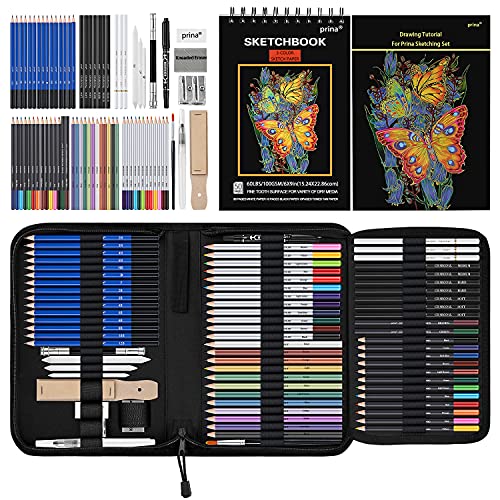
A boxed art set for a ten year old is a small studio gathered into one container. The core of most sets is a row of colored pencils, often twelve, twenty four or thirty six, graded from pale yellow through deep violet. Around that core a maker adds drawing pencils in a few graphite grades, a sharpener, an eraser, and some form of color that goes on wet: a watercolor tray with pans, a set of markers, or both. Pastels appear in many larger boxes, either soft chalk sticks that smudge easily or oil pastels that lay down a waxy, opaque stroke. A pad of paper, a ruler, a mixing palette and a brush or two round out the typical inventory printed on the back of the box.
Piece counts on packaging need a careful reading. A headline number such as eighty, one hundred twenty eight or two hundred eight usually counts every pencil, cap, clip and sheet in the box, and it may count a brush, a sharpener and each pan of paint as separate pieces. Two sets with the same headline number can hold very different amounts of usable color. One may devote half its count to paper sheets and accessories, while the other gives that space to a wider pencil range. The contents list, not the headline, tells a buyer what a child will actually open. Look for the breakdown by medium: how many colored pencils, how many markers, how many pans or tubes, and how many sheets of paper, stated as separate lines.
Colored pencils carry most of the drawing work at this age, so their range matters more than any other single item. A twelve pencil set limits blending, because skin tones, shadow tones and the middle greens of a landscape simply are not there. Twenty four pencils add the earth colors and the cooler grays that let a child model form instead of filling flat areas. Thirty six or more bring in duplicate favorites and finer steps between hues, which helps when a drawing needs three greens that sit close together. Sets aimed at ten year olds often add a white pencil and a black pencil as separate tools for highlights and outlines, and some include metallic gold and silver pencils that behave differently on dark paper.
Wet media divide into three families. Watercolor pans are dry cakes that wake up with a wet brush; they travel well, they do not spill, and a tray of twelve or twenty four pans fits neatly into a molded case. Watercolor tubes hold more pigment and mix into stronger washes, but they need a palette and more drying time, so they appear less often in sets for this age. Markers split into water based fineliners and broader coloring markers. Fineliners, with tips measured in fractions of a millimeter, suit lettering, borders and fine pattern. Broader markers fill large shapes quickly and reward a light, even hand, because a second pass over wet ink darkens the stroke.
Pastels and graphite complete the dry side of the box. Soft pastels give a powdery stroke that blends with a fingertip or a paper stump, and they teach a child how color can sit on top of color. Oil pastels resist water, so a drawing made with them can take a watercolor wash over the top without dissolving, a combined technique many art teachers introduce around this age. Graphite pencils in grades such as HB, 2B and 4B let a child move from a pale sketch line to a rich dark without pressing harder. A set that includes only one hard pencil asks the child to do all of that shading with pressure alone, which tires the hand and tears thin paper.
Accessories look minor on a contents list and turn out to be daily necessities. A sharpener with a shavings reservoir keeps a desk usable during a long drawing session, and a two hole sharpener fits both standard and thicker pencil barrels. A soft eraser lifts graphite without scouring the surface, while a kneaded eraser can be shaped to a point for small highlights. Short brushes with synthetic bristles suit watercolor pans, because they spring back after each stroke and rinse clean in plain water. A mixing tray with several wells, even a simple white plastic one, teaches a child to keep clean color separate from muddy color, a habit that improves every painting that follows.
Skill fit at age ten
Ten is a hinge age for drawing. Many children move away from symbol based pictures, where a house is a square with a triangle roof, toward observed drawing, where they compare proportions and notice that a shadow has a shape of its own. Their hand control supports longer sessions, finer detail and tools that demand a steadier touch. A set bought for this age should reward that growth rather than repeat the media of the preschool years. Washable toddler markers and chunky crayons still have a place in a family art bin, but a personal set for a ten year old should center on pencils that blend, paint that mixes and paper that accepts layered work.
Blending and shading are the skills that colored pencils teach best. With a sharp point and light pressure, a child can lay one color over another and watch a new tone form: blue over yellow for a leaf that is not flat green, a touch of brown under red for a brick wall in shade. Better sets support this by giving pencils a soft, even core that deposits color without scratching. Published descriptions that mention a soft core, a round or hexagonal barrel and a break resistant lead point toward that use. Hexagonal barrels also stop pencils rolling off a desk, a small detail that matters during homework and art class alike.
Watercolor control arrives in stages. The first stage is learning how much water a brush carries: too much and the color floods past its boundary, too little and the stroke drags and streaks. Pan paints suit this stage because the child adds water gradually and can return a pan to a usable state simply by letting it dry. A set with a refillable water brush, where the barrel holds water and feeds the tip, reduces spills at a kitchen table and makes outdoor sketching simpler. What matters in the specification is brush size and pan size. A single tiny brush forces all painting into small marks, while a round brush of a middle size can both edge a shape and fill it when used on its side.
The bridge between school and hobby use shapes which set fits a given child. School art at this age often asks for posters, diagrams, book covers and science fair boards, work that rewards markers, rulers and bold color. Hobby drawing asks for sketchbooks, shading practice and patient detail. A balanced set serves both: fineliners and markers for the poster, pencils and pastels for the sketchbook, watercolor for either when time allows drying. Sets that lean entirely toward glitter pens and novelty shapes serve celebration more than study, and sets that lean entirely toward graphite serve drawing class more than a child who loves color. The contents list shows the lean at a glance.
Reading about related creative tools can sharpen the choice. A child who draws on paper every day may also enjoy a drawing screen, and the guide at best graphic tablets for kids explains how those devices differ from paper sets. Neither replaces the other. Paper teaches pressure, mixing and patience with drying time, while a screen teaches layers and undo. Many families keep both, using the boxed set for school projects and travel, and the screen for long digital pieces at home. The boxed set remains the more forgiving starting point, because it needs no charging, no software updates and no account of any kind.
Attention span and care habits also belong in the fit decision. A large set with many small parts rewards a child who puts tools back in their slots, and frustrates a child who works on the floor and leaves pieces behind. For the second child, a mid sized set with a sturdy case and fewer loose items lasts longer in practice, even though its headline count looks smaller. Sets with elastic loops or molded trays make the missing piece visible at a glance, which turns tidying into a quick check rather than a search. That visibility is a specification worth seeking: makers who photograph the open case show exactly how each tool is held.
Media quality judged from published specifications
Without handling a set, a buyer still has real evidence to work from, because makers publish the facts that govern how media behave. For colored pencils and watercolor, the central fact is pigment load: how much of the core or the pan is color, and how much is binder, filler and wax. A high pigment load lays down strong color in one pass and mixes cleanly, because there is more actual colorant in the stroke. A low load needs repeated passes, and repeated passes polish the paper surface until it will take no more color, a limit young artists meet as a frustrating shine that repels further layers.
Binder choice explains much of the feel that descriptions try to convey. Wax based pencil cores feel smooth and build rich layers, but they can form a pale film, called wax bloom, on heavy dark areas after some days. Oil based cores feel slightly firmer, hold a finer point and rarely bloom, which suits detailed work. Watercolor pans rely on gum arabic as the traditional binder; pans that name it in their material notes tend to rewet evenly and release color at a steady rate. None of this requires handling the product to assess. It requires reading the material description closely and treating vague praise as no information at all.
Lightfastness describes how long a color resists fading under light. Professional ranges publish ratings pigment by pigment, often on a scale from excellent to poor, or with stars or numbers defined by the maker. Student and children ranges publish less detail, yet some still state that colors are fade resistant or give a rating for the range as a whole. For a ten year old, lightfastness matters most for work that will hang on a wall or go into a portfolio for a school application. A drawing pinned above a desk in bright sun can lose its pale blues within a season if the pigment is fugitive. Where a maker publishes ratings, prefer sets whose weakest colors still sit in the middle of the scale.
Marker nibs decide what a marker can draw. A bullet nib makes a line of even width and suits coloring inside outlines, lettering practice and pattern work. A brush nib widens and narrows with pressure, so one tool can edge a petal and then fill it, and it rewards the hand control that ten year olds are developing. A chisel nib offers a broad edge for banners and a thin edge for detail, common in poster markers. Fineliner tips are graded by line width, commonly from very fine points for technical drawing up to a millimeter for bold outlines. A set that mixes one brush marker type with fineliners covers more ground than a set of twelve identical bullet tips in different colors.
Ink behavior also appears in specifications, if a buyer knows the vocabulary. Water based marker ink cleans from skin and most fabrics, dries fast and can bleed through thin paper. Alcohol based ink blends smoothly and resists streaks, but it passes through almost all drawing paper and needs marker paper or a protective sheet under the page; it also carries a stronger odor and stricter age guidance, so it appears mainly in sets for older students. For a ten year old, water based ink is the usual and sensible default. Blendable claims deserve a check: true blending needs ink that stays wet long enough to merge, which water based markers do only briefly on suitable paper.
Watercolor pan size is a quiet specification with loud consequences. Small pans in a long tray hold little paint, and a child who paints large skies will wear a blue pan to the base in a few pictures. Larger pans, and pans sold as refillable, extend the life of the set and keep favorite colors available. Half pan and full pan language comes from artist watercolor, where a full pan holds roughly twice a half pan. Children sets rarely use those terms, but dimensions or photographs with a coin or hand for scale reveal the same information. A tray that lets each pan pop out for replacement is better value over years than a sealed tray that must be discarded when two colors run out.
Paper and pastel specifications complete the picture. Pastel sticks vary in hardness: softer sticks give intense color and more dust, harder sticks give control and cleaner hands. Oil pastels vary in size, and thicker sticks suit large work while standard sticks suit detail. For families comparing digital drawing surfaces alongside paper sets, best display graphic tablets covers screens that show the drawing directly under the pen, a useful contrast with the indirect feel of a plain tablet. The comparison underlines what paper sets do well: the tool and the mark occupy the same place, feedback is instant, and nothing about the setup can distract from the drawing itself.
Safety and standards
Art materials for children sit under a specific safety framework in the United States, and the labels on the box refer to it directly. The key standard for art materials is ASTM D-4236, which requires that art products be evaluated for chronic health hazards by a qualified toxicologist and labeled with any needed cautions. A product that conforms carries a statement saying so on its packaging. That statement matters more than a general claim of safety in advertising copy, because it points to a defined evaluation rather than a feeling. Buyers should look for the conformance statement on the box or in the maker documents for the exact set under consideration.
The AP seal adds a second layer of information. It is awarded through the Art and Creative Materials Institute program and appears on products evaluated as non toxic, meaning they contain no materials in sufficient quantities to be toxic or injurious to humans, including children, or to cause acute or chronic health problems. A related CL seal appears on products that carry cautionary labeling because they contain a hazard for some users or uses. For a set aimed at ten year olds, the AP seal is the mark to seek. Its presence can be checked in photographs of the packaging and in the institute listings that makers reference in their documents.
Non toxic is a defined claim, not a synonym for edible or harmless in every circumstance. It means the product passed the toxicological review for its intended use. Children still should not chew pencils, drink rinse water or use art markers on skin unless the product is made and labeled for body use. Face paint is a separate product category with its own labeling. Sets that include scissors, craft knives or sharpeners add mechanical hazards that the chemical review does not cover, so age grading on those components deserves its own reading. A set graded for ages eight and up may still contain a sharpener blade that a household with toddlers should store out of reach.
Age grading on packaging reflects both safety and developmental fit. Manufacturers grade art sets by the youngest child for whom the set is designed, considering small parts, sharp points and the complexity of the tools. A grade of six plus on a large set often signals small caps and detailed tools rather than any chemical concern. Small marker caps deserve attention in homes with younger siblings, because a cap that fits into the small parts cylinder used in toy testing presents a choking risk for children under three. Some makers use ventilated caps that allow air flow if swallowed, and that feature, when published, is a genuine safety point in favor of a set.
Imported sets and marketplace listings require extra care with labels. The same box design can appear with different label panels in different markets, because labeling law differs by country. A buyer should confirm that the listing photographs show the label for their own market, with the ASTM conformance statement and any caution text in a language the household reads. Sets with no visible standard reference and no named manufacturer are hard to assess from documents at all, and that absence is itself a finding. Established school suppliers publish data sheets for their ranges, and the presence of such documents signals a maker willing to be checked.
Allergies and sensitivities form the last part of the safety reading. Some pastels and paints use binders or additives that sensitive children react to, and wheat, latex and certain preservatives appear in modeling and glue products more than in drawing sets. Makers who serve schools often publish allergen notes for classroom ranges. Where a child has a known sensitivity, the contents and material notes for the specific set should be read before buying, and a smaller set from a documented range is a safer first step than a giant imported box with a thin label panel. Safety information is part of the specification, and treating it that way leads to calmer, better grounded choices.
Cases and organization
The case is not packaging to be discarded. For a personal art set it is the storage system, the travel system and the inventory system in one object, and it will be opened and closed hundreds of times. Molded plastic cases with individual slots hold each pencil and marker in a fixed place. They open flat like a book, often in two or three tiers, so the whole range is visible at once. Their strength is order: a missing pencil leaves an empty slot that a child notices. Their weakness is bulk and hinge wear. A cracked hinge or a failed clasp turns an otherwise sound set into a spill waiting to happen, so hinge design in product photographs deserves a look.
Wooden boxes carry a different set of trade offs. A wooden case with a sliding or hinged lid feels substantial, protects contents from crushing in a school bag and ages gracefully. It usually holds tools in grooved trays rather than tight slots, so pencils can shift and rub, dulling points and scuffing barrels. Wood adds weight, which matters when a child carries the set to class or to a grandparent house. Some wooden boxes double as a keepsake container long after the original media are used up, which is a real secondary value for a gift. Makers publish dimensions and weight for better boxes, and those two numbers predict daily convenience more reliably than any photograph.
Roll ups and fabric wraps suit pencils and brushes in particular. A canvas roll with individual pockets protects points, fits in a backpack side pocket and unrolls into a tidy work mat. Rolls hold fewer wet media, because pans and tubes need rigid protection, and they offer no flat surface for mixing. Zipper pouches sit between rolls and hard cases: light, cheap to replace and easy to wash, but they let tools tumble together. For a ten year old who works at one desk, a hard case that opens flat is usually the best home base, with a small pouch for taking a few pencils on a trip. Sets sold with both a case and a pouch answer that pattern directly.
Keeping a set complete is a habit that good organization makes easy. A fixed place for each tool turns cleanup into a matching task. Numbered or color ordered pencil slots help younger children within this age band rebuild the rainbow order after use, and that order speeds color choice during drawing as well. Loose trays and open bins invite the opposite habit, where markers migrate to drawers and the set slowly becomes a partial set. Replacement availability decides whether a partial set can recover. Makers with open stock ranges sell single pencils and refill pans, so a lost favorite color returns without buying a whole new box. Sets with no singles available should be priced in the mind as disposable over a longer horizon.
Refill thinking extends to consumables beyond color. Sketch pads inside a case run out first in many homes, because paper is used once while pencils last for months. A set whose pad is a standard size can be refilled from any stationery shelf; a set with an odd sized pad fitted to a molded recess cannot. Brushes flatten and splay with use, and a standard round brush in a common size is easy to replace. Even sharpeners dull. When a maker publishes the pad size and brush sizes in the contents list, that transparency lets a buyer plan refills before the first sheet is used, and it signals that the set was designed as a working kit rather than a sealed gift object.
Storage conditions at home affect media life as much as case design. Watercolor pans prefer dry storage with the lid open for a while after a wet session, so mold does not form on the pan surface. Markers store best horizontally or with caps firmly clicked, kept away from radiators and sunny windowsills that dry the ink. Pastels need separation, because soft sticks dust their neighbors and change their apparent color. A case that holds each medium in its own tier or compartment quietly enforces these habits. Families choosing audio gear for the same child face a similar storage logic, as the guide at best headsets for kids shows when it discusses fit and care for items a child uses daily.
Paper pairing
Paper is half of every drawing, and the pad inside a set is often its weakest part. Makers include paper to make a set usable on the day it is opened, but the sheets are commonly thin, smooth and few in number. Understanding paper weight helps a buyer judge what the included pad can do and what separate paper to add. Weight is expressed in grams per square meter or in pounds for a ream of a standard size. Copy paper sits near the light end. Sketch paper is heavier, drawing paper heavier still, and watercolor paper is the heaviest common type, built to take water without collapsing into waves.
Marker work exposes thin paper at once. Water based marker ink soaks in and spreads along the fibers, a defect called feathering, and it often shows through to the next sheet, called bleed through or strike through. A pad marketed for markers uses a coated or dense surface that holds ink on top and blocks it from passing. Where the set includes markers, a separate marker pad is the single most effective companion purchase, and its effect is visible in cleaner edges and in sheets that can be used on both the desk and the scanner without ghost images. Placing a spare sheet under any thin page is the low cost habit that protects the rest of the pad in the meantime.
Watercolor makes the strongest demands. A light sheet cockles under a wash, forming hills that pool pigment and dry into unwanted dark lines. Watercolor paper resists this through greater weight and through sizing, a treatment that controls how water and pigment enter the sheet. Cold pressed paper has a light texture that suits general work and hides small errors in a wash. Hot pressed paper is smooth and suits detailed painting with fine brushes. Paper sold in blocks, glued on several edges, stays flatter while wet than loose sheets, which helps a child who has not yet learned to stretch paper on a board. A set that includes watercolor but only thin sketch paper is really a set that needs a watercolor pad beside it.
Sketchbook formats shape habits in quieter ways. Spiral bound books lie flat and let pages fold back, which suits left handed drawers and crowded desks. Stitched or glued bindings keep pages in order and present finished work more neatly, but they resist lying flat in the middle of the book. Perforated pages release finished drawings for display or scanning without tearing. Sheet size matters for school use: a pad that fits a standard folder travels better than an oversized pad that must be carried by hand. When a set lists its pad dimensions and sheet count, a buyer can match those numbers to the folder, bag and desk the child actually uses.
Colored pencil work prefers a paper with slight tooth, a fine texture that grips the core and lets layers build. Very smooth paper gives crisp lines but limits layering, because the surface fills quickly. Very rough paper eats pencils and makes fine detail hard. General drawing paper in the middle of the range serves pencils, graphite and pastels adequately, which is why it is the default in most sets. Dark and toned papers open a different door: with white, metallic and pale pencils, a child can draw light instead of shadow, a reversal that refreshes interest in a familiar set. A small pad of black paper is an inexpensive way to extend a pencil range without buying more pencils.
Digital and paper workflows meet at the scanner and the camera. A child who shares drawings with relatives or keeps a portfolio will scan or photograph pages, and matte paper without glare gives cleaner captures than glossy stock. Families comparing computers for art homework and portfolios will find the sizing and storage discussion in best laptops for kids relevant once drawings start becoming files. Even then, the paper set remains the origin of the work. Choosing paper by weight, surface and format, rather than accepting whatever thin pad came in the box, is the cheapest upgrade available to any young artist, and it improves every medium the set contains.
Buying checks before you decide
The first check is freshness, and it applies most to markers and watercolor. Markers dry out with age, heat and poor storage long before their color is used up. A set that has sat in a hot warehouse for years can arrive with several markers already weak, and the loss is rarely spread evenly: the pale colors and the favorite colors fail first in use, but in storage any cap that was not fully seated at the factory can let its marker dry. Buyers cannot squeeze a marker through a listing photograph, so they rely on indirect signals: a current model rather than old stock, a seller who moves school supplies in volume, and packaging that looks like the maker present day design rather than a discontinued edition.
The second check compares the full contents list against the photographs, line by line. Listings sometimes pair a headline count from a larger configuration with photographs of a smaller one, or the reverse. Count the pencil rows in the open case photograph and compare that number with the written count. Check whether the pad, the palette and the brushes in the photographs match the written list, and whether accessories such as scissors or a ruler are counted as pieces. Where the written list and the photographs disagree, trust neither until a maker document or a clearer listing resolves it. This ten minute check prevents the most common disappointment with large sets, which is not poor quality but missing range that the buyer thought was included.
Gift use and classroom use pull in different directions. A gift set benefits from presentation: a handsome case, a broad first impression and enough variety to delight on the day. A classroom or art club set benefits from uniformity, refill availability and media that a teacher can manage for twenty children at once, which usually means watercolor pans over tubes, washable markers over permanent ones, and pencils that sharpen in a standard classroom sharpener. A set bought for one child at home can favor brush markers and pastels that a teacher might avoid for a whole class. Naming the use before choosing prevents buying a beautiful gift box for a purpose that needed a plain, refillable classroom kit.
Value at this age is best judged per usable medium rather than per headline piece. A set with thirty six good pencils, twelve pans and a refillable case will serve longer than a set with twice the count built from novelty items, eraser shapes and duplicate accessories. Consider also what the household already owns. Many homes have rulers, scissors and basic brushes in a drawer; a set that spends its count on those duplicates adds little. A set that spends its count on color range adds something new every time it is opened. Reading the contents list with the home drawer in mind turns a generic comparison into a personal one, and it often points to a mid sized set plus a good pad as the strongest combination.
Returns and support deserve a brief look before buying, because art sets are consumable and some sellers treat an opened set as used even when a marker arrived dry. A maker with a published contact route and a record of replacing dried or broken items reduces the risk of the freshness problem described above. School suppliers and established art brands tend to publish such routes in their documents. Keep the packaging until the child has tried each medium once, since a quick first pass over every marker and pan reveals dead items while a remedy is still simple. That first pass can be a pleasant ritual in itself: a swatch chart, where the child draws one line or patch of every color and labels it, which then serves as the reference chart for the life of the set.
A swatch chart also teaches the deepest lesson a boxed set can offer, which is that colors behave differently on paper than they look in a tray or on a barrel. Pencils lay down paler than their barrel color and deepen with layers. Watercolor dries lighter than it looks when wet. Markers dry close to their cap color but spread on absorbent paper. A child who has made a swatch chart owns a map of their own materials, and that map makes every later drawing more deliberate. It is a fitting first project for a ten year old with a new set: one page, every color, honestly recorded, before any picture is attempted.
Matching a set to a drawing interest
Children at ten often show a leaning, even if it changes by spring. One draws animals from reference photographs and cares about fur texture and accurate legs. Another fills margins with lettering, logos and invented team badges. A third builds comic panels and needs consistent characters across many pages. A boxed set serves each leaning differently, and the contents list reveals the fit. Animal drawing leans on pencils, blending and a good eraser. Lettering leans on fineliners, rulers and markers with steady tips. Comics lean on graphite for layout, fineliners for inked lines and a limited marker palette that can repeat the same hero colors on every page.
For the animal and nature drawer, mid tone pencils matter more than bright primaries. Fur, bark, stone and feathers live in browns, warm grays, olive greens and muted blues. Sets whose pencil range includes several earth shades, plus a white pencil for whiskers and eye highlights, support that work directly. Pastels help here as well, because a soft pastel background can set a scene behind a sharply drawn animal, and the contrast between blurred ground and detailed subject is a composition lesson in itself. A set short on earth colors forces the child to mix every brown from red, yellow and black, which is instructive a few times and tedious on every page.
For the lettering and design minded child, line quality is the whole craft. Fineliners that hold a consistent width, markers that do not flood at the end of a stroke, and paper smooth enough for clean edges all count heavily. Brush markers add expressive thick and thin strokes for headings, while bullet markers fill badge shapes evenly. Graph paper or dotted pads, rarely included in general sets, help align letters and repeat patterns, so a family buying for this interest should add such a pad separately. The set itself should be judged by how many distinct line tools it holds, not by how many pastel shades it can claim.
Comic and story drawing rewards a different economy. Character work needs the same colors again and again, so duplicate pencils or markers in skin tones, hair colors and costume colors are worth more than a vast range used once. Graphite in a soft grade lets the child sketch lightly and erase cleanly before inking. A light, hard pencil leaves grooves in the paper that show through later coloring, so grade choice has a visible result. Sets that include a fine black fineliner in more than one width give the young cartoonist a tool for outlines and a tool for detail, and that pairing mirrors how published illustrators separate line work by weight.
Landscape and building interests bring perspective tools into view. A ruler, already common in sets, supports early one point perspective: a horizon line, a vanishing point and edges that converge. Watercolor suits skies and distance, because a pale wash naturally reads as far away, while darker pencil work in the foreground reads as near. A set that pairs watercolor pans with pencils therefore teaches depth with its own media, each doing what it does best. Children drawn to maps and invented worlds benefit from the same pairing, plus fineliners for coastlines, borders and tiny place labels that must remain legible at small size.
Some children care most about making things rather than pictures: cards, bookmarks, paper models and decorated covers for school notebooks. For them, a set earns its keep through markers that write on varied surfaces, metallic pencils that show on dark card and pastels that can tint a background quickly. Scissors and glue often matter to this child more than a thirty sixth pencil, yet those tools sit in a different product category and carry their own age grading. A general art set plus a separate, well chosen craft kit usually serves this interest better than a giant set that tries to be both and shortchanges color range to pay for novelty accessories.
Building skill across a school year
A set bought in September faces a different child by May, and thinking about that arc helps a buyer choose range with headroom. Early in the year, most ten year olds benefit from guided variety: trying each medium in the box at least twice, learning what watercolor does that pencil cannot, and discovering personal favorites from experience rather than from the look of the tray. A set with genuine variety supports that exploration phase. Later, favorites emerge and deepen. The child who settles on pencils will use the blending range hard and may wear two or three favorite colors to stubs while others stay long. That uneven wear is normal, and it is exactly why open stock replacement for single pencils becomes valuable in the second half of the year.
Instruction sources change what a set can teach. School art lessons, library books on drawing and video lessons from art teachers all assume certain basic tools: a soft graphite pencil, a kneaded eraser, colored pencils that layer, and watercolor with at least one round brush of usable size. A set that covers those basics lets a child follow almost any beginner lesson without substitution. A set missing one basic forces workarounds that can confuse a learner, such as trying to blend waxy crayon where a lesson expects pencil layers. Checking a set against the tool lists in a couple of beginner drawing books is a document based check any buyer can do before choosing.
Progress also shows in how a child treats value, the lightness and darkness of a drawing. Early drawings tend to live in a narrow middle band, all one pressure and one tone. A graphite range with several grades, plus pencils that can go genuinely dark, lets a child practice a full value scale: a row of boxes from white paper to the darkest stroke the tool can make. That simple exercise, repeated with each new medium, builds control faster than almost any other practice at this age. Sets that include a sketch pad with enough sheets for exercises, not only for finished pictures, quietly support this kind of learning, because a child who fears wasting good paper will not practice freely.
By the second half of the year, presentation starts to matter to many children. They tape drawings to walls, give them as gifts and enter school exhibitions. Work made with fade resistant color and on heavier paper survives that public life better. A child can also learn to sign and date work, to keep a folder of finished pieces and to notice growth by comparing October with April. A sturdy case and a folder sized pad support those habits. None of this depends on buying the largest set. It depends on buying a set whose media are honest, documented and replaceable, so that the tool never becomes the limit on a skill that is still growing.
Families sometimes ask whether two smaller sets beat one large set. Two focused sets, one for drawing and one for painting, can give better paper, better brushes and deeper range in each medium than one general box of the same total count. The cost of that route is organization: two containers to store and carry. One large general set wins on convenience and gift impact, and it guarantees that all media travel together. The contents lists decide the comparison in any specific case. Add the usable colors in each option, note the paper and brush quality in each, and the better route usually becomes clear without any guesswork about quality that documents cannot support.
Check prices on Amazon
Live listings for the shortlist in this guide are pulled from Amazon below, so prices and availability are always current at the moment you look.


What the documents do not tell you
Honest buying guidance should name the limits of document based comparison. Published specifications can establish pigment family, nib shape, pan size, paper weight and safety conformance. They cannot establish how a pencil feels in a particular hand, whether a child will love a certain shade of teal, or how a hinge will behave after a year of school bag travel. Makers describe feel with adjectives that carry no standard meaning across brands, so one maker soft core may match another maker medium core in practice. Buyers should treat such adjectives as hints that gain meaning only when the same maker uses them consistently across its own range, where a firm, medium and soft line from one source can be compared within that source.
Photographs carry limits as well. Studio photographs present colors under controlled light, and screen settings shift them further, so a pencil that looks coral on a screen may read as orange pink on paper. That is another reason the swatch chart matters after purchase: it replaces the screen version of the set with the true version. Photographs can also flatter scale. A case that looks generous in a photograph may hold short length pencils, a format some sets use to fit more pieces into a smaller box. Where a maker publishes pencil length or case dimensions, those numbers settle the question that photographs leave open, and their absence is a reason to prefer a competing set whose maker publishes them.
Reviews and ratings from other buyers sit outside the evidence used here, because they mix verified fact with taste, delivery experience and expectations that vary widely. A buyer who reads them should separate the factual reports, such as a marker arriving dry or a clasp failing, from the taste reports, such as color choice delighting one child and not another. Factual reports that repeat across many buyers point to a real pattern worth weighing. Single dramatic reports, whether glowing or furious, carry little weight either way. Documents from the maker, checked against the delivered box, remain the firmest ground available before a set is opened and the swatches are drawn.
Finally, remember that a ten year old artist is not a small professional. Professional ranges publish exhaustive data because professionals buy pigment by pigment for work that must last decades and reproduce faithfully. A child needs safety, range, replaceability and media that respond honestly to effort. A set that delivers those four things, in a case the child can manage alone, will be used, and use is the point. The most carefully specified set in the world teaches nothing in a cupboard, while a modest set opened daily teaches pressure, patience, color and care, lesson by lesson, page by page, across the whole of a school year.
A final habit pulls these practical threads together. When the set arrives, sit with the child for the first opening, read the label panel aloud, check each row against the printed contents list, make the swatch chart, and write the date inside the lid. That short ritual confirms that the delivered set matches its documents, teaches the child that materials deserve care and record keeping, turns safety labels into ordinary household knowledge rather than fine print, and gives the family a starting point for noticing which colors run low, which tools get loved to stubs, and which media wait untouched, information that will make the next buying decision, whether it is a refill, a pad or a whole new set, calmer, cheaper in wasted items, and far better aimed at the artist the child is becoming.
Keep the box itself in a steady place, away from damp cupboards and hot window light, with the lid closed between sessions and the brushes rinsed and dried before they go back inside. Media stored cool, dry and out of direct sun keep their color and their temper far longer, and a child who learns that small routine early will carry the same care to every tool, instrument and material that later hobbies and school subjects place in their hands over the coming years ahead.
In the end, the right art set for a ten year old is the one whose contents list matches the drawings that child already attempts, whose safety labels can be read and verified, whose case keeps every tool in its place, and whose paper can carry the media inside the box.


