Our Top Picks


What's inside
- Why guitars need humidity control at all
- What a guitar humidifier monitor actually is
- The main formats, and how they differ
- How to read humidity inside a guitar case
- The eight products in this guide
- 1. MusicNomad The Humitar ONE — acoustic guitar humidifier and hygrometer, MN311
- 2. D’Addario Humidipak — guitar humidity control kit, two-way system for guitar case
- 3. Oasis Guitar Humidifier OH-1 — for soundhole
- 4. Boveda 49% Guitar Humidifier Kit — 3 packs and 2 holders, for large instruments
- 5. D’Addario Acoustic Guitar Soundhole Humidifier
- 6. D’Addario Acoustic Guitar Humidifier Pro
- 7. MusicNomad Humitar — acoustic guitar humidifier, MN300
- 8. Martin Guitar Humidifier
- Comparing the eight in prose
- Choosing by guitar and storage pattern
- Building a routine that actually lasts
- Common mistakes to avoid
- Frequently asked questions
- Check prices on Amazon
- Our verdict
As an Amazon Associate I earn from qualifying purchases. This post may contain affiliate links at no extra cost to you.
A guitar humidifier monitor sounds like a small accessory, and in physical terms it is. In practical terms, it solves one of the most expensive problems an acoustic guitar owner can ignore: wood that quietly dries out while the instrument sits in its case, on a stand, or in a room heated through winter. By the time a top cracks, a fret end feels sharp, or the action changes noticeably, the dryness that caused the problem has usually been present for weeks. Monitoring and controlling humidity is how you catch that drift early, while the fix is still simple.
This guide covers eight products built around that job. Only one of them is a monitor in the strictest sense: the MusicNomad Humitar ONE, which combines a humidifier and a hygrometer in a single product, so it both adds moisture and measures the humidity around the guitar. The other seven approach the same problem from the control side. They include two-way humidity control kits for a guitar case from D’Addario and Boveda, soundhole humidifiers from Oasis, D’Addario, and Martin, and acoustic guitar humidifiers from MusicNomad and D’Addario. Together they cover the main ways guitar owners actually manage humidity: measure it, add it, or hold it steady in both directions.
Our research for this guide is based on the published product titles for these eight products, together with widely accepted general guidance about wooden instruments and humidity. We checked what each title actually establishes — the brand, the format, the intended placement, and any stated target such as the 49 percent relative humidity named for the Boveda kit — and we have not added specifications that a title does not state. Where this guide discusses how soundhole humidifiers or two-way packs work in general, that discussion is presented as general background about the category, not as a specific claim about one product. If a detail matters to your guitar or your case, confirm it in the current listing and in the instructions supplied with the product you choose.
Why guitars need humidity control at all
An acoustic guitar is a thin wooden box built to vibrate. The top, back, sides, neck, and fingerboard are wood, and wood exchanges moisture with the air around it. When the air is moist, wood absorbs moisture and expands slightly. When the air is dry, wood gives up moisture and shrinks slightly. A well-built guitar tolerates normal, gradual movement. What it tolerates poorly is sustained dryness, especially in winter, in air-conditioned rooms, or in dry climates where indoor relative humidity stays low for long stretches.
The commonly cited safe range for wooden guitars is roughly 45 to 55 percent relative humidity. That range appears throughout maker and repair guidance because it reflects a practical balance: moist enough that the wood does not shrink and crack, and dry enough that the instrument does not swell, feel sluggish, or develop problems associated with excess moisture. Treat 45 to 55 percent as the working target for this guide. It is the range against which a hygrometer reading becomes meaningful, and it explains why the Boveda kit in this guide is built around 49 percent — a figure that sits near the middle of that range.
Dryness rarely announces itself with a single dramatic event. More often it builds through small signs. The top may sink slightly as it loses moisture, changing string height. Fret ends may begin to feel more prominent as the fingerboard shrinks around metal that does not shrink with it. Tuning and playability may drift in ways that seem unrelated until someone measures the humidity in the case and finds it far below the safe range. In more serious cases, the top or back can crack, seams can open, and a repair that could have been avoided becomes necessary. None of this means every dry week damages a guitar. It means sustained, unmeasured dryness is a risk that a monitor exists to remove.
Excess humidity matters too, although dryness is the more common worry for most owners. Wood that stays too moist can swell, the top can rise, action can climb, and the instrument can sound less clear. A case stored in a damp room is not a safe case simply because it is not dry. This is why two-way control has become so popular in this category: a system that only adds moisture answers half the problem, while a system designed to absorb moisture when humidity is high and release it when humidity is low aims to hold the case near a set point in both directions. Several products in this guide take exactly that approach.
What a guitar humidifier monitor actually is
The word monitor can mean three related things in this category, and separating them helps you choose correctly. First, there is measurement: a hygrometer reads relative humidity, usually where it is placed — inside a case, in a soundhole area, or in the room where guitars are stored. Without a reading, humidity care is guesswork based on weather, season, and how a room feels to a person, none of which reliably describes the air inside a closed guitar case. Second, there is humidification: a humidifier adds moisture to the air immediately around the guitar, commonly inside the case or through the soundhole. Third, there is regulation: a two-way system works toward a target, adding or absorbing moisture as conditions change.
The MusicNomad Humitar ONE is the clearest example of the first two ideas combined, because its published title describes it as both an acoustic guitar humidifier and a hygrometer. That combination matters. A humidifier without a reading asks you to trust a routine. A hygrometer without a humidifier tells you there is a problem but does not solve it. A combined unit closes the loop in one place: you can see the condition and act on it with the same system. For an owner with one valued acoustic kept mainly in one case, that simplicity is a genuine advantage, not a gimmick.
The main formats, and how they differ
Humidifier and hygrometer combinations
A combination unit puts measurement and moisture in one product. Its strength is feedback. Instead of refilling or replacing something on a fixed calendar and hoping the case stayed in range, you read the humidity and respond to the number. That is especially valuable during transitions: the first weeks of heating season, a move to a drier home, travel to a different climate, or the return of a guitar that has been stored elsewhere. In stable conditions a routine may be enough. In changing conditions, a reading is what tells you the routine needs to change.
Soundhole humidifiers
Soundhole humidifiers are designed around the opening in the top of an acoustic guitar. In general terms, this type sits at or in the soundhole and releases moisture into the body of the instrument and the surrounding case environment. The appeal is directness: the moisture is delivered close to the large, thin wooden surfaces of the body rather than only into a corner of the case. Oasis, D’Addario, and Martin all offer products in this format in the list below, which reflects how established the approach is for acoustic guitars. Soundhole designs suit owners who store the guitar in its case and want a focused, familiar method. They also require care in handling, because any product used at the soundhole must be fitted and removed as its maker directs, and the guitar should always be handled gently around the top.
Two-way case packs and kits
Two-way humidity control kits use packs placed in the case, often in holders, to work toward a target relative humidity. The Boveda kit in this guide states that target directly: 49 percent. The D’Addario Humidipak is described as a guitar humidity control kit and as a two-way system for a guitar case. The general principle of two-way control is that the packs respond in both directions rather than only releasing moisture. In a dry case they contribute moisture; in an overly moist case they absorb it. For owners who travel, store guitars for longer periods, or dislike maintaining a water-based routine, packs offer a tidy, case-centred approach. Holders, where included, keep packs positioned as the system intends rather than loose against the instrument.
General acoustic guitar humidifiers
How to read humidity inside a guitar case
A hygrometer reading is only useful if you understand what it represents. It reports the relative humidity of the air immediately around the sensor at that moment. Inside a closed case, that air is the environment your guitar actually lives in, which is why case readings matter more than a weather report or a thermostat display across the room. A room can feel comfortable to you while the air inside a case near an exterior wall, a heating vent, or a cold floor sits at a very different level. Measure where the guitar is stored, not where you happen to stand.
Give any new setup time to settle before judging it. When you first place a humidifier, a set of packs, or a combined unit in a case that has been dry, the reading will move as the case air, the packs or humidifier, and eventually the wood itself move toward balance. Check the trend over several readings rather than reacting to a single number minutes after closing the lid. A steady reading inside the 45 to 55 percent range is the goal. A reading that keeps falling despite a humidifier in place suggests the case is leaking dry room air, the room itself is extremely dry, the humidifier needs attention under its maker’s routine, or the guitar has been dry long enough that the wood is absorbing a great deal of moisture.
Finally, treat the monitor as an early warning, not as a guarantee. A good reading tells you the air in the case is in a sensible range. It does not inspect the guitar for you. Keep looking at the instrument itself: changes in action, sharp-feeling fret ends, a top that looks or feels different, or new buzzing are all reasons to check humidity promptly and, if you are concerned about cracks or structural change, to consult a qualified guitar technician. Monitoring works best as part of ordinary care, alongside sensible storage away from radiators, direct sun, and damp walls.
best 88 weighted key digital piano that works with android phones
The eight products in this guide
1. MusicNomad The Humitar ONE — acoustic guitar humidifier and hygrometer, MN311
ASIN B0BGM8VRLQ. The Humitar ONE, model MN311, is the product in this guide that most directly matches the phrase guitar humidifier monitor. Its published title describes it as both an acoustic guitar humidifier and a hygrometer, under the MusicNomad name. That pairing is the whole point. Instead of choosing between knowing the humidity and doing something about it, the owner gets a single product built around both jobs for an acoustic guitar.
Consider who benefits most from that. An owner who has never measured case humidity before gains immediate feedback: the first readings often surprise people, because a heated living room in winter can be far drier than it feels. An owner returning a guitar to its case after travel can see whether the case environment has recovered or is still low. An owner with one especially valued acoustic can build care around a number rather than around a calendar reminder that may not match real conditions. In each case, the hygrometer side turns humidification from a habit into a response.
2. D’Addario Humidipak — guitar humidity control kit, two-way system for guitar case
ASIN B000OMG0KI. The D’Addario Humidipak is described in its published title as a guitar humidity control kit and as a two-way humidity control system for a guitar case. Those two phrases define its place in this guide. It is a kit, so it is presented as a system for the case rather than as a single loose item, and it is two-way, so its purpose is control in both directions rather than humidification alone.
Two-way control suits a particular kind of owner: one whose problem is not simply a dry room in January, but variable conditions across the year. A case that is too dry in winter may be too moist in a humid summer, especially if the guitar moves between rooms, venues, or homes. A system designed to work toward balance in both directions addresses that swing without asking the owner to swap products by season. It also suits owners who store a guitar for stretches between playing sessions. A case left closed for a while benefits from a system whose stated job is maintaining the case environment, not merely adding moisture on the day it is installed.
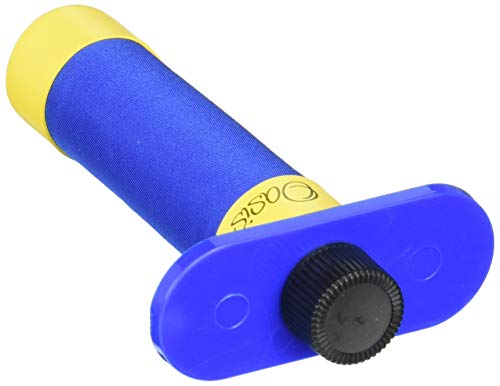
3. Oasis Guitar Humidifier OH-1 — for soundhole
ASIN B000K67VRO. The Oasis Guitar Humidifier, model OH-1, is described in its published title as a guitar humidifier for the soundhole. That placement is its defining feature. Rather than treating the whole case as the starting point, a soundhole humidifier focuses moisture delivery at the body of the acoustic guitar itself, through the opening in its top.
There is a clear logic to that focus. The body is where the largest thin wooden surfaces are, and the top is central both to sound and to the cracking risk that dryness creates. Owners who think of humidity care as caring for the body of the instrument often prefer a soundhole approach because it feels direct, and because the routine is contained: the humidifier has a defined place, and checking it becomes part of putting the guitar away. The OH-1 name is a familiar one in this corner of the guitar market, and its presence here gives the shortlist a dedicated soundhole option from a brand associated specifically with instrument humidification.
A soundhole product does ask for careful handling. The guitar top around the soundhole is not a place for hurried fitting or removal, and any owner should follow the instructions supplied with the OH-1 exactly for placement and upkeep. Owners who are nervous about anything sitting at the soundhole, who share a guitar with younger players, or who frequently hand the instrument to others may prefer a case-pack system instead. Owners who are methodical, store the guitar in its case, and like a body-focused routine will find the logic of the OH-1 easy to understand. It is also a natural partner to a separate hygrometer: the Oasis unit handles moisture at the body, while a reading in the case confirms the wider environment is in range.
4. Boveda 49% Guitar Humidifier Kit — 3 packs and 2 holders, for large instruments
ASIN B0CX738PMD. The Boveda kit is the most numerically specific product in this guide. Its published title states a 49 percent target, describes a guitar humidifier kit containing three packs and two holders, and identifies it as suitable for large instruments. Each of those details carries weight. The 49 percent figure sits near the centre of the generally accepted 45 to 55 percent range for wooden guitars, so the target is not an arbitrary number; it is a set point chosen for the environment a guitar case should maintain. The pack and holder counts tell you this is a system laid out for coverage, and the large-instruments description tells you whose case it was framed for.
Boveda is widely associated with two-way humidity control across several fields where a set point matters, and this kit applies that idea specifically to guitars. Choose it if your instrument is on the larger side, if you like the clarity of a stated 49 percent target, or if you want a kit whose contents are spelled out in the title itself. Owners of a standard acoustic should still read the current listing to confirm suitability for their case size, because a kit framed for large instruments may be more system than a small case needs. Owners who prefer to measure as well as control should pair any pack kit with a hygrometer reading from time to time, so the stated target can be checked against the real case.
5. D’Addario Acoustic Guitar Soundhole Humidifier
ASIN B0002D0COE. This D’Addario product is described in its published title exactly as an acoustic guitar soundhole humidifier. No target percentage, pack count, or model suffix is stated in the title provided for this guide, and that plainness is itself informative. This is the straightforward soundhole option from the same brand that offers the two-way Humidipak kit above, giving D’Addario two distinct answers to the same underlying problem in this shortlist alone.
Because the title is concise, the current listing and supplied instructions carry more of the detail for this product than for the more fully described kits. Check placement, routine, and any care steps there before buying, and follow them exactly once the humidifier is in use. What the title does establish is enough to shortlist it with confidence on format: an acoustic guitar soundhole humidifier from an established guitar accessories brand. Choose it if you want the soundhole method without moving to a pack system, and pair it with a case hygrometer if, like many owners, you want a number to confirm that the routine is holding the case in the safe range.
6. D’Addario Acoustic Guitar Humidifier Pro
ASIN B013WW8AUE. The D’Addario Acoustic Guitar Humidifier Pro is the third D’Addario entry in this guide, and its title positions it as an acoustic guitar humidifier with a Pro designation. This guide does not invent a specification to justify that word. What can be said from the title is that D’Addario offers this product as a distinct option alongside its soundhole humidifier and its Humidipak kit, which means a buyer who trusts the brand can choose among three framings: soundhole, broader acoustic humidifier, and two-way case kit.
As with the plainer soundhole title, the decisive details for the Humidifier Pro — placement, routine, and upkeep — should be confirmed in the current listing and followed from the supplied instructions. Do not assume that a routine learned on one humidifier transfers unchanged to another, even within the same brand. Choose the Humidifier Pro if the broader acoustic humidifier framing fits your case and habits better than a named soundhole fitting, and if staying with D’Addario matters to you. Owners who need a stated humidity target in the title itself will prefer the Boveda kit; owners who need measurement built in will prefer the Humitar ONE.
7. MusicNomad Humitar — acoustic guitar humidifier, MN300
ASIN B00DKAQGTG. The MusicNomad Humitar, model MN300, is described in its published title as an acoustic guitar humidifier that helps protect acoustic guitars from drying and cracking. That outcome language is worth taking seriously, because drying and cracking are precisely the harms this entire category exists to prevent. Where its sibling product, the Humitar ONE, adds a hygrometer to the proposition, the MN300 is presented purely as the humidifier: the moisture side of the routine, from the same MusicNomad family.
The relationship between the two MusicNomad products is one of the clearest decision points in this guide. If you already own a hygrometer you trust, or you monitor the room and case with a separate device, a humidifier-only product may be all you need, and the MN300 fills that role with an explicit anti-drying purpose. If you own no way of measuring humidity at all, the combined Humitar ONE removes a step. Neither choice reflects a difference in seriousness about the guitar. It reflects what equipment you already have and how you prefer to work.
MusicNomad builds its range around instrument care, and the Humitar name gives owners a recognisable humidifier line to return to for guidance and routine. As with every water- or moisture-based routine in this category, the supplied instructions govern how the product is prepared, placed, checked, and maintained. Build the check into a moment that already exists — putting the guitar away after playing, or a weekly case check alongside a humidity reading — rather than relying on remembering an isolated task. Choose the MN300 if you want a dedicated acoustic humidifier aimed squarely at preventing drying and cracking, and you are content to handle measurement separately or through the room and case checks you already make.
8. Martin Guitar Humidifier
ASIN B0009JPR8C. The Martin Guitar Humidifier carries one of the most recognised names in acoustic guitars. Its published title is the shortest in this guide: simply a guitar humidifier from Martin. That brevity means this guide makes no claim about placement, target humidity, or kit contents for this product, because the title states none of those things. Buyers should confirm the format and routine in the current listing before choosing it.
The discipline with a briefly titled product is to let the listing do the remaining work. Confirm where it is used, how it is maintained, and whether it suits your case and storage pattern, and do not transfer assumptions from the soundhole or pack products above. Choose the Martin humidifier if brand provenance from an acoustic guitar maker is a deciding factor for you and the format confirmed in the listing fits your routine. Choose elsewhere in this guide if you need the format, target, or contents stated up front: the Boveda kit states its percentage and contents, the Oasis OH-1 states its soundhole placement, and the Humitar ONE states its combined humidifier and hygrometer design.
best affordable tablets for musicians
Comparing the eight in prose
Read as a group, these eight products answer four different questions. The Humitar ONE answers: how do I know, and how do I act, in one product? The Humidipak and the Boveda kit answer: how do I hold my case near a stable point in both directions? The Oasis OH-1, the D’Addario soundhole humidifier, and — subject to confirming its format in the listing — the Martin humidifier speak to owners focused on an established humidifier route from a trusted name, with the first two explicitly framed around the soundhole. The D’Addario Humidifier Pro and the MusicNomad Humitar MN300 answer: what is a dedicated acoustic humidifier from a brand I recognise, aimed at preventing the drying that leads to cracking?
What none of these titles gives you is a reason to skip measuring altogether. Even the strongest control system benefits from an occasional check, because cases get moved, rooms change, and routines slip. Think of monitoring and control as two halves of one habit. The products that control humidity make the habit effective. A hygrometer — built into the Humitar ONE or used separately alongside any other product here — makes the habit informed.
Choosing by guitar and storage pattern
One main acoustic, kept in its case at home
This is the most common pattern, and it is the pattern the Humitar ONE fits most directly, because measuring and humidifying happen in the same case routine. It is also a pattern where a soundhole humidifier from Oasis or D’Addario, checked against an occasional case reading, works perfectly well. The deciding factor is temperament. Owners who like numbers should monitor with a built-in or separate hygrometer. Owners who reliably follow a routine may be content with a dedicated humidifier and seasonal checks.
A large instrument
For a large instrument, start with the Boveda kit, because it is the one product in this guide explicitly described for large instruments, with three packs and two holders working toward a stated 49 percent. A bigger case holds more air and surrounds more wood, so a kit laid out for coverage is a more natural match than a single small humidifier asked to do everything. Still confirm case fit and suitability in the listing, and consider a case reading to verify that the larger space is actually holding in range.
Several guitars in several cases
Travel and changing climates
A guitar that travels experiences humidity swings that a home routine never sees: vehicles, venues, hotels, and other homes all differ. A two-way case kit, such as the Humidipak or the Boveda system, is conceptually well matched to travel because its job is to work toward balance as conditions change around the case. A combined monitor is equally valuable on the road for a different reason: it tells you what the case actually experienced. Whichever format you travel with, give the guitar time in a stable environment after a trip, check the reading, and look the instrument over before assuming all is well.
A guitar that has already dried out
If a guitar already shows signs associated with dryness — changed action, prominent fret ends, or in the worst case a crack — a humidifier is part of the response, not the whole of it. Restoring moisture should be gradual and guided, and any crack, seam problem, or structural concern belongs in front of a qualified guitar technician. Do not attempt to force a very dry guitar back quickly, and do not use a monitor reading as a substitute for a professional assessment of an instrument that may already need repair. The products in this guide are preventive and maintenance tools. Used early, that is exactly their strength.
best affordable music production laptops
Building a routine that actually lasts
Most humidity failures are routine failures, not product failures. A good system bought in a moment of concern and then forgotten in a case protects nothing. Build the routine around anchors that already exist. When you put the guitar away, glance at the case environment if you have a combined unit. Once a week, or on a fixed day you associate with playing, check readings and the condition of packs or humidifiers according to their instructions. At the start of heating season and again when it ends, pay extra attention for a few weeks, because those transitions are when indoor humidity moves fastest and when a routine calibrated for one season quietly stops matching the next.
Storage choices support or undermine every product in this guide. Keep the case away from radiators, heating vents, and direct sunlight, which create local dryness and heat that no case system should have to fight. Keep it off damp floors and away from exterior walls that run cold or moist. A case stored in the most stable room in the home gives its humidifier or packs a far easier job than a case stored wherever there happened to be space. If guitars live out on stands in a room rather than in cases, recognise that case products cannot control an open room; room-level humidity management and a room hygrometer become the relevant tools, and case storage during the driest weeks is worth reconsidering.
Common mistakes to avoid
The first mistake is guessing. Rooms deceive, seasons deceive, and a guitar that looks fine can be drying slowly. Measure, even if only occasionally with a separate hygrometer alongside a non-monitor product. The second mistake is treating humidification as one-directional thinking in a two-directional world: adding moisture without ever checking can overshoot in a humid season, which is one reason two-way kits and monitored routines exist. The third mistake is inconsistency — a burst of care after reading a worrying article, followed by months of neglect. Wood responds to the average of its environment over time, not to one attentive weekend.
Frequently asked questions
What humidity should an acoustic guitar be kept at? The generally accepted working range for wooden guitars is roughly 45 to 55 percent relative humidity. That is why a stated target of 49 percent, as on the Boveda kit in this guide, makes sense: it sits near the middle of the range, leaving room for small swings in either direction.
Do I really need a hygrometer, or is a humidifier enough? A humidifier without any measurement is a routine without feedback. It can work in stable conditions, but you will not know when conditions change. A combined product such as the Humitar ONE builds the hygrometer in. With any other product in this guide, an occasional reading from a separate hygrometer is a sensible companion.
What is the difference between a soundhole humidifier and a case pack kit? A soundhole humidifier is placed at or in the soundhole and focuses moisture delivery at the body of the guitar. A pack kit is placed in the case, often in holders, and manages the air of the case as a whole. Two-way kits also work in both directions, absorbing as well as releasing moisture, while a basic humidifier only adds it.
Which product here suits a large instrument? The Boveda 49 percent kit is the one explicitly described for large instruments in its published title, with three packs and two holders. Confirm suitability for your specific case in the current listing before buying.
Can humidity control fix a guitar that has already cracked? No product in this guide should be treated as a repair. Gradual, guided rehumidification may be part of what a technician recommends, but cracks and structural concerns need a qualified guitar technician. These products prevent and maintain; they do not repair.
How often should I check the humidity in the case? Check often enough to see a pattern rather than a single moment: when you put the guitar away if you have a combined unit, and on a regular weekly rhythm otherwise, with extra attention during the first weeks of heating season and after travel or a house move.
Is a guitar maker’s own humidifier a better choice? The Martin Guitar Humidifier will appeal to owners who value a care product from an acoustic guitar maker, especially Martin owners. Judge it, as with every product here, on the format and routine confirmed in its listing and on how well that routine fits your storage pattern.
Check prices on Amazon
Live listings for the shortlist in this guide are pulled from Amazon below, so prices and availability are always current at the moment you look.
Oasis Guitar Humidifier OH-1 – For Soundhole

Our verdict
Start with the monitoring question, because it decides the shortlist faster than any brand preference. If you want measuring and humidifying in one acoustic guitar product, the MusicNomad Humitar ONE, B0BGM8VRLQ, is the defining choice in this guide. If you want two-way control of a guitar case, compare the D’Addario Humidipak, B000OMG0KI, with the Boveda 49 percent kit, B0CX738PMD — the latter stating its target, its three packs and two holders, and its suitability for large instruments in its title. If you want the soundhole method, the Oasis OH-1, B000K67VRO, and the D’Addario Soundhole Humidifier, B0002D0COE, are the explicit options. If you want a dedicated acoustic humidifier from a familiar name, consider the D’Addario Humidifier Pro, B013WW8AUE, and the MusicNomad Humitar MN300, B00DKAQGTG, the latter framed around protecting acoustics from drying and cracking. If maker provenance leads your decision, look at the Martin Guitar Humidifier, B0009JPR8C, and confirm its format in the listing.
Affiliate disclosure: This article is published on an affiliate website, and the Amazon product links connected with it are marketing links. If you buy through one of those links, this site may earn a commission, and that commission comes at no additional cost to you. The information in this guide comes from the published titles of the eight products covered and from general, widely accepted guidance about wooden guitars and humidity, including the commonly cited 45 to 55 percent relative humidity range. Our research involved checking and reviewing those published descriptions; this guide is a research summary, not a record of personal use of any individual product, and our research notes are available in the source file prepared alongside this article. Product details, included contents, and availability can change, so please confirm the current listing and follow the instructions supplied with the product you choose.
Related guides
- Best 24 Inch Monitors
- Best 25–35 Inch Monitors With Lowest Display Lag: An Honest Ranking Without Invented Numbers
- Best 1440p 165Hz Monitors: One Native 165Hz Pick, Three 180Hz Upgrades, an Overclock Headline and a 160Hz Ultrawide
- Best Computer Monitors Graphic Designers Can Trust for Print and Screen Work


