Our Top Picks



What's inside
- Speaker locations on a 2005 Tahoe and what you are replacing
- How the eight options in this guide were grouped
- Choosing speakers for a GMT800 Tahoe: the criteria that matter
- The products: eight ways into the same door opening
- 1. KICKER Front Door 6.5 Speakers Kit for Chevrolet Tahoe 1995-2014, DS Series DSC650
- 2. KICKER Speaker Package: CS Series 6.5-inch and 4×6-inch coaxial speakers
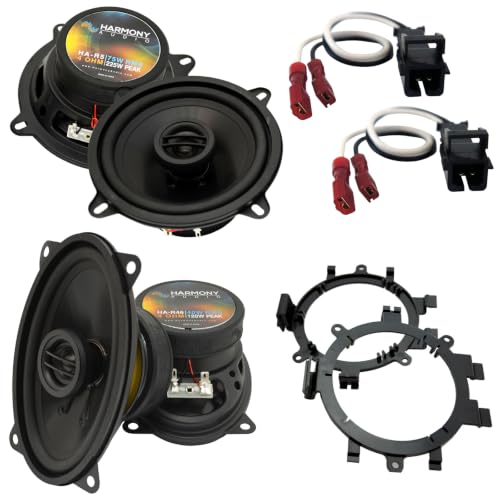
- 3. Harmony Audio Speaker Package for 1999-2006 Chevy Silverado, 5.25-inch and 4×6, harness included
- 4. 6.5-inch Car Audio Door Speakers, two pairs, for Chevy, GMC Sierra, Buick and Cadillac applications
- 5. KICKER Front Door 6.5 Speakers Kit for Chevrolet Silverado 1999-2006, CS Series CSC65
- 6. BOSS Audio Systems CH6530 6.5-inch car speakers, 300 watts per pair, 3-way
- 7. BOSS Audio Systems CH6530B 6.5-inch car speakers, 300 watts per pair, 3-way
- 8. Kenwood 6.5-inch KFC Sport Series 2-way coaxial, 300 watts maximum, 60 watts RMS per pair
- Which option fits which Tahoe owner
- Installation notes for GMT800 door speakers
- Realistic sound expectations and sensible next steps
- Frequently asked questions
- Conclusion
- Check prices on Amazon
- Affiliate disclosure
As an Amazon Associate I earn from qualifying purchases. This post may contain affiliate links at no extra cost to you.
The 2005 Chevrolet Tahoe sits on the GMT800 platform, a generation of full-size General Motors trucks and SUVs built around simple, serviceable hardware. That simplicity is good news for an audio upgrade. The front doors accept the widely used 6.5-inch speaker size, the factory wiring is straightforward, and a large aftermarket has grown up around these vehicles and their Silverado and Sierra siblings. If the sound in your Tahoe has gone flat, papery, or distorted at moderate volume, replacement speakers are usually the single most rewarding first step, because the speakers themselves are almost always the weakest and most worn part of the system by now.
This guide gathers eight options built around that 6.5-inch door position. One kit names the Tahoe directly in its published title. Several others are packages for the Silverado and Sierra trucks of the same 1999 to 2006 generation, which share the platform and the same common door speaker size, and those are presented honestly as same-platform kits rather than as Tahoe-specific products. The remaining picks are universal 6.5-inch coaxial speakers that fit the opening with the adapters and harnesses discussed throughout this article. Every product below is covered only with information taken from its published title or from general car audio practice, so you can see exactly what is claimed, what is shared across the platform, and what you should confirm before ordering.
Speaker locations on a 2005 Tahoe and what you are replacing
The main listening position in a 2005 Tahoe is the pair of speakers low in the front doors. That 6.5-inch location does most of the work for vocals, guitars, podcasts, and the midrange detail that makes music sound present rather than distant. Rear doors on this generation also carry speakers that fill the cabin for second-row passengers, and many owners start at the front because that is where the driver sits and where the improvement is most obvious. When people describe a Tahoe system as tired, they are usually describing the front door pair first.
Factory speakers of this era were built to a cost target. The cones were typically paper-based, the surrounds were foam or treated cloth, and the magnets and voice coils were sized for the modest output of the factory head unit. None of that was a problem when the vehicle was new. Twenty years later it is a different story. Heat cycles inside a door, humidity, ultraviolet exposure at the glass line, and simple mechanical fatigue break down foam surrounds until they crack or crumble. A cracked surround lets the cone move unevenly, which you hear as buzzing on bass notes and a loss of punch. Paper cones absorb moisture over the years and lose stiffness, which softens detail. The result is a system that may still play, but with thin low end, smeared vocals, and distortion that arrives long before the volume knob is anywhere near its limit.
Replacement speakers address those failure points directly. Modern coaxial speakers use more durable cone and surround materials, stronger motor structures, and an integrated tweeter that restores the high-frequency information the factory drivers reproduce poorly once they age. Because the 6.5-inch size is so common, you are not shopping in a niche. You are shopping in one of the most competitive sizes in car audio, which is why complete kits with mounting adapters and wiring harnesses exist for this platform at all.
How the eight options in this guide were grouped
Not every product below approaches the Tahoe in the same way, and grouping them honestly matters more than ranking them with false precision. The first group is the direct-fit kit: a package whose published title names the Chevrolet Tahoe across a wide year range that includes 2005, complete with adapters and harnesses. The second group is same-platform packages: kits titled for the Silverado or Sierra pickups built on the same GMT800 architecture in the same years. Those trucks share the 6.5-inch door speaker convention with the Tahoe, so the speaker sizes in the kits are relevant, but the kits were not titled for the Tahoe and this guide does not pretend otherwise. The third group is universal 6.5-inch coaxial speakers sold on their own merits, with no vehicle named at all. Those need adapters and harnesses sourced for the Tahoe, which is a normal and well-understood step.
Choosing speakers for a GMT800 Tahoe: the criteria that matter
Start with size and mounting. The front door position on this generation is served by 6.5-inch speakers, the size every product in this guide is built around. Some packages add a second, smaller size for other locations. The KICKER package further down pairs 6.5-inch speakers with 4×6-inch speakers, and the Harmony Audio package pairs 5.25-inch speakers with 4×6-inch speakers. Those secondary sizes reflect the multi-position layouts found across the GMT800 truck and SUV family. Before ordering any multi-size package, confirm which positions on your specific Tahoe you intend to fill and which sizes those positions take, because trim level and body configuration can change what is behind a given panel.
Pay attention to impedance. Most speakers in this guide are 4-ohm designs, and the KICKER CS Series package states 4-ohm in its title for both of its sizes. Four ohms is the standard load that factory head units and typical aftermarket receivers are designed to drive. Matching impedance matters because a speaker with a much lower impedance can make an amplifier or head unit work harder than intended, while a much higher impedance can leave the system sounding quiet. When a title states 4-ohm, that is one less compatibility question to resolve. When a title does not state impedance, check the published specifications for that exact model before pairing it with your source unit.
Understand power figures instead of chasing the biggest number. Speaker titles often lead with maximum power, sometimes called peak power. The BOSS models below are described at 300 watts per pair, and the Kenwood is described at 300 watts maximum with 60 watts RMS per pair stated in its title as well. RMS is the continuous figure, the one that describes what a speaker can handle over time rather than in a brief instant. Maximum figures are useful for rough comparison within a single brand, but they are not measured to one universal standard across brands, so a bigger maximum number does not guarantee a louder or better speaker. For a Tahoe running a factory or receiver-level system, sensitivity and a clean match to modest power usually matter more in daily listening than headline wattage. If you later add an amplifier, the RMS figure is the one to match against the amplifier output per channel.
Decide between a kit and loose speakers. Kits for this platform typically bundle the speakers with mounting adapters that let the new driver sit correctly in the factory opening, plus wiring harnesses that plug into the vehicle harness on one end and the speaker terminals on the other. That plug-and-play approach preserves the factory wiring, avoids cutting and splicing inside the door, and makes the job reversible if you ever sell the vehicle. Loose universal speakers can offer excellent value and a wider choice of designs, but you should budget for the adapter and harness pieces separately and confirm the mounting depth and hole pattern suit the Tahoe door. Either way, the harness point is not a minor detail. Cutting factory wires inside a door that sees moisture and constant opening and closing is how intermittent connections are born.
Know what coaxial means and where component speakers fit in. Every product in this guide is a coaxial design, meaning the tweeter is mounted in front of or within the woofer cone, on the same axis. A 2-way coaxial has a woofer and one tweeter. A 3-way coaxial, such as the BOSS models below, adds another small driver to the assembly. Coaxials are popular for door locations because they install in the factory opening as a single unit, need no separate tweeter mounting, and use no external crossover box. Component speakers separate the tweeter from the woofer and add a crossover network, which can improve imaging when the tweeter is placed well, but they demand more installation work and more decisions. For a straightforward Tahoe door refresh, coaxial is the practical default, and it is the category this guide covers.
The products: eight ways into the same door opening
The profiles below follow the order of the product list for this guide. Each one states plainly what the published title says, which vehicle or vehicles it names, what type of speaker or package it is, and where it makes sense in a 2005 Tahoe. Where a title gives a power figure or an impedance, that figure is reported as stated. Where a title is silent on a detail, the profile says what to verify rather than inventing a specification.
1. KICKER Front Door 6.5 Speakers Kit for Chevrolet Tahoe 1995-2014, DS Series DSC650
This is the only product in the guide whose published title names the Chevrolet Tahoe, and it names a wide span of model years, 1995 through 2014, which comfortably includes the 2005 model at the center of this article. It is described as a front door 6.5-inch speakers kit built around the KICKER DS Series DSC650 coaxial speakers, and the title states that adapters and harnesses are included. For a Tahoe owner, that combination is the most direct proposition in the list: the vehicle is named, the position is named, the size matches the known front door convention for this generation, and the fitment pieces are in the box.
The DS Series sits in KICKER’s lineup as an accessible factory-replacement family, and coaxial construction means each speaker carries its own integrated tweeter, so the pair covers the woofer and high-frequency duties in a single unit per door. In practical terms, this is the kit to shortlist first if your priority is a one-box answer for the front doors with the least fitment research. The included adapters address how the speaker mounts to the door, and the included harnesses address how it connects to the factory wiring, which together remove the two most common sources of delay in a door speaker job.
Who should choose it? Owners who want the front doors handled in one purchase, who value keeping the factory wiring uncut, and who would rather spend their decision-making effort on the install itself than on cross-checking accessory part numbers. Who should look further? Owners planning to refresh several positions at once may find the multi-pair packages below more efficient, and owners who have already installed adapters and harnesses from a previous upgrade may prefer a loose speaker. As with every kit here, confirm the contents against your exact trim before ordering, because a title covering many model years spans more than one Tahoe generation, and the pieces that matter are the ones matched to your 2005 doors.
2. KICKER Speaker Package: CS Series 6.5-inch and 4×6-inch coaxial speakers
The second KICKER entry is a different kind of proposition. Its published title describes a speaker package from the CS Series containing two 6.5-inch coaxial speakers and two 4×6-inch coaxial speakers, with both sizes stated as 4-ohm, under the model numbers 46CSC654 and 46CSC464. Unlike the kit above, this package title does not name a vehicle. It is a speaker bundle, not a vehicle-specific kit, so adapters and harnesses for a Tahoe are not part of what the title promises and should be planned separately.
What this package offers instead is coverage. A Tahoe cabin has more than one speaker position, and a matched set from a single series keeps the voicing consistent from one position to the next. The 6.5-inch pair addresses the front door role that dominates listening, while the 4×6-inch pair addresses a smaller position found in this vehicle family. Before ordering, verify which position on your Tahoe takes the 4×6 size, because package contents only help if every size in the box has a home in your truck. The stated 4-ohm impedance for both sizes is reassuring for use with factory and receiver-level power, since it matches the load those sources expect.
This package suits owners doing a broader refresh in one pass, particularly owners who have confirmed their full speaker layout and are comfortable sourcing the mounting and wiring accessories for the Tahoe separately. It is less suited to someone who wants a single front-door fix with everything included. Think of it as the coverage option: more speakers, matched character, standard impedance, and the fitment homework left to you.
3. Harmony Audio Speaker Package for 1999-2006 Chevy Silverado, 5.25-inch and 4×6, harness included
Honesty about fitment matters most with this entry. The published title says this Harmony Audio package fits the 1999 to 2006 Chevy Silverado. It does not name the Tahoe. It earns its place in this guide because the Silverado of those years is a GMT800 sibling of the 2005 Tahoe, sharing the platform and the era’s speaker layout conventions, and because multi-size truck packages of this generation are routinely cross-shopped by owners of both vehicles. Treat it as a same-platform package whose sizes and included harness deserve verification against your Tahoe, not as a Tahoe kit.
The package combines 5.25-inch speakers with 4×6-inch speakers, and the title states that a harness is included and describes the result as plug-and-play. Note the difference from the other packages here: the larger size in this bundle is 5.25 inches, not 6.5 inches. That makes this package relevant to positions that take the smaller size rather than a direct answer to the Tahoe’s 6.5-inch front door opening, unless an appropriate adapter arrangement is part of your plan and confirmed in advance. The included harness is a genuine convenience where it applies, since it supports the no-cutting approach this guide recommends for door wiring.
Choose this package if your refresh plan centers on the smaller positions in the cabin, or if you are working across a Silverado and a Tahoe from the same generation and the sizes line up with the positions you are filling. Skip it as a front-door solution for the Tahoe unless you have verified an adapter path, because the headline size does not match the door’s common 6.5-inch convention. That distinction is exactly the kind that separates a smooth Saturday install from a return shipment.
4. 6.5-inch Car Audio Door Speakers, two pairs, for Chevy, GMC Sierra, Buick and Cadillac applications
This entry is a volume play: two pairs of 6.5-inch car audio door speakers in one package, described in its title for Chevy and GMC applications including the Sierra across years that run from 1995 to 2007, along with Buick and Cadillac applications. The Tahoe is not named in the title, but the Sierra of the overlapping years is another GMT800 sibling, and the size at the heart of the package is the Tahoe front door’s own 6.5-inch convention. The title states a maximum power figure of 300 watts and says adapters and a harness are included.
Two pairs change the math of a refresh. Instead of renewing the front doors now and the rear positions later, you can bring four same-character speakers to the cabin at once, which keeps front and rear tonal balance even and avoids repeating the panel-removal work months later. The included adapters and harness extend that convenience to the mounting and wiring, following the same plug-in philosophy as the vehicle kits above. As always with a broad multi-brand application list, the sensible step is to confirm that the included pieces match your 2005 Tahoe’s doors specifically, since a package spanning many models and years necessarily covers more than one door design.
This package fits owners who have decided the whole cabin is due, who want matching speakers throughout, and who prefer one order that includes fitment pieces. It is more than a single-door repair calls for, and owners who only need the front pair will find the dedicated kits and single pairs in this guide easier to justify. Reported as a maximum figure, the 300-watt figure should be read the same way as elsewhere in this guide: a headline number from the title, not a promise about how the speakers will sound on factory power, where clarity at ordinary listening levels is the realistic goal.
5. KICKER Front Door 6.5 Speakers Kit for Chevrolet Silverado 1999-2006, CS Series CSC65
Like the Harmony Audio entry, this KICKER kit must be described as its title describes it: a front door 6.5-inch speakers kit for the Chevrolet Silverado, model years 1999 to 2006, built on the CS Series CSC65 and supplied with adapters and harnesses. The Tahoe does not appear in the title. The relevance is platform relevance. Those Silverado years are the GMT800 generation, the front door speaker size is the same 6.5-inch size the Tahoe uses, and the kit format means the mounting and connection pieces were selected for that generation of GM truck door.
For a Tahoe owner, this kit is a considered cross-shop rather than a guaranteed match, and the distinction should guide how you buy it. The speaker size and generation are right. The included adapters and harnesses were chosen for the Silverado application in the title, and truck and SUV doors of the same platform are closely related, but closely related is not identical, so verifying the adapter and harness fit against the Tahoe before ordering is the responsible move. Retailer fitment checkers and the seller’s application notes are the places to confirm it, using your exact year and body style.
Why include it at all? Because GMT800 owners have always shared parts knowledge across the truck and SUV lines, and a complete CS Series front door kit from the same generation is legitimately useful information for a Tahoe owner willing to do one verification step. The CS Series coaxial design keeps installation to a single unit per door with an integrated tweeter, and the kit format keeps the wiring uncut where the harness matches. If verification comes back clean, this is a strong front-door option. If it does not, the Tahoe-titled KICKER kit at the top of this guide is the fallback that needs no cross-referencing at all.
6. BOSS Audio Systems CH6530 6.5-inch car speakers, 300 watts per pair, 3-way
The BOSS CH6530 is a universal 6.5-inch speaker with no vehicle named in its title. It is described as a 3-way design rated at 300 watts per pair, again a maximum-style headline figure reported here exactly as the title states it. A 3-way coaxial places additional small drivers alongside the woofer on the same assembly, with the aim of dividing the high-frequency work more finely than a single tweeter does. In a door position, the practical takeaway is simpler: this is a full-range, single-unit replacement for the Tahoe’s front door size that asks only for the correct mounting and wiring accessories to go with it.
BOSS built its name on accessible pricing tiers across car audio, and speakers like the CH6530 are typically chosen by owners who want a clear step up from deteriorated factory drivers without turning a speaker swap into a major project. In a 2005 Tahoe, that use case is common. The factory speakers are old, one or both may be buzzing or silent, and the goal is dependable, better sound for commuting and road trips. A universal speaker serves that goal as long as the supporting pieces are right: an adapter so the speaker seats properly in the door, and a harness so it connects without cutting the factory plug.
This is also the entry where expectations about power figures matter most. A 300-watt-per-pair headline does not mean the speaker needs or uses that much power in a Tahoe on a factory head unit. It will run on receiver-level power like any speaker in this guide. Judge it on its role: an affordable, widely available 3-way coaxial in the correct size, to be paired with the fitment pieces the vehicle-specific kits include and this one does not claim to.
7. BOSS Audio Systems CH6530B 6.5-inch car speakers, 300 watts per pair, 3-way
The CH6530B deserves a candid introduction: it is a close variant of the CH6530 directly above, not a fundamentally different speaker. The published titles are effectively identical in substance, both describing BOSS Audio Systems 6.5-inch car speakers at 300 watts per pair in a 3-way design, with the B suffix distinguishing the variant. Guides that present near-identical variants as two unrelated discoveries do readers a disservice, so this one is presented as what it is: a second listing of essentially the same speaker concept, which may differ in finish or retail packaging details that the title does not specify.
Why does a variant like this exist in the market at all? Manufacturers routinely sell closely related versions of a high-volume model through different channels, and the practical consequence for a buyer is choice of seller rather than choice of speaker. If you are cross-shopping the CH6530 and the CH6530B, compare them on availability from a seller you trust and on the exact contents of the listing, and treat the underlying speaker decision as already made. There is no case for installing one of each in a pair of doors, and no meaningful expectation that the two will sound like different classes of product.
For the Tahoe, everything said about the CH6530 applies here with equal force. The size matches the front door convention, the 3-way coaxial format installs as a single unit, the headline power figure should be read as a maximum-style number, and adapters plus a wiring harness for the Tahoe should be planned alongside the purchase because a universal speaker title promises no vehicle fitment pieces. Owners who find this variant more readily available than its sibling lose nothing by choosing it, which is precisely the point of listing it honestly.
8. Kenwood 6.5-inch KFC Sport Series 2-way coaxial, 300 watts maximum, 60 watts RMS per pair
The Kenwood entry closes the list with the most informative title of the universal speakers. It describes a 6.5-inch Sport Series flush-mount coaxial speaker, 2-way in design, with 300 watts maximum power and, usefully, 60 watts RMS per pair stated in the title itself. That RMS figure is the detail experienced buyers look for, because it describes continuous power handling in terms that can be compared against a head unit or amplifier output. A rating in this range aligns naturally with receiver-level systems and modest amplifiers, which covers the great majority of 2005 Tahoes still on the road.
Kenwood is one of the long-established names in car audio, and the Sport Series occupies its accessible tier, the part of the range aimed at factory replacement and first upgrades. The 2-way coaxial layout is the classic formula for a door: a woofer handling lows and midrange, a tweeter handling the top end, both in one flush-mount unit that sits behind the factory grille. Flush mounting matters in a Tahoe door because the panel and grille leave limited room, and a speaker designed to sit flat avoids interference with the trim when the panel goes back on.
Choose the Kenwood if you prefer a single pair from an established brand with a stated RMS figure to plan around, and if a clean 2-way design appeals more than a 3-way layout. As with the BOSS models, it is a universal speaker, so adapters and a harness for the Tahoe are separate items to arrange. Paired with those pieces, it is a tidy front-door refresh, and its stated continuous rating makes it equally comfortable if a small amplifier joins the system later.
Which option fits which Tahoe owner
Patterns emerge once the eight are viewed together. For the least research and the most direct fitment claim, the Tahoe-titled KICKER DS Series kit is the natural first look, because vehicle, position, size, adapters, and harnesses are all addressed in one title. For a whole-cabin refresh with matched speakers, the two-pair 6.5-inch package and the KICKER CS Series package with its two sizes are the coverage plays, with the caveat that the CS package needs its secondary size verified against your cabin layout and both need accessory confirmation. For same-generation truck kits, the Silverado-titled KICKER CS kit and the Harmony Audio package reward one verification step, with the Harmony bundle’s 5.25-inch headline size pointing it toward smaller positions rather than the front doors. For the simplest universal purchases, the two BOSS variants are effectively one decision available through two listings, and the Kenwood offers the clearest power information of the group with its stated RMS figure.
Budget thinking follows the same grouping. Kits concentrate spending into one box that includes pieces you would otherwise buy separately, which makes their total cost easier to predict. Universal speakers can look cheaper at the speaker line and then require the adapter and harness spend on top, so compare complete installed cost rather than the first number on the page. And across all eight, the expensive mistake is not choosing the wrong brand. It is ordering a size or a kit for the wrong position, which is why the verification steps repeated in the profiles are worth the few minutes they take.
Installation notes for GMT800 door speakers
Door speaker replacement on a 2005 Tahoe is well within home garage territory, but a methodical approach protects both the truck and the new speakers. Begin by disconnecting the negative battery terminal. Door work puts tools and hands near wiring, window motors, and switches, and removing power from the equation is basic protection for the vehicle electronics and for you. Let the truck sit for a few minutes after disconnecting before working around any wiring.
Panel removal is the step where patience pays. Door trim panels of this era are held by a combination of screws, often hidden behind trim covers or inside the pull handle area, and plastic clips around the perimeter. Work around the edge with proper trim tools rather than a screwdriver, release clips progressively instead of forcing one corner, and lift the panel in the manner its hooks require rather than pulling straight out. Once the panel is free, disconnect the switch and latch connections carefully and set the panel somewhere it will not be stepped on. Twenty-year-old plastic is less forgiving than it was when the truck was built, and a broken clip or cracked mount turns a clean job into a rattle hunt.
With the speaker exposed, note the factory connector before removing anything. If you are using a harness adapter, it plugs between the vehicle connector and the new speaker, and the factory wiring stays untouched. Check polarity as you connect: the positive and negative leads must land on the correct terminals, because a speaker wired in reverse polarity still plays, but it moves in the opposite direction to its partner and the pair will sound thin, with weak bass and a vague center image. Polarity consistency across both doors matters more than almost any specification on a box. If you are using mounting adapters, seat the speaker in the adapter first, confirm the assembly sits flat against the door mounting surface, and make sure no part of the speaker fouls the window mechanism as the glass travels. Roll the window fully down and up before the panel goes back on, every time.
Before reassembling, play the system with the panels still off. Listen to each new speaker on its own by using the balance and fader controls, check for buzzes that suggest a loose mounting point or a wire resting against the cone surround, and confirm both sides produce similar output. Fixing a rattle or a reversed lead takes two minutes at this stage and an hour after the panels are back. When everything checks out, refit the panels by aligning the clips before applying pressure, reconnect the battery, and reset whatever clock or radio presets the disconnect disturbed.
- Disconnect the battery first and keep the negative terminal isolated while you work in the doors.
- Use trim tools, not force, on aged GMT800 door panels and expect a few sacrificial clips.
- Keep factory wiring intact with harness adapters wherever a kit or package offers them.
- Verify polarity on both sides so the pair works together instead of against each other.
- Check window travel with the new speaker mounted before refitting each panel.
- Listen before you reassemble, using balance and fader to audition each speaker alone.
Realistic sound expectations and sensible next steps
A successful speaker swap in a 2005 Tahoe sounds like this: dialogue and vocals step forward, acoustic instruments gain texture, the smeared quality on familiar songs lifts, and you can raise the volume further before the sound turns harsh. Bass becomes tighter and more defined in the mid-bass region where door speakers operate, but it does not become deeper in the way a subwoofer makes it deeper, because a 6.5-inch door speaker has physical limits no brand badge repeals. Owners who understand that distinction tend to be delighted with a speaker upgrade. Owners who expect sub-bass from door speakers tend to blame good speakers for the wrong job.
If your Tahoe still runs its factory head unit, a speaker upgrade is a reasonable first step on its own. If you later add a modern receiver, the same speakers will benefit from the cleaner signal and additional features without needing to be bought twice, provided their RMS handling suits the new source, which is another reason the stated RMS figure on a title like the Kenwood’s is genuinely useful information.
Frequently asked questions
Will a Silverado kit work in a Tahoe? Often the speakers themselves are the same size, because the 1999 to 2006 Silverado and the Tahoe of the same years share the GMT800 platform and its 6.5-inch front door convention. The verification point is the accessory hardware: adapters and harnesses chosen for a truck door should be confirmed against the Tahoe door before you rely on them. This guide includes Silverado-titled kits with that caveat stated, never as hidden Tahoe kits.
Do I need an amplifier with any of these speakers? No. Every option here is a factory-replacement style coaxial suited to head unit power. An amplifier can add headroom later, and if that is your plan, match it to the RMS handling of the speakers rather than to maximum power headlines.
Is a 3-way speaker automatically better than a 2-way? Not automatically. A 3-way coaxial divides the sound among more drivers on the same mounting axis, while a 2-way keeps the classic woofer and tweeter pairing. Execution matters more than the count, and in a low door position, both formats are established, legitimate designs. Choose based on the specific product, its stated figures, and your budget for the complete install.
Conclusion
The 2005 Tahoe is one of the easier full-size SUVs to bring back to life sonically, thanks to a common 6.5-inch front door size, a shared GMT800 parts culture with the Silverado and Sierra, and a market that still supports the platform with complete kits. Start with the Tahoe-titled KICKER DS Series kit if you want the most direct route. Consider the multi-pair and CS Series packages if the whole cabin is due. Treat the Silverado-titled kits as the same-platform options they are, with one verification step. And view the universal BOSS variants and the Kenwood as solid single-pair choices that simply ask you to add the adapters and harness yourself. Any of those paths, installed carefully with polarity checked and factory wiring preserved, will leave a twenty-year-old Tahoe sounding like it has years of good listening left, because it does.
Check prices on Amazon
Live listings for the shortlist in this guide are pulled from Amazon below, so prices and availability are always current at the moment you look.


Affiliate disclosure
This article contains affiliate links to products on Amazon. If you buy through those links, this site may earn a commission at no additional cost to you. The product information in this guide is based on published manufacturer and retailer information, including the product titles and specifications cited in each profile, together with general car audio practice for the GMT800 platform. The writer has not personally used or handled the specific products listed, and no product in this guide carries a performance rating or hands-on verdict from us. Fitment notes are provided as research guidance: confirm speaker sizes, adapters, and harnesses against your exact vehicle before purchasing, and consider professional installation if any step of the process is unfamiliar.

