Our Top Picks
 White-Rodgers Emerson M30 White Heat-Only Thermostat2 x 7 x 8.8 inches2 x 7 x 8.8 inches0.26 poundsCheck on Amazon
 PSD010B Non-Programmable 2-Wire Heat-Only ThermostatTraditional3.5 x 1.13 x 5.13 inches0.4 poundsCheck on Amazon
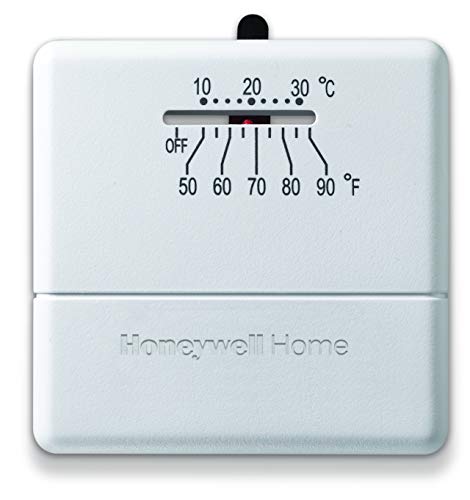 Honeywell Home Economy Millivolt Non-Programmable Thermostat(Pack of 1)3.12 x 0.88 x 3.12 inches0.15 poundsCheck on Amazon
 Non-Programmable Thermostat for Home Single-Stage Systems0.98"D x 4.72"W x 3.86"H4.72 x 3.86 x 0.98 inches0.37 poundsCheck on Amazon


What's inside
- Why a propane furnace asks more of its thermostat than most heating systems
- The 24-volt circuit, terminal by terminal
- Millivolt systems: the furnace that powers its own control
- The C-wire problem, and why power stealing can make a propane furnace chatter
- Cycle rate, swing, and the old heat anticipator
- A wiring-identification walkthrough to finish before you buy anything
- Two-wire, battery-powered, and mechanical controls for off-grid and backup situations
- Freeze protection for vacation cabins and intermittently used houses
- Staged burners, dual-fuel arrangements, and heat pump hybrids
- Safety checks that belong beside any control change
- Matching control families to real propane households
- Commissioning: the first week with a new control
- Troubleshooting patterns owners can read without instruments
- Questions propane owners ask most often
- Check prices on Amazon
- Buying checklist distilled from the furnace outward
As an Amazon Associate I earn from qualifying purchases. This post may contain affiliate links at no extra cost to you.
Why a propane furnace asks more of its thermostat than most heating systems
A thermostat looks like a simple wall dial, yet on a propane furnace it sits at the junction of three different electrical worlds. One world is the familiar 24-volt alternating-current circuit that runs most central furnaces in North America. Another is the self-generating millivolt circuit found on many wall furnaces, floor furnaces, and older central units, where a flame-heated thermopile makes its own small voltage and no transformer exists at all. The third world is the house itself: long pipe runs to a tank outside, a regulator that steps pressure down in two stages, rooms that cool quickly when wind finds the gaps, and a fuel that arrives by truck rather than by a pipe in the street. Pick a control that misunderstands any one of those worlds and the symptoms rarely announce the real cause. The furnace may fire in short bursts, overshoot the setpoint by several degrees, chatter its gas valve, or sit silent on the coldest night of the year because the thermostat has quietly drained the very circuit it was supposed to switch.
Propane also changes the feel of heat in a way that matters for control settings. Burners on a propane unit tend to deliver a high temperature rise across the heat exchanger, and supply air often leaves the registers noticeably hotter than the air from a heat pump or a mild-weather natural gas cycle. Hot, fast heat is welcome when a house has cooled overnight, but it punishes sloppy cycle settings. A thermostat that waits too long to call lets rooms swing cold, then the furnace answers with a blast that sails past the target. A thermostat that calls too eagerly starts and stops the burner in a rhythm that wastes igniter life, stresses the inducer motor, and leaves distant bedrooms underheated because the blower never runs long enough to push warm air through the full duct run.
That is why this guide spends more time on circuits, terminals, and cycle behaviour than on touchscreen size or app polish. A handsome display cannot rescue a mismatched control. The right purchase order is backwards from the way most people shop: first identify the voltage system at your furnace, then count the conductors in the wall, then decide how the house is used in winter, and only then compare features such as scheduling, remote sensors, or phone control. Houses heated by propane are disproportionately rural, and rural houses bring their own complications, including older wiring with only two conductors, additions built in different decades, backup generators, wood stoves that confuse a single central sensor, and vacation cabins that sit empty for weeks between visits. Each of those situations points toward a different thermostat, and in a few of them the honest answer is a plain battery-powered or mechanical control rather than anything that calls itself smart.
Read the sections that follow as a diagnostic path. By the end you should be able to stand in front of your furnace with a phone camera and a screwdriver, read the control board like a map, and know whether the thermostat you are considering belongs on that wall at all. Where a detail depends on a specific furnace model, the furnace manual and its wiring diagram outrank any general guide, including this one. Gas appliances reward that humility. A control swap is one of the few heating jobs a confident homeowner can do safely, but only when the electrical system is correctly identified and the gas side is left entirely alone.
The 24-volt circuit, terminal by terminal
Most modern central propane furnaces are controlled by a low-voltage circuit built around a step-down transformer. Line voltage enters the furnace cabinet, the transformer reduces it to roughly 24 volts alternating current, and that modest voltage travels up the thermostat cable to the wall control and back again. The thermostat itself does almost no heavy work. It simply closes small switches, increasingly electronic rather than mechanical, and those closures tell the furnace board which relays and gas-valve stages to energise. Understanding which wire does what turns a confusing bundle of coloured conductors into a set of plain statements about the house.
The R terminal carries the incoming 24-volt supply from the transformer. Some boards split this into Rc for cooling power and Rh for heating power, a legacy of systems where separate transformers fed separate equipment. A jumper or an internal switch usually links them when a single transformer serves both. The W terminal is the heat call: when the thermostat connects R to W, the furnace board begins its ignition sequence, proving the inducer, closing the pressure switch, energising the hot-surface igniter or spark, and only then opening the gas valve. Add a second stage and you will see W2, which brings on higher burner output after a delay or a larger temperature gap. The Y terminal calls for cooling, Y2 for a second compressor stage, and the G terminal runs the indoor blower on its own, which is how the fan-only setting circulates air without a burner flame.
The C terminal, often called the common, is the return path that completes the circuit back to the transformer. For decades thermostats did not need it, because a bimetal strip or a simple battery-powered control drew no continuous current. Smart thermostats changed that bargain. A Wi-Fi radio, a colour display, and a rechargeable cell all need a steady supply, and C is the wire that provides it cleanly. When a furnace board shows a C terminal with nothing connected, that empty screw is often the most important discovery of the whole project, because it means a full smart control can be powered properly if a spare conductor exists in the cable, or if a new cable or an approved adapter can supply the missing return.
Other letters appear on larger systems. O or B directs a heat pump reversing valve. E energises emergency heat strips. L carries fault or filter signals on some proprietary systems. S terminals on certain brands connect outdoor temperature sensors. None of those letters should be guessed at. Wire colour is a hint, never a guarantee, because installers use whatever cable is on the truck and previous owners improvise in ways that fade from memory. The letters printed beside the screws at both ends of the cable are the evidence that counts, and they should agree with each other before any new control is trusted to run a flame.
What the ignition sequence tells you about control faults
A healthy propane furnace follows a strict order each time W is energised. The inducer fan starts first and pulls a slight vacuum through the vent system. A pressure switch proves that draft before anything else proceeds. The igniter glows or sparks, the gas valve opens for a trial period, a flame sensor confirms combustion by passing a tiny rectified current through the flame itself, and only after heat is established does the main blower begin moving house air across the exchanger. If a thermostat drops the call in the middle of that sequence, or bounces it on and off several times in a second, the board may log faults, lock out for an hour, or retry in a pattern that looks like a failing furnace when the real fault sits on the wall. Clean, decisive switching is not a luxury on gas equipment. It is part of how the safety chain stays believable to the control board that supervises it.
Millivolt systems: the furnace that powers its own control
A large share of propane wall furnaces, gravity floor furnaces, some fireplaces, and a generation of older central furnaces use no transformer at all. Instead, a thermopile sits in the pilot flame. A thermopile is a bundle of thermocouples wired in series, and heat on their junctions generates roughly 750 millivolts of direct current, less than one volt in total. That whisper of electricity is enough to hold open an electromagnetic gas valve and to run a thermostat built for the job, because a millivolt thermostat is essentially a sensitive switch with contacts designed to close reliably while adding almost no resistance to a circuit that has almost no voltage to spare. Corrosion on a single connection, a long run of thin wire, or a thermostat contact meant for higher-voltage duty can drop enough of those millivolts that the valve weakens and closes even though the room is still cold.
Here is the consequence that surprises many shoppers: the overwhelming majority of smart thermostats cannot operate on a millivolt circuit. They expect 24 volts alternating current, they harvest or draw power measured in watts rather than microwatts, and their internal relays and radios have nothing in common with a thermopile circuit. Connecting one anyway does not produce a half-working compromise. It produces a dead control, a dead valve circuit, or in the worst arrangement a damaged board. Adapters marketed for millivolt conversion exist as interface relays: a separate 24-volt supply powers the modern thermostat, and the thermostat drives a relay whose isolated contacts close the millivolt loop. That arrangement can work on a central system where a power source and a technician are both available, but it adds failure points and should be treated as a small electrical project, not as a plug-in accessory discovered at checkout.
Identification is refreshingly physical. A millivolt appliance usually has a standing pilot or an older intermittent pilot arrangement, a gas valve with terminals marked TH, TP, or TH-TP, and a thermostat cable with just two wires landing on a control whose packaging or back plate mentions millivolt or 750 mV ratings. There will be no transformer humming in a junction box and no C terminal to find, because the whole concept of common return belongs to the other electrical world. Wall furnaces in small propane-heated homes are the classic case. The unit hangs on an interior or exterior wall, vents through a coaxial or B-vent arrangement, and heats by convection and a modest blower if one is fitted. Owners love them for their independence: many keep working during a mains outage, since the pilot and thermopile need no house current at all. That independence is worth protecting when you choose a replacement control, and it rules out any thermostat that needs wall power to think.
Owners of millivolt systems have three honest routes. The first is a dedicated millivolt-rated digital thermostat, battery powered, with setback scheduling and a readable display, connected across the same two wires. The second is a mechanical millivolt thermostat, the round or rectangular snap-action design that has controlled these heaters for decades and asks nothing but an occasional dusting. The third is the relay-interface route toward a smart control, chosen deliberately with full knowledge of its extra wiring. What does not belong on the list is a learning thermostat wired straight across a thermopile, no matter how many compatibility checkers phrase their questions loosely. If a checker never asks whether your system is millivolt, its verdict does not apply to your furnace.
best 4k smart home security cameras
The C-wire problem, and why power stealing can make a propane furnace chatter
Rural houses were often wired for heat with the minimum cable the original thermostat required: two conductors for a simple call, three if a fan switch was included, four when cooling arrived later. A modern smart thermostat arriving at that wall finds R and W waiting and no C anywhere in the box. Manufacturers answered this gap with power stealing, a technique in which the thermostat sips a small current through the heating circuit itself, leaking just enough energy through the W path to charge an internal battery or capacitor without, in theory, energising the furnace. On many systems the trick is invisible. On some propane furnace boards it is not, because the board’s input circuitry is sensitive enough to notice that leakage, or because the harvested current pulses as the thermostat’s battery charges and discharges.
The symptom owners describe is chatter. Relays on the furnace board click rapidly, the gas valve solenoid buzzes or ticks, the inducer starts and stalls, or the board posts intermittent fault codes that vanish when a technician visits and the thermostat happens to be fully charged. Chatter is more than an annoying sound. Rapid cycling of a gas valve and ignition circuit accelerates wear, confuses flame-proving logic, and can end in a lockout on a night when the house genuinely needs heat. Propane systems in cold regions also run longer, harder calls than a mild-climate furnace, so a marginal power arrangement that survives autumn may fall apart in January when call patterns change and the thermostat radio works harder against a weak signal in a thick-walled farmhouse.
Several fixes exist, and they rank clearly. Best is a genuine C wire: an unused conductor already inside the cable, connected to the C terminal at the furnace board and to C at the wall, solves the problem at its root. Second is running a new thermostat cable, which sounds disruptive but is often a short pull through a basement or crawl space directly below the thermostat wall, and it future-proofs the house for any control. Third is a manufacturer-approved common-maker adapter, which multiplexes signals over existing conductors from a module mounted at the furnace; these work well when installed exactly as drawn and when the furnace board matches the adapter’s assumptions. A distant fourth is relying on a thermostat with a large internal battery and accepting periodic removal or USB charging, a tolerable arrangement for a cabin and a tiresome one for a primary home. What should be avoided is the folk remedy of jumpering terminals or borrowing a ground, practices that can energise cabinet metal or defeat the transformer’s isolation.
Before blaming a thermostat for chatter, rule out the ordinary culprits. A weak transformer that sags below its rated output under load, a corroded splice hidden in the wall, a thermostat cable nicked by a staple decades ago, and a furnace filter so loaded that the blower labours can all mimic control faults. Voltage measured at R and C while the furnace is calling should sit close to the transformer’s nameplate figure; a reading that collapses during the call points upstream of the thermostat entirely. Good diagnosis separates the wall control from the equipment, often by jumpering R to W at the furnace board with the thermostat removed and watching whether the burner runs a clean, full cycle on its own command.
Cycle rate, swing, and the old heat anticipator
Every thermostat must decide not only when to start a call but when to end one and how long to wait before starting again. Older mechanical controls made that decision with a heat anticipator, a small resistive heater inside the thermostat that warmed the bimetal element slightly while the furnace ran. The anticipator fooled the sensor into ending the call a little early, because the designer knew the heat exchanger and ductwork would keep delivering warmth after the burner stopped. Setting the anticipator meant sliding a pointer to match the current draw of the gas-valve circuit, a figure often stamped on the valve itself. Set it too low and the furnace short-cycled; too high and rooms overshot while the control waited for its own sensor to cool. Many a propane wall of a certain age still hides one of these devices, and its little scale, marked in fractions of an ampere, explains behaviour that a new owner might otherwise blame on the furnace.
Digital controls express the same idea in two modern dialects. Cycle rate, sometimes labelled cycles per hour, caps how often the burner may start in an hour under steady demand. A setting near three cycles per hour suits many forced-air gas systems, giving long, thorough burns that warm the whole duct network and the furniture with it. Higher settings suit electric strips or small zone systems; lower settings suit massive radiant slabs that store heat for hours. Swing, also called differential or hysteresis, is the temperature band around the setpoint. A half-degree swing starts heat just below target and stops it just above, holding rooms remarkably even at the price of more frequent starts. A two-degree swing lets the house drift noticeably, then recovers with a long burn. Neither extreme is virtuous on its own. The correct band depends on how quickly the house loses heat, how hot the supply air runs, and how much residual warmth the system delivers after shutdown.
Propane makes overshoot the signature failure. Because supply air leaves the registers hot and the exchanger holds substantial heat at flame-off, a thermostat that ends the call exactly at setpoint will watch the room climb another degree or two as the blower finishes its cool-down delay. Smart controls with adaptive algorithms learn this coast and begin ending calls early, which is one of the few algorithmic features that genuinely matters on propane. Simpler digital controls can be tuned manually: widen the swing slightly, lower the cycle rate, and give the house several days at each setting before judging it, since weather variation between two single days can mislead anyone. Changing three settings at once guarantees you will never learn which one helped.
Blower delay settings at the furnace board belong to the same conversation. Many boards offer selectable off-delays, often in the range of one to three minutes, governing how long the fan runs after the burner stops. A longer delay harvests more of the exchanger’s stored heat into the rooms and reduces the temperature spike near the thermostat if supply registers sit close to it. A delay that runs too long eventually blows air that feels cool against skin, even while it is still above room temperature, which occupants read as the furnace failing. Balance is local: duct layout, register placement, and personal sensitivity all vote. Record the board’s original jumper or switch positions before changing anything, in the same photograph series you take of the wiring, so any experiment can be undone exactly.
best affordable wifi security cameras
A wiring-identification walkthrough to finish before you buy anything
Begin with power off at the furnace switch or breaker, and confirm the thermostat display has gone dark if it draws equipment power. Photograph the existing thermostat’s terminals before loosening a single screw, with wire colours and terminal letters both legible in the same frame. Then label each conductor with the letter of the terminal it came from, using tape flags or the stickers supplied with many new controls. Memory is not a labelling system. A week later, or an hour later after a phone call interrupts you, the photograph and the flags are the difference between a calm reconnection and a fuse blown on the furnace board by a crossed wire.
Next, count the conductors. Pull the cable gently from the wall and look for spare wires wrapped around the sheath or pushed back into the cavity; installers frequently ran five-conductor cable and used only what the original system needed. A spare is a gift: it can become C. Note the total count and whether the cable run is a single homerun or spliced along the way, since a splice in a damp crawl space is a future corrosion point worth knowing about. If the cable has only two conductors and the appliance is a wall furnace, you are very likely looking at a millivolt system, and the shopping list changes completely. If it has two conductors and a central furnace, a battery-powered control or a new cable run are the realistic paths.
Then go to the furnace itself. Remove the blower-door panel, find the control board, and photograph every terminal with its connected wire. Look specifically for a C or COM terminal and whether anything lands on it already, perhaps a condensate pump or an air-conditioner contactor cable. Confirm that the colours at the board match the colours at the wall for each letter; a mismatch means a splice somewhere changes colours mid-run, and your labels from the wall end are the ones to trust for reconnection while the board photo records the equipment side. While the panel is open, read the model and serial plate, note the number of heating stages the board supports, and check whether a small blade fuse, commonly rated in the low single digits of amperes, protects the low-voltage circuit. Knowing that fuse exists, and where a spare might be kept, turns a common installation mishap from a service call into a five-minute correction.
Finish the survey away from the equipment. Measure, even roughly, the distance from thermostat to furnace and whether the path passes through finished rooms or open basement, because that decides whether a new cable is a Saturday task or a contractor line item. Note where the thermostat sits: an interior wall away from supply registers, kitchens, direct sun, and the wood stove is the goal, and a control that supports remote room sensors can forgive a poor original location that would otherwise demand relocation. Keep that sheet with the furnace manual.
Red flags that should pause the project
Stop and involve a heating technician if the wiring shows scorched insulation, if the board carries a bypassed safety switch, if the gas valve wiring does not match the diagram pasted inside the cabinet door, or if you find a thermostat cable spliced into line-voltage wiring by a previous improviser. Likewise, a furnace that already short-cycles, locks out, or shows a soot-darkened vent connector has an equipment problem that no new thermostat should be asked to mask. Controls are inexpensive compared with heat exchangers. The survey is meant to sort houses into those ready for a simple swap and those where the swap should wait an hour for professional eyes.
Two-wire, battery-powered, and mechanical controls for off-grid and backup situations
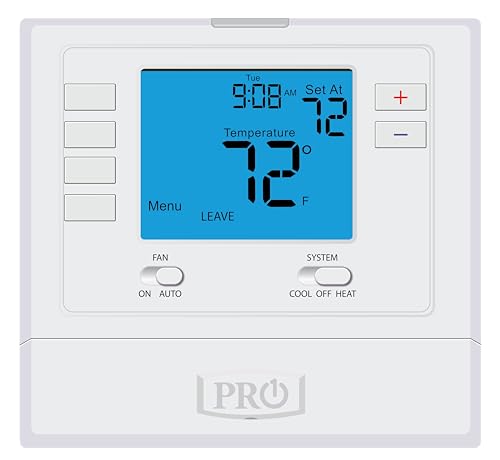
There is a particular peace in a heating control that cannot be stranded by a dead router, an expired account, or a flat mains supply. Battery-powered digital thermostats built for two-wire heat-only systems run for a year or more on a pair of common cells, hold a weekly schedule in local memory, and keep calling for heat through broadband outages, generator changeovers, and the long voltage sags that precede a rural power failure. On a 24-volt system they switch through a relay or solid-state contact rated for the board’s circuit. On a millivolt system the correct model uses contacts specified for that faint circuit, a distinction printed on the packaging that must be checked rather than assumed, because a control that works beautifully on one two-wire system may be electrically deaf on the other.
Mechanical thermostats go one step further into independence. A bimetal coil or a vapour-filled bellows needs no battery at all, and a millivolt-rated mechanical unit paired with a standing-pilot wall furnace forms a heating plant that functions with the house entirely dark. Hunters’ cabins, farm outbuildings, and emergency heat in a basement all benefit from that simplicity. The costs are real but predictable: temperature accuracy drifts with age, the swing is wide, there is no schedule beyond the discipline of the person turning the dial, and older units containing a mercury switch must be retired through hazardous-waste channels rather than tossed in household rubbish when they are finally replaced. Many jurisdictions have ended mercury thermostat sales, and modern mechanical designs use snap-action contacts instead, so a new purchase should state its switching method plainly.
Backup-power planning should include the furnace, not just the thermostat. A central propane furnace needs mains electricity for its inducer, igniter, board, and blower even though its fuel sits in a tank outside, so on generator or battery-inverter power the whole appliance draws a meaningful load, with blower start-up surge the largest moment. A thermostat that reboots gracefully, remembers its schedule without a cloud connection, and does not demand a Wi-Fi handshake before resuming a heat call earns its place in such a house. Some smart controls behave poorly after repeated brownouts, losing time or sitting at a set-up screen while the rooms cool. If outages are routine, favour controls documented to resume operation automatically, and consider keeping the previous battery thermostat in a drawer, labelled with its wiring, as a fifteen-minute fallback that any adult in the house can fit during a storm.
Off-grid houses add one more wrinkle: conservation. Every burner start spends igniter energy and blower energy, so a wider swing and a lower cycle rate can stretch a battery bank through a cloudy week, at the price of rooms that breathe between noticeably cool and generously warm. Occupants of such houses usually accept that trade happily because they chose the lifestyle with open eyes. What they cannot accept is a control that sips phantom power from the heating circuit or lights a bright display all night in a cabin run from stored sunshine. Look for models with dim or sleeping displays and published battery life, and treat manufacturer endurance figures as fair-weather estimates to be discounted by experience.
Freeze protection for vacation cabins and intermittently used houses
An empty house on propane faces a different risk profile from an occupied one. The occupants are absent, so comfort matters little; the plumbing is present, so a hard freeze matters enormously. Freeze-protection strategy begins with a setpoint that keeps vulnerable pipes safe with margin to spare, commonly in the low-to-mid teens Celsius in the living space, adjusted upward where pipes run through exterior walls, crawl spaces, or an unheated bathroom addition. The thermostat’s sensor reads the air near its own wall, not the air inside a vanity cabinet at the far end of the building, and the coldest pipe in the house is almost never near the thermostat. Margin exists to cover that geography.
Not every thermostat can be set as low as a cabin owner wishes. Many residential controls stop at a minimum heating setpoint designed for occupied comfort, and some smart models treat very low setpoints as an error to be corrected by an helpful automation. Check the published setpoint range before buying for a cabin, and check whether a hold will persist indefinitely or quietly expire back to a schedule after a day or two. A control that resumes a comfort schedule in an empty house wastes tank fuel; one that lets a temporary low setpoint lapse in the other direction, toward an off state entered by a guest, risks the pipes. The safest cabin arrangement pairs a control with a hard minimum-temperature safeguard, sometimes called a freeze alarm or low-limit, that calls for heat regardless of mode if the sensor falls below a floor value.
Remote awareness changes the stakes again. A connected thermostat that reports indoor temperature to a phone lets an owner notice a furnace failure while a repair visit can still save the plumbing, and low-temperature alerts are among the few smart alerts that justify their existence without qualification. Yet connectivity at a rural cabin is itself fragile: the same storm that cuts power may cut the broadband line, and a router rebooting into a configuration page will not send any alerts. Cellular-based monitors exist for exactly this gap, and a simple independent low-temperature alarm with its own battery covers the scenario where the thermostat itself is the failed component. Layered protection sounds cautious until the first burst pipe explains the arithmetic of a flooded cabin discovered in spring.
Fuel planning completes the picture. A cabin held at a modest setpoint through a cold month still consumes propane steadily, and a tank gauge that reads a quarter full in November may not carry the building to a February visit. Owners who heat empty buildings arrange either a larger reserve, a gauge with remote reporting, or a delivery service that tops up on a schedule rather than on request. Before leaving, the ritual should include confirming the thermostat mode and setpoint in person, opening cabinet doors under sinks on exterior walls, shutting off and draining vulnerable lines where the plumbing allows it, and leaving the furnace’s power switch unmistakably on. Most frozen-cabin stories begin with a switch flipped by a well-meaning guest, not with a failed control.
Staged burners, dual-fuel arrangements, and heat pump hybrids
Two-stage propane furnaces run most hours on a lower burner output and reserve full fire for design-cold mornings and recovery from setback. The thermostat’s role can be active or passive. In active control, the wall unit decides when the temperature gap or the run time justifies the second stage, using its own logic and sometimes its knowledge of outdoor conditions. In passive control, the thermostat simply makes a first-stage call and a timer or algorithm on the furnace board promotes the burn if the call persists. Both approaches work; mixing them up does not, because a board expecting to time the second stage can behave oddly when a thermostat also drives W2 on its own schedule. The furnace installation manual states which device owns staging, and the thermostat should be configured to match, a menu setting that installers occasionally leave at a default belonging to the other arrangement.
Modulating furnaces refine the idea further, varying burner output and blower speed across a range rather than two steps. Many achieve their best behaviour only with a communicating control from the same manufacturer, connected by a proprietary data pair rather than conventional terminal switching. A universal smart thermostat can usually run such a furnace through its conventional terminals, but the furnace then falls back to staged behaviour and surrenders some of the quiet, even warmth that justified its price. Owners of modulating equipment should weigh that surrender honestly before chasing app features. Comfort lost every hour of winter outweighs a prettier graph on a phone.
Dual-fuel systems pair an electric heat pump with a propane furnace as auxiliary and emergency heat. Above a chosen outdoor balance point, the heat pump carries the house efficiently; below it, the control locks out the compressor and fires the furnace, because heat pump capacity fades exactly as the house’s need grows. The thermostat or a separate dual-fuel control must manage that changeover with a lockout temperature, an outdoor sensor, and logic that prevents both heat sources from running together unless the equipment is explicitly designed for it. A control that lacks dual-fuel support, or whose support assumes electric strip auxiliary heat rather than a fossil furnace, can produce expensive or damaging behaviour in this arrangement. This is the one mainstream residential setup where thermostat selection should routinely involve the installing contractor, because the changeover settings interact with defrost cycles, compressor protection timers, and local utility programmes in ways a wall-swap guide cannot fully anticipate.
Safety checks that belong beside any control change
Carbon monoxide discipline is a property of the whole heating plant, not of the thermostat, but a control change is a natural moment to renew it. Every floor with bedrooms and every level near the furnace should carry a listed carbon monoxide alarm within its maker’s stated service life, and alarms that have passed their end-of-life date should be replaced rather than admired for still lighting up. A thermostat with an air-quality readout is not a substitute for a dedicated alarm with its own sensor chemistry and its own standards. If an alarm sounds or occupants develop headaches and nausea that ease outdoors, the correct response is to leave, call for help from outside, and let responders measure the air, not to open a window and troubleshoot the furnace between breaths.
Flame rollout and venting deserve the same calm, observational approach. Rollout switches exist because flames belong inside the combustion chamber; a tripped rollout switch or scorch marks near the burner door mean the furnace has been pushing fire or hot gas where it should not, and resetting such a switch without finding the cause invites a repeat with worse luck. Blocked or corroded venting, a cracked heat exchanger, and a failed inducer can all sit behind that symptom. A thermostat cannot cause most of those faults, but a thermostat fault that short-cycles the burner dozens of times an hour can add thermal stress to an exchanger that was already tired, which is one more reason chatter and rapid cycling deserve prompt attention rather than a shrug.
Propane itself offers one safety gift: the odorant added to the fuel announces leaks at very low concentrations with a smell like rotten garlic or a skunk. A faint whiff near a tank fitting after a delivery can be transient; a persistent smell indoors is a leave-and-call event, with no switch flipping on the way out, since a spark from ordinary electrical contacts is exactly what a gas-filled room does not need. None of this is written to frighten anyone away from a thermostat swap. It is written because the swap puts your hands and eyes inside the one cabinet in the house where fuel, flame, and electricity meet, and thirty seconds of observation there is worth more than a feature list.
Matching control families to real propane households
The full-time farmhouse with four or five conductors
A year-round house with a modern two-stage furnace, central cooling, and a spare conductor at the wall is the straightforward case the smart-thermostat market was built for. Choose a control with a true C-wire supply, configurable cycle rate, second-stage support that can be handed to either the thermostat or the board, and remote room sensors if the house has the classic hot kitchen and cold north bedroom pattern. Set the swing a touch wider than the factory default during the first cold week and watch whether the far bedrooms finally stay in the conversation. The farmhouse reward for correct settings is not a graph; it is a ground floor that no longer alternates between sweater and shirtsleeves every forty minutes.
The older house with two conductors and a central furnace
Here the decision is really about wiring appetite. If a new cable can be fished through open basement joists, do that once and buy any control the furnace supports. If the run crosses finished ceilings and plaster, a battery-powered programmable control designed for heat-only service gives nine-tenths of the lived benefit, namely a sane schedule and a steady setpoint, with none of the power-stealing risk. Owners in this group should be suspicious of any product whose compatibility story depends on stealing power through a furnace board of unknown sensitivity, because the board in an older house is the component least able to absorb surprises and most expensive to replace in a January emergency.
The wall-furnace cottage and the millivolt reality
For a cottage heated by a millivolt wall furnace, buy the best millivolt-rated battery digital control you can find, mount it where the old control sat unless that spot catches direct sun, and spend the money saved on a low-temperature alarm and a spare set of batteries taped inside the thermostat cover. Attempts to make this system clever usually end with a relay box, a wall wart, and a new dependence on mains power that the cottage never needed. Simplicity here is not a compromise. It is the design goal that made the heating plant trustworthy in the first place, and the thermostat should honour it.
The hybrid house with a heat pump in front of the furnace
Hybrid owners should shop by lockout logic first and screen size last. The control must understand a fossil-fuel auxiliary, accept an outdoor temperature input, protect the compressor with sensible changeover delays, and make its balance-point setting easy for a technician to find during a service visit. Document the chosen lockout temperature on the sheet kept with the furnace manual, because the next person to service the system will otherwise have to reverse-engineer your intentions from menu screens while the house cools around them.
Commissioning: the first week with a new control
Installation ends at reconnection; commissioning begins there. Restore power, confirm the control boots without error messages, and run deliberate calls in sequence: fan only, then heat raised several degrees above room temperature, listening for the ignition order described earlier and timing how long the blower continues after the burner stops. Lower the setpoint to end the call and confirm the furnace completes a graceful shutdown rather than stopping mid-sequence. If cooling shares the system, call for cooling briefly in mild weather only long enough to confirm the compressor and blower respond, then return the mode to heat. Every abnormal sound or fault code during this rehearsal is cheaper to chase now than during the first genuine cold snap.
Adjust one variable per cold spell. If starts feel frequent, lower the cycle rate or widen the swing, then live with the result through varied weather. If rooms overshoot, look first at residual blower behaviour and anticipatory features before blaming the sensor. If a single room misbehaves while the rest of the house is content, the fault is airflow, a damper, a closed register, or a door that stays shut, and no thermostat setting will redistribute heat that the ducts never delivered. A remote sensor in that room can help a control average the house more fairly, but it does so by keeping the furnace running for everyone, which the fuel bill will notice.
Troubleshooting patterns owners can read without instruments
When the display is blank, think power before thinking failure. A tripped furnace switch, a blown low-voltage fuse on the board after a wiring slip, a safety switch held open by a blower door not fully seated, or exhausted batteries in a battery control explain most dark screens. When the display lives but the furnace ignores a call, raise the setpoint well above room temperature to rule out a swing band simply not yet crossed, confirm the mode truly says heat rather than a schedule quietly holding a lower figure, and check whether a hold or vacation programme has overridden your intention. When the furnace runs but the house stalls several degrees short, suspect airflow and fuel before electronics: a clogged filter, a tank running on its last vapour in bitter cold, or a regulator vent iced over can all starve a system whose control is calling faithfully.
Intermittent faults that appear only at night often trace to temperature-sensitive connections, a thermostat mounted on a wall that cools unevenly, or a condensate issue in high-efficiency condensing furnaces whose drains and traps dislike freezing. A condensing propane furnace produces acidic condensate that must drain freely; a blocked trap can shut the burner down on a pressure or safety switch while the thermostat still calls, and the owner sees a house cooling with a control that insists everything is fine. Both are right, from their own vantage points. Reading the board’s fault-code flashes through the sight glass, and matching them against the chart glued inside the cabinet door, converts many mysteries into a named part and a plan.
Questions propane owners ask most often
Can a smart thermostat save fuel on a propane system?
It can trim waste where waste exists: heating an empty house to comfort temperature, overshooting setpoints through poor cycle control, or running a schedule nobody has adjusted since a previous occupant’s shift pattern. It cannot repeal the heat loss of the building, and in a well-run house with a sensible programmable control already fitted, the additional saving from connectivity alone is usually modest. The honest pitch for a smart control on propane is control quality, remote awareness for empty houses, and staging intelligence, with fuel savings arriving as a welcome side effect rather than a promise engraved on the box.
Why does the room temperature pass the setpoint after the burner stops?
Because the heat exchanger, the duct metal, and the air already in motion keep giving up warmth after the flame is out, and the blower’s off-delay intentionally pushes that stored heat into the rooms instead of up the vent. A degree of coast is healthy recovery of energy you already paid to create. Coast becomes a complaint when it regularly exceeds a couple of degrees, at which point anticipatory settings, a slightly wider swing, sensor placement away from a nearby supply register, or a shorter blower delay are the levers to try, in that order and one at a time.
Is a learning schedule a good idea in a house with irregular hours?
What should be replaced along with the thermostat?
Very little, which is part of the job’s appeal. Fit fresh batteries in battery-powered units, replace a warped or paint-bridged wall plate so the new control sits flat and its sensor breathes room air rather than wall-cavity air, and seal the cable hole behind the plate with a small piece of insulation or putty, because air leaking from the cavity can bias the sensor by several degrees on windy days. That last detail, invisible and nearly free, cures a surprising number of houses where the thermostat and every handheld thermometer in the kitchen disagreed.
Check prices on Amazon
Live listings for the shortlist in this guide are pulled from Amazon below, so prices and availability are always current at the moment you look.

Buying checklist distilled from the furnace outward
Write the system family at the top of the page: 24-volt or millivolt, with no third option and no guessing. Beneath it, list stages of heat, presence of cooling, conductor count, whether a genuine common wire exists or can be added, and whether a heat pump shares the system. Only then list comfort wishes, in the order the household will actually feel them: steady rooms, a schedule that survives the internet, remote warning for an empty house, sensors for a problem bedroom, a display an older relative can read at arm’s length. A control that satisfies the electrical list and the first two comfort wishes will serve better than one that satisfies every comfort wish and argues with the furnace board at midnight.
Check the published specifications for the details brochures bury: minimum and maximum setpoints for cabin duty, swing or cycle-rate adjustability, staging ownership, dual-fuel support where relevant, battery life and low-battery behaviour, resumption after power loss, and the exact millivolt rating where that applies. Prefer makers who publish wiring diagrams and configuration menus openly, because the household or its technician will need them on a cold evening, not during office hours. Keep the old control, labelled, until the new one has survived a full cold week; a proven fallback on a shelf is worth more than a return window.
Propane heating rewards owners who understand their own plant a little better than the average, and a thermostat chosen by circuit, cable, and cycle behaviour rather than by screen size becomes a quiet piece of equipment in the best sense: it holds the house in a narrow, comfortable band, it respects the furnace’s ignition discipline, it keeps an empty cabin above the danger line, and it never asks the gas valve to listen to static. Choose the control that fits the wires you photographed and the winter you actually live through, and the burner will answer each call with one clean ignition instead of an argument.
Readers who buy through links in this guide may support this site with a commission on qualifying purchases, at no added cost to them. When the first hard frost settles on the tank and the house holds its temperature through the night without a single extra burner start, that quiet is the verdict every propane owner is really shopping for.


