Our Top Picks


What's inside
- Why 40mm works for so many wrists
- What thin really means: case height by movement type
- Water-resistance ratings decoded honestly
- Crowns: screw-down security versus push-pull simplicity
- Gaskets, materials, and the service clock
- Straps, bracelets, and the illusion of thickness
- Glass: sapphire, mineral, and the thickness trade
- Dress-leaning versus sport-leaning at 40mm
- Care rules that keep the rating real
- Reading a specification sheet like a watchmaker
- Slim watches in travel, work, and weather
- Check prices on Amazon
- Buying checklist and final judgment
As an Amazon Associate I earn from qualifying purchases. This post may contain affiliate links at no extra cost to you.
Readers help keep this publication going: when you buy through affiliate links on this page, a commission may come back to us from retailers, supporting the time spent gathering specifications and explaining them plainly, while the price you pay stays the same. Recommendations here rest on published measurements, movement and case documentation, and long-established watchmaking references rather than on any claim of personal product trials, so always confirm a specific model’s current specification with its maker before ordering.
A thin 40mm water-resistant watch occupies a particular and very livable corner of watch design. The diameter is large enough for clear legibility and a modern presence, yet restrained enough to slide under a shirt cuff and sit comfortably on a wide range of wrists. The case is slim enough to disappear during a workday, rather than catching on desks, door frames, and jacket sleeves. And the sealing is good enough for real life — rain, hand washing, a shower, and, in the better-specified examples, recreational swimming — without turning the watch into a bulky instrument built for depth records nobody reading this guide intends to chase.
The difficulty is that all three virtues are described in language that invites misunderstanding. Forty millimeters sounds like a single measurement, yet two watches with identical stated diameters can wear very differently because of lug shape, bezel width, and dial proportions. Thin can mean anything from a genuinely slender dress case to a merely average sports case flattered by a domed crystal. Water resistance is printed in atmospheres or meters that sound like permission to dive to that depth, when the numbers describe a laboratory pressure condition with important limits. This guide translates each of those claims into what you will actually experience on the wrist.
It also treats water resistance as a maintained condition, not a permanent property. Seals are made of materials that age, compress, dry, and eventually fail, and a watch that was safe for swimming when new can become a watch that should stay dry after years of heat, soap, and ultraviolet exposure if its gaskets are never renewed. Understanding crowns, gasket materials, service intervals, and simple care rules matters more to the long-term survival of a watch than the rating printed on its dial. A modest rating maintained properly protects a watch better than a heroic rating neglected for a decade.
By the end, you should be able to read any 40mm listing with a sharper eye: find the lug-to-lug distance hiding behind the diameter, separate case height from crystal height, decode the rating honestly, judge whether the crown design suits your habits, choose a strap that does not undo the slimness you paid for, and decide whether a given design leans toward the dress or the sporting end of the spectrum. Those judgments, made before purchase, are what separate a watch worn daily for years from a watch admired in its box and quietly avoided each morning.
Why 40mm works for so many wrists
Watch diameter is measured across the case, usually excluding the crown, and 40mm has become a reference size because it balances dial area against wrist coverage for a broad middle of the population. On an average wrist, a 40mm case leaves a small margin of wrist visible above and below the lugs, which reads as proportionate rather than oversized or dainty. The dial is large enough for applied indices, a legible minute track, and a date window that does not crowd the numerals, yet the whole object remains light enough to forget during typing, driving, and sleep-adjacent routines like reading in bed.
The measurement that predicts comfort more accurately is lug-to-lug distance: the full length of the watch from the tip of one set of lugs to the tip of the opposite set, which is the dimension that must fit across the flat top of your wrist. Many 40mm cases measure roughly 46 to 49mm lug to lug, depending on lug design. If that span exceeds the width of your wrist’s flat surface, the lugs overhang, the strap angles sharply downward, and the watch looks and feels larger than its diameter suggests, no matter how elegant the case profile appears in photographs.
Short, downturned lugs are the quiet heroes of wearable 40mm design. They pull the strap attachment points inward and let the strap begin its curve close to the case, effectively shrinking the footprint. Long, straight lugs do the opposite and can make a nominally modest watch wear like a larger one. When comparing two candidates, hunt for the lug-to-lug figure in specification tables and enthusiast documentation, and treat its absence as a reason to measure the watch yourself at a retailer or to order only where returns are painless.
Wrist size guidance benefits from honesty about shape as well as circumference. A flat, wide wrist of modest circumference can carry a longer lug span gracefully, because the watch sits on a broad platform. A round, narrow wrist of the same circumference presents a curved surface that exaggerates overhang and lets the case rock. Two people with identical tape measurements can therefore reach opposite conclusions about the same watch, and both can be right. Photographs on other people’s wrists inform, but your own wrist geometry decides.
Measuring at home takes a minute and beats guessing. Wrap a strip of paper around your wrist at the position where a watch would sit, just behind the wrist bone, mark where the end overlaps, and measure that length flat with a ruler to get your circumference. Then measure the flat width across the top of the wrist and compare it with a candidate’s lug-to-lug span: if the span is at or slightly below that flat width, the watch should sit within your wrist’s borders. As a rough orientation, wrists around 15 to 17 centimeters often find 40mm with a compact lug span comfortable, wrists around 17 to 19 centimeters sit in its heartland, and larger wrists can wear it as a neat, classic proportion rather than a statement size.
Dial proportions finish the fit story. A 40mm watch with a wide bezel and a small dial wears visually smaller than a 40mm all-dial design with a thin bezel, because the eye reads the dial, not the case. Dress-leaning models exploit the all-dial effect to look refined and open; dive-leaning models spend case width on a rotating bezel and look more compact and tool-like. Neither is better, but knowing which effect you prefer prevents the surprise of a watch that measures identically to the one you wanted and somehow looks entirely different.
What thin really means: case height by movement type
Case height, often listed as thickness, is measured from the top of the crystal to the deepest point of the case back, and it determines whether a watch slips under a cuff, how it balances on the wrist, and how likely its edge is to strike door frames. In the 40mm class, a useful mental scale runs like this: under about 9mm reads as genuinely thin, roughly 9 to 11mm reads as slim and versatile, roughly 11 to 13mm reads as normal modern sports territory, and beyond that a watch is making its presence known, whatever the marketing copy claims.
Quartz movements allow the thinnest cases because a quartz caliber has no rotor, few moving parts, and a flat architecture powered by a small battery. Slim quartz watches at 40mm can reach heights around 6 to 8mm while still housing water-resistance gaskets and a proper crystal, which is why the thinnest everyday and dress designs are so often quartz. The trade is character rather than function: timekeeping is typically far more accurate than any mechanical caliber, but there is no sweeping seconds motion and no mechanical craft to admire through a display back, because in the thinnest examples there is sensibly no display back at all.
Automatic movements carry an inherent height budget. A self-winding caliber stacks a mainspring barrel, gear train, escapement, balance, and a semicircular rotor that must swing freely above the main plate, and the case must also accommodate the winding stem, seals, and a margin of shock clearance. Mainstream automatic movements therefore tend to produce finished watches around 10 to 13mm thick at 40mm, with the slimmer results coming from thinner calibers, restrained case design, and flat crystals. When an automatic 40mm watch claims a height near the bottom of that range, it is advertising a real engineering achievement worth verifying in the specification.
Hand-wound movements sit between the two, because removing the rotor removes the tallest layer of an automatic. Slim manual calibers have powered some of the most elegant thin watches ever made, and at 40mm a hand-wound watch around 8 to 10mm is entirely achievable. The daily ritual of winding suits some owners and irritates others, and the absence of a rotor also means the watch stops after a day or two off the wrist. For a slim dress-leaning piece worn on rotation, that compromise is often gladly accepted.
Crystal choice quietly inflates headline numbers. A domed crystal can add a millimeter or more at its center compared with a flat crystal, and some makers include the dome in the stated height while others describe the case alone, which is why two published figures for the same watch occasionally disagree. A dome is not wasted height: it adds vintage character, reduces reflections at angles, and can make the mid-case look slimmer by shifting visual bulk upward into glass. Judge thickness on the wrist and against your cuff, and use the number as a comparison tool rather than a verdict.
Case-back design matters at the other end. A slightly domed or carefully contoured solid back can settle into the wrist and make a watch feel thinner than it measures, while a flat, wide display back spreads contact and can feel stable but tall. Protruding case backs on some designs exist to house deeper water resistance or magnetic shielding. When you try a watch, press it gently into wearing position and notice where it contacts: a thin watch that rocks on a protruding back will annoy more than a marginally thicker watch that sits planted.
Water-resistance ratings decoded honestly
Water resistance is expressed in atmospheres, bars, or meters, three labels for roughly the same pressure scale: one atmosphere, or one bar, corresponds to the pressure at about ten meters of still water. A watch marked 3 ATM, 30 meters, or 3 bar has passed a standardized check at that pressure under controlled conditions. The number is real, but it describes a static laboratory event — a new watch, with fresh seals, held motionless while pressure is applied evenly — and daily life rarely resembles that event.
At 3 ATM, the honest translation is splash resistance. Rain, hand washing with care, an accidental spray at the sink, and everyday humidity are within the design intent. Showering is not a wise habit at this rating, because warm water, soap, and shampoo attack gasket materials and because a direct jet from a shower head creates localized pressure nothing like a gentle static soak. Swimming is outside the intent entirely. Many slim dress-leaning 40mm watches live at this rating, and they serve their owners perfectly well provided nobody mistakes the dial printing for a swimming credential.
At 5 ATM, the watch is built for more confident daily water contact. Showering is generally within the maker’s intent for a watch in good condition, and brief, gentle surface immersion such as a calm swim in a pool is often described as acceptable in manufacturer guidance for this class, though guidance varies by brand and model. This is the rating where reading the specific manual matters most, because makers draw their lines differently: some bless swimming at 5 ATM, others reserve that blessing for 10 ATM and describe 5 ATM as shower-proof only. The rating narrows the question; the manual answers it.
At 10 ATM, recreational swimming becomes a clear, intended use for a healthy watch: surface swimming, snorkeling in relaxed conditions, and repeated daily immersion are the design brief. This is the rating to require if your watch will swim with you weekly, ride along on beach holidays, and face chlorinated water as a routine rather than an accident. It is still not a saturation diving specification, and high-impact water entry — diving into a pool from height, water skiing falls, jet-ski spray at speed — imposes dynamic pressures and shocks that wise owners avoid at any non-diver rating.
Dynamic pressure is the concept that reconciles lab numbers with real failures. Moving water pushes harder than still water: a swinging arm during a hard swim stroke, a wave strike, or a shower jet concentrates force on seals and crown in spikes. Temperature compounds the problem, because hot water expands materials at different rates and accelerates gasket aging, which is why hot tubs and saunas are poor places for any watch you care about, regardless of rating. Cold, calm, shallow water with a well-maintained watch is gentle; hot, jetted, soapy water with old seals is the harshest environment most watches ever meet.
Standards give the ratings their backbone. General water-resistant watches are commonly evaluated under the ISO 22810 framework, which covers watches intended for everyday water exposure, while dedicated dive watches fall under the stricter ISO 6425 regime with additional requirements for legibility, timing devices, and resistance to shocks and magnetic fields. A 40mm thin watch in this guide belongs to the everyday framework almost by definition, since genuine dive specification demands case architecture that fights against slimness. Knowing which standard family a watch belongs to keeps expectations aligned with engineering.
Ratings also assume the crown is in its correct closed position and the case has not been opened since its last pressure check. A watch opened for a battery change or a regulation adjustment by anyone who did not replace seals and verify resistance afterward should be treated as unrated until checked, whatever the dial says. That single principle explains many sad stories that begin with a trusted local battery swap and end with fog under the crystal after a holiday swim. The printing on the dial describes the watch as it left the maker, not as it necessarily is today.
Crowns: screw-down security versus push-pull simplicity
The crown is the largest deliberate opening in a watch case, a moving shaft passing through the case wall, sealed by small gaskets that must work while the crown turns and is pulled in and out. Crown design therefore shapes real-world water safety as much as the headline rating. The two families are push-pull crowns, which seal by gasket contact in their resting position, and screw-down crowns, which thread onto a case tube and compress their seals firmly when screwed home.
A push-pull crown is simple, quick, and perfectly adequate for splash and shower ratings when its gaskets are healthy. Setting the time and date takes seconds, with no threads to engage, which suits a slim dress-leaning watch worn in rotation. Its vulnerability is human rather than mechanical: a crown left pulled out after a date change defeats the seal entirely, and a knock can theoretically disturb an exposed crown. Owners of push-pull designs should build the habit of glancing at the crown before any water contact, confirming it sits flush against the case.
A screw-down crown adds a deliberate ritual and a stronger seal at the most vulnerable point. Screwed home, it resists accidental displacement, compresses its gasket stack consistently, and signals that the maker designed the watch for regular immersion, which is why it is standard equipment at the 10 ATM end of this category. Its costs are minor but real: threads can cross if forced, the tube and crown are service parts that wear over years, and a crown left unscrewed — a surprisingly common oversight after setting a watch on holiday — leaves the watch less protected than a push-pull design at rest.
Crown size and guards influence daily life beyond water. A slim 40mm watch benefits from a modest crown that does not dig into the back of the hand, while crown guards — small shoulders of case metal flanking the crown — protect against knocks at some cost in elegance. Signed crowns, coin edges, and knurling patterns are not mere decoration; they determine whether wet or cold fingers can grip the crown securely. Fumbling with a tiny polished crown using soapy hands is how watches get dropped onto tile, an unglamorous risk that specification sheets never mention.
Whatever the design, one rule is absolute: never operate the crown, and never use chronograph pushers unless the maker explicitly certifies it, while the watch is wet or submerged. Pulling a crown breaks its seal geometry and gives water a path along the stem; pressing pushers can do the same at their gaskets. Set the watch with dry hands on dry land, confirm the crown is closed, and only then treat the rating as yours to use. More water damage traces to this single behavior than to any honest limitation of a rating.
Readers whose interests lean toward connected watches will notice these crown lessons transfer partly to smartwatch design, and our guide to best mens smartwatches shows how the category handles sealing without traditional crowns at all. The comparison is instructive: removing the opening removes a failure mode, but replaces mechanical gaskets you can service with sealed electronics you cannot, which reframes rather than solves the longevity question.
Gaskets, materials, and the service clock
Every water-resistant watch is a small system of seals. An O-ring gasket closes the case back, another seals the crystal into the case, tiny gaskets ride on the crown stem and inside the crown itself, and chronograph pushers, where fitted, carry their own. Water resistance is the strength of the weakest of these, which is why a single aged crown gasket can quietly demote a 10 ATM watch to a fair-weather object while its dial keeps advertising the old figure.
Most watch gaskets are made from nitrile rubber or similar elastomers chosen for elasticity and chemical stability, with silicone-based materials appearing in some applications for their temperature range and resistance to drying. All elastomers share an enemy list: time, heat, ultraviolet light, ozone, solvents, perfumes, sunscreen, and the detergents in soap and shampoo. Each exposure hardens or swells the material a little, compression gradually takes a permanent set, and the seal that once sprang back against pressure begins to sit passively in its groove, waiting for a pressure spike to find the gap.
Service intervals exist because of that chemistry. Makers and watchmakers commonly suggest a full mechanical service every several years for a mechanical watch, and water-resistance checks far more often — a pressure check roughly every one to two years is the standard advice for a watch that swims regularly, with gaskets replaced as part of any case opening and whenever a check fails. Quartz watches need the same seal discipline at battery changes: the correct moment to renew the case-back gasket and verify resistance is while the case is already open, not after fog appears.
A pressure check itself is quick and inexpensive relative to water damage. In a dry test, the watch is placed in a chamber and air pressure or vacuum is varied while instruments detect minute case deformation that reveals leaks; wet testing applies water pressure in controlled fashion. Either approach answers the only question that matters — does this specific watch, today, still meet its claim — rather than the question owners usually ask, which is what the watch met when it was new. Swimmers should treat a recent passing check the way divers treat an inspected tank: as the credential that counts.
Storage habits slow or hasten gasket aging. A watch kept on a sunny windowsill, in a hot car, or beside a bathroom’s daily steam cycles ages its seals faster than one kept in a cool, dry drawer. Leaving a screw-down crown unscrewed in storage invites dust and moisture toward the stem seals. Storing a watch crown-down in a padded slot rather than loose against other metal reduces scratches but does nothing for seals; the real preservation is environmental, boring, and effective. Rotate watches if you own several, because elastomers also dislike sitting compressed and unused for years at a time.
After any impact — a hard knock on a door frame, a drop onto tile — assume the seal system deserves suspicion even if the watch keeps perfect time. A crystal can shift microscopically, a case back can distort, and a crown tube can bend by amounts invisible to the eye yet fatal to a gasket’s contact. A pressure check after a serious knock is cheap insurance, and mentioning the knock to the watchmaker matters, because it directs attention to the case rather than only the movement. Water resistance fails silently; diligence has to be deliberate.
Straps, bracelets, and the illusion of thickness
Most 40mm watches in this class use 20mm lugs, meaning the strap or bracelet measures 20mm wide where it meets the case. Twenty millimeters has become the closest thing the industry has to a universal size at this diameter, which is excellent news for owners: the aftermarket in leather, rubber, fabric, and replacement bracelets is deepest exactly here, and changing the strap is the cheapest way to change a watch’s character, comfort, and apparent thickness without touching the watch itself.
Strap thickness is the hidden variable in perceived slimness. A thick, heavily padded leather strap can add several millimeters of visual and physical bulk beneath and beside the case, making a genuinely thin watch feel ordinary, while a slim, unpadded strap lets the case height speak for itself. The strap’s material under the case matters too in pass-through designs: a single-piece fabric strap slides beneath the case back and lifts the whole watch by the fabric’s thickness, adding height and a slight wobble that some wearers love for its casual security and others reject for exactly the lift it creates.
For water use, material choice stops being aesthetic. Leather absorbs water, darkens, stiffens, and ages quickly with repeated immersion, however handsome it looks on day one; it belongs to the dry rotation of a water-resistant watch’s life, swapped on for evenings and off for swimming days. Rubber straps — natural rubber and modern fluoroelastomer compounds — shrug off water, chlorine, and sunscreen, rinse clean, and suit the 10 ATM end of the category. Woven synthetic straps dry reasonably fast and wear comfortably wet, though they hold moisture against the wrist longer than rubber and benefit from a rinse and air-dry after salt water.
A steel bracelet changes the equation again. It adds weight that can balance a watch head nicely, eliminates the gap between case and strap that fabric creates, and survives water indefinitely with nothing more than rinsing and occasional cleaning between the links, where salt and soap residue otherwise accumulate. Its costs are fit and feel: a bracelet sized even slightly loose lets a slim watch slide and rotate, and its end links determine whether it hugs the case in a tailored line or stands off in visible steps. Solid end links shaped for the case look integrated; generic straight-end bracelets announce themselves as additions.
Spring bars are the small parts on which all of this hangs, literally. Quality bars of the correct shoulder style and diameter keep a strap attached in the water, where a lost watch sinks rather than falls visibly to the floor. When swapping straps on a watch that will swim, use fresh, correctly sized bars, confirm each end has clicked into its lug hole by tugging firmly, and prefer straps whose makers specify bar dimensions. Quick-release bars trade a measure of that security for convenience and are best reserved for dry-duty straps on a swimmer’s watch.
Clasp and buckle bulk deserve the same scrutiny as case height, because the underside of the wrist is where thickness is felt during desk work. A slim tang buckle nearly vanishes; a thick deployant clasp can rival the case itself in height and print through a cuff from below. Bracelet clasps with tool-free micro-adjustment are genuinely useful across a day as wrists swell in heat, letting a swimmer’s watch stay snug in the water and comfortable at dinner. Judge a watch as a complete worn system — case, strap, and closure — because that system, not the case alone, is what your wrist experiences.
For readers who run with a watch as well as swim, the strap lessons here pair with the fit discussion in best running smartwatches, where security during motion is the dominant concern. A thin mechanical or quartz watch on a well-fitted rubber strap can serve light training duty admirably, provided its rating and crown suit the plan and nobody expects it to record the session.
Glass: sapphire, mineral, and the thickness trade
The crystal is both window and armor, and its material shapes durability, clarity, and sometimes height. Sapphire — synthetic corundum, second only to diamond in hardness among common watch materials — resists scratches from nearly everything a wrist encounters, including door hardware, masonry, and the grit embedded in everyday dust. A sapphire crystal on a daily-worn 40mm watch can look new after years that would leave lesser materials mapped with hairlines, which is why it anchors the specification of most serious slim all-rounders despite its cost.
Mineral glass, a hardened silicate, is the respectable alternative. It scratches more readily than sapphire but resists shattering better than its reputation suggests, costs less to make and replace, and appears on many honest watches at accessible levels. Its practical weakness shows in slow accumulation: each individual scratch is trivial, yet after years of sleeves, desks, and travel, the dial’s clarity dulls in a way owners notice in angled light. For a watch worn gently or rotated among others, mineral glass is a rational economy; for a single daily watch expected to swim, work, and travel, sapphire usually repays its premium.
Acrylic, the oldest crystal material, survives in vintage-leaning designs. It is warm to the eye, light, shatter-resistant, and scratches if you look at it sternly — but its scratches polish out with simple compounds, a renewable quality neither mineral nor sapphire offers. Its domes are also the easiest to form deeply, which is why acrylic appears where a tall, period-correct dome matters more than laboratory hardness. On a thin watch, an acrylic dome is a deliberate aesthetic bargain: height spent on character, with maintenance accepted as part of ownership.
Hardness is not toughness in every direction. Sapphire’s resistance to scratching comes with brittleness at the edge: a hard, direct strike on a sharp corner can chip or shatter a sapphire crystal that would have shrugged off a thousand abrasions, while mineral glass may deform and crack more forgivingly and acrylic may simply dent. Recessed crystal seating, a protective bezel lip, and sensible wearing habits mitigate the risk. The lesson is to match material to life rather than to a hardness chart: the swimmer and the office worker face abrasion; the climber and the mechanic face impacts.
Anti-reflective treatment decides how much of the dial you actually see outdoors. Coatings on the underside of the crystal — and on both sides in more elaborate treatments — cut the milky glare that washes out a dial at the beach or poolside, precisely where a water-resistant watch earns its keep. External coatings can themselves show fine marks over time, which is why many makers coat only the inner surface as a compromise. When comparing two otherwise similar watches for summer use, legibility in bright, wet conditions is a specification worth ranking beside the rating itself.
Dress-leaning versus sport-leaning at 40mm
The same diameter and a similar height can produce two very different watches, and recognizing which direction a design leans prevents mismatched expectations. Dress-leaning 40mm watches favor slim polished cases, thin bezels, uncluttered dials with applied indices, modest crowns, and ratings at the splash end of the scale. Their water resistance exists to forgive weather and washing, not to invite immersion, and their beauty depends on proportions and finishing that sporting hardware would only clutter.
Sport-leaning designs spend their millimeters differently: a rotating or more pronounced fixed bezel, larger guarded crowns, brighter luminous material, higher-contrast dials, bracelets or rubber straps, and ratings at the swimming end. Even executed slimly, they read as instruments. On a smaller wrist they can look purposeful rather than formal, and under a cuff they announce themselves in a way a dress case avoids. Neither direction is superior; the failure mode is buying one while imagining the other, then blaming the watch for a character it displayed openly in every photograph.
The versatile middle — sometimes called the everyday or go-anywhere category — is where thin 40mm water-resistant watches most often succeed as an only watch. These designs keep a clean dial and polished-and-brushed case finishing, add a screw-down crown and a genuine swimming rating, and arrive on a bracelet that dresses up or down with a strap change. If your life includes office days, travel, swimming on holiday, and dinners where a dive watch would feel like costume, this middle is the brief to shop against, and its compromises are mild in every direction.
Lume deserves a decision rather than a default. Generous luminous material serves night swimmers, campers, parents checking time in dark nurseries, and anyone who wakes before dawn. It also adds a sporting visual note that some dress contexts reject. Painted luminous plots age gracefully on modern compounds and need light exposure to charge; a watch kept in a drawer will glow feebly no matter its specification. Decide whether darkness legibility is a real need in your week or an appealing idea borrowed from adventure imagery.
Dial color interacts with water in practical ways. Dark dials with high-contrast hands read best at the surface of a pool and in bright sun, while pale dress dials can wash out under glare despite their elegance indoors. Textured dials hide water spots and fingerprints between cleanings, a small mercy for a watch that lives wet in summer. Date windows, beloved for daily utility, add a case opening only in the sense of dial complexity — the sealing story stays with the crown and back — but a date magnifier bonded to the crystal is one more edge to protect from knocks.
Weight completes the character judgment. A slim steel watch on a bracelet can weigh substantially more than the same head on fabric, and heft reads as quality to some wrists and as burden to others across a long day. Titanium, where offered, cuts weight dramatically and warms to skin temperature quickly, at the cost of a duller finish and easier surface marking. There is no specification-sheet shortcut for this preference; a few minutes wearing each configuration at a retailer teaches more than an evening of comparison tables.
Care rules that keep the rating real
Daily care for a water-resistant watch is a short liturgy. Before water, confirm the crown is fully closed — screwed home if it screws — and the case back has not been disturbed since its last check. In water, leave the crown and any pushers alone. After water, especially salt water or a chlorinated pool, rinse the watch gently under fresh running water with the crown closed, turning it so the rinse reaches the case back, crown area, and the underside of the strap or bracelet, then dry it with a soft cloth and let the strap dry fully before storage.
Salt deserves its reputation. Left to dry on a watch, seawater leaves crystals that abrade seals as parts move, hold moisture against metal, and creep under bezels and bracelet links where they corrode spring bars quietly over a season. The rinse is not cosmetic fussiness; it is corrosion control, and it takes less than a minute. The same rinse after pool sessions removes chlorine that otherwise works on gaskets and strap materials all evening. Beach holidays should include a soft toothbrush for bracelet links and lug recesses, used gently with fresh water at the day’s end.
Soap strategy matters. Washing hands while wearing the watch is ordinary life and no cause for ceremony, but deliberately soaping the watch, wearing it through long showers with rich shampoo, or soaking it in detergents accelerates gasket and strap aging for no benefit. If the watch needs cleaning, lukewarm fresh water and the softest brush suffice for case and bracelet, with leather straps removed and kept dry entirely. Perfume and sunscreen should go on skin before the watch does, and ideally dry first, because their solvents are formulated to penetrate, and gaskets are exactly the kind of material they penetrate.
Condensation is the symptom to act on immediately. Fog or droplets under the crystal mean moisture is already inside, and the correct response is prompt professional attention: the watch should be opened, dried, inspected for corrosion, and resealed by a watchmaker, not baked on a radiator, buried in rice, or left crown-out on a windowsill while the movement quietly rusts. Timekeeping may continue for a while, which tempts delay, but corrosion compounds daily. A same-week visit can be a modest drying and reseal; a same-season visit can become a movement overhaul.
Sleep and recovery tracking have made many owners curious about wearing a watch around the clock, and the discussion in best smartwatches with sleep tracking covers the connected side of that habit. A traditional thin 40mm watch can certainly sleep on a wrist comfortably — its slimness helps — but nightly wear adds sweat, bedding abrasion, and knocks against bed frames to its life, and rotating it off some nights lets both wrist skin and strap recover. Comfort is a legitimate reason to choose thinness even if you never measure a cuff gap in your life.
Activity-focused readers may likewise compare notes with best activity smartwatches when deciding which device should absorb the roughest hours of a week. A sensible arrangement many owners reach is division of labor: the connected device takes workouts, impacts, and metrics, while the thin 40mm watch takes everything else, including the swimming it is rated and maintained for. Protecting a beautiful object from the week’s worst abuse is not preciousness; it is how objects survive decades.
Reading a specification sheet like a watchmaker
Specification sheets reward slow reading because the important facts are often present but scattered. Diameter may appear in a marketing summary, lug-to-lug length only in a technical drawing, case height in a downloadable document, and the water-resistance footnote — the sentence that limits the headline rating — in a care manual nobody opens. Gathering those four documents for a candidate takes ten minutes and replaces the vague impression left by product photography with a physical picture of the object: how long it is, how tall it stands, and what its maker actually promises when water arrives.
Pay attention to what a stated height includes. Some makers measure to the top of a flat crystal, others to the crest of a dome, and a few publish a case-only figure that quietly excludes both crystal and case back curvature. When two watches differ by a single millimeter on paper, that difference may be accounting rather than metal. The reliable comparisons are within one maker’s range, where the method is consistent, and on your own wrist, where no method matters. Treat cross-brand height comparisons as approximate until the watches are side by side on a table and then on your arm.
Weight figures deserve the same scrutiny. A headline weight may describe the watch head alone, the watch on a strap, or the watch on a bracelet with all links fitted, three numbers that can differ dramatically. For a slim watch, balance matters as much as mass: a head that outweighs its strap slides toward the outside of the wrist, while a counterweighted bracelet holds the dial centered through the day. If a listing gives weight with the bracelet, ask how many links that includes, and remember that removing links for your wrist changes both the figure and the feel.
Movements hide inside specification sheets under caliber names that mean nothing until looked up. A quick search of the caliber reveals its height, its power reserve for mechanical designs, its expected accuracy range, and whether it is a widely serviced workhorse or a niche construction your local watchmaker may decline. Caliber height predicts case height better than any other single fact, and serviceability predicts ownership cost better than purchase price. Five minutes with a caliber reference is the highest-value research a buyer of a mechanical watch can do.
Finally, note the warranty’s water language specifically. Some warranties cover water damage when the rating and maintenance conditions were respected; others exclude water damage categorically, treating the rating as a design description rather than a promise. That distinction, buried in legal text, is worth more than a millimeter of thinness. A maker who stands behind the rating under stated conditions is telling you something about seal quality and quality control that no photograph can convey.
Slim watches in travel, work, and weather
Travel is where the thin 40mm format quietly outperforms larger sporting watches. It passes through airport security routines without drama, fits under any sleeve a trip demands, survives the transition from a morning swim to an evening restaurant without a costume change, and presents a low profile in crowded places where a conspicuous instrument watch attracts the wrong kind of attention. Packed as an only watch, it covers the itinerary of most journeys completely, which is why experienced travelers so often converge on exactly this size and thickness class.
Time-zone handling separates the candidates for frequent flyers. A quickset date that can be adjusted without stopping the watch, a clearly legible second time reference in dual-time designs, and a crown large enough to operate confidently in a dim cabin all matter more than another atmosphere of rating. Quartz designs with independent hour-hand adjustment are especially graceful travelers, letting the local time change while the minutes and seconds run undisturbed. Whatever the mechanism, practice the adjustment at home in daylight before performing it at altitude with tired eyes.
At work, slimness pays its rent daily. A case under roughly 10mm slides beneath a fitted cuff without pushing fabric, rests lightly during long keyboard sessions, and avoids the desk-diving scratches that accumulate on the tall polished flanks of thicker cases. It also behaves better under gloves in clinical, culinary, and workshop settings, where a tall watch snags nitrile and latex at the cuff of the glove. Owners who work with their hands often discover that the watch they keep is the one that never asks to be taken off, and thinness is what earns that status.
Weather tests the whole system rather than the rating alone. A downpour soaks the strap first, which is why a watch intended for rainy climates lives happier on rubber or steel than on leather that stays damp for hours afterward. Cold weather stiffens some strap materials and shrinks wrists, loosening fit; heat swells wrists and bakes seals on sun-exposed arms. None of these are reasons to leave the watch at home. They are reasons to choose strap and fit for the climate you actually inhabit, and to loosen or tighten a hole of adjustment with the seasons rather than enduring a fit that was only ever correct in spring.
Altitude and air travel raise one occasional question worth settling: cabin pressure changes do not threaten a healthy water-resistant watch. The pressure differentials of commercial flight are trivial beside even a 3 ATM rating, and reports of crystals lifting in flight belong to damaged or counterfeit goods, not to sound watches. The real travel risks are mundane — a crown left open after a time-zone change, a watch left on a hotel sink ledge, a strap pin worked loose by luggage handling — and all three yield to the same habits that protect the watch at home.
There is also a social dimension to getting this format right, and it is not trivial. A watch sized and slimmed correctly looks intentional in every setting it enters, which quietly changes how often it is chosen and how long it is kept. Watches fail their owners less often through broken movements than through accumulated small frictions — a cuff resisted, a wrist tired, a swim declined for doubt about a seal — until the piece is simply left behind. Removing those frictions is the entire design brief of the category, and each measurement and habit in this guide exists to remove one.
Check prices on Amazon
Live listings for the shortlist in this guide are pulled from Amazon below, so prices and availability are always current at the moment you look.
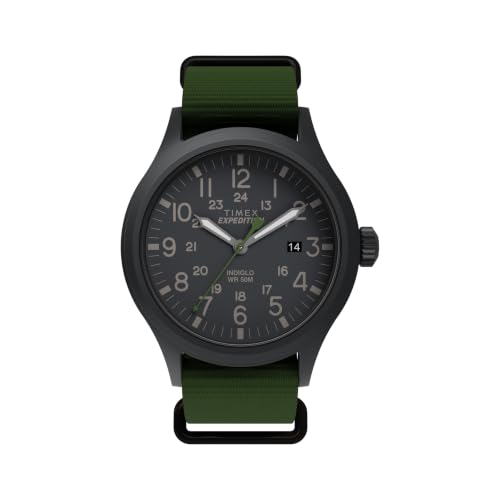


Timex Men's Weekender 40mm Watch – Silver-Tone Case Cream Dial with Blue Fabric Slip-Thru Strap


Buying checklist and final judgment
Shop in an order that puts the irreversible facts first. Confirm the lug-to-lug span fits your wrist’s flat width, using the paper-strip measurement rather than hope. Confirm the true case height and decide, against your cuffs and your habits, whether it qualifies as thin for your purposes. Confirm the rating in the maker’s own documentation, translate it by the honest scale — splash at 3 ATM, shower with model-specific guidance at 5 ATM, swimming at 10 ATM — and check whether the crown design matches that ambition.
Then examine the maintenance proposition with clear eyes. Ask when the watch was last pressure-checked if buying used, what the maker recommends as a service rhythm, whether a local watchmaker can obtain gaskets for the model, and what a battery change or service does to the seal warranty. A used watch with a recent documented check can be a safer swimmer than a newer watch with an unknown history, and the price difference between them should reflect the cost of the check and seals you will sensibly commission before its first swim.
Inspect the specific watch, not the model in the abstract. Work the crown slowly and feel for smooth threads or gritty resistance, which can signal a worn tube or contaminated seals. Examine the crystal edge under angled light for chips, the case back for tool marks suggesting careless openings, and the lug holes for elongation from years of strap changes. On a bracelet, stretch and twist gently to gauge link wear. None of these checks requires expertise beyond patience, and each one prices risk that photographs conceal.
Budget honestly for the whole ownership, not the object alone. A strap suited to water if the supplied one is leather, a pressure check at sensible intervals, gasket renewal at services, and eventual crystal or crown-tube work on a long-kept watch all belong in the arithmetic. Spread across years of daily wear, those costs are modest rent for reliability. Ignored, they convert silently into a single large repair or a lost watch at the bottom of a lake, which is the most expensive outcome in this entire category.
The thin 40mm water-resistant watch rewards owners who enjoy precision in small things: a case that fits because its span was measured, a rating respected because its laboratory meaning was understood, seals renewed because materials age whether acknowledged or not. Chosen and kept that way, it becomes the watch reached for without deliberation — presentable at a wedding, unbothered by a downpour, ready for an unplanned swim. When a slim case clicks shut over a fresh gasket and the crown turns home smoothly, you own not just a measurement but a small, dependable promise.