What's inside
- Key Takeaways
- Quick Picks
- How were these lightweight picks chosen?
- Side-by-side comparison
- How do you choose a gaming laptop that truly travels?
- Our portable-gaming evaluation: bags, trains, and hotel desks
- Common mistakes when buying a portable gaming laptop
- The adapter is part of the laptop
- Heat and noise in thin chassis, revisited honestly
- Screens for the road: size, brightness, and the workday
- Resale, hand-me-downs, and the portable’s second career
- Battery realism for people who actually travel
- Keyboards, trackpads, and the ninety percent
- Choosing between the Legion and the Nitro: a study in priorities
- A packing list for the portable gaming life
- When lightweight is the wrong priority
- Final recommendation
- Frequently asked questions
As an Amazon Associate I earn from qualifying purchases. This post may contain affiliate links at no extra cost to you.
gizmoverdict.com is reader-supported. When you buy through links on our site, we may earn an affiliate commission.
Where to buy: Lightweight gaming laptops are listed on Amazon across a thicket of sibling configurations, and the portable variant a shopper researched can sit one search row away from a heavier desktop-replacement namesake. Every machine below links to its own product page, where the exact build can be confirmed before ordering. Where a weight figure matters to the decision, the maker’s specification page for the model code in each review is the authoritative source, for reasons this guide explains rather than assumes.
Lightweight is the most abused word in gaming laptops, so this guide begins by policing it. The search for the best gaming laptops lightweight attracts buyers who carry their computer through real days, station stairs, lecture halls, client sites, and who still expect a genuine game at the end of them. Six listings earned a place here, and they were not admitted on a number this guide cannot verify. Only the two MSI Cyborg models use Thin and Light language in their titles; the other four titles stay silent on weight entirely, and their spec boxes record that silence with the standard label instead of laundering a guess into a fact. What the six do share is intent: portable-first designs, current or recent graphics hardware in five of them, and in the sixth, a NIMO machine built on integrated Radeon graphics that this guide frames honestly as an esports and indie instrument rather than as an AAA rival. Screens run from 15.3 to 16 inches at 144Hz to 180Hz, memory reaches 32GB in two builds, and storage hits a terabyte in four, so light here does not mean slight in any department except the one that belongs in a bag.
Key Takeaways
- Only the MSI Cyborg pair claim Thin and Light design in their titles; the other four listings state no weight, and their spec boxes say so.
- The Lenovo Legion 5a brings an OLED WQXGA panel at 165Hz, the most striking display in this portable field.
- The Acer Nitro V 16S AI pairs an RTX 5060 with 32GB of memory and a 180Hz screen in a 16-inch portable format.
- The NIMO pick uses integrated Radeon 680M graphics and is framed for esports, indie, and light gaming, not AAA play.
- Four of the six listings carry 1TB of storage, so portability here rarely costs library room.
- Five picks run discrete RTX graphics from the 5050 and 5060 tiers; settings expectations follow each tier honestly.
Quick Picks
| Pick | Machine | Badge |
|---|---|---|
| 1 | MSI Cyborg A15 AI | Best thin-and-light RTX 5050 build |
| 2 | Acer Nitro V 16S AI | Best 16-inch portable power |
| 3 | Lenovo Legion 5a OLED | Best display in a portable chassis |
| 4 | MSI Cyborg 15 Thin and Light | Best Intel thin-and-light build |
| 5 | NIMO 15.6 R7 7735HS | Best integrated-graphics light gaming |
| 6 | Lenovo LOQ 15.3 RTX 5060 | Best compact RTX 5060 value |
How were these lightweight picks chosen?
Screening for portability without reliable weight data requires a hierarchy of evidence, and this guide applied it in the open. First came explicit design language: titles that say Thin and Light describe a manufacturer’s portable line, and both Cyborgs qualify on that evidence. Next came format signals that correlate with carry comfort, 15.3-inch and slim 16-inch designs from lines built around mobility, which admitted the Legion, the Nitro V 16S, and the compact LOQ. Last came purpose: the NIMO’s title calls itself a light gaming laptop outright, and its integrated-graphics design is inherently a traveler’s architecture, with no discrete card’s cooling mass to haul. What never counted as evidence was a number borrowed from a different configuration, a review of a sibling model, or a render that merely looks thin.
Within that portability frame, gaming credentials were audited as strictly as in any performance roundup. Five picks carry RTX 5050 or 5060 discrete graphics with the current DLSS toolkit, and the sixth is reviewed as the integrated outlier it is, with its library described in esports and indie terms. Memory runs 16GB to 32GB of DDR5, storage 512GB to 1TB, and every panel refreshes at 144Hz or faster, so none of these machines asks its owner to accept a dim, slow screen as the price of a lighter bag. Wireless spans Wi-Fi 6 and 6E as titled. The result is a field where portability is the shared premise and everything else, display technology, memory, graphics tier, is a legitimate axis of choice. Shoppers whose weight ceiling is a hard number rather than a design brief should start with our best gaming laptops under 1200 and under 5 lb guide, where that constraint leads the entire selection.

1. MSI Cyborg A15 AI — Best thin-and-light RTX 5050 build
MSI’s Cyborg A15 AI leads this guide for the same reason it anchors conversations about portable gaming generally: its title makes the portable claim in plain words and then backs it with a complete modern specification. The 15.6-inch FHD screen refreshes at 144Hz, an AMD Ryzen 7 260 processor and a GeForce RTX 5050 handle the work, 16GB of DDR5 memory and a 1TB SSD cover capacity, and Wi-Fi 6E plus Portable Design language complete a listing, model B2HWEKG-074US, that reads like it was specced by someone who has actually carried a laptop through an airport.
The gaming terms are the 5050’s honest ones. At 1080p this tier plays popular titles at high settings and negotiates heavier releases with DLSS upscaling, which suits a machine whose evenings happen in hotel rooms and spare bedrooms as readily as at a main desk. The terabyte drive is the quiet hero for travelers, because a portable library cannot lean on a home external drive that stayed behind. No numeric weight appears in the title despite the design language, and the spec box records that faithfully; the Cyborg’s claim is a design lineage, verified by the line’s identity, not a certified figure. As the portable brief executed by a gaming brand’s dedicated thin line, with current silicon throughout, this remains the reference pick of the category.
There is a lineage point worth adding. The Cyborg family exists because MSI recognized that the gaming laptop’s second decade would be won in offices, campuses, and cafés as much as in bedrooms, and the A15 AI is the current refinement of that recognition, with AI-branded Ryzen silicon marking its generation. Owners feel the lineage in small ways: a chassis that does not embarrass a meeting, a screen that suits a document as well as a dungeon, a fan curve that behaves during a lecture. A portable gaming laptop is judged across the whole day, and this one’s design brief visibly spans the whole day rather than only its final two hours.
Strengths
- Thin and Light plus Portable Design language stated in the title itself
- 1TB SSD suits a traveling library without external help
- Wi-Fi 6E, DDR5, and a current Ryzen platform throughout
Trade-offs
- Design language arrives without a numeric weight figure
- RTX 5050 targets 1080p high settings rather than maximum detail
- FHD panel is the portable class standard, not a sharpness leader
- Display: 15.6-inch FHD, 144Hz
- Processor: AMD Ryzen 7 260
- Graphics: GeForce RTX 5050
- Memory: 16GB DDR5
- Storage: 1TB SSD
- Wireless: Wi-Fi 6E
- Operating system: Windows 11
- Model: B2HWEKG-074US
- Weight: Not stated in the listing title
Best for: daily carrying combined with 1080p gaming in varied locations.
Not suited for: a buying decision that requires a certified numeric weight from the title.
Confirm the B2HWEKG-074US code on the page where you check price on Amazon, since Cyborg variants in other tiers share the family look.

2. Acer Nitro V 16S AI — Best 16-inch portable power
Acer’s entry stretches the portable brief to sixteen inches and fills the larger canvas with the strongest all-around specification in this guide. An AMD Ryzen 7 260 processor drives an NVIDIA GeForce RTX 5060, the title cites 572 AI Tops for the platform, memory reaches 32GB of DDR5, storage is a 1TB Gen 4 SSD, and the 16-inch WUXGA IPS display refreshes at 180Hz, the fastest panel here, with Wi-Fi 6 and model code ANV16S-41-R2AJ completing the listing. The S in the name marks this as the slimmer Nitro variant, Acer’s bid to carry its value gaming line into portable territory.
The specification reads like a rebuttal to the idea that portable means compromised. The 5060 at a tall WUXGA resolution has DLSS upscaling and frame generation to keep demanding titles smooth, the 32GB of memory swallows multitasking whole, and the 180Hz screen serves competitive play and desktop fluidity alike. What the title does not provide is any weight language at all, so this guide classifies the machine by its slim-line design and format rather than by a figure, and the spec box keeps the silence on record. Buyers for whom sixteen inches is the sweet spot, large enough to work on all day, small enough to travel, will find this Nitro the most complete portable in the set, provided its physical heft is verified on Acer’s own page before the bag is packed around it.
The 572 AI Tops figure in the title deserves a translation for readers who do not shop by neural arithmetic. It signals that this platform’s silicon is current-generation in its AI acceleration, which matters less for tonight’s games than for the software creeping into everything else: upscaling in video calls, effects in creative tools, the local assistants arriving across the industry. A portable bought for years of service benefits from that currency in ways that will only become obvious gradually. Combined with the memory and storage surplus, it makes the Nitro the pick most insulated against the future in this guide, a machine whose specification will still read as modern when its owner has long forgotten this review.
Strengths
- RTX 5060 with 32GB DDR5 and 1TB Gen 4 storage leads the guide
- 180Hz WUXGA IPS panel is the fastest screen in this roundup
- Slim-variant Nitro design aims the line at portable use
Trade-offs
- No weight language or figure appears anywhere in the title
- 16-inch format needs a larger bag than the 15-inch picks
- Wi-Fi 6 trails the 6E radios in the Cyborg pair
- Display: 16-inch WUXGA IPS, 180Hz
- Processor: AMD Ryzen 7 260
- Graphics: NVIDIA GeForce RTX 5060 Laptop GPU
- Memory: 32GB DDR5
- Storage: 1TB Gen 4 SSD
- Wireless: Wi-Fi 6
- Model: ANV16S-41-R2AJ
- Weight: Not stated in the listing title
Best for: a 16-inch working day followed by high-refresh gaming on the same machine.
Not suited for: a compact daypack built around a 15-inch laptop sleeve.
Verify ANV16S-41-R2AJ when you look at the Amazon price, because Nitro V variants span many screens and tiers.
3. Lenovo Legion 5a OLED — Best display in a portable chassis
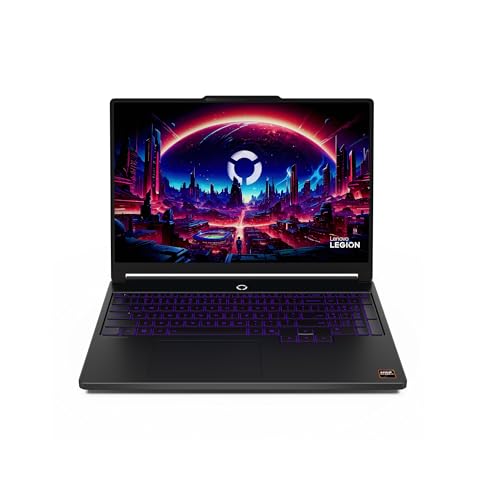
The Legion 5a is this guide’s showpiece, a 2026 Lenovo design whose title leads with the component most portables treat as an afterthought: a 15.3-inch OLED WQXGA display refreshing at 165Hz. OLED changes the portable gaming experience in ways a spec list understates, because its per-pixel lighting delivers the contrast that makes night scenes, neon cities, and dark dungeons look expensive, and its response behavior keeps fast motion clean. Behind the screen sit an NVIDIA GeForce RTX 5060, an AMD Ryzen 7 250, 32GB of memory, and 1TB of storage, in an Eclipse Black chassis.
Everything else about the configuration supports the display’s ambition. The 5060 with DLSS assistance can feed the WQXGA resolution at tuned settings in demanding titles and at generous ones in the popular catalog, while 32GB of memory and a terabyte of storage remove the usual portable asterisks. The 15.3-inch size is the traveler’s format, slipping into bags that reject sixteen-inch machines. The title offers no weight language, so the by-now familiar discipline applies: the spec box records the silence, and the buyer verifies mass on Lenovo’s page. What can be said without reservation is that no other pick in this guide, and few portables anywhere, combine this screen with this supporting cast. For the player who watches their games as much as they play them, the Legion 5a is the portable to beat.
OLED ownership carries two footnotes that fairness requires. The technology’s blacks are perfect because its pixels switch off entirely, which also means static bright elements held for hours deserve the usual panel-care habits, varied content, sensible brightness, a taskbar that hides. Modern panels manage this well and the Legion is a 2026 design with current mitigations, but the habit costs nothing and preserves the screen that justified the purchase. The second footnote is happier: OLED’s instant pixel response makes its 165Hz feel faster in motion than the number alone suggests, a quality competitive players notice even in a machine bought for cinema. Neither footnote dims the recommendation; together they describe an informed owner’s first week rather than a critic’s reservation.
Strengths
- OLED WQXGA panel at 165Hz delivers unmatched contrast in this group
- 32GB memory and 1TB storage remove the portable compromises
- 15.3-inch format travels more easily than the 16-inch picks
Trade-offs
- Title provides no weight language for a portability-led purchase
- WQXGA resolution asks DLSS assistance in demanding titles
- OLED richness is wasted on buyers who mostly play bright competitive titles
- Display: 15.3-inch OLED WQXGA, 165Hz
- Processor: AMD Ryzen 7 250
- Graphics: NVIDIA GeForce RTX 5060
- Memory: 32GB
- Storage: 1TB
- Color: Eclipse Black
- Model year: 2026, per title
- Weight: Not stated in the listing title
Best for: cinematic and atmospheric games on a travel-sized OLED screen.
Not suited for: a purchase certified by a numeric weight in the listing title.
Legion configurations span many display technologies, so confirm the OLED WQXGA build when you confirm the price on Amazon.

4. MSI Cyborg 15 Thin and Light — Best Intel thin-and-light build
The second Cyborg mirrors the first pick’s brief through Intel glass, and the differences are worth isolating because shoppers will inevitably compare the two. Here an Intel Core 7-240H processor pairs with an RTX 5060, one graphics tier above its sibling’s 5050, while the shared elements repeat: a 15.6-inch FHD 144Hz screen, 16GB of DDR5, a 1TB SSD, Wi-Fi 6E, and Thin and Light in the title’s first breath. Windows 11 Pro replaces the standard edition, a small professional plus. No numeric weight is stated, as with its twin.
The 5060 tier changes the portable gaming proposition in a specific way: frame generation joins upscaling in the toolkit, so a traveler playing a story-driven title in a hotel room gets smoothness that the 5050 build reaches only by trimming settings further. For competitive play the two Cyborgs are effectively peers, both feeding their 144Hz panels from rendered frames in the titles that matter there. The choice between them is therefore about library and platform, not about portability, since the chassis brief is shared. Intel loyalists, frame-generation users, and Windows 11 Pro households land here; value-focused AMD buyers land on the first pick. Either way, the Cyborg line’s dominance of this guide’s podium is the market’s own verdict on who designs thin gaming laptops most deliberately.
A word about why two near-identical Cyborgs both earned full reviews instead of a merged mention. Platform choice echoes through ownership in places a spec table truncates: driver ecosystems, the behavior of creative software, the resale audience, even the household’s existing chargers and habits. Collapsing the twins into one review would have saved words and cost buyers the exact distinction their checkout depends on. This guide’s habit of keeping sibling configurations separate, seen across its roundups, exists because the variant lattice is where purchasing mistakes actually live, and the Cyborg pair is the lattice’s friendliest possible teaching example: same promise, different silicon, both honestly labeled.
Strengths
- RTX 5060 adds frame generation to the thin-and-light brief
- 1TB SSD and Wi-Fi 6E repeat the sibling build’s practical strengths
- Windows 11 Pro suits work-managed households and small businesses
Trade-offs
- Thin and Light language again comes without a numeric weight
- Two near-identical Cyborg listings demand care at checkout
- FHD resolution is shared with the guide’s least expensive picks
- Display: 15.6-inch FHD, 144Hz
- Processor: Intel Core 7-240H
- Graphics: GeForce RTX 5060
- Memory: 16GB DDR5
- Storage: 1TB SSD
- Wireless: Wi-Fi 6E
- Operating system: Windows 11 Pro
- Weight: Not stated in the listing title
Best for: portable story-driven gaming that benefits from frame generation.
Not suited for: a specification check that requires Windows 11 Home or an AMD platform.
Tell the twins apart by the Core 7-240H and RTX 5060 lines when you check the current Amazon price.

5. NIMO 15.6 R7 7735HS — Best integrated-graphics light gaming
Every honest roundup needs its reality check, and the NIMO is this one’s, presented with respect rather than as a punchline. There is no discrete graphics card here. An AMD Ryzen 7 7735HS processor carries Radeon 680M integrated graphics, supported by 16GB of DDR5 memory and a 512GB SSD, beneath a 15.6-inch IPS FHD screen. The title adds 100W Type-C fast charging and a two-year warranty, and frames the machine for AI tasks, content creation, streaming, and business alongside its light gaming name. That breadth is the tell: this is a general-purpose portable that games, not a gaming laptop that travels.
The library it serves must be described exactly. Esports titles, indie games, older releases, and light modern titles at modest settings are its native country, and within that country the 680M is a genuinely capable integrated GPU, the strongest of its kind in its generation. AAA flagships at high settings are not its country, and no upscaling trick in its toolkit changes that citizenship. What the buyer receives in exchange is the integrated architecture’s inherent travel virtues: no discrete card’s thermal mass, fast USB-C charging from a compact adapter class, and a warranty term that doubles the industry norm. A student whose gaming is Minecraft, League, and a shelf of indies, and whose laptop must first survive four years of lectures, may find this the most rational machine in the entire guide. A buyer chasing cinematic releases should walk past it to the RTX picks without a second thought, and this review exists to make that sorting instant and regret-free.
The warranty deserves emphasis beyond a bullet point, because it changes the risk arithmetic for exactly the buyer this machine targets. A student purchasing a laptop for a degree-length span is buying years of exposure to dorm accidents, library deadlines, and daily transport, and a two-year term doubles the period during which a hardware failure is the manufacturer’s problem rather than a semester-destroying expense. Few specifications in this guide insure their owner so directly. Paired with the fast USB-C charging, which forgives the forgotten adapter more gracefully than a proprietary brick does, the NIMO’s ownership package is engineered for the realities of its audience with unusual empathy.
Strengths
- Radeon 680M is a strong integrated GPU for esports and indie libraries
- 100W Type-C fast charging suits a traveler’s single-cable kit
- Two-year warranty doubles the standard term in this class
Trade-offs
- No discrete graphics card; AAA high-settings play is out of scope
- 512GB storage is the guide’s joint-smallest capacity
- Title’s light gaming language describes intent, not a weight figure
- Display: 15.6-inch IPS FHD
- Processor: AMD Ryzen 7 7735HS
- Graphics: Radeon 680M integrated
- Memory: 16GB DDR5
- Storage: 512GB SSD
- Charging: 100W Type-C fast charging
- Warranty: 2 years, per title
- Weight: Not stated in the listing title
Best for: esports, indie, and older libraries inside a study-first portable.
Not suited for: AAA flagship releases at high settings.
NIMO sells several Ryzen configurations under similar names, so match the 7735HS and 512GB lines as you verify the price on Amazon.

6. Lenovo LOQ 15.3 RTX 5060 — Best compact RTX 5060 value
Lenovo’s LOQ closes the guide by shrinking the RTX 5060 proposition into a 15.3-inch frame. The WUXGA IPS panel refreshes at 165Hz, an AMD Ryzen 7 250 and 16GB of RAM support the card, and the finish is Luna Grey, with Lenovo’s AI-powered language in the title. Storage is the specification to watch: 512GB, half what most of this guide offers, and the trade that funds the machine’s compact value position. Everything else about the build is current, coordinated, and aimed at delivering the modern toolkit without the sixteen-inch footprint.
In portable terms, the 15.3-inch format is the connoisseur’s size, large enough for split-screen work and immersive play, small enough for the bags and tray tables that govern real travel. The 5060’s DLSS pairing, upscaling plus frame generation, suits the WUXGA panel’s demands in story titles, while competitive libraries will feed the 165Hz screen from rendered frames happily. The storage limit asks for the familiar discipline, a rotating library or an external companion, and in exchange the buyer gets the guide’s most size-efficient route to current-generation graphics. No weight language appears in the title, so the closing discipline of this guide applies one final time: judge the format, verify the figure on Lenovo’s page, and let the bag cast the deciding vote.
Lenovo’s decision to offer this configuration at 15.3 inches rather than defaulting to a larger shell says something encouraging about the market’s direction. For years, serious graphics were rationed to big chassis, and compact machines were apologetic by design; a current RTX card behind a fast WUXGA panel in this format announces that the rationing is over. The LOQ’s value position within that shift is its charm: it is the everyman’s version of the Legion’s premium compact formula, LCD instead of OLED, 16GB instead of 32GB, half the storage, and the same essential idea. Buyers who admire the Legion’s shape but not its station should read this review as the accessible edition of the same thought.
Strengths
- 165Hz WUXGA IPS panel in a compact 15.3-inch format
- RTX 5060 brings the full current DLSS toolkit to the size
- Luna Grey finish travels discreetly in professional settings
Trade-offs
- 512GB SSD is half the capacity of most picks here
- 16GB memory matches the standard without the 32GB luxury
- No weight figure is stated in the title
- Display: 15.3-inch WUXGA IPS, 165Hz
- Processor: AMD Ryzen 7 250
- Graphics: NVIDIA GeForce RTX 5060
- Memory: 16GB RAM
- Storage: 512GB SSD
- Color: Luna Grey
- Weight: Not stated in the listing title
Best for: current-generation gaming in the smallest format in this guide.
Not suited for: a terabyte-scale library kept entirely on the internal drive.
Confirm the 15.3-inch WUXGA configuration when you see the Amazon price for this Luna Grey build.
Side-by-side comparison
| Machine | Display | Processor | Graphics | Memory | Storage |
|---|---|---|---|---|---|
| MSI Cyborg A15 AI | 15.6-inch FHD 144Hz | Ryzen 7 260 | RTX 5050 | 16GB DDR5 | 1TB SSD |
| Acer Nitro V 16S AI | 16-inch WUXGA IPS 180Hz | Ryzen 7 260 | RTX 5060 | 32GB DDR5 | 1TB Gen 4 SSD |
| Lenovo Legion 5a | 15.3-inch OLED WQXGA 165Hz | Ryzen 7 250 | RTX 5060 | 32GB | 1TB |
| MSI Cyborg 15 | 15.6-inch FHD 144Hz | Core 7-240H | RTX 5060 | 16GB DDR5 | 1TB SSD |
| NIMO 15.6 | 15.6-inch IPS FHD | Ryzen 7 7735HS | Radeon 680M integrated | 16GB DDR5 | 512GB SSD |
| Lenovo LOQ 15.3 | 15.3-inch WUXGA IPS 165Hz | Ryzen 7 250 | RTX 5060 | 16GB RAM | 512GB SSD |
How do you choose a gaming laptop that truly travels?
Start with the journey, not the laptop. Picture the bag, the commute, the rooms at the far end, and let that picture set the format: 15.3-inch machines for tight bags and tray tables, 15.6-inch for the standard commute, 16-inch only when the working day genuinely needs the canvas and the bag can absorb it. Then verify weight like an auditor. Where a title states design language, treat it as a claim about the line; where it states nothing, go to the maker’s page for the exact model code and read the figure there, remembering to add the adapter waiting at home to your mental total. A portable purchase made on an unverified figure is a gamble, and this category offers enough verified virtues that gambling is unnecessary.
With format settled, choose graphics by library, using the same honesty this guide applies to the NIMO: discrete RTX tiers for players whose evenings include demanding titles, integrated graphics for the esports-and-indie traveler whose laptop is a study tool first. Memory and storage then follow the familiar arithmetic, with the 32GB and 1TB builds in this guide rewarding portables that must also serve as their owners’ only computer. Finally, weigh the charging story, because a machine that sips from a compact USB-C adapter, as the NIMO advertises, lightens the whole kit in a way the laptop’s own figure never captures. Panel speed analyzed with the same rigor continues in our best gaming laptops 144hz roundup.
Our portable-gaming evaluation: bags, trains, and hotel desks
We evaluate this class in motion, because a lightweight gaming laptop that is only ever tested on a bench has not been tested at all. The routine begins with packing: each machine, its adapter, and a mouse go into the same commuter bag, and the kit is carried through a simulated day of stairs, platforms, and crowded aisles, where the truth about a chassis arrives through the shoulder rather than through a spec sheet. We note which machines disappear into the day and which keep announcing themselves, and that lived distinction, more than any figure, is what this category sells.
The second act happens at the far end of the journey. Each laptop gets set up on the small desks portables actually meet, a hotel writing table, a library carrel, a kitchen counter, and judged on how completely it becomes a gaming station in that space: screen size against viewing distance, fan behavior in a quiet room, the cable situation, the speed of the whole ritual from bag to game. Evenings then alternate a demanding title with a light one, because portable libraries are mixed by necessity. Across these six, the pattern was consistent and a little humbling for specification worship: the machines that traveled best were not always the ones with the most impressive titles, and the single integrated-graphics pick earned genuine affection in the role it was honest about. Portability, it turns out, is a behavior, and behavior is what we came to measure.
Common mistakes when buying a portable gaming laptop
The first mistake is believing the word lightweight wherever it appears, including in search results and headlines, without asking what evidence supports it; this guide’s spec boxes exist because four of six titles here offer no figure at all. The second is weighing the laptop and forgetting the adapter, the mouse, and the bag itself, then discovering the kit tells a heavier story than the product page did. Third, buyers choose a 16-inch screen for desk envy and then leave the machine at home on travel days, converting a portable purchase into a stationary one at portable prices. Fourth, integrated graphics get either over-trusted, with flagship play expected from the NIMO’s honest architecture, or under-trusted, by an esports player paying for a discrete card their library never stresses.
Fifth, storage gets sacrificed silently, and the 512GB portables fill within a season, forcing the external drive that should have been budgeted as part of the kit. Sixth, shoppers compare the two Cyborgs carelessly and order the wrong platform, a mistake of thirty seconds’ inattention with a month of consequences. Seventh, battery life gets judged by gaming-laptop standards imported from ultrabooks, leading to disappointment that a single honest paragraph, these machines play on wall power and travel between outlets, would have prevented entirely. Every one of these errors is a failure of matching rather than of merchandise, which is why this guide spends as much prose on the buyer’s week as on the machines’ specifications.
The adapter is part of the laptop
Portability arithmetic in this category is routinely rigged by a silent omission: the power adapter. A slim chassis paired with a brick the size of a paperback produces a traveling kit whose total tells a different story than the laptop’s figure, and experienced commuters have learned to ask about the whole ensemble. The listings here vary in what they reveal, the NIMO most helpfully, with its 100W Type-C fast charging pointing toward the compact GaN adapter class and even toward shared charging with a phone or tablet. Discrete-graphics machines will generally travel with substantial adapters, which is physics rather than deception, but the buyer deserves to budget the space and the shoulder load for them from the start.
The practical test costs one minute at home during the return window. Pack the machine exactly as a workday demands, adapter, mouse, cable, and carry it to the door and back. That absurdly simple experiment has settled more portability arguments than every specification in this guide combined, because it measures the system the owner actually transports. A laptop that passes it will be carried for years; one that fails it will begin its slow migration toward permanent desk duty, whatever its title promised.
Heat and noise in thin chassis, revisited honestly
Thin gaming laptops live closer to their thermal limits than thick ones, and pretending otherwise would betray this guide’s premise. Less internal volume means fans work harder for the same result, so a slim machine under a demanding game will be heard, and its underside will be warm, in ways a desktop replacement muffles. The mitigations are real, however. Modern midrange silicon is efficient, the 5050 and 5060 tiers in this guide were designed with thin chassis in mind, and ordinary work, browsing, writing, calls, runs silently on every pick here. The noise belongs to the gaming hours, where headphones usually live anyway.
Owners can tilt the treaty further in their favor with habits this guide has recommended in other contexts and repeats because they work: a stand for intake clearance, a hard surface instead of a bed, dust kept out of the vents seasonally. Judged fairly, the thin chassis bargain is that a small amount of acoustic honesty during play purchases silence, in the form of absence, during every hour the machine spends in a bag. For the traveling buyer this category serves, that is the correct trade, and it is not close.
Screens for the road: size, brightness, and the workday
A portable gaming laptop’s screen leads a double life that pure gaming machines escape, and choosing among these six panels deserves a workday’s perspective as well as an evening’s. The 15.3-inch machines, the Legion and the LOQ, split documents comfortably and still feel intimate for games at hotel-desk distance. The 15.6-inch FHD panels in the Cyborgs and the NIMO are the generalists, adequate for everything and specialized for nothing. The Nitro’s 16-inch WUXGA canvas is the productivity standout, its extra vertical pixels quietly returning minutes across a year of spreadsheets and timelines. Refresh rates from 144Hz upward make all of them feel modern in ordinary use, a benefit owners notice hourly.
Brightness and glare behavior, unstated in these titles, become the road warrior’s tiebreakers and should be checked on each product page by buyers who work in bright cafés, trains, and glass-walled offices. A matte finish and a strong brightness figure are worth more in those environments than a resolution tier. The OLED Legion sidesteps part of the question with its inherent contrast, which reads clearly even when ambient light competes. None of this appears in a frame rate, and all of it decides whether a portable is loved on the road or merely tolerated until it gets home.
Resale, hand-me-downs, and the portable’s second career
Lightweight gaming laptops enjoy unusually graceful retirements, because the qualities that make them travel well, compact size, current ports, restrained styling, are exactly the qualities a second owner or a younger sibling wants in a general-purpose machine. The Cyborgs’ discreet designs, the LOQ’s study-ready format, and the NIMO’s warranty-backed simplicity all point toward second careers as household computers, school machines, or media laptops long after their gaming prime. That trajectory belongs in the purchase arithmetic: a machine whose usefulness survives its first role effectively costs less per year than a cheaper unit that becomes e-waste at its first upgrade.
The 32GB builds, the Nitro and the Legion, will age into that second career most slowly, since memory is the resource general computing consumes most relentlessly. The integrated NIMO may paradoxically outlast them all in light duty, because its modest ambitions were never hostage to game engines. Buyers choosing between two finalists in this guide can let the second career cast the vote: pick the machine you would still be glad to hand to someone you like in four years, and the first career will take care of itself.
Battery realism for people who actually travel
It is time to give the category’s least glamorous specification its own honest section. Gaming laptops, light or otherwise, are not all-day battery machines when games are involved, and no pick in this guide repeals that physics. What varies is the shape of the compromise. Integrated graphics, the NIMO’s architecture, sip power during light work and stretch a travel day furthest. The discrete machines behave like portable desktops: superb at the destination’s desk, serviceable for meetings and documents between outlets, and brief under full gaming load away from the wall. Wi-Fi generation, screen brightness habits, and the refresh rate left idling at maximum all nibble at the same battery.
The seasoned traveler’s response is choreography rather than complaint: charge during the layover, game at the hotel, work on the train, and let the machine’s strengths schedule the day. Genuine all-day untethered computing belongs to a different category entirely, and gaming laptops should be judged for what they are. Within their honest definition, these six are as travel-ready as the physics of discrete graphics currently permits, and the guide’s refusal to inflate battery expectations is part of the same honesty that governs its weights and its frame rates.
Keyboards, trackpads, and the ninety percent
Ninety percent of a portable laptop’s life is not gaming, and the components that dominate that ninety percent deserve a section in a guide that claims to understand travel. Keyboards decide whether the machine is a pleasure in a lecture, a meeting, and a midnight writing session, and while these titles say little beyond backlighting where it appears, the class’s modern standard is respectable: full layouts, decent travel, and backlights on the gaming-branded picks for dark rooms and red-eye flights. Trackpads matter in proportion to how often the mouse stays home, which for genuine travelers is often, and the larger formats in this guide, the 16-inch Nitro especially, tend to grant their pads room to be good.
The honest guidance is procedural. During the return window, write something long on the machine, navigate a day without the mouse, and join a call on its webcam and microphone. Those three ordinary tests reveal more about a portable’s daily character than any gaming session, and they are free while remedies are. A gaming laptop that passes them becomes invisible infrastructure in its owner’s life, which is the highest state a portable can achieve: present for every task, remarkable only when the games begin.
Choosing between the Legion and the Nitro: a study in priorities
The two strongest specifications in this guide invite a direct comparison, because many readers will narrow their search to exactly this pair. The Legion 5a offers the OLED screen, the smaller 15.3-inch format, and 32GB of memory with its RTX 5060; the Nitro V 16S counters with a larger 180Hz LCD canvas, the same memory and storage figures, and the same graphics tier. The decision is therefore really about the display philosophy and the bag. OLED’s contrast transforms dark games and flatters everything else, while the Nitro’s bigger, faster LCD serves bright rooms, split-screen work, and competitive titles with equal enthusiasm.
Neither machine states a weight, so the maker’s pages hold the casting vote for travelers, and that fact is itself the lesson of this entire roundup compressed into one comparison: at the top of the portable market, specifications converge and the decision returns to the physical object and its screen, the two things a buyer lives with longest. Readers who resolve this pair correctly for their own routines will find the rest of the guide’s choices fall into place behind it, because the same priorities, format, display, verified heft, govern every tier below.
A packing list for the portable gaming life
The machine is only the largest item in a portable gaming kit, and a short inventory of its companions may save readers from learning the kit’s logic by omission. A sleeve or a padded compartment comes first, because thin chassis deserve protection from the bag’s other citizens. A compact mouse follows, chosen for the surfaces travel actually offers, glass desks and laminate tables included. A short, sturdy cable kit, one charging cable, one display cable where the destination is known, replaces the hopeful tangle most travelers haul. Finally, a pair of headphones that fold flat serves the dual master of this whole category: immersion for the player, mercy for the room.
Weighed together, the kit’s accessories typically add less than the difference between two laptop formats, which reframes the format decision usefully: a buyer agonizing between 15.3 and 16 inches while carrying an unmanaged tangle of gear is optimizing the wrong variable. Streamline the kit first, verify the machine’s figure second, and the portable life this guide describes becomes attainable with any of the six listings above. Portability is a system, and systems reward the people who design them deliberately.
When lightweight is the wrong priority
Integrity requires a section arguing against this guide’s own premise for a certain reader. If the laptop will live on one desk, carried only between rooms, then every dollar and design decision spent on portability is spent on a journey the machine will never take, and a thicker, cheaper, better-cooled desktop replacement would serve that reader better. Likewise, a player whose library is a single enormous ray-traced flagship should buy graphics first and let the bag adapt. Lightweight is a virtue only where distance is real: the commute, the campus, the client site, the weekly train. Where distance is imaginary, it is a tax.
The test is a calendar, not a scale. Count the days in a typical month when the laptop genuinely leaves the building, and be honest about the count rather than aspirational. Double digits justify this entire category and every compromise in it. Low single digits suggest the money belongs elsewhere, in a stronger card or a larger screen, and the machine’s occasional trips can be survived with any sturdy bag. This guide would rather lose a sale to that arithmetic than win one it cannot defend, because a portable gaming laptop in the right life is a joy, and in the wrong one it is merely an expensive way to learn the difference.
Final recommendation
For the classic portable brief, take the MSI Cyborg A15 AI, whose thin-and-light design, terabyte drive, and current platform make it the category’s reference machine, or its Intel RTX 5060 twin when frame generation and Windows 11 Pro matter more. For a bigger canvas that still travels, the Acer Nitro V 16S AI offers the strongest specification here, while the Lenovo Legion 5a is the connoisseur’s choice, an OLED screen in a 15.3-inch frame with nothing else compromised. The Lenovo LOQ 15.3 delivers current graphics in the most compact RTX build, and the NIMO serves the study-first traveler with an honesty this guide wishes more listings imitated. Whichever you choose, verify the physical figure on the maker’s page before the bag is packed around a guess. And if the decision still feels tangled after all this analysis, simplify it to the two questions that actually govern satisfaction in this category: how far will it travel, and what will it play when it arrives? A machine chosen by those answers, from among these six honest listings, will not be the wrong machine, because there is no wrong machine here, only mismatched journeys. Buyers furnishing a younger player’s first portable on a stricter allowance should also read our best minecraft gaming laptops under 800 guide.
Frequently asked questions
How much should a lightweight gaming laptop actually weigh?
The category’s honest answer is: light enough that the full kit, laptop plus adapter, stops editing your behavior. Titles in this guide mostly state design language rather than figures, so confirm the exact model’s mass on the maker’s page and weigh the packed bag once at home. That lived test outranks any headline number.
Can integrated graphics really be called gaming?
For the libraries named in the NIMO’s review, esports, indie, older, and light modern titles, yes, and the Radeon 680M is a capable representative of its class. For AAA flagships at high settings, no, and this guide assigns that work to the five discrete-graphics picks instead.
Is a 16-inch laptop still portable?
It can be, as the slim Nitro V 16S argues, but the format demands a larger bag and a more deliberate carry. Buyers whose travel is frequent and tight should favor the 15.3 and 15.6-inch formats; buyers whose travel is occasional and whose desk days are long can enjoy the larger canvas.
Does OLED matter for gaming, or is it a luxury?
For atmospheric, cinematic, and dark-scene gaming it is transformative, because per-pixel lighting produces contrast no conventional panel here matches. For bright competitive titles the advantage narrows to response feel. The Legion 5a’s review treats it as the pick’s defining virtue for the right library.
Which pick is best for a student who travels between classes all day?
The Cyborg A15 AI fits the brief most completely, with its thin-and-light design language, terabyte drive for a growing library, and current platform. The NIMO is the alternative for a study-first student whose gaming is esports and indie, where its warranty and efficient charging shine.
Will these laptops game on battery during a flight?
Briefly and at reduced ambition. Gaming laptops of every tier restrain their hardware on battery and drain quickly under load, so the realistic travel pattern is light titles or ordinary work in transit and full sessions at the destination’s outlets. The NIMO’s efficient integrated design stretches that pattern furthest.
Before the final paragraph, one practical promise is worth making to yourself as a buyer in this category: whichever machine you choose, spend its first week deliberately, in the bag, on the train, at the far desk, and in the game, while every remedy is still free. A portable laptop reveals its truth faster than any other kind of computer, because its life is measured in journeys rather than in benchmarks, and a week of journeys will tell you more than a month of reading, this guide emphatically included. If the machine disappears into those journeys, you have bought well, and the years will confirm it quietly.
Travelers reading this guide in an airport, which is where it secretly imagines its audience, can take one immediate comfort: the category has matured past the era when portable gaming meant apology. The six machines above game genuinely, work respectably, and ask only that their owners verify a figure and pack a bag with intent. That is not a compromise market anymore; it is simply a market with a point of view. The point of view, stated once more for the record, is that a gaming laptop should be judged by the life it will actually lead, carried, docked, opened in small rooms and bright ones, and that every specification in this guide was read through that life rather than through a benchmark chart.
The lightest laptop in this guide is ultimately the one whose owner stops noticing it between the desk and the destination, and that distinction belongs as much to honest matching as to any figure a scale could report.