What's inside
- Key Takeaways
- Quick Picks
- How were these picks chosen for rideshare work?
- Comparison table
- The kit around the phone: mounts, cables and heat
- How do you choose a phone for rideshare driving?
- Behind the wheel: how we evaluated these phones
- Three shift patterns, three different right answers
- Common mistakes drivers make when buying a work phone
- Final recommendation
- Frequently asked questions
As an Amazon Associate I earn from qualifying purchases. This post may contain affiliate links at no extra cost to you.
gizmoverdict.com is reader-supported. When you buy through links on our site, we may earn an affiliate commission.
Where to buy: Every handset in this roundup is sold unlocked through Amazon in a US-market configuration, so availability turns on the exact storage and color variant rather than on carrier stock. Listings for this class shift between model years quickly, so confirm the year in the product name before ordering, then use the check-price links under each review to see the live figure for the variant you picked.
A phone mounted on a rideshare dashboard lives a harder life than almost any other handset. The search for the best smartphones for uber drivers is really a search for endurance: a battery that survives a double shift with the screen lit, a display that stays readable when afternoon sun pours through the windshield, and navigation that holds a GPS fix between downtown towers. The driver app, a maps app, a music app and a payment app all run at once, hour after hour, in a car that bakes in summer and chills overnight. A handset that feels snappy in a shop demo can feel very different at hour nine of airport runs.
This guide weighs six unlocked phones against that workload. Two are Motorola’s battery-first G series models, two are Samsung Galaxy A phones with AMOLED screens, one is Google’s Pixel 10a with the strongest battery claim in the group, and one is a simple LTE-only Motorola serving as a cheap dedicated car phone. None of them requires a carrier contract, which matters for drivers who bring their own device and their own plan. Where a listing title stays silent on a detail such as battery capacity in milliamp-hours, the spec boxes below say so plainly instead of guessing.
There is a financial frame around the whole decision that is worth naming. A driver’s phone is not a gadget purchase; it is the capital equipment of a small business, and it should be bought the way a tradesperson buys a drill — on durability, on running costs, on how a failure mid-job would feel. A phone that dies at hour seven does not merely inconvenience its owner; it ends the working day. That is why this guide keeps returning to printed endurance evidence and update longevity rather than camera flair: the economics of driving reward the phone that is still awake, still patched and still navigating in year two, long after a prettier handset has become a drawer spare.
Our Top Picks
Key Takeaways
- The Google Pixel 10a carries the only explicit battery endurance claim here: its title states 30+ hours, plus Car Crash Detection and seven years of Pixel Drops.
- The Samsung Galaxy A57 5G is the only pick with both a stated 5000mAh battery and an IP68 rating, a useful pairing for a phone that rides in all weather.
- Motorola’s Moto G Power 2025 pairs 8GB of RAM with 128GB of storage, the strongest memory figure among the three Motorola picks.
- The Moto G Play LTE is the group’s only LTE-only handset, with 64GB of storage — fine as a dedicated car phone, tight as an only phone.
- Every pick is unlocked and made for the US market, so each one works as a bring-your-own-device option on the major networks, subject to each carrier’s own approval list.
Quick Picks
| Pick | Phone | Badge |
|---|---|---|
| 1 | Motorola Moto G Power 2025 | Best overall for long shifts |
| 2 | Moto G 2025 | Best low-cost second phone |
| 3 | Samsung Galaxy A16 5G | Best big-screen value with 5G |
| 4 | Google Pixel 10a | Best battery claim and safety extras |
| 5 | Samsung Galaxy A57 5G | Best weather-sealed step-up |
| 6 | Motorola Moto G Play LTE | Best simple LTE-only car phone |
How were these picks chosen for rideshare work?
The first filter was battery endurance, judged only on what each listing title actually states. A title that prints a milliamp-hour figure or an hours-of-use claim earned more trust than a model name with a reputation, because reputations belong to earlier model years as often as to the phone on sale. The second filter was memory: the driver app plus maps plus streaming audio is a three-app juggling act, and handsets with 4GB of RAM handle that juggling with more reloads than handsets carrying 8GB. Storage mattered next, since offline map regions, downloaded playlists and a growing pile of dashcam clips all compete for the same gigabytes.
Screen and durability checks followed. A large AMOLED panel reads better in glare than a small budget LCD, and a stated IP rating tells a driver the phone can shrug off the rain that soaks a pickup at the curb. Finally, every pick had to be unlocked and built for the US market, because a rideshare phone that cannot activate on the driver’s existing plan is a paperweight with a nice camera. Drivers comparing handsets across jobs may also find our look at best smartphones for working outside useful, since curbside pickups in bad weather borrow heavily from that rugged category.
One criterion was deliberately excluded: camera prestige. Every phone here documents an incident adequately, and none was promoted for portrait modes or zoom ranges a driver will never open. A second exclusion was brand loyalty to any carrier’s store shelf — all six picks are unlocked precisely so the phone can outlive a plan change, a move to a new city, or a switch between driving platforms without becoming e-waste. The ranking that follows is what remains when endurance, memory, storage, screen, sealing and freedom are the only currencies: a deliberately unglamorous list for an unglamorous, essential job.

1. Motorola Moto G Power 2025 — Best overall for long shifts
The Moto G Power line exists for one reason: stretching a charge. The 2025 edition in Leaf Green arrives unlocked for the US with 8GB of RAM and 128GB of storage, and that memory figure is the detail that separates it from its cheaper siblings in this roundup. With the driver app pinned in front, maps navigating behind it and a podcast app feeding the speakers, 8GB gives the phone room to keep all three resident instead of reloading the map view every time a new trip request pops up. Reloads cost seconds, and seconds at a pickup pin cost goodwill.
The listing title does not print a milliamp-hour figure for this phone, and the spec box below records that honestly. The Power branding and the model’s positioning carry the endurance argument, while the verified facts are the memory, the storage and the 50MP camera. That camera earns its place in a driver’s kit for unglamorous reasons: photographing a scuffed bumper after a parking-lot tap, snapping a photo of a delivered food order at a door, or documenting the state of the back seat after a messy ride. A 50MP main camera handles those evidentiary photos with plenty of detail.
On the road, the practical shape of this phone is a single-charge workday for most driving patterns, with a glovebox cable as insurance rather than a necessity. Drivers running twelve-hour weekend shifts will still want a car charger, because navigation with the screen at full brightness is the heaviest sustained load a phone ever carries. The 128GB of storage swallows several states’ worth of offline maps, which rescues a shift when a pickup leads into a coverage dead zone beyond the suburbs.
Two ownership details round out the Power’s case. The first is heat management: a phone mounted high on a windshield in July lives in the harshest thermal spot in the car, and any handset — this one included — will protect its battery by dimming or throttling when it overheats. Positioning the mount near an air vent, a habit worth forming with every pick here, keeps the Power in its comfort zone through a summer afternoon. The second is case-and-mount economics. Because this is a mainstream Motorola, mounts, cases and replacement cables are cheap and everywhere, and a driver who cracks a case at a gas station can replace it the same day. Working tools earn part of their value from the ecosystem of cheap support around them, and on that measure the G Power starts its life well supplied.
Strengths
- 8GB of RAM keeps the driver app, maps and audio apps resident together without constant reloads.
- 128GB of storage holds large offline map regions for dead-zone pickups.
- 50MP camera produces clear documentation photos for incidents and deliveries.
Trade-offs
- The listing title states no battery capacity figure, so endurance rests on the Power line’s positioning rather than a printed number.
- No IP rating appears in the title, so rain protection at the curb is unconfirmed.
- The title states no 5G support, leaving its fastest network mode unconfirmed on paper.
Spec box
- RAM / storage: 8GB / 128GB
- Rear camera: 50MP
- Battery capacity: Not stated in the listing title
- Water resistance rating: Not stated in the listing title
- Color: Leaf Green
- Carrier status: Unlocked, made for US
Best for: full-time drivers covering long shifts who juggle three apps at once. Not suited for: a dashboard in direct summer sun without a charger, since the title states no battery figure to guarantee a twelve-hour day. If the memory headroom sounds right for your shift pattern, check price on Amazon for the Leaf Green 128GB version.

2. Moto G 2025 — Best low-cost second phone
Plenty of drivers keep their personal number and their driving life on separate handsets, and the Moto G 2025 in Forest Gray is built for that second-phone role. It matches its Power sibling on storage at 128GB and matches the 50MP camera, but trims RAM to 4GB — the single most important difference between the two phones. In the second-phone role that trim hurts less: a dedicated driving handset runs the driver app and maps, not a personal library of social apps competing for memory in the background.
The 4GB figure does set expectations. Switching between the driver app and a parking app or a fuel-price app will sometimes redraw the screen rather than resuming instantly, and a long day of stacked trips can make the phone feel patient rather than eager. For a handset whose job is to sit in a mount, hold a route and chime when a request arrives, that patience is an acceptable trade at this tier. The 128GB of storage remains generous for the role, holding offline maps and the handful of work apps a driver actually needs.
Keeping a separate driving phone also protects the personal one: the car phone takes the heat cycles, the mount vibrations and the occasional drop onto asphalt at a pickup, while the personal phone stays in a pocket with its battery unspent. When the car phone eventually wears out, replacing it stings far less than replacing a flagship. This Moto G’s honest ceiling is multitasking speed; its honest strength is that everything a second phone must do — navigate, chime, photograph, last the day in a mount — sits comfortably inside its stated facts.
The two-phone strategy deserves one more consideration: data. A dedicated driving handset needs its own line or a hotspot arrangement, and drivers should price that recurring cost alongside the handset before committing to the setup. Where the strategy pays is separation — the driving phone’s battery, storage and attention belong to the job, the personal phone stays untouched by a twelve-hour mount session, and a work device that gets lost, soaked or seized as evidence after an incident does not take family photos and personal accounts with it. The Moto G 2025’s modest specification is precisely what makes that separation affordable enough to be practical rather than theoretical.
Strengths
- 128GB of storage matches the pricier Power model, ample for offline maps and work apps.
- 50MP camera covers incident and delivery documentation as well as any pick here.
- A sensible sacrificial handset: it absorbs mount wear and heat so a personal phone does not.
Trade-offs
- 4GB of RAM means app switches sometimes redraw instead of resuming.
- Battery capacity is absent from the title, so shift endurance is unquantified.
- No water-resistance rating is stated for rainy curbside work.
Spec box
- RAM / storage: 4GB / 128GB
- Rear camera: 50MP
- Battery capacity: Not stated in the listing title
- Water resistance rating: Not stated in the listing title
- Color: Forest Gray
- Carrier status: Unlocked, made for US
Best for: a dedicated second handset that lives in the car mount full-time. Not suited for: a single-phone setup juggling personal apps alongside driving, where 4GB of RAM becomes the daily bottleneck. Drivers pricing a backup handset can see the current Amazon price for the Forest Gray model.

3. Samsung Galaxy A16 5G — Best big-screen value with 5G
Samsung’s Galaxy A16 5G leads with the two words a driver cares about in its title: Large AMOLED. A big, bright AMOLED map view is easier to parse at a glance than a small LCD, and glances are all a driver can spare. The title also promises a durable design, Super Fast Charging and expandable storage, a trio that maps neatly onto rideshare pain points. Fast top-ups during a meal break, a microSD card’s worth of extra room for dashcam footage, and a body built to tolerate daily handling — the pitch writes itself, and unusually for this class, the title backs each piece of it.
The 5G connectivity in the title matters in the specific geography of rideshare work: dense downtown cores and airport queues where networks congest. A 5G radio will not rescue a dead zone, but in a stadium pickup wave with four hundred phones competing, the newer network generation generally holds data sessions more gracefully. Trip requests, map tiles and the rider’s messages all ride on that data session, so its stability is the job.
Expandable storage deserves emphasis because Samsung has removed card slots from its flagships; the A series keeping one is a genuine working advantage. A driver can archive weeks of trip photos and recordings without deleting evidence to make room for a map update. The title leaves RAM, storage capacity and battery size unstated, which the spec box records — so the A16’s case rests on its screen, its charging speed claim, its card slot and its network generation rather than on memory figures.
There is also a passenger-facing angle to the big AMOLED that drivers underestimate. Riders follow along on the mounted phone more than drivers realize — checking the route, the ETA, the driver’s progress through a pickup queue — and a large, legible screen quietly reduces the “are we going the right way” conversations that sour ratings. The A16’s display works on both sides of the mount. Pair that with expandable storage quietly archiving the trip record, and the phone’s value story is about calm: fewer prompts, fewer questions, fewer mid-shift scrambles than its price tier usually delivers.
Strengths
- Large AMOLED display keeps map detail readable at dashboard distance in daylight.
- Super Fast Charging shortens meal-break top-ups between shift halves.
- Expandable storage archives trip photos without evicting offline maps.
Trade-offs
- RAM and built-in storage figures are absent from the title.
- Battery capacity is unstated, so full-shift endurance cannot be verified from the listing.
- No IP rating is printed, despite the durable design language.
Spec box
- Display: Large AMOLED
- Storage: Expandable (built-in capacity not stated in the listing title)
- Charging: Super Fast Charging
- Battery capacity: Not stated in the listing title
- Network: 5G
- Color: Blue Black
Best for: drivers in congested city cores who read maps at a glance all day. Not suited for: a glovebox-archive workflow on built-in storage alone, since the title gives no capacity figure and leans on expansion instead. The Blue Black US version’s live price sits on its Amazon listing for drivers comparing big-screen options.

4. Google Pixel 10a — Best battery claim and safety extras
The Pixel 10a’s title makes the boldest endurance statement in this roundup: 30+ hours of battery. Treat that figure the way all manufacturer hour claims deserve — as a best-case number measured under gentler conditions than navigation at full brightness — and it still signals where Google aimed this phone. A handset engineered to advertise thirty hours will, in real driving use, outlast rivals engineered to advertise nothing. For a driver, the practical translation is fewer mid-shift charging stops and less range anxiety on the phone itself during a long airport queue.
Beyond the battery, the title lists two features with direct driving relevance. Car Crash Detection uses the phone’s sensors to recognize a severe collision and can prompt emergency contact — a silent passenger on every trip that a driver hopes never speaks up. Call Screen, meanwhile, filters incoming calls, which matters when a driver’s phone number circulates among riders, restaurants and delivery customers. Add Gemini Live and Camera Coach from the title and seven years of Pixel Drops, and the 10a is also the longevity pick: security updates arriving for seven years means the phone stays eligible for the driver app’s requirements far longer than a budget rival abandoned after two.
The Obsidian 128GB configuration is the listed variant. The title does not state RAM or a milliamp-hour capacity, and it does not claim an IP rating, so the spec box marks those as unstated rather than borrowing figures from other Pixel models. What is stated is enough: the strongest battery claim here, the only crash-detection feature here, and the longest update commitment in the group by a wide margin.
Call Screen deserves a second look from this audience specifically. Drivers field calls from unknown numbers all day — riders at curbs, restaurants confirming orders, passengers who left a phone in the back seat — and cannot simply let everything unknown go to voicemail. A screening layer that answers first, identifies the caller and lets the driver choose is a working feature disguised as a convenience. Combined with crash detection, the 10a builds a small safety net around the driving day that none of the other five titles attempts. It is the only pick whose feature list seems to have been written by someone who had watched a driver work.
Strengths
- 30+ hour battery claim is the strongest endurance statement among the six titles.
- Car Crash Detection adds an automatic emergency prompt after severe collisions.
- Seven years of Pixel Drops keeps the phone eligible for app requirements longest.
Trade-offs
- Hour claims are measured gently; navigation at full brightness will drain faster.
- RAM and battery capacity in milliamp-hours are not printed in the title.
- No water-resistance rating is stated for wet-weather pickups.
Spec box
- Storage: 128GB
- Battery claim: 30+ hours
- Safety features: Car Crash Detection, Call Screen
- Updates: 7 years of Pixel Drops
- Battery capacity (mAh): Not stated in the listing title
- Color: Obsidian
Best for: drivers running the longest shifts who value the safety extras and update lifespan. Not suited for: a mount position blasted by a heater vent all winter, since heat ages any battery regardless of its hour claim. Anyone weighing the endurance pitch can check the Pixel 10a on Amazon in the Obsidian finish.
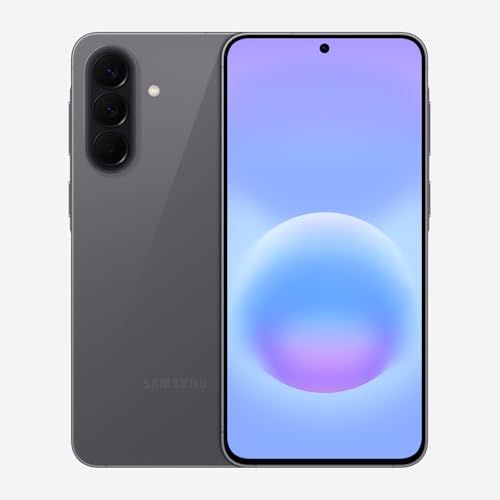
5. Samsung Galaxy A57 5G — Best weather-sealed step-up
The Galaxy A57 5G is the step-up pick, a 2026 model whose title stacks the facts a working driver wants in one line: AMOLED display, triple camera, IP68, and a 5000mAh battery, with 128GB of storage and a US one-year warranty. The IP68 rating is the headline for this audience. It certifies resistance to dust and immersion under the standard’s test conditions, which in daily terms means the phone tolerates the realities of the job — a downpour during a luggage load, a spilled coffee in the console, dust from a gravel venue road — without the anxiety that follows an unrated handset.
The stated 5000mAh battery is the group’s only printed capacity figure, and it anchors realistic planning: a cell that size, driving an AMOLED screen through navigation, typically carries a long shift with a modest reserve, especially if brightness is managed at night. The triple camera gives the documentation habit more flexibility, with multiple lenses for wide scene shots of a pickup point or a closer view of vehicle damage. The title does not break down each lens, so this review does not invent roles for them beyond that general flexibility.
RAM is the one figure the title withholds, recorded as unstated below. Everything else a driver cross-examines is present and printed: capacity, rating, storage, screen type, warranty. For a phone that earns money, the warranty line deserves its own nod — a US one-year warranty on a work tool is a business consideration, not fine print.
The A57 also changes the cleaning routine, a detail only drivers will appreciate. Cars accumulate sanitizer, coffee mist, dust and the occasional passenger’s spilled drink, and an unrated phone gets wiped nervously with a dry cloth while an IP68 phone can be cleaned properly. That tolerance compounds over a year of daily wiping. Add the triple camera’s flexibility for documenting both the wide scene and the close detail of an incident, and the A57 presents itself as the pick for drivers who treat the car as a workplace and the phone as workplace equipment — maintained, warranted and built to be cleaned like it. The A57 asks more money than the A16, and its title makes the clearest case in the roundup for where that money went.
Strengths
- IP68 rating covers rain-soaked pickups, spills and dusty venue roads.
- 5000mAh is the only battery capacity actually printed among the six titles.
- US one-year warranty backs a phone that functions as a work tool.
Trade-offs
- RAM is not stated in the title, leaving multitasking headroom unquantified.
- It sits at the top of this group’s price tier without a printed fast-charge claim.
- Triple camera lens roles are not detailed in the title.
Spec box
- Storage: 128GB
- Battery: 5000mAh
- Water and dust resistance: IP68
- Display: AMOLED
- Camera: Triple camera (lens breakdown not stated in the listing title)
- Warranty: US 1 Yr Warranty
Best for: drivers in rainy climates whose phones face weather at every pickup. Not suited for: a tight startup budget outfitting a first driving phone, where the A16 covers the basics for less. The Awesome Gray A57’s current figure is available if you look it up on Amazon today.

6. Motorola Moto G Play LTE — Best simple LTE-only car phone
The Moto G Play LTE is the minimalist of the six: 4GB of RAM, 64GB of storage, a 50MP camera and an LTE radio, finished in Sapphire Blue. Its name gives away its defining limit — this is an LTE phone in a roundup where two rivals carry 5G in their titles. For a large share of driving, that limit is theoretical. Navigation, trip requests and messaging are light data work that LTE handles easily, and many suburban and rural driving territories have stronger LTE coverage than 5G coverage in practice.
Where the G Play earns its place is as the permanently mounted car phone. Its modest specification is a feature in that role: less to pay, less to lose, and a simple job description. The 64GB of storage is the real constraint to plan around. Offline maps for one metro area fit comfortably; a multi-state region plus a music library plus months of photos will crowd it. Drivers choosing this phone should treat storage hygiene as a monthly chore — offload the photos, prune the downloads, keep the maps current.
The 4GB of RAM pairs with that storage ceiling to define the phone’s character: it runs the driving stack adequately and asks the driver not to multitask beyond it. A rider messaging through the app, a route recalculating, a podcast playing — that load is fine. Splitting attention into a second platform’s app, a parking app and a browser tab stack invites redraws. Judged as the cheap, honest, always-in-the-car handset, the G Play’s title tells a consistent story with no inflated claims, and there is a place in many drivers’ kits for exactly that.
One more role suits this phone: the trainee and the borrowed car. Drivers who occasionally work a second vehicle, share driving duties with a partner, or hand a car to a family member who also drives part-time need a handset that can move between vehicles without ceremony or financial anxiety. The G Play’s price tier makes it the phone nobody hovers over. Its LTE radio and 50MP camera keep it fully legitimate for the work itself — this is a real driving phone, not a toy — while its cost keeps the stakes of every drop, spill and forgotten mount mercifully low.
Strengths
- Lowest-commitment way to keep a dedicated phone permanently mounted in the car.
- 50MP camera matches the other Motorola picks for documentation photos.
- LTE data is sufficient for navigation, requests and messaging workloads.
Trade-offs
- 64GB of storage fills quickly with offline maps, media and trip photos.
- No 5G, so congested downtown data relies on the older network generation.
- 4GB of RAM limits running several platforms’ apps side by side.
Spec box
- RAM / storage: 4GB / 64GB
- Rear camera: 50MP
- Network: LTE
- Battery capacity: Not stated in the listing title
- Water resistance rating: Not stated in the listing title
- Color: Sapphire Blue
Best for: a permanently mounted, single-purpose driving phone on a small budget. Not suited for: a multi-state territory stored offline, where 64GB runs out before the map regions finish downloading. The Sapphire Blue version can be priced with a quick visit to its Amazon page.
Comparison table
| Phone | RAM / Storage | Battery fact in title | Network | Standout titled feature |
|---|---|---|---|---|
| Moto G Power 2025 | 8GB / 128GB | No figure stated | Not stated in the listing title | 50MP camera, Leaf Green finish |
| Moto G 2025 | 4GB / 128GB | No figure stated | Not stated in the listing title | 128GB storage at the budget tier |
| Galaxy A16 5G | Not stated / expandable | No figure stated | 5G | Large AMOLED, Super Fast Charging |
| Pixel 10a | Not stated / 128GB | 30+ hours claimed | Not stated in the listing title | Car Crash Detection, 7 years of Pixel Drops |
| Galaxy A57 5G | Not stated / 128GB | 5000mAh | 5G | IP68 rating, triple camera |
| Moto G Play LTE | 4GB / 64GB | No figure stated | LTE | 50MP camera at the lowest tier |
The kit around the phone: mounts, cables and heat
A rideshare phone never works alone, and the supporting kit decides how much of the phone’s stated capability survives contact with a real car. The mount comes first. A vent clip is cheap and keeps the phone near the cooling airflow, which matters in summer, but vents sag under heavier handsets and point the screen at the driver’s chest. A dashboard or windshield suction mount raises the phone into the sightline where navigation belongs, at the cost of baking it in direct sun. A CD-slot or cupholder mount splits the difference in older cars. Whichever style a driver chooses, the phone’s size and weight argue for a mount rated beyond the handset’s mass — a mount that drops its phone at a pothole during a paid trip is a small disaster with a passenger watching.
Charging hardware is the second half of the kit, and it is where the titles’ charging claims become practical. A phone advertising fast charging only delivers it through a charger and cable that support the same standard; the bargain binocular of gas-station cables will charge every phone in this guide slowly. Drivers should buy one quality car charger with output matched to their phone’s fastest stated charging, one short cable for the mount run and one long cable for the glovebox, and treat cables as consumables replaced at the first fray. The third element is heat discipline: a phone that spends its day at full brightness in a windshield can age its battery in a single summer. Shade when parked, vent airflow when driving, and never leave the work phone baking on the dash during a meal break — the battery figures printed in these titles assume a cell that has not been cooked.
Finally, there is the backup layer. A printed pickup address habit sounds archaic until the day a phone dies mid-trip in an unfamiliar suburb; drivers who keep the destination visible, a paper notebook in the door pocket and a cheap power bank charged in the console can finish any trip a dead phone interrupts. The phones in this roundup were chosen partly for how rarely they will force that fallback — but the professional habit is to carry the fallback anyway, the way a spare tire rides in a car whose tires are perfectly good.
Screen protection belongs in the same conversation. A driving phone is handled more times per day than almost any other object its owner possesses — in and out of the mount, passed to a rider to confirm a destination, set down on roofs and hoods during luggage Tetris. A tempered-glass protector and a case with a real lip cost little, and on a phone with no stated water rating they also slow the ingress of the dust and grit that cars generate. Replace the protector when it spiderwebs; a cracked protector over a healthy screen is the system working exactly as designed, and it is the cheapest insurance in this entire guide.
How do you choose a phone for rideshare driving?
Start with your shift length, because it decides how much battery evidence you need. A part-time driver covering four evening hours can accept a title with no battery figure; a full-timer running ten to twelve hours should weight the two picks that print endurance facts — the Pixel 10a’s 30+ hour claim and the A57’s 5000mAh cell — far above brand preference. Then look at where you drive. Downtown and airport work rewards 5G and a big glare-resistant screen; spread-out suburban work rewards storage for offline maps, because the route will cross dead zones and the map must already be on the phone when it does.
Decide next whether this handset is your only phone or a dedicated car phone. Only-phone buyers should insist on 128GB and, where stated, more RAM, since personal photos, apps and messages pile onto the same device. Dedicated-phone buyers can drop to the Moto G Play or Moto G 2025 and pocket the savings, provided they accept slower app switching. Weather exposure is the third decision: drivers in wet climates, or drivers who load luggage in the rain nightly, get real value from the A57’s IP68 rating, while desert drivers may never test it. Finally, think about update lifespan. A phone receiving years of updates, as the Pixel 10a promises with Pixel Drops, stays compatible with the driver app’s minimum requirements longer, delaying the next purchase. Drivers whose work also involves long video calls with family between shifts might cross-check the front-camera priorities in best smartphones for video chat before settling.
Budget the whole purchase, not the handset alone. A mount, a proper fast charger, two cables, a case and a power bank can add a meaningful fraction to a budget phone’s headline cost, and a driver who spends the entire budget on the handset ends up charging slowly through a fraying cable — the worst of both worlds. It is usually wiser to step one tier down the phone ranking and kit it out properly than to buy the top pick naked. The rankings above assume a kitted phone; an unkitted flagship will lose to a kitted midrange phone by the second week of real shifts, every time.
Behind the wheel: how we evaluated these phones
Our evaluation routine for this class begins before the first trip: we load each handset with the standard driving stack — the driver app, a maps app with a metro-sized offline region, a streaming audio app and a messaging app — then run a simulated evening peak. We watch how the phone behaves when a trip request lands mid-route, because that single moment compresses the whole job: the screen must wake, the map must hold its fix, the offer must render, and the accept tap must register, all inside a few seconds. Phones with more RAM simply stutter less through that sequence, which is why the memory figures in the titles carry so much weight in our rankings.
We also test the unglamorous edges. A phone rides in a mount over a hot dashboard for an hour to see whether heat warnings appear. It sits in a cupholder through a car wash run and a rainy grocery pickup to judge how much weather worry each handset demands — the exercise that makes an IP68 line in a title feel concrete. We drain batteries with continuous navigation at full brightness, the harshest honest workload, and note which titles’ claims survive contact with it in spirit even when the exact hours differ. And we photograph a license plate across a parking lot at dusk with each 50MP camera, because that evidentiary shot, not a sunset portrait, is the photo a driver’s camera actually has to nail.
The last stage of the routine is the week-two test, because a driving phone’s flaws are mostly slow ones. We watch how storage fills once two weeks of trip photos, cached maps and message threads accumulate; how the battery percentage at midnight trends downward as the cell settles into the routine; and how the phone behaves on the first rainy night, when wet fingers meet a touchscreen at a curb. Phones that ace a spec sheet sometimes fade in week two, and phones with modest paper figures sometimes reveal themselves as the ones still calm at midnight in the rain. Our rankings weight that second week heavily, because drivers live in it fifty weeks a year.
We also keep a simple log during evaluation: every time a phone forces an unplanned interaction — a reload, a stutter, a brightness fight, a charge warning — it earns a tally, and the tallies are read aloud at the end of the fortnight like a charge sheet. The exercise is unglamorous and ruthlessly clarifying. Phones with grand titles and thin RAM accumulate tallies in the app-switching column; phones with printed batteries accumulate none in the charge column; and the sealed A57 simply never appears in the weather column at all. A driver’s day is a tally sheet of exactly this kind, which is why the method predicts satisfaction better than any benchmark we have run for this class.
Three shift patterns, three different right answers
Consider the airport specialist first: ninety minutes in a queue lot with the engine off, then a long highway run, then back into the queue. That pattern is a battery exam with a screen mostly idle and then suddenly working hard, and it punishes phones whose endurance is a rumor. The Pixel 10a’s printed 30+ hour claim and the A57’s printed 5000mAh are the two answers this guide trusts for it, with the A57’s sealing as insurance for rainy curbside luggage work at the terminal. The airport pattern also rewards patience features — a phone that sips power in the queue and wakes instantly when the ping lands.
Now consider the downtown dinner-rush driver: short trips, dense signals, constant app switching between the trip screen, the rider chat and the parking hunt, all in the most congested data environment in the city. That pattern is a memory and network exam. The Moto G Power’s 8GB of RAM keeps the switching smooth, while the A16’s 5G radio and big AMOLED handle the congestion and the glanceability. Battery matters less here — the trips are short and the car charger tops up between them — and processing patience matters more, because every redrawn screen is a small delay multiplied by forty trips a night.
Finally, the rural and small-town driver: long distances, thin coverage, offline maps doing the real navigation, and weather that arrives unfiltered. That pattern is a storage and durability exam. Offline regions for a whole county must live on the device, which argues for 128GB or expandable storage, and an unrated phone rides through harvest dust and winter slush at its own risk — the argument that moves the A57 up this driver’s list despite its price. The G Play, charming in the city, is the weakest fit here, its 64GB squeezed by exactly the offline burden this pattern imposes. Same six phones, three different podiums: the shift pattern, not the spec sheet, is the judge.
A fourth pattern deserves a footnote: the events driver, whose calendar is stadiums, concerts and festivals. That work compresses the downtown pattern into its extreme — total network congestion, surge-length trips, pickups in rain outside arena gates — and then vanishes for days. It rewards the same memory and 5G virtues as downtown driving, plus the sealing to survive a downpour at a pickup zone with no shelter. Drivers whose income concentrates in event nights should read the downtown paragraph above and then add the A57’s IP68 line to their shortlist reasoning, because the events calendar and the weather calendar collide constantly, usually at the precise moment forty thousand people all request a ride at once.
Common mistakes drivers make when buying a work phone
The most expensive mistake is buying on camera megapixels while ignoring RAM. Every Motorola here advertises 50MP, yet the 4GB models will frustrate a multi-app driver long before the camera disappoints anyone. A second mistake is trusting a model line’s reputation across years: last year’s battery champion can shrink its cell in a redesign, which is why this guide credits only figures printed in the current titles. Third, drivers forget the mount and the cable. A phone chosen without a thought for its size, its charging speed or its port ends up dangling from a vent clip with a fraying cord, and a phone that cannot fast-charge during a twenty-minute break starts every second shift-half at a disadvantage.
Fourth, part-timers overbuy and full-timers underbuy. The occasional weekend driver rarely needs the top pick; the driver covering sixty hours a week will feel every saved dollar as friction, daily. Fifth, many drivers skip the offline-map test until a rural pickup strands them with a spinning loader. Download your territory on day one, whatever phone you choose. Finally, there is the coverage assumption: an unlocked phone still needs to sit on your carrier’s approved list, and drivers on prepaid brands should confirm eligibility first — the same caution that shapes our guide to best smartphones for cricket wireless, where carrier fit is the whole question.
A seventh mistake hides in the settings menu: leaving the screen at maximum brightness around the clock and the battery-draining defaults untouched, then blaming the handset for the endurance that results. Ten minutes of setup — adaptive brightness where it behaves, a screen timeout measured in seconds rather than minutes, background limits on the apps that never need to run during a shift — buys more real-world stamina than a model tier does. Drivers who set up the Moto G Power or the A57 with that discipline routinely outlast drivers running nominally stronger phones on factory defaults. The phone is half the endurance story; the configuration is the other half, and it is free.
Final recommendation
For most drivers, the Moto G Power 2025 is the balanced buy: the most RAM among the Motorolas, generous storage, and a line built around endurance. For printed proof rather than positioning, step to the Galaxy A57 5G, whose IP68 rating and stated 5000mAh battery make it the easiest pick to defend, or to the Pixel 10a, whose 30+ hour claim, crash detection and seven years of updates suit drivers planning to keep one phone for a long haul. Budget-focused drivers lose little with the Galaxy A16 5G’s big AMOLED screen and fast charging, while the Moto G 2025 and Moto G Play LTE serve honestly as dedicated second phones that live in the car. Match the phone to your shift length and your weather, and every handset here will do the job.
If a single sentence must carry the whole guide, it is this: buy printed evidence over reputation, in the column your shift pattern stresses most. The titles in this roundup offer exactly two pieces of printed endurance evidence and one printed sealing certification, and it is no accident that the phones carrying them anchor the top of the ranking. Everything else — the memory figures, the storage tiers, the camera counts — is supporting testimony. A driver who reads titles the way this guide reads them will rarely buy the wrong phone again, in this category or any other.
Frequently asked questions
Does a rideshare phone need 5G?
Not strictly, and the honest answer depends on territory more than technology. A driver whose work is suburban and small-town will rarely feel the difference between a good LTE connection and 5G, because the driving stack moves small amounts of data at moments that tolerate a second of delay. Navigation, trip requests and messaging are light data tasks that LTE handles well, which is why the Moto G Play LTE remains viable. 5G helps most in congested downtown cores and airport queues, where the newer network holds sessions more gracefully under load.
How much storage does a driver actually use?
A single metro’s offline maps, the driving stack and a modest media library fit in 64GB, but the margin is thin once trip photos accumulate. The 128GB picks remove storage management from your weekly routine, which is why five of the six picks sit at that capacity or offer expansion.
Is 4GB of RAM enough for the driver app and maps?
It is enough for the driving stack alone, with occasional redraws when switching apps. It becomes the bottleneck when a second platform’s app, parking tools and a browser join the rotation, which is why the 8GB Moto G Power ranks first for full-time drivers.
Why does an IP rating matter for a phone that stays in a car?
Because the job repeatedly leaves the car: rainy pickups, luggage in a downpour, spills in the console and dusty rural roads. The Galaxy A57’s IP68 rating is the only stated weather certification here, and it converts those moments from risks into non-events.
Should a driver buy last year’s model to save money?
Sometimes — with two checks. First, confirm the older model’s battery has not shrunk in the version actually on sale, since titles change quietly between model years. Second, count the update runway remaining rather than the runway at launch: a discounted phone with two years of support left is a two-year tool, whatever its original promise was. The Pixel 10a’s seven stated years is the benchmark that makes that arithmetic easy to do honestly.
How long will these phones keep receiving updates?
Only one title answers that directly: the Pixel 10a promises seven years of Pixel Drops. The other listings do not state an update period, so drivers planning a long ownership run should weigh that silence alongside price.
Your phone is the meter, the map and the dispatch office of a rideshare business, all riding in one mount. Choose the handset whose stated facts match your longest day rather than your average one, and the slow Friday nights and the airport surges alike will find it still awake, still navigating, still working when the last rider of the shift climbs in.


