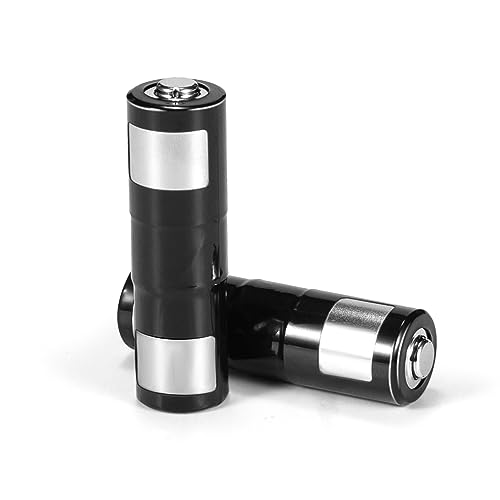
Our Top Picks


What's inside
- What an AG3 battery actually is
- Reading the cross-reference names without getting lost
- Alkaline versus silver oxide: the discharge curve is the story
- The devices that live on AG3 cells
- Freshness and date codes: the quality marker that matters most
- Packaging: blister packs, loose trays and what each tells you
- Counterfeit and no-name cells: recognising the risk
- Leakage: the slow failure that ruins devices
- Measuring a button cell properly: voltage under load
- Storage, mixing and everyday handling
- Child safety: the section that outranks every other
- Disposal and recycling of button cells
- A practical buying checklist for AG3 and LR41 cells
- How the cell is built, and why construction shows in service
- Troubleshooting: when a fresh cell seems not to work
- Buying for clinics, schools and other shared settings
- A short history of why one cell has so many names
- Check prices on Amazon
- Travel and spares: small cells away from home
As an Amazon Associate I earn from qualifying purchases. This post may contain affiliate links at no extra cost to you.
Few batteries cause as much quiet confusion as the AG3. It is a tiny disc of metal, smaller than a shirt button, yet it hides behind at least half a dozen different names, two distinct chemistries and a voltage difference small enough to ignore in some devices and large enough to matter in others. People usually meet this cell at an inconvenient moment: a medical thermometer that fades mid-reading, a glucometer that refuses to wake, a laser pointer that dims to a sullen red smudge during a presentation. The replacement hunt that follows tends to involve squinting at microscopic print on a cell that has been rolling around in a drawer for years, then guessing which of several look-alike codes on a blister card is the right one. This guide exists to remove that guesswork. It explains what the AG3 actually is, which names refer to the same physical cell, how the alkaline and silver oxide versions differ in behaviour, and what separates a good, fresh, trustworthy cell from the tired or counterfeit stock that fills bargain bins.
The stakes are higher than the size suggests. Button cells power devices that people rely on for health readings, and they are also among the most dangerous small objects in a home when a child swallows one. Quality, in this category, is therefore not a vague marketing word. It is a bundle of concrete things: a cell manufactured recently enough that its capacity is intact, a chemistry matched to the device, packaging that protects both the cell and the household, and a supply chain honest enough that the code printed on the blister means what it claims to mean. Working through those points in order turns a confusing purchase into a simple one.
A quick note on how this guide is funded before the detail begins. Some links on this site are affiliate links, and if you buy through them the site may earn a small commission at no extra cost to you. Listings change constantly, so treat any statement about availability as a snapshot rather than a promise, and check the current pack details before ordering.
What an AG3 battery actually is
The AG3 is an alkaline button cell with standardised dimensions of 7.9 millimetres in diameter and 3.6 millimetres in height. That size code matters more than any brand name, because every name in the AG3 family describes a cell built to the same physical envelope. It is a squat cylinder with a flat negative cap on one face and a slightly domed positive base, designed to sit in a shallow spring-contact holder inside small electronics. The nominal voltage of the alkaline version is 1.5 volts, which places it in the same broad family as the familiar AA and AAA cells, even though its capacity is a tiny fraction of theirs. When a device manual says it needs an AG3, it is really specifying this 7.9 by 3.6 millimetre footprint and expecting roughly one and a half volts delivered through a very small contact area.
Understanding the naming system helps decode the whole shelf. In the international IEC designation, the alkaline version is the LR41: the letter L identifies alkaline chemistry, R identifies a round cell, and the numbers encode the size. Manufacturers and retailers, however, have layered their own codes on top of that standard over decades. AG3 is a common trade designation for the same alkaline cell. The numbers 192, 384 and 392 come from older watch-battery numbering systems and appear constantly on multi-cell blister cards. L736 is another designation found in some manufacturers’ catalogues for this size. None of these codes describes a different battery in physical terms; they are different labels pinned to the same small cylinder, which is why a card listing several of them together is usually telling the truth about fit.
The complication arrives with the silver oxide branch of the family. The SR41 is the silver oxide cell in exactly the same 7.9 by 3.6 millimetre case, and codes such as 384 and 392 are frequently used for silver oxide versions as well, because those legacy numbers were applied loosely across chemistries. A silver oxide cell delivers a nominal 1.55 volts rather than 1.5, and, far more importantly, it holds that voltage almost level through most of its working life before falling away near the end. The alkaline cell, by contrast, begins near its peak and slopes steadily downward as it discharges. Two cells that look identical, fit the same holder and carry overlapping codes can therefore behave quite differently inside a precision device, and telling them apart is the first real skill this category demands.
Reading the cross-reference names without getting lost
The safest habit is to work from the device outward. Open the battery compartment, note the code printed inside the lid or moulded into the plastic if there is one, and remove the old cell to read its own markings under good light. Manufacturers of thermometers and glucometers usually print the required designation in the manual and often on a sticker near the compartment. If the old cell says LR41 or AG3, an alkaline replacement matches the original specification. If it says SR41, the device was supplied with silver oxide, and replacing like with like preserves the voltage behaviour the device was calibrated around. When the only surviving evidence is a code such as 392, chemistry is ambiguous from the number alone, so the deciding evidence becomes the chemistry word printed on the candidate pack: alkaline or silver oxide should be stated plainly somewhere on the card.
Cross-reference charts printed on packaging deserve a measured trust. Reputable manufacturers publish accurate equivalence tables because their distribution depends on retailers shelving the right cell for the right device. Problems arise with anonymous multi-packs whose cards list twenty or thirty codes in a cheerful grid. Those grids sometimes stretch equivalence beyond fit into function, implying that any cell in the size family serves any purpose equally well. Fit is only half the question. A laser pointer will forgive almost anything that fits, while a glucometer making a measurement that informs a health decision deserves the chemistry its maker specified. Treat the chart as a starting point, then confirm chemistry and freshness before buying, particularly when the pack is strikingly cheap relative to branded equivalents in the same shop.
There is also a near neighbour worth knowing about so it is not bought by mistake. Slightly larger and smaller button cells crowd the same display hooks: cells a millimetre wider or a fraction of a millimetre thicker can jam a holder, crack a plastic latch or sit loosely enough to lose contact when the device is knocked. Because the AG3 is only 3.6 millimetres thick, a thicker cell of similar diameter may appear to fit while preventing the compartment door from closing properly, which then flexes the contacts and produces intermittent faults that look like electronic failure. Checking the two dimensions on the pack against the 7.9 by 3.6 millimetre specification takes seconds and prevents a whole class of frustrating mis-purchases.
Alkaline versus silver oxide: the discharge curve is the story
The single most useful idea in this entire category is the discharge curve, the path voltage takes from fresh to exhausted. An alkaline AG3 starts its life a little above 1.5 volts, drifts down through the middle of its capacity, and spends its final portion sliding toward and below the level at which many devices stop working reliably. A silver oxide SR41 starts at about 1.55 volts and stays close to that plateau for most of its discharge, then drops comparatively quickly at the end. For a toy that simply needs current, the slope hardly matters. For a measuring instrument, the plateau is valuable because the electronics can be designed around a stable supply, and readings stay consistent from the first week of the cell’s life to the last.
Capacity figures underline that these are small reservoirs by any standard. Alkaline AG3 cells are typically rated somewhere in the region of 25 to 45 milliamp-hours depending on the drain at which the rating is measured and the generosity of the manufacturer, while silver oxide versions are generally rated around 38 to 45 milliamp-hours. Those ranges overlap, which sometimes leads buyers to conclude the chemistries are equivalent. They are not, because usable capacity depends on the voltage a device still accepts. A device that stops working when its supply sags below a threshold will abandon a sloping alkaline cell with charge still theoretically inside it, while the flat silver oxide cell keeps delivering above that threshold until its capacity is nearly spent. In practice the silver oxide cell often gives noticeably longer service in precision devices even when the printed milliamp-hour numbers look similar.
Temperature and drain rate tilt the comparison further. Button cells are usually asked for tiny currents, often in pulses: a thermometer draws while it measures, a glucometer draws while it runs a test cycle, a small light draws continuously but modestly. Alkaline chemistry loses effective capacity faster when asked for relatively heavy pulses from such a small cell, and both chemistries lose capacity in the cold, which matters for cells stored in unheated spaces or devices kept in cars. Silver oxide cells tend to hold their plateau well at the low, steady drains typical of watches and instruments, which is one reason the watch trade settled on silver oxide as its default long ago. None of this makes alkaline a poor choice in absolute terms; it makes chemistry a matching exercise between what the cell does naturally and what the device asks of it.
When the extra tenth of a volt matters, and when it does not
The difference between 1.5 and 1.55 volts nominal sounds trivial, and in many devices it is. Simple circuits with a wide operating range, including most LED novelties, laser pointers, small toys and many calculators, run happily on either chemistry and either voltage. The cases that reward attention are measuring devices and devices with a low-voltage warning tuned tightly to the expected supply. A glucometer that flags a low battery early on a sloping alkaline cell may do so while the cell still runs a torch perfectly well, because the instrument is protecting the accuracy of its readings rather than reporting the cell’s absolute exhaustion. Fitting silver oxide in such a device stretches the interval between warnings and keeps the supply in the band the instrument prefers. Conversely, nothing is gained by putting premium silver oxide cells into a singing greeting-card insert or a disposable novelty; the alkaline cell’s slope is irrelevant there and its lower cost is the rational point.
The devices that live on AG3 cells
Medical thermometers are the classic home for this cell. Digital stick thermometers and many compact clinical designs were built around a single LR41 because the cell is cheap, widely available and sufficient for the brief, low-power measurement cycles involved. The pattern of use is punishing in a specific way: long idle months in a bathroom cabinet, then a sudden demand for a trustworthy reading when someone is ill. A cell that has quietly self-discharged or begun to leak during those idle months fails exactly when it is needed. This is why freshness and storage, covered later in this guide, matter more for thermometer cells than raw capacity does, and why many households sensibly replace the cell on a schedule rather than waiting for the low-battery symbol during a feverish night.
Glucometers raise the stakes further. A blood glucose meter performs an electrochemical measurement and converts it into a number that can influence medication and food decisions, so its designers treat supply voltage as part of the measurement environment. Many meters specify the LR41 or its silver oxide equivalent and include battery warnings that trigger conservatively. Using a tired, counterfeit or wrong-chemistry cell in a meter is poor economy in the truest sense: the saving is pennies, and the risk is a reading trusted when it should not be, or a meter that dies with a strip already inserted and wasted. Anyone who manages a condition with a meter should keep a sealed, in-date spare cell with the testing supplies, rotate it before its printed date passes, and treat unexplained erratic readings as a prompt to check the cell alongside everything else.
Laser pointers, calculators and small LED lights form the forgiving end of the spectrum. A pointer that dims is an annoyance, not a hazard, and many pointers stack two or three AG3 cells in series, which multiplies both the voltage and the consequences of mixing old and new cells, a topic returned to below. Calculators sip current so slowly that a cell may serve for years, and solar-assisted models use the cell mainly as backup. Small LED keyring lights and book lights draw harder than instruments do, drain cells faster, and reveal the alkaline slope as gradual dimming; silver oxide holds brightness steadier but the alkaline cell remains a perfectly sensible choice where replacements are cheap and the light is a convenience. Toys spread across the whole range, from sound modules in plush toys to miniature electronic games, and their cells are the ones most often left forgotten until leakage announces them.
The hearing aid distinction, stated clearly
Because AG3 cells are small, round and sold near hearing products in some shops, a persistent confusion links them to hearing aids. True hearing aids do not use AG3, LR41 or SR41 cells. Modern hearing aids are powered by zinc-air cells in four standard sizes, universally colour-coded: size 10 with a yellow tab, size 13 with an orange tab, size 312 with a brown tab and size 675 with a blue tab. Zinc-air chemistry works by reacting with oxygen from the air, which is why those cells ship sealed with a sticky tab and only begin discharging once the tab is removed. An AG3 is a sealed alkaline or silver oxide cell with entirely different voltage behaviour, and it cannot substitute for a zinc-air cell in fit, voltage delivery or operating principle. The confusion probably survives because some inexpensive personal sound amplifiers and hearing-aid-adjacent gadgets, which are not medical hearing aids, do use small button cells of various sizes. Anyone buying for an actual hearing aid should buy the numbered, colour-tabbed zinc-air size the aid specifies, and anyone buying AG3 cells should be doing so for thermometers, meters, lights and similar small electronics, not for a hearing instrument.
Freshness and date codes: the quality marker that matters most
Button cells age on the shelf whether they are used or not. Alkaline cells self-discharge slowly and their seals and internal chemistry degrade over years; silver oxide cells are notably better keepers, which is part of their premium. The practical consequence is that two identical-looking packs can deliver very different service depending on when they were made. Quality buying therefore starts with the date. Reputable packs carry a use-by or best-before date, and some manufacturers print a production code from which the manufacturing date can be read. A pack with several years of shelf life remaining is a fundamentally better purchase than a marginally cheaper pack already close to its date, because the buyer is paying for stored energy and seal integrity, both of which drain away with time.
Reading date codes takes a little care. Some brands print an explicit month and year, which is the friendliest format. Others use a coded stamp in which letters or digits indicate the year and month of manufacture, with the key published in the manufacturer’s documentation. When a pack carries no decipherable date at all, that absence is itself information: established manufacturers date their retail packs because pharmacies, clinics and retailers need to rotate stock. Undated cells in anonymous packaging may be old stock, repackaged bulk cells or worse. For a device that sits idle for months and then must work, such as the thermometer in a first-aid kit, undated stock should simply be passed over, however attractive the per-cell price appears.
Freshness also interacts with where the pack has been kept. Cells stored in hot shop windows, damp warehouses or the glovebox of a display vehicle age faster than the printed date assumes. Buyers cannot audit a supply chain, but they can prefer sellers with obvious turnover: pharmacies, electronics retailers and established online stores that move button cells in volume. A dusty multipack in a shop that sells few batteries is a worse bet than the same pack from a high-turnover counter. At home, the same logic applies in miniature. Keep spares in a cool, dry drawer away from radiators and bathroom steam, in their original packaging, rather than loose in a warm kitchen junk drawer where they can also short against keys and coins.
Packaging: blister packs, loose trays and what each tells you
Retail blister packs, in which each cell sits in its own sealed cavity on a printed card, are the format best suited to household buying. The card carries the brand, chemistry, size codes and date in one place, the cells stay separated and protected from short circuits, and the sealed cavities give some assurance the cells have not been handled, swapped or partially used. Child-resistant blister designs, now common for button cells, add deliberate difficulty to opening, which is a safety feature discussed further below. For most people, branded blister packs of modest size are the quality sweet spot: enough cells to cover the thermometer, the meter and a spare, without stockpiling so many that the last cells age out before use.
Loose cells in trays or bulk strips serve workshops, clinics and manufacturers who fit cells into devices at volume and use them quickly. The format itself is legitimate, but it strips away every household safeguard: no printed date travels with an individual cell beyond the stamp on its face, no card confirms chemistry, and cells can be mixed, old or counterfeit without any visible sign. Bulk buying also invites the false economy of owning fifty cells that expire as a group. Unless the household genuinely consumes AG3 cells at pace, for example maintaining a fleet of devices for a care setting, small dated blister packs bought more often beat a large tray bought once. Readers maintaining larger battery-powered devices alongside these small cells may also find our guide to best aa and aaa battery chargers useful for keeping rechargeable household cells in rotation rather than relying entirely on disposables.
Between those poles sit the large multi-cell cards sold in discount shops, often printed with a spray of equivalent codes and little else. Some are perfectly serviceable fresh alkaline cells from real factories; others are the natural home of the problems in the next section. The distinguishing checks are quick: is a manufacturer or responsible brand named, is the chemistry stated, is there a legible date, and does the printing look like it belongs to a company that expects to be found again? A card that answers yes to those questions is a reasonable budget buy for toys and lights. A card that answers no should not be trusted with a medical device.
Counterfeit and no-name cells: recognising the risk
Counterfeiting follows value and volume, and branded button cells have both: they are small, light, easy to copy superficially and sold at a healthy margin over their material cost. A counterfeit AG3 typically copies the livery of a respected brand while containing a cheaper, lighter or older cell, or a cell with less active material and correspondingly less capacity. The outward signs are often subtle: printing slightly misaligned or misspelled, a brand’s logo rendered almost but not quite right, packaging that imitates a known design while omitting the date or batch information the genuine card carries. Weight can be a clue in aggregate, since a card of genuine silver oxide cells feels denser than a card of fakes, but no single test is reliable, which is why source matters more than inspection. Buying branded cells from the brand’s normal retail channels is the strongest protection available.
No-name cells are a separate category from counterfeits and deserve a fairer hearing. Plenty of honest factories produce unbranded or store-brand button cells that work adequately in undemanding devices. The risk profile is different: not deception about identity, but uncertainty about age, capacity and quality control. Seal quality is the quiet variable. A well-made button cell’s crimp and gasket keep its alkaline electrolyte contained for years; a poorly made one may weep potassium hydroxide into a device months after fitting, corroding contacts and ruining electronics worth far more than the saving. For low-value, frequently checked devices, a no-name cell is a defensible gamble. For a glucometer, a thermometer relied on for a child, or any device that will sit unchecked for a year, the gamble stops making sense, and the modest premium for a dated, branded cell is better understood as insurance than as brand tax.
Leakage: the slow failure that ruins devices
Alkaline button cells leak by chemistry and by age. As an alkaline cell discharges, and especially as it sits discharged, internal gas pressure can build and the electrolyte, a caustic potassium hydroxide solution, can escape past the seal. In a large AA cell this often shows as white crust at the cap. In a button cell the volumes are smaller but the setting is worse: the cell sits in a tight compartment against delicate contacts and circuit boards, so even a small weep spreads corrosion across exactly the surfaces that must stay clean and conductive. Devices killed by button cells are rarely killed by the discharge itself; they are killed by the cell left inside long after exhaustion, quietly corroding the holder through a winter in a drawer.
Prevention is mostly habit. Remove cells from devices that will be stored unused for months, particularly seasonal toys, spare thermometers and novelty lights. Check infrequently used devices once or twice a year, and treat any cell that has been in place beyond its expected service as due for replacement even if the device still wakes. Watch for the early signs at each change: a dull or rainbow sheen on the cell face, white or green deposits on the contacts, a compartment that smells faintly sharp, or a cell that has swollen enough to sit proud of its holder. A swollen or leaking cell should come out promptly, be handled with dry hands or gloves, and go to battery recycling rather than the household bin, both because its contents are caustic and because button cells are a recognised ingestion hazard loose in the home.
If leakage has already reached a device, modest corrosion can sometimes be cleaned from contacts with a cotton bud barely dampened with white vinegar or lemon juice for alkaline deposits, followed by careful drying and a fresh cell, though badly eaten contacts may never conduct reliably again. The deeper lesson is economic as much as technical: the cheapest cell is expensive if it writes off a meter or a thermometer. Fresh, well-sealed cells from manufacturers with real quality control leak far less often, and removing cells from dormant devices costs nothing at all. Households that also keep larger rechargeable cells for torches and tools can reduce disposable use overall by following the approach set out in our guide to best 18650 chargers, keeping high-drain devices on rechargeables and reserving button cells for the small instruments that genuinely need them.
Measuring a button cell properly: voltage under load
A multimeter can tell a useful story about a button cell, but only if the measurement is made honestly. A nearly exhausted alkaline cell will often show a deceptively healthy open-circuit voltage, close to its fresh reading, because with no current flowing there is nothing to expose its risen internal resistance. The specification sheet for a quality cell lists both its nominal voltage and the conditions under which capacity is rated, and experienced technicians therefore measure under load: the cell is connected across a suitable resistor or a battery tester that draws a small current, and the voltage is read while that current flows. A fresh AG3 holds close to its rated voltage under a light load; a tired one sags immediately and recovers when the load is removed, which is the signature of a cell whose chemistry can no longer deliver.
For household purposes, a simple button-cell tester that applies a modest load and shows a graded reading is more informative than a bare multimeter, and either is better than judging by the device alone, since device behaviour mixes cell condition with contact condition. Dirty or slightly corroded contacts mimic a dead cell faithfully: intermittent readings, dim lights, devices that work when squeezed. Before condemning a cell, clean the contacts gently with a dry cloth or a pencil eraser, ensure the cell sits flat and the spring presses evenly, and retest. When a new, dated cell from a sealed pack also performs badly in the same device, suspicion should move to the device or its contacts rather than to a run of bad batteries.
One more measurement trap deserves mention: comparing chemistries by voltage alone. A fresh alkaline AG3 and a fresh silver oxide SR41 read differently by design, around 1.5 and 1.55 volts respectively, and an alkaline cell partway through its sloping life may read the same as a silver oxide cell near the end of its plateau. Voltage is a state indicator within a chemistry, not a league table across them. Judge a cell against what its own chemistry should read when fresh, under load, and treat any cell reading far below its fresh plateau under a light load as finished, regardless of how recently it was fitted. Keeping notes sounds excessive for such a small component, yet writing the fitting date on a thermometer’s case or a meter’s pouch transforms guesswork into a schedule, and schedules are what keep small batteries from becoming small emergencies.
Storage, mixing and everyday handling
Button cells prefer the conditions most electronics prefer: cool, dry and stable. Room temperature storage in original packaging keeps self-discharge low and prevents the accidental short circuits that occur when loose cells touch each other or metal objects; a cell shorted in a drawer can heat, discharge and occasionally rupture, and a pile of loose cells of mixed ages also invites fitting the wrong one. Refrigeration, once commonly advised for batteries, offers no meaningful benefit for modern alkaline or silver oxide cells and introduces condensation risk when cold cells meet warm humid air, so a drawer away from heat sources is the better answer. Keep spares out of bathrooms where possible, since repeated steam and warmth age both cells and the devices that use them.
Mixing old and new cells is the most common handling error, and it matters most in devices that stack cells in series, as many laser pointers and small lights do. In a series stack the weakest cell limits the whole chain, and as it is driven beyond exhaustion by its stronger partners it can be pushed into voltage reversal, which greatly increases the chance of leakage and can damage the device. The rule is absolute and simple: replace all the cells in a device at the same time, with cells of the same chemistry, brand and date where possible, and never top up a stack with one fresh cell. The same logic applies to fitting an alkaline cell alongside a silver oxide one because their voltages and discharge shapes differ; the pair will behave worse than either matched set. Devices using a single cell escape the mixing problem but not the habit worth building, which is to keep the removed cell until the new one is confirmed working, then recycle the old one immediately rather than letting it migrate to a drawer of ambiguous spares.
Handling with clean, dry hands is not fussiness. Skin oils and moisture on the contact faces add resistance exactly where a low-voltage, low-current device can least afford it, and a cell that has been dropped on a hard floor can suffer seal damage invisible to the eye. Fit cells with the polarity shown in the compartment, since a reversed button cell in a multi-cell stack is another route to reversal damage, and never attempt to recharge a primary AG3 or SR41: these are single-use chemistries, and applying charge can generate gas, heat and rupture. Rechargeable button formats exist in other chemistries for specialised uses, but they are different products with different voltages, not a refill path for this family. Workshops that maintain banks of rechargeable cells for many devices may find the multi-bay approach in our guide to best 16 bay battery chargers a practical way to keep that separate rechargeable fleet organised without confusing it with primary button stock.
Child safety: the section that outranks every other
Button cells are a severe ingestion hazard, and the AG3’s small size does not make it a safe one. Swallowed button batteries can lodge in a child’s oesophagus and, driven by the moisture of body tissue completing a circuit, generate a caustic reaction that burns tissue within hours; larger lithium coin cells are the most notorious, but health authorities warn about button cells generally because the injury mechanism is shared and because small cells are easily dropped, left on tables and stored within reach. The packaging standards now applied in several markets, including child-resistant blister packs and explicit warnings on cards, exist because education alone did not move the injury numbers enough. Buying packs that are genuinely hard for a child to open, and treating that difficulty as a feature rather than an annoyance, is part of buying quality in this category.
Household practice should match the packaging. Store button cells, new and used, out of sight and reach, ideally in a closed container rather than an open drawer; a spent cell retains enough charge to be dangerous and is more likely to be left lying around precisely because it feels finished. Fit cells promptly after opening a pack, count cells out and count the old ones back in, and search the floor after any change, because a dropped 7.9 millimetre disc is nearly invisible on carpet. Check that battery compartments on toys and devices close with a screw where the design provides one, and re-tighten it after every change. If ingestion is suspected, the correct response is immediate emergency medical care, not waiting for symptoms, because serious internal injury can develop before a child shows obvious distress. That urgency, repeated in safety guidance worldwide, is worth more than any other sentence in this guide.
Disposal and recycling of button cells
Spent button cells should go to battery recycling, not general waste. Silver oxide cells contain recoverable silver and have historically been collected partly for that value; alkaline cells contain steel, zinc and manganese that recycling streams can separate, and both chemistries are unwelcome in landfill, where large numbers of small cells add metals and caustic residues to leachate. Many pharmacies, electronics shops, supermarkets and municipal sites accept button cells in collection tubes, and some regions classify them within household hazardous waste rules. Taping the faces of stored spent cells, or keeping them in a small closed tub, prevents shorts among the discarded cells themselves while they await a trip to a collection point.
The environmental arithmetic of this category is dominated by behaviour rather than chemistry choice. A cell that serves its full life in a device, is removed before it leaks, and reaches a recycling stream is a small, well-managed object. A cell that leaks into a device sends the whole device towards electronic waste, which is a far larger footprint than the cell itself. Long service is therefore an environmental property as well as an economic one: choosing the chemistry that lasts in the device, buying fresh stock that delivers its full capacity, and maintaining contacts so cells are not discarded early all reduce the total number of cells a household consumes. For the bigger rechargeable cells used around a home workshop, the same stewardship thinking applies at larger scale, and our guide to best 12 volt battery chargers covers the charging side of keeping vehicle and equipment batteries in service longer.
A practical buying checklist for AG3 and LR41 cells
Pulling the threads together, a sound purchase follows a short sequence. First, confirm the exact requirement from the device: the code in the manual or compartment, and the chemistry originally fitted. Second, decide chemistry deliberately: silver oxide for measuring instruments and devices that sit idle then must perform, alkaline for inexpensive, frequently checked, undemanding devices. Third, buy a dated blister pack from a manufacturer or retailer with visible turnover, checking that the chemistry and the 7.9 by 3.6 millimetre size are printed on the card. Fourth, be suspicious of prices that undercut branded equivalents dramatically while offering no date, no chemistry statement and no accountable brand. Fifth, plan the household system: a sealed spare with the meter or thermometer, fitting dates noted, old cells recycled at once, and no loose cells in drawers.
Quantity deserves a final word of restraint. Because these cells age whether used or not, the cheapest per-cell price in a huge pack often becomes the most expensive per hour of actual service, as the tail of the pack expires unused. Households typically run a handful of AG3 devices; a small pack bought fresh each year or two outperforms a bulk tray bought once a decade. The exception is a setting that genuinely consumes cells steadily, such as a clinic, school science department or care home maintaining many devices, where turnover justifies larger packs and a written rotation. In every setting the discipline is the same: first in, first out, dates visible, and no cell fitted without someone knowing roughly how old it is.
How the cell is built, and why construction shows in service
A button cell is a small exercise in sealing. Inside the steel can sits a zinc-based anode, a separator and a cathode mix: manganese dioxide in the alkaline version, silver oxide in the SR41. A crimped gasket closes the can and must do three jobs at once for years: keep the electrolyte in, keep moisture exchange with the outside world negligible, and insulate the two terminals from each other across a gap measured in fractions of a millimetre. Manufacturers rate their cells against standard discharge conditions defined in international button-cell standards, and the published capacity of a reputable cell is tied to a stated load and end-point voltage rather than invented for the card. That discipline is invisible in the shop, yet it is exactly what separates a cell whose printed figures can be planned around from one whose figures are decoration.
Construction quality shows up in the field as consistency. Cells from a controlled production line behave like siblings: fitted together in a three-cell pointer, they age together and exhaust together. Cells from loose production vary enough that one member of a stack fades early and drags the device down while its partners still hold charge, which the owner experiences as a product that eats batteries mysteriously. It also shows up as shelf behaviour. A well-made gasket and a clean crimp keep self-discharge slow and predictable, so the date printed on the card means something; a marginal seal lets a cell tire itself out on the shelf, and no date can rescue it. None of this can be seen through a blister, which is why this guide keeps returning to provenance: brand, channel and date are the visible proxies for an invisible manufacturing discipline.
Troubleshooting: when a fresh cell seems not to work
Every owner of button-cell devices eventually fits a new cell and meets a dead screen, and the fault is only sometimes the cell. The most common culprit is contact geometry. Holders rely on a spring tab pressing the cell’s face, and a cell inserted slightly tilted, a tab bent by a previous thicker cell, or a film of oxidation on the contact can break the circuit completely. Reseating the cell, rotating it a quarter turn, and cleaning the contacts resolves a surprising share of apparent failures. The second culprit is a protective insulator left in place: some devices ship with a plastic tab or film over a contact, and some replacement cells carry a protective sticker on one face that must be removed before fitting, a detail easy to miss on a 7.9 millimetre disc.
The third culprit is the device’s own reset behaviour. Many thermometers and meters expect a defined power-up sequence, and a cell fitted while the device is mid-cycle, or a compartment closed before the cell settles, can leave the electronics in a confused state that a clean removal, a short wait and a careful refit will clear. Moisture is a fourth factor in bathroom devices: condensation inside a compartment raises resistance and corrodes contacts over time, so drying the compartment gently and completely before fitting the new cell matters. Working through reseating, cleaning, drying and refitting in that order, with a known fresh cell, solves nearly every case; a device that still refuses with two different fresh cells has an electronic fault, and continued spending on batteries for it is money spent diagnosing the wrong component.
Buying for clinics, schools and other shared settings
Shared settings change the buying problem from personal habit to small-scale logistics. A school laboratory may run dozens of thermometers and timers; a clinic or care setting may hold meters and thermometers across several rooms, maintained by different people. In such settings the failure mode is rarely a single bad cell and almost always a system gap: no one owns the spares, dates go unrecorded, and a device is discovered dead at the moment of use. The remedies are organisational rather than technical. Keep one named stock point, store cells in date order, record the fitting date on a label on each device, and set a calendar rhythm for checking idle devices rather than relying on memory.
Procurement in bulk also deserves a cooler head than it often gets. Tendered or bulk-bought cells should still be specified by chemistry, size code and minimum remaining shelf life on delivery, and deliveries should be checked against that specification, because a consignment close to its date transfers the seller’s storage problem to the buyer. Silver oxide earns its place even more clearly in shared settings, since the labour cost of one failed measurement or one dead device in a busy clinic dwarfs the price difference between chemistries. The household reader can borrow the same insight at smaller scale: the true cost of a button cell includes the moment it is needed, and reliability at that moment is the product actually being bought.
A short history of why one cell has so many names
The tangle of codes makes more sense with a little history. Button cells grew up with the watch trade, and watchmakers, national manufacturers and standards bodies each built their own numbering habits before international designations settled over the top of them. A size that a Swiss catalogue numbered one way, an American catalogue another and the IEC system a third way accumulated aliases every time a maker printed a fresh equivalence chart. Retail branding added the AG and SG style prefixes used on consumer cards, where the letter hints at chemistry and the number at a size series. The result is not a conspiracy to confuse buyers; it is the sediment of a century of small devices, each generation keeping the codes its manuals already used.
That history carries a practical moral for the modern buyer. Because the codes were never fully unified, the physical dimensions and the chemistry word are the only fully reliable identifiers, and both should be checked whenever a purchase matters. A seller who lists the size in millimetres and states the chemistry plainly is working in the modern, verifiable system. A seller who offers only a cloud of legacy numbers is asking to be trusted on the weakest evidence available. The cell itself has not changed in decades, which is a quiet virtue: a device built around the LR41 in the last century can still be fed confidently today, provided the buyer reads the small print with the same care the original engineers used to choose it.
One last everyday scenario deserves a mention: the device drawer audit. Once or twice a year, empty the drawer where small electronics collect, power every device up, and note which ones hesitate, flicker or show a battery symbol. That ten-minute ritual catches cells near the end of their slope while replacements are still a planned purchase rather than a midnight problem, and it doubles as a leakage inspection for everything stored together. Households that adopt it rarely meet a dead thermometer again.
Check prices on Amazon
Live listings for the shortlist in this guide are pulled from Amazon below, so prices and availability are always current at the moment you look.


Travel and spares: small cells away from home
People who manage a medical condition while travelling learn to treat the spare cell as part of the kit, alongside strips, medication and the device itself. A meter that dies in a hotel room in an unfamiliar city turns a trivial component into an urgent errand, and button cells are not stocked everywhere at every hour. Carrying one sealed, in-date spare in its blister, protected from keys and coins in a separate pouch, removes that errand entirely. The same applies to a thermometer travelling with a family: illness rarely schedules itself near a pharmacy. Keep the spare with the device rather than in general luggage, note its date when packing, and replace it into home stock on return if the trip has carried it through heat or long storage in a car.
Air travel adds one small consideration: spare lithium cells face strict carriage rules, but alkaline and silver oxide button cells are ordinary consumer batteries, best carried in hand luggage in their original packaging so terminals cannot touch. The governing habit is separation and protection, the same rule that applies in the kitchen drawer. A traveller who follows it arrives with a spare that is fresh, identifiable and safe, which is the whole philosophy of this category compressed into one pouch.
So, when is silver oxide worth it?
The decision reduces to three questions. Does the device measure something whose accuracy matters? Does it sit idle for long stretches between uses? Does it warn about low battery in a way that interrupts something important? Glucometers answer yes to all three, good thermometers to the last two, and for those devices silver oxide’s flat discharge, longer shelf life and steadier voltage repay its premium many times over in reliability. A calculator that is used daily and warns nobody, a toy that will be checked and changed often, or a pointer used for a single talk answer no, and alkaline serves them honestly at lower cost. Neither chemistry is the quality choice in the abstract; the quality choice is the deliberate match, bought fresh, stored well, fitted as a matched set and removed before age turns a two-gram cell into a repair bill. Buy the cell the device would ask for if it could, keep its birthday written down, and the smallest battery in the house will also be the least troublesome one.