Our Top Picks
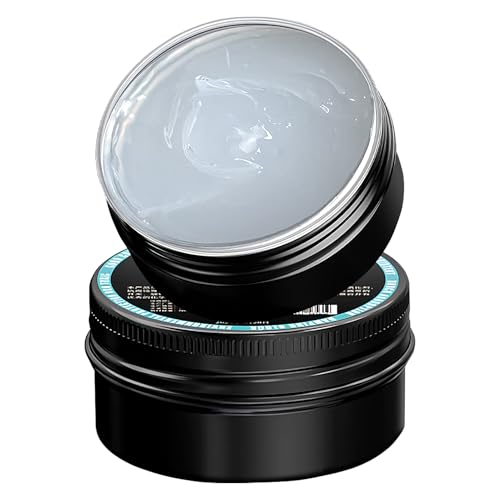
 Helimax-XP Camera Telescope Optical Instrument Focusing Helicoid Grease1 Ounce2 x 2 x 1 inches0.1 poundsCheck on Amazon
 MicroLubrol Helimax-XP Camera Telescope Optical Instrument Focusing Helicoid2 ounces0 poundsCheck on Amazon


What's inside
- Why an old lens feels the way it does
- What damping grease actually does inside a helicoid
- Grades, consistency and the NLGI scale
- What decades do to the original grease
- Grease is not oil, and oil is not grease
- Cleaning out the old grease
- How much grease, and how it is spread
- Temperature: why focus stiffens in winter
- Synthetic, lithium-soap and plastic compatibility
- Tools around the job
- Does this lens need grease, or a full service?
- Check prices on Amazon
- A short decision summary before you open anything
As an Amazon Associate I earn from qualifying purchases. This post may contain affiliate links at no extra cost to you.
Some links on this page are affiliate links, and the site may earn a commission if you buy through them, at no extra cost to you. Prices and availability change over time, so check the details again before you order.
Why an old lens feels the way it does
Turn the focus ring on a well-kept manual lens from the 1960s or 1970s and the motion tells you a great deal before you ever look through the viewfinder. The ring does not spin freely, it does not grind, and it does not stop and start in little jerks. It travels with a calm, even resistance, as if it were moving through something soft that pushes back just enough to keep your fingers honest. That feeling is not an accident of machining alone. The threads underneath were cut to close tolerances, certainly, but the character of the movement comes largely from a thin film of damping grease spread across those threads. Choose the right grease, apply it in the right amount, and an old helicoid recovers that composed motion. Choose badly, and the same beautifully made lens can feel loose, gritty, stiff in cold weather, or strangely vague at the exact point where focus should settle.
A helicoid is, in simple terms, a very wide, shallow screw thread. As you rotate the focus ring, mating helical threads translate rotation into a straight-line movement of the optical group toward or away from the film or sensor plane. Zoom rings on older push-pull and rotating zooms use related mechanisms, sometimes with straight slots and followers as well as threads. In every case there is metal sliding on metal over a surprisingly large surface area. Without lubrication those surfaces would wear, chatter and eventually gall. With ordinary thin oil they would feel slick for a week and then run almost dry, because oil migrates away from a broad, slow-moving thread. Damping grease exists to solve a specific problem: it stays where it is put, fills the microscopic clearance between threads, and resists movement in a controlled, predictable way.
That word damping matters. A lubricant for a bicycle chain is judged by how little friction it creates. A damping grease for a focus helicoid is judged partly by the friction it deliberately provides. Too little resistance and the ring overshoots, creeps under the weight of the lens when the camera points down, and gives the photographer no tactile sense of where focus is. Too much resistance and focusing becomes a two-handed effort that shakes the camera and discourages fine adjustment. The correct grade sits between those extremes, and finding it is the central decision in any renewing grease job. Readers who enjoy these mechanical cameras as complete systems often browse guides such as best 35 film cameras alongside lens servicing information, because a body in good order deserves optics that handle just as well.
What damping grease actually does inside a helicoid
Controlled resistance rather than slipperiness
Inside a focus helicoid, grease performs three jobs at once. First, it separates the thread flanks so that aluminium, brass or steel surfaces do not rub directly. Many classic lenses mix metals deliberately, pairing a brass thread with an aluminium barrel, for example, because dissimilar metals slide more kindly and resist seizure. Grease completes that partnership by cushioning the contact. Second, it fills clearance. Even a well-made helicoid has a small amount of play, and if that play is empty space the optical group can tilt or shift slightly as the ring changes direction. A grease film of the right consistency takes up that slack and keeps the movement centred. Third, it damps. The viscous drag of the grease is what your fingers read as smoothness and authority.
Backlash is the name for the dead movement you feel when you reverse direction and the ring turns a fraction before the optics begin to move the other way. Some backlash can come from worn threads or loose guide keys, and no grease will repair damaged metal. But a surprising amount of apparent backlash in an old lens is simply the result of grease that has dried, shrunk or migrated away, leaving the clearance empty. Fresh grease of an appropriate grade can reduce that lost motion noticeably, not by gluing anything together but by restoring the hydraulic-like cushion between the threads. If backlash remains severe after cleaning and correct lubrication, the honest conclusion is mechanical wear, and that points toward a fuller service rather than a thicker product applied in hope.
No creep, no slump, no surprises
Creep describes a focus ring that moves on its own. Photographers notice it most when shooting downward at a tabletop subject or upward at a ceiling detail: the ring slowly rotates under gravity and focus drifts. Heavy front groups make the problem worse, and some long lenses were known for it even when new, which is why a few designs added friction adjustments or focus locks. On a helicoid that originally held position, renewed creep usually signals grease that has become too thin, has separated into oil and filler, or was replaced at some earlier date with a general-purpose lubricant never intended for damping. A proper damping grease has a structure that resists this slow flow. It behaves almost like a very soft solid at rest, then shears smoothly once you apply deliberate torque.
That behaviour is sometimes described with the word thixotropy in lubricant literature, though for the camera owner the practical translation is simpler. At rest, the grease should stay put and hold the ring. In motion, it should yield evenly without stick-slip, the juddering pattern that makes fine focus feel notchy. Stick-slip often appears when grease has hardened into patches, so the ring alternately grips and releases as it crosses areas of different resistance. A uniform film of fresh grease removes those patches. The goal is not a ring that feels impressive in a shop for ten seconds; it is a ring that behaves identically at the near limit, in the middle of its travel and at infinity, in summer and in winter.
Grades, consistency and the NLGI scale
Reading a tub without guessing
The grade printed on the tub describes consistency, and consistency is not quite the same thing as oil viscosity. Grease is oil held in a thickener structure, often a metallic soap such as lithium soap, or a synthetic thickener system. The proportion and type of thickener determine how stiff the grease feels. The most widely used consistency scale comes from the National Lubricating Grease Institute, abbreviated NLGI, and it runs from 000, which is almost pourable, through 00, 0 and 1, up to 6, which is block-hard. Camera helicoid greases live at the soft end of everyday experience, but within the specialist damping greases sold for lenses the meaningful range is usually described by the maker’s own light, medium and heavy designations rather than by a bare NLGI number alone.
That distinction trips up many first-time buyers. Two greases can share a similar NLGI grade and feel quite different on a helicoid, because damping performance also depends on the base oil viscosity and on additives that increase tack or internal friction. Specialist suppliers therefore sell damping greases in numbered series, where each step up the series is noticeably firmer on the threads. Japanese hobby-tool makers are particularly associated with this approach, offering numbered grades so that a repairer can move one step lighter or heavier and predict the result. When a listing gives a series number, treat it as a relative position within that maker’s range, not as a universal measurement that transfers exactly to another brand.
Light, medium and heavy in practice
Light damping grease suits small, short-throw helicoids, delicate rangefinder focusing mounts and lenses whose rings were light in action from the factory. Many compact primes for rangefinder cameras fall into this group, as do the focusing mounts of smaller enlarging lenses that owners sometimes adapt. A light grade preserves the fingertip character of such lenses. Put a heavy grade in the same mount and the ring may become ponderous, with infinity focus feeling as though it sits behind a cushion. Medium grades are the workhorses. They suit the majority of single-lens reflex primes from the classic manual-focus era, standard zooms with rotating focus, and lenses of moderate diameter where the maker originally aimed for a firm, deliberate action.
Heavy grades earn their place on large-diameter helicoids, long telephotos with substantial moving groups, and zoom mechanisms where creep is a genuine risk. The larger the thread diameter, the more leverage your hand has and the more surface the grease must control, so a grade that feels perfect on a small standard lens can feel almost absent on a big telephoto. Heavy grease is also sometimes the right answer for a lens that will be used pointed down on a copy stand or for close-up work. It is not, however, a cure for worn threads, and using the heaviest tub in the catalogue to disguise mechanical looseness usually creates a lens that is both stiff and imprecise, the worst combination of all.
Matching grade to the lens in front of you
Repair technicians specify grade by considering thread diameter, thread pitch, the weight of the moving group, the length of travel and the climate in which the lens will be used. A coarse, multi-start helicoid that moves a heavy group through a long travel in a few degrees of rotation needs more damping than a fine thread that creeps a light group slowly. If you are choosing for the first time, the conservative method is to begin with the grade closest to what the original lubricant appears to have been, judging by any clean residue in protected areas, and then adjust only one step if the resulting action is clearly wrong. Changing two variables at once, grade and quantity, makes it impossible to learn which one produced the improvement or the problem.
It also helps to remember that focus and aperture rings do not want the same treatment. Aperture rings on many lenses run in a shallow groove with a click ball or spring detent, and their lubricant needs, where lubricant is specified at all, are lighter and quite different. Some aperture mechanisms are intended to run essentially dry. Treating every rotating part as though it were a focus helicoid is a common beginner error. The helicoid is the main event for damping grease; everything else in the lens needs its own judgement, and several internal parts, as later sections explain, must never see grease at all.
What decades do to the original grease
Drying and hardening
The grease packed into a lens at the factory was expected to last a long time, and in many lenses it has lasted remarkably well. Forty or fifty years, however, exceeds the design life of most lubricant formulations from that period. The lighter fractions of the base oil slowly evaporate or oxidise, the thickener structure tightens, and what began as a smooth, workable film becomes a waxy or even crumbly residue. Photographers describe the result as a stiff focus ring, a dry feeling, or a ring that moves in reluctant stages after standing unused. In advanced cases the helicoid can seize so firmly that forcing it risks twisting the whole optical assembly against its guide keys. Force is never the diagnostic tool here. A ring that will not move with reasonable pressure is telling you the lubricant has failed and the lens needs to be opened, not wrestled.
Hardened grease also loses its protective function. Instead of cushioning the threads it can hold abrasive particles in place, turning old dust and metal wear debris into a grinding compound. That is one reason a lens with a gritty ring should not simply be exercised repeatedly in the hope that it loosens up. Every rotation drags whatever is trapped in the residue across the thread flanks. Cleaning first, then lubrication, is the correct order, and it is also why a quick injection of solvent or oil through a gap in the barrel, a shortcut sometimes suggested in casual conversation, is a poor substitute. It may free the ring temporarily while leaving most of the contaminated material exactly where it can do harm.
Separation and migration
Grease can also fail by separating. A tub left for years sometimes shows a pool of clear oil on its surface, and the same process happens slowly inside a lens. The oil component bleeds out of the thickener and, being mobile, travels. Inside a lens, travelling oil has somewhere unfortunate to go: the aperture blades. Blades are thin, overlapping leaves of blued or blackened metal that must slide over one another instantly and completely as the diaphragm opens and closes. A trace of oil on them adds surface tension that makes them stick together. The symptoms are familiar to anyone who collects older lenses, a diaphragm that is slow to close, blades that hesitate when the camera fires, overexposure at small apertures because the blades had not finished travelling when the shutter opened, or a shiny wet look on blades that should appear matte and dry.
Migration explains why the quantity of grease matters as much as the grade. An overfilled helicoid gives surplus lubricant somewhere to escape every time temperature rises and the material expands or softens slightly. From the helicoid, excess can creep along shafts and barrel joints toward the aperture housing. Heat accelerates the journey, which is why a lens stored in a hot car or a sunlit attic can develop oily blades even if its focus still feels acceptable. The grease itself may not be defective; there was simply too much of it, too close to parts that must stay dry, in conditions that encouraged it to wander. Careful application, described later, is therefore not fussiness. It is contamination control.
Recognising the different failure smells and textures
Experienced repairers pay attention to what old grease looks and smells like when a lens is opened, because appearance hints at history. Original factory greases varied in colour, so colour alone proves little, but a residue that has turned greenish around brass, black and tarry in the thread roots, or pale and chalky on exposed edges is plainly past service. A sharp, rancid odour suggests oxidised oil. A residue that strings into threads when touched has often been mixed with a later lubricant by a previous owner. None of this requires laboratory analysis; it is observational evidence gathered while cleaning. What matters for the buyer of grease is the conclusion: once the original material has changed character, adding a fresh product on top of it does not restore anything. The old material must come out completely, or the new film will be contaminated and its behaviour unpredictable.
Grease is not oil, and oil is not grease
Why shutters and escapements take watch and clock oils
A camera contains mechanisms moving at utterly different speeds and loads, and lubrication follows those differences. The focus helicoid moves slowly, under moderate load, through large contact areas. A focal-plane shutter, a leaf shutter and its escapement move quickly, with tiny pivots, fine gears and pallet-like parts whose timing depends on minimal, consistent friction. Those parts are lubricated, where the maker specifies lubrication at all, with watch or clock oils: very light, carefully formulated oils applied in minute quantities to specific pivots and bearing points. Such oils are designed to stay in a tiny bearing by capillary action, to resist spreading, and to avoid gumming as they age, though even they eventually dry and require a proper service.
Putting grease into a shutter escapement would be like putting jam into a watch. The viscous drag would slow the timing train, blades would lag, and speeds would drift or fail outright. Conversely, putting watch oil onto a helicoid produces a ring that feels wonderfully light for a short period and then becomes loose and dry as the oil spreads and escapes. Each product is correct in its place and wrong in the other’s. This is also why combination products marketed as universal lubricants deserve scepticism in camera work. A mechanism built to tolerances measured in fractions of a millimetre does not benefit from a substance that claims to suit everything from a bicycle to a sewing machine.
Aperture blades must stay dry
If one rule deserves emphasis, it is this: aperture blades are not lubricated. They are cleaned and left dry. Their speed and reliability depend on metal sliding on metal with nothing sticky between the leaves. Owners sometimes see sluggish blades and reach instinctively for a lubricant, reasoning that anything slow must need oil. The reasoning inverts the actual cause. Sluggish blades are almost always slow because oil or grease residue is already present, gluing them together with surface tension, or because of corrosion or damage. The remedy is careful cleaning of each blade, traditionally with a suitable solvent on a swab or tissue, handled gently because blades bend easily and their pivot pins are small. Adding more lubricant to contaminated blades makes the fault worse and spreads contamination further into the diaphragm housing.
The same dry principle applies to some other sliding surfaces in lenses and cameras where the service literature specifies no lubricant, including certain shutter blade systems in leaf shutters. The broader lesson is that a renewing grease job is really a selective lubrication job. Knowing where grease belongs is inseparable from knowing where it must never go, and a lens treated with restraint will outlast one treated generously. Owners of older interchangeable-lens systems who are still deciding which bodies and lenses to keep can find useful context in roundups such as best affordable point and shoot film cameras for the simpler end of film photography, where fixed lenses spare owners most of these internal concerns entirely.
Other lubricants you may meet in service literature
Older service manuals occasionally mention molybdenum disulfide pastes, graphite-bearing products or specific branded oils and greases that are no longer sold under the same names. Moly pastes have legitimate uses on certain high-load sliding parts in some mechanisms, but they are dark, staining and entirely unsuited to helicoids near optics, and graphite can migrate as a dry powder. Modern equivalents are normally chosen by function: a damping grease for the helicoid, a specified light oil for designated pivots, a very light grease for certain gear trains in some bodies, and nothing at all for blades. If a manual names a discontinued product, the safe path is to match its documented function and consistency class, not to improvise with whatever is in a household drawer. Silicone sprays, general penetrating oils and automotive greases all have enthusiastic advocates in unrelated hobbies and all are poor guests inside a lens, because they spread uncontrollably, attack some paints and plastics, or dry into residues that are difficult to remove.
Cleaning out the old grease
Solvent practice with naphtha and lighter fluid
Before fresh grease can do its work, the helicoid must be genuinely clean. Repair practice has long used naphtha, sold in small tins as lighter fluid for wick lighters, as the everyday solvent for old camera grease. It dissolves the oil component of most aged lubricants, evaporates without leaving a deliberate residue, and is comparatively gentle on many metals and glasses when used in small amounts on swabs and tissues rather than as a bath. The usual method is patient rather than dramatic. With the helicoid separated or opened as far as the particular design allows, and with the position of the threads carefully marked before separation so the correct re-entry point can be found again, the worker wipes a section of thread with a tissue or swab dampened with solvent, rotates to the next section, and repeats, changing tissues frequently so dissolved grease is lifted away instead of being smeared around.
Marking thread entry deserves special stress because multi-start helicoids can be reassembled on the wrong start, leaving infinity focus unreachable or the focus scale misaligned. Photographing the assembly at each stage, marking mating points with a fine pencil line where appropriate, and noting the exact position at which threads disengage are habits that separate a controlled job from an afternoon of regret. Some helicoids should not be fully separated at all without knowing the reassembly procedure for that specific lens. Cleaning in place, working the solvent-dampened tissue into accessible thread sections and rotating the helicoid through its travel, is slower but sometimes wiser for designs whose alignment is notoriously unforgiving.
Ventilation, flammability and common sense
Naphtha and lighter fluid are flammable solvents, and the cautions are not decorative. Work away from pilot lights, gas hobs, soldering irons, cigarettes and any spark source. Use small quantities, keep the tin closed between applications, and ventilate the room so vapour does not accumulate; a gentle through-draught is enough for the modest amounts used on swabs. Do not work in a confined cupboard-like space, do not pour solvent into open bowls in large volume, and keep solvent-soaked tissues in a metal container with a lid until they can be disposed of safely according to local rules for flammable waste. Gloves protect skin from repeated defatting, and anyone who feels dizzy should stop and get fresh air. These are ordinary workshop disciplines, but they matter more in a kitchen-table setting, where distractions and ignition sources are both closer than in a dedicated bench room.
Solvent discipline also means keeping liquid away from places it can damage. Naphtha can soften some paints, printed lettering, cements and leatherette coverings, and it can creep under edge blackening on lens elements. Protect finished surfaces by working with dampened, not dripping, applicators, by masking or simply by keeping a dry tissue between the work area and any painted or covered surface, and by never flooding a lens in the hope that solvent will find the grease by itself. Flooding finds everything else too, including the aperture blades and the internal glass. If solvent reaches elements, it can leave drying marks that then require proper element cleaning, turning one job into three. Small amounts, applied precisely, refreshed often, will remove a surprising quantity of old grease over twenty patient minutes.
Getting the thread roots truly clean
Old grease hides in thread roots, the bottom of the helical groove, and a surface wipe can look clean while the roots still hold dark residue. Soft wooden picks, folded lens tissues and cotton swabs worked along the groove lift that residue without scoring metal. Metal picks and screwdriver blades have no place against thread flanks. Inspect under a bright lamp and, if available, a loupe: a clean thread shows an even metallic surface, while remaining grease shows as gloss or dark lines that follow the helix. Both mating threads need the same attention, as do the straight guide slots and keys that keep the helicoid from rotating incorrectly. Those guides also receive a very light share of the new lubricant in many designs, according to the maker’s practice, but only after they are equally clean.
Cleaning is also the moment to inspect for damage that grease cannot fix. Look for bright, galled patches where metal has torn, for flattened thread crests, for corrosion pitting on aluminium, and for grit embedded in the surface. A lens that has been used at beaches or in dusty environments may carry fine sand deep in the mechanism, and every grain must come out before new grease goes in, otherwise the fresh film simply suspends the abrasive. If the threads themselves are damaged, stop and reassess. Lubrication is maintenance, not metal repair, and proceeding regardless converts a serviceable lens into a wearing one.
How much grease, and how it is spread
Less than you think
Newcomers almost always apply too much. A helicoid needs a film, not a filling. The threads should carry an even, thin coating that fills the working clearance and no more; grease standing in ridges along the groove, squeezing out at the ends of travel, or visible as beads on the barrel joints is excess that will migrate. A useful mental image is butter on toast rather than icing on a cake, and even that overstates it. Many repairers apply with a small spatula, a wooden stick or a fingertip in a clean glove, placing a modest quantity at several points around the thread and then working the helicoid through its full travel repeatedly so the mating threads themselves spread the film evenly. The mechanism is the best applicator: rotation distributes grease along the helix far more uniformly than any attempt to paint every millimetre by hand.
After distribution, the ends of travel deserve inspection. Grease tends to accumulate where the thread run ends, pushed ahead of the mating part like snow before a plough. Wipe away that accumulation, rotate again, and repeat until no new ridge forms. Check also any nearby surfaces the grease could reach, including the rear of the helicoid nearest the aperture housing. This cycling and wiping stage is where restraint pays for itself years later in clean blades. If the action then feels too light, the answer may be a firmer grade rather than a larger quantity. Adding more of a too-light grease increases migration risk without adding much useful damping, because the surplus simply squeezes out of the loaded zone.
Reading the action after application
Judge the result with the lens at room temperature, mounted or held as it would be in use, and work the ring slowly from minimum focus to infinity and back several times. The resistance should be consistent, with no tight spots that suggest a thread problem or a lump of old material missed in cleaning, and no loose sector that suggests uneven coverage. Focus should hold when the lens points up and down. The ring should start moving without a jerk and stop without rebound. If a tight spot repeats at the same position, suspect debris or damage at that point rather than adding lubricant. If the whole travel feels uniformly heavy, the grade is too firm or the film too thick; if uniformly light, the grade is too soft. Distinguishing those two causes is why changing one variable at a time matters.
On zoom mechanisms, work both the zoom and focus actions through their ranges, because some designs share lubricant zones and a film that suits one motion can affect the other. Push-pull zooms should slide with control and stay where they are left, within the limits of their original design. A zoom that originally crept slightly when new should not be condemned for doing so after service, which is why knowing the model’s reputation helps set expectations. Period reviews, service notes and owners’ documentation all contribute to a picture of what correct felt like when the lens left the factory. The aim of renewing grease is to restore that character, not to invent a new one that merely feels impressive on the bench.
Temperature: why focus stiffens in winter
The physics in plain terms
Every grease becomes firmer as temperature falls and softer as temperature rises, because the viscosity of its base oil changes with temperature. A helicoid greased with a heavy grade that felt authoritative on a mild autumn afternoon can become stubborn on a frosty morning, demanding enough torque that fine focus is effectively impossible and the photographer risks straining the mechanism by forcing it. The reverse happens in heat: a light grade chosen for a cold climate can thin enough in a summer car boot to allow creep and to encourage migration toward the blades. Temperature behaviour is therefore not a footnote to grade selection. For photographers who actually take old lenses outdoors in all seasons, it may be the most important property on the tub.
Lubricant makers describe resistance to viscosity change with the concept of viscosity index: a higher index means the base oil changes less across a temperature range. Synthetic base oils generally offer a wider useful temperature range than conventional mineral oils, holding a more consistent feel from cold mornings to warm afternoons. That consistency is a major reason modern synthetic damping greases have become the default recommendation for lenses that will travel. A lens that lives on a shelf and is used indoors for scanning or tabletop work can tolerate a narrower range. A lens that goes up a hill in January cannot.
Choosing for the climate you shoot in
Start from the coldest conditions in which you realistically expect to focus the lens, because cold stiffness is the failure that stops work entirely, whereas slight summer lightness is usually manageable. If you shoot winter landscapes with a manual telephoto, favour a grade one step lighter than the room-temperature feel alone would suggest, preferably in a synthetic formulation with a stated wide temperature range. If your photography is mostly warm-climate travel, a medium grade that resists creep in heat matters more. Photographers in continental climates with hard winters and hot summers have the hardest brief and the strongest case for modern synthetics, accepting that no single fill will feel identical at both extremes.
There is also a storage lesson here. Repeated cycling between a freezing car and a heated house stresses old grease and encourages the separation and migration described earlier, as well as condensation on optics. Lenses live longer in stable, moderate conditions. If an old lens comes in from the cold with a stiff ring, let it warm gradually to room temperature before judging its lubricant; a helicoid that recovers its normal action as it warms is demonstrating temperature behaviour, not necessarily failure. One that remains stiff when warm has hardened grease and needs attention. Learning to distinguish those two states saves unnecessary openings of healthy lenses, and every unnecessary opening carries its own small risks of dust, lost screws and disturbed alignment.
Synthetic, lithium-soap and plastic compatibility
What the thickener does
Most traditional greases use a lithium soap thickener, a structure of lithium stearate fibres holding mineral oil in a sponge-like matrix. Lithium greases are well understood, widely available and entirely serviceable on metal helicoids, which is why they dominated general lubrication for decades. Their limitations in camera work are the limitations of their base oil: a narrower temperature range and, in older formulations, a greater tendency over long periods to separate or oxidise. None of that makes a lithium-soap damping grease wrong for a metal lens used in mild conditions. It does mean the buyer should check that the specific product is formulated as a damping grease for fine mechanisms, rather than assuming any lithium grease from an automotive shelf belongs in a helicoid. Automotive products are made for bearings under loads and speeds a lens never sees, often with additives a lens never wants.
Synthetic damping greases use synthetic base oils, commonly polyalphaolefin or similar engineered fluids, with thickener systems chosen for stability. Their advantages in this application are a wider temperature range, good resistance to oxidation over long service intervals, and low tendency to creep or stain. For a lens the owner intends to keep and use for another twenty years, those properties justify the modest extra effort of sourcing a specialist product. Synthetics also tend to be cleaner to work with, holding their consistency in the tub rather than pooling oil on the surface during storage, provided the tub is kept sealed and cool.
Plastics, polycarbonate and caution
Later vintage lenses, and many autofocus-era designs that are now becoming collectible, contain plastic thread sections, nylon followers, polycarbonate barrels and rubberised coatings. Some mineral oils and solvents can swell, craze or soften certain plastics, and a grease that is perfectly safe on a brass helicoid from 1965 may be unkind to a plastic helicoid from 1988. Compatibility statements on specialist products exist for this reason. Where a maker states suitability for plastics, that statement reflects testing against common engineering polymers; where no statement exists, caution and a small compatibility check on a hidden area are wiser than optimism. The same caution applies to rubber focus grips and aperture rings, which certain oils can swell or make tacky.
Painted and anodised surfaces deserve a mention too. The grease itself rarely harms them, but aggressive solvents used in cleaning can dull anodising or lift enamel-filled engravings if allowed to pool. Working cleanly, with minimal solvent and no soaking of external parts, protects the cosmetics that contribute much of a classic lens’s value. Collectors care about originality, and a lens whose engravings have been bleached by careless solvent use has lost something no lubricant can restore. Readers drawn to older optics for photography rather than pure mechanics will also enjoy the broader film-camera coverage in best analog instant film cameras, a reminder that not every vintage experience requires opening a barrel with a spanner.
Storage of the grease itself
A tub of damping grease is a small investment that should last through many lenses, but only if stored sensibly. Keep the lid sealed against dust, because a single grain of grit transferred to a helicoid defeats the purpose of the exercise. Store it cool and out of sunlight, level so oil cannot pool against the lid, and always take grease from the tub with a clean spatula rather than a finger that has just handled solvent or old lubricant. Note the grade on the lid if you own several, since similar-looking tubs invite mistakes. If a grease has sat for years and shows heavy oil separation or a dried skin, stir or discard according to the maker’s guidance rather than trusting it inside a valuable lens.
Tools around the job
Spanners, cones and holding the work
Most lenses are opened by unscrewing retaining rings and name rings that carry two small slots or holes for a lens spanner, an adjustable tool with interchangeable tips that engages those slots. A proper spanner, adjusted so its tips sit fully and squarely in the slots, turns a ring without drama. Improvised tools, dividers, needle pliers or the ends of scissors, slip, chew the slots and can skate across a front element. The cost of a basic spanner set is small compared with the value of the lenses it protects, and it belongs in any kit assembled for this work. Rubber friction cones and ring tools serve the related job of gripping smooth name rings and filter rings that have no slots, using friction alone to unscrew them without marking the finish. A set in several sizes covers most barrels.
Holding the lens securely matters as much as turning the ring. A small bench vice with padded jaws, or purpose-made lens vice blocks lined with cork or leather, keeps a barrel from rotating while both hands manage the spanner. Bare metal vice jaws will scar a barrel in a second. Work on a clean, pale surface, ideally a tray with a raised edge, so screws and shims stay visible and cannot roll away. Screws in old lenses are small, varied and sometimes subtly different in length between adjacent holes; laying them out in order on a piece of card, in the pattern in which they were removed, prevents the classic error of driving a long screw into a shallow hole and damaging a thread or an internal part.
Cleaning materials and small consumables
Lens tissues, cotton swabs, wooden picks, a blower and a soft brush form the cleaning side of the kit. Use tissues and swabs once and discard them; a swab loaded with dissolved grease redeposits it elsewhere. A blower removes loose dust before wet cleaning begins, so grit is not dragged across surfaces. Jeweller’s screwdrivers in correct sizes, not a single worn driver forced into every slot, protect screw heads. A loupe or magnifier helps inspect threads and blades. Keep a notebook or phone camera running as a disassembly record. Photographs taken before each part is removed are the cheapest insurance in the whole process, documenting cable routes in bodies, shim positions under mounts, and the orientation of elements and spacers in lenses.
Shims deserve their own warning. Many lenses contain thin metal or paper shims that set flange distance, element spacing or focus calibration. They look like scrap and are easily swept away with used tissues. Every shim must be kept with its assembly, in order, and replaced exactly. Losing a shim can shift infinity focus or degrade an element group’s spacing in ways the owner then misdiagnoses as a grease problem. Similarly, note any factory paint seals on screws; breaking them is sometimes unavoidable, but their presence tells you whether a lens has been opened before, useful history when assessing its condition.
Does this lens need grease, or a full service?
Symptoms that point to lubricant alone
A lens is a candidate for cleaning and renewing grease as its main treatment when the optics are clean, the aperture blades are dry and snap correctly, the mount is sound, and the only faults are in the feel of the focus or zoom action: stiffness, dryness, uneven resistance, mild creep or a gritty sensation. Check the aperture first by moving the ring through its range and watching the blades form a clean, even polygon that opens and closes without hesitation. Check the glass against a bright light for fungus, haze and separation, problems that grease will not touch. Check infinity focus on the camera if possible. If everything else behaves and only the helicoid feels tired, fresh damping grease addresses the actual fault.
Grit is the symptom that most changes the timetable. A gritty ring should be cleaned promptly and the lens not used in the meantime, because continued rotation grinds the threads. Stiffness without grit is less urgent but still progressive; hardened grease does not improve with age. Mild creep in a heavy zoom may be a design characteristic, so compare against period descriptions before condemning the lubricant. The discipline is to diagnose before opening: write down what the lens does wrong, what it does right, and what evidence links the fault to the helicoid. That short note, made before any screw is turned, prevents the common drift in which a lens opened for one reason accumulates speculative repairs in three other areas.
Symptoms that point beyond grease
Oily or sluggish aperture blades mean the job already includes a diaphragm strip and blade cleaning, a step up in difficulty that involves many small, easily bent parts. Fungus inside elements requires element separation and cleaning, with its own risks to coatings and cemented groups. Haze from deteriorated element cement or balsam separation is optical repair, not maintenance. A loose optical group, a wobbling barrel, damaged threads, a bent mount or focus that disagrees with the scale after correct assembly all indicate mechanical or calibration work. On camera bodies, shutter speeds that wander, light seals turned to crumbs and meter faults belong to a body service, often called a CLA, for clean, lubricate and adjust, in which the whole instrument is cleaned, specified points are lubricated correctly, and speeds, meters and focus are adjusted against standards.
The term CLA is sometimes used loosely for any attention at all, which muddies decisions. A true service is systematic: seals replaced, mechanisms cleaned, correct lubricants in correct places in correct quantities, and performance measured afterwards. Renewing grease a helicoid is one component that may form part of such a service or stand alone when the rest of the lens genuinely needs nothing. Being clear about which situation you are in keeps expectations honest. Fresh grease will not make shutter speeds accurate, will not remove fungus, and will not straighten a dropped lens, and pretending otherwise wastes the effort the grease job itself deserved.
Valuable lenses and the honest recommendation
There is a point at which do-it-yourself enthusiasm should yield to arithmetic and respect for rarity. Lenses that are valuable, uncommon, or optically complex, with floating elements, many groups, or helicoids whose reassembly procedure is undocumented, carry a risk profile very different from a common standard prime of which thousands survive. On a common lens, a careful first attempt is a reasonable education and the downside is limited. On a rare fast telephoto or an early collectible in original condition, a slipped spanner, a lost shim or a helicoid reassembled on the wrong thread start can destroy value and performance in an afternoon. Professional repairers also bring parts access, collimation equipment and experience of the exact model that no general guide can transfer.
Choosing a professional CLA for such a lens is not an admission of defeat; it is the recommendation this guide would give its own readers for their best glass, and it is the same judgement technicians themselves make when they send specialist work to colleagues. Ask what the service includes, whether aperture blades will be cleaned dry, what lubricant class will be used on the helicoid, and whether focus will be checked after assembly. A good repairer answers those questions plainly. Meanwhile, build skill on inexpensive, plentiful lenses, keep notes on grades and quantities that worked, and let the collection’s crown jewels benefit from that experience indirectly. Enthusiasts planning field use for serviced classics, perhaps for wildlife with long manual glass, will find complementary buying context in best birding cameras and lens, where handling and focus feel matter just as much as headline specifications.
Check prices on Amazon
Live listings for the shortlist in this guide are pulled from Amazon below, so prices and availability are always current at the moment you look.


A short decision summary before you open anything
Work through the decision in order. Confirm the fault is in the helicoid’s feel and not in the blades, glass or mount. Identify the lens’s size, moving weight and intended climate, and select a damping grade one careful step at a time, favouring synthetic formulations for wide temperature use and checking plastic compatibility on later designs. Plan the cleaning before the lubricating: solvent in small amounts, ventilation, no ignition sources, protection for paint and leatherette, marks and photographs before any thread is separated. Apply a thin film, let the threads distribute it, wipe the surplus at the ends of travel, and judge the action at room temperature for evenness and hold. If at any stage the evidence points to damage, contamination of the diaphragm, optical faults or a lens whose value punishes mistakes, stop and route it to a professional service instead.
Done well, renewing grease is among the most satisfying maintenance jobs in classic photography, because the improvement is literally in your hands every time you focus. The lens does not merely work again; it recovers the measured, deliberate handling its makers intended, and it will keep that character for years if the grease was chosen with its climate in mind and applied with restraint. Keep the tub sealed, keep your notes with the lens’s record, and resist the urge to open a healthy helicoid out of curiosity. The next time a frosty morning, a downward tabletop shot and a long landscape session all pass with the ring behaving identically, you will know the quiet film of grease inside is doing precisely the job its grade promised on the day you chose it.
Related guides
- Best Barn Cameras: 4G LTE, Long-Range Wi-Fi and Hub Systems Compared
- Best 400 FPS High Speed Cameras: The Honest Truth About Burst Slow Motion
- Best Airbnb Security Cameras: Compliant Outdoor Cameras and Noise Sensors for Hosts
- Best 1080p IP Cameras: PoE Domes, Turrets, Bullets and a PTZ That Earn Their Cable


