Our Top Picks

What's inside
- The anatomy of a NATO strap, piece by piece
- Three ring NATO against five ring Zulu hardware
- The two millimetre question: height under the case
- Lug widths of 18, 20 and 22 millimetres
- Ordinary nylon against seatbelt nylon
- Field watches of 38 to 40 millimetres: the natural partners
- Measuring a wrist and dealing with excess strap
- Spring bars: the small parts doing the serious work
- Washing, drying and storing nylon straps
- Colour, stripes and coordinating with the dial
- Buying checklist for a watch and NATO combination
- The military specification behind the civilian favourite
- Pass through straps beyond the field watch
- Value, longevity and the economics of a fabric strap
- Fitting a NATO correctly, step by step
- Check prices on Amazon
- Smaller wrists, shorter straps and the proportions problem
As an Amazon Associate I earn from qualifying purchases. This post may contain affiliate links at no extra cost to you.
A watch sold on a NATO strap arrives with its character already decided in a way that a watch on a bracelet never quite does. The single strip of woven nylon passing beneath the case, doubling back through its keepers and carrying stripes or regimental colours announces a field heritage before the dial is even read. Yet beneath that relaxed appearance sits a surprisingly technical accessory, with its own dimensions, hardware traditions and failure points. Choosing well means understanding how the strap is built, how much height it adds under a case, and how its width, weave and hardware interact with the watch head it carries.
This guide treats the combination as a system rather than a watch with an afterthought attached. It covers the anatomy of the NATO design, the difference between a three ring layout and a five ring Zulu arrangement, the roughly two millimetres of extra height the pass under the case creates, lug widths of 18, 20 and 22 millimetres, the contrast between ordinary woven nylon and denser seatbelt style webbing, and the practical arts of measuring a wrist, trimming excess length, changing spring bars and washing a strap that has absorbed a summer of sweat. Specifications quoted throughout come from manufacturer data sheets and strap makers’ published dimension drawings.
How this guide is funded deserves a plain statement in its own right, separate from any recommendation below. As an Amazon Associate we earn from qualifying purchases. Readers should treat that disclosure as background information about the publication, not as a reason to favour one weave, width or hardware finish over another, because every measurement and construction detail in the following sections can be verified against the dimension charts that strap manufacturers publish for their own products.
The appeal of the pairing is easy to state. A NATO strap is inexpensive to replace, washes clean, dries quickly, adds colour without touching the watch itself and keeps the watch on the wrist even if one spring bar fails. That last property explains its military origin and still matters to anyone who wears a watch while swimming, climbing or working around machinery. The sections below unpack each of those claims carefully, including the trade offs that marketing photographs tend to hide, such as added case height and the bulk of folded excess strap on a smaller wrist.
Readers who also wear connected watches during the week may find our overview at best affordable round android smartwatches useful for contrasting how a sealed modern case handles strap changes compared with the open lug architecture discussed here.
The anatomy of a NATO strap, piece by piece
A classic NATO strap is a single continuous strip of nylon webbing, typically about 280 millimetres long and roughly 1.2 millimetres thick, though both figures vary by maker. The strip threads down through one spring bar, passes flat beneath the watch case, rises through the opposite spring bar and returns along the wrist. That under case pass is the defining feature of the design. It means the watch head rides on a layer of fabric rather than against skin, and it means the head stays captive on the strap even when a spring bar bends or pops free, sliding only as far as the remaining bar allows.
Attached to the main strip, usually by stitching or ultrasonic welding a short distance from one end, sits a shorter secondary loop. This loop forms the keeper section that gives the NATO its second layer of security. After the strap passes under the case, its loose end threads through the rings of this secondary piece, which holds the watch head in a chosen position along the strap and prevents it migrating toward the buckle during activity. Two piece straps that merely resemble the style lack this secondary loop entirely, and the distinction matters to buyers who want the genuine security behaviour rather than only the appearance.
The holes along the tail are heat sealed during manufacture, a detail worth examining on any strap under consideration. Molten sealing fuses the woven filaments around each punched hole so the edges resist fraying under the repeated pressure of the buckle pin. A strap with cleanly sealed, evenly spaced holes, commonly a dozen or more along the adjustment range, will age gracefully. Ragged holes with loose filaments signal hurried finishing, and those holes stretch into ovals within months, coarsening the fit adjustment and eventually tearing toward the strap edge.
Hardware completes the anatomy. A buckle closes the strap, fixed keepers near the buckle manage the tail, and on the secondary loop a pair of rings receives the returning strap. Hardware arrives in polished, brushed, blasted and black coated finishes, in stainless steel or occasionally brass. The better makers weld or machine their rings with rounded profiles that slide against nylon without sawing at it. Sharp stamped edges on cheap hardware act like a dull blade across thousands of wrist movements, and the resulting fray along the strap’s centre line is a recognised failure pattern that buyers can inspect for in product photographs.
Three ring NATO against five ring Zulu hardware
The naming of ring counts confuses newcomers because makers count differently, yet the underlying distinction is simple. A conventional NATO arrangement uses slimmer, often rectangular or squared rings, with one buckle and the keeper rings on the secondary loop, and its overall hardware impression is neat and relatively flat. A Zulu arrangement uses heavier, rounded rings, typically three or five depending on whether the secondary loop carries one ring or two, and those rings are thicker in cross section with a more pronounced curve. Zulu hardware reads as rugged and slightly industrial beside the tidier NATO profile.
The practical differences follow from ring shape and mass. Rounded Zulu rings let a thick strap glide and fold more willingly, which suits heavy duty webbing and larger watches. Their bulk, however, adds visible metal at the sides of the wrist and can catch on cuffs or kit. Squared NATO rings sit flatter and dress more discreetly, suiting the 38 to 40 millimetre field watches that dominate this category. Neither system is stronger in any meaningful sense for ordinary wear, because the nylon itself usually outlasts both, so the choice resolves to strap thickness, watch size and taste.
One functional nuance deserves attention: the secondary loop’s rings determine how the folded tail behaves. On a correctly sized NATO the tail tucks back through the keepers and lies flat, sometimes folded outward over the keeper for the distinctive layered look associated with the style. Zulu rings give that fold more room and hold a thick tail without strain. On a small wrist wearing a long strap, the fold can stack three layers of nylon plus hardware on top of the wrist, a comfort question that links hardware choice directly to the sizing discussion later in this guide.
The two millimetre question: height under the case
Every NATO fitting adds the strap’s thickness beneath the watch, because the webbing passes between case back and wrist. With typical webbing around 1.2 millimetres thick and the secondary loop adding its own layer in places, the effective lift is commonly described as roughly two millimetres once fabric compression and the loop geometry settle on the wrist. A field watch specified at 11 millimetres thick therefore wears closer to 13 millimetres on a NATO, and a watch that began at 13 can feel like a 15 millimetre piece, with consequences for cuff clearance and for how top heavy the head feels during activity.
That lift also changes the watch’s centre of gravity relative to the spring bars. On a two piece strap the case sits low and its weight presses straight down into the wrist. On a NATO the head floats on fabric and can rock slightly fore and aft, especially if the strap is worn loose. Wearing the strap a hole tighter than usual usually cures the wobble, because the fabric tension pulls the case down into a stable cradle. Buyers who dislike any movement should test this on first fitting rather than concluding the combination is wrong for them.
Clearance between case back and spring bars decides whether a given strap can be fitted at all. The webbing must slide through the gap between each spring bar and the case edge, and on watches with bars seated very close to the case, thick seatbelt webbing may refuse the passage or may fit only with force that damages the weave. Manufacturers of straps publish their thickness, and watch makers sometimes publish lug diagrams, so buyers should check both numbers where a watch is known for tight clearances. Curved spring bars, which bow gently away from the case, exist precisely to buy extra room for this fitting.
Skin contact changes as well. The fabric layer keeps a metal case back off the wrist, which some wearers with nickel sensitivity value highly, and it spreads pressure across a wider, softer footprint. In hot weather the nylon can feel warmer than a bare case back for the first minutes of wear, then cooler as it wicks moisture outward. These small sensations accumulate over a working day, and they explain why some owners convert entirely to pass through straps while others return to two piece designs after a single summer.
Lug widths of 18, 20 and 22 millimetres
Lug width, the distance between the inner faces of the lugs where the spring bars sit, governs which straps fit which watches, and this category concentrates on three sizes. Field watches of 36 to 38 millimetres often carry 18 millimetre lugs. The broad middle ground of 38 to 40 millimetre cases usually takes 20 millimetres, the most widely stocked width in the entire strap market. Larger field and pilot styles of 42 millimetres and above commonly move to 22 millimetres. Manufacturers specify lug width in their dimension tables, and buyers should check that figure rather than measuring a fitted strap, which may have been squeezed or stretched into place.
Proportion matters as much as fit. A strap narrower than the lug width rattles sideways on its bars and exposes the bar ends, while a wider strap forced between lugs bunches, distorts its weave and can lever against the bars under strain. The correct width slides in with light finger pressure and sits without lateral play. Because nylon compresses slightly, a strap sold as 20 millimetres may measure a shade under, which is normal and desirable; a strap measuring over its stated width is the one to return.
Owners of watches with odd widths such as 19 or 21 millimetres face a narrower menu. A 20 millimetre nylon strap can sometimes be coaxed into 19 millimetre lugs because the fabric yields, and many wearers do exactly this, accepting slight bunching at the edges. The reverse, stretching an undersized strap, never works. Where a watch in this guide ships with its NATO included, the maker’s chosen width is by definition correct, and replacement shopping should begin from that known figure rather than from the case diameter printed in headlines.
Taper, or its absence, shapes the final look. NATO straps hold a constant width from lug to tail, unlike leather straps that narrow toward the buckle. That straight profile suits the utilitarian character and keeps the folded tail the same width as the keepers that must swallow it. On very slim wrists the constant width can look assertive, which many wearers enjoy as part of the style’s identity. Those seeking a quieter profile sometimes choose two piece nylon instead, trading away the under case security for a tapered silhouette.
Ordinary nylon against seatbelt nylon
The standard NATO weave is a plain, relatively open weave with a matte surface and a slightly coarse hand feel. It is light, dries fast after washing or swimming, and breaks in quickly, softening noticeably over the first weeks of wear. Its edges are usually heat cut and sometimes stitched. For a field watch that will be worn hard and washed often, ordinary nylon remains an entirely rational choice, and its lower replacement cost encourages owners to treat straps as consumables, swapping colours freely and retiring tired examples without regret.
Seatbelt nylon borrows its weave from automotive webbing: a much denser, finer weave with a subtle sheen and a smooth, almost silky surface. It drapes more fluidly, resists the fuzzy abrasion that plain weave develops along its edges, and presents stripes with crisper definition because the tighter ground weave holds dye boundaries sharply. The trade offs are thickness and drying time. Seatbelt webbing is commonly a little thicker, which returns the discussion to spring bar clearance, and its density holds water longer after a swim or a wash.
Between those poles sit ballistic and ribbed weaves marketed under various names. Ballistic nylon offers a coarse, highly abrasion resistant surface suited to tool watches, while ribbed straps add longitudinal ridges that stiffen the webbing and create a distinctive shadow pattern. What unites all of them is the base polymer: nylon absorbs a small percentage of water, stretches marginally when wet and returns as it dries. Owners who notice a watch feeling loose at the pool and snug an hour later are feeling that property, not imagining it, and the correct response is to use one hole tighter for swimming rather than forcing the dry fit.
Colourfastness separates careful dye work from cheap production. Dark stripes printed onto a light ground can bleed during the first wash on poorly made straps, while solution dyed or properly fixed yarns hold their boundaries. A new strap of unknown quality deserves a first wash alone, in cool water, before it spends a sweaty week against a pale shirt cuff. Makers who publish their dye and finishing processes generally have little to hide on this front, and the price difference between a strap that bleeds and one that does not is small compared with a ruined shirt.
Field watches of 38 to 40 millimetres: the natural partners
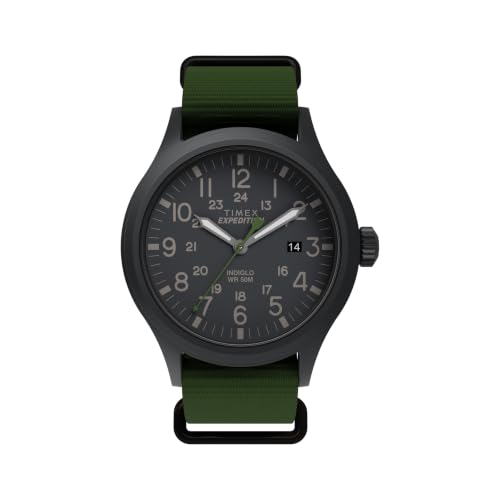
The field watch and the NATO strap evolved in the same military ecosystem, and their dimensions still suit each other. A 38 millimetre case with 20 millimetre lugs, a thickness near 11 millimetres and a matte dial of Arabic numerals sits on nylon exactly as its ancestors sat on the fabric straps issued with them. At 40 millimetres the pairing gains presence without losing the cuff friendliness that makes the combination a daily proposition. Beyond 42 millimetres the watch begins to dominate the strap visually, and the look shifts from issued kit toward fashion statement, which some buyers want and others should recognise before ordering.
Dial design interacts with strap colour more than case size does. A black dial with white numerals tolerates almost any stripe combination, while a cream or full lume dial narrows the palette toward earth tones and navy. Green dials reward olive and khaki straps and punish bright primaries. These are judgements of proportion and contrast rather than rules, and the low cost of spare straps encourages experiment: a second strap in a bolder scheme effectively gives the same watch a weekend personality distinct from its weekday one.
Weight distribution completes the pairing logic. Field watches in this size range usually carry slim cases and modest water resistance hardware, keeping the head light enough that the fabric cradle never feels strained. A heavy diver style head on a NATO can feel pendulous by comparison, because the strap lacks the rigid connection that a bracelet provides. Buyers combining a substantial watch with nylon for the first time should wear the pairing around the house for an evening before committing to a full day, since the sensation divides opinion sharply.
For a sense of how dial legibility is judged on the connected side of the market, the models gathered at best android smartwatches looks make an instructive contrast with the stark numeral layouts that field watches favour.
Measuring a wrist and dealing with excess strap
Strap length labels assume a fitting method, so measuring the wrist itself is the reliable starting point. Wrap a flexible tape or a strip of paper around the wrist exactly where the watch sits, usually just behind the wrist bone, and note the circumference without pulling tight. Wrists between roughly 15 and 18 centimetres suit standard 280 millimetre straps comfortably. Smaller wrists should look for short length versions around 260 millimetres where offered, and larger wrists for extended lengths near 300 millimetres, because the folded tail, not the buckle reach, is what runs out first.
The tail management ritual defines the NATO silhouette. After buckling, the excess length passes up through the fixed keepers and is commonly folded back on itself so the end points toward the watch, creating the layered stack photographed in most product imagery. Worn this way the tail cannot flap, catch or work loose. Alternatively the tail can be trimmed for a clean single layer finish. Trimming is permanent, so it should happen only after several days of wear have confirmed the ideal hole, and never on a strap that might be returned or resold.
Trimming technique is simple but unforgiving of haste. Mark the cut line with the strap on the wrist, allowing enough length beyond the second keeper for a secure grip, then cut with sharp scissors following a curve that mirrors the factory end shape. The fresh cut must be sealed immediately by passing the edge briefly near a flame until the filaments fuse, keeping the nylon moving so it melts rather than scorches. A sealed, slightly glossy edge confirms success. An unsealed edge will fray within days, undoing the neatness the trim was meant to create.
Hole position deserves the same patience. The ideal buckle hole places the watch centred on the wrist with the tail fold sitting flat. Because nylon relaxes slightly over its first weeks, a strap that begins on the fourth hole may settle to the fifth, which argues for leaving one hole of adjustment in reserve when trimming. Owners between holes can add a fresh hole with a heated pin or a proper punch, sealing it as the factory holes are sealed, though this is best practised on a retired strap before being attempted on a favourite.
Spring bars: the small parts doing the serious work
A NATO strap’s security story depends entirely on two spring bars, the telescoping steel pins that anchor everything to the case. A standard bar compresses at both ends, seating its tips into holes drilled inside the lugs. Shouldered bars add a small flange that a tool can grip, while shoulderless bars, common on watches with drilled lug holes, are pushed out from outside the lug with a pin. Fat bars of greater diameter serve heavy tool watches and resist bending under loads that would bow a standard bar into release.
Changing a NATO strap itself needs no tools at all, because the webbing simply unthreads from beneath the bars. Changing the bars is the operation that deserves care. A spring bar tool with a forked end catches the bar’s shoulder and compresses it clear of the lug, work best done over a soft surface with the watch face down, because a released bar travels surprisingly far. Masking tape over the lug tops prevents the tool from engraving scratches during the inevitable slips. Owners who rotate straps weekly rarely touch the bars, which is precisely the wear saving the design intends.
Bar condition should be inspected whenever a watch changes hands or returns from service. A bar whose spring action feels gritty or weak, or whose tube shows a bend, is a failure waiting for an energetic moment. Replacements cost very little and are specified by lug width and diameter, both of which manufacturers specify for their cases. Fitting a fresh pair of quality bars to a newly acquired watch is among the cheapest forms of insurance in the hobby, and it pairs naturally with the NATO design, whose whole purpose is to forgive the day a bar eventually gives way.
One caution belongs here: the under case pass protects against a single bar failure, not against both bars failing together, and not against the strap itself being cut or unbuckled. It converts the most common accident, one popped bar during a knock or a caught sleeve, from a dropped and possibly smashed watch into a watch dangling from the wrist by its remaining bar. That is a large and genuine safety margin, and it is the reason outdoor instructors and military issue programmes adopted the pattern, but it should be understood as mitigation rather than invincibility.
Washing, drying and storing nylon straps
Nylon straps absorb the evidence of wear: sweat salts, sunscreen, dust and the faint odour that any fabric worn against skin eventually develops. The remedy is refreshingly low technology. Remove the strap from the watch, place it in a bowl of warm water with a drop of mild detergent, agitate it gently and let it soak for fifteen minutes before rinsing thoroughly. A soft brush along the weave lifts ground in dirt around the holes and keepers. Manufacturers of straps consistently recommend hand washing over machine cycles, which can batter hardware against a drum and fade colours unevenly.
Drying should be patient and indirect. Nylon dries quickly compared with leather or canvas, usually within a few hours at room temperature, but direct heat from radiators or hair dryers can distort the weave and dull the heat sealed edges. Lay the strap flat or hang it by the buckle away from strong sunlight, which over months will fade dyes, particularly reds. A strap put away still damp in a closed box will develop a musty smell that later washes struggle to shift, so dry storage is not pedantry but prevention.
Rotation extends life more than any product can. Owners with two or three straps per watch, worn in rotation, give each example days to dry fully and recover its shape between outings, and the set outlasts a single strap worn daily by a wide margin. Storage is undemanding: rolled loosely or laid flat in a drawer, away from solvents and away from the plasticisers in some vinyl pouches that can mark pale nylon. Because replacement cost is low, the sensible strategy is abundance rather than preservation, keeping a rotation that includes one strap reserved for water and rough work.
Hardware needs a glance during washing. Rinse grit from the buckle frame, check that keeper rings still slide freely and confirm no ring edge has raised a burr that could saw the webbing. Black coated hardware will eventually show bright metal at its contact points; that wear is cosmetic and widely accepted as part of the style’s patina. A buckle pin that has bent should be straightened or the strap retired, since a pin under side load can slip from its hole during exactly the activity the strap is trusted for.
Colour, stripes and coordinating with the dial
The stripe patterns carry history. Regimental colours migrated from British military units into civilian straps, and the most famous combinations, such as the dark blue and red associated with a certain fictional spy’s undersized strap in a 1964 film, remain best sellers decades later. That film example also taught an enduring lesson in proportion, because the strap on screen was narrower than the lugs and showed spring bar at both sides, a look now deliberately copied by some and regarded as a fitting error by others. Knowing the reference helps a buyer decide which camp they occupy.
Coordination works on three levels: the dial ground, the dial markings and the hardware finish. A black dial with white print accepts stripes that pick up any secondary colour on the dial, such as a red tipped seconds hand or orange minute track. A strap whose stripe repeats that accent at low volume looks considered rather than matched. Hardware should echo the case: polished rings beside a polished case, brushed beside brushed, black coated beside a coated case. Mismatched hardware is the detail most likely to make an otherwise handsome combination look assembled by accident.
Solid colours deserve equal respect. An olive drab, a charcoal or a plain navy strap often serves a field watch better than stripes, particularly when the dial itself carries colour. The plain strap also crosses dress codes more easily, looking acceptable beneath a shirt cuff in settings where regimental stripes read as weekend wear. Many experienced owners settle on a quiet solid strap as the default and keep one striped example for contrast, an arrangement that mirrors how the original military straps were issued: one working strap, with colour reserved for the units that had earned their pattern.
Seasonal rotation is the final pleasure of the format. Pale khaki and sand straps lighten a watch for summer and show dust honestly, while dark greens and browns settle into winter clothing. Because swapping takes under a minute and needs no tools, the same watch can follow those shifts without any commitment. Readers planning a similar rotation for a connected watch will find the sizing logic transfers, and our guide at best all around smartwatches covers the broader everyday category those pieces belong to.
Buying checklist for a watch and NATO combination
Confirm the fundamentals in order. Lug width first, from the maker’s dimension table. Case thickness second, with the mental addition of roughly two millimetres for the strap’s pass beneath the case. Spring bar clearance third, especially where seatbelt nylon is planned for a case with tight bar seating. Strap length fourth, matched to a measured wrist circumference rather than a guess. Each of these figures is published or measurable, and together they predict fit more reliably than any photograph of the watch on someone else’s wrist.
Inspect construction quality with the tests scattered through this guide. Holes should be heat sealed and evenly spaced. Stitching or welds on the secondary loop should be straight and complete. Hardware edges should feel smooth under a fingertip dragged along the ring interiors. The weave should show no loose filaments at the tail, and stripes should meet the strap edges cleanly without dye bleeding across boundaries. A strap failing two or more of those checks will not improve with wear, and returning it immediately is the correct response.
Consider the ownership pattern honestly. A buyer who swims daily should weight drying speed and keep a rotation of at least two straps. A buyer in formal settings should weight hardware discretion and solid colours. A buyer choosing a first field watch gains most from the classic formula: 38 to 40 millimetre case, 20 millimetre lugs, plain weave strap in a regimental stripe, with a solid colour spare in the drawer. That formula has satisfied several generations of wearers, and its endurance is evidence rather than inertia.
Finally, keep expectations proportionate to the format’s virtues. A NATO strap will not make a watch more accurate, more water resistant or more valuable. What it does is simpler and, for many owners, more important: it makes the watch comfortable, colourful, washable and unusually hard to lose, while connecting it visibly to a practical tradition that valued function over ornament. Those qualities explain why a strip of nylon designed for issue kit now appears on wrists far from any barracks, and why the combinations gathered in this guide continue to look right long after louder styles have dated.
The military specification behind the civilian favourite
The design descends from a British Ministry of Defence specification of the early nineteen seventies, when service watches were issued on a grey nylon strap defined by a defence standard rather than by fashion. The issued pattern fixed the essentials that civilian versions still follow: a single length of heat weldable nylon, a secondary loop to retain the watch head, hardware in a muted finish and a width matched to the issued watches’ lugs. Soldiers valued the strap because it dried after river crossings, survived laundering with kit and could be cut or replaced in the field without tools beyond a knife and a flame to seal the end.
Civilian production widened every parameter the specification had held narrow. Colours multiplied from grey into regimental stripes and seasonal palettes, widths expanded to cover the whole lug range of modern watches, and hardware finishes grew decorative. That expansion explains the uneven quality in the current market: the pattern is public and simple to copy superficially, while the details that made the original durable, sealed holes, sound welds, smooth hardware, are exactly the details a hurried copy omits. The checklist earlier in this guide is essentially the original specification translated into shopping language.
The name itself is a small historical accident. The strap’s association with the alliance comes through stock numbers and quartermaster catalogues rather than through any single nation’s design bureau, and collectors of issued equipment distinguish carefully between the original grey pattern and the striped civilian descendants. None of that scholarship is required to enjoy the strap, yet it explains the design’s stubborn consistency across fifty years: a pattern standardised for logistics changes slowly, because every change must justify itself against warehouses of existing stock and decades of habit.
Pass through straps beyond the field watch
Although the field watch is the natural partner, the pass through format flatters other categories when proportions are respected. A slim dress watch on a plain, dark NATO in seatbelt weave can look deliberately relaxed rather than mismatched, provided the strap’s thickness does not lift the case into awkwardness and the hardware finish matches the case metal. The combination works best with simple dials and stick markers, where the fabric’s informality reads as a considered contrast. Ornate dials with applied gold numerals tend to fight the strap’s utility character, and the pairing collapses into costume.
Dive watches present the opposite extreme. Their cases are thicker, their bezels wider and their owners genuinely use the security argument, because a watch lost overboard is lost completely. A NATO under a dive case adds its two millimetres to an already tall profile, and the long tail echoes the extension systems that let dive watches fit over wetsuit sleeves. Many divers wear the strap precisely for that margin, accepting the bulk as the price of retention. The strap should be rinsed after salt water without exception, since salt crystals stiffen nylon and abrade its weave from inside the folds.
Chronographs sit between those poles. A slim quartz chronograph on nylon looks sporting and coherent, while a thick automatic chronograph can feel like a puck balanced on fabric, rocking at each wrist movement. The deciding factor is rarely diameter; it is the ratio of case height to lug span. A tall case with long lugs spreads its weight across the strap and settles, while a tall case with short lugs concentrates everything above the fabric cradle. Buyers mixing categories should apply that ratio test before blaming the strap for a pairing that geometry doomed from the start.
Troubleshooting the fittings that disappoint
Most NATO disappointments trace back to a short list of correctable causes. A watch that slides around the wrist usually needs the head repositioned along the strap so the secondary loop grips it centrally, or one hole more of tension. A tail that will not stay folded usually means the strap is too long for the wrist, and trimming or a shorter length solves what repeated refolding cannot. Hardware that digs into the wrist’s underside can often be rotated a few millimetres by shifting the whole fitting before buckling, moving the buckle away from the bone that it troubles.
Fraying has its own diagnostics. Damage concentrated at one point along the strap’s length points to a burr on the hardware or case edge that contacts that exact spot, and smoothing or replacing the offending part saves the next strap as well. Even fuzz across the whole surface is ordinary age, accelerated by Velcro cuffs and jacket linings that hook the weave thousands of times. A strap retired for fuzz still serves for rough work, which is why experienced owners demote rather than discard, keeping a hierarchy from best to beaten that mirrors their clothing.
Fit also changes with the seasons in ways that surprise new owners. Wrists swell measurably in heat and during exercise, and nylon’s slight give accommodates only part of that change. A strap fitted perfectly in a cool shop may feel strict on a summer afternoon, which argues for choosing the hole that leaves one step of looseness available rather than the tightest comfortable setting. The abundance of holes on a NATO, often a dozen or more, exists for exactly this micro adjustment, and using different holes across a single day is normal practice rather than evidence of a sizing mistake.
Value, longevity and the economics of a fabric strap
The economics of the format are unlike anything else in watch ownership. A quality NATO costs a small fraction of the watch it carries, lasts years under rotation and can be replaced in a minute without tools or a workshop visit. Compare that with a proprietary bracelet, whose replacement may require ordering through a brand’s service network, or a fitted leather strap shaped to one case only. The NATO’s universality, any strap of the right width fits any watch with standard lugs, means money spent on a good strap is never stranded when the watch collection changes around it.
That universality also makes the strap the cheapest route to understanding personal taste. A new enthusiast unsure whether they prefer military restraint or striped exuberance can test both personalities on one watch for less than the cost of a single leather strap, and the knowledge transfers to every later purchase. Sellers of watches understand this, which is why so many field watches now ship on NATO straps from the factory: the maker delivers two looks in the box when a spare strap is included, and the buyer begins the rotation habit from the first day.
Longevity claims should still be kept honest. Nylon is a consumable on a long fuse, not a permanent component. Ultraviolet light weakens it slowly, abrasion thins it locally and the holes nearest the daily setting will oval after years of pin pressure. A strap examined against the light that shows thin patches at the fold points should be retired from any duty where its security is the argument for wearing it. Keeping one fresh strap in reserve costs little and preserves the safety story that justifies the whole design.
Owners who alternate between fabric and the electronic side of a collection will recognise the same value logic at work in replaceable connected straps, and the entry level options surveyed at best affordable android smartwatches show how widely that idea now extends.
Fitting a NATO correctly, step by step
The fitting sequence takes under a minute once learned, and doing it in the right order prevents the two common muddles: a watch head sitting off centre and a secondary loop left doing nothing. Begin with the watch off the wrist and the strap laid flat. Thread the long end down behind the first spring bar, across the case back and up behind the second bar, so the webbing lies flat against the case back without twists. A twist introduced at this stage will print through as a ridge under the case for the whole wearing, so flattening the pass now is worth the seconds it takes.
Next, slide the head along the strap until the secondary loop, the short sewn section carrying the extra rings, sits positioned to receive the returning strap. Draw the long end through those rings and pull the head snug into its pocket. The head should resist sliding when tugged gently, held by the loop’s geometry rather than by wrist tension alone. If the head travels freely, the loop is either bypassed or the strap has been threaded in the wrong direction, and starting again beats compensating later with an overtight buckle.
Only now does the wrist enter the process. Wrap the strap, set the buckle pin into the chosen hole and assess three things in order: the head centred on top of the wrist, the buckle centred underneath or slightly toward the thumb side according to preference, and the tail length remaining for the keepers. Feed the tail through the fixed keepers and fold it back on itself if length allows, tucking the end neatly so no corner stands proud to catch on a cuff. The finished fitting should allow a fingertip beneath the strap at the wrist’s side, the traditional gauge of correct tension for fabric straps.
Refitting after washing deserves its own note because damp nylon behaves differently. A strap put back on while still slightly damp will stretch a fraction as it dries on the wrist and may end a hole looser than intended. The patient sequence is to let the strap dry fully, refit using the familiar hole and then confirm the tail fold after an hour of wear. Owners who rotate straps sidestep the issue entirely, fitting a dry strap while the washed one rests, which is one more argument for owning at least two examples per watch.
Check prices on Amazon
Live listings for the shortlist in this guide are pulled from Amazon below, so prices and availability are always current at the moment you look.


XSNE Digital Watch Sports Waterproof Military Back Light Small Watch for Men Black 1426


Smaller wrists, shorter straps and the proportions problem
The standard 280 millimetre length was settled for adult wrists of average size wearing issue watches, and it serves smaller wrists poorly when used uncritically. On a wrist of 14 or 15 centimetres the tail left after buckling can exceed the keeper capacity, producing a fold so bulky that it dominates the watch it was meant to serve. The market’s answer is the short length strap, typically 260 millimetres and occasionally less, which restores the intended proportions: a modest fold, keepers that sit flat and a buckle that lands where it should rather than migrating toward the case.
Width interacts with wrist size as strongly as length. A 22 millimetre strap on a small wrist under a 36 millimetre case overwhelms the pairing, while the same wrist carrying a 38 millimetre case on an 18 or 20 millimetre strap looks composed. Because lug width is fixed by the watch, the lever available to the buyer is case selection itself: shoppers with smaller wrists who love this style should filter first for cases between 36 and 39 millimetres with 18 or 20 millimetre lugs, and only then choose colours. That order of decisions prevents the common purchase of a handsome watch that no strap can civilise.
Children and teenagers entering the hobby through field watches benefit from the same logic in miniature, with the added advantage that nylon tolerates playground abrasion and washes clean after it. A short strap trimmed carefully to a young wrist, with the cut sealed as described earlier, gives a secure fit that grows by one hole at a time. The security argument carries extra weight here, because a watch that survives a popped spring bar on a climbing frame is a watch that comes home, and parents replacing lost watches understand the arithmetic immediately.
Travel, sport and the strap as a system component
Travellers prize the format for reasons beyond security. A single watch on a NATO crosses time zones without the metal detector attention a heavy bracelet draws, packs flat when removed and can be rinsed in a hotel sink after a dusty day of sightseeing. Carrying two spare straps adds negligible weight to a bag yet changes the watch’s appearance enough to cover both casual days and a smarter evening, reducing the temptation to travel with a second watch. That packing logic mirrors the original military virtue: one issued watch, adapted by fabric rather than by duplication.
For sport the calculus centres on water and impact. Swimmers gain the retention margin already discussed, plus a strap that does not trap water against the skin the way a solid rubber band can. Runners gain a fit that can be loosened one hole as hands swell late in a long run, without tools and without stopping. Cyclists gain a low profile under gloves and cuffs, with no bracelet links to rattle against a handlebar. In each case the strap is not an accessory trailing the watch’s capabilities but a component completing them, which is the correct way to evaluate any combination gathered in this guide.
What included straps reveal about a maker’s intent
When a watch ships on a NATO from the factory, the included strap’s quality is a small audit of the maker’s priorities. A brand that specifies seatbelt weave, welded keepers and signed hardware for its included strap is signalling that the strap belongs to the product rather than to the packaging budget. A brand that bundles a thin, roughly finished strap with an otherwise excellent watch is telling the buyer, perhaps unintentionally, to budget for an immediate replacement. Neither signal decides a purchase alone, yet both deserve weight because the strap is the component the owner touches most often.
The included strap also fixes the reference proportions against which replacements should be judged. Its length, measured end to end and noted before any trimming, tells the owner which aftermarket length to order. Its thickness, compared against the clearance at the spring bars, defines how much denser a weave the case will accept. Keeping the original strap untrimmed in a drawer preserves those references and provides a guaranteed fallback if a fashionable replacement disappoints, a small discipline that experienced collectors apply to bracelets and leather alike.
Gift purchases follow from all of this. A field watch on a NATO makes an unusually forgiving present, because the strap’s dozen holes forgive an unknown wrist size, its colours forgive uncertain taste better than a fixed bracelet finish does, and its replaceability forgives the possibility that the recipient prefers a different pattern entirely. The giver who adds a second strap in a contrasting scheme doubles the forgiveness at trivial cost, and the recipient gains the rotation habit from the first week rather than discovering it years later.
One last habit separates owners who enjoy this format for decades from those who drift away from it: they treat the first week with any new strap as a calibration period rather than a verdict. The weave softens, the fold learns its shape, the preferred hole declares itself across hot afternoons and cool mornings, and the hardware settles into the position it will keep. Judged on day one, a good strap can feel stiff and unfamiliar; judged on day seven, the same strap often feels inevitable. Giving the pairing that week costs nothing and prevents the premature returns that fill discount bins with perfectly serviceable nylon.
Somewhere between the second keeper and the folded tail, a striped length of nylon turns an ordinary field watch into a small daily ceremony of threading, folding and fastening that no clasp has ever quite managed to replace.


