Our Top Picks


What's inside
- How an RV signal booster actually works
- Reading signal conditions before choosing hardware
- Exterior antennas: OTR, omnidirectional and Yagi compared
- Band coverage and carrier independence
- FCC rules, registration and responsible operation
- Powering a booster from a twelve-volt RV system
- Vehicle construction: aluminium skin, fibreglass and steel
- Separation, oscillation and the geometry of a stable install
- Installation planning, cable routing and weatherproofing
- Matching booster classes to travel styles
- Troubleshooting weak results after installation
- Seasonal, terrain and weather considerations
- Comparing total system cost without chasing headline numbers
- Safety, driving and etiquette on the road
- A structured buying checklist
- Maintenance across seasons of travel
- Frequently asked questions from RV owners
- Worked scenarios: reading the road before spending
- What specification sheets reveal and conceal
- Antenna height, grounding and long-term reliability
- Final decision framework for hesitant buyers
- Check prices on Amazon
- Disclosure and how this guide is funded
As an Amazon Associate I earn from qualifying purchases. This post may contain affiliate links at no extra cost to you.
A recreational vehicle changes the cellular problem in ways a house never does. The serving tower may sit two miles away across open water one week and twenty miles beyond a forested ridge the next, while the vehicle itself, particularly a metal-skinned trailer, attenuates the very signal its occupants need for maps, work calls, hotspot data and campground check-ins. A cell phone extender for RV use, more formally a consumer signal booster, does not create coverage where none exists. It captures an existing outdoor signal, amplifies it within strict regulatory limits, and rebroadcasts a stronger local copy inside a limited area so phones and cellular routers stop hunting, dropping and draining their batteries at maximum transmit power.
That distinction matters before any shopping begins. Manufacturer specification sheets describe gain, uplink power and supported bands under controlled conditions, and published measurements from drive surveys consistently show the same pattern: a booster helps most when a weak but usable outdoor signal already exists, helps moderately when the signal fluctuates at the edge of usability, and helps not at all in a genuine dead zone with no detectable carrier energy. Readers planning routes through mountain basins, desert flats or shielded coastal inlets should therefore treat a booster as one layer in a connectivity plan that also includes carrier choice, antenna height and realistic expectations about data throughput at fringe distances.
How an RV signal booster actually works
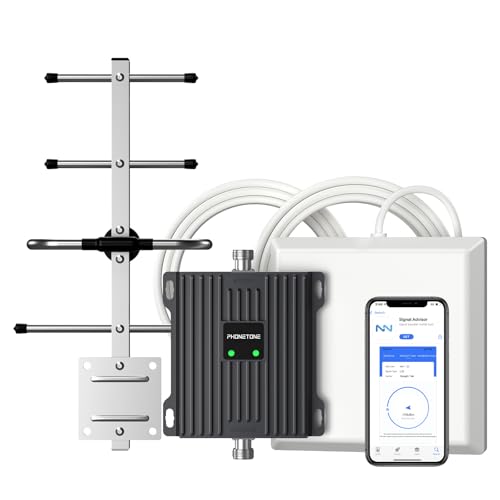
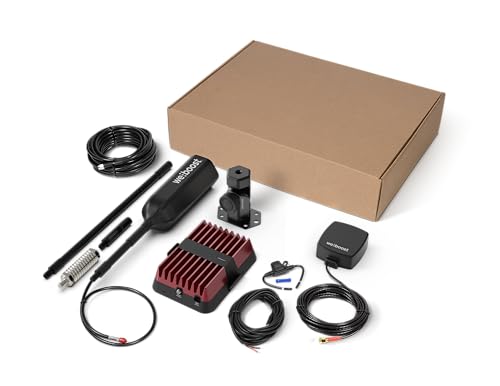
Every consumer booster system follows the same three-part architecture. An exterior donor antenna, mounted as high as practical on the vehicle, receives the downlink signal from the nearest compatible tower and delivers it through coaxial cable to an amplifier unit. The amplifier raises the signal level by a specified amount of gain, expressed in decibels, while its automatic gain control continuously trims that boost to stay inside regulatory and stability limits. A second antenna inside the living space then rebroadcasts the amplified downlink to nearby handsets, while the reverse path carries each phone uplink signal back through the amplifier and out through the donor antenna toward the tower.
Gain figures deserve careful reading because headline numbers hide two separate realities. Downlink gain describes how much the incoming tower signal is raised before rebroadcast, whereas uplink gain and uplink output power determine whether a phone buried inside a vehicle can be heard back at a distant site, which is often the true limiting direction on rural routes. A system quoting generous downlink gain but modest uplink power may make signal bars look reassuring while calls still break up, because the tower receives too little energy from the handset side of the conversation. Balanced specification sheets list both directions, per band, and that per-band detail is where meaningful comparison begins.
Noise figure, rarely printed in large type, quietly shapes fringe performance. Each amplifier adds a small amount of electrical noise to the signal it processes, and a lower noise figure preserves more of the faint original information when the outdoor level is already close to the receiver threshold. Two boosters with identical gain can behave differently at a lakeside site at dusk precisely because one preserves a cleaner copy of a marginal signal. Published laboratory measurements treat noise figure as a first-order specification for exactly this reason, and shoppers comparing otherwise similar kits should give it weight.
Automatic gain control and oscillation detection form the safety core of modern designs. When the donor antenna sits too close to the interior antenna, amplified output can leak back into the input and the system begins feeding on itself, a condition engineers call oscillation or feedback. Certified boosters monitor for that condition and reduce gain or shut down the affected band rather than radiating interference. Indicator lamps on the amplifier housing report those events, and understanding what each colour and blink pattern means turns a confusing roadside fault into a straightforward antenna-spacing correction.
Reading signal conditions before choosing hardware
Phones report signal in two dialects that are often confused. The familiar bar graph is a manufacturer interpretation with no standard mapping, while the numeric reading in decibel-milliwatts, available through field-test screens on many handsets, states received power directly. A reading near minus fifty decibel-milliwatts indicates a strong local signal, values around minus ninety describe workable mid-range conditions, and readings approaching minus one hundred and twenty mark the fringe where connections become fragile. Recording that numeric value outside the vehicle, then inside with doors closed, quantifies exactly how much the shell and glazing are costing before any money moves.
Signal quality matters alongside raw strength. A reference signal received quality figure, or a signal-to-interference-plus-noise ratio where the handset exposes it, reveals whether a seemingly strong reading is clean or polluted by neighbouring cells on the same channel. Boosters amplify interference along with the desired carrier, so a site with strong but dirty signal may show little data improvement even as bars climb. That is why experienced travellers relocate the vehicle a short distance, raise the antenna, or aim a directional antenna at a cleaner sector before blaming the amplifier, and why this guide treats site survey habits as part of the equipment decision itself.
Because campgrounds concentrate many vehicles into small areas, evening congestion adds another variable that no amplifier can remove. When hundreds of subscribers share one rural sector, throughput falls even with excellent radio conditions, and a booster that transforms a morning video call may appear ineffective during the holiday weekend peak. Separating radio problems from capacity problems saves needless hardware swaps: if voice stays clear while data slows at predictable hours, the bottleneck sits in the network, not between the handset and the tower.
Exterior antennas: OTR, omnidirectional and Yagi compared
The tall whip supplied with many over-the-road style kits borrows its design from trucking, where a spring base, a ground-plane-independent radiator and a mast that clears the cab roof serve vehicles in constant motion. On an RV, that format suits travellers who relocate frequently, drive long highway days and want a fit-and-forget installation that survives low branches and fuel-station canopies. Its omnidirectional pattern gathers signal from whichever direction the nearest tower happens to lie, which removes aiming chores at each new stop but also gathers interference from every other direction with equal enthusiasm.
Omnidirectional antennas divide further into short roof-mounted whips, magnetic designs intended for steel panels, and taller mast-mounted collinear arrays with greater vertical reach. Gain in this family is modest by design, because spreading sensitivity across the full horizon trades peak strength for convenience. On a fibreglass coach roof there is no steel surface for a magnetic base and often no conductive ground plane at all, so the mounting hardware and any required ground-plane kit become part of the purchase rather than an afterthought discovered on a ladder.
A Yagi-Uda antenna takes the opposite bargain. Its boom carries a driven element, a reflector and a row of directors that concentrate sensitivity into a forward lobe, delivering substantially higher gain toward one chosen tower while rejecting signals arriving from the sides and rear. That directivity rewards campers who stay put for a week or a season, who can identify the bearing of a serving site from coverage maps or a slow rotation survey, and who accept that re-aiming becomes part of setting up camp. In fringe valleys where a single distant sector provides the only service, a correctly aimed Yagi on a telescoping pole routinely outperforms any whip, sometimes by a margin that decides whether a connection exists at all.
Stationary aiming has its own discipline. Small angular errors matter because the forward lobe narrows as gain rises, so rotating the boom in small steps while watching the numeric signal reading, then pausing at each step for the handset to re-register, produces a more honest peak than sweeping quickly and chasing a lagging display. Polarisation adds a second adjustment: most terrestrial cellular sites transmit with slant or vertical polarisation depending on band and operator practice, and rotating the antenna ninety degrees occasionally recovers several decibels that no amplifier setting can supply.
Hybrid routines suit many full-time travellers best. The whip handles transit days, overnight rest stops and urban campgrounds where signals arrive from several directions, while a packed Yagi and collapsible mast come out for extended rural stays. Some amplifiers accept only one donor input, so swapping antennas means a deliberate connector change at the amplifier or at a bulkhead feed-through, performed with power removed and connectors kept clean and dry. Planning that swap into the installation, with labelled cables and a weatherproof entry point, prevents the hybrid idea from collapsing into a tangle of improvised wiring.
Band coverage and carrier independence
North American consumer boosters are expected to be carrier-agnostic within the bands they amplify, passing whichever operator signals occupy those frequencies rather than locking to a single network. The low bands carry the long-distance burden: band twelve and band seventeen overlap in the seven-hundred-megahertz range used widely for rural reach, band thirteen serves a different major operator in adjacent spectrum, and band five covers the older eight-hundred-fifty-megahertz allocations still valuable in many regions. Because wavelengths at these frequencies are long, they diffract around terrain and penetrate foliage better than higher bands, which is precisely why fringe RV coverage so often depends on them.
Mid-band support decides capacity and speed once a solid low-band link exists. Band two in the nineteen-hundred-megahertz range, band four and its extended sibling band sixty-six in the AWS allocations, and related mid-band channels carry much of the data load in towns and along highways. A booster that amplifies only low bands may stabilise voice and messaging yet leave data crawling, while a five-band design keeps more of the handset carrier-aggregation combinations alive inside the vehicle. Shoppers should match the band list on the specification sheet against the bands their own carrier actually deploys in the regions they tour, using operator coverage documentation rather than assumptions.
Two cautions follow from that matching exercise. First, no consumer booster in this class amplifies the newest mid-band five-G spectrum in the three-gigahertz range or any millimetre-wave allocation, so marketing language about five-G readiness usually means the device passes certain low and mid bands that a carrier also uses for five-G service in its non-standalone configuration. Second, bands differ across borders: a kit configured for United States allocations does not automatically suit Canadian or Mexican deployments, and cross-border travellers should confirm both the frequency list and the certification regime of the destination country before relying on the same hardware abroad.
Inside the amplifier, each band is handled by its own chain with independent gain control, which explains a behaviour that puzzles new owners. The unit may reduce boost on a strong nearby band to prevent overload while continuing to amplify a weak distant band at full gain, so a single status lamp rarely tells the whole story. Better housings provide per-band indicators, and better documentation explains how the chains interact when, for example, a powerful band-two signal from a town tower coexists with a faint band-twelve signal from a rural site in the opposite direction.
FCC rules, registration and responsible operation
In the United States, consumer signal boosters operate under Federal Communications Commission rules that require devices to meet a network protection standard, carry proper certification labelling and be used with the antennas and cables supplied or approved for the kit. Purchasers must obtain consent from their carrier, a condition the major operators grant broadly for certified consumer devices, and must register the booster with that carrier before operation. Registration is normally a short online form recording the owner, the device details and the location of use, and keeping a copy of the confirmation with vehicle documents is a sensible habit for a machine that changes address every week.
The rules also assign the operator a duty to switch the device off if it causes harmful interference and the carrier or the Commission directs it. Modern certified designs minimise that risk with automatic oscillation shutdown, uplink inactivity timers that quiet the amplifier when no handset is active, and limits on antenna gain and radiated power. Buying an uncertified amplifier through informal channels bypasses all of those protections at once, and the apparent saving purchases legal exposure plus a real chance of degrading service for everyone sharing the same sector, including the purchaser when a neighbour returns the favour with an equally careless installation.
Labels matter during resale and inspection. The certification identifier on the amplifier housing ties the unit to its grant of authorisation, and documentation should travel with the booster when an RV changes hands so the next owner can register it correctly. Travellers who install a booster as part of a larger roof project should photograph the label before the unit disappears behind cabinetry, because reaching that information later can otherwise mean dismantling trim for a string of characters.
Powering a booster from a twelve-volt RV system
Most RV-oriented kits offer a twelve-volt direct-current supply option alongside a mains adapter, and the vehicle supply brings both convenience and electrical homework. A hardwired feed taken from the house battery through a correctly rated fuse keeps the booster alive away from shore power, while a plug-in lead into an auxiliary socket suits renters and anyone unwilling to disturb factory wiring. Either route should respect the amplifier current draw printed on its rating plate, the voltage drop along long thin cable runs, and the reality that a booster left energised during storage becomes one more parasitic load flattening a battery that also feeds alarms and control boards.
Voltage behaviour on recreational vehicles is less tidy than the nominal twelve volts suggests. Converters push absorption voltages well above thirteen, solar controllers sweep through charging stages, and lithium house banks rest at higher levels than flooded batteries, so the booster supply input range deserves a glance before hardwiring. Quality kits tolerate that spread; marginal power supplies may run hot or reset when a charger changes stage. A dedicated switch, clearly labelled, lets occupants silence the system when a campground provides strong native signal, when troubleshooting interference, or when conserving battery during a dry-camping stretch.
Cable quality on the radio-frequency side deserves the same respect as the power feed. Every metre of coaxial cable between donor antenna and amplifier consumes signal before amplification, and thin, lossy cable at the higher bands can surrender several decibels that the antenna worked hard to gather. Low-loss cable types specified in kit documentation exist for a reason, as do the connector families that terminate them: fifty-ohm systems using N, SMA or F-type interfaces are not interchangeable without adapters, and each adapter adds loss and a potential water entry point. Keeping runs short, bends gentle and exterior joints sealed with proper weatherproofing tape preserves the link budget the specification sheet promised.
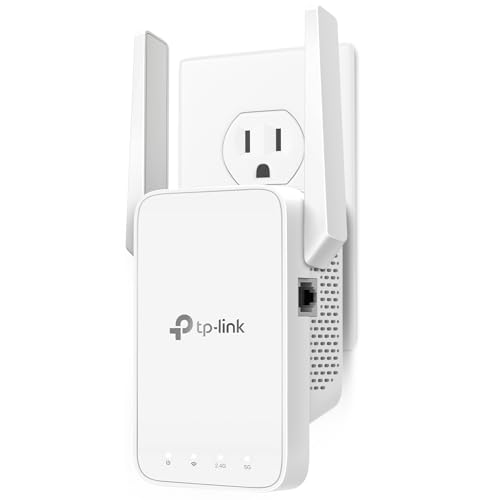
For broader context on how range extenders for data networks differ from cellular amplifiers, the discussion collected under best 4g network extenders clarifies why a device that repeats a mobile broadband signal follows different rules from one that rebroadcasts a local wireless network, and why confusing the two categories leads shoppers toward hardware that cannot solve a tower-distance problem.
Vehicle construction: aluminium skin, fibreglass and steel
A polished aluminium travel trailer behaves, from the radio point of view, remarkably like a perforated metal enclosure. The shell reflects and absorbs cellular energy, windows and roof vents leak a portion of the signal inside, and occupants often notice calls surviving near glazing while failing at a dinette surrounded by metal cabinetry. In such vehicles the interior rebroadcast antenna does the heavy lifting, because the booster bypasses the shell entirely: signal travels by cable through a sealed entry gland instead of fighting through the skin. Placement of that interior antenna near the main seating and sleeping areas, away from large metal appliances, converts the enclosure problem into a manageable coverage pattern.
Fibreglass and composite coaches sit at the other end of the scale. Their panels pass radio energy more readily, though foil-backed insulation, metallised window films and dense internal wiring can still carve dead pockets into particular corners. Owners of these vehicles sometimes find a booster unnecessary in suburbs yet valuable in the same fringe locations that trouble everyone else, and the donor antenna may perform well at lower mounting heights because the roof structure interferes less. Slide-out rooms complicate both construction types: an interior antenna positioned for a retracted room may sit behind a refrigerator once the slide extends, so checking coverage in the configuration actually used at camp is the only reliable survey method.
Interior antenna style interacts with construction as well. Panel antennas radiate in a directed pattern and suit mounting on a wall or ceiling aimed across a living space, while low-profile dome and whip styles spread energy more evenly over a smaller radius. Coverage claims quoted in square footage assume favourable layouts and collapse quickly in long narrow floor plans divided by bathrooms and wardrobes, which is why large coaches sometimes employ a splitter and a second interior antenna where the amplifier manufacturer supports that arrangement, accepting the signal division loss in exchange for even distribution.
Separation, oscillation and the geometry of a stable install
Isolation between the two antennas is the single installation variable most likely to decide success or disappointment. Isolation grows with physical distance, with shielding placed between the antennas, and with antenna patterns that point energy away from each other. A metal roof is an ally here, forming a barrier when the donor antenna sits above it and the interior antenna hangs below the ceiling line. Vertical separation on a mast helps installations on composite roofs that offer little shielding, and horizontal distance along the vehicle length adds further margin on long coaches and fifth-wheel trailers.
Kit manuals translate isolation into minimum separation guidance, often expressed as a combination of vertical and horizontal distance, and those figures should be treated as starting points rather than guarantees. The amplifier announces insufficient isolation by reducing gain, lighting a warning indicator or cycling a band off and on, and the remedy is almost always geometry: raise the donor antenna, move the interior antenna farther from the roof edge, or rotate a panel antenna so its null faces upward. Adding amplifier gain to overpower feedback achieves the opposite of stability, because feedback grows with gain until the protection circuits intervene again.
Commissioning a fresh installation benefits from a methodical sequence. Start with the interior antenna in its planned position and the donor antenna at its lowest intended height, power the system, and read the indicators after the unit settles. Raise or relocate one antenna at a time, waiting between changes, until every band reports normal operation at full automatic gain. Then walk the living space with a handset in numeric signal mode, noting corners where the boosted field fades, and adjust the interior antenna aim before drilling any permanent holes. That patient hour prevents the common outcome of beautifully routed cables serving antennas in positions the radio environment refuses to accept.
Installation planning, cable routing and weatherproofing
Roof work on a recreational vehicle carries consequences beyond radio performance. Every penetration must respect the roofing membrane or metal skin system of that specific builder, use compatible sealants, and land where interior access exists for the cable run. Existing entry points, refrigerator vents, solar cable glands and factory antenna conduits often provide routes that avoid new holes altogether. Where a new gland is unavoidable, positioning it above a cabinet or wardrobe hides the interior cable drop and keeps the run away from occupants, curtains and slide mechanisms that move.
Exterior cable deserves ultraviolet-resistant jacketing, strain relief at the antenna base and drip loops that stop water tracking along the sheath toward the entry point. Connectors assembled outdoors should be tightened to the manufacturer torque guidance where given, then wrapped with self-amalgamating tape and an outer layer of ultraviolet-stable tape, a combination that survives seasons rather than weeks. Lightning exposure on tall masts invites a coaxial surge protector bonded to the vehicle chassis at the entry point; it will not save electronics from a direct strike, but it bleeds induced surges from nearby strikes that otherwise travel straight down the feed line into the amplifier.
Portable and semi-permanent arrangements suit travellers who avoid roof modifications. A telescoping pole clamped to a ladder, bumper or stabiliser jack raises a directional antenna only while parked, a suction or clamp mount holds a whip for short stays, and cables enter through a window seal or a flat feed-through designed for that purpose. These rigs trade elegance for reversibility and let renters or warranty-conscious owners experiment with antenna height, which is frequently the cheapest performance variable available, before committing to fixed hardware.
Readers comparing home-network range solutions alongside cellular hardware will find a useful contrast in best 2 4 ghz 5ghz wifi extenders, because dual-band wireless repeaters solve an indoor distribution problem on unlicensed spectrum, whereas the booster discussed here operates on licensed carrier frequencies under an entirely separate certification and registration framework.
Matching booster classes to travel styles
Single-user kits designed around a cradle or a very small interior coverage zone serve solo travellers in vans and small trailers who keep one handset close to a fixed position. Their modest amplifiers draw little current, install quickly and accept that a passenger at the far end of the vehicle may see little improvement. For a remote worker whose laptop hotspot and phone both live on one dinette table, that tight footprint can be entirely sufficient, and the money saved buys antenna height or a second carrier line instead.
Multi-user vehicle kits step up amplifier output, interior antenna options and band support for families and crews spread through a full-size coach. Their coverage still shrinks when the outdoor signal is extremely weak, a relationship governed by the link budget rather than by marketing categories: less energy arriving at the donor antenna means the rebroadcast field contracts toward the interior antenna. Understanding that contraction prevents the familiar complaint that a system covering the whole coach near town only reaches the front seats at a remote reservoir, which is physics behaving normally rather than a defect.
Dedicated support for a cellular router or gateway deserves attention from travellers whose work depends on a roof-mounted data device rather than handsets alone. Some routers accept external antenna leads directly, and in marginal locations feeding the router from a high directional antenna can outperform boosting the cabin air for a device with modest internal antennas. Other households prefer the booster because it lifts every handset and visitor device at once. The two approaches can coexist, but combining them carelessly, for example placing a router inside the boosted field while also cabling it to the donor antenna, invites the same feedback headaches described earlier.
Troubleshooting weak results after installation
Disappointing performance usually traces to one of a handful of causes, and working through them in order saves random part-swapping. Begin outdoors: confirm the handset alone, held near the donor antenna position, receives a stronger and cleaner signal than it does at ground level, because a booster cannot manufacture an advantage its antenna never captured. Next, inspect every connector for moisture, cross-threading or a centre pin pushed back into its housing, faults that pass a casual glance yet devastate a high-frequency link. Then read the amplifier indicators band by band, since a single band in protection mode can masquerade as total failure when the affected carrier happens to be the one a household uses most.
Overload deserves separate attention in towns and near highway corridors. A very strong local signal can drive an amplifier toward its compression limits, prompting gain reduction that paradoxically leaves indoor coverage uneven a short drive from a tower. Some designs include attenuation switches or automatic input protection for exactly this scenario, and relocating the donor antenna away from a direct line toward a close site occasionally restores balance. Owners who tour both deep-rural and urban locations should learn how their unit reports overload before the trip, not during a frustrating evening in a fairground parking field.
Interference hunting follows a slower rhythm. Switch off other vehicle electronics in groups, shore chargers, inverters, LED lighting drivers and solar controllers among them, while watching the numeric signal quality figure, because a noisy power supply radiates broadband hash that a sensitive receiver front end cannot ignore. If quality improves with one circuit dark, the fix belongs to that device or its wiring, not to the booster. Keeping the amplifier feed and coaxial runs away from inverter output cables and fluorescent ballasts during the original installation prevents most of these detective sessions from ever becoming necessary.
Seasonal, terrain and weather considerations
Foliage changes the radio map across a touring season. Deciduous canopy in full leaf absorbs and scatters mid-band energy far more than bare winter branches, wet leaves worsen the effect, and a site that delivered comfortable data in April may feel noticeably poorer in August even with identical hardware. Snow load and ice on a donor antenna detune its elements and add weight a spring mount was never asked to carry, so northern travellers should include a safe antenna inspection in winterising and de-winterising routines, checking mounts, seals and cable jackets for cracks opened by freeze and thaw cycles.
Terrain shadowing obeys simple geometry that repays a map study before arrival. A ridge between the campsite and the serving town blocks the direct path, yet signals sometimes arrive by diffraction over the crest or reflection from an opposite slope, which explains why rotating a directional antenna a few degrees away from the expected bearing occasionally finds a stronger reflected arrival. Coastal sites add tidal flats and open water paths that carry signals surprising distances at certain hours, along with ducting conditions that import interference from distant co-channel sites, so a setup optimised at noon may deserve a second look after dark.
Heat inside a closed vehicle challenges electronics quietly. An amplifier tucked into an unventilated cabinet above a refrigerator heat exchanger can reach temperatures that trigger thermal protection during a summer afternoon, precisely when a family returns seeking air conditioning and connectivity together. Mounting with the clearance the manual specifies, avoiding enclosed spaces shared with heating appliances, and confirming that cabinet vents remain unblocked by stored linens keeps the unit inside its intended operating envelope without any additional hardware.
Comparing total system cost without chasing headline numbers
Because this guide deliberately avoids quoting figures, the useful comparison is structural rather than numerical. A complete budget accounts for the amplifier kit, any upgraded donor antenna, low-loss cable beyond the supplied length, mounting poles and brackets, entry glands, surge protection, sealants and the hand tools a first-time installer may lack. Kits that appear lean on specification sheets sometimes require several of those additions for a real vehicle, while a fuller package that includes a proper mast and both antenna styles can prove the more economical route once the extras are honestly counted.
Shoppers weighing home wireless equipment in parallel sometimes start from roundups such as best affordable wifi extenders and carry across an expectation that range claims are directly comparable between product families. They are not: unlicensed wireless extenders operate at different frequencies, power rules and interference conditions, and their coverage statements assume building interiors rather than a metal vehicle parked miles from a tower, so the cellular link budget method used throughout this guide remains the safer planning tool.
Safety, driving and etiquette on the road
No connectivity task justifies interacting with signal applications while the vehicle is moving. Surveys, aiming and indicator checks belong to parked time, and drivers should treat a passenger report of fading coverage as information for the next stop rather than a prompt to reach for a handset. Roof and ladder work carries its own obvious hazards: three points of contact, footwear suited to wet fibreglass, a second person footing the ladder, and a strict rule against leaning a raised mast anywhere near overhead power lines at campgrounds and storage yards.
Campground etiquette includes radio courtesy. A correctly installed certified booster is neighbourly equipment, but a modified amplifier, an improvised high-gain interior antenna or a system left oscillating degrades the shared sector for surrounding vehicles. Reporting persistent interference symptoms to a carrier, switching a malfunctioning unit off and keeping registration details current are part of operating the equipment responsibly, and they protect the traveller reputation of everyone else who depends on the same technology.
A structured buying checklist
Confirm the fundamentals first
Start by listing the carriers every regular occupant actually uses, then verify that each network relies on bands the candidate amplifier supports in the regions on the itinerary. Check that the device carries the appropriate certification, that registration with each carrier is understood, and that the kit antennas and cable lengths match the vehicle dimensions without extensions improvised from unrelated hardware. Record the outdoor numeric signal at several familiar stops if possible, because those readings predict the class of system required far better than any advertisement category name.
Match the antenna plan to the itinerary
Decide honestly how often the vehicle moves. A nightly mover gains little from a directional antenna that demands aiming at every stop, while a seasonal resident sacrifices real fringe performance by refusing one. Measure the available separation between plausible donor and interior antenna positions on the actual floor plan, including slide movements, and reject any kit whose isolation requirements cannot be met inside that geometry. Examine roof construction drawings or builder documentation before promising a mount to a particular panel, especially on laminated roofs with limited fastener options.
Plan power, routing and service access
Choose the power route, fuse rating and switch position on paper before drilling, and confirm the amplifier will remain reachable for indicator checks and eventual removal. Fewer owners regret leaving a service loop of cable and an accessible connector than regret sealing every joint permanently behind trim. Photograph the routing during installation, label both ends of each cable, and store the manual, registration confirmations and a note of antenna positions in the vehicle document wallet for the next owner or a roadside technician.
Brand ecosystems raise a final comparison point for readers who also maintain a home network. A household already using one networking brand may browse best netgear wifi extenders for indoor coverage, yet brand familiarity transfers poorly to cellular boosters, where certification, band support and antenna engineering matter more than any shared logo, and where the correct purchase may well come from a specialist maker with no consumer router catalogue at all.
Maintenance across seasons of travel
Booster systems ask little routine care, but the little they ask repays consistency. Inspect exterior connectors and seals at the start of each season, look for cable jackets chafed where they pass through glands or across roof edges, and confirm mast clamps and spring bases still move as designed rather than corroding solid. Inside, dust the amplifier vents, verify the power lead fuse holder has not loosened with vibration, and re-run the indicator check so a band silently sitting in protection mode is discovered at home rather than at a remote trailhead.
After any roof work, antenna change or interior refit, repeat the original commissioning walk through the living space. Furniture moves, a new microwave, a replacement window film or a relocated router can each reshape the indoor field enough to matter. Keeping a short dated log of signal readings at favourite sites, recorded in the same handset mode each time, builds a personal evidence base that separates genuine equipment decline from ordinary network change, foliage growth or a carrier quietly refarming a band in that district.
Frequently asked questions from RV owners
Will a booster help inside a detached garage or at a home base?
The same amplifier principles apply in a building, but consumer boosters are certified and kitted for particular antenna arrangements, and a vehicle system moved indoors still carries its registration and carrier-consent obligations at the new location. Home installations usually benefit from building-specific kits with interior antennas designed for rooms and corridors. Travellers who split time between a house and the road sometimes keep separate, correctly registered systems rather than shuttling one amplifier between two very different antenna geometries.
Can two boosters serve one large vehicle?
Running two independent boosters in a single coach invites interaction between their donor and interior antennas, gain-control confusion and feedback paths that neither unit was designed to manage. The supported route for large floor plans is a single amplifier whose manufacturer explicitly allows split interior antennas, installed within the stated cable and loss limits. Where even that arrangement leaves a distant bunk weak, repositioning one interior antenna or accepting a smaller high-quality coverage zone near the main living area generally produces a better real experience than stacking unsynchronised amplifiers.
Does a booster improve data speed or only calls?
Both voice and data ride the same amplified radio link, so a cleaner, stronger connection usually steadies data sessions, reduces retransmissions and lets the network assign more efficient modulation, all of which can raise practical throughput. The ceiling remains whatever the serving sector and the outdoor signal quality allow, and congestion or a distant, heavily loaded site will still cap speeds. Travellers measuring results should compare at similar times of day, because a booster judged during an evening capacity peak is being blamed for a network condition no vehicle equipment can cure.
Why does coverage shrink at the most remote sites?
The rebroadcast radius depends on how much usable signal the donor antenna delivers to the amplifier. Near town that input is plentiful and the indoor field can fill a coach, while at a fringe reservoir the input may be a whisper that the amplifier raises enough for handsets close to the interior antenna only. Sitting nearer that antenna, raising the donor antenna or improving its aim recovers margin honestly, whereas expecting a specification written for strong-input conditions to hold at the edge of coverage misunderstands how the link budget scales.
Worked scenarios: reading the road before spending
Consider a couple wintering on desert land where the handset outdoors shows a low-band reading in the minus one hundred and five range with steady quality. That profile suits a vehicle booster well: the signal is weak yet stable, a mast-mounted donor antenna can add height above scrub and neighbouring rigs, and the interior rebroadcast should cover a compact living area for calls and moderate data. Their priorities run to band support matching the regional carrier, a tolerant twelve-volt supply for a solar-charged house bank, and enough antenna separation on a short trailer to keep the amplifier out of protection mode.
Contrast a family touring forested mountain parks where outdoor readings swing wildly between minus ninety-five on a ridge-facing pitch and unusable inside a tree-lined hollow two hundred metres away. Hardware alone cannot flatten that geography, so their better plan combines a directional antenna for longer stays, a routine of checking numeric signal at the pitch before unhitching, and acceptance that some hollows remain offline. For that household the buying emphasis shifts toward a collapsible mast, clearly marked aiming references and a quick-deploy cable entry, because the equipment will be set up and struck dozens of times a season.
A third pattern belongs to the travelling professional who parks near towns during the week and needs dependable video meetings from a motorhome office. Outdoor signal is rarely the crisis; instead, the metal cab structure, tinted glazing and a desk positioned at the vehicle rear create an indoor shadow. A multi-user kit with a panel antenna aimed down the living space, a donor antenna clear of roof air-conditioning units, and a hardwired supply that survives engine-off working days answers that profile. The specification to scrutinise is interior distribution rather than maximum fringe gain, and the commissioning walk with a handset matters more than any headline figure.
Finally, picture a rally or festival field where hundreds of recreational vehicles cluster within sight of one rural sector. Every booster present will dutifully amplify, yet the shared capacity still divides among the crowd and evening speeds sag for everyone. In that setting expectations, offline preparation and scheduling large downloads for quiet morning hours deliver more relief than upgraded hardware. Recognising a capacity problem early also protects neighbourly relations, because no amount of re-aiming on one roof will manufacture spectrum the operator has not deployed.
What specification sheets reveal and conceal
Our research approach for this guide weighted documents that engineers sign over brochures that marketers decorate. A serious specification sheet states gain and output power per band, noise figure, supported connector impedances, supply voltage range and current draw, operating temperature limits and the certification identifier, each with units and conditions attached. Vague documents substitute adjectives for those numbers, quote a single maximum gain with no band breakdown, or present coverage areas without naming the outdoor signal level assumed. Learning to spot that difference protects buyers across every booster brand, because the discipline of demanding conditions behind a claim transfers to antennas, cables and power supplies as well.
Warranty and support terms form the quieter half of the same judgement. A booster lives on a vibrating, temperature-cycling vehicle, and the makers who publish clear mounting guidance, answer registration questions and stock replacement antennas and cables treat that reality seriously. Checking that spare coaxial leads, interior antennas and power supplies remain orderable for a chosen model matters to full-time travellers who cannot park a project for weeks while an obscure connector crosses an ocean. Documentation quality today usually predicts support quality in the third year of ownership.
Antenna height, grounding and long-term reliability
Height remains the most honest variable in the whole system. Raising a donor antenna clears it above neighbouring vehicles, rooflines and the turbulent clutter of a crowded campground, and even a modest increase can move the element from the shadow of a roof air conditioner into clean air with a direct view toward the serving sector. That is why telescoping masts, flagpole-style mounts adapted for antenna duty and ladder brackets recur throughout serious travelling installations. Each option must still respect travel mode: a mast that performs beautifully at camp must lower, lock and survive highway vibration without loosening, and any mount relying on a ladder inherits the ladder rating and attachment limits set by the vehicle builder.
Grounding and bonding deserve plain language because they are often confused with lightning protection. Bonding the antenna mount and any coaxial surge device to the vehicle chassis gives induced currents a controlled path and reduces static build-up that can disturb sensitive receiver stages. It does not make a tall mast safe in a thunderstorm, and the correct response to approaching lightning remains lowering conductive masts where the design allows and moving occupants away from contact with the installation. Travellers who frequent exposed high country should fold that weather judgement into camp routine rather than treating the booster as a reason to keep electronics raised and attended during a storm.
Reliability over years usually fails at interfaces rather than inside the amplifier. A connector left finger-loose works its way free under vibration, a cable jacket nicked during installation admits water that migrates invisibly along the braid, and a sealant incompatible with a roofing membrane lifts at one edge and channels rain into the ceiling cavity. None of those faults announces itself on the day of installation, which is why the seasonal inspection described earlier concentrates on joints, jackets and seals. Keeping a short length of matching cable, spare connectors of the correct family and the sealant specified for the roof turns a discovered fault into an afternoon repair instead of a cancelled tour.
Documentation closes the reliability loop. A folder, physical or digital, holding the booster manual, carrier registration confirmations, photographs of cable routing before trim was refitted, and notes on which antenna position served each favourite site, converts accumulated experience into something a partner, technician or future owner can actually use. Vehicles change hands with their boosters increasingly often, and a documented installation commands confidence because its next operator can register it correctly, reproduce its best antenna geometry and distinguish a new fault from an old, already-diagnosed quirk of a particular campground.
Final decision framework for hesitant buyers
Uncertainty usually resolves once three questions receive honest answers. First, does a usable outdoor signal exist at the places this vehicle genuinely visits, confirmed by numeric readings rather than hope? Second, can the floor plan provide the antenna separation and cable route a stable installation demands without heroic modification? Third, will the occupants actually perform the small rituals a system may require, aiming a directional antenna on long stays, checking indicators after a move, and switching the unit off when a fault appears? A yes to all three predicts satisfaction with a mid-range multi-band kit far more reliably than any comparison of maximum gain figures between rival boxes.
Where the first answer is no, money belongs elsewhere: a different carrier line whose low-band footprint covers the preferred region, a data plan arrangement that tolerates roaming partners, or a route plan that accepts offline stretches with downloaded maps and media. Where the second answer fails, a cradle-style single-device system or a portable mast arrangement may fit the geometry that a fixed multi-room layout cannot. Where the third answer wavers, the simplest omnidirectional installation, professionally fitted and properly registered, will serve better than an elaborate directional rig that nobody enjoys deploying after a long driving day.
One last practical habit ties the framework together: borrow certainty before committing permanently. Many travellers begin with a temporary arrangement, donor antenna clamped rather than drilled, interior antenna rested rather than screwed, power drawn from an auxiliary socket, and live with that provisional rig across two or three representative stops. Readings logged during that trial reveal whether coverage reaches the bed as well as the dinette, whether the amplifier stays calm at full gain, and whether the daily routine feels acceptable. Permanent mounting then follows evidence instead of optimism, and the holes eventually drilled are drilled in places already proven to work.
Check prices on Amazon
Live listings for the shortlist in this guide are pulled from Amazon below, so prices and availability are always current at the moment you look.

Disclosure and how this guide is funded
Guides published here are supported through affiliate arrangements, which means that when a reader follows certain retailer links and later completes a purchase, a commission may be paid to the publisher at no additional cost to that reader. That funding model is disclosed openly so readers can weigh recommendations with full knowledge of the commercial relationship behind them, and it does not alter the technical criteria, specification comparisons or cautions set out above, which rest on manufacturer documentation, regulatory publications and published measurements rather than on any commercial arrangement.
Choose the booster that matches the bands beneath your route, the geometry of your own rig and the patience you honestly have for aiming an antenna, and the quiet reward is a phone that simply works at the end of a long gravel road.