Our Top Picks


What's inside
- Why a 4.5 inch screen still makes sense for some hands
- The honest trade-offs nobody should discover after buying
- Where the remaining compact models actually come from
- Judging the display itself, beyond its diagonal
- Performance in a small body: enough is a real specification
- Cameras when the body leaves little room
- Battery life, charging and the discipline of small cells
- Durability, cases and the second-hand reality
- Who should buy one, and who should walk away kindly
- Setting up a small phone so it feels designed, not shrunk
- Questions compact-phone buyers ask most often
- Living with one for a month: a diary in small moments
- Comparing against the slightly larger escape route
- Check prices on Amazon
- Bringing it back to the pocket test
As an Amazon Associate I earn from qualifying purchases. This post may contain affiliate links at no extra cost to you.
A brief word on funding before we start: readers who buy through links on this page sometimes generate a small referral payment for us, at no extra cost to them, and that income never shapes the verdicts that follow. Now to the small-phone problem itself. Tomas keeps his phone in the breast pocket of a work shirt, rides a crowded tram with one hand wrapped around a rail, and answers messages with his thumb while his other hand carries tools, groceries, or a child who has decided walking is optional. His previous handset, a slab so tall it peeked out of every pocket he owned, slid onto pavement twice in one month. He does not want a smaller phone as a fashion statement. He wants one because his day keeps punishing large hardware.
That is the honest starting point for anyone searching for an Android phone built around a 4.5 inch screen. This size once sat in the middle of the market. Today it lives at the edge, kept alive by compact specialists, rugged models for field work, simplified devices for younger or older users, and a stubborn community who never accepted that bigger automatically meant better. Shopping here therefore feels different from shopping for a mainstream handset. You are not choosing among twenty near-identical launches. You are hunting through a thin catalogue, weighing older designs against niche new ones, and deciding which compromises you can live with for the sake of a phone that disappears into a pocket.
This guide follows Tomas and readers like him through that hunt. It explains what a display of this size does well, where it quietly frustrates, and how to judge the rest of the hardware when the screen itself is the reason for buying. Cameras, batteries, processors and update policies all behave differently in a small body. So does pricing logic in the second-hand market, where many of the most appealing compact models now circulate. Read it as a field manual rather than a parade of winners, because in this corner of Android the right answer depends heavily on how you actually carry and use a phone.
Why a 4.5 inch screen still makes sense for some hands
Reach is the first gift. On a panel this compact, a thumb of average length can travel from the bottom navigation bar to the top corner without the palm-shifting shuffle that larger phones demand. That sounds trivial until you count how many times a day you perform it: dismissing a notification while holding a coffee, tapping a map pin while steadying a bicycle, pausing music while a dog lead wraps around your wrist. Each small saving compounds, and the phone stops feeling like an object you manage with both hands and starts feeling like a tool you operate almost without looking.
Pocket behaviour changes just as much. A short handset sits below the hinge point of most trousers, so it does not dig into your hip when you sit, crouch or climb stairs. It fits shirt pockets without leaning out, slips into the small internal sleeves of bags that designers clearly intended for another era, and rides in a running belt without bouncing against a rib. Cyclists notice it in jersey pockets. Nurses notice it in scrubs. Parents notice it when a phone has to share a jacket pocket with keys, tissues and a half-eaten snack sealed in a bag.
Weight follows size downward, and wrists notice before minds do. Holding a compact phone above your face in bed does not turn reading into a forearm workout. A long video call propped against a mug stays stable instead of toppling. Children and grandparents, whose grip strength may be limited, can hold the device with genuine security rather than a hopeful pinch. For readers recovering from wrist or thumb injuries, that reduced leverage can be the difference between comfortable use and a dull ache by evening.
There is also a psychological shift worth naming. A smaller display invites shorter sessions. Social feeds show fewer posts at once, games feel less cinematic, and the phone becomes slightly less absorbing by design. Some buyers actively want that friction. They want maps, messages, music, banking and photographs, without a glowing billboard competing for every idle minute. A compact handset will not cure distracted habits on its own, yet it tilts the environment in a calmer direction, and several readers who wrote to us about downsizing mentioned this effect before they mentioned anything about hardware.
The honest trade-offs nobody should discover after buying
Typing deserves a frank warning. Keyboards shrink with the screen, and each key becomes a narrower target. Fast two-thumb typists usually adapt within a week, though error rates in the first days can be genuinely annoying, especially for readers who write long emails on trains. Swipe typing helps many people because the gesture tolerates approximate landings. Voice dictation helps in quiet rooms and fails socially in open offices. If your job involves constant written replies, spend real time with a compact keyboard in a shop or borrow an older small phone for a weekend before committing.
Reading splits by content. Novels, messages and news articles flow beautifully because line lengths stay close to what print designers settled on generations ago. Spreadsheets, dense PDFs, timetables and desktop-style websites are another story. Columns squeeze, pinch-zooming becomes a habit, and side-by-side document comparison is effectively impossible. Students reviewing lecture slides, accountants checking tables and anyone who annotates plans on a phone should treat this as a central limitation, not a footnote. A compact phone pairs happily with a tablet or laptop. It struggles as your only large-document machine.
Video and games lose spectacle, obviously, but the subtler loss is shared viewing. Showing a friend a clip means huddling closer. Following a recipe video from across a kitchen counter becomes squinting. Strategy games with crowded interfaces demand precision taps on tiny units, and some modern titles assume display dimensions that this class of phone simply does not offer. None of this makes entertainment impossible. Podcasts, music, casual puzzles and turn-based games thrive here. It does mean the phone stops being the household’s default portable television.
Battery physics impose the final trade. A small body holds a small cell, full stop. Efficient processors and a modest pixel count soften the blow, and many compact models comfortably reach bedtime under moderate use, but physics sets a ceiling that software tricks cannot repeal. Heavy navigation days, hotspot sessions and winter cold all expose it sooner than on a large handset with twice the internal volume. Later sections return to charging habits and realistic expectations, because judging this category by the endurance standards of giant phones guarantees disappointment, while judging it by its own logic often ends in satisfaction.
Where the remaining compact models actually come from
Understanding the supply helps explain the strange listings you will meet. Mainstream makers largely abandoned this display size as buyers rewarded larger panels and as internal components, especially camera modules and batteries, grew harder to package in small frames. What remains comes from four distinct sources, and each source carries its own buying logic. Confusing them leads to most of the disappointment in this category.
First are the compact specialists, small companies building deliberately tiny Android devices for minimalists, travellers wanting a secondary handset, and users who prize pocketability above nearly everything. The Unihertz Jelly family is the name most shoppers encounter here, with models that push below even this size class. These phones are charming, genuinely pocket-proof and surprisingly complete in features, yet their keyboards suit short messages rather than essays, and their cameras document moments rather than compete with flagships. Buy one for its philosophy and it delights. Buy one expecting a shrunken flagship and it will feel like a compromise machine.
Second are rugged and workplace models. Some phones designed for warehouses, delivery routes, construction sites and field service keep modest screens because the device must survive glove use, holsters and one-handed scanning. Lines such as Samsung’s Galaxy XCover family illustrate the thinking, even though individual generations vary in display size. Here durability, replaceable batteries on some designs, programmable buttons and enterprise support matter more than thinness. For Tomas, whose work already destroyed one glossy slab, this branch of the family tree deserves more respect than lifestyle reviews usually give it.
Third comes the used and refurbished market, where former compact flagships from Sony’s Xperia Compact era and smaller Galaxy and Pixel generations still circulate. These can offer beautiful build quality, capable cameras and displays that shame newer budget hardware. Their weakness is time. Batteries age, software support windows close, and a handset that was premium in its launch year may no longer receive the security attention a banking phone deserves. The bargain is real, but it must be priced against a finite remaining lifespan, a theme this guide returns to when discussing updates.
Fourth are simplified and accessibility-focused devices, built for users who want communication without complexity: large on-screen buttons despite the modest panel, streamlined launchers, emergency features and restrained app environments. Families shopping for a first phone for a younger teenager, or a manageable handset for a parent who finds modern slabs bewildering, often land here for good reasons. Judge these on clarity, support and call quality rather than benchmark charts, and they make far more sense.
New, refurbished or older stock: choosing your risk
New niche models carry warranties and fresh batteries, and their makers usually still answer support emails. The trade is modest specifications and occasionally quirky software translation or update cadence. Refurbished flagships flip that equation: lovely hardware, uncertain battery health unless the seller certifies it, and a support clock that started years ago. Unsold older stock sitting in a warehouse can be the sweet spot or a trap, since a sealed box does not stop a lithium cell from ageing quietly on a shelf.
Ask direct questions whichever route you take. Has the battery been replaced or tested, and to what retained capacity? Which Android version does the device run today, not at launch? Will it receive further security patches, and until roughly when? Does the seller accept returns if the handset cannot activate on your carrier? A vendor who answers these plainly is worth more than a slightly lower price from one who hides behind generic descriptions.
Carrier compatibility deserves its own pause, because compact and imported models often target particular regions. Check that the phone supports the LTE and 5G bands your network actually uses where you live and travel, and confirm that voice calling over LTE works on your carrier, since some networks now require it as older voice networks retire. Readers comparing across sizes sometimes start from a different shortlist entirely, such as the even smaller models gathered in best 4 inch screen android phones, and that comparison is useful mainly for testing whether your hands truly want this class or merely want relief from the very largest flagships.
Judging the display itself, beyond its diagonal
Resolution matters more, not less, when a screen shrinks. Text rendered on a low-resolution compact panel can look soft at reading distance, because your eyes bring small phones closer. A sharp 720p-class panel at this size can look perfectly crisp, while a bargain panel with poor contrast will tire eyes during evening reading regardless of its pixel count. Look for honest brightness figures, an automatic brightness sensor that behaves sensibly, and a display that dims low enough for bedside use without flickering uncomfortably.
Panel technology shapes the experience in quieter ways. OLED screens in this class deliver deep blacks that make dark-mode interfaces handsome and can sip power when interfaces stay dark. LCD panels avoid certain burn-in worries and often read more naturally in bright workplaces. Neither wins universally. What matters is calibration: whites that do not lean blue, colours that keep skin tones believable in photographs, and touch response that registers the edge taps a small keyboard demands all day.
Refresh behaviour is a luxury here rather than a necessity. Higher refresh rates make scrolling feel fluid on large gaming phones, but on a compact handset used for messages, navigation and reading, a well-implemented standard panel with responsive touch sampling often feels just as pleasant in practice. Spend your limited budget on brightness, contrast and touch accuracy before chasing refresh numbers borrowed from flagship marketing.
Outdoor visibility separates tools from toys. Tomas reads delivery addresses in direct sun and checks train times on bright platforms. A compact phone with a dim panel forces the shade-hunting dance he hates. If a listing hides its brightness specification entirely, treat that silence as information. Similarly, check whether the screen works with the thin gloves your climate or job requires, since some rugged compact models offer a dedicated glove mode while delicate lifestyle models do not.
Bezels, aspect ratio and the size you actually hold
Diagonal measurements flatter modern phones and confuse comparisons with older ones. A tall, narrow 4.5 inch display in a contemporary aspect ratio holds less area than a classic wider panel with the same diagonal, and the two feel unrelated in the hand. Always compare physical width and height in millimetres when listings provide them. Width decides thumb reach and pocket comfort more than any other single figure. A slightly larger diagonal in a narrow body can paradoxically feel smaller than an older wide design.
Bezels are not purely cosmetic at this scale. A modest frame gives fingers somewhere to rest without triggering edge touches, which happen constantly on borderless designs when you grip tightly on a moving train. Compact phones with a small chin and forehead also tend to house better earpieces and front cameras without cutouts eating into an already limited canvas. Fashion says bezels are wasted space. Hands, holding on for stability, often disagree.
Performance in a small body: enough is a real specification
Compact phones rarely chase flagship processors, and for their intended work they rarely need to. Messaging, navigation, music streaming, photography, banking and browsing place modest demands on modern silicon. Where buyers feel a weak chip is not in opening an app but in the accumulation of small delays: the keyboard arriving late, the camera thinking before saving, maps redrawing slowly when a route changes mid-journey. Judge responsiveness in those moments rather than peak benchmark theatre.
Memory plays an outsized role in how long the phone stays pleasant. A handset that reloads every app from scratch each time you switch will feel old within a year, even if its processor once seemed adequate. Readers who keep navigation, music and messaging rotating all day should weight RAM generously in their decision. If your shortlist includes models in the class covered by best 3gb ram android phones, treat that memory figure as a floor for light use rather than a comfortable target, and prefer more whenever the price gap is survivable.
Storage follows a similar logic of quiet regret. Photographs, offline maps, messaging media and app caches grow steadily, and a phone that begins nearly full becomes a weekly housekeeping chore. Cloud backups ease the pressure for readers with reliable connections, while travellers and field workers who spend days offline need local room to breathe. The shortlist in best 64gb android phones is a useful reference point for what comfortable entry storage looks like, and a memory card slot, when present, remains one of this category’s underappreciated blessings for music and photo archives.
Heat behaviour deserves mention because small bodies shed warmth less easily. A compact phone that grows hot during navigation on a sunny dashboard will throttle, dim its screen and drain faster, precisely when you need it most. Rugged models with thicker frames sometimes handle sustained loads more gracefully than delicate miniatures. If you record long videos, play demanding games or use your phone as a hotspot, read owner reports about sustained behaviour rather than launch-day speed tests, and consider whether your usage honestly belongs in this size class at all.
Software: the update clock decides the real lifespan
Every Android purchase is partly a subscription to a maker’s update discipline, whether the box mentions it or not. Security patches protect banking apps, work accounts and personal photographs. Version upgrades keep newer apps compatible. On a niche or older compact model, this clock may be short, and a responsible buyer factors that into the price from the start rather than discovering it when an essential app refuses to install.
Ask three concrete questions. What Android version ships today? How many further version upgrades has the maker promised in writing? Until when will security patches arrive? Vague phrases about staying up to date mean little beside dated commitments. Mainstream makers now publish clearer timelines, which is one reason a slightly larger phone from a major brand sometimes outlives a purer compact rival. The screen you want matters enormously, but a phone you must replace early for software reasons is neither cheap nor sustainable.
Interface design can rescue or ruin small hardware. A thoughtful launcher offers adjustable icon density, a keyboard that scales sensibly, one-handed modes that pull the top of the interface downward, and gestures that do not demand edge swipes from a cramped canvas. Some compact specialists include genuinely clever adaptations. Others simply shrink a large-phone interface and leave you squinting at miniature controls. Screenshots in listings help, but hands-on time or a generous return window helps far more.
Cameras when the body leaves little room
Camera modules need physical depth, and compact phones have less of it. Expect honest single-camera systems rather than the multi-lens arrays of larger flagships. That is not the condemnation it sounds like. A well-tuned single lens with reliable autofocus and sensible processing produces warm, shareable photographs of family, food, documents and travel scenes. What it will not do is zoom gracefully across a stadium or rescue a dim concert with computational magic.
Judge sample photographs by the subjects you actually shoot. Tomas photographs delivery labels, his daughter’s school projects and the occasional harbour sunset. For him, fast focus in ordinary light and accurate colour on paper documents outweigh telephoto reach. A parent recording school performances from the back row has the opposite priorities and may be genuinely happier with a larger device. Neither preference is more serious than the other. They simply point at different phones.
Video stabilisation varies wildly in this class. Walking footage from a small, light phone picks up hand tremor easily because there is little mass to damp it. If you film children, pets or site walkthroughs, look for electronic stabilisation that works at the resolution you intend to use, and be wary of listings that advertise headline video modes while quietly disabling stabilisation within them. Audio recording quality matters here too, since small phones are often held close and can capture handling noise that larger bodies mute.
The front camera carries an outsized workload on compact phones because video calls are one of the tasks where screen size barely matters. A modest but well-processed selfie camera with a wide enough view for two faces serves most readers better than a high-pixel-count sensor with narrow framing. Check also where the camera sits. On a small display, a centred punch-hole steals proportionally more interface space than it does on a giant panel, and some compact designs sensibly keep it in a slim bezel instead.
Battery life, charging and the discipline of small cells
Let us talk plainly about endurance expectations. A compact Android phone used for calls, messages, a few photographs, an hour of navigation and evening reading can finish the day with room to spare, because its small screen draws modest power and its users tend toward shorter sessions. Push it with constant hotspot duty, bright outdoor maps and long video, and it will ask for a charger while larger phones keep going. Both statements are true, and which one describes your life decides whether this category feels liberating or limiting.
Charging speed can compensate more than buyers expect. A small cell that refills quickly during a lunch break changes the ownership rhythm entirely: top up while eating, unplug, and stop thinking about percentages until bedtime. Wireless charging appears on some premium compact models and vanishes on most niche ones, so confirm it rather than assuming. A replaceable battery, still offered by a handful of rugged and specialist designs, remains the most elegant solution of all for readers who keep phones for many years or work far from sockets.
Habits extend life in ways specifications cannot. Keeping a compact phone out of hot dashboards, avoiding overnight heat soak on fast chargers when a slower bedside brick would do, and letting battery-saver modes handle genuinely long days all preserve both daily endurance and long-term cell health. Because replacement batteries for niche models can be scarce, buying a spare while the phone is current is a quietly wise move for rugged and specialist devices that support swapping.
Power banks pair naturally with this class, and here the small phone wins an unexpected point: a modest pocketable bank that would merely sip at a giant flagship can refill a compact handset completely, sometimes more than once. Tomas carries one the size of a lip balm tube in his work bag and has stopped thinking about battery anxiety altogether. The system, phone plus tiny bank, still weighs less than many large phones alone. Judge endurance as a system you carry, not only as a cell sealed inside a frame.
Durability, cases and the second-hand reality
Small phones survive drops better than intuition suggests. Less mass means less impact energy, shorter falls from shirt pockets mean lower velocity, and a device you grip securely is a device you drop less often in the first place. Tomas’s compact predecessor survived two years of site work that destroyed a larger handset in months, not because it was tougher on paper but because it lived deeper in pockets and sat more securely in his palm.
That said, protection choices narrow in niche territory. Case makers follow volume, and owners of specialist compact models may find only a couple of rugged shells or a simple gel cover where flagship owners browse entire shop walls. Screen protectors may need trimming from universal sheets. Before buying any uncommon model, check what protection exists for it today, not what a listing promises is coming soon. A phone you cannot protect is a phone whose repair story you should also investigate in advance.
Repairability splits the category. Older compact flagships were built when batteries were sometimes still accessible, and independent shops often know them well, though genuine parts grow scarcer each year. Newer sealed designs need specialist opening tools and patience. Rugged workplace models often lead here, with screwed panels and maker-supported parts channels reflecting their fleet customers. Ask who near you will actually fix the phone, and what a screen or battery service costs in time rather than only money, because a handset shipped abroad for repair leaves a communication gap few readers can afford.
Buying used without buying someone else’s problem
The refurbished route rewards methodical checking. Inspect photographs for screen burn-in, especially pale ghost images around navigation areas on older OLED panels. Ask for a battery health reading or a plain-language statement of tested capacity. Confirm the device is not tied to a previous owner’s account, that its identifier is clean for activation, and that all radios, cameras, speakers and charging ports have been function-tested rather than merely wiped and polished.
Meet the software in person if you can. Open the camera and record a short clip. Make a call and listen for earpiece crackle. Connect to Wi-Fi and mobile data, insert your own SIM when the seller allows it, and check that the touchscreen registers along every edge, where ageing digitisers fail first. On a small phone these checks take five unhurried minutes and reveal more than any grading label. Cosmetic grades describe shells. Your checks describe the phone you will actually live with.
Finally, price used compact models against their remaining update life, not their original flagship status. A beautifully kept handset with a year of patches left is a one or two year companion, and it can be a wonderful one at the right price. The same handset priced as a long-term investment invites resentment when apps begin refusing it. Honest timelines make for happy owners in this market, and sellers who discuss them openly deserve your business more than those selling nostalgia.
Who should buy one, and who should walk away kindly
Commuters who operate a phone one-handed in motion are the clearest winners. So are readers with smaller hands who have spent years stretching around hardware designed for someone else, workers whose pockets and holsters punish tall devices, and minimalists who want a communication tool that resists becoming an entertainment portal. Older users who prioritise a secure grip and simple reach over cinematic media often thrive here too, especially with a launcher configured for large text and uncluttered home screens.
Mobile gamers chasing demanding titles, spreadsheet-heavy professionals, keen videographers and readers who consume most of their video on a phone should hesitate. So should anyone whose phone is their only computer. These are not character flaws in either direction. A compact handset is a specialised answer, and specialised answers reward honest self-knowledge. The readers who love this category describe relief. The readers who return these phones describe trying to want them. That difference usually existed before the purchase, hiding inside daily habits nobody examined.
Budget shapes the decision in a particular way here, because compact does not automatically mean inexpensive. Niche production runs cost more per unit, and some specialist models carry prices that surprise shoppers expecting small phone, small bill. Comparing against the broader field gathered in best affordable android phones unlocked helps calibrate whether you are paying for pocketability itself, which can be entirely legitimate, or simply overpaying for weak hardware wearing a charming size as camouflage.
A practical shortlist method that works in a thin market
Begin by writing down your three non-negotiables in plain words. Tomas wrote: fits the shirt pocket, survives a full workday on one charge with a lunchtime top-up, and runs his banking and transit apps without complaint. Notice what he did not write: best camera, fastest chip, most storage. Your list will differ, and it should, but forcing it to three items exposes the real purchase hiding inside the vague wish for a nice small phone.
Next, filter every candidate through carrier compatibility and update life before admiring anything else. A phone that cannot activate properly or will age out of app support within a year fails regardless of how beautifully it sits in your palm. Then check the physical width, the battery arrangement and the case situation. Only after those gates should cameras, screens and processors enter the conversation, because in this category the unglamorous gates eliminate more bad purchases than any benchmark comparison ever will.
Then use the return window like a professional. Carry the phone through a real week: the commute, the workplace, the weekend errands, the evening reading. Test the keyboard with your actual correspondence, navigate an unfamiliar route, photograph the subjects you genuinely photograph, and make calls from the places where you usually struggle to hear. A compact phone reveals itself in routines, not in unboxing impressions, and a seller with a fair returns policy is effectively lending you the truth before you pay for it permanently.
Setting up a small phone so it feels designed, not shrunk
Setup choices matter more at this size than on any flagship. Start with display scaling: many compact handsets default to interface elements sized for larger panels, leaving text needlessly tiny. Raise the display size setting one step, choose a comfortable font size, and accept showing slightly less content per screen in exchange for reading without squinting. Your eyes will thank you every single evening, and the phone will suddenly feel intentional rather than compromised.
Choose your keyboard deliberately. Swipe typing suits many compact owners, while others prefer a keyboard with taller rows and fewer visible function keys, expanding the rest behind long-presses. Enable strong autocorrection during the adaptation week, then tune it once your thumbs have learned the geography. Voice input deserves a genuine trial for longer messages at home. Most readers settle into a hybrid rhythm within a fortnight and stop noticing the smaller canvas for ordinary correspondence entirely.
Arrange the home screen for reach rather than symmetry. Place the six apps you open constantly in the bottom two rows, within effortless thumb range, and let less urgent tools live in the app drawer. Widgets should earn their space ruthlessly: a calendar glance and a music control justify themselves, while decorative stacks steal the scarcest real estate you own. Turn on any one-handed mode your software offers and learn its gesture before you need it on a crowded platform with shopping in your other hand.
Notifications deserve stricter curation on a small phone, because each glance costs proportionally more attention and the temptation to batch life into calmer windows is one of this category’s hidden gifts. Keep messages, calls and navigation audible. Let everything else arrive silently into a summary you review at chosen moments. Tomas reports that this single change, forced on him by a screen too small to enjoy doomscrolling, improved his evenings more than any hardware feature on the device itself.
Accessories that complete the compact idea
A short charging cable for the bag, a genuinely pocketable power bank and a case with a textured edge finish the kit for most owners. Some readers add a simple ring or strap for crowded environments, not from clumsiness but because a compact phone’s security in the hand is its whole philosophy, and a strap extends that philosophy to festivals, boats and mountain viewpoints. Wireless earbuds pair naturally here, since a phone this size often lives in a pocket while music plays, and headphone cables tugging at a light handset can pull it from shallow pockets more easily than from a heavy slab.
Car mounting deserves a thought for drivers. A small phone in a spring mount can wobble on rough roads where a heavier device sits still, so choose a mount with side support and test it on your roughest regular route. On the plus side, compact handsets obstruct far less windscreen, run cooler in sun because there is less dark glass absorbing heat, and slip into console cubbies that reject larger phones entirely. Cyclists and motorcyclists will find bar mounts sized for this class more readily than for oversized flagships, another small ecosystem advantage that rarely appears in reviews.
Questions compact-phone buyers ask most often
Can a phone this small handle modern apps comfortably?
For communication, banking, navigation, music, photography and ordinary browsing, yes, provided the memory and storage are adequate and the software remains supported. Trouble arrives with apps designed carelessly for large canvases: cramped booking flows, games with miniature controls, and professional tools that assume room for toolbars. Check your three most important apps specifically, ideally during a return window, because general reassurance means little beside the behaviour of the software your own life depends on daily.
Is buying an older compact flagship sensible in the present day?
It can be, when the price honestly reflects its remaining supported life, its battery has been tested or renewed, and your expectations centre on calls, messages, photographs and light media rather than years of future upgrades. It becomes poor sense when nostalgia inflates the price, when banking or work apps demand newer software than the handset will ever run, or when parts for a likely repair no longer exist anywhere reachable. Treat it as buying a known number of good years, and judge whether the quoted price per year feels fair.
What about children and older relatives?
This size class quietly excels for both groups, for opposite reasons that converge on grip and simplicity. Younger users drop phones constantly, and a lighter, securer hold prevents real damage, while a less immersive screen aligns with many families’ hopes anyway. Older relatives benefit from reach, weight and launchers that present a handful of large, clear choices. In both cases, set the device up with the person who will use it, practise calls and messages together, and write the charging routine into daily life from the first evening rather than troubleshooting confusion weeks later.
Will the category survive, or is this a farewell purchase?
Honest answer: the mainstream shows little sign of returning to this size, yet the niche has proven stubbornly durable because its users are motivated and underserved. Specialist makers keep refining tiny handsets, rugged lines keep valuing manageable dimensions, and the refurbished pool will circulate for years. Buying now is not buying into a thriving mainstream, but neither is it buying the last of anything. It is joining a small, persistent ecosystem, with the spares-and-cases caveats this guide has repeated because they are the ecosystem’s real terms of membership.
Living with one for a month: a diary in small moments
Week one is all thumbs. Tomas mistyped his own street name twice, cursed the narrow keyboard at a ticket machine, and briefly wondered whether nostalgia had conned him. By the fourth day his swipe gestures had learned the smaller geography, and the errors thinned to ordinary levels. This adaptation curve is real and worth warning partners, parents and colleagues about: the first days flatter nobody, and judging a compact phone on day two is like judging new boots during the first mile of a long walk.
Week two revealed the pocket dividend in places he had not predicted. The phone fit the slim document wallet he uses at work sites. It sat flat in the shallow tray of his car instead of sliding into the footwell at every roundabout. At the gym it stayed in a shorts pocket through an entire session, present for music and rest timers without announcing itself during squats. None of these moments is dramatic. Together they describe a device that stopped negotiating for space in his life and simply occupied the room it needed.
By week three the compromises had sorted themselves into two honest piles. In the tolerable pile: pinch-zooming through a supplier’s dense catalogue, holding the phone closer for recipe videos, and charging during lunch on heavy navigation days. In the genuinely missed pile: showing his father photographs across a café table, which now involved passing the phone rather than turning it, and following football highlights, which migrated to the television without much sorrow. Notice how personal both piles are. Another reader’s piles would swap half their contents, which is precisely why this category defeats generic ranking tables.
Week four brought the moment that settled it. A pipe burst at a job site, both his hands were occupied holding a fitting while a colleague talked him through a valve sequence over speakerphone, and the little handset, wedged securely on a nearby ledge because its size let it sit where a slab would have slid, carried the call clearly until the water stopped. Tools earn loyalty in emergencies, not in showrooms. He stopped browsing larger phones that evening, not because they are worse, but because his question had been answered by his own working life.
What owners say a year later
Long-term owners of compact phones repeat a few themes in reader mail, and they are worth hearing before you spend anything. Almost nobody misses the giant screen for communication. Many miss it briefly for travel photography and then adapt by carrying a small dedicated camera on trips that matter, or simply by accepting photographs that document rather than dazzle. Battery replacement, when the design allows it, gets described with unusual affection, as does the simple fact of a phone that still fits the pockets of clothes bought years apart.
The regrets cluster elsewhere. Owners who bought ageing flagships without checking update timelines feel the sting when an essential app withdraws support. Owners who chose the absolute tiniest models for heavy written work describe keyboard fatigue that never fully faded. And owners who skipped buying a case while one was available kick themselves when the inevitable drop finally lands badly. Every one of these regrets was avoidable at purchase time with the checks in this guide, which is encouraging rather than damning: the category’s pitfalls are knowable in advance.
There is also a financial rhythm to small-phone ownership that suits patient people. Because the category moves slowly, a good compact handset does not feel obsolete each spring when larger flagships refresh. Owners keep them longer, replace batteries instead of devices, and spend their money on the occasional accessory rather than annual upgrades. If your temperament runs toward keeping tools until they genuinely wear out, this ecosystem will feel like it was designed by people who think the same way.
Comparing against the slightly larger escape route
Some readers arrive here wanting relief from huge phones yet discover, after honest testing, that their true comfort zone sits a step above this class. That is not failure. The compact market shades upward into handsets that keep narrow bodies while offering more breathing room for keyboards and video, and many former small-phone loyalists settle contentedly there. The value of researching the strict 4.5 inch class first is that it clarifies your priorities. If every compromise in this guide sounded acceptable, you have found your category. If two or three sounded exhausting, you have learned something cheaper than a return shipment teaches.
Run the comparison physically whenever possible. Hold both sizes through the same five tasks: typing a paragraph, reading a long article, following a map while walking, photographing something moving, and stowing the phone one-handed while carrying a bag. Time is less important than feeling. The right size announces itself as the one your hand stops thinking about, and that announcement is more trustworthy than any amount of forum opinion, including the opinions in this guide.
Households sometimes solve the dilemma by splitting roles. A compact phone handles daily communication while a shared tablet absorbs video, documents and games at home. Tomas and his partner drifted into exactly this arrangement, and their total screen spending stayed modest because each device could be simpler at its job. Readers who travel constantly may prefer one larger device instead of two smaller ones. There is no universal arithmetic here, only the shape of your days, honestly examined.
One last check belongs to the future. Before paying, imagine the phone in your life eighteen months from now, with its battery a little tired, its software a little older, and your habits exactly as stubborn as they are today. If that picture still looks comfortable, buy with confidence and stop reading comparison threads. If it looks strained, the strain will not shrink with ownership. Compact phones reward commitment and punish wishful thinking, which is another way of saying they reward knowing yourself before you shop.
The travel test: small phones far from home
Travel rearranges a phone’s job description, and compact handsets respond to the change in surprising ways. At airports they slip into passport wallets and the slim front pockets that pickpockets find hardest to work, and their modest screens sip power through long connection days when sockets are contested territory. A traveller using one as a secondary device, loaded with local transit apps, translation tools and copies of documents, gains a discreet companion that can be risked in crowded markets in a way a flagship never quite can.
The cautions are equally specific. Boarding passes and QR codes display smaller, which occasionally slows scanning at gates until brightness is raised and the code is centred carefully. Map-heavy sightseeing days drain the modest battery by mid-afternoon in unfamiliar cities where getting lost carries real costs, so the pocket power bank stops being optional abroad. Offline preparation matters more here than at home: download city maps, language packs and entertainment before leaving, because a small phone rewards travellers who load it deliberately rather than streaming their way across a continent.
Photography while travelling deserves one honest paragraph of its own. A compact phone will capture the café, the coastline and the travelling companions perfectly well in kind daylight, and its discretion encourages candid street scenes that a conspicuous flagship might chill. It will not reach across a valley to a distant temple or rescue a candlelit interior with flagship grace. Many small-phone travellers describe this as a fair exchange, especially those who remember when travel photography meant choosing a few rolls of film and accepting whatever the light allowed. Expectations, once again, are the whole game.
One more quiet advantage deserves recording before we close, because owners mention it with genuine surprise: a small phone changes how other people experience you. Conversations pause less often for a glowing slab placed face-up on the table like a third participant. Children get an adult whose hands are free and whose attention is visibly present. Colleagues read your glances at a compact screen as checks rather than disappearances. Technology shapes manners whether we invite it to or not, and hardware that takes up less room, physically and socially, nudges those manners in a direction many readers quietly prefer once they have felt the difference for themselves.
And if you buy one and love it, consider telling the maker. Niche categories survive on visible demand, and a short message explaining that the size itself earned your money carries weight inside companies deciding whether another compact generation deserves to exist. Small phones persist because specific people keep choosing them on purpose, out loud, year after year.
Check prices on Amazon
Live listings for the shortlist in this guide are pulled from Amazon below, so prices and availability are always current at the moment you look.

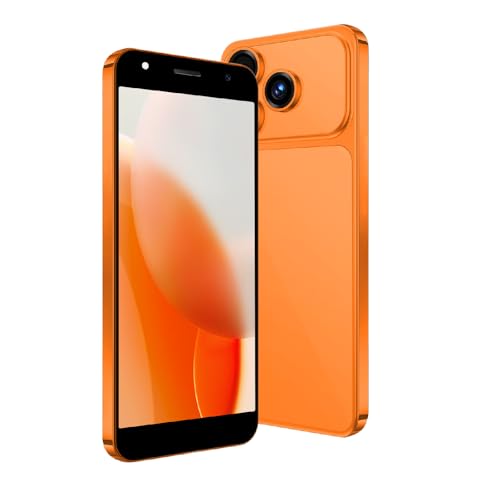


Bringing it back to the pocket test
Every argument in this guide eventually returns to a moment Tomas described after his first week with a compact handset. He was climbing the tram steps with a toolbox in one hand, rain beginning, and his phone buzzed with a changed pickup address. He read it, replied with four words, and returned the phone to his shirt pocket without breaking stride, without a two-handed ceremony, without the small flare of anxiety that a slipping slab used to cause. Nothing about that moment would appear in a specification table. It was, he said, the entire point.
Your version of that moment is the real buying guide. Picture where your phone lives, how your hands meet it, which tasks fill its hours and which frustrations repeat. If reach, weight and pocket manners dominate your list while documents, spectacle and gaming sit quietly at the margins, a 4.5 inch Android deserves its place at the top of your shortlist despite its rarity. Choose it with clear eyes about updates, batteries and cases, buy from a seller who answers plain questions plainly, and set it up as deliberately as this category demands.
For Tomas, the lasting surprise was not that a small phone could do enough, but how rarely enough turned out to be a limitation at all; most days, the little handset in his shirt pocket simply vanished into the work, which is the highest praise a tool can earn.


