What's inside
- Where to buy
- Key Takeaways
- Quick Picks
- How did we judge bargain phones when the bargain specification itself has expired?
- What can a true 2GB and 16GB Android phone still do in daily life?
- Which phones sit closest to the bargain floor while still working properly?
- How do you keep an ultra-cheap Android phone usable for longer?
- How do the bargain contenders compare on the traps that matter?
- How do you vet a suspiciously cheap phone listing before ordering?
- What mistakes do bargain-phone buyers make again and again?
- How does the total cost of a bargain phone really add up over its life?
- Final Recommendation
- Frequently Asked Questions
- Related Guides
As an Amazon Associate I earn from qualifying purchases. This post may contain affiliate links at no extra cost to you.
gizmoverdict.com is reader-supported. When you buy through links on our site, we may earn an affiliate commission.
Where to buy
Open a phone’s name to see its listing, but read this introduction first, because the kindest service this guide can perform is an honest one. Hunters after the best android 2gb 16gb bargain phones are looking for the cheapest possible Android handset: two gigabytes of memory, sixteen of storage, a price that barely registers. Phones built to exactly that specification still exist in some markets and in ageing stock, yet recommending one in good conscience has become difficult, because the Android ecosystem has outgrown the specification. Apps have swollen, security requirements have hardened, and a 2GB phone bought today is often obsolete in the hand that unwraps it.
So this guide does something more useful than pretending otherwise. It explains precisely what a true 2GB and 16GB phone can and cannot still do, who might genuinely be served by one as a second or emergency handset, and then ranks the cheapest phones from our verified pool that sit as close to that bargain floor as honesty allows. Those picks carry more memory and storage than the search specifies, because they are the least a buyer can spend while still receiving a phone that makes calls, runs essential apps, receives security attention, and survives its first year without becoming a source of daily friction.
Think of the ranking as a ladder whose bottom rung has rotted. We will describe the bottom rung accurately, since some readers will meet it in market stalls, prepaid shelves, and old stock listings, and they deserve to know its exact strength. Then we will stand on the first sound rung and work upward through phones that remain bargains in the only sense that matters: the lowest total cost of owning something that actually works. Every judgement below is made against the workload these phones are bought for, which is communication first and everything else a distant second.
Key Takeaways
- A brand-new phone with exactly 2GB of RAM and 16GB of storage is now a false economy for almost everyone: modern apps and security requirements have outgrown the specification.
- The legitimate remaining roles for a true 2GB phone are narrow: a glovebox emergency handset, a call-and-text backup, or a deliberately limited first device for a child.
- The cheapest phones worth recommending start higher, and the Motorola Moto G 2025 in this ranking is the lowest rung that still feels like a complete modern handset.
- Security support is the hidden cost of ultra-cheap phones; an unsupported handset used for banking or email is a risk, not a bargain.
- Storage discipline cannot rescue 16GB, because the operating system and essential apps consume most of it before the owner adds anything.
Quick Picks
| Pick | Badge | Why it earns its place |
|---|---|---|
| Motorola Moto G 2025 | Lowest rung worth standing on | A renewed-listed Moto G with 4GB of memory and 128GB of storage that delivers the complete modern basics at the gentlest credible price in this guide. |
| Samsung Galaxy A15 5G | Bargain with expandable storage | A renewed-listed Galaxy whose memory card slot quietly solves the storage half of the bargain problem for years of photographs and apps. |
| Samsung Galaxy A16 5G | New-phone bargain benchmark | The current affordable Galaxy, bought new, with a large AMOLED screen, expandable storage, and the longest calm ownership at the bottom of the market. |
| Google Pixel 4a | The veteran cautionary tale | A beloved older Pixel with 128GB of storage that shows both why old bargains tempt and why their update clocks must be checked before money moves. |
| Samsung Galaxy S10e | Old flagship, small body | A former compact flagship with 128GB of storage and premium manners that now circulates at bargain prices, with the same age-related warnings as any veteran. |
| TCL 50 XL 5G (T-Mobile) | Carrier bargain, giant screen | A T-Mobile-only handset whose huge 120Hz screen, listed 50MP camera, and large battery make it the entertainment-leaning bargain of the group. |
How did we judge bargain phones when the bargain specification itself has expired?
The method began with a workload definition rather than a price. A bargain phone must, at minimum, make reliable calls, handle messages and a mainstream messaging app, show a map and navigate, browse simply, take a recognisable photograph, and receive security updates appropriate to anything holding an email account. Each candidate was tested in the imagination against that list, informed by the known behaviour of its memory and storage class, and any specification that failed the list on paper was described as failing it, however attractive its price appeared.
Memory and storage were treated as the hard constraints they are. Two gigabytes of RAM forces Android to close background apps aggressively, which breaks the small continuities, returning to a conversation, keeping navigation alive during a call, that make a phone feel competent. Sixteen gigabytes of storage, after the system and preinstalled software take their share, leaves room for a handful of apps and very little else, and modern app sizes turn that handful into a negotiation the owner loses weekly. Phones were therefore ranked by how completely they escape those two traps per unit of money.
The final consideration was honesty about listing types. Several of the cheapest credible phones reach their prices through renewed stock or international versions, and each pick below states its situation plainly, with the checks a buyer should perform. A bargain that depends on the buyer not reading the listing is not a bargain, and this guide would rather lose a pick than misdescribe one.
What can a true 2GB and 16GB Android phone still do in daily life?
Begin with what still works, because the specification is limited rather than useless. Calls are calls, and a 2GB phone makes them as reliably as a flagship. Text messaging, basic email reading, an alarm clock, a calculator, a torch, and light web browsing through a single open tab all function, and a phone kept deliberately to that diet can serve as an emergency handset in a car, a backup during a main phone’s repair, or a contact device for someone who wants to be reachable without being immersed. In those narrow roles the extreme cheapness is a genuine feature: a phone that costs very little can be risked, lent, and lost with minimal grief.
The failures begin where modern life begins. Mainstream messaging and social apps now assume several times the memory this specification offers; they will install, in many cases, and then crawl, reload, and occasionally eject the user mid-conversation. Maps can navigate, but slowly, and switching between navigation and a call or a message invites the phone to close one of them. Photography fills 16GB with startling speed once a few minutes of video join the stills, and the operating system’s own updates compete for the same shrinking space until the phone begins refusing to update at all, which is where inconvenience becomes insecurity.
Security is the argument that ends most debates about this class. A phone that no longer receives security updates, holding a primary email account, a banking app, or a messaging identity, is a liability carried in the pocket. Ultra-cheap and aged handsets are precisely the ones vendors abandon first, and app publishers increasingly refuse to run on very old Android versions at all, so the bargain phone can find itself locked out of the exact services it was bought to reach. None of this is snobbery about specifications; it is the arithmetic of an ecosystem that moved on.
The fair conclusion is that the 2GB and 16GB specification survives as a specialised tool and a cautionary tale. As a deliberate second phone with almost nothing installed, it can still earn its keep. As anyone’s main phone in the current app economy, it spends its owner’s time and patience at a rate that quickly exceeds the money it saved, which is why the ranking below starts at the first specifications that escape the trap and stays as close to the floor as integrity permits.
Which phones sit closest to the bargain floor while still working properly?

Motorola Moto G 2025 — Lowest rung worth standing on
The Moto G 2025 is where this ranking’s conscience and its arithmetic meet. Its listed configuration carries 4GB of memory and 128GB of storage, figures that sound modest until they are compared with the specification in the search: twice the memory and eight times the storage transforms the experience from negotiation to normality. Messaging apps stay alive, maps navigate without evicting themselves, and the storage swallows the essential app library with room left for photographs. This is the cheapest phone here that a reviewer can hand to a relative without an apologetic briefing.
Motorola’s software approach amplifies the hardware’s adequacy. The interface stays close to plain Android, free of the duplicate apps and decorative clutter that consume resources on some budget rivals, so the memory fitted is spent on the owner’s apps rather than the manufacturer’s ambitions. The camera handles daylight documentation and family snaps competently, the screen is large enough for maps and messages to coexist with ageing eyes, and the whole device feels like a phone from the current era rather than a survivor from an earlier one, which, at the bottom of the market, is a rarer quality than it should be.
The renewed status of the listing is the price of admission and deserves its usual calm checks on grading and returns. Motorola’s update commitment at this level is also shorter than the Samsung entries below, so a buyer planning four years of service should weigh that honestly. For the reader who arrived wanting the cheapest Android that works, though, this is the answer the evidence supports: spend at this rung, and the phone disappears into your life; spend below it, and the phone becomes a recurring topic of conversation for all the wrong reasons.
- Memory and storage in listing: 4GB RAM, 128GB
- Listing status: renewed configuration
- Software: near-stock Motorola Android
- Camera: competent daylight main camera
- Role in this guide: the minimum complete modern handset
Strengths
- Escapes the memory and storage traps completely at a bargain price
- Clean software spends limited resources on the owner’s apps
- Large screen suits maps, messages, and older eyes
Trade-offs
- Renewed listing requires the usual condition checks
- Update commitment shorter than Samsung’s in this class
- Performance is adequate rather than eager under load
Best for: anyone whose real requirement is the cheapest Android phone that simply works at everything essential.
Not suited for: buyers set on a brand-new handset with the longest possible support.

Samsung Galaxy A15 5G — Bargain with expandable storage
The Galaxy A15 5G earns its place in a bargain guide through one humble feature: a memory card slot. The chronic disease of cheap phones is storage starvation, and expandability is the cure that keeps working after purchase day. Fit an inexpensive card and the A15’s photographic life, its offline maps, and its media stop competing with the operating system for the internal space that apps demand. Combined with memory comfortably above the expired specification, that makes this renewed Galaxy a bargain measured across years rather than at the checkout.
Samsung’s contribution beyond the slot is familiarity and support. The interface is the one most Android owners already know, the camera produces bright and friendly daylight results, and Samsung’s update habits in this class are comparatively generous, which matters enormously on a cheap phone because security support is where cheap phones usually betray their owners first. The international-version wording in the listing should be read carefully for carrier compatibility, a two-minute check that protects the whole purchase.
Pace is the compromise to accept with open eyes. The A15 thinks before it leaps between demanding apps, and its camera after dark is a daylight tool out of its element. Neither flaw touches the bargain brief: calls, messages, maps, browsing, and daytime photographs all proceed without drama, and the storage cure means they will still be proceeding in year three. For a buyer whose previous cheap phone died by a thousand storage warnings, this is the pick that ends the cycle.
- Listing status: renewed, international version as described
- Storage: expandable by memory card
- Connectivity: 5G capable
- Software: Samsung Android with comparatively generous class support
- Display: bright panel for outdoor readability
Strengths
- Memory card slot solves cheap-phone storage starvation
- Samsung support horizon protects a long, cheap ownership
- Familiar interface needs no relearning for most owners
Trade-offs
- Renewed and international listing needs carrier checking
- Processor pace is deliberate between heavy apps
- Night photography is weak, as expected at the price
Best for: bargain hunters whose last cheap phone choked on its own storage.
Not suited for: impatient users who juggle many demanding apps at once.

Samsung Galaxy A16 5G — New-phone bargain benchmark
Where the A15 reaches its price through the renewed market, the Galaxy A16 5G is the bargain bought new, and the difference shows in the ownership it offers. A current model with a large AMOLED display, expandable storage, and Samsung’s extended update commitment for its class, it is the phone in this guide most likely to be forgotten about in the best sense: charged, used, updated, and still serviceable when phones bought alongside it have been replaced. Bargain hunters should learn to price that longevity, because the cheapest phone is the one bought least often.
Daily performance sits a clear step above the expired specification that frames this search. Apps remain resident, navigation survives a phone call, and the storage, expandable when the internal space eventually fills, never becomes the weekly emergency that defines 16GB ownership. The camera covers family and documentary life in daylight with Samsung’s characteristic cheerful colour, and the big screen makes maps, video calls, and photo review genuinely pleasant rather than merely possible.
Its compromises are matters of degree rather than kind. The processor is steady rather than swift, low-light photography is serviceable rather than special, and nothing about the device excites a specification enthusiast. Yet the reader searching for bargain phones is not a specification enthusiast; they are a person who needs communication to work at the lowest sensible total cost, and on the evidence of support, storage, and screen, the A16 is the benchmark against which every cheaper offer should be made to justify itself.
- Listing status: current model, US version as described
- Display: large AMOLED panel
- Storage: expandable by memory card
- Software: Samsung Android with extended class update commitment
- Connectivity: 5G with fast charging support
Strengths
- Bought new with the longest calm ownership in this guide
- Expandable storage and generous support end bargain anxiety
- Big AMOLED screen lifts maps, calls, and photographs
Trade-offs
- Costs more than the renewed entries, inevitably
- Steady rather than swift under demanding multitasking
- Night camera results are ordinary for the class
Best for: buyers who want one cheap phone bought once and kept for years.
Not suited for: shoppers whose budget absolutely cannot stretch beyond renewed prices.

Google Pixel 4a — The veteran cautionary tale
The Pixel 4a is included as this guide’s honest veteran: a phone that was once the thinking person’s bargain and now illustrates exactly how bargains age. On paper much remains attractive. It carries 128GB of storage, a compact and likeable body, and a camera whose processing made it famous, producing photographs that still shame newer cheap phones. As a camera-forward second handset, a music and podcast device, or a child’s first phone on a household account with sensible controls, it can still give pleasure and service.
The caution is written in its calendar. The 4a belongs to an earlier Android generation, and its official update window has closed, which changes what it should be trusted with. A handset without current security support is a poor home for banking and primary email, however charming its camera, and app publishers steadily raise their minimum Android versions in ways that will eventually lock ageing phones out of services their owners rely on. Buyers must therefore purchase it as what it is: a delightful device for light, low-risk duties, priced accordingly, with its renewed listing read carefully.
Judged in that frame, the 4a earns its place as a teaching example with genuine utility. It demonstrates that storage and camera quality age gracefully while support does not, a lesson worth more than the phone itself to anyone shopping the bottom of the market. Readers tempted by any very cheap, very old handset, including true 2GB devices, should apply the 4a test: what still works beautifully, what has quietly expired, and does the price honestly reflect the second list as well as the first?
- Listing status: renewed
- Storage in listing: 128GB
- Camera: single rear camera with Google processing reputation
- Software: earlier Android generation, update window closed
- Character: compact, light, one-handed friendly
Strengths
- Camera results still embarrass many newer cheap phones
- Generous storage for a handset of its age and price
- Compact body suits small hands and second-phone duty
Trade-offs
- Security support has ended, limiting what it should hold
- Ageing battery expectations on renewed stock
- Rising app minimum versions will narrow its usefulness
Best for: a low-risk second handset, camera toy, or child’s first device under household supervision.
Not suited for: banking, primary email, or any role needing current security support.

Samsung Galaxy S10e — Old flagship, small body
The Galaxy S10e represents the other road to a bargain: yesterday’s flagship rather than today’s budget model. When new, it was Samsung’s compact flagship, with a bright display, capable cameras, wireless-era conveniences, and a body size that modern phones have largely abandoned. It now appears at prices that compete with new budget handsets, carrying 128GB of storage in this listing, and for buyers who value a small, premium-feeling phone above all else, the temptation is entirely understandable.
Ownership reality must accompany the romance. Like the Pixel veteran above, the S10e’s update window belongs to history, so it should not be entrusted with the most sensitive accounts, and its battery, whether original or renewed, will not match a new budget phone’s endurance across a long day. Its cameras remain pleasing in daylight, its screen remains lovely, and its performance for communication duties remains adequate, but it is a phone to buy for its character and size with a clear-eyed view of its years, not as a like-for-like substitute for a supported modern handset.
Within those boundaries it can be a genuinely satisfying bargain, particularly as a second phone, a media handset, or a compact device for someone whose main accounts live elsewhere. The listing’s USA-version wording is a point in its favour for carrier compatibility. Buy it the way one buys a well-kept older car: for the engineering and the feel, with maintenance expectations set honestly, and it will reward the purchase; buy it expecting a new phone’s support life, and disappointment is scheduled.
- Listing: USA version, Prism Black, as described
- Storage in listing: 128GB
- Character: compact former flagship body
- Cameras: capable daylight flagship-era array
- Software: earlier Android generation, support window closed
Strengths
- Premium compact body unlike anything new at the price
- Bright display and capable daylight cameras endure
- Generous storage for media and photographs
Trade-offs
- Security support has ended, so sensitive accounts belong elsewhere
- Battery endurance trails new budget phones
- Age shows in app compatibility over time
Best for: lovers of small premium phones wanting a characterful second handset cheaply.
Not suited for: a primary phone expected to serve securely for years.
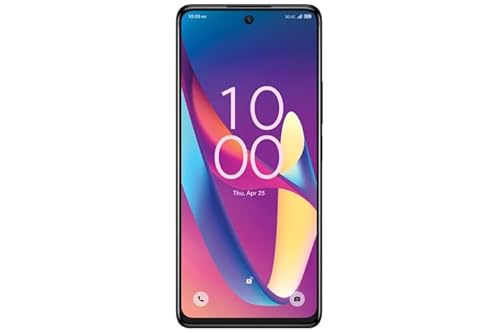
TCL 50 XL 5G (T-Mobile) — Carrier bargain, giant screen
The TCL 50 XL 5G closes the ranking by serving the bargain hunter whose priorities include the screen itself. Its 6.78-inch FHD+ display refreshes at 120Hz, a specification that would have sounded luxurious not long ago, and it transforms the bargain experience: messages, maps, photographs, and video all gain a spaciousness that cramped cheap phones cannot offer. Memory and storage sit comfortably beyond the expired specification behind this search, the listed camera is a modern 50MP unit, and the battery is sized for the screen it feeds.
The condition attached is absolute, and the listing states it openly: this phone is for T-Mobile customers. Within that network it is a coherent bargain, especially for buyers whose phone doubles as their television, their photo album, and their video-call window, and who feel screen quality daily while feeling processor differences rarely. TCL’s display heritage shows in brightness and outdoor legibility, practical virtues for a phone that will navigate, photograph, and entertain outdoors.
Support horizons at this level are shorter than Samsung’s, the night camera is modest, and the big body demands big pockets, yet none of those caveats disturb its central bargain: the most screen, the smoothest scrolling, and a complete modern Android experience for buyers already on the right network. For the reader who came hunting the absolute floor of the market, the 50 XL is a useful reminder that a small step upward in price can buy an entirely different class of daily experience.
- Network: T-Mobile only, as listed
- Display: 6.78-inch FHD+ at 120Hz
- Main camera listed: 50MP
- Battery listed: 5010mAh class
- Finish in listing: Slate Gray
Strengths
- Enormous smooth screen transforms bargain-phone media
- Modern memory and storage leave the 2GB trap far behind
- Large battery matches the display’s appetite
Trade-offs
- Useless to anyone outside T-Mobile’s network
- Shorter support horizon than the Samsung entries
- Big body is unwieldy for small hands and pockets
Best for: T-Mobile bargain hunters who watch, read, and video-call constantly.
Not suited for: other carriers’ customers or anyone wanting a compact phone.
How do you keep an ultra-cheap Android phone usable for longer?
Storage discipline is the first survival skill, and it begins on day one. Install only the apps that serve the phone’s actual role, prefer the lightweight editions major services offer where they exist, and move photographs to a computer or cloud album on a schedule rather than in a panic. Keep a clear margin of free space at all times, because Android slows dramatically and updates fail outright when storage is nearly full. On a phone with expandable storage, put media on the card from the start and reserve internal space for apps and the system.
Memory discipline is the second skill. A cheap phone is not a multitasking machine, and fighting that nature wastes battery and temper. Close the heavy apps you are finished with, avoid live wallpapers and elaborate widgets that consume resources for decoration, and restart the phone weekly to clear the accumulated clutter of days of use. Use one browser tab at a time for anything important, and let navigation be the only demanding app running while driving, so a call or message does not evict the directions at the worst moment.
Security hygiene matters more, not less, on cheap hardware. Keep the phone updated for as long as its maker offers updates, install apps only from the official store, and be honest about the handset’s limits: when support ends, migrate banking and primary email to a supported device and demote the old phone to duties whose risk matches its protection. That single habit converts an ageing bargain from a liability into a useful servant, and it costs nothing but a few minutes of clear thinking.
Finally, manage the battery like the consumable it is. Cheap phones are often bought to be kept, and batteries age by charge cycles and heat. Avoid leaving the phone cooking on a sunny dashboard, charge it overnight on a ordinary charger rather than chasing speed it does not need, and replace the handset when the battery, rather than pride, dictates. A bargain phone that is charged gently, stored lightly, and secured honestly can serve its narrow role for years, which is the only definition of value this end of the market should be judged by.
How do the bargain contenders compare on the traps that matter?
The comparison below is organised around the traps this guide has described: memory, storage, support, and the fine print of each listing. Price brought you here, but those four columns are what will decide whether the purchase still feels clever in a year.
| Pick | Standout quality | Main compromise | Choose it if |
|---|---|---|---|
| Motorola Moto G 2025 | Complete basics at the lowest credible rung | Renewed listing, shorter support | You want the cheapest phone that does everything essential |
| Samsung Galaxy A15 5G | Expandable storage cures the classic disease | Renewed international listing | Your last cheap phone died of storage warnings |
| Samsung Galaxy A16 5G | New phone, long support, big screen | Costs more than renewed rivals | You buy cheap phones rarely and keep them long |
| Google Pixel 4a | Camera quality far beyond its price | Support window has closed | You need a delightful low-risk second handset |
| Samsung Galaxy S10e | Compact flagship character and storage | Ageing battery and support | You miss small premium phones and accept the years |
| TCL 50 XL 5G (T-Mobile) | Largest, smoothest screen in the group | T-Mobile customers only | You are on T-Mobile and live on your screen |
How do you vet a suspiciously cheap phone listing before ordering?
Start with the specification in the listing title and treat any vagueness as information. A trustworthy listing states the exact model, memory, storage, network compatibility, and whether the phone is new, renewed, or an international version. A listing that hides those facts behind adjectives is telling you that the facts would not help the sale. Cross-check the model against the manufacturer’s specification page, confirm the phone supports your carrier’s bands, and read the return terms before the price finishes its persuasion.
Then interrogate the support question, which cheap listings almost never volunteer. Find the phone’s release date and the maker’s update policy for that model, and calculate how much supported life remains. A phone with two years of security support ahead of it and a phone with none can look identical in photographs and differ enormously in safe usefulness. This five-minute investigation is the highest-value step in bargain phone buying, and it is the step the expired 2GB class fails most completely.
When the phone arrives, test the essentials during the return window with unusual thoroughness. Make calls, send messages, install the three apps you truly need, navigate somewhere, photograph something, and watch the storage figure before and after. Check the battery across a normal day rather than an hour. A bargain that survives that week of honest use will usually survive its intended life; one that struggles immediately will only struggle more as apps grow, and the return window is the cheapest exit you will ever be offered.
What mistakes do bargain-phone buyers make again and again?
Buying the specification in the search rather than the job in the hand is the founding error. A 2GB and 16GB phone can be the cheapest Android on the shelf and still be the most expensive purchase in the shop once the owner’s hours, frustration, and early replacement are priced in. The correction is to define the workload first, calls, messages, maps, email, and buy the cheapest phone that performs that workload without drama, which is exactly the standard the ranking above applied.
The second mistake is ignoring the update clock. Buyers compare screens and cameras on phones whose security support differs by years, then store their entire digital lives on the result. A supported budget phone is a safer possession than an unsupported former flagship for anything involving accounts and money, and the demotion of unsupported handsets to low-risk duties should be planned at purchase, not improvised after a warning appears.
Third comes storage optimism, the belief that 16GB or even a filled 64GB will somehow stretch. It never does; apps grow, photographs accumulate, and the system itself expands. Buy expandable storage or a generous internal figure, and treat any phone that begins life nearly full as a phone already in decline. The fourth mistake is skipping the listing’s fine print on renewed and international stock, where carrier bands, grading, and return terms live. Bargain buying rewards readers and punishes skimmers with metronomic reliability.
How does the total cost of a bargain phone really add up over its life?
Price a bargain phone the way landlords price a cheap flat: the rent is only the beginning. The first hidden cost is time, charged in small daily instalments. A phone that takes twenty extra seconds to open maps, that reloads a conversation whenever its owner answers a call, that refuses an update because its storage is full, collects those seconds relentlessly, and across a two-year life they compound into hours of a person’s life spent waiting for a device that was bought to save money. Any honest comparison between a 2GB handset and the picks above should include that toll, because it is the largest price most bargain phones ever charge.
The second hidden cost is replacement timing. A phone bought at the absolute floor of the market often needs replacing within a year as apps outgrow it, while a phone one rung higher serves three. Two floor-priced phones in three years usually cost more than one sound phone kept for the same period, and they generate two rounds of setup, transfer, and learning along the way. This is why the ranking above treats the Moto G 2025 as the floor and resists going lower: the rung below it is cheaper only if the calendar is ignored, and the calendar is the one critic no bargain can bribe.
Accessories and repairs form the third line of the true invoice. A case and a spare cable are trivial beside a flagship, yet a cracked screen on an obscure ultra-cheap model can be unrepairable at any price because parts simply do not circulate, while mainstream bargain phones like the Samsung and Motorola entries here benefit from repair networks and parts that exist in the real world. Buyers should ask the unglamorous question before purchase, who near me can fix this, because a bargain that cannot be repaired is a disposable wearing a phone’s clothing.
Data and accounts carry a fourth cost that rarely appears in buying guides. Moving a digital life between phones, banking approvals, messaging histories, two-factor codes, is an afternoon of friction each time, and it carries genuine risk when the old phone is insecure or the new one is set up in haste. A phone kept longer, with support intact, reduces the number of these migrations across a decade. Older relatives in particular pay this cost heavily, since each new handset demands relearning, which is why families so often discover that the cheapest phone for a parent is the supported one bought once and left alone.
There is an environmental line in the ledger too, and bargain buyers are entitled to count it without embarrassment. A phone manufactured, shipped, used briefly, and discarded because its specification expired is waste at every stage, while a modest phone kept in service for years, then demoted to a drawer role, then recycled, extracts full value from the materials inside it. The veterans in this ranking illustrate the honourable version of that story: devices still useful in low-risk roles long after their prime, because someone bought sound hardware in the first place and matched its duties to its remaining strength.
None of this argues for spending more than the job requires. It argues for pricing the job honestly. A glovebox phone that will make one emergency call a year can be bought at the true floor without a qualm, because its workload will never collect the hidden tolls described here. A main phone, carrying a life, should be bought at the first rung where those tolls disappear, and the whole of this guide has been an attempt to mark that rung clearly: enough memory to breathe, enough storage to live, enough support to stay safe, and not one specification more than those three sentences demand.
When in doubt, apply the one-year test. Ask whether this phone, with these apps, at this support horizon, will still be serving calmly in twelve months, and let the answer rather than the price tag make the decision. The picks above pass that test at descending prices and ascending caveats, which is the most any honest bargain guide can offer: not the cheapest phone in the shop, but the cheapest phone whose cheapness survives contact with a year of real life.
There is one more legitimate home for the true bargain specification that deserves acknowledgement: the deliberately restricted phone. Some parents want a first device that communicates without inviting the entire internet, some workplaces need a handset that does one job on one site, and some travellers carry a sacrificial phone for environments where loss is likely. In each case the restriction is the point, the accounts involved are disposable or supervised, and the phone’s cheapness is a form of insurance. Bought with that clarity, even a very small Android can be the right tool; bought by accident as a main phone, it is a lesson purchased at retail price.
A word about hand-me-downs belongs here too, because the bargain market includes the drawer of retired family phones. A relative’s old handset can be an excellent free bargain provided the same tests are applied: check its remaining support, wipe it fully, fit a fresh account, and assign it duties that match its protection. Sentiment makes old phones feel safer than they are, and the kindest gift is an honest assessment alongside the hardware.
A last word belongs to the gift buyer, because many bargain phones are bought by one person for another. Resist the temptation to give the absolute cheapest handset to the person least able to troubleshoot it. The economics invert completely across a generation gap: your savings at the checkout become their confusion at the kitchen table, repeated weekly. Give the supported, expandable, unhurried phone, set it up completely before handing it over, and write the important steps on paper. That is the version of bargain buying that families remember kindly, and it costs only slightly more than the version they remember at all.
A bargain phone benefits from a single home-screen discipline: calls, messages, camera, maps, and nothing else on the first page, so the owner’s thumb learns a geography that never changes under it.
Write the phone’s own number and one family contact on a card inside its case, because the most common bargain-phone emergency is a lost handset whose owner cannot tell anyone what number it had.
Set the text size one step larger than vanity suggests and the phone becomes kinder instantly, particularly for the bargain buyers whose eyes have been squinting at small print for a decade.
A cheap phone kept as a spare should be charged and switched on monthly, because a battery left flat for a year and an account left dormant can both quietly expire, and an emergency phone that has expired is a paperweight with a dial tone in its past.
Teach the owner the restart before anything else: one long press, once a week, cures a remarkable share of cheap-phone strangeness and costs nothing but a minute of patience.
If the phone will serve a child, agree the charging place, the contact list, and the bedtime shelf before the first day, because a bargain handset with clear household rules outperforms an expensive one governed by argument.
Keep the box, the cable, and the receipt together in one drawer, a peasant habit that transforms any future warranty conversation, resale, or repair from archaeology into administration.
Judge a bargain phone after a fortnight, not an afternoon, because its virtues are cumulative and quiet: it charged, it rang, it navigated, it photographed, and it never once became the story of the day.
The second-hand market deserves a fuller treatment than a warning, because it is where many readers will actually shop. A used phone from a reputable refurbisher, with a graded condition, a tested battery, and a warranty measured in months, can be a wiser bargain than a new phone at the expired specification this guide began with. The checks are learnable: confirm the exact model and its remaining support, ask the battery’s tested health rather than its age, verify the handset is not locked to another account, and insist on a return window long enough to live with the phone for a week. Sellers who answer those questions plainly are selling phones; sellers who evade them are selling problems.
Carrier offers complicate the bargain landscape in ways worth decoding slowly. A phone advertised at a startlingly low price through a carrier is usually priced across a contract, a trade-in, or a plan tier, and its true cost is the sum of those commitments rather than the headline. That does not make such offers bad; for a customer already committed to the plan, they can be the cheapest route to a supported modern handset in this entire guide. It makes them unreadable at a glance, which is the point of the advertising. Do the arithmetic across the full term, compare it with the unlocked prices above, and let the larger, duller number decide.
There is a special case for the extremely light user that this guide should honour explicitly: the person who makes two calls a week, sends a handful of messages, and wants a phone the way they want a kettle, present, simple, and beneath notice. For that person the veterans and even the true bargain class come closer to fitting than this ranking’s main line suggests, provided a family member performs the security demotion honestly, keeping banking and primary email elsewhere. Bargain advice that ignores how little some people ask of a phone is advice written for reviewers rather than for the public.
End the search with a promise to the future owner, whoever that is. Set the phone up completely, contacts, voicemail, text size, the three applications that matter, before it begins its life, and write the essential steps on paper in plain words. A bargain phone’s reputation is made in that first evening: configured kindly, it becomes invisible infrastructure; handed over raw, it becomes a puzzle its owner resents. The few pounds saved at the bottom of the market are real, but the hour of setup is where the bargain is actually won or lost.
Prepaid and contract arithmetic hides inside bargain phones as surely as it does inside flagship ones. A handset that appears free or nearly free through a carrier is being paid for across a plan, and the honest comparison is the total across the whole term against the unlocked prices in this guide plus the cheaper plan the unlocked buyer is free to choose. Sometimes the carrier route wins, particularly for customers who would keep the plan anyway; sometimes it quietly doubles the phone’s cost. The bargain hunter’s skill is not avoiding contracts but reading them at the speed they deserve, which is slowly, with the total written down.
There is a geography to bargain phones that national reviews flatten. Signal quality on the cheapest networks varies by street, and a phone that performs admirably in a city can sulk in a valley where a rival network is strong. Before buying any handset in this guide, borrow the network, not the phone: a friend’s SIM, a temporary prepaid card, a week of testing the places the owner actually stands. That experiment costs almost nothing and decides more about satisfaction than the difference between any two picks above, because a bargain phone’s first job is to be a phone, in the places its owner lives.
Finally, teach the bargain phone’s owner one small ceremony: the monthly photograph purge, performed with a cup of tea and no mercy for duplicates. Ten minutes a month keeps storage young, the gallery findable, and the phone’s pace where it was on the day it arrived. Bargain hardware rewards housekeeping more visibly than flagship hardware does, because its margins are thinner, and the owners who keep these phones happily for years are, without exception, the owners who keep them tidy.
If the decision still wavers between two rungs of this ladder, let the support calendar break the tie, because it is the one specification that cannot be upgraded later with money, accessories, or good intentions. Memory can be managed, storage can be expanded or emptied, batteries can be babied, but a phone whose updates have ended is finished becoming safer, and every month of remaining support is a month of protection the buyer does not have to think about. In bargain territory, where every figure competes for attention, that quiet fact deserves the final word.
And charge it tonight, whichever rung you choose, because every bargain in this guide shares one final specification that no listing prints: a phone that is charged, carried, and ready is worth more than a finer phone sitting empty in a drawer at home.
Final Recommendation
If you take one recommendation from this guide, take the Moto G 2025 as the floor of sensible spending, the Galaxy A16 5G as the bargain to keep for years, and the A15 5G as the storage-proof renewed alternative, while treating the two veterans here as charming specialists for low-risk duties and the TCL as a T-Mobile-only screen bargain. A true 2GB and 16GB phone still has one honourable job, the stripped-down emergency handset, and it should be bought for that job alone, with almost nothing installed and nothing sensitive entrusted to it.
The cheapest phone is never the one with the smallest number on its price tag; it is the one whose owner stops thinking about it, and every pick above was chosen because, at its price, it lets an ordinary person get on with communicating while the machinery of modern Android quietly stays out of the way.
Frequently Asked Questions
Can a 2GB RAM, 16GB phone still work as a main phone?
For calls and texts, yes; for the modern app life most people expect, realistically no. Mainstream apps assume more memory, storage fills almost immediately, and many such handsets no longer receive security updates. As an emergency or backup handset with almost nothing installed, the specification remains serviceable.
Why do cheap phones slow down so quickly?
Usually through accumulation rather than failure: apps grow with each update, photographs fill storage, and a nearly full phone slows sharply while updates begin to fail. Expandable storage, regular photo offloading, and keeping free space delay the decline considerably.
Is a renewed phone a good bargain strategy?
It is often the smartest one, provided grading, battery expectations, and return terms are read carefully and the seller is established. Several picks in this guide reach their prices through renewed listings, and the homework takes minutes.
When should an old phone stop holding banking apps?
When its security updates end. At that point the handset should be demoted to low-risk duties such as calls, media, and a child’s supervised use, while banking and primary email move to a supported device. Charm and camera quality do not substitute for current protection.
How much storage should a bargain phone have today?
Treat 128GB as the comfortable modern figure, or choose expandable storage and use it from day one. Sixteen gigabytes is consumed largely by the system and essentials, leaving the owner negotiating with the phone from the first week.
What is the single best bargain pick here?
The Moto G 2025 is the lowest rung that still delivers the complete modern basics, while the Galaxy A16 5G is the better buy for anyone who can spend slightly more and intends to keep the phone for years.
Related Guides
Keep exploring with cheapest android phones that still work and renewed phone buying checks and android storage management guides.



[…] is one axis of phone choice; explore the others with our best 4 inch screen android phones guide to the even smaller classes, the best 5 inch android phones roundup of the next size up, and […]