Our Top Picks
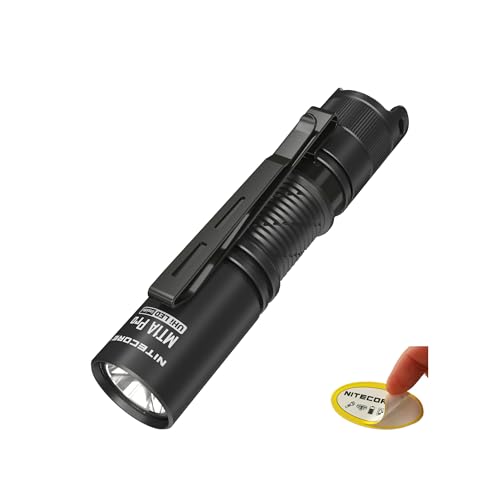 Nitecore MT1A Pro 800 Lumen EDC Flashlight PenlightCompact3.66 x 0.78 x 0.68 inches0.2 poundsCheck on Amazon
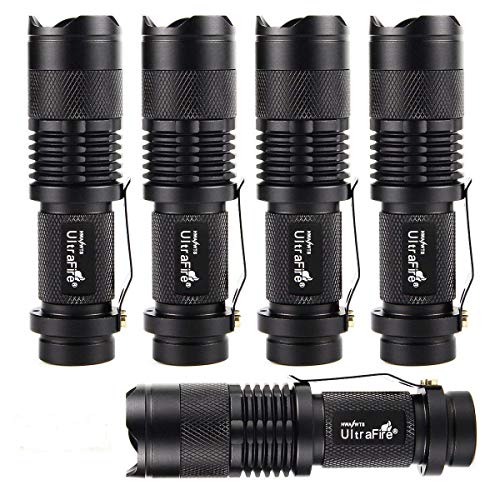 ULTRAFIRE SK68 AA Mini LED Flashlights3.67 x 1 x 1.03 inches6 x 1.3 x 3 inches0.15 poundsCheck on Amazon
 Nitecore MT1A PRO High Output Compact Rechargeable AACompact2 x 1 x 2 inches0.1 poundsCheck on Amazon


What's inside
- Why AA power still matters
- The shape of Nitecore’s AA range
- Dual-fuel designs and the 14500 question
- Cell chemistry compared
- Output, runtime and regulation, read properly
- Mode spacing and user interface
- Build, sealing and durability
- Size and weight classes
- Check prices on Amazon
- Buying checks before you commit
As an Amazon Associate I earn from qualifying purchases. This post may contain affiliate links at no extra cost to you.
Some links on this page are affiliate links, and purchases made through them may earn the site a small commission at no extra cost to you. That income keeps these buying guides free to read, but it does not influence which flashlights are covered, how their strengths are weighed, or which readers each model is steered toward, and all performance discussion here is framed around published specifications and the known behaviour of the AA format.
AA batteries are the most widely available power cells on Earth, sold in petrol stations, pharmacies, airport kiosks and village shops on every continent, and a flashlight that runs on them plugs into that entire global supply network. Nitecore, a maker better known for lithium-powered lights, has long maintained AA lines for exactly this reason, and choosing among them is mostly a matter of understanding what the humble AA can and cannot deliver.
This guide explains the format’s physics first, then the shape of Nitecore’s AA catalogue, then the chemistries and dual-fuel options that change a light’s character completely, so that the closing buying checks rest on how these torches actually behave in a pocket, a glovebox and a power cut rather than on headline numbers alone.
Why AA power still matters
The case for AA begins with availability under stress. When a storm takes out the power and the roads, the cells in a drawer, a remote control and a child’s toy are all potential fuel for an AA light, while a proprietary pack that sits empty is a paperweight. Emergency planners call this scavengability, and it is the format’s deepest advantage: the light eats what the world already stocks.
Travel makes the same argument in a gentler key. A traveller can land almost anywhere and buy fresh AA cells within the hour, carry spares without lithium air-transport paperwork worries in the case of alkaline and NiMH cells, and abandon exhausted alkalines without grieving an expensive pack. For expedition support staff, aid workers and journalists moving through regions with thin infrastructure, that logistics simplicity outweighs raw performance.
Cost structure matters too, though it is measured in convenience rather than currency. A household that already maintains a stock of AA cells for clocks, remotes and game controllers owns the fuel supply for an AA light as a by-product. Keeping a compatible charger fed is part of that ecosystem, and readers building one out can compare options in best aa and aaa battery chargers to keep NiMH cells rotated and ready.
The honest limits deserve equal time. An AA cell holds modest energy beside modern lithium formats, its voltage sags under heavy load, and a light built around it will never match the sustained output of a large lithium torch. Choosing AA is choosing logistics, universality and graceful degradation over peak performance, and the rest of this guide assumes that trade is being made deliberately, with eyes open about what the format gives back.
Emergency kits and household readiness
In a household emergency kit, the AA light’s virtues compound. Cells stored alongside it can be rotated through everyday devices so nothing expires unused, the light itself asks for no charging routine that a busy household will forget, and any family member can refuel it without instructions. Readiness that depends on a remembered charging schedule fails quietly; readiness built on the world’s commonest cell fails far less often.
Gloveboxes and workshop drawers tell the same story at smaller scale. A light that shares its fuel with the household’s other devices is a light that is actually loaded when reached for in the dark, and a remarkable fraction of flashlight disappointment is simply an empty proprietary cell discovered at the worst moment. The AA format’s mediocrity in energy density is the price of never being caught quite that empty.
The shape of Nitecore’s AA range
Nitecore’s AA offerings have historically organised themselves into recognisable families. The EA series covers the explorer-style lights: single-AA compact bodies at one end and multi-AA search-oriented designs at the other, generally with side switches, mode-rich interfaces and a emphasis on runtime flexibility. Across generations the EA name has attached to everything from a pocketable single-cell light to an eight-cell thrower, united by the AA diet rather than by size.
The MT series, Nitecore’s multi-task line, includes AA models aimed at general and tactical-leaning users, typically with tail-switch operation, simpler mode sets and a more direct, glove-friendly interface. Where an EA light tends to invite the user to browse its modes, an MT light tends to assume the user wants light now and settings later, and that interface philosophy is a more useful sorting tool than any output figure.
Around those two families sit occasional special-purpose AA designs: headlamps built on AA cells for users who refuse headbands with battery packs, penlight-adjacent inspection lights, and lantern-style products for area lighting. The catalogue changes across years, models retire and successors rename, so the durable skill is reading any given AA model’s cell count, switch layout and mode structure rather than memorising a roster that will date.
A naming caution applies across the range: similar badges can hide different cell counts, and some designs accept both AA-size chemistries and lithium cells of the same dimensions, which changes their output character entirely. The cell-count and voltage information on the maker’s specification page for the exact model, not the family name, is what predicts behaviour, a theme the buying checks return to with some insistence.
Single-AA compacts
The single-AA light is the format’s purest expression: a tube barely longer than the cell inside it, light enough to forget in a jacket pocket, and bright enough on modern emitters for household tasks, dog walking and finding a dropped key. Output in this class is modest by lithium standards, typically spanning from a firefly-level low suited to preserving night vision up to a few hundred lumens at the top for short periods, with the middle modes doing the real work.
What single-AA lights sell is not lumens but presence. A light that is carried is infinitely brighter than a powerful light left at home, and the single-AA form factor is the largest light many people will genuinely carry daily. For readers whose need is a dependable pocket companion rather than a search tool, this class is not the budget compromise; it is the correct answer wearing modest specifications.
Multi-AA bodies and search formats
Adding cells changes the character completely. Two and four-cell designs gain runtime, sustained output and grip, while the largest AA search lights, running six or eight cells in a wide body, use sheer cell count to reach outputs and throw distances that seem to contradict the format’s humble reputation. Those big bodies exist for users who need serious light where lithium logistics are unwelcome: remote facilities, marine stores and emergency caches stocked with AA cells by the case.
Multi-AA lights also regulate differently. With several cells sharing the load, each cell works less hard, voltage sag shrinks, and the light can hold its middle modes flat for long stretches. The trade is bulk and the chore of feeding many cells at once, which is why owners of the larger formats tend to standardise on NiMH and a charger with enough bays, a point revisited when chargers enter the discussion below.
Dual-fuel designs and the 14500 question
Many AA-size Nitecore designs are dual-fuel: the same tube accepts a standard AA cell or a 14500 lithium cell, which shares the AA’s dimensions but delivers roughly triple the voltage. That voltage difference transforms the light. On a 14500, maximum output can climb dramatically, sometimes several times the AA figure, because the driver has far more electrical headroom to feed the emitter.
The transformation is not free. Higher output on a small cell means shorter runtime at the top, more heat in a compact body, and a cell that drains quickly if the user lives in the highest mode. Regulation also changes character: some designs hold output flatter on lithium, while on AA cells the same light may step down sooner or taper as the cell tires. The specification sheet’s separate runtime tables for each chemistry exist because the two fuels genuinely produce two different lights in one tube.
Safety and compatibility checks matter here. Not every AA light accepts 14500 cells, and feeding triple voltage to a design that does not expect it can destroy the driver. The maker’s stated input voltage range is the authority, printed in the manual and on the product page, and it should be checked for the exact model rather than assumed from the tube’s size. Equally, protected 14500 cells run slightly longer than unprotected ones and may not fit every tube, a mechanical detail that decides purchases in practice.
For most owners the sensible pattern is dual-fuel in the literal sense: run NiMH AA cells for daily duty, where refuelling is cheap and behaviour is gentle, and keep a charged 14500 for the occasions that want the light’s full reach. The light becomes two tools sharing one body, and understanding both personalities is the difference between a versatile purchase and a confusing one.
Cell chemistry compared
Three chemistries dominate the AA world, and choosing among them changes an AA light as much as choosing the light itself. Alkaline cells are the default of drawers everywhere; lithium primary AA cells are the premium long-life option; NiMH rechargeables are the working choice for anyone who uses a light weekly. Each interacts differently with a driver’s regulation, and the interactions are predictable enough to plan around.
Alkaline: convenient, saggy, and prone to leaking
Alkaline AA cells start at a nominal one and a half volts and decline steadily as they discharge, sagging sharply under heavy current draw. A light on alkalines therefore tends to dim progressively, its highest modes shortening first, and its behaviour varying with temperature and cell age. For occasional use this is acceptable; for a light that must perform identically on demand, the decline is a genuine operational flaw.
The darker alkaline risk is leakage. Cells left in a device for months or years, especially partly discharged ones, can vent corrosive electrolyte that destroys contacts and electronics. The discipline alkaline ownership demands is simple and widely ignored: remove cells from lights stored long-term, or accept the small recurring risk of finding a good light ruined by a neglected cell. Emergency kits built on alkalines should be inspected on a schedule, not merely assembled and forgotten.
Lithium primary AA: the cold-weather and shelf-life champion
Lithium primary AA cells, the disposable lithium chemistry sold for cameras and outdoor gear, hold a flatter voltage curve, deliver current with far less sag, shrug off cold that cripples alkalines, and store for many years with minimal self-discharge. In a glovebox light that must work at winter temperatures after a year of neglect, this chemistry is not a luxury; it is the difference between a light and a souvenir.
The same flat curve flatters a light’s regulation, holding middle modes steadier and longer than alkaline can. Weight is another quiet advantage: lithium AA cells are noticeably lighter than alkaline equivalents, which matters in the eight-cell search formats and in travel kits counted by the gram. Their drawback is simply that they are consumables; once spent, they are spent, which suits standby lights far better than nightly work lights.
NiMH: the rechargeable workhorse
Nickel-metal hydride cells run at a nominal one point two volts, lower than a fresh alkaline, and that voltage shapes output steps in lights whose drivers key brightness to input voltage. Some designs post slightly lower maximum output on NiMH than on fresh alkaline, while holding their modes far more consistently across the discharge, because the NiMH curve is flat through most of its capacity and only falls near the end.
Modern low-self-discharge NiMH cells hold their charge on the shelf for months, which removed the chemistry’s old disqualification for standby duty. For any light used weekly, NiMH is the rational default: consistent output, hundreds of recharge cycles, no leak-prone chemistry ageing inside the tube, and a fuel cost per hour of light that undercuts disposables decisively. The supporting charger becomes part of the lighting system, and households running several AA lights often end up valuing capacity in bays, which is why best 16 bay battery chargers exists for the multi-light, multi-cell end of this hobby.
Cell quality varies within the chemistry, and capacity claims on wrappers deserve scepticism. Established makers’ cells deliver close to their ratings and survive their cycle life; anonymous cells often do neither. Since a multi-AA light is only as strong as its weakest cell, matching a set, buying cells together, using them together and retiring them together, keeps a four or eight-cell light behaving like the instrument it was designed to be.
Output, runtime and regulation, read properly
Output figures for AA lights should be read as class ranges rather than promises. Single-AA designs typically span from sub-lumen lows to a few hundred lumens; two-cell designs push higher with better sustain; the big multi-cell search bodies reach into the thousands at peak. The honest question is never the peak, which heat and cell sag curtail within minutes, but the sustained middle: the level the light can hold until the cells are done, because that level is the light the owner actually owns.
Driver regulation explains the difference between lights with identical headline numbers. A well-regulated driver holds brightness nearly constant as cells decline, then steps down decisively when the cells can no longer support the mode. A loosely regulated design fades gradually, which some users prefer as a fuel gauge written in brightness. Neither is wrong, but they suit different work: regulated flatness for tasks, gradual fade for casual use where a surprise shutoff would be worse than a slow dimming.
Runtime figures follow the standardised measurement conventions the industry uses, which count down to a small fraction of initial output. A runtime claim therefore describes a long tail of diminishing light, not hours at full brightness, and comparing the mode tables, output at each level against its runtime, reveals a light’s true personality far better than the biggest number on the box. Mode spacing, covered next, is where that personality becomes usable or frustrating.
Heat is the silent term in every equation. Small AA bodies have little mass to absorb emitter heat and little surface to shed it, so their highest modes are inherently brief, governed by thermal step-downs that protect the electronics. This is physics, not corner-cutting, and it is why experienced buyers compare lights at the mode they will actually run for an hour, where thermal limits and cell capacity, not peak output, decide the contest.
Mode spacing and user interface
A good mode set is spaced so each step looks meaningfully different from its neighbours, roughly multiplying brightness at each jump, because the eye judges brightness logarithmically. Lights whose modes cluster at the top waste their switch travel, while a set that runs from a true low, through a walking level and a working level, to a reserve high covers a life rather than a specification sheet. The lowest mode deserves special respect: a genuine sub-lumen or single-lumen setting preserves night vision and stretches a cell across nights of standby use.
Nitecore’s AA lights divide mainly into side-switch and tail-switch philosophies. Side switches suit the EA style: they allow mode browsing with the light held like a torch in a relaxed grip, often with shortcuts to lowest or highest output, and they pair naturally with electronic lockout features. Tail switches suit the MT style: mechanical, findable by touch, operable with gloves, and honest in the dark when the user cannot look at the light.
Mode memory cuts both ways. A light that remembers its last mode rewards users with a stable routine and punishes users who left it on high before a task that needed discretion. Lights that always start low are predictable for household sharing; lights that start high suit security and inspection work. Neither behaviour is a defect, but a mismatch between the behaviour and the household is a daily irritation, so the manual’s description of start-up behaviour belongs on the pre-purchase checklist.
Strobe and beacon modes divide opinion and should be weighted honestly. For signalling, cycling and emergency location, a beacon that runs for days on AA cells is a real capability; for household users it is menu clutter that lengthens the path between useful modes. Interfaces that hide special modes behind long presses or separate switch paths serve both camps, and that detail, invisible in headline specifications, shapes daily satisfaction more than another few lumens ever will.
Build, sealing and durability
Nitecore’s AA bodies are typically machined aluminium with a hard-anodised finish, the type III hard-coat commonly abbreviated HAIII, which resists the scratches and pocket wear that make lesser finishes look tired within a season. Knurling or machined grip texture appears where hands actually hold the light, and the better designs keep that texture effective without shredding pockets, a balance that is easy to state and surprisingly rare in practice.
Water and dust resistance is expressed in IP ratings, and the AA range spans from splash-resistant household designs to fully submersible-rated models intended for outdoor and marine use. The rating’s second digit is the one that matters for rain and immersion, and buyers should read the exact rating for the exact model, since family resemblance guarantees nothing. O-ring maintenance, a smear of silicone grease and an annual inspection, is what keeps a rating true after the warranty language is forgotten.
Impact resistance is quoted as a drop distance onto hard surfaces under standardised conditions, and AA lights benefit from the format here: their cells are light, their bodies are small, and the physics of falling favour them. The weak points in any drop are the lens and the switch, and designs that recess both survive working life better. For a light destined for a toolbox or a boat, these construction details outweigh electronic features entirely.
Threads and contacts decide long-term reliability more than any single specification. Clean, well-cut threads that engage smoothly, springs or sprung contacts that tolerate cell length variation between brands, and contact surfaces that resist the corrosion AA cells can bring are the unglamorous engineering that separates a five-year light from a five-month one. None of it photographs well, and all of it is visible in the hand within ten seconds of picking the light up.
Size and weight classes
At the smallest end, single-AA lights approach keychain territory without quite joining it: a tube around the length of a finger, light enough for a jacket pocket to forget, suited to daily carry and household drawers. This class trades everything for presence, and judged on presence it wins, because the best emergency light is reliably the one that was actually there.
Two-cell designs, in both inline and side-by-side arrangements across the wider market, occupy the working middle: enough grip for real tasks, enough fuel for a night of intermittent use, still pocketable in a coat if not in jeans. For many households this is the sweet spot, the light that lives by the door and handles everything from a tripped breaker to a lost dog without ceremony.
Four-cell bodies move into deliberate-tool territory, the size of a small lantern handgrip, offering sustained output and runtimes that cover multi-day outages at sensible modes. Eight-cell search formats complete the arc: heavy, two-handed in spirit if not in fact, built to throw a beam across a field or a harbour from a fuel that a rural store can restock. Matching the class to the job matters more than any other decision in this guide, because an oversized light stays home and an undersized light gets outgunned, and both failures look identical in the dark.
Weight deserves a traveller’s attention. AA cells are not light, and an eight-cell body carries its fuel as a significant fraction of its mass. Lithium primary cells trim that meaningfully, one of their under-sung virtues, while NiMH adds a little. Backpackers counting grams will find the single and two-cell classes the only honest candidates, and should weigh the light loaded, since the brochure figure sometimes excludes the cells that make it work.
Check prices on Amazon
Live listings for the shortlist in this guide are pulled from Amazon below, so prices and availability are always current at the moment you look.


Buying checks before you commit
Start with cell count and class, chosen by job rather than by output envy: pocket, household, vehicle, or search. Then confirm the exact model’s fuel permissions, especially whether 14500 lithium cells are approved, because that single line in the manual doubles or halves the light’s character. Readers maintaining chargers for mixed fleets sometimes also keep larger gear on hand, and the broader charger landscape in best 12 volt battery chargers and best 10 amp battery chargers is relevant to the vehicle and workshop side of a household’s power kit rather than to the AA lights themselves.
Check the switch against your hands and your weather. A recessed side switch that delights bare fingers in a shop can defeat heavy gloves on a winter night, and head diameter plays into this more than buyers expect: a wider head gives gloved fingers something to work against and houses a larger reflector for throw, while a slim head carries better and suffices for close work. Decide which hand the light will actually meet, bare or gloved, summer or January, before deciding which switch is best.
Look for a lockout method and test your tolerance for its absence. Electronic lockout through the switch, or a physical lockout by loosening the tailcap a quarter turn, prevents the pocket and glovebox activations that quietly empty cells. In an AA light the cost of accidental activation is usually just a set of cells, but in an emergency kit it can be the whole point of the kit, so lockout belongs on the checklist beside output, not below it.
Read the mode table as a whole: the lowest level, the spacing, the start-up behaviour, and the runtime at the level you will use most. Then read the IP rating, the impact rating and the exact cell permissions, in that order, and let those unglamorous lines overrule the headline lumens if they conflict with your use. A light bought this way rarely disappoints, because it was bought as a system, cells, switch, modes and build together, rather than as a number.
Battery discipline quietly determines how any AA light ages. Cells stored inside a light for years invite exactly the leakage and contact corrosion that kill standby tools, so long-term storage means cells beside the light in a sealed bag, or lithium primaries inside it with an inspection date written on a label. The five minutes this ritual takes is the cheapest reliability upgrade available to any owner.
Colour temperature and beam quality rarely headline AA light specifications, yet they decide how pleasant a light is to live with. A neutral-tinted beam renders colours honestly for inspection and repair work, while a cool beam can look marginally brighter on paper and harsher in a bedroom at three in the morning. Where a model offers tint choices, the household and inspection user usually prefers neutral; where it does not, the beamshot photographs in independent coverage tell more than the specification table.
Beam shape follows reflector design in predictable ways. A smooth, deep reflector concentrates the beam for throw, useful across fields and water; a textured orange-peel reflector smooths the beam for close work, removing the harsh hotspot edge that makes reading and repairs tiring. Head diameter constrains both, since a slim tube cannot house a deep reflector, which is another reason the search formats are wide: the width is optics, not styling.
A pocket clip sounds like an accessory and behaves like a feature. A deep-carry clip that keeps a single-AA light low in the pocket decides whether the light is carried at all, and a clip that can reverse for cap-brim use turns a hand light into an improvised headlamp. Clips that rotate freely or tear pockets are worse than none, so the clip’s tension and mounting deserve the same ten-second inspection as the switch.
Headlamps built on AA cells deserve a mention for users who dislike battery packs and proprietary headband bricks. An AA headlamp balances acceptably, feeds from the same drawer stock as everything else in the house, and suits campers and crawlers under houses equally. The weight sits at the front rather than in a rear pack, which some wearers prefer and others cannot abide, making fit a genuinely personal check that specifications cannot settle.
The used market for AA lights is unusually friendly, because the format’s simplicity means an older model with a sound body and clean contacts performs close to its original specification with fresh cells. Buyers should inspect contact springs, thread condition and lens clarity, and should treat any light sold with old alkalines installed as a small act of optimism by the seller. A light that has survived alkaline leakage once often carries hidden contact damage, visible as dull or green-tinged metal.
Children change a household’s lighting calculus in ways worth stating plainly. An AA light has no exposed lithium cells to manage, no charging cable to supervise, and modes low enough for a midnight corridor walk without waking the house. A modest two-cell light with a simple interface is a better child’s torch than any high-output design, and its cells can be the household’s NiMH rotation at the end of their front-line life.
For cyclists and runners, an AA light is rarely the primary beam in an age of rechargeable bike lights, but as a backup it has a specific virtue: it can be refuelled at any shop on a long route. A light that takes the same cells as a traveller’s other gear earns its grams in a saddlebag precisely because its fuel is everywhere, which is the format’s founding argument repeating itself in miniature.
Storage temperature quietly governs standby readiness. Cells of every chemistry lose capacity faster in heat, so the glovebox light that bakes each summer deserves lithium primaries and an annual check, while a hall-cupboard light in a temperate house asks far less of its fuel. Matching chemistry to storage conditions is the kind of unglamorous planning that separates a preparedness kit from a drawer of good intentions.
There is an environmental ledger worth acknowledging without sermonising. A household that runs its AA lights on NiMH sends very few cells to waste, while a standby light on lithium primaries spends perhaps a handful of cells across a decade of readiness. The wasteful pattern is the middle one: heavy daily use on disposable alkalines. Matching chemistry to duty, rechargeables for workers and primaries for sleepers, is both the economical and the tidy solution.
Finally, standardisation across a household multiplies every advantage in this guide. When the door light, the car light, the kit light and the child’s light all eat the same cells and ideally share a charger and a cell brand, spares become universal, rotation becomes simple, and no one ever holds a dead light and the wrong cells at the same time. That system-level thinking, more than any single model’s merits, is what AA ownership rewards.
Runtime planning deserves arithmetic rather than vibes. A household light used for ten minutes a night on a middle mode can run for weeks on one set of NiMH cells, while the same light pressed into outage duty at that mode may need fresh cells nightly. Reading the mode table against your own realistic hours of use converts vague runtime claims into a fuelling schedule, and it usually reveals that the middle modes, not the headline maximum, deserve the closest scrutiny.
Beam distance figures follow the same standardised logic as runtime: they describe the distance at which the beam delivers a defined, modest illumination, roughly moonlight level. That number is useful for comparing throw between models and useless as a promise of useful working light at that range. For searching, what matters is hotspot intensity combined with spill wide enough to search with, and only beam photographs or experience communicate that balance honestly.
Spill is the unsung half of every beam. A tight hotspot with no spill throws far and works badly, forcing the user to paint the world through a drinking straw, while generous spill at modest throw handles most real tasks, yards, paths, engine bays and attics, with far less wrist work. AA lights aimed at household and outdoor general use usually tune for spill sensibly, and buyers seduced by throw figures alone often end up owning the wrong beam for their actual evenings.
A spare-cell carrier is the accessory nobody photographs and everybody needs. Cells loose in a pocket or bag can short against keys and coins, and a simple plastic carrier keeps pairs together, protected and identifiable as charged or spent by orientation. For multi-cell lights, carriers also enforce the matched-set discipline the chemistry section recommended, since a set that travels together tends to be charged together and retired together.
Charging practice for NiMH rewards a little knowledge. A decent smart charger terminates each cell individually, which matters because cells in a set drift apart over time and a timer-based charger will chronically underfill one and overcook another. Individual-channel charging, a refresh function for tired cells and clear completion indicators are the features that protect a cell fleet, and they matter more than raw charging speed for cells that mostly charge overnight anyway.
Air travel with AA gear is refreshingly uneventful compared with lithium equipment. Alkaline and NiMH cells travel in cabin or hold under far simpler rules, spares ride in their carrier, and the light itself raises no eyebrows. Lithium primary AA cells are treated as lithium batteries for transport purposes and belong in hand luggage in their packaging or carrier, a small detail worth knowing before a winter trip rather than at a security tray.
Fishing and boating expose lights to the exact conditions IP ratings exist for, plus one more: drops overboard. An AA light that floats is a rarity, so a wrist lanyard or a foam float on the lanyard is the practical answer, and the lanyard deserves the same inspection as the switch. Marine users also learn to rinse salt from threads and contacts, because salt corrosion works faster than any other kind a household light will meet.
Cold-weather use rewrites the chemistry rankings completely. Alkaline cells that performed adequately in a summer glovebox can deliver a fraction of their capacity on a January night, while lithium primaries keep working and NiMH sits respectably between. A winter car kit built on alkalines is a kit designed for the season when it is least needed, and swapping its cells to lithium primaries each autumn is a five-minute ritual with an outsized payoff.
Power outages reveal household lighting as a system rather than a gadget. One AA light per floor, one per bedroom, cells standardised, a lantern role for the largest body and headlamps for hands-free repair work: that arrangement, built from unremarkable components, outperforms a single superb light kept in one drawer. The AA format’s universality is what makes such distribution affordable and maintainable, since every unit eats from the same cell stock.
Reading in a tent, checking on a sleeping child, finding a fuse box without waking a house: the low modes earn their existence in these small hours. A light whose lowest setting is still a glare forces users to shield it with fingers and ruins the night vision it was meant to preserve. When comparing two otherwise equal AA models, the one with the genuinely lower low is frequently the one that gets kept, a preference that surprises buyers who shopped by maximum output.
Mechanical tail switches have a failure mode worth knowing: the click mechanism and its retaining ring can loosen over years, producing intermittent contact that masquerades as cell trouble. The fix is usually a snug retaining ring and clean contacts rather than a new light. Side electronic switches fail differently, through moisture or wear in the boot, and both designs reward an owner who occasionally inspects rather than merely uses.
Contact cleaning is the highest-value maintenance in the AA world. A cotton bud, a little isopropyl alcohol and attention to the spring and the head contact restore many lights declared dead by their owners, because the actual fault was a film of oxidation or the residue of an old cell. Doing this annually, and whenever a light returns dimmer than memory says it should be, keeps the fleet honest and postpones replacements indefinitely.
Lanyard holes and tail-standing ability sound like trivia until a light must stand on a tail to ceiling-bounce light into a dark room during an outage, which is the oldest area-lighting trick in the flashlight world. Many AA designs tail-stand well, and a ceiling-bounced middle mode lights a room more pleasantly than any direct beam. Checking that a candidate model stands stably is a two-second test with years of outage value behind it.
Gift purchases follow different logic from personal ones. An AA light is among the safest technical gifts because its fuel needs no explanation, its operation can be taught in a sentence, and it will still be working, on shop-bought cells, long after a rechargeable gift’s cable has been lost. For older relatives especially, a simple two-mode AA light with a big, findable switch outperforms every cleverer option that requires a manual and a memory.
Dog walking, the unglamorous monarch of flashlight use cases, asks for a specific bundle: one-handed operation, a mode bright enough for verges and fields, a lower mode for pavements, a clip or lanyard for the hand holding the lead, and cells that tolerate nightly partial use. NiMH ownership fits this rhythm perfectly, with a weekly top-up replacing any thought about fuel, and a two-cell light usually balances output and carry better than either extreme.
Under-sink, under-bonnet and behind-appliance work rewards a right-angle or headlamp format and punishes glare. A floody, modest mode held close beats a throwy beam at arm’s length, because the hotspot bounces off pale surfaces straight back into the eyes. Households that keep one AA light for repairs should favour flood and a headlamp option, and should forgive that light its unimpressive distance figures, which measure a talent the job never asks for.
The question of how many AA lights a household needs has a boring, correct shape: one per regular location beats several in one place. By the door, in the car, in the emergency kit, in the toolbox and one floated where children can reach it covers nearly every real scenario, and standardising the fleet on one or two models means one manual, one cell type and interchangeable everything when a unit is eventually retired.
Disposal and recycling complete the chemistry story. Alkaline and lithium primary cells belong in battery recycling streams where they exist rather than in household waste, and NiMH’s whole point is postponing that journey for years. A household that standardises on rechargeables for its working lights and reserves primaries for standby duty produces a remarkably small pile of spent cells, which is a quiet, measurable virtue of the system this guide recommends.
Manufacturers’ output claims across the industry follow a shared measurement standard, which makes cross-brand comparison fairer than cynics assume, provided the comparison uses the same mode and the same chemistry. The trap is comparing one light’s lithium-fuelled peak against another’s alkaline sustained figure, an error marketing layouts occasionally encourage. Keeping chemistry constant in any comparison table is the single easiest way to make AA light shopping honest.
Anodising colour is not merely cosmetic on a working light. A brightly coloured or pale-finished body is easier to find in a dark drawer, a grass verge or the bottom of a bag, and several owners of identical black lights eventually mark theirs with tape for exactly this reason. Where a model offers finish choices, visibility is a legitimate functional criterion, and the colour that offends a collector’s eye may serve a household’s torch perfectly.
Warranty and parts support deserve a glance before purchase, because the parts that wear, switch boots, pocket clips, O-rings and lens covers, decide whether a five-year-old light gets repaired or replaced. Makers who sell spares cheaply extend a light’s life indefinitely, and the AA format’s mechanical simplicity means most failures are these small, replaceable ones rather than dead electronics, provided corrosion from neglected cells has not done deeper damage first.
There is a particular pleasure in a tool whose fuel is beneath notice, and AA lights deliver it reliably. They ask their owners to learn a handful of ideas, cell chemistry, matched sets, a charger routine, a lockout habit, and then they disappear into the background of a household’s life, working on the world’s commonest battery, in the dark, whenever called. That disappearance is the format’s real specification, and no rival chemistry has matched it yet.
Holsters and belt carry suit the larger AA formats better than pockets do. A four-cell light in a belt holster rides comfortably for facilities staff, security patrols and anyone whose work is outdoors and nocturnal, and the holster keeps the switch protected from accidental activation in a way a pocket never will. Buyers planning belt carry should confirm holster availability for the exact model, since head diameter decides fit and not every body has a matched carrier.
Camping splits flashlight duty into three jobs that one light rarely does equally well: navigation on paths, camp chores at arm’s length, and in-tent light at the lowest modes. An AA light with a genuine low and a floody middle covers the second and third jobs beautifully, and a lantern diffuser accessory, offered for several models, turns it into area light for a table. The navigation job is where campers most often under-buy, wanting more throw than a compact body owns.
Vehicle kits deserve a dedicated paragraph because cars are hostile storage: summer heat, winter cold, vibration and long neglect. The recipe that survives is a simple light, lithium primary cells, a carrier of spares, and a calendar habit of checking the kit when the clocks change. Anything cleverer, rechargeable systems that self-discharge in the heat or lights with parasitic drain that empties cells in months, fails this particular job quietly and completely.
Parasitic drain is worth naming for buyers of electronically switched lights. A side-switch design may sip a tiny current while off, harmless across weeks but meaningful across a year in a drawer. Lights intended for long standby should either use a mechanical switch, offer a true physical lockout, or be stored with cells removed, and the manual usually states the standby behaviour for those who read that far into it.
Comparing two AA lights side by side is best done at night, outdoors, on the same set of freshly charged cells, at the mode each would actually be used. Brochure comparisons privilege peaks and paper figures; a garden, a lane and a dark garage reveal beam shape, switch feel and mode spacing in ten minutes. Retailers with dark corners and patient staff are rarer than they should be, but a home trial within a returns window serves the same purpose.
One overlooked specification is the minimum cell voltage at which a light still operates usefully. Designs that squeeze the last capacity from a cell suit NiMH owners, whose cells hold value down to low voltages, while designs that cut off early protect alkalines from the deep discharge that provokes leakage. Neither is universally better; each matches a chemistry, and matching driver behaviour to your chosen cells is the kind of detail that separates a thoughtful purchase from a lucky one.
The humble rubber switch boot decides more field reliability than its size suggests. A boot that seals well, resists tearing and can be replaced when it eventually perishes keeps water out of the switch for the light’s whole life. Buyers handling a light in a shop should flex the boot, check its seating and note whether spares exist, because a torn boot on an otherwise perfect light is the commonest quiet killer in wet-climate fleets.
For readers assembling a first proper light rather than replacing one, the two-cell middle class remains the safest single recommendation in this entire guide: enough output for outdoor confidence, enough runtime for an outage evening, a size that suits adult hands and coat pockets, and a fuel appetite that a small NiMH set covers indefinitely. Specialisation can come later, in both directions, once the household knows which jobs its first light actually gets handed.
Renters and students, who move often and own little, benefit from AA lights in a specific way: the light’s value does not depend on infrastructure they may lose between homes. No charger brick is strictly required if alkalines bridge the gaps, no account or cable ecosystem follows them, and the light works in a first night in a new flat whose fuse box location is a mystery. Portability of the whole system, not just the torch, is the point.
Workshops accumulate lights the way they accumulate tape measures, and standardising the workshop fleet on AA models ends the familiar archaeology of dead proprietary torches in every drawer. A wall charger with labelled cells, a carrier of spares by the door and identical lights at each bench create a small system that any apprentice can operate without instruction, which is precisely what workshop equipment is supposed to do.
There is also a resale and hand-me-down virtue to the format. An AA light given to a relative, a neighbour or a new driver carries its own fuel supply chain with it, because the recipient already owns AA cells or can buy them anywhere. Gifts of lithium rechargeable lights too often become gifts of a future dead battery; an AA light remains a working tool in any household it lands in, indefinitely, on the world’s most ordinary consumable.
Seasonal rhythms suit AA ownership well. Autumn is the natural audit: check the car kit’s cells, rotate the emergency stock, top up every NiMH set, grease the O-rings and confirm each light still tail-stands, locks out and steps through its modes. Fifteen minutes once a year keeps an entire household fleet honest, and the audit’s simplicity is itself a product of the format, since one cell type and one charger serve every light on the list.
A final practical habit ties the whole system together: label each NiMH set with its purchase season using a fine marker on the wrapper, and retire sets together when their runtime visibly fades. That tiny bookkeeping step prevents the slow confusion of mixed-age cells, keeps multi-cell lights performing evenly, and costs nothing beyond the seconds it takes to write four small dates each year.
The right Nitecore AA light is therefore not the one with the longest specification sheet but the one whose cell count, chemistry, switch and modes align with a specific job in a specific place, fed by cells the household already understands. Buy it as part of a small system, a light, a chemistry and a charger chosen together, and it will repay that thoughtfulness every dark evening for years, asking nothing exotic and accepting fuel from any shop on Earth, which is a kind of reliability no brighter light has ever beaten.