Our Top Picks
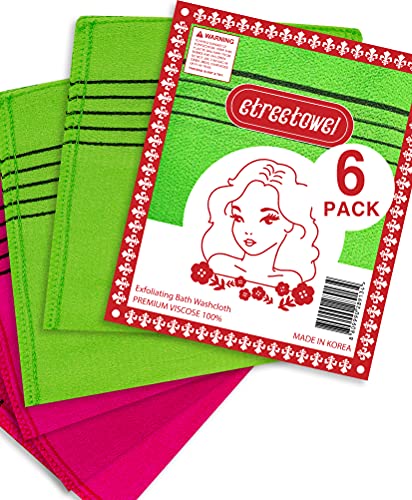 etreetowel Anti-Shrink Korean Asian Exfoliating Bath Washcloths MittSmall6 x 5.5 x 0.2 inches0.1 poundsCheck on Amazon


What's inside
- The landscape: flagship, domestic labels, and market editions
- How origin labeling works
- Movement classes you will actually find
- Design signatures of the Korean domestic market
- Build checks that separate serious pieces from souvenir grade
- Buying from outside Korea
- Who these watches suit, and who should look elsewhere
- A short history of Korean watchmaking in context
- Sizing, wearability, and reading a Korean specification sheet
- Ownership: batteries, service, and keeping a Korean watch for decades
- Gift occasions, presentation, and choosing between models
- Placing Korean watches beside Japanese and Swiss equivalents
- Check prices on Amazon
- A brief verification checklist to use at the point of purchase
As an Amazon Associate I earn from qualifying purchases. This post may contain affiliate links at no extra cost to you.
South Korea is a watchmaking country with a real industry, a flagship maker, and a large domestic market, yet it remains oddly invisible in international watch conversation, which tends to divide the world into Swiss, Japanese, and everyone else. That invisibility creates two opposite errors among buyers. The first is dismissal: the assumption that a Korean watch must be a souvenir or a fashion trinket with a borrowed name. The second is romantic overclaiming: the assumption that a Korean brand name on the dial guarantees a Korean movement, Korean manufacture throughout, and a hidden bargain equivalent to far costlier watches. The truth, as documented by the brands themselves, is more specific and more interesting than either error. Korea has genuine watch manufacturing, centered on companies that design, assemble, and finish watches domestically while sourcing movements from the Japanese and Swiss caliber makers that supply most of the world’s industry. Understanding that structure, rather than demanding an impossible purity, is the key to buying a Korean-made watch well.
This guide maps the landscape honestly. It explains who the Korean makers are, what origin labels do and do not promise, which movement classes actually appear inside Korean-brand watches and what accuracy those classes deliver, which design signatures belong to the Korean domestic market, and which physical checks separate a serious Korean-made piece from a souvenir-grade one. Throughout, the evidence base is published material: brand histories and catalogs, movement makers’ specification sheets, and the markings and documentation that accompany the watches themselves. No claim here rests on handling impressions dressed up as fact, and where the public record is thin, the guide says so plainly.
The landscape: flagship, domestic labels, and market editions
Romanson is the name that anchors any serious account of Korean watchmaking. Founded in 1988, the company grew from a domestic producer into Korea’s flagship watchmaker, exporting widely, building a recognizable design identity, and operating at a scale no other Korean watch firm matches. Its catalogs have historically spanned several tiers: accessible quartz dress watches for the domestic gift market, fashion-forward lines aimed at younger Korean buyers, and higher lines fitted with Swiss movements, a structure the company has presented openly rather than disguising. Romanson’s significance for the buyer is twofold. First, it demonstrates that Korean manufacture at volume is real, with domestic production facilities and decades of continuity behind the name. Second, its popularity at home makes it the Korean brand most often imitated abroad, a point the buying section of this guide returns to in detail.
Around the flagship sits a tier of domestic Korean labels serving the home market: dress and fashion watches sold through Korean department stores, television shopping channels, and online malls, often at the polished, gift-ready end of the market. These brands compete on design fluency, presentation, and price discipline rather than on movement prestige, and their watches typically run proven Japanese quartz calibers, the same workhorse movements found inside entry-level watches from Japanese and Western fashion brands alike. Judged by the standards of their own segment, the better domestic labels are respectable products: coherent designs, competent finishing for the class, and movements with documented accuracy and battery life. Judged by the standards of Swiss manufacture, they were never attempting that contest, and criticism that pretends otherwise misses what the Korean domestic market actually buys these watches to do.
The third category requires the most care, because it is where labeling confusion begins. Korean-market editions of global brands are watches designed, specified, or packaged for sale in Korea by companies whose manufacture lies elsewhere. A limited colorway sold only in Seoul, a domestic gift set with Korean-language presentation, or a collaboration with a Korean retailer does not make the watch Korean-made, any more than a Paris boutique edition makes a watch French. Conversely, a genuinely Korean-assembled watch may carry a movement from Japan and a strap sourced from a third country without forfeiting its origin claim, because origin in watchmaking has always referred principally to where the watch was manufactured and assembled under the brand’s responsibility. Keeping the three categories distinct, Korean brand with Korean manufacture, Korean brand with mixed sourcing, and foreign brand with Korean retail presence, prevents nearly every disappointment buyers report in this segment. Readers arriving from the smartwatch side of the market, where Korean electronics loom far larger and categories blur differently, will find the mechanical and quartz distinctions here stricter than in guides such as best android smartwatches for samsung phone, and that strictness is deliberate.
Why the industry took this shape
Korea’s watch industry developed alongside its broader precision-manufacturing rise in the late twentieth century, and it made a pragmatic choice early: rather than spending decades building commodity quartz calibers that Japanese makers already produced superbly and at enormous scale, Korean firms concentrated on the parts of watchmaking where design, case work, assembly, and quality control determine what the owner actually experiences. The movement, the component most romanticized by enthusiasts, is in truth a bought-in industrial product for the majority of the world’s watch brands, including many respected Swiss names that built their modern catalogs on ebauche calibers from specialist suppliers. Korea’s structure is therefore not an exception to how watchmaking works. It is the normal pattern, stated more openly than usual, and buyers who understand that pattern can evaluate a Korean watch on the merits its maker actually controlled: the case, the dial, the assembly discipline, and the honesty of the specification sheet.
How origin labeling works
Origin claims on a watch live in three places: the dial, the case back, and the documentation. A watch entitled to a country-of-origin manufacture claim states it in the small print of the dial, conventionally at the six o’clock edge, or engraved or printed on the case back, and the wording matters. Text that names Korea as the place of manufacture is a stronger and more specific claim than a Korean brand name, a Korean flag motif, or Korean-language text, none of which asserts anything about where the watch was made. Buyers should also expect, on many Korean-brand watches, a separate and entirely compatible statement of movement origin, because the movement’s country and the watch’s country are recorded independently in this industry. A dial or case back that acknowledges a Japanese movement inside a Korean-made watch is displaying the system working correctly, not confessing a contradiction.
The three-country distinction deserves a full statement, because it governs almost every purchase in this guide. Brand country is where the company is based and where design and commercial responsibility sit. Movement country is where the caliber was manufactured, Japan or Switzerland for nearly every Korean-brand watch a buyer will encounter. Assembly country is where movement, dial, hands, and case were brought together into a finished, regulated, and quality-checked watch. A Romanson designed in Korea, assembled in Korea, and powered by a Japanese quartz caliber is a Korean watch with a Japanese movement, and describing it as either purely Korean or secretly Japanese both misstate the record. Customs and labeling practice in most markets follows the place of final substantial manufacture, which is why the assembly country carries the origin claim, while movement markings satisfy the separate obligation to declare the caliber’s source.
What should make a buyer pause is not mixed sourcing but missing specificity. A listing that leans on phrases evoking Korea, Seoul style, Korean design, a Korean brand story, while nowhere stating a place of manufacture, is usually selling the second or third category described earlier while hoping to be mistaken for the first. The remedy is mechanical: find the model number, find that model in the brand’s own Korean catalog or documentation, and read what the brand itself claims for it. Brands with genuine domestic manufacture state it for the models it applies to, because the claim has commercial value at home. Silence in the brand’s own materials, filled in by enthusiastic marketplace copy, is the single most reliable warning sign in this market, and it costs nothing to check before money moves.
Movement classes you will actually find
Japanese quartz dominates Korean-brand watches for the same reason it dominates the world’s accessible watch market: the calibers are accurate, thin, durable, inexpensive to service by replacement, and available in every complication layout a designer could want. The Miyota 2035 class is the archetype of the three-hand quartz caliber in this segment, a long-running Citizen-group movement family documented with accuracy in the region of plus or minus twenty seconds per month under normal conditions and a battery life measured in years rather than months. Countless Korean dress watches run this caliber or its close relatives, and that fact should be read as a quality signal within the class: the movement is a known quantity with published tolerances, global parts availability, and a service record spanning decades. A Korean watch with a documented Miyota inside is a more verifiable product than a watch of any origin claiming an unnamed proprietary quartz caliber with no published sheet behind it.
Chronograph and multi-function models draw on the corresponding Japanese caliber families, including the JS-class chronograph movements from Miyota and the multi-eye quartz calibers from Seiko’s movement arm, sold under the Epson and Hattori designations that appear in supplier documentation. These calibers add stopwatch subdials, 24-hour indications, or date complications in layouts that Korean designers favor for the domestic fashion market, where a busier dial reads as a richer gift. Their accuracy classes track the three-hand calibers, broadly in the same monthly tolerance band, with battery life shortening as complication count and chronograph use rise, exactly as the movement makers’ own sheets describe. Solar-charging and radio-controlled models sold for the Korean market form a smaller, technically distinct group: they depend on Japanese movement platforms for their power and time-signal technology, including radio reception aligned to the Japanese standard transmitters receivable across much of Korea, and their documentation is correspondingly more Japanese in origin even when the watch around the movement is a Korean domestic product.
Korean-assembled automatics and Swiss-movement lines
Mechanical Korean-brand watches exist, and honesty about their construction matters more here than anywhere else in the guide. The automatic models offered by Korean brands are typically assembled in Korea around Japanese mechanical calibers, most recognizably the Miyota 8-series family, whose published specifications include accuracy stated in daily rather than monthly terms, commonly in a band from about minus twenty to plus forty seconds per day for the standard grades, with a power reserve in the region of forty hours. Those figures are ordinary for the caliber class worldwide, neither a Korean failing nor a Korean triumph, and a buyer comparing a Korean-assembled automatic against a Japanese or Swiss-branded watch running an equivalent bought-in caliber is comparing case work, dial quality, regulation care, and price, not national essences. Higher-grade Miyota 9-series calibers, thinner and finished to a higher standard with tighter stated tolerances, appear in the more ambitious Korean lines and deserve the same caliber-first reading.
At the top of the flagship’s historical range sit the Swiss-movement lines, in which Korean design and manufacture meet Swiss quartz or automatic calibers from the major Swiss movement houses. These watches complicate national categories in a way the guide insists on presenting plainly: they are Korean watches by brand, design, and company manufacture, carrying the movement origin that their price tier leads buyers to expect, exactly parallel to Swiss brands that have used bought-in calibers throughout their histories. The practical guidance for all three movement territories is identical. Identify the caliber from the brand’s documentation, read that caliber’s published specification from its maker, and hold the watch to its caliber’s class rather than to marketing language. Accuracy, battery life or power reserve, service intervals, and shock and magnetic resistance all descend from the caliber sheet, and a seller who cannot or will not name the caliber is asking the buyer to purchase a story instead of a specification. Buyers cross-shopping connected watches will notice how different this discipline feels from the smartwatch market surveyed in guides like best affordable android smartwatches, where the specification that matters is a platform rather than a caliber, but the underlying habit, name the engine, then judge, transfers intact.
Design signatures of the Korean domestic market
Every national watch market develops tastes that outsiders can learn to read, and Korea’s are unusually coherent. The dominant signature is slimness. Korean domestic dress watches favor thin cases and restrained diameters that sit flat under a cuff, reflecting both the formality of Korean business dress and a gift market in which the recipient’s wrist is often unknown and a moderate, elegant profile is the safe and flattering choice. Where Western fashion watches of the same era swelled toward oversized cases, the Korean domestic mainstream largely held to classical proportions, and that restraint now reads as a virtue to international buyers tired of the oversized cycle. Dials follow the same discipline: clean indices, restrained text, and color palettes built around silver, white, black, deep blue, and the warm metallic tones that photograph well in the gift listings where many of these watches are sold.
K-fashion minimalism is the second signature, and it is more than a mood. Korean fashion’s international influence trained a domestic audience to value pared-back surfaces, fine typography, and one deliberate accent rather than accumulated decoration, and the watch catalogs reflect that training directly. Expect thin baton indices instead of heavy numerals, small and carefully lettered brand signatures, hands with clean profiles, and bezels left smooth where another market’s version of the same watch would be fluted or engraved. The risk inside this aesthetic is anonymity, and the better Korean designers answer it with proportion and finish rather than ornament: a slightly domed dial, a distinctive handset silhouette, a seconds hand in a contrasting tone, or a case profile with one unexpected facet. Learning to see those quiet decisions is most of the skill of shopping this market, because the difference between a refined Korean dress watch and a generic one lives entirely in details that a thumbnail photograph flattens.
Materials aimed at the domestic gift market form the third signature. Ceramic elements appear in women’s and unisex lines for their scratch resistance and their deep, even color. Mother-of-pearl dials recur across the gift tiers, each one naturally unique, paired with crystal-set indices in the more decorative lines. These are not affectations imported for export. They answer a domestic retail reality in which watches are bought to be presented, at graduations, at weddings, at career milestones, and at the major gift-giving holidays, and in which the unboxing and the first impression carry real weight. Presentation boxes, protective films, and paperwork are correspondingly more elaborate in Korean domestic packaging than international buyers expect at the price class, and a genuinely domestic-market watch often announces itself through that completeness before any marking is read.
Couple watches: a durable Korean category
No account of Korean watch design is complete without the couple-watch set, a retail category with a staying power in Korea that surprises visitors. Matching men’s and women’s models, sold as a pair in shared packaging with coordinated dials, cases scaled in two sizes, and sometimes engraved case backs, answer a well-established domestic custom of couples marking anniversaries and milestones with matched goods. For the international buyer, the category matters for two practical reasons. First, it explains catalog structures that otherwise look odd, where a design appears twice in near-identical form at two sizes with paired model numbers. Second, it creates a buying opportunity and a caution at once: a separated half of a couple set, sold singly through a marketplace, may be entirely genuine yet arrive without the packaging and paperwork its original presentation assumed, while a complete set with both watches and full presentation is among the most distinctly Korean watch purchases an overseas gift-buyer can make. Readers comparing gift options across categories, including the connected pairs considered in guides such as best mens smartwatches, will find the Korean couple set a reminder that matching, in this market, is a feature with cultural roots rather than a marketing afterthought.
Build checks that separate serious pieces from souvenir grade
Because movements in this segment are bought-in and documented, build quality is decided at the case, dial, and assembly level, and it can be assessed with a short list of physical checks that require no instruments beyond good light and a loupe or a phone camera’s magnification. Case finishing comes first. A serious piece shows clean transitions between brushed and polished surfaces, edges that are defined without being ragged, lugs whose undersides are finished rather than left raw from forming, and a case back that seats evenly with legible, evenly struck markings. Souvenir-grade production betrays itself in wavy polishing that distorts reflections, plating that thins visibly at lug tips, and case backs whose text is shallow, uneven, or misspelled, an error class that also flourishes in counterfeit production and should end any negotiation on the spot.
Bracelet and strap hardware carry the same information at smaller scale. On a bracelet, end links should meet the case with minimal gap and no rocking, links should articulate without gritty resistance, and the clasp should close with a positive, repeatable action rather than a vague press. Screwed links are a welcome sign at higher tiers, though well-made pin links are respectable in this class and their presence alone proves nothing either way. On leather, look for even stitching that neither wanders nor frays at the holes, a lining that is bonded cleanly, and a buckle whose frame is finished on its inner faces, the surfaces makers skip when they expect no one to look. Deployant clasps on gift-tier Korean models deserve a specific check, because a stamped, loosely toleranced deployant is the most common point of failure in the segment, while a milled clasp with firm detents signals a maker spending money where owners actually feel it.
Dial printing and hand alignment are where assembly discipline becomes visible. Indices should sit at their markers without rotation, printed minute tracks should register evenly against applied indices, date windows should frame the date numeral centered rather than clipped, and the date should change crisply near midnight rather than drifting across hours, a behavior governed by the caliber and its assembly. Hands should be parallel to the dial without contact, the seconds hand should advance without stutter beyond its caliber’s normal character, and on chronographs the subdial hands should return to their zero positions exactly when reset, a check that takes five seconds and reveals more about a specific watch than any catalog claim. Under magnification, dial text should have clean edges; fuzzy, bleeding print is the signature of dials produced without the process control that serious Korean makers apply to their domestic lines.
Water resistance, stated honestly
Water resistance is the specification most often inflated in casual listings for this segment, and the honest baseline is simple. Most Korean dress watches in the domestic gift tiers are rated at 3 ATM, which in the standards language the industry uses means resistance to splashes and brief incidental contact with water, not swimming, not showering, and not immersion as a pastime. A 3 ATM dress watch is not a defective watch. It is a correctly specified dress watch, and the failure lies only in listings that translate 3 ATM into swim-ready language. Buyers who need genuine swim capability should look for ratings of 10 ATM and beyond, ideally with a screw-down crown, and should treat any Korean-market model so rated as the sports exception rather than the dress rule. Whatever the rating, gaskets age, and a watch bought used or old-stock should have its resistance treated as historical until a watchmaker renews the seals, advice that applies to watches of every origin and is printed, in some form, in the documentation of every serious maker in this guide.
Buying from outside Korea
Most international buyers meet Korean-made watches through marketplaces and cross-border sellers rather than through authorized channels in their own countries, and that route works well when its predictable frictions are understood in advance. Documentation is the first. Domestic-market models ship with Korean-language manuals and warranty cards, which is normal and expected, not a sign of gray-market diversion. The caliber-level information a buyer needs, battery type, setting instructions, water-resistance limits, is usually recoverable from the movement maker’s published sheets once the caliber is identified, and many brands publish Korean catalog PDFs in which the model appears with its full specification even for a reader working through translation. A buyer should archive the listing, the model number, and any catalog reference at purchase time, because marketplace listings vanish and the model number becomes the thread by which all later verification hangs.
Warranty handling is the second friction, and it should be described generically and honestly: coverage for a Korean domestic model bought from abroad typically runs through the seller or the marketplace’s own protections rather than through a local service network, because most Korean watch brands maintain no service presence in the buyer’s country. For quartz watches in this segment, the practical exposure is modest. The movements are global products that any competent watchmaker can service or replace, batteries and gaskets are standard, and case and bracelet parts are the only components whose replacement truly depends on the brand. Buyers for whom that residual risk matters should weigh it before purchase rather than discover it after, and should favor sellers whose stated return and warranty terms are written down in the listing rather than offered in conversation.
Model-number verification is the buyer’s strongest tool, and it deserves emphasis as a procedure. Take the model number from the case back or the listing, locate that exact model in the brand’s Korean catalog or official Korean retail presence, and compare the dial layout, case shape, dimensions, and stated movement against the item offered. Genuine domestic models match their catalog entries in every particular, because Korean retail is orderly and the brands document their lines carefully. Mismatches in dial text, handset shape, or case-back engraving between the offered watch and the catalog model are not charming variations. They are the measurable signature of the counterfeit and replica trade, which brings the discussion to the segment’s unavoidable shadow.
Counterfeit patterns around popular lines
Romanson’s popularity makes its best-known lines the primary target for imitation, and the patterns repeat across marketplaces with enough regularity to be listed. Dial text with softened or subtly wrong lettering, especially in the brand signature. Case backs with shallow, laser-pale engraving where genuine production is struck or deeply etched. Weights that feel light for the stated case material, because substitute alloys and hollow construction are where imitation production saves its money. Movements that do not match the documented caliber for the model, revealed by an incorrect date position, a wrong subdial layout, or a case-back opening that shows an unrelated caliber where the seller permits inspection photographs. Presentation that mimics the genuine box while omitting the paperwork, or paperwork whose model and serial details do not correspond to the watch. None of these signs requires expertise to check, only the catalog comparison described above and a refusal to explain away a mismatch that has been seen clearly. A price dramatically below the model’s Korean domestic retail level should be treated as one more such sign, not as a negotiating triumph, because the genuine distribution chain for these watches does not produce unexplained bargains of that size. Buyers who also shop the connected end of the market, through roundups like best all around smartwatches, already know this discipline in its software form, checking model numbers against official listings, and the quartz dress market rewards exactly the same habit.
Who these watches suit, and who should look elsewhere
The strongest case for a Korean-made watch is a gift with a genuine story. A buyer with Korean heritage, a Korean wedding or graduation to honor, time lived in Korea, or simply a recipient who will value an object that comes from a specific place and a specific maker, gets something from a Romanson or a serious domestic label that no equivalently priced global fashion watch provides: provenance that is true. The watch was designed and made by a Korean company with a documented history, in a design language shaped by its home market, and it will start conversations that a generic mall watch never will. Layered on that story are practical virtues that should not be undersold. Quartz reliability in this segment is excellent by any standard, the documented calibers ask for a battery every few years and nothing else, and the slim dress profiles suit formal and office wear with an ease that bulkier fashion watches cannot match.
The minimal-dress buyer is the second natural owner. Someone building a small rotation around a clean, thin, classically proportioned dress watch, who cares about proportion and finish and is indifferent to movement nationalism, will find the better Korean lines deliver that brief with real discipline, often in sizes the Western market has drifted away from. The couple-set buyer is the third, for the cultural reasons already described, and the value-conscious buyer who has learned to read caliber sheets is arguably the fourth, because this market prices its watches for domestic gift competition rather than for international enthusiast speculation, and a documented Miyota or Swiss caliber inside Korean manufacture can represent straightforward value when verified model by model.
Honesty requires naming the buyers these watches will not satisfy. The in-house-manufacture purist, for whom a watch counts only when its caliber was designed and produced under its own brand’s roof, should look elsewhere, because that is a standard most of the world’s industry fails and Korean brands do not claim to meet. The resale-value hunter should also look elsewhere: Korean domestic watches hold their worth as objects and gifts, not as traded assets, and their secondary markets outside Korea are thin. The buyer who needs local authorized service in their own city, swim-rated versatility in a single watch, or the particular prestige signal of a Swiss dial signature is likewise shopping in the wrong aisle, and no amount of appreciation for Korean design converts these watches into those things. Naming these limits is not a concession extracted from the guide. It is the same discipline applied throughout: match the documented thing to the actual need.
A short history of Korean watchmaking in context
To understand why Romanson’s founding in 1988 matters, it helps to place Korean watch production in the timeline of the industry around it. Through the middle of the twentieth century, Korea’s watch activity centered on assembly, distribution, and a domestic market supplied heavily by imports, first mechanical and then, decisively, quartz. The quartz revolution of the 1970s and 1980s reset the industry’s geography: electronic calibers rewarded electronics manufacturing strength, and Korea, then building the industrial base that would later define its global position in displays, semiconductors, and consumer electronics, had exactly the adjacent skills the new watchmaking required. Domestic brands multiplied in that window, most serving the home market with quartz dress and fashion watches, and the survivors of that competitive period are the labels whose names still anchor Korean department-store watch counters today.
Romanson’s emergence at the end of the 1980s marked the moment a Korean firm set out to be a watch brand in the full sense rather than a local assembler of other people’s designs: its own design studio language, its own export ambitions, and a catalog architecture that reached from accessible domestic quartz up toward Swiss-movement lines as the company’s capabilities and confidence grew. The decades that followed tested that ambition through the Asian financial crisis of the late 1990s, which hit Korean consumer industries hard, and through the smartphone era’s pressure on all traditional watch sales. That the flagship endured both, continuing to publish catalogs, maintain domestic production, and refresh its lines, is the factual core beneath its reputation at home. Korean consumers did not keep the company alive out of sentiment. They kept buying its watches through periods when imported alternatives were freely available, which is the market’s own verdict on whether the products met their brief.
The broader lesson of that history for today’s buyer is about continuity and documentation. A brand with decades of continuous catalogs leaves a paper trail that makes verification possible: old models can be looked up, caliber choices can be traced across generations, and a watch bought today joins a documented lineage rather than a marketing moment. Ephemeral labels, by contrast, appear with a story and vanish before their warranties would be tested, leaving owners with unbranded movements in unmarked cases and no catalog against which to check anything. When this guide urges model-number verification so insistently, it is really urging buyers to purchase inside the documented part of the Korean industry, the part with a history, and to let the undocumented part, however attractively photographed, sell to someone else.
Sizing, wearability, and reading a Korean specification sheet
Korean domestic specification sheets reward careful reading because they state, compactly, the dimensions that decide whether a watch will actually be worn. Case diameter is the headline figure, and in the Korean dress mainstream it clusters in the moderate range that suits a wide span of wrists, with women’s and couple-set models scaled below it and fashion lines occasionally pushing above it. Diameter alone, however, predicts fit poorly. Lug-to-lug length, the distance from the tip of one lug to the tip of the opposite lug, decides whether a case overhangs a smaller wrist, and thickness decides whether the watch slides under a cuff or catches on it, a matter of daily consequence for the slim dress profiles this market favors. Korean sheets typically state diameter and thickness plainly; lug-to-lug is stated less consistently, and a buyer with a smaller wrist should ask for it or measure from scaled catalog photography rather than guessing from diameter alone.
Weight completes the picture, and here the material and bracelet choices dominate. A steel bracelet adds substantially to the worn weight compared with a leather strap on the same case, and hollow-link bracelets in the accessible tiers weigh noticeably less than solid-link construction, which is one reason a genuine watch in this segment can feel lighter than an uninformed buyer expects. Light is not the same as insubstantial, and the checks that matter remain those described earlier: end-link fit, clasp action, and finishing. Strap width at the lugs, commonly in the moderate range for dress models, determines how easily an owner can fit replacement straps from the global aftermarket, one of the quiet practical advantages of Korean dress watches built to conventional dimensions. A watch with a standard lug width and a documented caliber is a watch that any city in the world can keep running and keep wearing, which is more long-term security than many costlier proprietary designs offer.
Reading the rest of the sheet is a matter of matching each line to its source. Accuracy belongs to the caliber and should match the movement maker’s published band for that caliber; a listing claiming accuracy far beyond the caliber’s own sheet is inventing a virtue. Battery life likewise belongs to the caliber sheet, stated for typical use, and shortens with chronograph running and, on solar models, depends on light exposure patterns the maker’s manual describes. Water resistance belongs to the finished watch and its gaskets, and it is the one line where the brand’s own statement, not the caliber’s, governs. Crystal material deserves a direct look: mineral glass dominates the accessible tiers, sapphire appears as lines ascend, and the difference matters to buyers who are hard on watches, because sapphire resists the scratches that mineral accumulates. None of these readings requires insider knowledge. They require only the habit, repeated throughout this guide, of asking which document stands behind each number.
Ownership: batteries, service, and keeping a Korean watch for decades
Quartz ownership in this segment is mercifully plain, and its plainness is a selling point the guide states without apology. A three-hand quartz watch on a documented Japanese caliber needs a battery renewal at the interval its caliber sheet suggests, a gasket check at the same visit if its water resistance is to remain meaningful, and nothing else on any fixed schedule. The battery type is a standard cell named in the movement documentation, available to watchmakers everywhere, and a competent independent watchmaker in any country can perform the work without brand-specific tools for the great majority of Korean domestic models, whose case backs open by conventional snap or screw methods described in their documentation. Owners should tell the watchmaker the stated water rating and ask for the gasket to be inspected rather than assumed, because the difference between a splash-resistant watch restored to specification and one returned with a perished seal is invisible until the first wet day.
Automatic models assembled around Miyota 8-series and 9-series calibers follow the mechanical ownership pattern familiar worldwide: a service interval measured in years, commonly discussed in the range of four to seven years depending on use and the caliber maker’s guidance, during which the movement is cleaned, lubricated, and regulated. Because the calibers are global products with published technical documentation, independent watchmakers can service them without recourse to Korea, and replacement movements, should one ever be beyond economic repair, are obtainable through normal trade channels, a practical advantage of bought-in calibers that in-house romantics rarely credit. Regulation deserves a word of expectation-setting: an automatic delivered within its caliber’s published daily band is performing to specification, and an owner who wants the tightest end of that band should discuss regulation with a watchmaker as a service, rather than treating mid-band performance as a fault in a Korean watch that would be accepted without comment in a Japanese or Swiss-branded equivalent.
Long-term keeping is mostly a matter of storage and honesty about use. Quartz watches stored for long periods should be stored with the crown in its normal running position debate set aside in favor of the simpler rule that a watch intended to be worn again soon stays ready, while a watch retired for years is better served by having its battery removed by a watchmaker than by leaving a cell to age inside the movement, because an exhausted cell is the one component that can damage a healthy caliber in storage. Leather straps age by sweat and sunlight and should be regarded as renewable fittings rather than permanent parts. Bracelets want rinsing after salt or heavy sweat exposure even on dress-rated watches, within the limits of their water rating, and drying before storage. These are small disciplines, but they are precisely the disciplines that separate the Korean dress watch still presenting beautifully at a family occasion twenty years on from the one that faded in a drawer, and they cost their owner almost nothing beyond attention.
Gift occasions, presentation, and choosing between models
Because so many Korean domestic watches are bought to be given, the gift logic of the catalogs deserves direct treatment for the overseas buyer stepping into it. The major domestic gift occasions, graduations in late winter, the spring wedding season, career beginnings and promotions, and the great family holidays of Seollal and Chuseok, shape when new lines appear and which designs lead the catalogs. A graduation gift leans classic and versatile, a slim three-hand watch that suits a first job’s wardrobe. A wedding or couple gift leans toward the matched sets described earlier, where the pairing itself carries the meaning. A milestone gift for a parent leans toward legibility, larger and cleaner dials, high-contrast indices, and the mother-of-pearl and warm-tone finishes that read as celebratory rather than severe. A buyer choosing from abroad does not need to perform Korean custom perfectly. They need only to recognize which of these registers a given model was designed in, because a watch chosen inside its intended register lands with a coherence that a technically similar watch chosen at random rarely achieves.
Presentation is part of the product in this market, and it can be evaluated rather than merely admired. A complete domestic presentation includes the fitted box, the warranty card bearing the model reference, the instruction booklet, and any protective films and tags the line ships with, and its completeness correlates with the orderly distribution this guide keeps recommending. An overseas buyer receiving a watch loose in generic packaging has not necessarily bought a fake, since sellers split presentations for shipping and separated couple sets circulate legitimately, but they have bought a watch whose provenance now rests entirely on the model-number verification procedure, and they should perform that procedure with corresponding care. Where the gift itself is the point, paying the modest premium for a complete, documented presentation is usually the right economy, because the recipient experiences the presentation first and the verification protects the giver as much as the wearer.
Choosing between two verified Korean models, finally, is an exercise in ranking the criteria this guide has built. Caliber first: prefer the documented caliber whose accuracy band, battery life, and complication layout fit the wearer’s habits, remembering that a simple three-hand caliber outlasts and out-serves a complicated one for most owners. Fit second: confirm diameter, thickness, and lug-to-lug against the wearer’s wrist where it is known, and default to the moderate middle of the Korean dress range where it is not. Finish third: apply the case, dial, and clasp checks to photographs or in person, because at equal calibers the finish is the product. Provenance always: a slightly less glamorous model with complete documentation and a catalog match is a better purchase than a spectacular listing that cannot be verified, in this market above most, because the documented industry is the genuine industry and everything outside it is a story told at the buyer’s expense. Ranked that way, the choice between two honest Korean watches becomes a matter of taste, which is exactly where a buying decision should end up once the facts have done their work.
Placing Korean watches beside Japanese and Swiss equivalents
A fair comparison framework keeps many buyers from both snobbery and naivety, and it can be stated in one principle: compare watches at the level of caliber, case execution, and documentation, and let national reputation enter only after those three are equal. A Korean dress watch on a documented Miyota quartz caliber, in a well-finished slim case, with a catalog-verifiable model number, stands comparison with any Japanese or Western fashion-brand watch on the same caliber family, because the engine is shared and the remaining differences are workmanship that can be inspected. It does not stand comparison with a high-accuracy quartz watch on a thermocompensated caliber, a mechanical watch on a manufacture caliber, or a Swiss piece whose value rests on heritage and finishing labor of a different order, because those are different products answering different ambitions, and pretending otherwise flatters no one, least of all the Korean industry, whose genuine strengths need no borrowed comparisons.
Where Korean watches can claim an edge, it is specific rather than mystical. Domestic-market competition keeps design disciplined and presentation generous. Moderate sizing, retained while other markets chased extremes, now suits the broad turn back toward classical proportions. A flagship with decades of continuous domestic production offers verification depth that pop-up labels cannot imitate. And the gift culture behind the catalogs produces watches designed to be received with pleasure, an intention that shows in dial restraint, in packaging, and in the couple-set category that has no real parallel elsewhere. Where they concede ground, it is equally specific: no manufacture calibers, thin resale markets abroad, limited service networks outside Korea, and a dress-heavy catalog that offers little to the buyer seeking a rugged sports watch. A buyer who walks in with both lists in hand is almost impossible to disappoint, because the purchase will be made on the documented merits of a particular model, and particular models, verified one by one, are what this entire guide has been about.
Check prices on Amazon
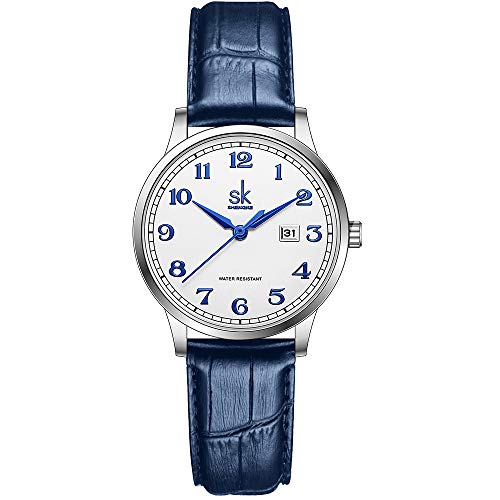
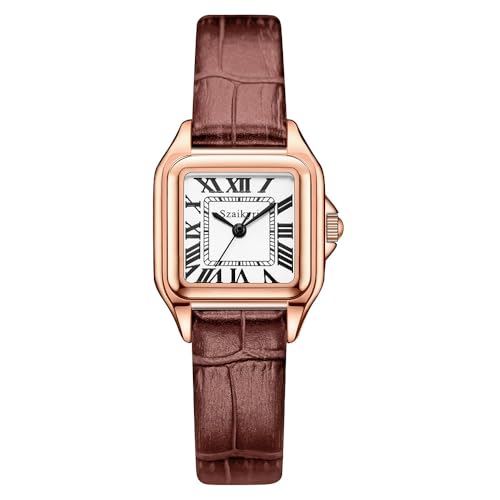
Live listings for the shortlist in this guide are pulled from Amazon below, so prices and availability are always current at the moment you look.


A brief verification checklist to use at the point of purchase
Everything in this guide compresses into a short sequence a buyer can run in a few minutes before paying. First, write down the exact model number from the case back or listing, and find that model in the brand’s own Korean catalog or official Korean retail listing. Second, compare five visible points between the catalog entry and the offered watch: dial text and layout, handset shape, case profile, case-back markings, and stated dimensions, and stop if any one of them disagrees. Third, confirm the caliber named for the model and read its accuracy and battery or reserve figures from the movement maker’s own sheet, so expectations are set by documentation rather than by sales language. Fourth, read the water-resistance figure on the watch itself and translate it conservatively, treating a dress rating as splash protection only. Fifth, record what presentation and paperwork will actually arrive, and what written return and warranty terms the seller offers, in the listing rather than in messages. A watch that passes all five steps is, by the standards available to any buyer, a verified Korean watch, and a watch that fails one has told its buyer something worth the small price of attention.
One small habit protects every step of that checklist: buy the documentation before buying the watch, in the literal sense of spending an evening with the brand’s Korean catalog and the caliber sheets before spending anything on the watch itself. Buyers who arrive at a listing already knowing the model’s dial variants, dimensions, and movement read that listing the way an editor reads a manuscript, catching the wrong handset or the impossible accuracy claim in seconds. Buyers who reverse the order, falling for a photograph first and researching afterward, spend their research defending a decision already made. The Korean market, orderly and well documented at its genuine core, rewards the first habit generously and punishes the second without malice, simply by containing both verified watches and unverifiable stories at similar prices, close enough together that only preparation tells them apart.
A final word on method and interests, in different terms than these pages usually use: everything asserted above traces back to published specifications, brand documentation, catalogs, and movement makers’ sheets, the public record any buyer can re-check model by model, and nothing here depends on privileged access or private impressions. This publication may receive a commission on qualifying purchases that follow from its guides, which helps fund the research behind them; that support does not purchase placement for any brand named, and the cautions about labeling, verification, and counterfeit risk stand exactly as written regardless of where a reader chooses to buy. For the buyer who wants a watch that is genuinely of Korea, verified against its maker’s own catalog and worn for the quiet elegance its home market prizes, these are watches with a real country behind them, and that rootedness, once confirmed with your own eyes on the documentation, is a pleasure no replica and no vague story can counterfeit.


