Our Top Picks
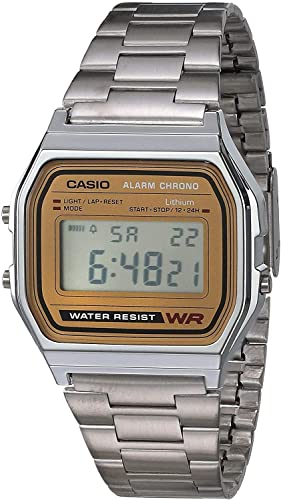 Casio Vintage A158WEA-9CF Casual Classic Digital Gold Bracelet9.1 x 9.1 x 9.1 inches0.2 poundsCheck on Amazon
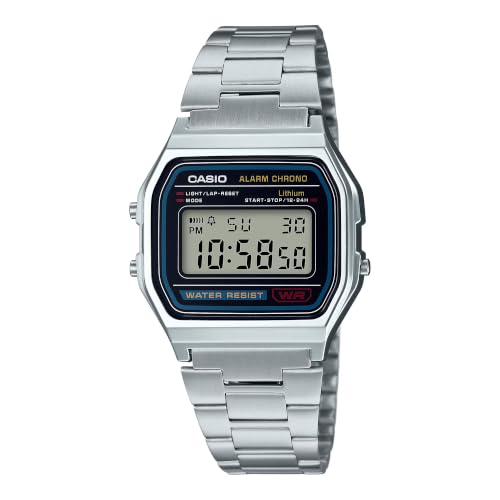


What's inside
- The classic model families, on published specifications
- Original 1980s and 1990s production versus modern reissues
- Modules and accuracy: what the numbers promise
- Batteries: cells, rated life, and the risks of a swap
- Resin cases and straps: care, rot, and replacement
- Water resistance reality: reading the dial honestly
- Counterfeit cues: the most copied watch in the world
- Choosing between the families: a practical comparison
- Check prices on Amazon
- Buying checklist: NOS, used, and everything between
As an Amazon Associate I earn from qualifying purchases. This post may contain affiliate links at no extra cost to you.
Some watches survive because they were precious. The classic digital models from Casio survived because they were the opposite: inexpensive, light, accurate enough for any ordinary day, and sold in such enormous numbers that they became part of the visual background of the late twentieth century. A black resin F-91W on a schoolchild, a silver-tone A168 on a shopkeeper, a calculator watch on an engineering student who enjoyed the joke and the utility in equal measure — these were not luxury objects. They were tools that happened to tell the time, and their honesty is exactly why collectors now hunt clean examples of the very pieces that were once bought without a second thought.
This guide covers the vintage and vintage-style digital lines on the strength of published specifications and manufacturer documentation: module numbers, battery codes, rated water resistance, case dimensions, and the feature sets printed in the manuals. It is deliberately not a guide to the shock-resistant lines, which follow a different design philosophy built around layered protection and much larger cases. The watches here are the slim, simple digitals — time, alarm, stopwatch, calendar — plus the stranger branches of the family tree that added calculators, phonebooks, and world maps to a wristwatch long before the modern connected watch existed.
One disclosure belongs near the top, in plain language: this site may receive a commission when readers buy through links on this page and complete qualifying purchases, and that support arrives at no additional cost to the person buying.
Understanding this corner of the catalog means understanding that Casio rarely changed a winning formula quickly. A model could stay in production for decades with quiet revisions to its module, its caseback stamping, or its country of assembly, while the face stayed nearly identical. That continuity is a gift to buyers, because replacement straps and fresh cells keep most of these watches useful indefinitely. It is also a trap for the careless, because two watches that look the same in a listing photo can differ in age by twenty years, in module by two generations, and in collector value by a wide margin.
The classic model families, on published specifications
F-91W: the reference point for everything else
The F-91W, launched at the end of the 1980s, is the watch almost every discussion of vintage digital style starts from, and its specification sheet explains why it never really left. The case measures roughly 38.2 by 35.2 millimetres with a thickness near 8.5 millimetres, and the whole watch weighs about 21 grams, light enough that wearers routinely forget it is on the wrist. Current production uses module 593, a number worth memorizing because it appears stamped on the caseback of genuine examples and anchors most authenticity checks. The feature set is deliberately small: time with a 12 or 24 hour format, a daily alarm, an hourly time signal, a 1/100 second stopwatch, an automatic calendar programmed through 2039, and a small LED light tucked into the upper left corner of the display.
The rated battery life is the famous figure here. Casio rates the watch at approximately seven years on a single CR2016 lithium cell, a claim that depends on restrained use of the light and alarm — the documentation works from assumptions along the lines of one light operation and twenty seconds of alarm per day. Owners regularly report longer real-world service from a cell, which makes sense: the module sips current, the display draws very little, and a wearer who rarely uses the backlight asks almost nothing of the battery beyond keeping time. Treat the seven-year figure as a conservative floor rather than a promise, and treat any seller claim of a fresh battery as a detail to verify rather than a fact to accept.
Water resistance on the F-91W needs careful reading, because the marketing language and the formal rating are different things. The dial carries the words Water Resist, and no depth figure accompanies that marking on this model. In the manufacturer’s own rating system, a watch marked simply Water Resist is built for everyday splashes — hand washing, rain, brief accidental wetting — and is not rated for swimming, showering under pressure, or diving of any kind. Later retail copy sometimes dressed the watch in grander language, but the caseback and the manual are the documents that count, and they describe a splash-resistant watch. That distinction matters enormously for vintage examples, whose gaskets have aged for years beyond the conditions the rating assumed.
A158 and A168: metal-look resin and the light that separates them
The A158 and A168 take the same basic timekeeping formula and dress it in a silver-tone finish meant to echo the metal watches of an earlier era. Both use resin cases with a metallic-look coating and are normally paired with a stainless steel bracelet with an adjustable clasp, which is why they read as dressier objects than the F-91W despite sharing its humble mechanical soul. The case dimensions sit in the same neighbourhood, around 36 to 37 millimetres across, and the weight rises modestly because of the bracelet rather than the watch head itself.
The meaningful difference between the two sits in the dark. The A158 uses a small LED light similar in spirit to the F-91W unit: a single diode at the corner of the display that tints one side of the screen greenish and leaves the far digits dimmer. The A168 upgrades to an electroluminescent backlight, which Casio marketed under its Illuminator branding, and the whole display glows evenly when the button is pressed. For a buyer choosing between them, that backlight is the practical dividing line — the A168 is simply easier to read at night, on a train, or in a cinema — while the A158 tends to appeal to purists who prefer the older, quirkier light and the slightly cleaner dial text that comes without the Illuminator script.
Both models run module variants in the same family as the F-91W generation, carry the same splash-level Water Resist marking without a depth number, and draw on CR2016 power with multi-year rated life. The bracelet deserves its own warning: the folded-link construction is light and comfortable, but the clasp adjustment relies on a small sliding section that wears over decades, and the resin case beneath the metallic finish can chip at the lugs where the bracelet meets it. Inspect those lug corners in listing photos before anything else, because a chipped corner cannot be polished back the way a steel case could.
CA-53W: the calculator watch that outlived the joke
The CA-53W is the calculator watch in its most honest form, and its specification is more serious than its reputation suggests. The keypad offers sixteen raised resin keys across the lower case, and the calculator handles eight digits, which covers everyday arithmetic, percentages worked out longhand, and the sort of quick sums that arise in workshops, markets, and classrooms. Beyond the calculator, the module provides dual time — genuinely useful for travellers who want home time on a second readout — plus a daily alarm, an hourly signal, a 1/100 second stopwatch, and an auto calendar. Current versions run module 3208, and the rated battery life is approximately five years on a CR2016.
What makes the CA-53W interesting to collectors is that it represents a branch of digital watchmaking that solved a real problem of its era. Before phones lived in every pocket, a wrist calculator was the fastest arithmetic tool a person could carry, and this model stayed in the catalog while flashier databank flagships came and went. The keys are small, and adult fingers will occasionally press two at once, but the tactile bumps on the keypad are placed with more care than nostalgia usually credits. Water resistance remains at the basic Water Resist level, so the same splash-only discipline applies, and the resin strap is integral to the design language — this watch looks wrong on anything else.
DBC-32 and DBC-150: the databank experiment
The databank models asked a different question: what if the watch remembered things for you? The DBC-32 and its DBC-150 sibling combine a calculator keypad with a small memory for telephone numbers and short memos. Depending on module and market, the storage is described in terms of records — the DBC-32 class offers storage for around twenty-five databank records, each holding a name field and a number field — while the DBC-150 name reflects a memory accounting that counts characters across records rather than simply counting entries. That naming difference confuses buyers to this day, so the manual for the specific module in front of you is the only reliable statement of capacity.
The databank watches also brought a schedule-friendly auto calendar and, on the DBC-32, an LED light rather than a full backlight, which places it visually in the older generation. Entering data through a sixteen-key pad is slow by any modern standard — each letter requires repeated key presses in the manner of an old phone keypad — and nobody should buy one expecting a productivity tool. The appeal is historical and tactile: these are working fossils of the personal-information era, the missing link between the paper address book and the smartphone, preserved in resin. Battery specification on the DBC-32 centres on the CR2025 cell with a rated life around three years under the manufacturer’s stated usage assumptions, noticeably shorter than the F-91W figure because the larger display and memory functions draw more from a cell of similar size.
AE-1200: world time, a map, and a ten-year battery
The AE-1200, often nicknamed for its resemblance to a certain cinematic spy gadget, is the overachiever of the classic range. Its module 3198 presents the time in a distinctive layout: a small world map in the upper right that shades the region corresponding to the selected city, an analogue-style LCD subdial at the upper left, and the main digital readout below. The watch covers world time across dozens of cities in all time zones, offers five daily alarms, a countdown timer, a 1/100 second stopwatch, and an LED light with selectable illumination duration — a refinement the simpler models never received.
Two specification lines lift the AE-1200 above its siblings for practical wear. First, the rated water resistance is 100 metres, a genuine depth-marked rating that changes what the watch can be used for, including swimming in the manufacturer’s guidance for this class. Second, the battery claim stretches to approximately ten years on a CR2025, the longest headline figure in this guide, achieved because the larger cell feeds an efficient module and the light is an LED rather than a power-hungry full panel. The case is bigger than the F-91W at roughly 45 by 42 millimetres, so it wears with more presence, and the resin strap carries a textured pattern that suits the instrument-panel styling. Collectors of vintage-style pieces include it because its design language is rooted in the multi-display experiments of earlier decades, even though it is a later creation.
W-800H and the sport-leaning classics
The W-800H represents the athletic branch of the traditional family: a larger resin case, a 100 metre water resistance rating, a ten-year battery claim on a CR2025, and a lap-memory stopwatch that can store up to sixty records depending on the module revision. Its dual time display shows a second time zone directly on the main screen rather than hiding it behind a mode change, which endears it to shift workers and frequent travellers. The LED light is brighter in effect than the F-91W corner diode because the display itself is bigger and the light placement suits it.
Around these headline models sits a supporting cast worth knowing. The W-96H and W-201 variations explore similar sport styling with different display layouts. The A700 and A1000 lines move the vintage formula toward slimmer cases and, in the A1000 case, a metal case construction at a higher price tier within the range, though pricing discussion belongs to live listings rather than a guide like this one. The B640 and W-217 families revisit the rectangular silhouette with different dial graphics. Each follows the same underlying logic: a proven module, a resin case in most instances, a long-life lithium cell, and features counted on one hand. Choosing among them is mostly a matter of display layout, light type, and the water rating printed on the dial.
Original 1980s and 1990s production versus modern reissues
Casio kept its classics in production so long that the word vintage covers two quite different kinds of object. A true period piece left a factory in Japan, Korea, Malaysia, Thailand, or China during the eighties or nineties and has lived a real life since: sunlight on the strap, water at the gasket, scratches on the crystal. A modern reissue or continuing-production example uses the same model name and nearly the same face but was assembled recently, sometimes with a revised module, different caseback text, and subtly altered dial printing. Neither is automatically better. The period piece carries history and collector interest; the fresh example carries a sound gasket, an unyellowed strap, and a battery that is not a decade old.
Reading the caseback like a document
The caseback is where a watch confesses its age, and learning to read one is the single most valuable skill in this hobby. Four screws hold the stainless steel back on most classic models, and the engraving between them records the module number in a small box or bracketed field, the model name, the case code, and a line stating where the movement or watch was cased or made. Early Japanese production carries particular prestige among collectors, and casebacks from that era often show deeper, crisper engraving than later runs. A line reading Japan, or a movement marked as made in Japan and cased elsewhere, tells a different production story from a later Thailand or China assembly line, and none of those stories make a watch fake — they make it datable.
The letter U appears in discussions of the F-91W more than any other single character. On many casebacks, a small U stamped near the module information has been associated by collectors with particular production periods and factories, and its presence or absence is used as one clue among several when dating an example. The honest position is that the U stamp is a real marking with a debated meaning: it correlates with certain eras and sources, but it is not a certificate, and fakes have copied it. Treat the stamp as one line of evidence alongside engraving depth, dial printing, module behaviour, and weight, never as a verdict by itself.
Serial and batch information on these watches is modest compared with luxury brands. Many classics carry no true serial number at all, only module and case codes, which is why provenance for a specific watch usually rests on paperwork, a seller history, or physical clues. Dial text evolved quietly: fonts for the Water Resist and Alarm Chrono lines shifted, the spacing of letters changed between production runs, and the small printed codes at the bottom of the dial — often overlooked entirely — differ between generations. Photographing a dial straight-on under even light and comparing it with documented examples of the same module era is slow work, and it is also the only work that reliably separates a period dial from a later one.
What collectors mean by condition grading
Grading language in listings sounds precise and is not, so translate it into physical questions. New old stock, abbreviated NOS, should mean a watch that was never sold or worn, ideally with its tags, box, and manual, and with a strap that has never been flexed around a wrist. Dead stock claims deserve scepticism when the strap shows creases or the caseback screws carry tool marks, because a genuinely untouched watch should look untouched under magnification. Mint in collector shorthand usually means worn briefly or stored carefully with no visible defects at arm’s length, while excellent and very good step down through light surface marks, faint crystal scuffs, and early strap stiffness.
The defects that actually govern value are specific. Crystal scratches sit at the top of the list because the acrylic or resin crystals on many classics can be polished only within limits, and deep gouges are permanent. Display faults come next: missing segments on a digit, a faded LCD with low contrast at glancing angles, or a darkened patch where the polarizing layer has aged. Then come case chips at the lugs, rounded caseback screws from clumsy battery changes, and straps that have begun the chalky surface breakdown collectors call resin rot. A watch can be honestly graded as good while carrying any one of these; a listing that mentions none of them has usually not looked.
Originality complicates grading further. A period F-91W wearing a fresh genuine strap is more usable and slightly less original than one wearing its cracked factory strap, and collectors disagree about which deserves the higher price. Replacement caseback screws, a swapped module, or a later dial inside an early case each move a watch toward the category politely called a marriage — correct parts, wrong combination. For a wearer, a marriage is often the smart buy, priced below a fully original example and mechanically sound. For a collector building a reference set, originality is the entire point, and the premium follows it.
Modules and accuracy: what the numbers promise
Every classic in this guide is a quartz watch, and its accuracy comes from a vibrating quartz crystal regulated by the module’s counting circuit. Casio’s published accuracy figures for these modules typically sit at plus or minus thirty seconds per month, with some modules specified at plus or minus twenty or fifteen seconds per month in the documentation. Those tolerances assume wear within a normal temperature band, roughly the range a watch experiences on a wrist or in a temperate room. A watch left on a cold windowsill or in a hot car will drift beyond its brochure figure without anything being wrong with it, because quartz frequency shifts with temperature in a predictable curve.
In daily life, thirty seconds a month is invisible. It amounts to about a second a day, far below the threshold at which appointments are missed, and it explains why these watches earned their reputation among nurses, runners, cooks, and travellers long before phones took over timekeeping. What varies between modules is not basic accuracy but the furniture around it. The F-91W generation offers one daily alarm and a simple stopwatch measuring in hundredths with a modest capacity before it rolls over. The AE-1200 module multiplies alarms to five, adds a countdown timer with proper setting ranges, and layers world time across its city codes. The W-800H module invests its complexity in the stopwatch instead, storing lap and split records for later recall.
Dual time deserves a precise definition, because marketing language blurs it. On the CA-53W, dual time is a secondary timekeeping readout that can be set independently and displayed in place of the main time. On the AE-1200, world time is a browsable list of city codes, each showing its local time derived from the home city setting and the UTC offset table stored in the module, with daylight saving toggles per city. On the W-800H, a dual time appears as a permanent smaller readout on the main screen. Three different mechanisms, three different uses: a fixed second zone, a travelling reference, and an at-a-glance companion for someone working across zones daily.
Alarm behaviour also differs in ways the spec sheets only hint at. The classic single-alarm modules sound for about twenty seconds and offer no snooze, a discipline some owners genuinely prefer. The hourly time signal — two short beeps on the hour — can be enabled independently and is the feature most often discovered by accident at 3 a.m. by a new owner who explored the settings before bed. Multi-alarm modules add one-time versus daily settings and, on some, a snooze alarm that repeats at intervals. None of this is documented on the dial; the module manual is the map, and downloading the correct manual by module number should be the first act of any new owner.
The auto calendar is the quietest specification and the one most likely to be misunderstood on older pieces. These calendars are programmed with a fixed span — the F-91W generation famously runs its calendar logic to 2039 — and they handle month lengths and leap years automatically within that span. A period watch whose calendar span has ended or whose year setting cannot reach the current year correctly will show the wrong day of the week for a given date, even while the time stays perfect. Savvy owners work around an exhausted calendar by setting the watch to an earlier year whose calendar layout matches the current one, a trick passed around collector forums for decades.
best android smartwatches for ios
Batteries: cells, rated life, and the risks of a swap
Which cell goes in which watch
The classic range runs overwhelmingly on two lithium coin cells. The CR2016, three volts and sixteen millimetres across with a thickness of 1.6 millimetres, powers the F-91W, the A158 and A168, and the CA-53W. The CR2025, same voltage and diameter but 2.5 millimetres thick with correspondingly greater capacity, powers the AE-1200, the W-800H, and the DBC-32. The codes are not decorative: the first two digits give the diameter in millimetres and the last two give the thickness in tenths of a millimetre, which is why a CR2025 physically cannot substitute for a CR2016 in a shallow battery well, and why a CR2016 rattling in a CR2025 compartment makes intermittent contact and produces the classic symptom of a display that dies when the light button is pressed.
Rated life figures in the manuals are engineering estimates under defined test conditions, and the conditions matter as much as the headline. The F-91W’s roughly seven years, the CA-53W’s roughly five, the DBC-32’s roughly three, and the ten-year claims attached to the AE-1200 and W-800H all assume a stated daily budget of light and alarm use. Electroluminescent backlights draw far more current than a corner LED, which is one reason the A168’s practical life tends to run shorter than an F-91W’s on the same cell family. A wearer who checks the time in the dark twenty times a night is spending battery the brochure did not budget for, and no fault is involved when the cell fades early.
Doing the replacement without hurting the watch
Changing a cell in a classic digital is simple in outline and fiddly in detail. The caseback comes off with a small Phillips or JIS driver across four screws that are soft, small, and eager to strip; the correct driver size and downward patience are the whole game. Inside, a metal retaining clip or a sticker label covers the cell, and the manual for the module usually prints a diagram of the latch. The step that separates careful work from folklore is the AC reset: after the new cell seats, many modules require a momentary contact between the pad marked AC and the back of the battery, made with tweezers, to start the circuit cleanly. Skipping it can leave a module showing a frozen or partial display that looks like damage and is usually just an uninitialized circuit.
The gasket is the other casualty of careless swaps. A thin rubber ring sits in a groove around the case or the caseback, and it must come out unpinched, go back seated evenly, and ideally receive the lightest touch of silicone grease to stay supple. A gasket that is stretched, twisted, or trapped under the caseback edge silently cancels whatever water resistance the watch had. Screws should return in a cross pattern with gentle, even torque, because overtightening a resin case cracks the screw posts from inside — an injury invisible until the back loosens months later. Anyone who does not enjoy this scale of work should pay a watch counter to do it; the labour charge is small and the failure modes are not.
When a dead vintage piece deserves a fresh cell
A non-running vintage watch is not automatically a bargain or automatically a loss. The favourable signs are a clean display with no bleeding or dark patches, an uncorroded battery compartment, and caseback screws that turn without crumbling. A fresh cell wakes most such watches immediately, because the modules are robust and the electronics rarely fail before the battery does. The unfavourable signs are green or white corrosion creeping from the battery well, a display with segments missing even after a proper reset, and buttons that no longer spring back. Corrosion can sometimes be cleaned with care and a fibreglass pen, but it travels along contacts invisibly, and a watch that wakes and then fades repeatedly is telling you the circuit has suffered.
Leaked cells are the worst-case version of the same story. Lithium coin cells leak less dramatically than old alkaline button cells did, but a watch stored for twenty years with a dead cell inside is a small chemistry experiment. Budget your enthusiasm accordingly: a common model with leakage damage is a parts donor at best, while a genuinely scarce period piece might justify professional attention. Either way, never store a collection with exhausted cells inside the watches. Removing a dead battery from a watch you are shelving is the cheapest preservation step in the entire hobby.
Resin cases and straps: care, rot, and replacement
The resin used across the classic range is a polyurethane formulation chosen for lightness, shock tolerance, and cheap, precise moulding. In its prime it is slightly flexible, faintly matte, and almost indifferent to knocks. Its enemy is not impact but chemistry and time. Heat, ultraviolet light, skin oils, sunscreen, and certain solvents work on the polymer chains year after year, and the material answers in stages: a surface that turns sticky or chalky, fine cracks around the spring bar holes, then crumbling at the strap keepers and lug ends. Collectors call the advanced stage resin rot, and it is the reason so many period watches survive as heads only, their original straps long since snapped at a buckle hole.
True vintage pieces from the eighties are deep into this timeline, and honest sellers photograph straps flexed gently to show whether cracks open under strain. A strap that looks perfect flat may reveal a web of white stress lines the moment it bends, and those lines are a countdown, not a cosmetic quirk. Storage slows the process: cool, dark, dry conditions, away from the heat cycling of an attic or the damp of a basement. Displaying a collection under strong light is a genuine trade-off, because the same light that shows the watches also yellows clear and coloured resins and bleaches dial printing over the years.
Yellowing deserves its own note because it is so often misread as dirt. Clear and white resin cases from the period absorb a yellow cast as the polymer ages, and surface cleaning does not reverse a change that runs through the material. Whitening treatments borrowed from retro computer restoration exist and are debated endlessly; they can brighten a case while making the plastic more brittle, which is a poor bargain on a strap that must flex. Most experienced collectors leave honest yellowing alone and reserve intervention for grime, which responds to warm water, a soft brush, and patience around the lugs where dirt compacts into a dark paste.
Strap replacement and lug widths
The good news is that the classics were built for strap swaps, and the dimensions are friendly. The F-91W family uses an integrated-look strap that mounts at a narrow case interface — the strap end is around 18 millimetres where it meets the case on many of these models, with the exact profile shaped to the case rather than a plain straight cut — so the correct approach is a strap made for the model, not a generic band trimmed hopefully. The A158 and A168 bracelets attach with spring bars at a conventional lug width for their case size, and period-correct replacements should match the folded-link style and clasp shape if originality matters. The AE-1200 and W-800H use wider, model-specific resin straps with shaped ends that follow the case contour.
Spring bars on these watches are small and their removal is the moment most cases get scratched. A proper spring bar tool, working from the back of the lug so any slip marks the hidden side, beats the folk method of a knife blade. Measure the old bar before discarding it; a bar a millimetre short will feel seated and then let go on the wrist. When a strap end is shaped for the case, check the fit dry before fitting the bars, because aftermarket mouldings vary in the depth of the spring bar channel, and a shallow channel leaves the bar under constant sideways load.
Aftermarket strap quality spans a wide range, and the differences are tactile before they are visible. Better replacements use a resin that flexes without whitening at the bend, keepers that grip the strap tail instead of sliding freely, and a buckle whose pin sits centred in the holes. Poor ones arrive stiff, smell strongly of solvent, and crack at the buckle hole within a season. Genuine maker-supplied straps remain the reference standard for fit, and for common models they are still produced, which removes any excuse for forcing a wrong strap onto a good case. Keep a removed original strap, however tired, in a labelled bag; future buyers and future you will both want the reference.
Case care follows the same gentle logic. The printed dial text and the painted case lettering sit close to the surface, and aggressive polishing compounds will lift them. Warm soapy water and a microfibre cloth handle nearly everything a worn watch collects. Buttons deserve a rinse after any exposure to sand or salt, because grit under a button collar is what turns a smooth pusher into a crunchy one, and a crunchy pusher eventually tears its tiny sealing ring. Never use ultrasonic cleaning on a complete vintage digital: the vibration can disturb an aged display connection and drive water past seals that were marginal before the bath.
Water resistance reality: reading the dial honestly
Water resistance ratings are laboratory statements about a new watch with fresh seals, tested under static pressure in clean water. Real life adds movement, heat, soap, and age, and the gap between the lab and the pool is where vintage watches drown. The manufacturer’s own guidance draws the lines clearly. A watch marked Water Resist with no depth figure is protected against splashes and rain. A 50 metre marking adds tolerance for showering and shallow recreational swimming in the maker’s guidance for that class. A 100 metre marking, like the AE-1200 and W-800H carry, is the level at which swimming and snorkelling enter the picture, while diving belongs to dedicated 200 metre dive-rated lines outside this guide entirely.
Notice what those numbers are not: they are not a promise that a thirty-year-old example still meets them. Gaskets harden, button seals shrink, and a caseback that has been opened six times by six different hands may no longer close to its original tolerance. The prudent rule for period pieces is to demote every watch by at least one class. Treat a vintage 100 metre watch as a splash-and-swim-cautiously watch only if its gasket history is known and recent; treat a vintage Water Resist model as a watch that should come off before hand washing becomes enthusiastic. Rain will not hurt any of them. Immersion is a decision, not an accident, and it should be made with the seal history in mind.
Buttons are the weak point in every scenario. Pressing a pusher underwater opens a momentary path along the button stem, and even manufacturers of depth-marked models advise against operating buttons while submerged. On the classics, the light button is the one people reach for in a pool at night, which is precisely the wrong instinct. Heat is the other quiet saboteur: a hot shower combines warm water, steam, and soap, three agents that each stress seals in different ways, and steam in particular finds paths that liquid water at the same pressure might not. A watch that survives a cold swim can fog after a hot shower, and the fog is condensed moisture that entered as vapour.
If a display does fog, act quickly and simply. Leave the watch in a bowl of uncooked rice or, better, with silica gel packets in a sealed container, face up, in a warm room — not on a radiator and never under a hairdryer, because heat damages the LCD layers. Persistent fog, droplets that gather and run, or a display that fades afterward all mean water reached the module, and the watch needs opening, drying, and a gasket replacement by someone equipped for it. A pressure test after any seal work is the only way to restore a rating claim; without one, the honest description of the watch is water resistant in hope, and it should be worn that way.
best fitness and music smartwatches
Counterfeit cues: the most copied watch in the world
The F-91W holds an unwanted distinction: it is among the most counterfeited watches ever made, copied because the genuine article is cheap, famous, and simple enough to imitate at a glance. Fakes range from crude toys with printed-on buttons to near-clones that fool a casual buyer in a dim listing photo. The defence is a layered check, because no single tell survives contact with every generation of copy. Work through display, case, caseback, weight, and behaviour, and let the evidence accumulate.
Start with the display and dial printing. On a genuine watch, the dial text is crisp at magnification, the letter spacing is even, and the day and date abbreviations render in the correct font weight. Copies often show slightly fuzzy printing, a Water Resist line that sits a fraction too high or too low, and digits whose segments look subtly wrong — sevens with odd angles, ones with unexpected serifs of light. The LCD itself on a genuine module has a particular neutral tone and strong contrast from straight ahead that softens predictably at an angle; cheap copy displays look washed from the front and greenish or patchy from the side.
The famous test screen is real and worth using. Holding down all of the buttons together on a genuine F-91W generation module brings up a display check in which the screen fills with segments and shows the maker’s name as part of the diagnostic routine; letting go of the buttons returns the watch to normal timekeeping. Many copies either show nothing, show a partial mess of segments, or display a garbled name. Treat the test as strong supporting evidence rather than a sole verdict, because copyists read the same forums collectors do, and later fakes have learned to mimic the screen. A watch that passes the test and fails the caseback is still a watch to walk away from.
The caseback tells its own story in metal. Genuine engraving is cut with consistent depth and clean edges; the module number sits in its field with the digits evenly stamped, and the four screws are proper small Phillips heads with tidy slots. Copy casebacks frequently show shallow laser etching that feels smooth under a fingernail where real engraving catches, lettering that wobbles along its baseline, and screws of soft metal that deform under a correct-size driver. Spelling errors still occur on the worst copies, but the better ones spell everything correctly and get the typography wrong instead — letters too bold, spacing too wide, the stamped box around the module number the wrong shape.
Weight and finish complete the picture. A genuine F-91W weighs about 21 grams, and while nobody should expect a kitchen scale verdict to the decimal, a copy that feels noticeably heavier in a metal-feeling case or lighter with a hollow rattle has announced itself. Genuine resin has a smooth, slightly warm matte finish with clean mould lines hidden at the case edges; copies show shiny plastic, sharp parting lines along the flanks, and strap plastic that creaks. Buttons on a genuine watch press with a defined click and return smartly. Buttons on a copy feel vague, sit at uneven heights, or — on the very worst — are decorative mouldings that do not move at all, which at least has the courtesy to settle the question instantly.
Price logic is the final filter, applied with care. A genuine classic costs little, so a listing priced far below the normal retail band for a supposedly new watch is asking to be doubted, and bulk lots of unboxed examples with identical photos are the natural habitat of the copy. Buy from sellers who show the caseback, who will photograph the test screen on request, and whose other listings look like a watch seller’s rather than a general liquidator’s. The databank and calculator models are copied less often, because their keypads raise the imitation cost, but the same checks apply: module number, engraving quality, display behaviour, and the feel of the keys.
Choosing between the families: a practical comparison
With the specifications laid out, the choice between families resolves into a handful of honest questions. The first is light. If you read your watch in the dark often, the A168’s full electroluminescent glow and the AE-1200’s selectable LED duration are worth more than any other feature on the table, and the F-91W’s corner diode will frustrate you nightly. The second question is water. A buyer who swims with a watch should start at the 100 metre models and stay there; a buyer whose watch meets water only at a sink can ignore ratings beyond the basic marking and choose on looks alone.
The third question is size and presence. The F-91W and the A158 pair disappear under a cuff and suit smaller wrists without argument. The AE-1200 and W-800H occupy the wrist like instruments, with cases in the mid-forties millimetre range that read boldly and catch on tight sleeves. Neither direction is better; they are different watches wearing similar badges, and wrist fit decides more purchases happily than any feature list. The fourth question is novelty tolerance. The calculator and databank models delight their owners and bewilder everyone else, and their keypads add case height and visual busyness that a minimalist will tire of by the second week.
Running costs across the range are as close to zero as watch ownership gets. A lithium coin cell every three to ten years, a strap every several years for a daily wearer, and nothing else scheduled — no servicing interval, no lubrication, no regulation beyond setting the time twice a year if the drift offends you. That economy is part of the design’s moral character. These watches were built to be used up and replaced, and the collector twist is that they refused to be used up: the modules keep counting long after the straps surrender, which is why the secondhand market is full of sound watch heads waiting for fresh resin.
For a first purchase, the sensible order of operations is to buy the common watch well rather than the rare watch badly. A clean, verified, currently produced F-91W or A168 teaches a new owner everything about fit, light, and daily wear for the smallest possible stake, and it remains useful forever as a travel or work watch even if taste later runs to period pieces. The period hunt — Japanese production, early modules, documented provenance — rewards patience and punishes hurry, and it is far more enjoyable with a working watch already on the wrist and a reference example already in hand for comparison.
Check prices on Amazon
Live listings for the shortlist in this guide are pulled from Amazon below, so prices and availability are always current at the moment you look.

Buying checklist: NOS, used, and everything between
Before you commit to a listing
- Ask for a straight-on photo of the caseback, readable enough to confirm the module number and the model stamp.
- Request the all-button test screen photo on any F-91W family purchase where authenticity carries the price.
- Check the dial photo for even printing, correct text placement, and digits that render with clean, complete segments.
- Look at the strap flexed, not flat, and scan for white stress lines, chalky patches, and cracks at the buckle holes.
- Confirm which battery the model takes and whether the fitted cell is fresh, old, or simply unknown.
- Read the water marking exactly as printed and plan your use one class below it for any older example.
- Compare the asking price with the normal band for a new example of the same model before paying a vintage premium.
- Prefer sellers who describe faults plainly; a listing that admits a scratched crystal is safer than one that mentions nothing.
NOS versus used, decided honestly
New old stock tempts buyers with the promise of a time capsule, and sometimes delivers it. A genuinely unworn period watch with tags and papers is a museum-grade object, and it should be priced and treated as one, which includes a decision about whether to fit a fresh cell and wake it or preserve it untouched. Understand that NOS resin has aged exactly as long as worn resin from the same year; an unworn strap can be more brittle than a used one, because flexing was never the main agent of decay. Buying NOS to wear daily is therefore a gamble with the strap, whatever the case condition promises.
Used examples divide into worn-with-care and worn-out, and the photos separate them if you know the landmarks. Caseback screws with clean slots suggest battery changes done by careful hands. A crystal with honest light scuffing and no deep gouges suits a wearer perfectly. Display contrast strong in a photo taken at an angle suggests a healthy LCD. The watches to avoid are the ones with several small mysteries at once: a replaced-looking caseback, a strap that does not match the model’s known profile, a module whose functions do not match the dial’s printed claims. One mystery is a story; three mysteries are a warning.
After the watch arrives
Set the watch against the correct module manual, not a generic video, and walk every function once: alarm on and off, hourly signal, stopwatch start, split, and reset, calendar behaviour at a month boundary. Note the drift over the first week against a phone clock to learn your example’s personal rate; a steady rate, fast or slow, is a healthy rate, while a rate that changes erratically can hint at a tired cell. If the battery history is unknown, replace the cell on your own schedule rather than waiting for the display to fade mid-trip, and keep the gasket discipline described earlier while you are in there. Photograph the caseback and dial for your own records on day one. If the collecting habit takes hold, those photos become the baseline every future purchase gets compared against, and the hobby quietly turns from buying watches to reading them — which is, in the end, the real pleasure these modest machines have been offering all along, one honest digit at a time.


