Our Top Picks
What's inside
- Where T-Classic Sits in the Tissot Catalogue
- The Powermatic 80 Movement in Detail
- The Families: Le Locle, PR 100, Tradition, Everytime, Carson and Chemin des Tourelles
- Quartz T-Classic Models and the Thin-Case Advantage
- Dial, Crystal and Legibility
- Water Resistance: What 30 and 50 Metres Really Mean
- Bracelets, Straps and Clasps
- Sizing on the Wrist: Diameter, Thickness and Lug-to-Lug
- Servicing, Gaskets and Long-Term Ownership
- Buying Checks: References, Papers and Swiss-Made Marks
- Check prices on Amazon
- Shortlist Logic: Three Routes Through T-Classic
As an Amazon Associate I earn from qualifying purchases. This post may contain affiliate links at no extra cost to you.
Where T-Classic Sits in the Tissot Catalogue
Tissot occupies a distinctive position inside the Swatch Group, sitting above entry-level fashion labels and below the groups more exclusive houses, and the T-Classic collection is the clearest expression of that middle ground. Published collection material describes T-Classic as the dress and everyday branch of the catalogue, distinct from the sport-oriented T-Sport lines, the connected T-Touch models and the heritage reissues that draw on specific archive years. For a buyer sorting through the range, that positioning matters because it sets expectations for case finishing, dial restraint and movement choice before any single reference is considered.
Swiss-made labelling provides the legal frame around the collection. Under the Swiss ordinance governing the use of the Swiss name for watches, a watch may carry the designation when its movement is Swiss, its final assembly takes place in Switzerland and the manufacturer carries out the final inspection there, with a prescribed proportion of manufacturing costs incurred domestically. T-Classic references meet that framework, and the dial signature reflects it directly. The point is not decorative. It explains why production, assembly and quality control for these models follow a particular cost structure and why the watches present differently from fashion watches assembled elsewhere with bought-in movements.
Within T-Classic, the design language leans toward restraint. Cases are predominantly polished or finely brushed stainless steel, dials favour applied indices over oversized numerals, and colour palettes stay close to silver, white, black, blue and champagne tones. Owner reports describe the watches as easy to pair with tailoring and with casual clothing alike, which is consistent with the collections stated everyday-dress brief. Nothing in the line chases extreme water resistance or oversized case proportions, and that deliberate modesty is part of its appeal for buyers who want one watch to cover office, evening and weekend wear without drawing attention for the wrong reasons.
Price positioning, described here only in relative terms, places T-Classic below luxury-tier Swiss dress watches and above generic quartz fashion pieces. The value argument rests on specification rather than branding theatre: sapphire crystals across most of the line, Swiss automatic movements with extended reserves in the Powermatic models, and case finishing that holds up under close inspection of lug edges and bezel transitions. Readers comparing connected alternatives may also find the contrast instructive in best mens smartwatches, where battery management and screen legibility raise entirely different ownership questions from a mechanical dress watch.
Understanding the collection as a system helps narrow a shortlist quickly. The families inside T-Classic are not random names. Each one encodes a dial style, a case profile and usually a movement tier. Le Locle signals traditional decoration, PR 100 signals clean modern minimalism, Tradition signals vintage influence, Everytime signals pared-back contemporary design, and the larger Carson and Chemin des Tourelles lines signal more presence on the wrist. Once that map is clear, the remaining decisions concern size, movement type and strap or bracelet configuration rather than vague questions of taste.
A further structural point concerns availability and continuity. Core T-Classic families have remained in the catalogue across multiple model years with incremental updates to movements and dial options rather than wholesale redesigns. That continuity supports parts availability and servicing confidence, and it means published specifications for a given family tend to remain comparable across generations. Buyers considering a reference from a few seasons ago can therefore use current family-level guidance with reasonable confidence, provided the individual reference number is checked against its own spec sheet.
This guide was prepared from manufacturer specifications, published movement data and aggregated owner feedback, and it contains affiliate links that may earn a commission at no additional cost to the reader, which supports continued coverage of classic watchmaking. Specifications change between model years, so the reference-level spec sheet remains the final authority for any individual watch.
The Powermatic 80 Movement in Detail
The Powermatic 80 is the mechanical centrepiece of modern T-Classic production. Published specifications list an 80-hour power reserve, a frequency of 21,600 vibrations per hour and 23 jewels. The calibre derives from the ETA 2824 architecture, reworked with a slower beat rate and revised gearing and mainspring arrangements to deliver the extended reserve. The name itself encodes the headline figure, and for many buyers that figure is the single most persuasive specification in the entire collection.
Frequency deserves unpacking because it involves a trade-off. A movement beating at 21,600 vibrations per hour completes three oscillations per second, compared with four per second in a 28,800-vibration movement. The slower beat contributes to the longer reserve and reduces wear rates on certain components, while producing a slightly less smooth seconds-hand sweep. The spec sheet rates accuracy within ranges typical for this tier, and owner reports describe daily rates that vary by position and state of wind, as expected for a non-chronometer mechanical calibre worn in ordinary conditions.
Selected Powermatic variants add a silicon balance spring. Silicon resists magnetic fields far better than conventional metallic alloys and is unaffected by temperature variation in the same way, which supports rate stability in daily environments full of laptop speakers, phone cases and bag clasps with magnetic closures. Published material distinguishes these variants by movement designation, so buyers who care about the silicon specification should confirm the exact calibre listed for the reference under consideration rather than assuming every Powermatic 80 carries the same hairspring material.
The practical consequence of an 80-hour reserve shows up in weekly rotation. A watch fully wound on Friday evening will still be running on Monday morning, with reserve to spare into Tuesday in many cases. That eliminates the Monday reset ritual that shorter-reserve watches impose: no resetting the date, no correcting minutes lost over the weekend. For owners who alternate between a dress watch and a weekend watch, the reserve transforms the T-Classic from a watch that demands attention into one that waits patiently. The date change mechanism still requires care around midnight, as with most calendar movements, but weekday pickup-and-go convenience is genuinely different at this reserve level.
Winding behaviour also deserves note. The Powermatic 80 winds automatically through wrist motion and can be hand-wound through the crown. Published guidance for automatic movements generally cautions against excessive manual winding as a daily habit, since the automatic winding works are the intended primary route. In practice, a modest number of crown turns to start a stopped watch, followed by normal wear, matches the design intent. Hacking seconds, where fitted, allow precise time setting by halting the seconds hand when the crown is pulled to the time-setting position, a feature owners use when synchronising to a reference clock.
Comparing the Powermatic route with battery-powered alternatives clarifies the ownership split inside T-Classic. Mechanical ownership brings periodic servicing and positional rate variation; quartz ownership brings battery changes and near-effortless accuracy. Neither is objectively superior. Readers whose daily wear already centres on connected devices, a context explored in best all around smartwatches, often find the mechanical ritual either a welcome contrast or an unnecessary burden, and that reaction is a useful self-diagnostic before committing to either movement family.
The Families: Le Locle, PR 100, Tradition, Everytime, Carson and Chemin des Tourelles
Le Locle takes its name from Tissots home town in the Swiss Jura and carries the most traditional styling in the collection. Signature elements include guilloche-style dial centres with a Clous de Paris or wave pattern depending on generation, Roman numerals at selected positions, leaf or dauphine hands and a slim polished bezel. Common case sizes sit around 39 to 40 millimetres with thicknesses near 9 to 10 millimetres for automatic versions, and lug widths typically follow the 19 or 20 millimetre convention for the family. An exhibition case back on many references reveals the decorated movement and the signed rotor.
The PR 100 family takes the opposite approach. Dials are clean and largely undecorated, with stick indices, a discreet date window and generous lume plots on many variants that lift legibility beyond pure dress-watch norms. Cases commonly measure 40 millimetres with a more modern, slightly sportier profile than Le Locle, and both quartz and Powermatic versions appear in the family. The name reaches back to earlier Tissot lines where the letters suggested particular robustness, and current models retain a faintly tool-adjacent character while remaining firmly office-appropriate. For buyers who find Le Locle ornamentation too formal, PR 100 is usually the natural alternative.
Tradition models look backward deliberately. Domed dials, curved hands, vintage-inspired numerals and in some references a distinctive open-heart or perpetual-calendar layout evoke mid-century Swiss watchmaking. Case sizes cluster around 40 to 42 millimetres, and the domed crystals or crystal profiles enhance the period feel while adding a fraction of height. The family rewards buyers who want historical character without the fragility, servicing uncertainty and provenance questions that accompany actual vintage purchases. Dial furniture is busier here than anywhere else in T-Classic, so legibility preferences should be tested against photographs at full size before ordering.
Everytime strips the formula to essentials. The dial carries simple indices, slim hands and minimal text, the case is thin and unadorned, and the overall effect is closer to a minimalist design watch than to traditional Swiss formality. Sizes span roughly 38 to 42 millimetres across mens and unisex references, with quartz movements dominating and keeping thickness low. Mesh bracelets and smooth leather straps recur in the family. Everytime suits buyers who prioritise versatility and understatement and who regard dial decoration as noise rather than craft.
Carson and Chemin des Tourelles occupy the larger, more formal end. Chemin des Tourelles, named for the street where the Tissot factory stood in Le Locle, commonly appears at 42 millimetres with Powermatic movements, textured dials and a dressier bracelet or strap presentation. Carson references share the upscale brief, with refined dial finishes and in some markets chronometer-adjacent positioning in presentation, though buyers should rely on the individual spec sheet for any accuracy designation rather than family reputation. Lug-to-lug lengths on these larger cases approach 48 to 50 millimetres, which makes wrist fit checks especially important.
Across all families, the reference system encodes the configuration. A Tissot reference number segments identify the collection, case material, dial variant and strap or bracelet type, and the final digits change when only the strap changes. Two watches that look identical in photographs may therefore carry different references because one ships on a bracelet and the other on leather. Recording the full reference from the case back or warranty card is the reliable way to match a watch to its published specifications, its correct lug width and its movement variant.
Quartz T-Classic Models and the Thin-Case Advantage
Quartz references form a substantial share of T-Classic, powered by Swiss ETA quartz calibres in three-hand and date configurations. Published specifications for these movements emphasise accuracy measured in seconds per month rather than seconds per day, a difference in kind from mechanical rate behaviour. For owners who set a watch and expect it to agree with a phone clock weeks later, quartz delivers that outcome without positional variation, without state-of-wind effects and without the need for regular wear to keep it running.
Battery intervals for the quartz families typically run to multiple years depending on calibre and whether the reference includes additional complications. End-of-life indication, where fitted, causes the seconds hand to advance in multi-second jumps as the cell depletes, warning the owner before the watch stops. Replacing the cell through an authorised channel also provides an opportunity for gasket inspection, which protects the water-resistance rating. Owner reports describe battery changes as brief, routine service events compared with mechanical servicing, and that simplicity is a legitimate ownership advantage rather than a compromise to apologise for.
Thickness is where quartz quietly wins. Without a rotor, mainspring barrel sized for days of reserve or a tall gear train, quartz T-Classic cases can sit noticeably thinner than their automatic siblings, in some families by two millimetres or more. Under a fitted shirt cuff, two millimetres is the difference between a watch that slides freely and one that catches. Buyers whose wardrobes lean toward slim tailoring should weigh that dimension as heavily as movement romance. The thinner case also reduces weight, which some owners prefer for all-day desk wear.
Quartz does not mean featureless. Selected T-Classic quartz references include chronograph layouts, moonphase indications in related classic lines and dual-time functions in travel-oriented variants, each adding dial complexity while retaining quartz accuracy. The trade-off is dial density: subdials and apertures compete with the clean aesthetic that defines much of T-Classic. Shoppers should decide whether the added function will actually be used weekly. A chronograph that never times anything is decoration with extra pushers to catch on cuffs.
A hybrid ownership pattern appears frequently in owner communities: a quartz T-Classic as the dependable daily watch and a Powermatic model reserved for occasions when the mechanical character matters. That pattern exploits the strengths of both movement types without forcing one watch to satisfy contradictory demands. It also spreads servicing events across different years. Readers building a small rotation may find that logic more durable than searching for a single reference that claims to do everything, a temptation that connected-watch marketing encourages in a different category altogether, as seen in best affordable round android smartwatches.
Resale and longevity considerations differ modestly between the movement families. Quartz references depend on long-term availability of compatible Swiss quartz calibres or module replacements, an area where Swatch Group service infrastructure provides reassurance. Mechanical references depend on parts for a widely produced calibre family. In both cases, keeping the warranty card, service receipts and full reference details supports future servicing and any eventual sale. Documentation discipline costs nothing at purchase and pays off years later.
Dial, Crystal and Legibility
Sapphire crystal covers the dial on most T-Classic references, and that specification deserves emphasis because it is not universal at this tier. Sapphire ranks near the top of the hardness scale for watch crystals and resists scratching from keys, desk edges and everyday abrasion that would mark mineral glass within months. Published specifications list sapphire explicitly for the majority of current models, though buyers should confirm the exact reference, since a small number of entry references in some markets have used alternative crystals in past seasons.
Dial textures carry much of the collections visual identity. Le Locle uses patterned centres that catch light in concentric or hobnail relief, PR 100 favours flat or lightly sunrayed surfaces, Tradition employs domed profiles with printed vintage numerals, and several families offer sunburst blue or gradient finishes that shift tone between indoor and outdoor light. These are manufactured dial finishes rather than hand-cut engine turning, and honest descriptions should say so. The visual effect at wrist distance, which is where watches are actually seen, remains refined and deliberate.
Applied indices appear across most families, raised above the dial surface and typically polished to match the hands. Applied furniture creates shadow lines and depth that printed markers cannot replicate, and it signals the tier difference between T-Classic and cheaper dress watches with flat printed dials. Date windows are usually framed or colour-matched to the dial, a small detail that separates considered design from catalogue assembly. Cyclops magnifiers are absent, preserving the flat crystal profile and the dress character.
Legibility follows from contrast and proportion. Silver hands on a silver dial, a combination found on some dress references, can wash out under flat office lighting despite looking elegant in product photography. Owner reports frequently flag this pairing as the one to inspect carefully in person or in unedited photographs. Black, blue and white dials with contrasting hands present fewer surprises. Lume is modest on dress-oriented families and more generous on PR 100 variants, reflecting their everyday brief; none of the T-Classic families should be bought primarily as a night-legibility tool.
Crystal reflections are managed with anti-reflective treatment on selected references, described in published material as coating on one or both sides depending on model. Double-sided treatment improves dial clarity at oblique angles but can show smudges and, if the outer coating is scratched, faint marks that the sapphire beneath would have resisted. Owners are divided on the preference, and the practical advice is simple: clean with a microfibre cloth, avoid abrasive wipes, and treat the crystal as a finished optical surface rather than a phone screen.
Hands complete the picture. Dauphine hands with faceted profiles dominate the dress families, leaf hands appear on traditional models, and simple baton hands suit Everytime minimalism. Length matters functionally: a minute hand that reaches the minute track supports precise reading, while undersized hands force estimation. T-Classic proportions are generally disciplined in this respect. When comparing photographs across families, hand length relative to the track is a quick, objective legibility check that requires no specialist knowledge.
Water Resistance: What 30 and 50 Metres Really Mean
Most T-Classic references carry a water-resistance rating of 30 metres, with some families rated to 50 metres. These figures are laboratory pressure ratings expressed in depth equivalents, not permissions to dive to those depths. Industry convention, reflected in manufacturer care guidance, treats 30 metres as splash resistance: rain, hand washing and accidental splashes are within scope, while showering, swimming and submersion are not. The rating assumes intact gaskets, a fully seated crown and no operation of pushers under moisture exposure.
A 50-metre rating broadens the margin. Brief immersion such as a quick swim is described in general manufacturer guidance as acceptable for many 50-metre watches, though dress-watch leather straps should never be submerged regardless of case rating, and repeated hot-water exposure in showers degrades gaskets through heat and soap chemistry. For T-Classic specifically, the sensible reading is that 50 metres buys insurance against accidents rather than a licence for aquatic use. These are dress and everyday watches, and their seals, crowns and case backs are engineered to that brief.
Gasket ageing is the hidden variable. Seals are elastomer components that compress, harden and lose resilience over years, faster in hot climates and with exposure to perfumes and solvents. A ten-year-old watch with an untested 50-metre rating may offer less real protection than a freshly serviced 30-metre watch. Authorised service channels pressure-test after opening the case, and published care guidance recommends periodic checks for any watch regularly exposed to water. Owners who treat the rating as permanent misunderstand what the number certifies: performance when new and correctly maintained.
Crown discipline protects the rating in daily life. Crowns must be fully pushed in before any water contact, and chronograph pushers on quartz T-Classic references must not be operated when the watch is wet. Steam deserves special mention because water vapour penetrates seals more readily than liquid splashes and because bathroom humidity is a common, underestimated exposure for dress watches left on counters during showers. Condensation under the crystal, visible as fogging, indicates seal failure and warrants prompt service attention before corrosion reaches the movement or dial.
Strap choice interacts with water exposure. Leather straps absorb water, stain, stiffen and age rapidly when repeatedly wetted, while steel bracelets tolerate splashes indefinitely with basic rinsing and drying. Owners in humid climates or with splash-prone routines often keep a T-Classic on its bracelet through summer and return to leather in drier months. That seasonal logic preserves both the strap investment and the dress appearance. Rubber straps are uncommon in this collection, which itself signals the intended use envelope.
Set against sports watches rated to 100 or 200 metres with screw-down crowns, T-Classic ratings look modest, and the comparison is fair only if aquatic use is genuinely planned. For office, travel and social wear with incidental rain and hand washing, 30 to 50 metres with maintained gaskets covers the realistic risk profile. Buyers whose weekends involve open water should add a dedicated sports watch to the rotation rather than asking a dress watch to exceed its design brief, much as activity-focused buyers consult best activity smartwatches for tools built around entirely different exposure assumptions.
Bracelets, Straps and Clasps
Factory bracelets on T-Classic models are typically stainless steel with a mix of brushed outer links and polished centre elements, closed by a butterfly deployant clasp. The butterfly design opens symmetrically from both sides, preserving the continuous line of the bracelet around the wrist and avoiding the dangling end of a single-fold clasp. Published descriptions note push-button release on most versions. Sizing is achieved by removing links, and the absence of extensive micro-adjustment on many clasps means the initial link count decision matters; a half-link, where supplied, can be the difference between a bracelet that rides correctly and one that migrates.
Link construction varies by family and generation. Higher references use solid links with a reassuring density, while some entry configurations have used folded or partially hollow construction in past seasons. Weight, edge finishing and articulation are the tactile tells: a well-made bracelet drapes without sharp edges and articulates smoothly around the wrist curve. Because bracelet feel is difficult to judge from photographs, weight figures in published specifications and owner descriptions of drape and rattle are useful proxies when buying without handling the watch.
Leather options span smooth calf, alligator-pattern embossed leather and suede-like finishes, usually paired with a standard pin buckle or a deployant on selected references. Stitching quality, edge painting and lining material determine how gracefully a strap ages. A strap that cracks at the adjustment holes within a season reflects lining and leather grade more than owner care. Tissot-branded replacement straps preserve the original taper and buckle sizing, while independent straps open a far wider range of colours and materials at standard lug widths.
Lug width is the enabling specification for strap changes. T-Classic families commonly use 19, 20, 21 or 22 millimetre lug widths depending on case size, with 20 millimetres the most convenient because the aftermarket catalogue at that width is effectively unlimited. Odd widths such as 19 or 21 millimetres narrow choices but remain well served by specialist strap makers. Spring-bar access through drilled or standard lug holes varies; a basic spring-bar tool and a measured approach make swaps a five-minute task, and quick-release spring bars, where fitted, remove even that barrier.
Taper shapes the wearing character. A strap or bracelet that tapers from 20 millimetres at the lugs to 18 or 16 millimetres at the clasp looks dressier and feels lighter than a straight design, while minimal taper reads more contemporary. Owners building a strap rotation for a single T-Classic often settle on three configurations: the factory bracelet for warm months and formal settings, a smooth dark leather for classic dress use, and a textured or suede option for casual wear. That trio covers the realistic wardrobe range of the collection without accumulation for its own sake.
Clasp and buckle security deserve a final check. Butterfly clasps should close with a positive, even engagement on both sides; a clasp that favours one side will eventually open unexpectedly. Pin buckles should be inspected for a tongue that sits flush and holes that are cleanly punched rather than torn. These are small mechanical details, but they are the components that keep the watch on the wrist, and they reward the same specification-level attention as the movement.
Sizing on the Wrist: Diameter, Thickness and Lug-to-Lug
Case diameter dominates marketing, but fit is governed by three numbers together: diameter, thickness and lug-to-lug length. T-Classic spans roughly 38 to 42 millimetres in diameter for mens references, with thicknesses from under 8 millimetres for slim quartz models to around 11 millimetres for some automatic and chronograph configurations. Lug-to-lug measurements, the tip-to-tip distance that determines whether a case overhangs the wrist, typically run about 46 to 50 millimetres across the families. That third figure is the honest fit number because it maps directly onto wrist width.
Wrist circumference provides the matching scale. On a wrist around 16 centimetres, a 39-millimetre Le Locle with a lug-to-lug near 47 millimetres usually sits contained, while a 42-millimetre Chemin des Tourelles approaching 50 millimetres lug-to-lug may reach the wrist edges. On a wrist around 18.5 centimetres, the relationship inverts: the smaller case can look spare and the larger case sits proportionally. These are tendencies, not laws, because wrist shape matters as much as circumference; flat wrists carry lug length more comfortably than round wrists of the same measurement.
Thickness interacts with cuffs and with perceived size. A watch under 10 millimetres thick slides under most shirt cuffs and reads as dressier regardless of diameter, while a thicker case announces itself and pairs better with knitwear and jackets. Powermatic references generally sit in the middle of the T-Classic thickness range, quartz references at the slim end. Buyers who wear fitted tailoring daily should treat 11 millimetres as a practical ceiling and verify the figure for the exact reference, since chronograph and open-heart variants add height that headline family descriptions may not highlight.
Dial proportion modifies visual size independently of the case. A white dial with a thin bezel wears larger than its diameter because the eye reads the dial opening, while a black dial with a broader bezel wears smaller. Everytime models, with their minimal bezels, present larger than their measurements suggest; Tradition models with domed profiles and busier dials present denser. Trying equivalent diameters across dial colours, even through owner photographs taken at natural wrist distance, corrects the common mistake of judging size from macro product shots.
Strap and bracelet choice changes fit after purchase. A bracelet adds visual mass and holds the case centred, a thick padded leather strap adds height beneath the lugs, and a thin flat strap lets the case sit lowest. Curved spring bars or integrated-look straps reduce the gap between case and strap that can make a watch appear to float. Owners between sizes often find that strap selection resolves the question more cheaply than exchanging the watch, provided the lug-to-lug itself does not overhang.
A disciplined fitting method closes the section. Measure wrist circumference with a tape at the wearing position, note the lug-to-lug of the target reference from published specifications, and compare against a watch already owned that fits well. If the target exceeds the known-good lug-to-lug by more than about two millimetres, expect a different wearing character and seek photographs on similar wrists. Diameter alone should never be the deciding figure, and retailers who quote only diameter are omitting the measurement that matters most.
Servicing, Gaskets and Long-Term Ownership
Mechanical servicing follows a rhythm measured in years. Manufacturer guidance for modern automatic movements generally suggests inspection intervals in the four-to-six-year range, adjusted by wear patterns and performance drift. A Powermatic 80 service at an authorised centre typically involves complete movement disassembly, cleaning, replacement of worn components, lubrication with specified oils, regulation across positions and renewal of gaskets, followed by pressure testing and rate verification. The extended reserve complicates nothing about that process; the calibre was designed for mainstream service infrastructure.
Between services, rate behaviour is the owners diagnostic. A watch that gradually loses its reserve, gains or loses time beyond its earlier pattern, or shows a rough winding feel is communicating wear or lubricant ageing. Addressing those signals at inspection stage is materially cheaper in parts terms than running a movement until components damage each other. Owner reports consistently describe authorised servicing as the point where an ageing T-Classic returns to its original timekeeping character, which reflects the benefit of factory parts, correct lubricants and specified regulation targets.
Quartz servicing is lighter but not zero. Battery replacement intervals double as gasket inspection opportunities, and a watch that has stopped should not sit indefinitely with a depleted cell inside, since aged batteries carry a small leakage risk that can damage a movement. Authorised battery service includes seal checks and pressure testing where the rating matters. Owners who change batteries at general kiosks trade away the pressure test and the correct gasket handling, a saving that makes sense only for watches whose water exposure is truly nil.
Magnetism is the most common modern disturbance for mechanical references without silicon springs. Exposure to strong magnetic fields can magnetise the balance spring, typically causing a sudden gain in rate. Demagnetisation is a quick, non-invasive correction available at service centres and many retailers. Silicon-spring Powermatic variants resist this failure mode by material choice. Owners noticing an abrupt rate change after travel, medical imaging proximity or contact with magnetic clasps should suspect magnetism before assuming mechanical damage.
Storage and rotation habits influence service life. A watch worn regularly distributes lubricants through motion; a watch stored for years may need inspection before returning to daily use even if it appears to run. Watch winders are optional convenience devices rather than necessities for an 80-hour-reserve movement, since the reserve itself covers short rotations. Long-term storage in dry conditions, away from speakers and magnetic closures, with the crown fully seated, covers the realistic risks. Documentation of every service event, kept with the warranty card, builds the provenance file that supports value and simplifies future diagnosis.
The authorised network is part of the ownership proposition. Swatch Group service infrastructure spans most major markets, with published channels for intake, estimates and warranty handling. Warranty terms for new Tissot watches are stated in the accompanying documentation, and international warranty recognition means a watch bought while travelling can be serviced at home. Grey-market purchases may carry seller warranties instead, which shifts the servicing conversation; that distinction is examined in the buying checks that follow and should be understood before, not after, a purchase decision.
Buying Checks: References, Papers and Swiss-Made Marks
The reference number is the master key to a correct purchase. It appears on the warranty card and in retailer listings, and its segments identify collection, material, dial and strap configuration. Cross-checking the reference against the manufacturers published listing for that exact code confirms that the dial colour, movement variant and bracelet described by the seller match factory configuration. Mismatches occasionally reflect listing errors rather than anything sinister, but they must be resolved before payment because they determine lug width, crystal material and calibre.
Exhibition case backs, fitted to many Powermatic T-Classic references, allow direct visual confirmation of the movement. The rotor typically carries the brand signature and the calibre designation is engraved on the movement itself. A buyer can compare the visible calibre marking with the specification for the reference, confirm the jewel count inscription and observe the balance spring material where the silicon variant is claimed. Solid case backs on quartz and selected dress references remove that window, making paperwork and seller credibility correspondingly more important.
Swiss-made marks appear at the dial base and, for the movement and case, in the documentation and case markings. The dial signature should be crisply printed and correctly positioned, a detail that sounds trivial until compared with the soft, misaligned printing found on counterfeit dress watches. Counterfeiting of mid-tier Swiss watches is less discussed than luxury fakery but exists, particularly for popular Le Locle and PR 100 configurations. Buying through authorised retailers eliminates the category of risk entirely; buying elsewhere transfers verification responsibility to the purchaser.
Grey-market purchases trade a lower outlay for a different warranty structure. The watch itself, when sourced from reputable grey sellers, is a genuine factory product, but the manufacturer warranty card may be unstamped or replaced by a seller warranty. Buyers should establish, in writing where possible, who honours warranty claims, how servicing is accessed during that period and whether the full set of box, papers and links is included. Removed bracelet links matter practically: a bracelet sized for a small wrist without spare links cannot be enlarged later without sourcing matching parts.
Pre-owned checks extend the same discipline. Service history, case polishing state and dial originality determine value more than cosmetic shine. Heavy polishing rounds lug edges and softens case lines in ways photographs can conceal with favourable angles; unpolished or lightly polished cases retain the geometry the factory cut. Dials and hands should be original to the reference, since replacement parts from other variants create frankenspecimens that complicate servicing. A pre-owned Powermatic with documented recent service is often a stronger purchase than an identical watch with unknown history and a superficially cleaner case.
Final verification is procedural. Confirm the reference, confirm the calibre through the case back or documentation, confirm sapphire and water rating against the published spec sheet for that code, confirm the full set of accessories, and confirm the warranty route. Five confirmations, each taking minutes, close nearly every realistic purchase risk for this collection. The discipline mirrors how careful buyers approach any specification-led product: trust documents and measurements over listing adjectives, and let the spec sheet arbitrate every disagreement.
Heritage also shapes how the collection should be judged. Tissot was founded in Le Locle in 1853, and the T-Classic families deliberately reference that nineteenth-century pocket-watch inheritance through slim profiles, restrained dials and traditional finishing cues. That lineage does not make any individual watch better, but it explains why the design centre of gravity sits where it does: the collection is the custodian of the brands original identity, while the sport and connected lines are later branches. Buyers who understand that custodial role stop asking T-Classic to be something else and start evaluating it on the terms it sets for itself.
Regulation and adjustment deserve a closer look for mechanically minded readers. The Powermatic 80 uses a traditional regulator system on many variants and a free-sprung arrangement with variable-inertia balance on selected silicon-spring versions, a distinction visible through exhibition backs and documented in calibre descriptions. Free-sprung balances adjust rate through timing screws on the balance rim rather than regulator pins, a system associated with greater stability after shocks. Owners need not service either system themselves; the relevance is diagnostic. Knowing which arrangement a reference carries explains its published accuracy range and its behaviour after the knocks of daily wear, and it gives a service conversation a precise starting point.
Case construction details reward inspection across the families. Lug profiles curve downward to follow the wrist, bezels are polished to contrast with brushed case flanks on many references, and case backs thread or snap according to family and generation, a detail that affects who should open the watch and with what tools. Sapphire exhibition backs add a fraction of thickness compared with steel backs but transform ownership for buyers who value seeing the calibre. Water-resistance engineering is shared across those back types when gaskets are fresh, so the choice between display and solid backs is aesthetic and tactile rather than functional, provided servicing stays with channels equipped for the fitted back type.
Crown and winding feel provide daily tactile feedback that specifications omit. Powermatic crowns are typically signed, moderately sized and knurled for grip without protruding into the wrist, and the winding action through the crown has a defined, slightly resistant character as the mainspring loads. Date setting uses a quickset position on most references, and the standard caution applies: avoid quickset operation during the late-evening hours when the calendar mechanism is engaged, a window described in the manuals. These small interactions, repeated thousands of times across ownership, are where the collection either feels considered or feels assembled, and T-Classic generally lands on the considered side.
Box, presentation and included materials form the final layer of the ownership record. New references ship with warranty documentation, instruction material and, on bracelet models, the links removed at sizing if the retailer returns them, which buyers should explicitly request. Keeping the inner and outer boxes supports any future sale and protects the watch in storage, while photographing the case back, reference and warranty card at purchase creates a personal record independent of paper. None of this affects timekeeping, yet experienced owners treat documentation as part of the watch itself, because servicing, insurance and resale all run more smoothly when the paper trail is complete from day one.
Gift and milestone purchases follow a distinct logic within the collection. A T-Classic is frequently chosen to mark graduations, weddings and retirements because its styling will not date quickly and its servicing infrastructure supports decades of use. Engraving, where the case back allows it, personalises without altering the watchs function, though solid-back references accommodate engraving far better than exhibition backs. Buyers shopping for another person should weight size conservatively, favour the middle of the size range, retain exchange options and include the warranty card completed correctly, since a milestone watch that fits poorly or lacks papers fails its purpose despite excellent specifications.
Travel behaviour is a quiet strength of the long-reserve automatic. A Powermatic T-Classic worn on a flight arrives running, handles a weekend without a winder and tolerates being left in a hotel safe for a day without stopping, which keeps the date correct and removes resetting from the travel routine. Quartz references go further, surviving weeks in a drawer and presenting the correct time at pickup, which is why frequent travellers often anchor a rotation with one quartz classic. Time-zone handling is manual on both movement types, there is no jumping-hour complication in this collection, so owners crossing zones reset hands and verify the date rollover at midnight local time, a minor ritual that also serves as a useful check of crown operation before the watch is needed for a meeting.
Dial colour selection has practical consequences beyond taste. White and silver dials maximise contrast with blued or darkened hands where those are fitted and read clearly in the flat light of offices, while champagne dials warm formal outfits but can reduce contrast with gold-tone hands at oblique angles. Blue sunburst dials, now common across PR 100 and Le Locle, shift between near-black indoors and vivid blue in sunlight, effectively giving one watch two characters. Black dials remain the most forgiving for legibility and the most formal after white. Because dial furniture and hand finishes are paired per reference, the spec sheet and full-size photographs together predict the wearing experience more reliably than colour names in a listing.
Long-term dial and hand ageing on modern references is deliberately uneventful. Contemporary luminous compounds do not develop the patina of vintage tritium, dial lacquers are stabilised against ultraviolet change, and sapphire protects the surface from the scratches that once clouded acrylic crystals. A T-Classic bought today should look materially the same in a decade with ordinary care, which suits the collections design intent but disappoints collectors who enjoy visible ageing. The ageing that does occur concentrates in straps, gaskets and lubricants, the consumable layer of the watch, and the service system exists precisely to renew that layer while the dial, case and movement persist.
Finally, the question of value retention deserves a sober answer. T-Classic references are produced in volume and traded in an active secondary market, so they should be bought as durable goods whose return is measured in years of wear rather than as appreciating assets. Limited or discontinued dial variants occasionally command stronger demand, but predicting those outcomes at purchase is speculation, not buying discipline. The economically rational approach is to secure the correct reference at a fair channel price, keep the full set and service record, and let cost-per-wear fall across a long ownership. Judged that way, the collections combination of sapphire, Swiss movements and serviceability makes its case without any appeal to investment language.
One further ownership detail separates careful buyers from casual ones: photographing the watch on the wrist in natural light during the first week. Those photographs record the factory finish before daily wear softens it, document the dial variant unambiguously and provide a dated reference if the watch is ever lost, insured or offered for sale. Stored with the warranty card details and service receipts, they complete a provenance file that takes minutes to create and years to appreciate, particularly for references whose dial options changed quietly between production seasons without any change to the family name.
Retail display lighting flatters every dial and hides every proportion problem, which is why the measurements and owner photographs emphasised throughout this guide deserve more trust than a boutique mirror. Distance, daylight and a known wrist size tell the truth that spotlights conceal.
Check prices on Amazon
Live listings for the shortlist in this guide are pulled from Amazon below, so prices and availability are always current at the moment you look.

Tissot T-Race, Swiss Automatic, 41mm, Black Dial, Men’s Watch

Tissot T-Race, Swiss Powermatic 80, 41mm, Black Dial, Men's Watch
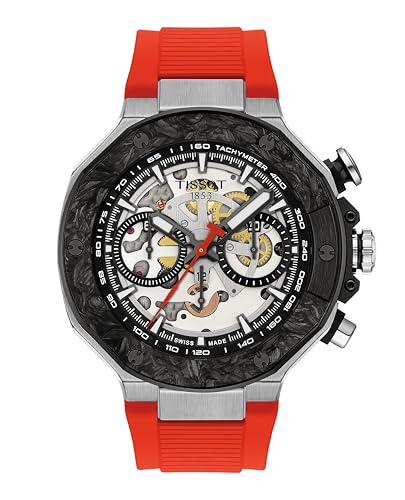
Tissot T-Race MotoGP 2026, Swiss Automatic Chronograph, 45mm, Men’s Watch

Tissot T-Touch Connect Sport, Swiss Quartz Solar Tactile, 43mm, Black Dial, Unisex Watch

Tissot Classic Dream, Swiss Quartz, 42mm, Ivory Dial, Men’s Watch

Tissot Classic Dream, Swiss Automatic, 40mm, Ivory Dial, Men’s Watch

Tissot T-Touch Connect Sport, Swiss Quartz Solar Tactile, 43mm, Black Dial, Unisex Watch
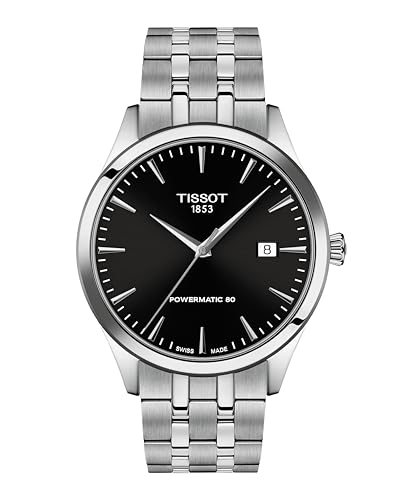
Tissot Classic Dream, Swiss Automatic, 40mm, Black Dial, Men’s Watch
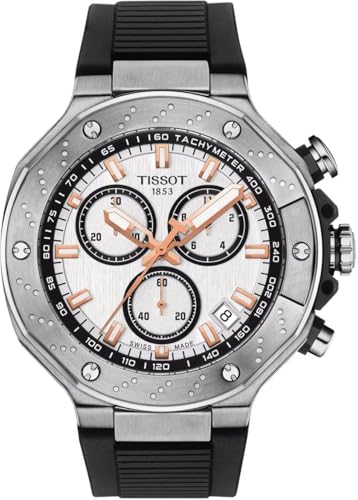
Tissot T-Race, Swiss Quartz Chronograph, 45mm, White Dial, Men's Watch

Shortlist Logic: Three Routes Through T-Classic
The one-watch dress route leads to Le Locle. A 39 to 40 millimetre Powermatic Le Locle on leather covers formal wear with its patterned dial and Roman numerals, handles office days without excess, and offers the exhibition back and 80-hour reserve that make ownership engaging over years. It is the reference family most owners describe as the archetypal T-Classic, and for a buyer who will own exactly one Swiss dress watch, archetype is a feature. The main cautions are modest lume and the splash-level water rating, both acceptable within a dress brief honestly assessed.
The everyday three-hander route leads to PR 100. In Powermatic form it pairs the long reserve with a cleaner, more contemporary dial, better low-light legibility than the dress families and a case character that survives jeans as comfortably as tailoring. In quartz form it becomes the set-and-forget option with the thinnest wearing profile of the everyday candidates. PR 100 is the family to choose when the watch must be the default every morning rather than the choice for particular outfits, and its relative anonymity is precisely what makes it work at that job.
The vintage-look route leads to Tradition. Domed dials and period numerals deliver historical atmosphere with modern reliability, fresh gaskets and a warranty, a combination no genuine vintage purchase can match at comparable effort. Tradition suits buyers who love mid-century design language but keep modern expectations about accuracy, water resistance and service access. The busier dials demand a legibility check, and the slightly larger cases demand the lug-to-lug discipline described earlier, but the character payoff is the highest in the collection for those drawn to the style.
Everytime and the larger formal families refine rather than replace those routes. Everytime answers minimalism, Chemin des Tourelles and Carson answer presence and formality at larger sizes, and quartz variants across families answer accuracy and thinness. A sound shortlist therefore starts from the route, dress, everyday or vintage, selects the family that embodies it, and only then resolves movement, size and strap. Reversing that order, starting from a dial photograph and rationalising afterwards, is how buyers end up with beautiful watches that fit neither wrist nor wardrobe.
One closing distinction separates satisfied long-term owners from serial flippers in owner communities: honesty about the wearing context. T-Classic rewards buyers who wear a watch daily in the ordinary environments it was designed for, offices, travel, dinners and weekends in town. It frustrates buyers who secretly wanted a dive watch, a chronograph tool or a status signal beyond its tier. Matched to its brief, the collection offers Swiss mechanical substance, disciplined design and serviceable movements in a form that disappears into daily life until the moment its details are noticed, which is exactly when a dress watch earns its keep and the patterned centre of a Le Locle dial catches evening light across a table.


