Our Top Picks



What's inside
- A number with an error bar
- Light through skin
- The known confounders
- Wellness versus medical
- Three sampling philosophies
- The Garmin implementation
- Fitbit and Samsung: the sleep-dashboard school
- Sleep: what overnight traces can justify
- Altitude: trend lines above 3,000 metres
- Power budgets and charging cadence
- Check prices on Amazon
- Choosing: three buyers and the honest alternatives
As an Amazon Associate I earn from qualifying purchases. This post may contain affiliate links at no extra cost to you.
Some links in this guide are affiliate links, and purchases made through them may earn this site a commission at no extra cost to you. That support keeps the lights on here, but it never decides which devices get covered or what the coverage says. Every figure below comes from published specifications, product manuals and regulatory filings, and every limitation is stated as plainly as every strength.
A number with an error bar
Blood oxygen saturation, written SpO2, describes the share of haemoglobin molecules in arterial blood that are currently carrying oxygen. A reading of 98 percent means that, of the haemoglobin passing the measurement site, roughly 98 percent is loaded and 2 percent is not. Healthy adults at sea level typically sit between 95 and 100 percent while awake and breathing ordinary room air. Values drift a little lower during sleep, and they fall predictably as altitude thins the air above about 2,500 metres.
The number looks reassuringly exact on a watch face, a single integer with no decimals and no visible doubt. That presentation is borrowed from clinical fingertip oximeters, which earn their confidence through controlled validation against arterial blood samples. A wrist device is solving a harder problem with weaker signals, and its integer hides a spread of uncertainty that published validation work commonly places at two to three percentage points in either direction under good conditions. Poor conditions widen that spread considerably.
Two to three points sounds trivial until it is placed against the narrow band where decisions change. The difference between a comfortable 96 percent and a concerning 92 percent is four points, barely wider than the error bar itself. A single wrist reading of 93 percent could therefore correspond to a true value anywhere from about 90 to 96, a range that spans reassurance and genuine worry. This is why clinicians treat isolated consumer readings as prompts for a better measurement rather than as findings in themselves.
One more calibration helps before any product talk begins. Saturation is not oxygen delivery: a person can register 98 percent while severely anaemic, because the percentage describes how fully the available haemoglobin is loaded, not how much haemoglobin exists. Nor does the figure measure carbon dioxide, breathing effort or airway openness directly. It is a single, narrow physiological channel — valuable precisely because it is narrow, and misleading whenever it is asked to summarise the whole respiratory system in one glowing integer.
Regulatory standards for medical pulse oximeters express accuracy as a root-mean-square error, often written Arms, across the 70 to 100 percent saturation range. Cleared fingertip devices are generally expected to hold Arms near three percent under laboratory conditions. Consumer wrist sensors are not held to that bar, because most are marketed as wellness features rather than medical measurements. The gap between those two regulatory worlds explains much of the confusion buyers feel when a watch and a fingertip unit disagree.
Disagreement itself is not proof that either device is broken. Two instruments sampling different sites, at different moments, with different algorithms will routinely differ by a point or two even when both are working as designed. Blood oxygen also fluctuates naturally across a minute of breathing, dipping after a held breath and recovering after a deep one. A watch that samples once and a fingertip unit clipped on thirty seconds later are quite literally measuring different physiological moments.
The honest way to read a wrist SpO2 figure is as a rough location on a map rather than a coordinate. It can tell a wearer that saturation is broadly normal, broadly reduced, or somewhere ambiguous in between. It cannot reliably split 94 from 96, and it should never be asked to. Buyers who understand that framing tend to be satisfied with these devices, because the useful information was always in patterns across many nights rather than in any one glowing integer.
Everything that follows in this guide returns to that distinction between pattern and point. Sensor physics explains why the wrist is a difficult neighbourhood for light-based measurement. Sampling strategy explains why one brand shows a nightly average while another shows a graph. Battery figures explain why continuous recording is rationed. Readers comparing broader sleep features alongside oxygen data may also want the overview at best smartwatches with sleep tracking, which covers the surrounding metrics that give SpO2 its context.
Light through skin
Every optical oximeter works by shining light into tissue and listening to what comes back. Oxygenated and deoxygenated haemoglobin absorb red and infrared light at different rates, and the ratio between those two absorption channels lets an algorithm estimate saturation. The pulsing of arterial blood with each heartbeat separates the arterial signal from the steady background of skin, fat, venous blood and bone. Without that pulse-synchronous flicker, the calculation has nothing clean to hold on to.
A fingertip oximeter uses transmission geometry: emitters on one side of the finger, a photodetector on the other, and light that passes through a relatively thin, well-perfused slab of tissue. The finger is close to an ideal optical bench, which is why cheap fingertip units perform respectably. The signal is strong, the path length is short, and the wearer sits still because the measurement only takes seconds. Nearly every advantage in that arrangement disappears at the wrist.
Wrist devices use reflectance geometry instead, with emitters and detector sitting side by side on the caseback. Light dives into the skin, scatters through tissue, and a small fraction curves back up into the photodiode. The returning fraction is tiny, and the path it took is unknown, so the algorithm leans heavily on calibration models built from population data. Published specifications for these sensors describe the arrangement honestly as an estimate derived from reflected light, not a direct transmission measurement.
Channel choice matters as well. Green light, around 525 nanometres, is strongly absorbed by blood and gives an excellent pulse waveform for heart rate, but it penetrates shallowly and performs poorly for saturation ratios. Red light near 660 nanometres and infrared near 940 nanometres penetrate deeper and carry the differential absorption the SpO2 calculation needs. Wrist units therefore run separate optical channels: green for the everyday pulse, red and infrared in brief, power-hungry bursts when an oxygen reading is requested or scheduled.
Sensor placement on the caseback has converged across the industry for optical reasons. Arrays sit centrally, ringed by a raised bezel that seals against skin and blocks stray light, because every photon entering from the side is noise the algorithm must subtract. Watches that sit tall or rock on narrow wrists break that seal with each movement, which is why case diameter and lug curvature — usually discussed as styling — quietly belong in any serious discussion of oxygen-reading reliability on smaller arms.
The wrist itself is an uncooperative measurement site. The radial and ulnar arteries run deeper than the capillary beds of a fingertip, shielded by tendon, fascia and variable amounts of soft tissue. Bone sits close beneath the sensor on many wrists, reflecting light along paths that never met much arterial blood. Hair, sweat films and the microscopic gap that opens when a strap loosens all scatter or leak light before it reaches the detector. Each of these is small; together they define the error budget discussed in the previous section.
Manufacturers fight back with brute optical force and computation. Multiple photodiodes arranged around the emitters catch returning light at several angles, and accelerometers flag samples corrupted by movement so they can be discarded. Some designs curve the caseback to press the sensor array gently into the wrist and exclude ambient light at the edges. These refinements genuinely help, and generation-over-generation validation results have improved, but they refine an estimate rather than convert it into a transmission-grade measurement.
Understanding the geometry also explains the handling advice buried in manuals. The manual states that the watch should sit snug, a finger’s width above the wrist bone, with the wearer resting the arm flat for the duration of a spot check. That choreography is not fussiness; it is an attempt to recreate, briefly, the stable optical conditions a fingertip clip gets for free. Skipping it does not make the reading worthless, but it widens the uncertainty that was already the headline fact about this technology.
The known confounders
Motion is the first and largest enemy of wrist oximetry. Walking swings the arm, shifts the sensor against the skin and pumps venous blood in ways that mimic an arterial pulse. Algorithms use accelerometer data to reject corrupted samples, which is why watches so often refuse to produce a reading while the wearer moves. A failed reading is the system working correctly: it recognised that the returning light could not support a trustworthy ratio and chose silence over a confident guess.
Fit runs a close second. A strap loose enough to slide lets ambient light leak under the caseback and lets the sensor rock across the skin with every step. A strap cranked painfully tight is not the answer either, since excessive pressure can blanch the tissue and distort local perfusion. Manufacturer guidance converges on snug and stable: the watch should not migrate when the wrist flexes, and the wearer should barely notice the pressure. Night-time readings benefit most from fit discipline, because sleep involves hours of unsupervised wrist positions.
Cold extremities starve the measurement of signal. When hands and wrists are cold, peripheral vasoconstriction diverts blood toward the core and the pulsatile component at the wrist shrinks toward the noise floor. Skiers checking saturation in a freezing hut and winter runners finishing a dawn session both meet this limitation at exactly the moment they are most curious. Warming the hands before a spot check is unglamorous advice that appears, in various wordings, across manufacturer support pages for a reason.
Altitude of residence quietly belongs on the confounder list too. People who live permanently at elevation run lower resting saturations as a normal adaptation, and a watch calibrated against sea-level expectations can make healthy high-altitude residents look perpetually borderline. The same applies, in miniature, to the first nights of any mountain trip. Baselines are local. A wearer who establishes what their own normal looks like at home elevation owns the reference frame that makes every later reading, anywhere on Earth, interpretable.
Skin pigmentation has been studied more rigorously for fingertip devices than for wrist wearables, and the findings deserve plain statement. Peer-reviewed validation work on hospital oximeters, including a widely cited 2020 study in a major medical journal, found that occult hypoxemia — low arterial saturation missed by the oximeter — occurred more often in patients with darker skin. The mechanism is optical: melanin absorbs some of the emitted light and alters the calibration assumptions baked into algorithms trained on lighter-skinned cohorts. Subsequent regulatory discussion in the United States has pushed manufacturers toward validation cohorts that better represent the full range of skin tones.
For wrist wearables the published picture is thinner, because wellness labelling has historically required less validation disclosure. Independent laboratory comparisons that do exist suggest the same directional concern applies, compounded by the weaker reflectance signal. The practical takeaway is not that any group should avoid these watches, but that wearers with darker skin should weight fingertip confirmation more heavily when a wrist number looks borderline. A reading that disagrees with how a person actually feels deserves a second instrument, whatever the wearer’s skin tone.
Tattoos over the sensor site are a smaller but real confounder, acknowledged in manufacturer support documentation. Dense dark ink absorbs emitted light before it reaches blood at all, and heavily tattooed wrists can produce repeated failed readings or implausible values on both heart-rate and oxygen channels. The usual workaround is simply wearing the watch on the untattooed wrist. Nail polish and artificial nails, famous saboteurs of fingertip units, are irrelevant at the wrist — one of the few confounder categories where the watch wins by default.
None of these confounders is a secret kept from buyers; they are scattered across manuals, support articles and validation papers rather than printed on the box. Their combined effect is that wrist SpO2 performs best in the conditions of sleep: warm, still, supine, with the strap settled. That accident of physiology and physics is why every major brand has steered its oxygen feature toward the night, a steering the sampling discussion below takes up in detail.
Wellness versus medical
The word wellness on a watch box is a legal classification before it is a marketing adjective. In the United States, a general wellness claim — supporting a healthy lifestyle, tracking a parameter associated with wellbeing — can be marketed without the premarket review that a medical device claim requires. The moment a manufacturer claims to diagnose, treat or monitor a medical condition, the feature enters medical device territory with validation studies, quality systems and clearance letters. Most wrist SpO2 features are deliberately positioned on the wellness side of that line.
Fingertip oximeters sold for clinical or home medical use sit on the other side. Many carry FDA 510(k) clearance supported by controlled desaturation studies, in which volunteers breathe carefully reduced oxygen mixtures while arterial samples anchor the device’s readings. Those studies are expensive, ethically supervised and impossible to run casually for a feature on a consumer watch. The clearance gap between a fingertip unit and a wrist sensor is therefore not a conspiracy or a corner cut; it reflects genuinely different evidence dossiers.
European and other regulatory regimes draw similar lines with their own vocabulary, and manufacturers tune claims market by market. The same watch may describe its oxygen feature with noticeably different confidence depending on the region selected at setup. Owners comparing notes across countries sometimes discover that a metric visible to a friend abroad is absent or renamed on their own unit. Regional labelling, not hardware, is usually the explanation.
The most instructive recent episode involves the blood-oxygen feature on a certain prominent American smartwatch line. Following a patent dispute over oximetry technology, an import ruling in late 2023 led the manufacturer to disable the feature on newly sold units in the United States from January 2024, while units already in owners’ hands retained it. The episode had nothing to do with accuracy findings; it was intellectual property law expressing itself through a health sensor. Later software-based workarounds, calculating on a paired phone rather than on the watch itself, were subsequently introduced for that market as the legal process continued.
That history matters to buyers for a practical reason: a feature’s presence on a specification sheet is not a guarantee of its presence on a particular unit in a particular country. Anyone buying specifically for blood-oxygen tracking should confirm that the feature is enabled for their region and model before purchase, and should treat second-hand units with extra care, since enablement can vary by serial range and sale date. Retail listings do not always make these distinctions visible.
None of this makes wellness-labelled data useless. It defines the data’s proper job. A wellness metric can motivate a conversation, justify a closer look with cleared equipment, and document a personal trend across months. What it cannot do is close a diagnostic question. Manufacturers’ own fine print says versions of exactly this, typically advising that readings are not intended for medical use and that concerning symptoms warrant professional evaluation regardless of what any sensor reports.
Buyers who need medical-grade confidence — people managing chronic lung disease, or those whose clinicians have asked for oxygen monitoring — should start from cleared fingertip devices and clinician guidance, not from a watch shortlist. Readers whose interest is broader everyday tracking, with music and training features in the same device, will find the landscape surveyed at best fitness and music smartwatches. The watch is a companion instrument. Treating it as one is not a criticism of the category; it is the category’s own stated design.
Three sampling philosophies
Ask a watch for its oxygen philosophy and the honest answer is a sampling schedule. The first philosophy is the on-demand spot check: the wearer opens an app, sits still, keeps the arm flat, and waits through a countdown of roughly fifteen to thirty seconds while the red and infrared channels run. Spot checks suit deliberate questions — how does saturation look this morning, or at this altitude — and they cost battery only when invoked. Their weakness is selection bias: people check when they feel fine and awake, which is rarely when saturation does anything interesting.
The second philosophy is periodic background sampling. The watch wakes its oxygen channels at intervals when the wearer appears still, building a scatter of daytime and evening values without any wearer effort. Background sampling catches the texture of ordinary life — the dip during a nap, the lower values on a congested night — but the samples remain sparse and condition-dependent. A reading taken while the wearer sits motionless at a desk is valid; the algorithm simply discards the hours when life is too mobile to measure.
The third philosophy is continuous or near-continuous overnight recording, where the sensor samples every few seconds or minutes across the whole sleep period. This produces the densest dataset a wrist device can offer: hundreds of points that reveal clusters of dips, their timing against sleep stages, and their relationship to respiratory rate. It is also the most expensive philosophy in battery terms, which is why several brands gate it behind an explicit overnight mode the wearer must enable. Data density and charge anxiety are the same dial turned in opposite directions.
Writers of companion apps face a design choice inside each philosophy: whether to show wearers the raw scatter or only the digested summary. Raw scatter respects the wearer and exposes the sensor’s messiness, including failed samples and implausible outliers the algorithm quietly dropped. Summaries protect casual users from misreading noise as crisis. Platforms differ in where they land, and the choice is worth inspecting in screenshots and documentation before purchase, because a buyer who wants the scatter will feel censored by a summary-only app within a week.
Brands combine the three philosophies differently, and the combination matters more than any sensor specification. One ecosystem might offer rich overnight traces but no manual spot check, leaving altitude users without their most useful tool. Another might excel at on-demand readings yet summarise sleep with a single average that hides every dip. Shoppers should decide which question they actually want answered — tonight’s pattern, this moment’s value, or the week’s background texture — and then check that the shortlisted watch samples in a way that can answer it.
Sampling cadence also shapes what the companion app can honestly display. A nightly average built from four background samples is a different object from an average built from four hundred, though both render as the same tidy number in a dashboard tile. Some apps disclose sample counts or show the underlying trace; others present only the summary. Owner reports describe a familiar frustration here: two nights with identical averages and completely different traces, one smooth and one jagged, carrying very different implications that the headline figure erased.
There is a statistical comfort hiding in the denser philosophies. Individual wrist readings carry the two-to-three-point uncertainty described earlier, but averaging many samples taken under similar conditions narrows the uncertainty of the average itself. A week’s overnight mean is a genuinely informative number even when each contributing point is soft. This is the mathematical version of the guide’s recurring theme: the wrist sensor is a trend instrument, and sampling philosophy determines how much trend it can see.
Finally, sampling interacts with wear compliance in a way spec sheets never mention. A continuous overnight mode that drains a third of the battery persuades many owners to charge at night instead, silently converting their dense dataset into no dataset. The best sampling philosophy is the one a given wearer will actually sustain for months. A modest background mode worn every night will teach its owner more than a laboratory-grade overnight trace recorded twice and abandoned.
The Garmin implementation
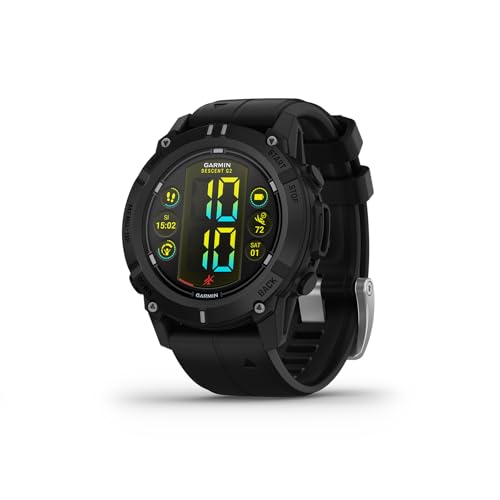
Garmin builds its oxygen feature, branded Pulse Ox, into a wider physiological dashboard than most rivals attempt. Across the Fenix, Forerunner and Venu lines the same basic toolkit recurs: on-demand spot checks, an all-day periodic mode, and a dedicated sleep mode, with the exact menu wording varying by generation. Published specifications list the feature as an SpO2 estimate, and the watches pair it with respiration rate, heart-rate variability and stress estimates derived from the same optical hardware. The integration, rather than the sensor alone, is the product.
The Fenix line carries the feature furthest into the mountains. Its acclimation widget interprets recent Pulse Ox readings alongside altitude to estimate how a wearer is adjusting during a stay at elevation, presenting a percentage and a plain-language status. Forerunner models fold oxygen data into recovery and training-readiness calculations, where a rough night at low saturation can soften the day’s suggested workout. Venu models present the same data in a lifestyle frame, emphasising sleep and body-energy estimates over expedition use.
Garmin’s manuals are unusually candid about conditions. The documentation instructs wearers to stop moving, rest the arm, and expect the measurement to take up to thirty seconds, and it warns that readings below the wearer’s normal range at altitude are expected physiology rather than malfunction. Owner communities for the Fenix line contain long threads comparing watch values against fingertip units on trekking routes, with the consensus matching the physics: agreement within a couple of points when still and warm, divergence when cold or moving.
Battery honesty is another Garmin trait worth noting. The published battery tables for recent Fenix and Forerunner models list separate figures with Pulse Ox modes enabled, acknowledging drops that can reach a third or more of total runtime in the most demanding configurations. Few manufacturers print the with-and-without comparison so plainly. Buyers planning multi-day treks can therefore budget charge against sampling ambition using the manufacturer’s own numbers rather than forum folklore.
Garmin also exposes altitude context automatically, since its watches carry barometric altimeters across most of the relevant lines. An oxygen reading tagged with a measured elevation of 3,400 metres is interpretable in a way a bare number is not, and the acclimation features lean on that pairing heavily. The ecosystem rewards wearers who live outdoors, where elevation changes are the daily texture, more than wearers whose altitude never varies beyond a flight of stairs.
The trade-offs are equally visible. Garmin’s health dashboards prioritise depth over simplicity, and new owners regularly report a learning curve measured in weeks. Pulse Ox data lives among dozens of other metrics competing for attention, and the sleep presentation is less immediately legible than the single-score summaries offered elsewhere. None of that diminishes the implementation; it defines its audience. Wearers who want oxygen data woven into altitude and training decisions are served here in a way no rival currently matches.
Shoppers whose days are built around general activity rather than expeditions may find the priorities surveyed at best activity smartwatches a useful counterweight before committing to an expedition-grade device. The Pulse Ox hardware is comparable across much of the market; what differs is the interpretive machinery wrapped around it. Garmin wraps the most machinery, aimed at the wearer most likely to be standing on a ridge wondering whether to climb higher tomorrow.
Fitbit and Samsung: the sleep-dashboard school
Fitbit approaches oxygen from the opposite direction to Garmin: not as a field instrument but as one quiet contributor to a morning sleep report. Its headline oxygen feature is Estimated Oxygen Variation, a graph of relative changes across the night rather than a parade of absolute percentages. The design is scientifically defensible — relative variation is exactly what a noisy sensor measures most reliably — and it frustrates users who want a number to compare with a fingertip unit. Both reactions are understandable, and the tension between them defines the platform.
Beneath that graph, Fitbit’s Health Metrics dashboard assembles breathing rate, resting heart rate, heart-rate variability, skin temperature variation and, on supported models, blood oxygen into a rolling seven-day and thirty-day view. The dashboard’s real subject is deviation from personal baseline: a night where breathing rate climbs and oxygen variation widens while temperature rises is the classic signature owners learn to recognise during illness. Published support material describes these metrics as wellness indicators, and the presentation honours that framing by emphasising change over absolute thresholds.
Some Fitbit and Pixel Watch models also surface an overnight SpO2 average, expressed as a percentage with the sampling caveats attached. Owner reports describe values that track fingertip spot checks loosely, usually a point or two lower, which matches the known behaviour of reflectance sensing during sleep. The average’s usefulness is longitudinal: a wearer whose overnight mean sits at 95 for months and then prints 92 for a week has learned something worth attention, regardless of the absolute accuracy of either figure.
Subscription framing deserves one clear-eyed paragraph of its own. Where a platform reserves longitudinal oxygen insights for a paid tier, the buyer is not buying a sensor but renting the interpretation of one already owned. That may still be worthwhile — baseline modelling across thirty days is real computation with real value — but it belongs in the total cost comparison beside the purchase price. Buyers allergic to subscriptions should verify, before ordering, exactly which oxygen views remain available if the paid tier lapses.
Samsung’s Galaxy Watch line takes a more direct presentational route, offering on-demand blood-oxygen measurement alongside overnight recording within its health platform. The manual measurement follows the familiar ritual: sit, rest the arm on a table, stay still through the countdown. Overnight, supported models record saturation through sleep and present minimum and average values in the morning report, where repeated excursions below 90 percent are visually flagged in the trace.
Samsung’s sleep coaching layer then interprets the whole night — oxygen, snoring detection via the paired phone, sleep stages and consistency — into animal-labelled chronotypes and multi-week coaching programmes. The oxygen trace is one voice in that choir rather than a soloist. For wearers whose primary question is whether their nights look disturbed, this integrated presentation can be more actionable than a folder of raw percentages. For wearers who want to interrogate the oxygen data itself, the layering can feel like interpretation standing between them and the evidence.
The two ecosystems also differ in data portability and history. Fitbit’s long archive of a wearer’s nights, stretching back across device generations, gives its baseline-deviation approach compounding value the longer an account runs. Samsung’s strength is the immediacy of the watch-phone pairing for its own handset owners, with measurements a thumb-tap away. Both platforms reserve some analytics depth for subscription tiers, a commercial fact buyers should weigh alongside sensor specifications when comparing total ownership experience.
Neither school pretends to medical authority, and both print the wellness framing in their support documentation. Their disagreement is about presentation philosophy: variation versus values, baselines versus thresholds, coaching versus raw access. Wearers who think in trends tend to settle happily into the first; wearers who think in numbers tend to prefer the second. Knowing which kind of thinker one is turns out to be a more reliable buying guide than any sensor comparison table.
Sleep: what overnight traces can justify
Sleep is where wrist oximetry earns its keep, because the conditions that corrupt it — motion, cold, loose fit, daylight leakage — are minimised by a warm, still, horizontal wearer. Across a night, a supported watch assembles the densest and cleanest dataset it can produce. The resulting trace shows saturation drifting with sleep stage, dipping briefly around arousals, and, in some wearers, falling in repeating clusters that line up with pauses in breathing. Those clusters are the entire clinical interest of the feature.
Obstructive sleep apnoea, in which the airway repeatedly narrows or closes during sleep, produces a characteristic oxygen signature: saw-tooth desaturations, sometimes dozens per hour, each followed by recovery as breathing resumes. A wrist trace cannot diagnose this condition, and no manufacturer claims otherwise. What a trace can do is convert a vague suspicion — years of unrefreshing sleep, a partner’s reports of snoring and silence — into a documented pattern concrete enough to bring to a clinician. That conversion is genuinely valuable, because sleep complaints are famously easy to postpone.
Respiratory rate is the essential companion metric, and most platforms now record it overnight from the same optical signal. Saturation dips accompanied by a rising breathing rate and an elevated resting heart rate tell a different story from dips alone; the cluster that appears during a respiratory infection looks different from the cluster that appears every night for a year. Owners who learn to read their dashboards in combination, rather than fixating on the oxygen tile, consistently extract more signal from the same hardware.
The threshold for action deserves exact language. A single low night after alcohol, congestion or a late heavy meal is ordinary physiology and warrants nothing but a mental note. Repeated clusters of dips across many nights, especially with daytime sleepiness, morning headaches or witnessed apnoeas, justify a conversation with a clinician and, very likely, a proper sleep study. A formal study — whether laboratory polysomnography or a prescribed home test — measures airflow, effort, oxygen and sleep staging together, which is precisely the context a wrist sensor lacks.
Equally important is what overnight traces never prove. They cannot grade apnoea severity, because severity scoring depends on airflow events and arousals the watch cannot see. They cannot exclude a sleep disorder when they look clean, because a still wrist on a good night is not a ruled-out airway. They cannot evaluate treatment; a person using prescribed therapy who wants to know whether it is working needs the therapy device’s own data and clinical follow-up, not a wellness graph. Holding these limits clearly is what keeps a useful screening prompt from becoming a source of false confidence or false alarm.
There is also a quieter, legitimate use: illness and recovery tracking. Owner reports across platforms describe overnight oxygen averages sagging and breathing rates climbing a day before cold symptoms declare themselves, then normalising across recovery. No single night proves anything, but a wearer who knows their own multi-month baseline owns an early-warning texture that population thresholds cannot provide. This is the strongest argument for wearing the same device consistently rather than pursuing whichever new model advertises a marginally better sensor.
Practical sleep use imposes practical requirements. The watch must be charged enough to survive the night, worn snugly enough to hold contact through position changes, and given a sampling mode that records more than a token average. Wearers who charge overnight by habit will collect nothing, which is why several platforms now nudge a pre-bed top-up when the battery sits below a threshold. The ritual is minor; the dataset it unlocks is the main reason most owners bought an oxygen-capable watch in the first place.
Altitude: trend lines above 3,000 metres
Air at 3,000 metres holds roughly thirty percent less oxygen pressure than air at sea level, and the body answers with faster breathing, a quicker pulse and, over days, deeper physiological adjustment. Healthy saturation at that elevation commonly sits in the high eighties to low nineties while acclimatising — numbers that would alarm the same person at home. Context is not a footnote at altitude; it is the entire meaning of the measurement. A wrist sensor carried up a mountain is therefore only as useful as the wearer’s understanding of what the mountain does to the metric.
Acclimatisation follows a recognisable curve. The first night at a new altitude usually brings the worst sleep and the lowest saturations, with periodic breathing — cycles of waxing, waning and briefly absent breaths — fragmenting the night. Across two to four days at a fixed elevation, ventilation increases, sleep steadies and saturation climbs partway back. A further move upward restarts the process from a slightly better base. Trekkers ascending in stages are, knowingly or not, surfing that curve, and an overnight oxygen trace is one of the few consumer tools that renders it visible.
This is why trend lines beat single readings so decisively in the hills. A spot check of 87 percent taken breathless at a pass, with cold hands and a swinging arm, contains almost no information. The same wearer’s overnight averages — 84 on arrival night, 87 on the second, 89 on the third — describe adaptation in progress and support a decision to ascend. Conversely, a plateau or decline across nights at one altitude, paired with worsening headache and nausea, is the pattern that should slow an itinerary down. The number never decides; the trajectory argues.
Guides for mountaineers add one procedural refinement: measure at the same time, in the same posture, under the same warmth each day, and write the result down beside symptoms in a simple log. Standardising the ritual strips out much of the confounder noise that makes casual spot checks incomparable across days. The resulting column of numbers, dull as it looks, is the closest a consumer device comes to expedition-grade evidence, and medics reviewing a struggling trekker will ask for exactly that column before they ask for anything else.
Symptoms outrank sensors at altitude, and every serious source on mountain medicine insists on the ordering. Acute mountain sickness is diagnosed clinically, from headache plus nausea, dizziness, fatigue or poor sleep, not from a saturation threshold. Two trekkers can share an identical reading while one feels strong and the other is deteriorating. A watch figure that contradicts how a person feels should be believed less than the person, and descent decisions should never wait for a gadget’s permission. The sensor is a supporting witness, never the presiding judge.
Cold deserves a second mention in this setting because altitude guarantees it. Fingers and wrists chilled by wind and altitude vasoconstriction produce failed readings and implausible values at exactly the elevations where curiosity peaks. Experienced users warm a hand inside a jacket before attempting a spot check and treat hut readings, taken warm and seated, as the day’s reference values. Readings attempted on the move in a gale are entertainment, not data, and the watches usually say so by refusing to commit to a number.
Skiers meet a compressed version of the same physiology. Resort altitudes between 2,500 and 3,500 metres, reached by lift in an hour rather than by foot across days, deliver unacclimatised bodies straight into thin air, and the first night’s sleep in resort lodging often shows the periodic-breathing pattern in full. A watch trace from that night explains the strange, air-hungry dreams better than any single evening reading. For most skiers the information is a curiosity; for those who sleep badly at altitude every trip, the pattern can motivate practical changes to lodging elevation and first-day exertion.
The altitude case is, in the end, the purest demonstration of this guide’s thesis. Removed from sea-level reference ranges, the wrist number loses all meaning as an absolute and retains real meaning as a personal trajectory. Trekkers who grasp that distinction describe their watches as genuinely useful companions. Trekkers who expect fingertip certainty at 4,000 metres describe the same devices as broken. The hardware did not change between those verdicts; the interpretation did.
Power budgets and charging cadence
Oxygen sensing is expensive in the only currency a watch truly holds: milliamp-hours. The red and infrared channels draw far more current than the green heart-rate channel, and reflectance geometry wastes most of the emitted light into tissue that never returns it. A spot check is a brief extravagance, but continuous overnight sampling can consume in eight hours what heart-rate tracking alone would spend in days. Every manufacturer’s sampling philosophy, examined earlier, is secretly a battery philosophy wearing a lab coat.
Published battery tables make the cost concrete when brands choose to disclose it. Garmin’s specification pages for recent Fenix and Forerunner generations list smartwatch-mode runtimes that fall noticeably when the sleep Pulse Ox mode is enabled nightly, and the all-day mode costs more again. Other platforms are less forthcoming with with-and-without figures, but owner reports converge on the same arithmetic: enabling overnight oxygen typically removes somewhere between a fifth and two-fifths of a charge cycle, depending on model and sampling density.
The practical consequence is a charging cadence, and cadence is a habit design problem. Owners of long-lived watches settle into a weekly rhythm — a top-up during a shower or a desk hour — that keeps overnight recording permanently affordable. Owners of one-to-two-day watches face a tighter negotiation: charge during dinner, wear through the night, and never let the morning routine include a cable. Miss the window and the night’s data simply does not exist, which is why several platforms issue a low-battery nudge in the early evening when sleep tracking is armed.
Charge temperature is a footnote with teeth for winter users. Lithium cells charge reluctantly when cold, and a watch brought in from a freezing tent may refuse a fast top-up until it warms against skin or inside a sleeping bag. Expedition owners learn to charge during the warmest hour of the day, inside the tent, rather than discovering the refusal at midnight. It is a small, unglamorous operational detail of exactly the kind that decides whether an oxygen dataset survives a cold itinerary intact.
Fast charging has quietly become an oxygen feature. A watch that recovers half its battery in twenty minutes can be rescued during evening ablutions even by owners who forgot the day’s top-up entirely. Slower-charging models demand planning that many owners sustain for a month and then abandon, taking their sampling philosophy with them. When comparing models, the minutes-to-useful-charge figure deserves the same attention as total runtime, because it determines how forgiving the device is of ordinary human forgetfulness.
Multi-day travel sharpens every one of these trade-offs. A trekking itinerary that enables altitude acclimation features, GPS tracks and overnight oxygen simultaneously is stacking the three hungriest workloads a watch knows. Published expedition-mode figures assume sampling restraint that oxygen-hungry wearers may not want to practise. Carrying a small power bank and rationing continuous modes to alternate nights is the compromise experienced users describe; the trend line survives alternate-night sampling almost intact, because acclimatisation moves on a timescale of days rather than hours.
There is also a longevity angle rarely printed anywhere: batteries age by cycles, and a watch charged daily accumulates cycles roughly three times faster than one charged every third day. Heavy oxygen sampling therefore taxes not just this week’s runtime but the device’s useful lifespan across years. Owners planning to keep a watch for four or five years might reasonably choose periodic background sampling over continuous recording for routine nights, reserving the dense mode for travel, illness and altitude, where its information density justifies the wear.
None of these calculations appears in marketing, yet they decide real-world data quality more than sensor generation does. A theoretically superior sensor on a watch that is dead by midnight contributes nothing. When the choice is between models, the honest question is not which samples best in a laboratory but which will still be on the wrist, charged and recording, on an ordinary Tuesday night in February. Battery tables, read with oxygen modes switched on, answer that question better than any other page of the specification sheet.
Check prices on Amazon
Live listings for the shortlist in this guide are pulled from Amazon below, so prices and availability are always current at the moment you look.



Choosing: three buyers and the honest alternatives
The sleep-focused buyer should shop for presentation and stamina before sensor bragging rights. What this buyer needs is a dense overnight mode, a dashboard that pairs oxygen with respiratory rate and resting heart rate, and enough battery that recording every night is a habit rather than a project. Fitbit’s variation-centred approach and Samsung’s flagged overnight traces serve this buyer in different dialects, while Garmin serves those who also train hard. The decisive test is whether the morning report invites a second look or merely displays a number; screening value lives in the patterns a wearer actually reviews.
The altitude-focused buyer should shop for context: a barometric altimeter, an acclimation or elevation-aware presentation, spot checks that work on demand in a hut, and published battery figures with oxygen modes enabled. This is the brief Garmin’s Fenix and upper Forerunner lines were plainly built against, and it is the use case where a watch genuinely outperforms a fingertip unit carried in a pack — not on accuracy, but on presence. The fingertip unit wins every measurement it attends; the watch attends every night of the trek.
The phone-ecosystem buyer faces the least romantic and most binding constraint. Watch platforms are extensions of phone platforms, and oxygen features inherit those walls: some watches only pair with their maker’s handsets, some health apps only reach full depth within one ecosystem, and regional feature enablement can differ by market. Readers weighing handset compatibility alongside fitness features should start from the shortlist at best android smartwatches fitness trackers under 100 if budget and pairing flexibility dominate the decision. No sensor specification outranks the brute fact of whether the watch will talk to the phone already in the buyer’s pocket.
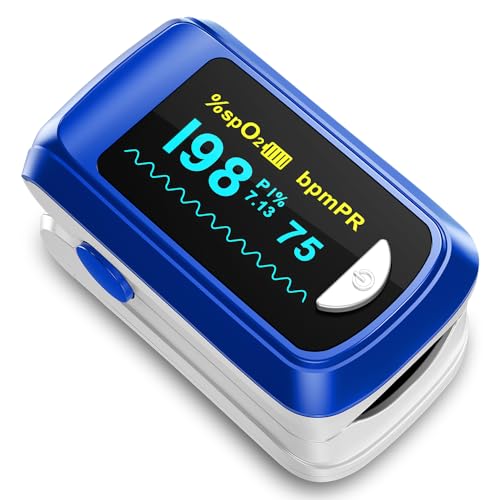
Then there are the buyers for whom the honest answer is a different instrument entirely. Anyone whose clinician has asked for oxygen monitoring, anyone managing diagnosed lung or cardiac disease, and anyone needing a defensible number rather than a trend should buy a cleared fingertip oximeter, use it seated and warm, and record its readings as their reference. The fingertip unit is cheaper than every watch in this guide, more accurate than all of them, and boring in exactly the way medical equipment should be.
The overnight ring deserves its own honest paragraph. Finger-worn sleep trackers measure from a site with fingertip-class perfusion while asking nothing of the wrist, and their published validation material for overnight saturation is among the stronger consumer evidence available. For a buyer whose only interest is sleep oxygen and who dislikes sleeping in a watch, a ring may simply be the right-shaped tool. Its weaknesses — no spot checks, no altitude dashboard, no training platform — matter only to buyers who wanted those things, and this buyer did not.
What remains is to match the instrument to the question with unusual honesty. Am I screening my sleep for a pattern worth showing a clinician? Am I watching myself adapt across a trekking week? Am I collecting a number a doctor requested? The first two questions belong to wrist watches, used as trend instruments under the conditions where they perform best. The third belongs to cleared fingertip hardware. Confusing those assignments — in either direction — is the only genuinely wrong purchase available in this category.
A pulse ox watch, chosen with its error bar understood and its sampling matched to a real question, is a quietly remarkable object: a nightly census of the blood, taken by light, from the wrist, for years on end. Its figures will never carry the authority of a clinical measurement, and they were never honestly sold as doing so. What they offer instead is continuity — the long, personal, otherwise invisible record of how a body breathes through its nights and climbs through its mountains — and for the wearer who reads that record as a record, continuity is the whole point.


