Our Top Picks
 Casio Men's Quartz Day-Date Indicator Black Resin DiveAdult0 x 0 x 0 inches0.1 poundsCheck on Amazon
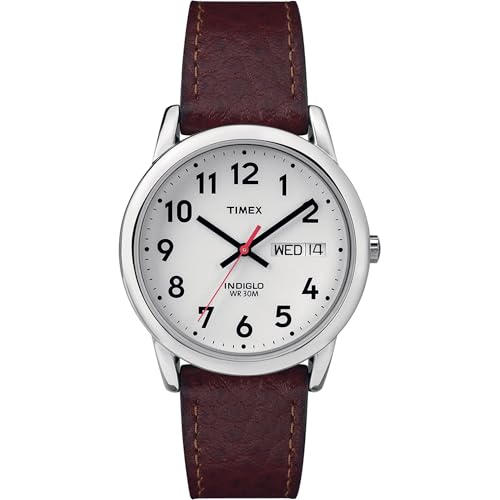


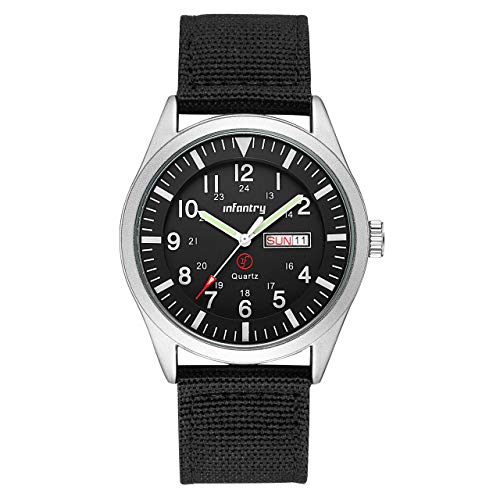
What's inside
- Defining the complication: a word and a number
- The mechanics: twin discs under the dial
- Quickset generations and the midnight danger zone
- Day discs, languages and alignment
- Layouts: where the word sits on the dial
- Movements known for the complication
- Case, size and wearing a day-date
- Buying used: discs, quicksets and service records
- Setting up and living with the complication
- Calendar accuracy, servicing and long-term keeping
- Check prices on Amazon
- Final checklist for day-date watches
As an Amazon Associate I earn from qualifying purchases. This post may contain affiliate links at no extra cost to you.
A day-date watch spells out the full weekday alongside the date, so a single glance tells you not only that it is the fourteenth, but that the fourteenth is a Tuesday. That extra word on the dial sounds like a small thing until you live with it through shift patterns, travel across time zones, and the ordinary fog of a busy week. This guide explains how the complication works, from the twin discs turning beneath the dial to the midnight change you can feel through the crown, and it sets out the quickset generations, language wheels, layouts and movements that separate a well-sorted day-date from a frustrating one.
Product links in this guide are affiliate links, and following one to the retailer may earn this site a commission without adding anything to what you pay. No watch brand paid for a place in these pages, sent a model for coverage, or saw the conclusions before they were published, and the commission arrangement has no bearing on which movements are praised or which setting quirks are criticised. The account below rests on published calibre documentation, manufacturer specification sheets and horological reference works on calendar mechanisms, which is where every technical claim here can be checked.
Defining the complication: a word and a number
The definition is strict. A day-date watch displays the complete weekday, written out in full or in a long abbreviation, together with the date of the month. A watch that shows only a three-letter weekday squeezed into a subdial is a borderline case, and a watch with a date window alone, however large or beautifully framed, is not a day-date at all. The full word is the point: it occupies real dial area, it needs its own disc and drive, and it forces the designer to solve a layout problem that a simple date window never raises. That is why the complication has its own name, its own movement variants and its own collecting following.
The historical template was set in 1956, when Rolex introduced the Day-Date, the first wristwatch to display the weekday spelled out in full in a window on the dial alongside the date. It was offered in precious metals, carried an automatically wound chronometer movement, and presented the day in a curved arc of text at twelve o clock with the date at three. The model established the visual grammar that still dominates the category: day prominent at the top of the dial, date at the side, both changing together at midnight. Editorial histories of the brand treat that launch as the moment the complication became a flagship category rather than a curiosity.
From that expensive beginning, the layout spread steadily down the market as movement suppliers added day discs to proven calendar calibres. Swiss ebauche makers offered day-date variants of their standard automatic movements, and Japanese manufacturers built the complication into high-volume calibres fitted to watches sold worldwide. By the nineteen seventies a day-date could be had in steel from several continents, and the complication became a default option on everyday watches rather than a flagship indulgence. The spread matters for buyers now, because it means the mechanism exists at many levels of finishing and price positioning, with genuinely different engineering behind superficially similar dials.
It helps to distinguish the day-date from its calendar relatives. An annual calendar shows day, date and month and needs correction once a year, at the end of February. A perpetual calendar tracks month lengths and leap years mechanically. A complete calendar adds a moonphase to day, date and month displays. The plain day-date does none of that: it assumes every month is driven forward by the wearer or the mechanism day by day, and it must be advanced by hand after any month shorter than thirty-one days. That limitation is not a flaw in execution; it is the definition of the complication class, and every movement discussed here shares it.
The date half of the display has its own conventions. Most day-date movements drive a date disc printed with the numerals one to thirty-one, shown through a window, though some designs use a pointer hand indicating a date scale around the dial edge, and a few use large twin-digit apertures built from two discs. The weekday disc carries seven entries, each repeated as the disc is printed to fill its circumference, and on bilingual wheels fourteen entries alternate between two languages. The pairing of a seven-cycle and a thirty-one-cycle on one movement is the mechanical heart of the whole category, and the next section follows how those cycles are driven.
The mechanics: twin discs under the dial
Under the dial sit two flat rings. The date disc is a toothed ring carrying the numerals, and the day disc is a second ring, usually smaller or stacked at a different level, carrying the weekday names. Both are driven from the hour wheel, the wheel that turns the hour hand once every twelve hours, through a calendar gear train that reduces that rotation to one step per day. A driving wheel with a finger or pin engages the teeth of the date ring once per revolution of the twenty-four-hour gearing, advancing the numeral by one position. The day disc advances from the same train, either directly or through an intermediate wheel, so the two displays stay in step.
The energy for the change is stored before it is spent. In an instantaneous design, a spring-loaded lever is slowly loaded by a cam over several hours and then released, snapping both discs forward in a fraction of a second at midnight. In a semi-instantaneous design, the loading period is shorter and the snap less violent, with the change completing over a few minutes. In a dragging, or gradual, design there is no stored snap at all: the driving finger pushes the disc teeth directly, and the day and date creep through their windows over a period that can last from under an hour to several hours either side of midnight. The three behaviours feel entirely different in ownership, even though the dials look identical at noon.
An instantaneous change is the most satisfying and the most demanding. Done well, both windows are perfectly aligned before midnight and perfectly aligned after it, with a faint click that experienced owners listen for. The mechanism needs a jumper spring for each disc, a small spring that presses into the disc teeth and holds the disc positively in each position, plus the loading cam and release geometry. More parts mean more adjustment at service. When an instantaneous mechanism is worn or poorly regulated, the snap can leave a disc half a tooth off, which shows immediately as a weekday sitting high or low in its window.
The dragging change has compensating virtues. It is mechanically simple, tolerant of wear, and cheap to manufacture, which is why it appears on many high-volume Japanese and Swiss movements that run for decades. Its drawback is cosmetic and practical at once: read the watch at half past eleven at night and the day may already be tipping toward tomorrow while the date still shows today, or the reverse, depending on which disc leads. Owners learn their own movement habit. On some calibres the date leads and the day follows; on others both creep together. Documentation rarely states the sequence, so this is one detail best confirmed from owner reports on a specific calibre rather than assumed.
Jumpers deserve a paragraph of their own because they decide alignment. Each disc has a jumper, a spring finger whose tip sits between two teeth and resists rotation until the driving force overcomes it, then snaps the disc into its next detent. Jumper tension is a balance: too light and a shock can knock a disc forward, too heavy and the change consumes more of the movement power reserve at midnight, in the worst case stopping a watch whose mainspring is nearly unwound. Watchmakers check jumper action at service, and a day-date that occasionally wakes up with a crooked weekday is often telling you a jumper or its spring needs attention, not that the whole calendar has failed.
The calendar train draws its power from the going train, so the change happens whether the watch is worn, resting in a box, or sitting on a winder. If the watch stops, the calendar stops with it, and the displays simply hold the day and date of the moment the balance stopped. There is no battery-backed memory and no independent calendar motor in a mechanical day-date. This is why a watch left unworn for a fortnight must be set forward through the accumulated days, and why the quickset mechanisms described next matter so much to anyone who rotates between several watches. Readers who rotate into connected models between mechanical pieces may consult best running smartwatches for that side of a collection.
Why the change happens at midnight and not at noon
The calendar is geared to the twenty-four-hour cycle of the hour wheel, and the change point is set during assembly so the snap or creep centres on midnight, when the date conventionally rolls over. A watch whose hands have been fitted incorrectly can change at noon instead, a fault that appears after dial or hand work if the hands are refitted twelve hours out of phase. The fix is simple for a watchmaker, who removes and refits the hands in the correct phase, but the symptom confuses owners who assume the calendar itself is broken. If a day-date changes in the middle of the day, suspect hand fitting first and the calendar train second.
Time zone travel exposes another calendar truth: the day-date follows local time only when the wearer sets it so. A movement with an independently adjustable hour hand can jump the hour forward or back without disturbing the minute hand, and the calendar will advance if the jump crosses midnight, but most classic day-date calibres lack that feature and must be wound forward through the hours, calendar and all. Fly across enough zones and the weekday, not the date, is the display travellers report checking first on landing, which is a small argument for the complication that no specification sheet captures.
Quickset generations and the midnight danger zone
The earliest day-date movements had no quickset at all. To change the date, the wearer wound the hands forward through twenty-four hours for every day of correction, or rocked the hands back and forth across midnight to nudge the date one step at a time on movements that tolerated it. Correcting the weekday could be worse, because the day disc on some early designs advanced only with the full passage of days. After a watch had stopped for a week, restoring the correct displays could take minutes of winding and considerable patience. Vintage examples remain charming, but anyone buying one should understand that the setting ritual is part of the ownership package.
Single quickset, the next generation, added a crown position that advances the date disc directly, usually by rotating the crown in one direction with the calendar gearing partially disengaged from the time train. The weekday still had to be set by moving the hands through days, which created a fixed routine: set the day by winding forward to the correct weekday, then quickset the date to its numeral, then set the time. This generation, widespread from the late nineteen seventies, transformed usability for the date while leaving the day as the slow part. Many respected Swiss and Japanese calibres in current or recent production still work exactly this way.
Double quickset completes the system: one crown position, with rotation in one direction advancing the date and in the other direction advancing the day, or separate positions handling each disc. The wearer can set both displays in seconds without moving the hands at all. This is the arrangement to look for in a modern day-date, and its presence or absence is stated in movement documentation and instruction booklets. Where a listing does not mention quickset, assume the slower routine until confirmed, because sellers describe the dial gladly and the setting mechanism reluctantly. The difference between generations is the single largest usability gap in the whole category.
Every generation shares the danger zone: the hours around midnight when the calendar change is engaged. On a dragging movement the driving finger is in the disc teeth for a long window, often quoted in manuals as roughly nine in the evening to three in the morning; on an instantaneous movement the loaded mechanism is vulnerable for a shorter period near midnight. Using the quickset, or forcing the hands backward through an engaged change, during that window can bend a driving finger, chip a disc tooth or derail a jumper. The safe rule printed in maker manuals is consistent: do not quickset the calendar in the late evening or small hours, and if in doubt, move the hands to the lower half of the dial, around six, before touching the calendar functions.
The danger zone also explains a setting habit worth adopting permanently. Set a day-date in this order: move the hands to a safe morning hour, quickset the day and date to the day before the correct one, then wind the hands forward through midnight so the mechanism itself performs the final change into today, and finally set the exact time. This routine proves the change works, aligns both discs under their jumpers exactly as a normal midnight would, and avoids leaving a disc resting between detents from a quickset nudge. It takes under a minute and it is the method watchmakers themselves use when returning a serviced watch.
Pushers complicate the picture on some designs. A minority of day-date watches, particularly older or dress-oriented models, advance the day or date with a small corrector pusher set into the case flank, pressed with a pin or the tip of a tool. Correctors are quick and keep the crown simple, but they are easy to press accidentally against a desk edge, they add another case opening to seal, and they obey the same midnight danger zone as crown quicksets. A corrector that feels gritty or fails to advance its disc cleanly is a service symptom, since the corrector mechanism shares parts with the calendar train it drives.
Day discs, languages and alignment
Many day discs are bilingual. Because a seven-day disc has room around its circumference, makers print fourteen positions, alternating two languages, so the same calibre can serve two markets or one bilingual owner. English paired with French, German, Spanish, Italian, Arabic, Japanese or Chinese characters are among the combinations documented by movement makers, and some discs use Romanised text while others use script. The wearer chooses the language not with a switch but at the changeover: when setting the day, you advance the disc until the weekday appears in the language you want, and the mechanism then keeps stepping through that same language set, since the alternation is fixed in the printing.
The choosing moment confuses new owners because it happens once and then hides. If a watch arrives showing the weekday in a language you did not expect, nothing is broken; the previous setting simply landed on the other set. Advance the day by one step using the quickset or the hands and the other language appears, after which every subsequent midnight keeps that choice. Instruction booklets describe this in a sentence that is easy to skim past. It is also why a bilingual disc is a small delight in a bilingual household, where the watch can be switched to match the wearer language with a single extra step during setting.
Alignment faults are the characteristic ailment of the complication. A day sitting half-turned in its window, showing the bottom of one word and the top of the next, points to a disc resting between jumper detents, a worn jumper, or a disc that was knocked forward by a shock and stopped mid-step. A date numeral riding high or low in its window has the same family of causes. Minor misalignment that appears only at the change and settles by morning suggests a dragging mechanism mid-travel, which is normal behaviour. Persistent misalignment at midday is not normal, and because both discs share driving parts, a fault in one display is a reason to have the whole calendar examined rather than only the crooked disc.
Font and printing quality on the discs vary more than buyers expect. At the finest level, weekday words are printed in a typeface matched to the dial, with even spacing that keeps long words such as Wednesday centred in the window. Wednesday and Saturday are the stress cases for any day window: the longest words in English, they reveal whether the window and disc were designed together or merely paired. On high-volume movements the disc font is a standard printer face shared across many brands, which is why the same weekday typography appears on watches from otherwise unrelated makers using the same calibre family. That sameness is a clue to the movement inside, readable from the dial alone.
Some designs replace the window with a different display entirely. A retrograde day indicator sweeps a hand across an arc of weekday initials and snaps it back on Sunday night. A subdial can carry a day hand among other indications. A few digital-mechanical hybrids of the quartz era printed the day on a disc behind a long window showing three days at once, yesterday, today and tomorrow, so the week could be read in context. Each alternative trades the clean full-word window for something else: visual interest, dial space, or contextual reading. The classic window remains dominant because it gives the complete word at the largest size the dial can spare.
Quartz day-date movements deserve their own note, since they solve the same problem electrically. A quartz calendar uses the motor pulses that drive the hands to advance discs through gearing that mirrors the mechanical layout, and many quartz day-dates offer an end-of-life battery warning that has no mechanical equivalent. Setting behaviour differs: quartz quicksets are often faster and the danger zone guidance may be relaxed in the manual, because the driving parts are smaller and the change is usually a rapid motor-driven step. Always follow the manual for the specific calibre rather than transferring mechanical habits wholesale, although the habit of setting away from midnight harms nothing on either technology.
Layouts: where the word sits on the dial
The classic layout places the day in an arc at twelve o clock and the date in a window at three. The day text follows the curve of the dial, each word printed on the disc along that arc, so the full weekday reads like a banner under the brand name. This arrangement gives the day maximum prominence and keeps the date where date windows conventionally live. Its cost is dial real estate at the top, where a logo, a long brand signature or applied indices might otherwise sit, and the curved printing demands a disc made for that specific dial geometry rather than a generic flat window disc.
The second layout puts both windows side by side at three o clock, day and date sharing one elongated aperture or two adjacent ones where the hour marker would otherwise be. This keeps the dial top free, concentrates all calendar information in one glance point, and suits smaller cases where an arc at twelve would crowd the design. The weekday word must fit a straight horizontal window, which constrains word length and font size, and the combined aperture removes the three o clock index, which some wearers notice as an asymmetry in the marker pattern. Many Japanese day-date models use this layout, and it has become the visual signature of an entire school of everyday watches.
The third family of layouts gives the day a full-width treatment: the weekday spelled in a long window curved beneath the brand name at the top of the dial, sometimes extending across much of the dial width, with the date at three or occasionally at six. At its most generous this becomes the so-called president-style presentation associated with the 1956 template, where the day is the first thing read on the watch. A rarer variant places the day window at six, under the centre, which balances a large logo at twelve but puts the word where hands cross it in the evening hours. Each position changes which hand obscures the display and when, a detail worth picturing with the hands at your usual waking hours.
Legibility follows from these choices in predictable ways. The arc at twelve offers the largest characters and the longest window, so it reads best at a glance and at small case sizes. Side-by-side windows at three offer smaller type but a single focal point. Full-width day windows maximise the word but can dominate a dress dial and leave the design feeling top-heavy if the date is small by comparison. Contrast matters as much as size: most discs are white with black printing or black with white printing, chosen to match the dial, and a disc whose tone differs slightly from the dial around its window will draw the eye whether the designer intended that or not.
Dial balance is the subtler consequence. A day window interrupts whatever it replaces: an applied index, a minute track, sometimes part of a printed logo. Good design reintegrates the interruption, framing the window in metal, bevelling its edges, or matching its surround to the other indices so the aperture reads as furniture rather than a hole. Cyclops magnification lenses bonded over the date at three, a feature strongly associated with the historical template brand, enlarge the date but do nothing for the day, and their raised profile divides opinion. On layouts with both windows at three, a lens over only the date half can look lopsided, which is one reason that layout usually forgoes magnification.
Hands and calendar interact in one more way worth checking in photographs: at midnight the displays change while the hands point upward together, and on some layouts the minute hand passes directly over the day window during the very minutes a dragging change is completing. None of this affects function. It affects the small theatre of watching the change happen, which owners of instantaneous movements sometimes stay up for, and it explains why the position of the change in photographs of day-date watches is so often shown a few minutes after midnight, with both windows freshly aligned and the hands clear of them. For a contrasting approach to information layout, the connected models in best activity smartwatches arrange weekday data on screens rather than discs.
Movements known for the complication
The ETA 2834 and 2836 family is the Swiss reference point for accessible day-date movements. Both derive from the 2824 automatic architecture, beating at 28,800 vibrations per hour with a power reserve in the region of thirty-eight hours in standard documentation. The 2836 places day and date in the side-by-side arrangement driven from one calibre layout, while the 2834 is the variant arranged for the day arc at twelve with a larger movement ring to carry the wider day disc. That distinction is the key to reading specifications: the calibre number predicts the dial layout, because the day disc geometry differs between them. Generations of watches from dozens of brands have used these movements, which makes parts and watchmaker familiarity excellent.
Sellita supplies the direct counterpart in the SW240, built as the day-date member of its SW200 architecture family. Its published data mirrors the familiar Swiss pattern: automatic winding, a beat rate of 28,800 vibrations per hour, hacking seconds and hand-winding, and day-date displays with quickset correction, with disc language options offered to the brands that buy the calibre. Because Sellita movements are manufactured to interchange with the dimensions of the designs they parallel, many brands moved between the two suppliers across production years of the same watch model. Two examples of one reference can therefore carry different calibres with the same layout and slightly different change feel, a fact that serial records and caseback markings help untangle.
Japanese executions bring their own character. Seiko long-running automatic families, including the 7S26 and its successors and the newer NH36 type calibres widely supplied to other brands, pair day and date at three o clock, commonly with bilingual day wheels such as English and Spanish or English and Arabic depending on market. Their change is typically a gradual one spread across the late evening, their day quickset works by pushing the crown in on some generations rather than turning it in a second position, a mechanism that surprises owners expecting a crown position. Beat rates in this family are commonly 21,600 vibrations per hour, and power reserves sit around forty hours, varying by exact calibre.
Orient approach, through its in-house automatic calibres in the F6 family and their predecessors, keeps the day at three in a separate small window beside the date on many models, with a dedicated day-setting pusher above the crown on classic designs. That pusher is a recognisable Orient signature: press it and the weekday steps forward with a positive click, independent of the crown date quickset. Orient documentation lists power reserves around forty hours for these calibres and beat rates of 21,600 vibrations per hour. The pusher system is quick and satisfying, and it demonstrates that the double quickset ideal can be reached by case hardware as well as by crown positions.
At the top of the market, the template brand own calibres show what budget-no-object calendar engineering looks like. Successive generations of its day-date movements added the double quickset, then improved the instantaneous change precision and power reserve, with the current generation offering a reserve around seventy hours and a change engineered to complete within a narrow window at midnight. Other high-end makers build day-date functions into their manufacture calibres as modules over base movements, which stacks the calendar above the going train and adds case height. The module approach is not inferior; it lets a maker add the complication to a proven base, at the cost of thickness and a longer service procedure.
What differs between all of these, in daily use, reduces to four things: the speed and snap of the midnight change, the quickset arrangement, the disc font and language options, and the setting quirks such as a push-in crown or a separate day pusher. Beat rate and power reserve matter to timekeeping but not to the calendar character. When comparing two watches on the same shortlist, those four calendar traits, all documented or easily confirmed for a named calibre, will predict your satisfaction with the complication far better than case finishing or strap quality, which you can judge in photographs. The calibre name is therefore not trivia in this category; it is the specification that governs the experience.
Reading a calibre number like a calendar specification
Movement families encode their calendar variants in their numbering, and learning the local pattern for a family you are shopping saves repeated lookups. A base number denotes the architecture, a suffix or a following digit denotes the calendar execution, and the maker calibre list maps each variant to its display positions and quickset type. Supplier catalogues publish these tables openly, including disc diameter, hand-fitting heights and the crown positions for correction. When a watch listing names only a generic automatic movement with no calibre reference, that omission usually means a bought-in calibre the brand prefers not to highlight, and the calendar behaviour then has to be established by asking rather than reading.
Case, size and wearing a day-date
Day-date models cluster in the middle of the case-size range because the dial must fit a weekday word. Classic executions run from about thirty-six millimetres, the size of the original template watches, through forty millimetres for contemporary everyday models, with sports executions reaching forty-one or forty-two millimetres where larger windows and a rotating bezel share the design. Below thirty-six millimetres the day word shrinks toward the limit of comfortable reading, which is why small day-date watches are rare and why vintage thirty-four millimetre examples use abbreviated day displays that fall outside the strict definition used in this guide.
The dial proportion question cuts both ways. A wide case gives the day arc room to breathe and lets Wednesday sit in its window without crowding, but the same movement and disc set in a smaller case can look denser and more jewel-like. Lug-to-lug length decides how the case sits on the wrist more than diameter alone, and day-date watches on bracelets present a larger visual footprint than the same case on a strap, because the end links extend the metal line. Specification sheets publish diameter reliably and lug-to-lug inconsistently, so photographs on a wrist of known size remain a useful supplement when judging a model you cannot handle in person.
Bracelet versus strap changes the character of the complication in use. On a bracelet, a day-date reads as an everyday instrument, the weekday consulted in the same glance as the time during a working week, and metal suits the steel everyday models that make up most of the category. On a leather strap the same dial becomes a dress watch, where the day display is arguably more information than formal design traditionally allows, yet many wearers value exactly that practicality under a cuff. Weight follows the choice: a steel bracelet can add half again the weight of the head alone, while a strap keeps the watch light enough that the calendar mechanism, not the case, dominates the wearing feel.
Dress and field executions diverge on water resistance and case protection. Dress day-dates commonly carry ratings of thirty or fifty metres under the general water-resistance standard, splash protection rather than swimming credentials, with slim cases and polished surfaces. Field and sports day-dates offer one hundred metres or more, brushed cases, lumed dials where the day window must be integrated without losing a key marker, and sometimes crown guards. The complication itself is indifferent to these ratings; the calendar sits behind the dial, and sealing is a case matter. Choose the execution for the life the watch will lead, then check that the specific model day display stays legible in that execution dial style.
Crown size and grip matter more on a day-date than on a time-only watch, because the crown does more work: winding, hand-setting, and one or two quickset functions, distinguished by rotation direction or by a push action on some Japanese calibres. A small, smooth dress crown can make the double quickset fiddly with dry winter fingers, while a larger knurled sports crown makes correction effortless. Instruction booklets describe the crown positions for each function, and a booklet that needs a diagram to explain them is telling you the watch rewards a careful first read before its first setting. That first setting, done by the safe routine described earlier, is also your best check that every calendar function on a new watch works as documented.
Thickness completes the wearing picture. A day-date movement is taller than its date-only sibling because the day disc and its drive stack above the date mechanism, and module-based day-dates add more height again. Typical complete watches land between roughly eleven and thirteen millimetres thick, with slim dress executions below that and sports cases above it. Under a shirt cuff the difference between eleven and thirteen millimetres is the difference between forgotten and felt. Since makers publish thickness, compare it directly, and remember that a domed crystal adds its height at the centre where cuffs press least, while caseback depth adds it where the wrist presses most.
Buying used: discs, quicksets and service records
A used day-date asks for a specific inspection routine beyond the usual checks of case, dial and timekeeping. Begin with the calendar: advance the hands slowly through midnight and watch both displays change. Note whether the change is instantaneous, semi-instantaneous or dragging, and confirm that by one in the morning both day and date sit squarely in their windows, correctly aligned and showing the expected values. Then operate every quickset function in a safe morning position of the hands. The date should step cleanly numeral by numeral, and the day, where a quickset exists, should step word by word without landing between detents.
Continue the check across boundaries that reveal wear. Run the date through the thirty-first and into the first to confirm the disc completes its cycle, and advance the day through a full week to confirm all seven words align, since a single damaged tooth or printing fault may affect only one position. If the watch has a bilingual wheel, step the day once and confirm the alternate language appears and aligns as well as the first set. Check the alignment again with the watch held at different angles; a disc that looks centred face-on but drifts when tilted may be riding on a worn jumper or a bent disc, faults a watchmaker can price for repair before you commit.
Service records carry unusual weight with this complication because calendar faults are labour faults. A receipt describing a full service with calendar work, listing parts such as jumpers, discs or driving wheels, is strong evidence the mechanism was opened and regulated rather than merely timed. Records that show only polishing or only a battery-era style quick fix on a mechanical piece tell a thinner story. Ask when the watch was last serviced and by whom, and whether the day and date change was verified afterward. Sellers of well-kept watches answer such questions readily, because the answers are part of what they are selling.
Price the risk honestly where records are absent. A day-date with a dragging change that completes untidily, a sticky quickset, or one crooked word may need anything from a jumper adjustment within a routine service to a replacement disc that must be sourced for a discontinued calibre. Mainstream Swiss and Japanese calibres keep parts supply deep, which is a concrete argument for those movements in a used purchase. Obscure or short-lived calibres behind attractive dials carry a parts risk that should be reflected in what you offer. None of this requires opening the watch before purchase; the setting checks above expose most calendar health through the crown alone.
Originality checks specific to the complication complete the inspection. Day and date discs were sometimes replaced during past services with discs in a different language, font or colour from the original, and such a swap is visible when the disc tone does not match the dial or the font does not match period photographs in reference material. A replaced disc is not a defect in function, but it is a change from factory specification that belongs in the price conversation. Likewise, confirm that the day language set suits you; living with a weekday in a language you do not read, on a watch without a bilingual alternative fitted, turns the headline feature into decoration.
Questions to put to any seller
Five questions cover the ground efficiently. Does the day quickset work, or is the day set by the hands alone? At what time do the displays finish changing? Do both discs sit centred at midday? When was the calendar last serviced, and is there a receipt? Which languages are on the day wheel? A seller who can answer all five has handled the watch attentively, and the answers map exactly onto the ownership experience you are buying. Vague answers are information too: they suggest the calendar has not been examined, and your inspection routine then carries the full weight of the decision. Owners cross-shopping modern alternatives can compare the mechanical routine with the automatic calendar handling described in best android smartwatches looks and best android smartwatches for ios, where the weekday is software rather than a printed disc.
Setting up and living with the complication
The first week with a day-date teaches its habits. You learn when its change begins and ends, whether the date or the day leads, and how its quickset crown positions feel. Keep the watch wound through that week, either on the wrist or with a few crown turns each morning, because a movement that stops mid-change from an exhausted mainspring can leave the discs in transit and confuse the next setting. Once the habits are known, the complication recedes into usefulness: the weekday is simply there, in the same glance as the time, on the mornings when the week shape is genuinely uncertain.
Month ends are the recurring chore the complication honestly carries. After February, April, June, September and November, the date must be advanced past the nonexistent thirty-first, or from the thirtieth through the first, depending on where the month ended. With a double quickset this is a five-second task done in a safe hour. With a date-only quickset it is nearly as fast, since only the numeral needs correction. With no quickset it is the laborious wind through days, and owners of such watches often let the date sit wrong until the watch next stops, correcting everything in one session. Knowing which chore you are accepting is part of choosing a generation knowingly rather than discovering it on the first of March.
Storage interacts with the calendar in one practical way. A watch winder keeps a day-date correct indefinitely, which suits a daily-wear piece in a rotation of two or three. For a larger rotation, letting watches stop and resetting them on wear days is normal, and the setting routine becomes a small ceremony of ownership that many collectors openly enjoy. What should be avoided is the halfway state: a watch left running but unworn until it stops at a random hour with its calendar mid-cycle, then grabbed and quickset in a hurry during the danger zone because the indicated time happens to sit there. Move the hands to safety first; the habit costs ten seconds.
Finally, the complication has an emotional register that specification sheets cannot convey, and a buying guide may as well admit it. The spelled-out weekday connects a watch to the rhythm of a working life: Mondays look different from Fridays on the same dial. Retirement, shift work, school terms and travel all rearrange the week, and the watch quietly tracks the rearrangement. That is why a complication with no practical information beyond what a phone offers continues to anchor flagship models and everyday steel watches alike. It displays not just the date within a month, but the day within a life, and owners feel the difference more than they can justify in a feature comparison.
Calendar accuracy, servicing and long-term keeping
The calendar can only be as accurate as the timekeeping beneath it, because the change is triggered by the position of the gearing rather than by any independent reference. A watch gaining two minutes a day will perform its midnight change two minutes early by indicated time, then four minutes early the next day, and so on until it is reset; the discs are not drifting, the hands are. This is why a day-date that seems to change at the wrong hour is usually reporting a rate problem or incorrectly fitted hands, not a calendar defect. Regulation addresses the rate, and a watchmaker checks the change point on a timing machine cycle during service, advancing the movement through its calendar engagement to confirm the snap or creep centres where the hands say midnight should be.
Servicing a day-date costs somewhat more than servicing the same base movement in date-only form, for a simple reason: there are more parts to strip, clean, inspect and reassemble in the correct phase. The day disc, its jumper, its driving wheel and any bilingual wheel printing must all come off and go back without damage, and the calendar must then be tested through several complete changes before the watch is cased and timed. Service documentation for supplier calibres itemises these calendar components separately, which is why a quote that names them is more credible than a flat figure offered without inspection. Owners keeping a day-date for decades should budget on the maker stated service rhythm and treat the calendar test results, like the timing results, as part of the service record worth filing alongside the original paperwork.
Check prices on Amazon
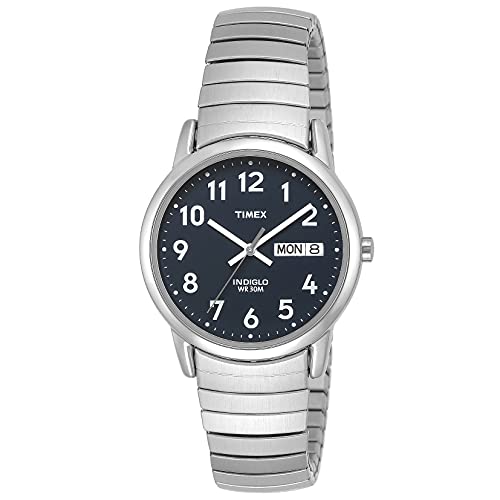
Live listings for the shortlist in this guide are pulled from Amazon below, so prices and availability are always current at the moment you look.




Final checklist for day-date watches
Put change type and quickset first, because they govern every interaction you will ever have with the calendar. Decide whether you want an instantaneous change with its crisp midnight snap, a semi-instantaneous compromise, or a simple dragging change, and confirm which your chosen calibre delivers from its documentation. Then confirm the quickset generation in writing: double quickset if the watch will rotate with others and stop often, date-only quickset as an acceptable middle, and no quickset only when a vintage piece other virtues outweigh a setting routine measured in minutes. Test every one of these functions during any used inspection, in a safe position of the hands.
Put disc language and layout second. Choose the day language, or the bilingual pair, that you will actually read, and confirm the wheel fitted to the specific watch rather than the model line in general, since market variants differ. Choose the layout for your eyes and your taste together: the arc at twelve for the largest, most traditional presentation, side-by-side windows at three for a single glance point and a cleaner dial top, or a full-width day display where the weekday is meant to dominate. Check Wednesday in photographs; if the longest word sits comfortably, every other day will too.
Put case size third. Match diameter and thickness to your wrist and your cuffs, remembering that the day word imposes a practical floor on dial size and that module-based movements add height. Decide bracelet or strap by the role the watch will play, weekday instrument or dressed practicality, and weigh crown usability alongside case dimensions, because a day-date crown is a tool you will use at every month end. A watch that fits your wrist but fights your fingers at each correction has failed a test that the specification of crown positions quietly predicted.
Add the supporting checks before you commit. Read the calibre documentation for beat rate, power reserve and the stated change behaviour, and prefer movements with deep parts supply if the watch is used or will be kept for decades. Verify the water-resistance standard against the life the watch will lead, splash-proof dress case or swimming-capable sports case. Confirm the service path for calendar work in your region. Each check is answerable from published material or a seller direct answers, and together they convert a charming complication into a sound purchase.
Close by picturing the watch in use on an ordinary weekday morning, which is where this complication either proves itself or becomes dial decoration. The best day-date for you is the one whose change you trust, whose setting routine you accept without resentment, whose weekday you can read without leaning closer, and whose case disappears on your wrist while its two windows keep their quiet double record of the week and the month. When those four things align, the little word at the top of the dial stops being a feature you bought and becomes the way the watch thinks alongside you, one spelled-out morning at a time.


