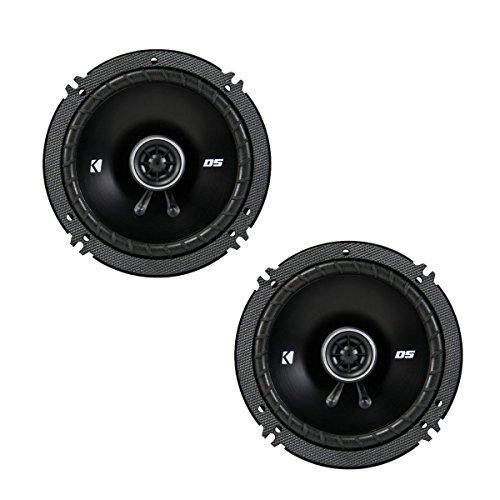
What's inside
- Key Takeaways
- Quick Picks
- How Did We Choose These Marine Pairs?
- What Does Flush Mounting Actually Require of a Boat?
- How Much Power Does a Cockpit Pair Really Need?
- The Six Pairs in Detail
- How Do the Six Pairs Compare at a Glance?
- How Should a Flush-Mount Pair Be Installed Well?
- What Mistakes Do Marine Speaker Buyers Make?
- Where on the Boat Should Each Kind of Pair Live?
- How Do Marine Speakers Age, and What Maintenance Do They Want?
- What About Sound Quality at Anchor Versus Underway?
- How Should Speaker Size and Count Scale With the Boat?
- What Should Be Verified Before the Saw Comes Out?
- How Do Grille Colour and Finish Age in Sunlight?
- Why Does the Head Unit Matter as Much as the Speakers?
- How Does a Second Zone Change the Wiring and the Budget?
- What Does a Good Flush Installation Look Like Five Years Later?
- How Should Replacement Speakers Be Matched to an Existing Cutout?
- Why Do Boats Punish Cheap Audio Faster Than Any Other Vehicle?
- What Should a Buyer Listen for at the Dock?
- How Do Tower and Surface-Mount Speakers Differ From This Set?
- Final Recommendation
- Frequently Asked Questions
- Related Guides
As an Amazon Associate I earn from qualifying purchases. This post may contain affiliate links at no extra cost to you.
gizmoverdict.com is reader-supported. When you buy through links on our site, we may earn an affiliate commission.
Where to buy: Each pair below links to its own Amazon listing; confirm the cutout dimensions and grille colour against your boat’s panels before ordering.
The best marine speakers flush mount shoppers can fit share one defining act: they disappear into the boat. A flush-mount speaker sits in a circular cutout in a console, a cabin bulkhead, a cockpit side panel or a hardtop, with only its grille showing, so the sound arrives from the boat’s own surfaces instead of from boxes bolted onto them. The six pairs in this guide are all 6.5-inch class marine coaxials from the boat-audio names that matter — Garmin’s Fusion line, JBL, Skar Audio, Kenwood, Polk Audio and Wet Sounds — and choosing among them is a matter of power handling, mounting reality and how much weather the position will honestly see.
Marine is a working environment, not a styling theme. A cockpit speaker lives with spray, washdowns, ultraviolet light, vibration and the occasional green water over the side, and it is driven for hours by a head unit or amplifier that expects it to survive all of that while remaining intelligible over wind and engine noise. The designs below are built for that life: corrosion-resistant materials, sealed construction approaches and grilles meant to be hosed rather than dusted. Where a listing title states a figure — a wattage, a size — this guide uses it; where a title is silent about a rating, the spec boxes say so plainly, because on a boat an assumed waterproofing rating is a debt the sea collects.
One distinction organises the whole comparison. Flush-mount speakers divide into those destined for open cockpits, where output and weather endurance lead, and those destined for cabins and covered positions, where balance and finish matter more. All six pairs can physically mount in the same kind of cutout; they differ in how much power they welcome, how loudly they play cleanly, and how their makers have prioritised the salt end of the brief. The sections below keep returning to position, because on a boat the position chooses the speaker more honestly than the catalogue does.
Key Takeaways
- All six picks are 6.5-inch class two-way marine coaxials that cut into a panel and sit flush, with only the grille exposed to the weather and the eye.
- Stated power figures in the listing titles run from the JBL pair’s 60W to the Skar pair’s 320 Watt headline — numbers measured differently by different makers, and useful mainly as a guide to each pair’s appetite.
- The Garmin Fusion XS Series entry carries the premium system pedigree, a 200-Watt title figure and grille options in white and black for matching boat interiors.
- No listing title in this set states an IP waterproof rating, so that specification is marked not stated for every pick — verify the rating in the maker’s documentation before fitting any pair to an exposed position.
- Flush mounting rewards measurement: cutout diameter, mounting depth and the material behind the panel decide what fits long before sound enters the argument.
Quick Picks
| Pick | Badge | Why it earns its place |
|---|---|---|
| Garmin Fusion XS Series | Best system pick | The premium marine-audio line’s 6.5-inch entry, with a 200-Watt title figure and classic grilles in two colours. |
| JBL 6-1/2″ Marine Speaker | Best head-unit friendly | A 60W two-way multi-element design in white, sized and rated for boats running modest power. |
| Skar Audio SK65MB | Best for volume | A black 320 Watt headline coaxial pair built for cockpits that compete with wind and engine noise. |
| Kenwood KFC-1653MRW | Best straightforward pair | Kenwood’s white 6.5-inch marine two-way — the uncomplicated replacement and upgrade path. |
| Polk Audio DB652 | Best all-rounder | The DB+ Series coaxial with a long cross-over reputation between boats, vehicles and outdoor duty. |
| Wet Sounds | Best specialist brand | From the marine-only specialist maker — a title that states little, so its documentation carries the decision. |
How Did We Choose These Marine Pairs?
The shortlist required three things. The speaker had to be a genuine marine design from a maker with a marine catalogue, not a car speaker in a white grille. It had to fit the flush-mount brief — a round coaxial that cuts into a panel — because surface-mounted pods and tower speakers answer a different question. And the set of six had to span the realistic range of boats: the premium system boat, the modest head-unit runabout, the loud open cockpit, the straightforward refit, the all-rounder, and the specialist brand’s entry.
Title discipline governs the details. Wattage figures are quoted only where a listing title prints them, and they are treated as each maker’s own headline rather than as a common currency, because the industry measures and markets power too variously for cross-brand arithmetic. Waterproof and IP claims are stricter still: no title in this set states an IP rating, so no pick below is credited with one, and the guide repeatedly directs the reader to the maker’s documentation for the rating that matters at an exposed mounting position.
What Does Flush Mounting Actually Require of a Boat?
A flush-mount installation is a small act of boat surgery, and planning it honestly prevents the category’s classic failures. The panel must offer a flat area large enough for the cutout and the grille’s diameter, with clear space behind it for the magnet and basket — mounting depth is the specification that ambushes buyers, because a speaker that fits the hole can still foul a wiring run, a structural stringer or the back of an adjoining locker. Fibreglass consoles forgive the saw; upholstered side panels demand more nerve and a template; thin panels may need a backing ring to give the screws something honest to hold.
Tools and materials should be gathered before the first cut, because a boat opened up mid-job has a way of staying open. The list is short and entirely marine: the maker’s template, a hole saw or jigsaw suited to the panel material, tinned speaker cable of adequate gauge for the run’s length, adhesive-lined heat-shrink for the connections, a marine sealant compatible with the panel, and fasteners that will not stain or corrode against the flange. Substituting household materials from the garage is the classic false economy of boat work — every item on the list exists in a marine grade because the environment has already graded the household version and failed it.
Wiring deserves the same respect as the hole. Marine speaker cable, tinned against corrosion, should run with a drip loop so water travelling down the wire arrives at a low point rather than at the speaker terminals, and connections behind the panel should be sealed against the damp air that lives inside every hull. Positioning is the final planning act: pairs should sit symmetric where listeners sit, aimed by the panel’s own angle, and far enough from compasses and electronics that magnet and wiring keep their manners. A flush installation done once, carefully, disappears for a decade; done hastily, it advertises itself at every washdown.
How Much Power Does a Cockpit Pair Really Need?
Open air is an unforgiving room. A cockpit has no walls to return bass, wind strips the top end, and an engine at cruise adds a broadband competitor, so marine speakers work harder for the same perceived result than any home speaker. That physics explains the spread of title figures in this guide — from the JBL pair’s modest 60W to the Skar pair’s 320 Watt headline — and it should be read as a spread of intended systems rather than a league table. A pair fed by a head unit alone lives happily at the modest end; a pair on a dedicated amplifier can use the headroom the larger figures gesture toward, playing cleanly at volumes where an underpowered system turns harsh.
The practical test is the boat’s loudest honest moment: cruise speed, canvas up or down as it is usually run, conversation still intended. If the current speakers reach that moment cleanly, replacement is about tone and condition; if they distort, thin out or vanish under the engine, the answer is more capable speakers on adequate power, in that order of diagnosis. Chasing wattage headlines without an amplifier plan buys numbers, not volume — the amplifier and the speaker are one decision wearing two price tags.
The Six Pairs in Detail

Garmin Fusion XS Series — Best system pick
Fusion is the name serious boat audio is built around, and since Garmin absorbed the brand, the XS Series sits inside the most complete marine entertainment ecosystem on the water. This 6.5-inch pair carries a 200-Watt figure in its listing title and the Classic grille in white and black options, which matters more than it sounds: a flush speaker’s grille is the only part anyone sees, and a grille that matches the boat’s gelcoat or upholstery is the difference between an installation and an intrusion. The XS positioning within the Fusion range is the refined middle — designed to pair with Fusion head units and amplifiers in a system where components were voiced to work together.
On the water, that system thinking shows in balance. The XS pair is tuned for clarity across a cockpit rather than for a single sweet spot, with the composed, slightly warm delivery that long days reward — loud enough to hold a playlist over a cruise, civilised enough for an anchored evening. Boats already running Fusion electronics will find the integration argument decisive; boats starting fresh should still weigh this pair first if the budget reaches, because the ecosystem it belongs to is the one least likely to strand an owner mid-upgrade. Its premium is real, and it buys pedigree, finish and a upgrade path rather than raw output.
- Size: 6.5-inch marine speakers, as the title describes
- Power figure: its title prints 200-Watt
- Grille: Classic style, white and black options named in the title
- IP / waterproof rating: the title gives no rating; Garmin’s documentation is the source to check
- System context: Fusion marine entertainment ecosystem
Strengths
- The strongest system pedigree in the set, with matching head units and amplifiers
- Two grille colours let the installation match the boat instead of announcing itself
- Balanced, cockpit-wide tuning suits long days at mixed volumes
Trade-offs
- Premium positioning; the pair asks flagship money in a six-pair guide
- Its best self appears inside a Fusion-centred system
- The title states no IP rating, so exposed-position buyers must verify before fitting
Best for: a system boat, especially one already running Fusion electronics. Not suited for: a minimal refit where a head unit and two speakers are the whole plan and budget.

JBL 6-1/2″ Marine Speaker — Best head-unit friendly
JBL’s marine pair is the modest-power citizen of this set, and its listing title is admirably plain about it: a 6-1/2-inch two-way marine multi-element speaker at 60W, in white. That rating, read correctly, is a description of its intended system — a boat where the head unit’s own amplification does the work, which describes the majority of small and mid-sized boats afloat. Within that brief the design makes sense: a multi-element two-way layout aims for clear, projecting sound that stays intelligible at the helm without demanding amplifier money, and the white finish matches the classic cockpit palette.
The listening character follows the brief. This is a pair for the runabout, the fishing boat and the family bowrider whose audio life is radio, playlists and commentary at sensible volumes, delivered cleanly over a modest engine. It will not win a dockside volume contest, and asking it to power a wake party misunderstands the design; the Skar pair exists for that temperament. What the JBL offers instead is the easiest installation story in the guide — standard size, undemanding power, a trusted badge — and for the enormous fleet of boats that need their tired factory speakers replaced with something honest, that story is the whole argument.
- Size: 6-1/2-inch (160mm), from the title
- Design: a two-way marine multi-element layout
- Power figure: the title rates it at 60W
- Finish: white
- IP / waterproof rating: no rating appears in the title — consult JBL’s documentation
Strengths
- Matched to head-unit power, so no amplifier enters the budget
- Clear, projecting delivery suits helm and cockpit listening
- The simplest like-for-like replacement story in the set
Trade-offs
- The lowest power headline here; big cockpits on amplifiers will outgrow it
- White only, per the title — dark interiors should check the listing for options
- Volume ceiling arrives earlier than the louder pairs in this guide
Best for: head-unit-powered boats in line for a clean, trusted replacement pair. Not suited for: an amplified cockpit built for high-volume open-air listening.
Skar Audio SK65MB — Best for volume
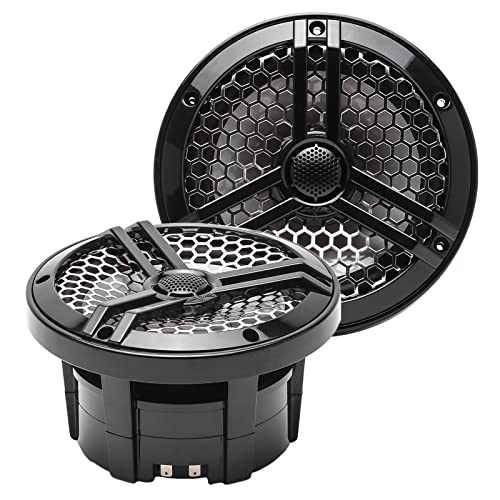
Skar Audio built its name on output per coin, and the SK65MB brings that temperament to the water. Its listing title announces a 6.5-inch two-way marine full-range coaxial pair at 320 Watt, in black — the largest power headline in this guide, from the maker whose audience measures success in how a system holds together at full song. Read the figure as Skar’s own headline rather than a cross-brand currency, and the intent is still unmistakable: this pair is built to be driven, on real amplifier power, in cockpits where wind, engine and enthusiasm all compete.
The black finish is part of the same statement, suiting the growing fleet of dark-accented centre consoles and sport boats where white grilles look like appliances. In service, the SK65MB’s virtues are headroom and nerve — it stays composed where modest pairs begin to shout — while its demands are equally plain: feed it properly or its headline stays theoretical, and place it with the respect a high-output pair deserves, because a loud speaker in a rattling panel advertises the panel. For the boat whose soundtrack is part of the day’s sport, this is the pair in the set speaking that language natively.
- Size: 6.5-inch
- Design: a 2-way marine full-range coaxial pair
- Power figure: a 320 Watt headline in its title
- Finish: black
- IP / waterproof rating: absent from the title; take the figure from Skar Audio’s documentation
Strengths
- The output headroom to hold a loud cockpit together
- Black finish matches modern dark-accented boats
- Value-led positioning for the performance on offer
Trade-offs
- Needs genuine amplifier power to deliver its headline character
- Its talents are wasted on a quiet cabin brief
- High output exposes rattling panels and loose fittings mercilessly
Best for: an amplified, open cockpit that listens loudly by design. Not suited for: a head-unit-only boat or a hushed sailing cockpit.

Kenwood KFC-1653MRW — Best straightforward pair
Kenwood’s entry is the pair that asks the fewest questions. The listing title describes 6.5-inch two-way marine speakers in white, sold as a pair, and the model behind it has the demeanour of good fleet equipment: standard size, conventional design, a maker with decades of marine and car audio behind it, and no agenda beyond replacing what the boat already has with something that works properly. In a category fond of drama, that plainness is a feature — boatyards and owners alike reach for this class of speaker when the brief is simply that the cockpit should sound right again by Saturday.
The sound is correspondingly balanced rather than theatrical, with the clear midrange that helm listening depends on and enough composure for music at working volumes. It pairs naturally with head-unit power and does not sulk if an amplifier arrives later. Boats in the middle of everything — family cruisers, fishing boats with a cabin pair to feed, older boats mid-refit — will find the KFC-1653MRW the lowest-friction route from silence or crackle back to music. It is the pick least likely to be anyone’s dream speaker and the most likely to be exactly what a given boat needed.
- Size: 6.5-inch
- Design: a 2-way marine pair
- Finish: white
- Power figure: the title prints none — Kenwood’s documentation holds it
- IP / waterproof rating: unstated in the title, so check Kenwood’s documentation
Strengths
- The lowest-friction replacement path in the set
- Balanced delivery suits helm, cockpit and cabin alike
- Content on head-unit power, unbothered by a later amplifier
Trade-offs
- No headline figure in the title; specification shoppers must read the documentation
- Plain finish and presentation next to the premium grilles here
- Not voiced as a high-output specialist for loud open cockpits
Best for: a straightforward refit or replacement on a working family boat. Not suited for: a showcase system build where finish and flagship detail lead.

Polk Audio DB652 — Best all-rounder
The DB652 arrives with a reputation earned across more environments than any other pick here. Polk’s DB+ Series — named in its listing title alongside the 6.5-inch size and two-way coaxial design — has served boats, vehicles and outdoor installations for years, and that breadth shows in the design’s priorities: a speaker built to sound composed in imperfect acoustic spaces and to keep doing so season after season. Marine duty is part of its brief rather than a costume, which is precisely why it keeps appearing in refit lists.
Its listening character is the all-rounder’s: a smooth, slightly generous balance that flatters mixed playlists, treats voices kindly at the helm, and never makes an evening at anchor feel like an audition. It accepts head-unit power gracefully and scales with an amplifier when one arrives, which makes it the natural choice for a boat whose system will grow in stages — this season the speakers, next season the amplifier, with no step wasted. Against the Fusion pair it concedes system pedigree; against the Skar it concedes theatre; against everything it defends the proposition that the best marine speaker for most boats is the one that does every job at a high level and complains about none of them.
- Size: 6.5-inch
- Design: a DB+ Series 2-way coaxial marine pair
- Power figure: no figure in the title; Polk Audio’s documentation supplies it
- IP / waterproof rating: the title is silent — Polk Audio’s documentation decides
- Character: cross-environment all-rounder with a long service reputation
Strengths
- Balanced, forgiving sound across music, radio and voice
- Happy on head-unit power today and an amplifier tomorrow
- A long production reputation in marine and outdoor duty
Trade-offs
- No system ecosystem behind it, unlike the Fusion pair
- Headline specifications require a trip to the documentation
- Jack-of-all-trades tuning concedes the extremes to the specialists
Best for: a growing system on a mixed-use boat, fitted in stages. Not suited for: a single-ecosystem build planned around one maker’s electronics.

Wet Sounds — Best specialist brand
Wet Sounds is the marine-only specialist in this company — a maker whose entire catalogue exists for boats — and its listing title is the most reticent in the guide, offering the brand name and little else. That silence shapes the honest way to write about this pick: the brand’s specialisation is the argument, and the specific model’s documentation is where its size, power handling and ratings must be confirmed before a cutout is committed to a panel. Specialist makers earn their following by voicing speakers for open air from the first sketch, and by standing behind products in an environment that destroys casual equipment.
For the shopper, this pick is therefore a research assignment with a promising destination. Owners who run Wet Sounds systems tend to be deliberate people — the brand is chosen rather than stumbled into, often as part of a wider specialist build with matched amplification. A boat being fitted out to that standard will find this pair’s natural home; a boat in line for a Saturday-morning replacement should take the Kenwood or Polk route and its fuller public specifications. What this guide will not do is invent the missing numbers: on a specialist’s product, the documentation is the specification, and the listing is the doorway to it.
- Brand: Wet Sounds, marine-audio specialist
- Size: the title omits it — Wet Sounds documentation must confirm it
- Power figure: none given in the title; the maker’s documentation carries it
- IP / waterproof rating: unlisted in the title — a documentation check is essential
- Fitment: confirm cutout and depth from the maker’s documentation before ordering
Strengths
- A marine-only maker’s focus behind every design decision
- Fits naturally into a wider specialist system build
- A following among deliberate, high-standard fit-outs
Trade-offs
- The listing title states almost nothing — homework is mandatory
- Cutout cannot be planned from the listing alone
- Specialist route suits planned builds, not urgent replacements
Best for: a planned specialist fit-out where documentation drives the decision. Not suited for: a quick like-for-like swap measured in a single afternoon.
How Do the Six Pairs Compare at a Glance?
| Pair | Title power figure | Finish in title | Character | Natural home |
|---|---|---|---|---|
| Garmin Fusion XS Series | 200-Watt | White and black grilles | System-grade balance | Fusion-equipped boats |
| JBL Marine | 60W | White | Clear, head-unit friendly | Runabouts, fishing boats |
| Skar Audio SK65MB | 320 Watt | Black | High-output cockpit pair | Amplified sport boats |
| Kenwood KFC-1653MRW | Not stated in title | White | Straightforward replacement | Family boats, refits |
| Polk Audio DB652 | Not stated in title | — | All-round balance | Mixed-use boats |
| Wet Sounds | Not stated in title | — | Specialist build component | Planned fit-outs |
Two cautions govern the table’s use. The wattage column mixes makers’ own headline conventions and must not be read as a measured ranking; and the not-stated entries are not criticisms — they are instructions to consult documentation, which is where marine specifications honestly live.
How Should a Flush-Mount Pair Be Installed Well?
Measure twice with the template, not the tape alone: mark the cutout from the maker’s template, check behind the panel with a hand and a torch for wiring, plumbing and structure, and confirm the mounting depth against the shallowest obstacle. Cut conservatively — fibreglass can always yield another millimetre, and never the reverse — then dry-fit the speaker before any sealant appears. Bed the flange on a marine sealant appropriate to the panel, drive the fasteners evenly rather than to maximum tightness, and leave the grille off until the first powered test has passed.
The wiring run decides the installation’s lifespan. Use tinned marine cable, support it so it cannot chafe on the cutout’s edge, form a drip loop below the speaker, and seal the connections. Test at the dock at working volume before the panel’s neighbours go back on, listening for rattles that a fingertip on trim pieces will locate faster than any tool. An hour of this patience buys a decade of invisibility, which is the entire promise of flush mounting.
What Mistakes Do Marine Speaker Buyers Make?
The expensive mistake is cutting first and measuring the depth second, discovering a stringer where the magnet intended to live. The commonest is treating a car speaker as a marine speaker because the grille is white — the first season of spray writes the review of that decision. Third is chasing the largest wattage headline with no amplifier to feed it, then blaming the speaker for the head unit’s limits. Fourth is ignoring the rating question entirely: no title in this guide states an IP figure, and an owner fitting an exposed tower-side or bow position must take that rating from the maker’s documentation, not from optimism. The last mistake is mounting a fine pair where nobody sits — speakers belong at the listeners’ panels, and a cockpit’s social geography, not its wiring convenience, should draw the map.
Where on the Boat Should Each Kind of Pair Live?
A boat offers at least four acoustic positions, and they reward different picks. The helm and cockpit — the social and working centre — want clarity at conversational distance and enough output to hold a cruise; the Fusion, Polk and Kenwood pairs all serve here, in ascending order of system ambition. The bow, on boats that carry listeners forward, is the harshest seat: full weather, full wind, and a long cable run from the electronics, which argues for the pair whose endurance the owner has verified from documentation rather than assumed. The cabin inverts every priority — small air volume, close listeners, evening volumes — and there the modest pairs shine, because output headroom buys nothing in a space the size of a wardrobe, while balance at low level buys everything.
The hardtop and arch positions deserve their own sentence, because flush mounting there places speakers above the listeners, firing down — a geometry that spreads sound evenly across a cockpit and flatters every pick in this guide, provided the structure offers the depth the baskets need. Boats adding a second zone should think of the zones as two decisions sharing one head unit: a cockpit pair chosen for weather and output, a cabin pair chosen for manners, each wired and levelled independently. The single-pair boat has the simpler life, and its pair should be the all-rounder its mixed duties describe.
How Do Marine Speakers Age, and What Maintenance Do They Want?
The marine environment grades equipment on a curve of seasons. Ultraviolet light embrittles what it touches, salt air creeps into every unsealed seam, and vibration works fasteners like a patient thief. The maintenance that answers all three is modest and mostly visual: a freshwater rinse when the boat is washed, a seasonal check that grilles sit tight and sealant lines remain unbroken, and a hand on each fastener once a year. Cones and surrounds on genuine marine designs are chosen for this life, which is the practical difference the category’s premium buys — not immunity, but a slower clock.
Failure, when it comes, usually announces itself politely: a crackle at one corner of the volume range, a grille discoloured ahead of its twin, output that thins as a connection corrodes behind the panel. Each symptom points at wiring and seals before it points at the driver, and the owner who inspects the cheap causes first saves the price of a pair more often than pride prefers to admit. When replacement does arrive, the flush-mount standard is the owner’s friend — the cutout outlives the speaker, and a successor pair of the same class restores the system in an afternoon, which is one more argument for cutting the hole carefully the first time.
What About Sound Quality at Anchor Versus Underway?
A boat is two listening rooms sharing one set of speakers. Underway, the room is hostile: engine, wind and water raise the floor under the music, bass is the first casualty and detail the second, and what survives is presence — the midrange energy that keeps a song recognisable and a voice intelligible. At anchor, the room turns kind: the same pair, at a third of the volume, reveals the balance its maker actually voiced, and subtleties that were ballast underway become the evening’s pleasure. Judging a marine pair by only one of its rooms misleads in both directions — the cockpit bruiser that seems crude at the dock may be perfectly judged for the cruise, and the refined pair that charms at anchor may evaporate at hull speed.
Practical owners therefore set two habits rather than one: an underway level and EQ posture, found once at cruise and left alone, and an anchored posture at low volume where tone can be trimmed to taste. Systems with zone control make the split effortless; single-zone boats achieve it with the volume knob and lowered expectations of bass underway. The picks in this guide were judged against both rooms, and the all-rounders — Polk and Fusion above all — earned their places by refusing to embarrass themselves in either.
How Should Speaker Size and Count Scale With the Boat?
The 6.5-inch class dominates flush mounting for sound reasons: it is the largest driver that fits the panels most boats actually offer, and the smallest that produces genuinely satisfying output in open air. Smaller boats — the under-six-metre fleet — live well with a single pair at the helm, because their cockpits are one social space and the listeners are never far from the grilles. Mid-sized cruisers and centre consoles justify the second zone, cabin or bow, and the wiring plan should be drawn for both zones even if the second pair waits a season; cable pulled during a refit costs a fraction of cable pulled after it.
Large boats change the question from coverage to choreography, with zones multiplying and a system head — the Fusion ecosystem’s home ground — conducting them. Even there, the 6.5-inch flush pair remains the atom of the design, repeated at each position rather than replaced by larger units, because panels, not ambition, set the aperture. Subwoofers enter marine systems as they do at home, through a separate decision about the lowest octave, and a boat that wants one should plan its power and its mounting space as part of the same drawing. The six pairs here are that atom in six temperaments; the boat’s size decides how many atoms, and its life decides which temperament.
What Should Be Verified Before the Saw Comes Out?
A pre-cut checklist, in order. The model’s documented cutout diameter and mounting depth, taken from the maker’s own material — for the Wet Sounds pick this step is the entire beginning, since its title states neither. The panel’s thickness and composition at the chosen spot, and the clearance behind it through a full hand’s exploration. The cable route from the head unit or amplifier, including where it passes through bulkheads and how it will be sealed and supported. The grille colour against the boat in daylight, not under a shop’s lamps. And the rating question, answered from documentation, for any position that will take direct weather.
One more verification belongs to the system rather than the speaker: confirm what will drive the pair, and that its output and the speaker’s documented appetite are on speaking terms. A head unit’s modest channels and a high-headline pair like the Skar can coexist, but the pairing should be a decision rather than a discovery. Boats are unforgiving of improvised electronics — the environment amplifies every shortcut — and the hour spent with documentation and a tape measure is the cheapest insurance in the whole fit-out.
How Do Grille Colour and Finish Age in Sunlight?
The grille is the installation’s public face, and the sun edits it daily. White grilles match the classic gelcoat palette and hide salt residue gracefully, which is why three of the six picks here wear it; they also show mould spots and scuffs in jurisdictions with humid winters, and they yellow at rates that vary by material quality. Black grilles — the Skar pair and the Fusion’s second option — suit modern dark-accented boats and conceal scuffs, while showing dried salt as a pale bloom after every trip until rinsed. Neither colour wins; the boat’s existing palette wins, and the Fusion pair’s two-colour offering is the only pick that lets the owner decide at the point of order rather than at the point of compromise.
Whatever the colour, a grille that removes easily for cleaning will be cleaned, and one that requires a tool and a prayer will be admired dirty for years. That small mechanical mercy, invisible in every specification, is worth a line in the pre-purchase checklist — ask how the grille attaches before the cutout makes the question permanent.
Why Does the Head Unit Matter as Much as the Speakers?
A speaker pair is the visible half of a marine system; the head unit is the half that decides what the pair is fed, how zones behave, and whether the phone in the skipper’s pocket joins gracefully or through a cable and a curse. Boats building around Fusion electronics gain the conducted-system virtues — unified control, sources that behave, an upgrade path with signposts. Boats running a simple head unit gain simplicity and should choose speakers, like the JBL and Kenwood pairs, whose appetites match that simplicity. The mismatch to avoid is philosophical: reference-grade speakers on a neglected source sound like an accusation, and modest speakers on a flagship system sound like a shrug. The six picks span both philosophies deliberately, and the honest purchase pairs each speaker with the electronics the boat actually runs.
Source quality has a marine wrinkle: reception. Offshore, the library becomes whatever is downloaded, the radio becomes weather-dependent, and Bluetooth range across a cockpit is tested by bodies and bulkheads. A system judged at the dock on a strong signal should be re-judged a mile out, where its real working conditions live — one more version of this guide’s insistence that on a boat, the environment always gets a vote.
How Does a Second Zone Change the Wiring and the Budget?
Adding a zone is the point where a speaker purchase becomes a system project, and it should be priced as one: the second pair itself, the cable run to reach it, the head unit channels or amplifier it will draw on, and the control arrangement that lets the cockpit and the cabin disagree about volume without a negotiation. Boats that plan the second zone while the first is being fitted save the expensive half of the work — panels opened once, cable pulled once, sealant cured once. The picks divide naturally across the zones: output-led pairs forward or in the cockpit, balance-led pairs in the cabin, with the all-rounders covering either duty when a single model must be chosen twice for tidiness.
There is also a social dividend to zoning that brochures undersell. The crew’s film in the cabin and the skipper’s weather radio at the helm stop competing; the teenagers’ bow and the adults’ cockpit keep separate treaties. A boat is a small country, and zones are its federal system — worth building properly, and worth choosing speakers for zone by zone rather than by the pallet.
What Does a Good Flush Installation Look Like Five Years Later?
It looks like nothing, which is the point. The grilles sit flat and true, their colour aged evenly with the surrounding gelcoat, the sealant lines unbroken, and the sound arrives with the same balance it had on commissioning day because the connections behind the panel were sealed against the damp that rewrites systems slowly. The speakers have become part of the boat’s furniture in the best sense — noticed only when a guest asks how the cockpit sounds so complete with no visible equipment. Every behaviour that produces that outcome is in the installation sections above, and none of them costs money worth counting. They cost an afternoon’s care, spent once, at the only moment it can be spent.
How Should Replacement Speakers Be Matched to an Existing Cutout?
Most marine speaker purchases are not new installations but successions: a tired pair comes out, and its hole dictates the shortlist. The succession rules are mercifully mechanical. The replacement’s documented cutout should match or sit fractionally inside the existing hole’s tolerance — a grille flange covers small sins, a basket does not negotiate with a hole that is too small — and its mounting depth must respect whatever the old speaker’s magnet was clearing. Owners who photograph the old installation, measure the hole in two directions (fibreglass holes are rarely perfectly round after years of fasteners), and carry those numbers into the documentation of each candidate will find that the six-way choice often narrows itself to two before sound is even discussed.
Succession is also the moment to repair the invisible half: replace perished sealant, renew any cable that shows green at the copper, and add the drip loop the original installer skipped. A new pair in an old, damp wiring run will be blamed for the run’s faults within a month. The boat rarely offers a cheaper opportunity to fix the foundations than the day the old speakers are already in a bucket on the dock.
Why Do Boats Punish Cheap Audio Faster Than Any Other Vehicle?
A car lives in a garage’s mercy and a sealed cabin; a boat lives outdoors in salted air, with its electronics breathing hull damp through every temperature swing. Connectors corrode by electrochemistry rather than by wear, ultraviolet light attacks polymers as a daily ration, and vibration is not an event but a climate. That is why the marine category exists as more than a colour scheme, and why its honest makers — every badge in this guide among them — spend their budgets on materials and sealing that produce no showroom drama. The buyer comparing a marine pair with a cheaper automotive twin is not paying for a word on the box; the difference is a design brief written by an environment that has never once been negotiated with.
What Should a Buyer Listen for at the Dock?
A dockside audition cannot reproduce a cruise, but it can expose the faults that no cruise will cure. Play a voice first — a newsreader or a podcast — at the volume a helm conversation would use, and walk the cockpit: the pair that keeps the voice intelligible at every seat, without a hot spot at the grilles and a dead zone at the wheel, has the dispersion a boat needs. Then play a familiar track and listen for rattles, buzzes and panel sympathy at modest level, because underway those small resonances will be amplified by engine vibration into the system’s permanent accent. Finally, turn the system down to anchored-evening level and confirm the balance survives the journey — a pair that only assembles itself when loud will spend its evenings switched off.
Bring the boat’s own source to the audition: its head unit, its phone pairing, its usual material. A speaker demonstrated on a shop’s flagship electronics is a promise made by somebody else’s system, and the water will not honour it.
How Do Tower and Surface-Mount Speakers Differ From This Set?
They answer a neighbouring question, and naming the boundary protects the purchase. Surface-mount and tower speakers hang their cabinets in the air — on a wakeboard tower, an arch or a rail — aiming sound at listeners behind or around the boat, and they accept visual presence as the price of projection. Flush-mount speakers trade that projection for disappearance, drawing their output from the boat’s own panels at the listeners’ level. A wake boat may honestly need both dialects; a cruiser, a fishing boat or a sailboat almost always wants the flush dialect alone, because its listeners sit inside the boat the panels belong to. Every pick in this guide speaks the flush dialect, and a shopper whose day is spent behind the boat on a rope should take the tower guides as the sequel rather than forcing these pairs into a job their mounting was never shaped for.
Final Recommendation
Let the boat’s system and social life choose. A Fusion-equipped boat, or one being built as a system, should take the Garmin Fusion XS pair and its grille-matched finish. A head-unit boat seeking honest sound by the weekend should choose between the JBL pair’s clarity and the Kenwood pair’s plain dependability, with the Polk DB652 as the all-rounder for a boat whose system will grow in stages. The loud open cockpit on amplifier power belongs to the Skar pair, and the deliberate specialist build should do its documentation homework on the Wet Sounds entry. In every case, measure the panel before the catalogue seduces you — because a flush-mount speaker’s first job is to fit the boat, and its second is to survive it, and only then does it get to sing.
Frequently Asked Questions
Are marine speakers actually waterproof?
They are built to resist the marine environment — spray, humidity, ultraviolet exposure and washdowns — but the specific rating is a documented specification, not a vibe. No listing title in this guide states an IP rating, so confirm the exact rating in the maker’s documentation for the mounting position you have in mind, especially for fully exposed locations.
Can I use car speakers on a boat instead?
Physically they may fit the cutout; environmentally they are not built for the job. Marine designs use corrosion-resistant materials and construction intended for spray and sun, and a car speaker in an open cockpit typically degrades within a season or two. The price difference buys the environment rating, not just the badge.
What size cutout do 6.5-inch speakers need?
The cutout is smaller than the nominal size and varies by model — the basket and magnet pass through a hole the grille then covers. Always work from the chosen model’s own template and stated cutout diameter in its documentation rather than from the 6.5-inch headline, and verify mounting depth behind the panel at the same time.
Do I need an amplifier for marine speakers?
Not always. Pairs designed around modest figures, like the JBL entry here, are intended for head-unit power and satisfy most small boats. Larger cockpits, louder listening and the high-headline pairs — the Skar above all — need an amplifier to deliver their character. Match the pair to the power the boat will actually provide.
Is a higher wattage headline always better on the water?
No. A headline figure describes the pair’s intended system — the power it welcomes — rather than a promise of volume in isolation, and makers state such figures by different conventions. A modest pair on adequate power will outperform a high-headline pair starved by a small head unit, at sea as surely as anywhere else.
What gauge of speaker cable should a boat use?
Gauge follows the run: short cabin runs are forgiving, long runs to a bow or arch position deserve heavier tinned cable so the amplifier’s effort arrives at the speaker rather than warming the wire. When the documentation offers a recommendation for the installation, follow it; when in doubt, one step heavier than the minimum is cheap insurance on a boat.
Should the grilles match the boat or contrast with it?
Matching is the flush-mount philosophy — the installation disappears — and most owners should let the boat’s existing palette decide, which is why a two-colour offering like the Fusion pair’s is genuinely useful. Deliberate contrast suits sport boats with dark accent schemes, where a black grille reads as equipment rather than error. Decide in daylight at the boat, not from a screen.
How many speakers does a typical boat need?
One pair covers a small cockpit honestly; a second pair, zoned separately, serves a cabin or a bow once the boat’s social life spreads out. More than two pairs belongs to system builds with the head unit and amplification planned to conduct them. Count listening positions, not panels, and the arithmetic settles itself.
Can flush-mount speakers be fitted to a sailboat?
Yes, and sailing makes its own demands: heel angles move the listening geometry, cockpits value low power draw and clear voice at modest volume, and cabin pairs do heavy evening duty. The balanced, head-unit-friendly pairs in this guide suit that life better than the high-output cockpit specialists, and every rating should be verified from documentation for positions that take spray over the rail.
Why do some listings not state power or IP figures?
Listing titles are summaries, and some makers keep their titles short — the Wet Sounds entry in this guide is the extreme example. The full specification lives in the product documentation. Treat a silent title as a prompt to read that documentation, never as permission to assume a figure.
Related Guides
Boat audio continues with powering speakers for outdoor spaces, pairs naturally with whole-house speaker systems for listeners who split time between dock and home, and meets the shore in outdoor and patio speaker choices.