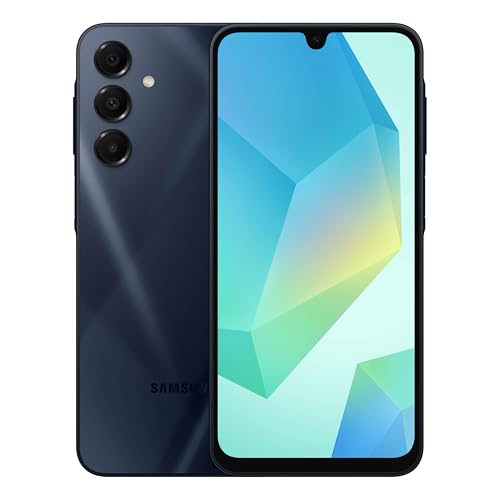
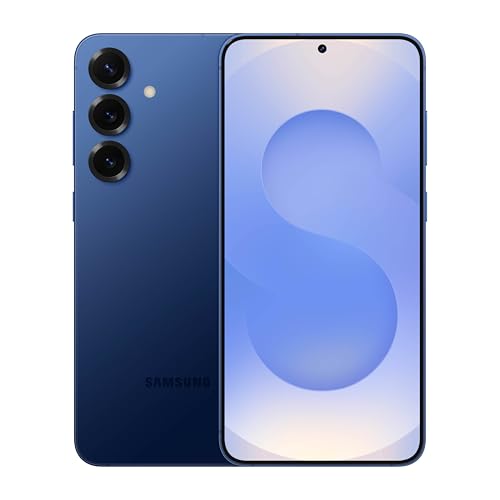
Our Top Picks
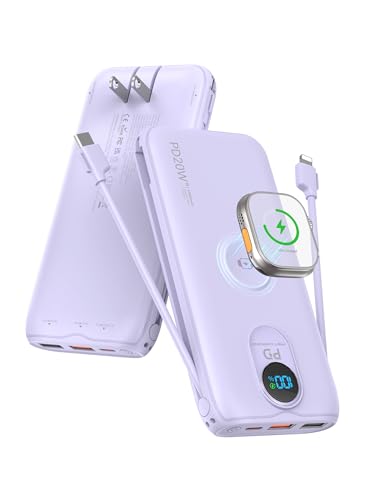 Portable Charger Power Bank 10000mAh PD20W w/Built-in Cables100002.8 x 0.83 x 5.91 inchesCheck on Amazon


What's inside
- What slow means: watts, volts and the 5-watt baseline
- How lithium-ion batteries age
- The overnight problem: hours spent sitting at 100 percent
- Charge limits and adaptive charging: the phone’s own defences
- Old USB-A bricks and new low-power USB-C adapters
- Cables at 5 watts: the component that stops mattering
- Measuring reality with a USB meter
- Safety: certification, heat and the cheap-adapter problem
- Who benefits most from charging slowly
- When slow charging is the wrong tool
- Myths that attach themselves to slow charging
- Setting up a slow bedside station, step by step in spirit
- Reading battery health figures without obsession
- Seasons, signal and other overnight variables
- Timers, smart plugs and other clever ideas examined
- Comparing the options in one view
- Slow charging away from home: hotels, relatives and spare rooms
- Frequently asked questions
- Check prices on Amazon
- Disclosure and a closing note
As an Amazon Associate I earn from qualifying purchases. This post may contain affiliate links at no extra cost to you.
Fast charging dominates phone marketing, with wattage figures climbing every product cycle and demonstrations built around minutes rather than hours. Yet a large share of all phone charging happens in the least urgent setting imaginable: overnight, on a bedside table, while the owner sleeps for seven or eight hours. In that setting, speed buys nothing. A phone that fills in forty minutes and then sits full until morning has not served its owner better than a phone that fills gently in three hours and then sits full for a shorter time. That simple mismatch between capability and context is the entire case for the slow charger, a small low-power adapter, usually around 5 watts, chosen deliberately for the hours when nobody is waiting.
This guide treats slow charging as a considered strategy rather than a leftover habit. It defines what slow actually means in volts, amps and watts, explains how lithium-ion batteries age and which parts of that process charging speed can genuinely influence, and compares a low-power adapter with the charge-limiting features now built into phones themselves. It also covers the unglamorous practicalities: old USB-A bricks versus newer low-power USB-C models, why cables barely matter at this level, how a simple USB meter reveals what a charger is really doing, and why safety certification matters even more, not less, when a device stays plugged in beside a bed every night of the year.
Nothing here argues against fast charging in its proper place. A rapid top-up at an airport, in a car or between meetings is a genuine convenience that slow hardware cannot replace. The argument is narrower and, for that reason, stronger: the charger that lives at the bedside should be matched to the bedside job. For a phone that will rest untouched until an alarm sounds, the gentlest adequate tool is often the wisest one, and the small adapter that flagship phones once included as standard equipment turns out to have been well matched to that job all along.
What slow means: watts, volts and the 5-watt baseline
Charging power is the product of voltage and current. The classic low-power phone adapter delivers 5 volts at 1 amp, giving 5 watts, a specification so standard for so long that it defined normal charging for a generation of phones. Slightly stronger variants deliver 5 volts at 1.5 or 2 amps, reaching 7.5 or 10 watts, and still belong in the slow family by any modern comparison. Above that territory sit the fast standards: USB-C Power Delivery negotiating 9, 15 or 20 volts for totals of 18 to 45 watts and beyond in ordinary phones, proprietary systems pushing considerably higher, and Qualcomm Quick Charge raising voltage on compatible hardware. A phone on a fast charger can gain half its battery in the time a 5-watt adapter needs for a modest fraction of a charge.
Those headline fast figures need one qualification that matters for the overnight argument. Phones do not charge at peak power from empty to full. Every modern phone tapers its intake as the battery fills, accepting full speed only in the lower and middle ranges of charge, then stepping down progressively, and crawling through the final percentage points at a rate not far from what a slow charger provides. The battery’s own protection demands this curve. So the real-world difference between a fast and slow adapter is concentrated in the first hour or so, exactly the hour that an overnight charge has to spare eight times over.
Charge rate and the idea of C-rate
Battery engineers describe charging intensity relative to capacity, using C-rate. A battery charged at 1C receives current equal to its capacity in amps, filling it in roughly an hour before tapering. A 5,000 milliamp hour phone battery on a 5-watt, 1-amp adapter charges at about 0.2C, a very gentle rate. The same battery on a high-power adapter may briefly approach or exceed 1C in its fastest phase. C-rate is the number that connects charging speed to battery stress in the scientific literature, because the physical and chemical strain inside a cell scales with how hard it is pushed relative to its size. Slow charging, in those terms, is simply charging that keeps C-rate low throughout, rather than only at the end when the phone insists on it anyway.
How lithium-ion batteries age
A phone battery does not wear out in a single way, and untangling the mechanisms explains where slow charging helps, where it barely matters, and where other habits matter more. Cycle ageing counts the cumulative work the cell performs. Each full equivalent cycle, whether completed as one journey from empty to full or as several partial journeys adding up to the same throughput, consumes a small slice of the cell’s life as the internal chemistry gradually loses its ability to shuttle lithium ions. Calendar ageing proceeds in parallel even when a phone sits unused, driven mainly by time, temperature and the state of charge at which the cell rests.
Three stress factors recur in the research and in manufacturer guidance. Heat accelerates nearly every degradation reaction inside a cell. Time spent at very high states of charge keeps the cell’s internal voltage elevated, which encourages side reactions at the electrode surfaces. And high charge or discharge rates add mechanical and chemical strain, including, in extreme fast-charging conditions, the risk of lithium plating on the anode instead of orderly intercalation into it. No consumer habit eliminates these forces. Battery care is the art of reducing the ones that cost nothing to reduce, and overnight charging happens to concentrate two of them, heat and hours at full charge, in a single nightly event.
Heat: the factor with no defenders
Of all the influences on battery longevity, temperature has the clearest verdict. Cells aged at high temperature lose capacity markedly faster than identical cells kept cool, and the effect compounds with state of charge, so a hot battery sitting full is in the worst documented position. Charging itself generates heat in proportion to power throughput and inefficiency. A fast charger pushing 30 or 40 watts into a phone warms the battery, the charging circuitry and the phone body noticeably, even with well-designed thermal management spreading that warmth. A 5-watt adapter generates so little heat that the phone typically feels neutral to the touch throughout. In a warm bedroom in summer, or under a pillow where a phone should never be charged at any speed, that difference in heat production is the slow charger’s most concrete advantage.
Environment multiplies or softens the effect. A phone charging on a hard bedside table in a cool room sheds heat easily. The same phone charging on bedding, inside a thick case, or in direct morning sunlight through a window keeps more of it. Slow charging widens the margin for imperfect environments because the starting heat load is so small. It does not license careless placement, since even a low-power adapter should sit in open air on a stable surface, but it makes ordinary bedside conditions comfortably safe rather than borderline.
The overnight problem: hours spent sitting at 100 percent
Consider the timeline of a fast charger at a bedside. Plugged in at eleven in the evening, the phone reaches full charge before midnight, then remains connected for another seven hours. Phones manage this state intelligently, allowing the battery to drift down slightly and topping it up in small pulses rather than forcing current continuously, but the cell nevertheless spends most of the night at or near its maximum voltage. Repeated nightly for two or three years, those hours accumulate into a meaningful share of the battery’s calendar ageing, purchased in exchange for speed that nobody used.
A 5-watt adapter stretches the charging phase across a larger share of the night. Depending on battery size and starting level, a phone plugged in at a quarter charge may take three to four hours to fill, reaching full in the small hours and then resting at full for a correspondingly shorter period. The battery also arrives at full more coolly, having never passed through a high-power phase. Neither benefit is dramatic on any single night. Battery care is a game of accumulation, and the slow charger’s case rests on hundreds of slightly kinder nights adding up across the years an owner keeps a phone.
Why fast charging overnight is wasted rather than wicked
Precision matters here, because overstated claims undermine sensible advice. Fast charging a modern phone overnight does not ruin it. Phones are engineered with thermal limits, charge controllers and tapering curves precisely so that ordinary use, including fast charging, stays within safe bounds, and manufacturers validate their batteries for the chargers they sell. The honest framing is waste and marginal wear, not danger. The fast adapter’s capability goes unused, the battery banks extra hours at full charge and extra warmth it did not need, and the owner gains nothing at all in return. Slow charging simply declines that trade. Readers weighing replacement adapters generally, including faster models for daytime use, will find the broader landscape mapped at best 3rd party iphone chargers and, for the other major platform, at best android cell phone chargers, since many households sensibly keep one charger of each temperament.
Charge limits and adaptive charging: the phone’s own defences
Phones have not stood still while this debate developed. Recent generations of both major platforms include features aimed squarely at the overnight pattern. On one side, optimised charging learns the owner’s routine and holds the battery near 80 percent through the night, completing the final stretch shortly before the usual wake time. On the other, adaptive charging applies a similar schedule-based hold, and several makers offer a hard limit that caps charging at 80 or 85 percent indefinitely for owners who rarely need the last portion of capacity. These features attack the hours-at-full problem directly and effectively, and for owners who enable them, they deliver much of the benefit attributed to slow charging.
The two approaches operate at different layers and combine without conflict. A charge limit governs where charging stops or pauses, regardless of the adapter. A slow adapter governs how the phone travels to whatever limit is set, and how much heat it generates on the way. An owner can run a strict 80 percent cap through a fast adapter and still pass through a warm, high-rate phase every evening, or run no limits at all on a 5-watt adapter and still spend hours at full, merely arriving there later and cooler. The strongest overnight arrangement uses both layers: a low-power adapter doing the work slowly, and a scheduled or capped finish keeping the resting state below the maximum. The weakest arrangement uses neither, which describes the default fast-charger-on-the-bedside setup that many households drift into by accident.
The 80 percent question in daily life
Whether a permanent 80 percent cap suits an owner depends on the shape of their day. Someone who works at a desk with chargers nearby gives up nothing, since the missing fifth of the battery would rarely be touched before the next charging opportunity. Someone who spends long days away from power, travelling, working outdoors or covering events, may need every percent the battery holds and would feel the cap as a daily tax. For that second owner, scheduled optimisation, which delivers a genuinely full battery by morning while still minimising hours spent full, is the better tool, and it pairs happily with a slow adapter. The underlying principle is that the last 20 percent of charge is the most expensive in ageing terms and the least often needed, so features and habits that treat it as optional tend to repay their users.
Old USB-A bricks and new low-power USB-C adapters
The most likely slow charger in any household is already there: the small USB-A adapter that shipped with an older phone, a tablet accessory or a pair of earbuds, rated at 5 volts and 1 amp. These adapters remain electrically appropriate for overnight charging of current phones, provided they come from a reputable maker and show no damage. Their age alone is not a defect. A well-made adapter from a major manufacturer, kept dry and unbent, can serve a bedside for a decade. The cable pairing is the only adaptation required, since a modern phone with a USB-C port needs a USB-A to USB-C cable, an inexpensive and widely available item whose quality matters little at 1 amp, as a later section explains.
New low-power USB-C adapters exist for buyers starting fresh or replacing a lost brick. Some are deliberately minimal 5-watt or 12-watt designs, while others are compact adapters whose low output comes from simplicity rather than intent. A subtlety deserves attention: certain USB-C adapters implement Power Delivery in ways that let a phone negotiate a higher voltage and charge faster than the buyer wanted. An owner specifically seeking slow charging should read the output specification rather than trusting size or shape. A fixed 5-volt output, or a modest maximum clearly printed on the housing and listing, guarantees the gentle behaviour intended. Multi-port adapters complicate the picture further, since output per port can vary with load, though a shared bedside hub can still serve a phone slowly if its per-port delivery stays low; the pairings explored at best 2 port usb chargers illustrate how a phone and a second small device can share one socket without either being hurried.
Retiring adapters that should not be kept
Not every old adapter deserves its second career. An adapter with a cracked case, a loose prong, a port that grips cables weakly, scorch marks, a buzzing or whining sound under load, or a history of running hot should be recycled rather than reassigned to the most unattended charging post in the home. The same applies to adapters of unknown origin that arrived bundled with unrelated gadgets and carry no identifiable maker or certification. The bedside role is precisely where standards should be highest, because the device works nightly, for hours, near bedding, while the household sleeps. A certified replacement costs little and converts an inherited question mark into a known quantity.
Cables at 5 watts: the component that stops mattering
Cable debates consume surprising energy in fast-charging discussions, where wattage ceilings, e-marker chips and conductor thickness decide whether a phone reaches its advertised speed. At 5 watts, nearly all of that falls away. One amp at 5 volts is a trivial load for any intact cable from a reputable source, and voltage drop over a typical bedside length of one to one and a half metres stays negligible. A cable that would embarrass itself on a 100-watt laptop charger performs flawlessly in overnight phone duty. This indifference is one of slow charging’s quiet conveniences: the drawer of accumulated cables, so often a source of incompatibility, becomes a reliable supply for the bedside.
Two cable cautions survive at any power level. Physical damage matters, because a frayed cable with exposed conductors is a hazard and a short-circuit risk regardless of wattage, and cables that have been pinched in drawers or chewed by pets belong in recycling. Connector fit matters too, since a worn USB-C plug that sits loosely can interrupt charging intermittently, leaving a phone at 40 percent by morning for reasons that look like adapter failure. Beyond those basics, length choice is about tidiness. A cable just long enough to reach from socket to table, without a coiled surplus to slide onto the floor, keeps the bedside calm and reduces the nightly temptation to use the phone in bed while tethered, a habit with its own costs to sleep that no charger can offset.
Measuring reality with a USB meter
Owners curious about what their charger actually delivers can answer the question directly with an inexpensive inline USB meter, a small device that sits between adapter and cable and displays voltage, current and accumulated energy. At the bedside, the readings tell a clear story. A healthy 5-watt arrangement shows voltage close to 5 volts and current near 1 amp while the battery is low, then a gradual decline in current as the phone tapers, ending in tiny intermittent draws once full. A supposedly slow adapter that shows 9 volts has negotiated a faster mode and is not the gentle tool its owner intended. An adapter showing far below its rating from the start may be faulty, mismatched to its cable, or limited by a phone that is already nearly full, which is why measurements mean most when taken with the battery below half.
The meter also settles arguments about wireless charging, the other common bedside method. A wireless pad fed by a modest adapter delivers its power with lower efficiency than a cable, converting the difference into heat at the pad and the phone, which is why a phone can feel warmer after a night on a nominally gentle pad than after a night on a 5-watt cable. Owners committed to wireless convenience for other reasons can still choose low-power pads deliberately, and the category overview at best 10w wireless chargers covers that middle ground, though the heat arithmetic means cable-based slow charging retains an edge for pure battery kindness.
Interpreting the overnight energy total
Many meters accumulate milliamp hours or watt hours across a session, and that total offers a satisfying sanity check. A phone battery rated near 15 watt hours, charged from a quarter full, should draw somewhat more than the roughly 11 watt hours it stores, with the excess reflecting conversion losses in the adapter, cable and phone. A total wildly above expectation suggests the phone was awake and busy through the night, perhaps backing up media or struggling with poor signal, both of which also explain morning warmth better than the charger does. A total far below expectation, paired with a full battery in the morning, usually means the session began at a higher charge than the owner remembered. Numbers end speculation, which is the meter’s real gift to a topic prone to folklore.
Safety: certification, heat and the cheap-adapter problem
Low power is not a safety certificate. A 5-watt adapter still connects directly to mains electricity, still converts that supply through components that can fail, and still operates for thousands of hours across its life, mostly unattended. The safety case therefore rests on design and certification rather than wattage. Recognised marks such as UL or ETL in North America and CE or UKCA in European markets indicate assessment against standards covering insulation, temperature rise, fault behaviour and fire resistance. Those marks carry weight when they come from identifiable manufacturers with model numbers and traceable documentation, the same signals that distinguish a considered purchase from a gamble in any small mains appliance.
The dangerous end of the market is well characterised. Ultra-cheap adapters of unknown origin have repeatedly been found, on teardown by engineers and regulators, to skimp on the isolation distance between mains and output sides, to omit proper fusing, and to use components operated beyond their ratings. Such an adapter may work for months, which is precisely the trap: its failure mode is rare, unpredictable and potentially severe, and it tends to arrive at night. Slow charging’s whole purpose is a calmer relationship with risk and wear, so pairing that philosophy with the cheapest uncertified adapter available contradicts it entirely. The correct bedside adapter is inexpensive but not anonymous, certified but not luxurious.
Heat at the adapter, and where adapters should live
A small adapter converting mains power at modest load will feel slightly warm, and that warmth alone is not a warning. Heat becomes information when it changes character: an adapter too hot to hold comfortably, one that smells of hot plastic, or one whose warmth persists hours after the phone reached full all deserve replacement without further investigation. Placement extends the same logic. Adapters belong in open air, plugged directly into a wall socket or a reputable power strip, not buried under bedding, not inside a closed drawer powering a phone through a gap, and not daisy-chained through travel adapters and splitters stacked by improvisation. The phone itself follows parallel rules, resting on a hard surface rather than under a pillow, a habit that matters at 5 watts and matters far more at 40.
Who benefits most from charging slowly
The clearest beneficiary is the long keeper, the owner who buys a phone expecting four or five years of service. Battery capacity is usually the first component to make an old phone feel old, forcing midday top-ups and eventually a battery replacement or an unwanted upgrade. Every factor that slows capacity loss extends the comfortable life of the whole device, and a nightly slow charge is the easiest such factor to adopt because it requires one purchase and no ongoing discipline. For this owner, slow charging belongs in a small portfolio of kind habits alongside charge limits, moderate brightness and keeping the phone out of hot cars, none heroic alone and meaningful together.
Second phones and older handsets form a second natural audience. A spare phone kept for travel, a child’s first phone, a handset dedicated to music or to two-factor codes, or a retired flagship serving as a household remote and camera all charge on forgiving schedules and gain nothing from speed. Slow adapters suit their smaller, older batteries particularly well, since an ageing cell tolerates gentle treatment better than aggressive input. Households often discover they own several such devices, each with a fast adapter it never needed, and rebalancing the adapter drawer, fast bricks to the kitchen and office, slow bricks to the bedrooms, costs nothing at all.
The bedside ecosystem beyond the phone
Bedsides accumulate other small batteries: earbuds cases, watches, e-readers, torches and tablets on rotation. Most of these devices charge slowly by design or accept low power happily, and a modest multi-port adapter or a small cluster of low-power bricks can serve the whole collection without any device being rushed. The watch and earbuds that sip a few watts are natural companions for a 5-watt phone adapter on a shared strip, provided total load stays within the strip’s and adapter’s ratings. Organising the bedside as a low-power zone, with the household’s one or two fast adapters stationed where urgency actually occurs, is the spatial version of the whole argument: speed placed where time is scarce, gentleness where time is abundant.
When slow charging is the wrong tool
Honesty about limits strengthens the recommendation. Slow charging fails wherever time is genuinely short. A traveller with a fifty-minute layover and a phone at 15 percent needs every watt a modern adapter and a compliant cable can deliver, and the battery cost of that single fast session is trivial in the context of the phone’s life. A worker between shifts, a parent grabbing twenty minutes while a child naps, a photographer heading back out after lunch all face the same arithmetic. Opportunity charging during the day is fast charging’s home ground, and keeping a capable adapter in a bag, car or workplace is part of a balanced setup rather than a betrayal of the slow philosophy.
Slow charging also disappoints when it is expected to rescue a battery already in decline. A phone whose cell has lost a third of its capacity will not recover that capacity through gentler nights; the chemistry does not run backwards. Gentle charging can slow further loss and reduce heat-related discomforts such as unexpected shutdowns under load, but the honest remedies for a worn battery are a replacement cell, where the model allows it, or a replacement phone. Similarly, a very large tablet battery on a 5-watt adapter may not reach full during a short night at all, since the arithmetic of capacity divided by 1 amp is unforgiving. Matching adapter to device size remains basic competence, and mid-sized tablets generally belong on the 10 to 12 watt tier overnight rather than the 5-watt tier.
Morning surprises and the discipline of plugging in
The one operational risk of a slow bedside setup is the forgotten plug. A fast charger forgives an owner who remembers at midnight with a nearly empty phone; a slow charger may return only a partial charge by a six o’clock alarm in that scenario. The mitigation is routine rather than technology: plugging in on arrival at the bedside, not at lights-out, adds the reading or scrolling half hour to the charging window, and enabling the phone’s low-battery reminders catches the rest. Owners with irregular schedules, such as shift workers sleeping at varying hours, should test their setup across a week rather than assuming, since a slow arrangement that repeatedly delivers half-full mornings is the wrong arrangement for that life, whatever its battery virtues.
Myths that attach themselves to slow charging
Folklore gathers around batteries more than around almost any other component, and slow charging attracts its share. The most persistent myth holds that a gentle charge trains or exercises a lithium-ion battery, restoring its condition the way movement restores a stiff joint. Lithium-ion cells have no memory effect of the kind that afflicted older nickel-based batteries, and no charging rhythm reverses ageing. What gentle charging does is avoid adding fresh stress; the benefit is preservation, not improvement, and any source promising restoration through a special adapter or a special routine is selling a story rather than a specification.
A second myth inverts the first by claiming that only full cycles count, so partial charges are free. The accounting that matters is total throughput: two charges from half to full move roughly the same energy, and age the cell roughly as much in cycle terms, as one charge from empty to full, with the important refinement that shallow cycles centred in the middle of the range are gentler per unit of energy than deep cycles spanning the extremes. That refinement is the scientific seed of the 80 percent limit and of advice against routinely draining a phone to zero. Deep discharge followed by a full charge is among the harder patterns a consumer can impose, and the fact that it feels thorough or old-fashioned confers no benefit.
Overnight charging itself is not the villain
A broader myth deserves clearing away, since it frightens owners unnecessarily: the idea that leaving a phone plugged in overnight is inherently reckless. Modern phones stop accepting meaningful charge when full, protect themselves thermally, and are validated by their makers for exactly this use. Fires and failures associated with charging trace overwhelmingly to damaged batteries, damaged cables, counterfeit adapters or phones charging in suffocating conditions, not to the mere fact of an eight-hour connection with reputable equipment. Slow charging improves on an already acceptable baseline at the margins of heat and longevity. Owners who keep the baseline safe with certified gear and sensible placement have solved the safety question; the rest of this guide concerns the slower, quieter question of how long a battery stays healthy.
Setting up a slow bedside station, step by step in spirit
A good slow setup begins with an inventory rather than a purchase. Most homes already contain a suitable adapter, identifiable by the fine print on its housing: output of 5 volts at 1 amp, a recognisable maker, certification marks, and a case in sound condition. Pair it with an intact cable of convenient length, plug it into a socket or strip that stays powered overnight, since some households switch certain sockets off by habit and wake to unchanged phones, and place the phone’s resting spot on a hard surface within the cable’s easy reach. Then enable the phone’s own overnight features, scheduled optimisation or a charge cap according to the owner’s daytime pattern, so the two layers of protection operate together.
The first week serves as calibration. An owner notes the battery level on plugging in and the level at waking, confirming that the arrangement completes its work with time to spare on ordinary nights. If mornings show a shortfall, the causes rank in a predictable order: a late plug-in habit, an unusually large battery, an adapter delivering less than its label claims, or a phone busy overnight with backups or weak-signal searching. Each cause has its own remedy, and only one of them, an underperforming adapter, argues for moving up a tier to a 10-watt model, which remains slow by any fair definition. Calibration turns a philosophy into a fitted routine, and a fitted routine survives because it never asks the owner to wake to a problem.
Households with two schedules under one roof
Couples and families often contain conflicting charging needs: one person rising at five for a commute, another working evenings and sleeping until noon, a teenager whose phone is both alarm clock and lifeline. A single bedside philosophy stretches across those patterns better than a single product choice. The early riser benefits most from scheduled optimisation aligned to the alarm. The late sleeper, whose phone rests connected for ten hours, benefits most from a hard charge cap. The teenager, whose battery endures the deepest daily cycles in the house, benefits from any reduction in heat and from a cable long enough that the phone rests on a desk rather than in the bed. Slow adapters serve all three, with the phone settings personalised on top, which is a fair model of how household technology usually succeeds: shared hardware, individual configuration.
Reading battery health figures without obsession
Most phones now report an estimate of battery health, expressed as a percentage of original capacity or as a cycle count, and slow-charging adopters naturally watch those figures for evidence that the habit is working. The figures deserve a calm interpretation. They are estimates produced by the phone’s own fuel-gauge modelling, they move in steps rather than smoothly, and they can sit unchanged for months before dropping a point in a week without anything unusual having happened. A difference of one or two points between two similar phones proves almost nothing, because usage patterns, climate and manufacturing variation all push the estimate around by at least that much. The meaningful signal is the long trend across years and the phone’s behaviour in daily life: whether it still reaches the evening, whether it shuts down unexpectedly at low percentages, and whether it warms noticeably during ordinary charging.
Cycle counts add useful context for owners who understand the accounting. A phone charged nightly from roughly a third to full accumulates well under one full equivalent cycle per day, so a count in the low hundreds after two years is ordinary rather than alarming. Manufacturers design consumer cells to retain a substantial majority of their capacity after several hundred full equivalent cycles, and gentler conditions, shallow depth of discharge, low temperature and modest charge rates, tend to land a given battery on the favourable side of that design range. None of this turns the health screen into a score to be maximised. Owners who check it quarterly and otherwise ignore it extract all the information it honestly contains, while owners who check it weekly mostly manufacture anxiety from estimation noise.
When replacement becomes the honest answer
There comes a point in a long-kept phone’s life when charging habits stop being the relevant variable. If a battery has fallen to the neighbourhood of four fifths of its original capacity, if the phone dies at displayed percentages that should still carry it, or if the back panel shows any lifting that suggests swelling, the correct response is a battery replacement through the maker or a reputable repairer, not a new charging ritual. Swelling in particular is a stop-everything signal: the device should be powered down, kept off chargers of any speed, and handled by a professional. Slow charging’s role in that longer story is postponement. It pushes the replacement decision further into the phone’s life, perhaps by a year or more, which for an owner who likes the device is real money and real convenience saved.
Seasons, signal and other overnight variables
Overnight charging does not happen in laboratory conditions, and several background variables influence both the charge and the wear more than owners usually credit. Room temperature swings with the seasons move battery temperature directly, so the same fast charger that felt acceptable in a cool spring bedroom becomes a warmer proposition during a summer heatwave, while the 5-watt adapter’s small heat contribution stays small in both. That seasonal swing is one reason a slow bedside arrangement feels increasingly right across a year of use: it removes charging heat from the list of things summer can worsen.
Mobile signal strength is the other hidden variable. A phone in a weak-signal corner of a house works harder to maintain its connection, waking its radios more often and consuming more standby energy, and a phone performing a large cloud backup over that weak connection can stay busy, and warm, for a surprising share of the night. Owners puzzled by a warm phone on a gentle charger should look at the battery usage screen before blaming the adapter, since a single struggling application or a marginal signal can out-heat any 5-watt brick. Moving the charging spot a metre or two, enabling scheduled backups for earlier evening hours, or letting the phone use the home wireless network overnight all address the real cause. A slow charger cannot fix a busy phone, but it also never adds meaningfully to the problem, which keeps diagnosis simpler.
Cases, stands and the physical bedside
Thick protective cases insulate a phone the way a coat insulates a person, trapping charging heat that would otherwise drift away. At fast-charging power levels that insulation is a genuine consideration, and some makers of rugged cases acknowledge slower charging as a side effect of the protection. At 5 watts the trapped heat remains minimal, which frees owners of heavy-duty cases from a trade-off they would otherwise have to make nightly. Bedside stands deserve a similar practical note. A stand that holds the phone upright as an alarm clock display keeps its back exposed to room air and works well with a short cable, while a phone left face down on a mattress or wedged between books combines poor ventilation with poor sense at any wattage. The physical arrangement costs nothing to get right and quietly supports everything the electrical arrangement is trying to achieve.
Timers, smart plugs and other clever ideas examined
Owners who enjoy optimisation sometimes add a timer or a smart plug to the bedside, intending to cut power entirely after a set hour so the phone cannot sit connected until morning. The impulse is understandable and the benefit is smaller than it appears. A modern phone at full charge draws only tiny maintenance power, manages its own resting state intelligently, and gains little from being physically disconnected at three in the morning. Meanwhile the timer adds a failure mode: a mis-set schedule, a daylight-saving shift or a forgotten override leaves a phone uncharged on the one morning it matters. Built-in scheduled charging, which holds the battery below full and completes the charge before the alarm, achieves the underlying aim inside the phone, with the alarm itself as the reference point, and should be preferred over external switching for most households.
A related idea, charging the phone in another room entirely, trades battery considerations for sleep quality, and many owners find that trade worthwhile for reasons that have nothing to do with lithium chemistry. A phone outside the bedroom cannot light up the room, cannot be scrolled at two in the morning, and still charges perfectly well on a slow adapter in a hallway. Where household routines allow it, that arrangement may be the single most beneficial change in this entire guide, with the battery benefit riding along as a bonus. Where it does not allow it, because the phone is the alarm clock or an on-call lifeline, the bedside slow station described earlier remains the sound default.
Comparing the options in one view
Stepping back, the choices arrange themselves into a short hierarchy of effort and effect. Doing nothing, and fast charging nightly by default, costs the battery the most in heat and hours at full charge, though it remains safe with reputable equipment. Swapping only the bedside adapter for a 5-watt model costs a few units of currency or a rummage in a drawer, removes the heat and delays the arrival at full charge by hours. Enabling only the phone’s charge features costs nothing and attacks the hours at full, while leaving the warm fast phase intact. Combining adapter and features costs little more than either alone and addresses heat, rate and resting state together, which is why this guide recommends the combination without hesitation for anyone keeping a phone beyond a couple of years.
What no option on that list can do is make a battery immortal. Capacity will decline across years of use whatever an owner does, because time and throughput are non-negotiable inputs to the chemistry. The realistic prize is a phone that still holds a comfortable day’s charge in its fourth year instead of begging for a socket by mid-afternoon in its third. Measured against the trivial cost and zero daily effort of the slow bedside arrangement, that prize is disproportionately valuable, and it arrives silently, as an absence of problems rather than a presence of features, which may be why it is so often overlooked in a market that sells speed by the watt.
Slow charging away from home: hotels, relatives and spare rooms
The bedside argument travels well. Hotel rooms offer unfamiliar sockets in inconvenient places, often a single accessible outlet behind furniture, and a traveller who plugs a small 5-watt adapter into it for the night loses nothing to the faster brick left in the bag, because the night is just as long away from home as it is in the owner’s own bedroom. Keeping the slow adapter permanently in a wash bag or a travel pouch also protects the routine from the most common disruption, which is arriving home after a trip with every charger still packed and spending a week fast charging nightly out of pure disorganisation. The fast adapter, meanwhile, earns its place in the day bag, ready for the airport and the delayed train, which is exactly the division of labour this guide recommends at home, reproduced in luggage.
Relatives’ houses and spare rooms present the same pattern with a social twist. A guest who borrows a charger usually receives whatever the host finds first, frequently a fast modern brick, and no guest should lecture a host about battery chemistry. The graceful solution is carrying the small slow adapter, which weighs almost nothing and ends the question. Parents keeping a spare slow charger in a guest room perform a quiet kindness for visiting family whose own adapters were forgotten, and the guest room is also the natural home for the household’s retired-but-certified adapters, working a few nights a month in gentle duty rather than sitting in a drawer. Across all of these settings the principle stays constant: wherever a phone will rest for many hours, a low-power adapter matches the situation, and wherever minutes matter, it does not, and confusing those two settings in either direction is the only real mistake available.
Frequently asked questions
Will a 5-watt charger damage a modern phone?
No. A phone draws what it needs from a compliant adapter, and receiving less power than its maximum is a normal condition it handles by design, simply charging for longer. Every phone also charges slowly in its final phase regardless of adapter, so a low-power brick extends a mode the phone already uses daily. The only requirement is that the adapter itself be reputable and undamaged, as with any mains equipment.
How long does a full overnight charge take at 5 watts?
Timing depends on battery capacity and starting level. A typical phone battery of around 4,500 to 5,000 milliamp hours, starting near a quarter charge, generally needs three to four hours at 1 amp before tapering extends the final portion. Even a nearly empty large phone fits comfortably inside a seven-hour night, which is the practical test a bedside setup must pass.
Is an old adapter from a previous phone safe to reuse?
An adapter from a recognised maker, in sound physical condition, with legible specifications and certification marks, is a reasonable reuse candidate and the most common source of a household’s slow charger. Adapters that are cracked, loose, hot, noisy or anonymous should be recycled instead, and any adapter that behaves differently from its history deserves retirement without a second chance.
Does slow charging remove the need for charge limits?
No, because the two measures address different stresses. A slow adapter reduces rate and heat on the way up, while a limit or scheduled hold reduces the hours spent resting at maximum charge. Used together they cover more of the ageing picture than either covers alone, and both are cheap enough that choosing between them is rarely necessary.
A final word on proportion
Proportion is the thread running through every section of this guide. Charging is a small, repeated act, and small repeated acts reward calm optimisation rather than intensity. An owner who adopts the slow bedside adapter, switches on the phone’s own overnight protections, keeps certified equipment in open air and reserves fast charging for the moments that genuinely demand it has done essentially everything within a consumer’s power for the health of a phone battery. Anything further, elaborate schedules, constant health-screen monitoring, anxiety over single percentage points, spends human attention worth more than the battery capacity it might theoretically preserve. The battery exists to serve the owner’s day, and a setup that protects it silently, in the background, while asking nothing in return beyond the initial arrangement, respects that relationship correctly. That is the standard a bedside charger should be judged by, and it is a standard the humble 5-watt adapter meets more completely than any faster, cleverer or more expensive alternative yet sold for the purpose.
One last practical observation concerns households that adopt this arrangement and then move house, renovate a bedroom or replace the bedside furniture. The slow station should be rebuilt deliberately in the new layout rather than recreated by accident around whichever socket happens to be free, because socket position decides cable length, ventilation and whether the phone rests on a hard surface or on bedding. Five minutes spent placing the adapter, cable and resting spot with the same care as the original setup preserves the whole system intact, whereas a hurried reconnection behind a new wardrobe is how phones end up charging under pillows and adapters end up buried behind furniture for years.
Check prices on Amazon
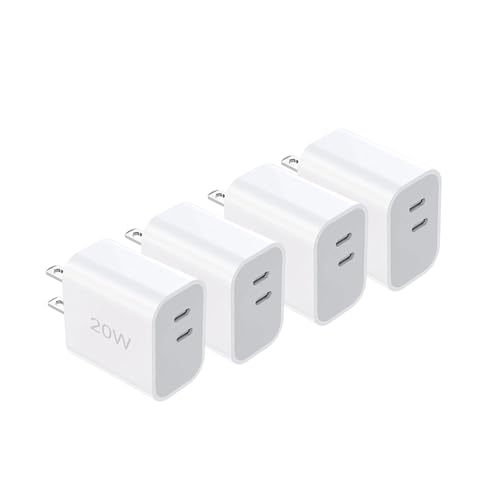
Live listings for the shortlist in this guide are pulled from Amazon below, so prices and availability are always current at the moment you look.

Disclosure and a closing note
Some links in this guide are affiliate links, and purchases made through them can generate a commission for the publication at no additional cost to the buyer, with the shelf price unchanged, which helps fund detailed explanatory coverage of unglamorous topics like this one.
Somewhere tonight a phone will spend eight hours beside a sleeping owner and ask for only five quiet watts to do its work, and choosing the small adapter that matches that modest request is the rare technology decision that becomes easier, cheaper and calmer the longer it is lived with.