What's inside
- Where to buy
- Key Takeaways
- Quick Picks
- How did we choose the best 4k 60fps cameras?
- How do the best 4k 60fps cameras compare at the rate itself?
- What is 4K60 actually for: delivery rate or slow motion?
- Why does 60p halve your light, and what do you do about it?
- How do crops at high frame rates change lens choice?
- How should you manage heat on a long 60p day?
- What settings make 60p footage cut cleanly with 24p material?
- When is an action camera the right 60p answer?
- What bitrates and codecs should you expect at 4K60?
- How does rolling shutter behave at sixty frames per second?
- How do you light and expose differently for slow-motion playback?
- What mistakes do 4K60 buyers make most often?
- Final Recommendation
- Frequently Asked Questions
- Related Guides
As an Amazon Associate I earn from qualifying purchases. This post may contain affiliate links at no extra cost to you.
gizmoverdict.com is reader-supported. When you buy through links on our site, we may earn an affiliate commission.
Where to buy
Configurations differ sharply between these listings, and the differences are part of the product: one Sony arrives as a body only, another is bundled with a Sigma zoom, the Canon listing stacks three lenses into the box, and the DJI is an action camera kit that needs no lens decision at all. Compare what you can shoot on delivery day, not just the badge on the body, because a 4K 60fps specification without a lens in front of it records nothing.
Buyers comparing the best 4k 60fps cameras are usually chasing two different things with one phrase. The first is slow motion with dignity: footage shot at sixty frames per second and played at twenty-four or thirty, stretching a moment to two-and-a-half times its lived length while keeping full 4K detail. The second is a smoother, more immediate 60p delivery for sport, gaming-adjacent content and fast real life. Both uses are legitimate, and both expose the same truth — 4K60 is where camera spec sheets start itemising their compromises, in crops, in bit depth, in recording limits and in heat.
This guide therefore reads every 60p mode the way an owner experiences it: what the frame actually covers, what colour depth survives at that rate, how long the camera will sustain it in a warm room, and what the mode costs in rolling shutter and battery. Six cameras make the cut — five interchangeable-lens bodies across APS-C, Micro Four Thirds and full-frame, plus one action camera that treats 60fps as its floor rather than its ceiling — and each verdict names the price of its 60p in plain language.
Key Takeaways
- The Panasonic GH6 is the endurance answer: full-width 4K60 in 4:2:2 10-bit, internal ProRes options and a fan that removes heat from the negotiation.
- Sony’s FX30 matches that depth for cinema work and adds autofocus that tracks moving subjects through the slow-motion take.
- The a6700 delivers oversampled 4K60 in the smallest hybrid body here, with a small additional crop and warm-room recording limits to plan around.
- Canon’s EOS R7 oversamples its 4K60 from the full sensor width — the sharpest APS-C 60p here — with heat limits in warm conditions.
- The full-frame ZV-E1 shoots luscious 4K60 with no crop, and its compact body is the most heat-sensitive of the set.
- DJI’s Action 4 records 4K all the way to 120fps, making 60fps its relaxed cruise rather than its redline.
Quick Picks
| Pick | Badge | Why it earns its place |
|---|---|---|
| Sony Alpha a6700 (body only) | Compact hybrid all-rounder | Oversampled 4K60 with 10-bit colour and superb autofocus in the smallest interchangeable-lens body here. |
| Panasonic Lumix GH6 | The endurance specialist | Full-width 4K60 in 4:2:2 10-bit with ProRes options and a cooling fan — the mode, sustained. |
| Sony FX30 with Sigma 18-50mm f/2.8 | Cinema-first 60p | A Super 35 cinema body with fan cooling, 10-bit 4K60 and a fast bundled zoom — a slow-motion kit in a box. |
| Sony ZV-E1 (body only) | Full-frame 60p, pocket scale | The a7S III’s sensor philosophy in a creator body: no-crop full-frame 4K60 with gorgeous files and real heat limits. |
| Canon EOS R7 with three-lens bundle | Sharpest APS-C 60p | Oversampled full-width 4K60 from a 32.5MP sensor, bundled with two zooms and a long telephoto for sport reach. |
| DJI Osmo Action 4 (Standard Combo) | 60fps is its cruise | An action camera recording 4K to 120fps with a large 1/1.3-inch sensor — 60p with total headroom. |
How did we choose the best 4k 60fps cameras?
We began by refusing to count any 60p mode that exists only in a footnote. A qualifying camera had to record 4K at 59.94 or 60 frames per second internally, at a bit depth and chroma sampling an editor can grade — which in practice meant favouring 10-bit recording heavily and treating 8-bit-at-60p modes as the compromises they are. Where a camera’s 60p involves a sensor crop, the review states the crop and what it does to lens choice, because a wide lens that stops being wide changes the shot, not just the specification.
Heat was tested as a specification, not a rumour. Sustained 4K60 is the most thermally violent thing a mirrorless camera does, and the honest differences between a fan-cooled cinema body and a sealed compact hybrid only appear after twenty minutes in a warm room. We weighted manufacturers’ stated recording limits, the presence of active cooling, and the consistency of owner reporting, and each verdict tells the buyer which side of that line the camera lives on.
Finally we spread the six across the realistic buying shapes: a Micro Four Thirds production flagship, two Sony APS-C bodies with different philosophies, a full-frame creator camera, a Canon hybrid with a three-lens bundle, and an action camera for the subjects no interchangeable-lens body should chase. Frame rate is the entry ticket; the verdicts are about everything the ticket does not mention.
A word about the DJI’s inclusion, since an action camera among mirrorless bodies invites the question. The keyword asks for cameras that record 4K at sixty frames per second, full stop — and for a large class of subjects, from whitewater to motocross, the action camera is not the budget answer to that question but the only survivable one. Excluding it would have made the guide tidier and less true.
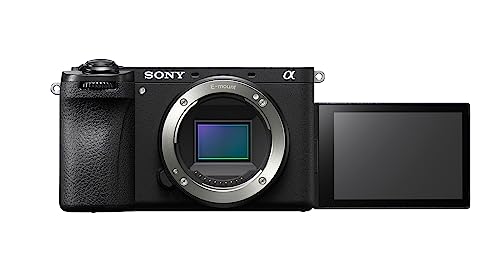
Sony Alpha a6700 (body only) — Compact hybrid all-rounder
The a6700 is the hybrid camera Sony’s APS-C line had been promising for years, and its 4K60 mode shows both the promise and the accounting. The 26-megapixel sensor oversamples 4K at lower frame rates from a 6K readout; at 60p the camera applies a small additional crop — roughly 1.04x beyond the format’s usual factor — and still delivers a detailed, gradable image in 10-bit 4:2:2 with S-Log3 for those who grade and excellent colour for those who do not. In practice the crop is a framing footnote rather than a creative problem, but wide-angle vloggers should know it exists before choosing a lens by the millimetre.
Autofocus is where the a6700 separates itself from the field. Sony’s AI-assisted subject recognition holds eyes — human, animal, bird — through movement that would defeat the contrast systems in this guide, and at 60p that reliability converts directly into usable slow motion of unrehearsed life: children, dogs, street sport, the moments that cannot be asked to repeat themselves. The body is compact and weather-sealed, the viewfinder and screen serve both stills and video honestly, and stills performance at 26 megapixels with fast bursts makes it a genuine two-discipline camera.
Heat is the tax. The small sealed body has no fan, and sustained 4K60 in warm conditions can reach Sony’s stated recording limits — plan on breaks between long takes in summer, use the auto power-off temperature setting thoughtfully, and do not assign it a two-hour stage recording in a hot hall. Rolling shutter at 60p is present though manageable. For the hybrid shooter whose 60p comes in clips rather than marathons, the a6700 is the most complete small camera in this guide.
Media and workflow details flatter the a6700 more than its size suggests. Dual-format slots accept the fast media its higher bitrates want, USB-C power delivery lets a power bank extend a shooting day, and Sony’s Catalyst ecosystem offers stabilisation refinement in post using the camera’s own gyro data — a genuine second chance for handheld 60p clips that came back with a tremor. Creators already inside Sony’s app and transfer habits will find the whole chain unusually frictionless for a body this small.
The a6700 also ages well as a second camera. Owners who later buy a full-frame Sony body keep it as the reach extender — its APS-C crop multiplies telephoto lenses for sport and wildlife — and as the B-camera whose colour and menus match the main unit. In a 60p context that pairing is practical rather than sentimental: the big body takes the beauty angles, the a6700 takes the risky, distant or overhead ones, and the footage cuts together without a colourist’s apology.
- Sensor: APS-C, 26 megapixels, back-illuminated
- 4K60: 10-bit 4:2:2 internal, small additional crop at 60p
- Colour: S-Log3, S-Cinetone and LUT support
- Autofocus: AI subject recognition, real-time eye AF
- Cooling: passive; stated recording limits in warm conditions
- Mount: Sony E-mount
Strengths
- Tracking autofocus makes unrehearsed 60p usable
- Oversampled image quality with real 10-bit depth
- Compact sealed body, strong stills performance
Trade-offs
- Sustained 4K60 limited by heat in warm rooms
- Small crop at 60p affects widest lenses
- No active cooling for marathon sessions
Best for: hybrid shooters and creators whose 60p work comes in clips — sport, family, travel and content.
Not suited for: event videographers recording long continuous sets in warm venues.

Panasonic Lumix GH6 — The endurance specialist
The GH6 treats 4K60 not as a party trick but as a working rate, and it is the only camera in this guide about which the heat conversation can be ended in one sentence: it has a fan. The Micro Four Thirds sensor records 4K60 across its full width — the format’s native width, so no additional crop surprises — in 4:2:2 10-bit, with internal ProRes available for productions whose edit systems prefer it, and recording continues until media or batteries say otherwise. For a shooter whose 60p means a full match, a long stage set or a documentary day, that combination is the entire argument.
Depth at 60p is the second half of the argument. Many rivals quietly thin their colour or bit depth as frame rates climb; the GH6’s 60p keeps the 10-bit 4:2:2 integrity that makes slow-motion footage grade like the 24p material it will be cut against. Stabilisation rated up to 7.5 stops with supported lenses steadies handheld 60p, dynamic range boost helps contrasty venues, and the monitoring and audio pathways — waveform, four-channel sound with the adapter — belong to a production camera rather than a hybrid dabbling in video.
The costs are the familiar GH6 ones. Autofocus is contrast-based and a generation behind the Sony and Canon phase-detect systems in this guide, so tracking a single athlete through a 60p take demands more operator skill. The fan made the body larger; the menus reward commitment. Buyers whose 60p subjects move predictably — performances, processes, landscapes with motion, rehearsed action — will never meet those limits. Buyers chasing toddlers should read the Sony verdicts first.
One underreported GH6 virtue at 60p is audio headroom for slowed footage workflows. Because slowed clips discard their sound, productions often record the event’s audio separately — and the GH6’s four-channel capability with the XLR adapter lets a single body serve as both the 60p camera and the audio hub for a second 24p unit in small crews. It is the kind of systems thinking that separates a production tool from a spec sheet, and it compounds across a season of work.
The GH6’s second life is equally secure: as Panasonic’s video flagship of its generation it anchors the used market for Micro Four Thirds cinema rigs, with cages, rails and monitor arms all designed around it. A buyer building a 60p production kit around one today is buying into the deepest accessory bench in this guide, at the format whose lenses remain the lightest way to reach any given framing. Endurance, in the end, describes the ownership as accurately as the recording.
- Sensor: Micro Four Thirds, 25.2 megapixels
- 4K60: full-width, 4:2:2 10-bit internal; ProRes options
- Cooling: active fan, no practical thermal ceiling
- Stabilisation: rated up to 7.5 stops with supported lenses
- Audio: 4-channel recording with optional adapter
- Media: CFexpress Type B plus SD
Strengths
- Sustains 4K60 indefinitely for real productions
- Full 10-bit depth retained at 60p
- Stabilisation and monitoring built for video
Trade-offs
- Contrast autofocus trails phase-detect rivals
- Body size grew to house the fan
- Codec depth wasted on casual shooting
Best for: productions recording long 60p sessions — sport, stage, documentary — that must not stop for heat.
Not suited for: run-and-gun shooters who need the camera to track subjects unaided.

Sony FX30 with Sigma 18-50mm f/2.8 — Cinema-first 60p
The FX30 brings the cinema division’s priorities to 60p: a fan-cooled Super 35 body that records 4K60 in 10-bit 4:2:2 from an oversampled readout, holds the mode without thermal negotiation, and wraps the result in the working apparatus of a film camera — tally lamps, mounting points everywhere, shutter angle thinking, and dual base ISO behaviour that keeps high-sensitivity 60p shadows cleaner than a stills-first body manages. The bundled Sigma 18-50mm f/2.8 is the rare kit lens that belongs in the headline: constant aperture through the zoom, compact enough for gimbals, and fast enough to keep 60p exposures honest indoors, where the doubled shutter speed of high-frame-rate work eats light.
At 60p specifically, the FX30’s readout keeps rolling shutter well controlled for its class, and Sony’s phase-detect autofocus with eye tracking follows actors through the take — the combination narrative shooters need when a slow-motion moment is performed once. Step beyond 60 and the camera continues to 120p with a crop, which this guide counts as headroom rather than the headline. S-Log3 and flexible ISO workflows integrate with the larger Sony cinema ecosystem for productions that rent upward.
What it refuses to be is a stills camera or a viewfinder camera. There is no EVF at all, the control layout subordinates photography entirely, and the body’s talents assume at least a small rig for audio and monitoring on serious work. As a deliberate cinema purchase — especially with that lens in the box — it is the most direct route in this guide to shooting a slow-motion short this month rather than assembling the means to.
Rigging economics deserve a paragraph in any FX30 verdict, because cinema bodies are bought as systems. The FX30’s flat top and multiple threaded points accept a cage-free minimal rig for run-and-gun days, while its compatibility with Sony’s XLR top handle gives it a professional audio path without a separate recorder. At 60p that flexibility shows up as speed: the camera moves from tripod to gimbal to shoulder in minutes, keeping the rate available in every configuration rather than only in the one the rig was built for.
There is also a training argument. Crews learning cinema craft on the FX30 learn the transferable grammar — shutter angle, dual base ISO, LUT monitoring, timecode habits in the ecosystem — on a body whose mistakes are affordable. Rental houses stock its bigger siblings precisely because operators raised on this camera already speak their language. For a film-school graduate or a wedding shooter moving into commercial work, that apprenticeship value outlasts any single specification in this review.
- Sensor: Super 35 APS-C, 26 megapixels stills class
- 4K60: 10-bit 4:2:2 internal, oversampled readout
- Lens included: Sigma 18-50mm f/2.8 constant aperture
- Cooling: internal fan for sustained recording
- Autofocus: phase-detect, real-time eye tracking
- Extras: 4K120 available with sensor crop
Strengths
- Fan cooling and cinema ergonomics for long 60p days
- Bundled fast zoom completes the kit immediately
- Autofocus tracks performers through slow-motion takes
Trade-offs
- No viewfinder in any configuration
- Stills play a distant second fiddle
- Serious audio wants rig accessories
Best for: filmmakers building a cinema kit who shoot 60p as a primary creative rate.
Not suited for: hybrid photographers or anyone who composes through an eye-level finder.
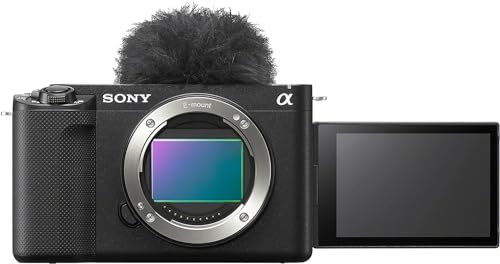
Sony ZV-E1 (body only) — Full-frame 60p, pocket scale
The ZV-E1 places a 12.1-megapixel full-frame sensor — the low-light philosophy of Sony’s S line — inside the smallest body in this guide, and its 4K60 is the most immediately beautiful footage here: full-width, no crop, 10-bit 4:2:2, with the shallow depth and clean high-sensitivity rendering that only large pixels deliver. A face at 60p in a dim bar, slowed gently in the edit, looks like cinema rather than content. For creators whose 60p means beauty inserts, product work and atmospheric B-roll in short takes, nothing else on this page renders the rate so flatteringly.
Sony wraps the sensor in creator-specific machinery: product showcase focusing, breathing compensation, AI-framing assistance, reliable eye autofocus and colour that can go straight to publication. The body is body-only in this listing, so budget for an E-mount lens; a fast prime completes the low-light argument the sensor begins. Battery life is modest, there is a single card slot, and no viewfinder — the design assumes a screen, a creator and short, deliberate clips.
Heat is the honest headline alongside the beauty. A sealed full-frame body this small, working this hard, reaches its thermal limits at 4K60 faster than any rival here — in warm conditions, sustained takes are measured in tens of minutes rather than hours, and Sony’s own guidance treats the high-temperature setting as part of the workflow. That is not a defect so much as a definition: the ZV-E1 is a sprinter. Assign it marathons and the GH6 and FX30 verdicts above exist precisely for you.
The ZV-E1’s 60p has one more party trick that suits its creator brief: the camera received higher frame rate support through firmware, extending its slow-motion ceiling beyond the launch specification, which tells buyers something useful about Sony’s intentions for the line. Features that arrive by update are never guaranteed, but a manufacturer investing in a body’s second year is a reasonable proxy for the support a buyer can expect across ownership.
Practical owners develop a rhythm with its heat rather than fighting it: pre-roll planning so the camera records the take rather than the rehearsal, a small USB fan or shade for outdoor summer work, and the high-temperature tolerance setting enabled with eyes open about the trade. Managed that way, the ZV-E1’s 60p output per gram of carried weight is the highest in this guide — the camera disappears into a jacket pocket and returns with full-frame slow motion. For travel creators, that ratio is not a compromise at all; it is the entire product.
- Sensor: full-frame, 12.1 megapixels, back-illuminated
- 4K60: full-width, no crop, 10-bit 4:2:2 internal
- Colour: S-Log3 and S-Cinetone, LUT support
- Autofocus: AI recognition with real-time eye AF
- Cooling: passive; shortest sustained 4K60 in this set
- Mount: Sony E-mount, body only in this listing
Strengths
- Most beautiful 60p rendering here, especially in low light
- Full-frame width with no crop at 60p
- Creator automation that genuinely saves takes
Trade-offs
- Heat limits sustained 4K60 in warm conditions
- Single card slot, no viewfinder
- Lens is a separate purchase with this listing
Best for: creators shooting short, gorgeous 60p clips — beauty, product, atmosphere — in controlled bursts.
Not suited for: long-form recording, dual-slot security or hot-climate event work.
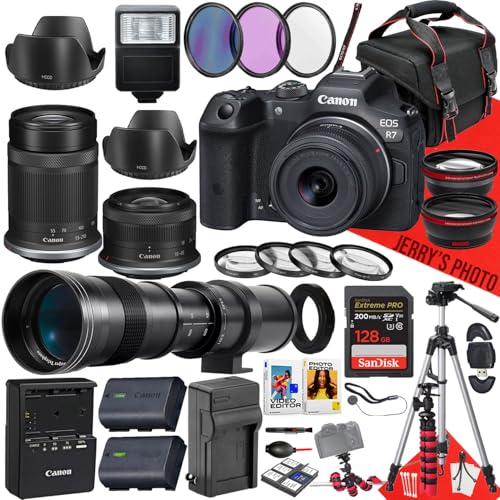
Canon EOS R7 with three-lens bundle — Sharpest APS-C 60p
Canon’s R7 makes the sharpest 60p argument in the APS-C class: its 32.5-megapixel sensor oversamples 4K60 from the full sensor width, so the mode carries no additional crop and detail that survives aggressive editing. Recorded in 10-bit colour with Canon Log 3 available, the footage grades credibly, and for wildlife and sports shooters — the R7’s natural tribe — 60p at full width with the format’s 1.6x reach is a compelling recipe: the bundled kit pairs the standard 18-45mm and 55-210mm zooms with a long 420-800mm telephoto, an eccentric but genuinely useful inclusion for distant subjects in bright light.
The stills side is the strongest in this guide alongside its video: fast bursts with electronic shutter, subject-detection autofocus that finds animals and vehicles, and in-body stabilisation coordinating with RF lenses. A creator who shoots a match and then photographs it owns one body for both halves of the day. Canon’s colour, particularly for skin, remains the preference of many who deliver without grading.
Limits arrive as heat and handling. Sustained 4K60 in warm conditions meets Canon’s stated recording limits sooner than a fan-cooled body — shade, airflow and take discipline are part of the workflow — and the bundle’s long third lens is a bright-day specialist with a narrow aperture that the 60p shutter will expose ruthlessly after dusk. The two main zooms are the working kit; treat the telephoto as a bonus for noon kickoffs and garden birds. Judged that way, the R7 bundle is the sport-and-wildlife 60p pick of this guide.
The R7’s 60p story improves further when its stills burst modes enter the conversation, because sports shooters rarely choose between motion and stills — they owe the client both. The electronic shutter’s fast bursts with pre-shooting capture the instant before the photographer reacted, and the same subject-detection system serves the 60p tracking and the stills work without a mode-change penalty. Few cameras in this guide serve a match day as completely from a single bag.
Canon’s lens roadmap quietly strengthens the bundle over time: the RF-S line keeps gaining the compact zooms and primes this body was designed around, and every full-frame RF lens mounts with the crop acting as a teleconverter the owner did not have to buy. A young sports photographer can therefore grow from this kit toward professional glass without a mount change waiting at the end of the road. The 60p mode is the headline today; the mount is the reason the purchase still looks clever in five years.
- Sensor: APS-C, 32.5 megapixels
- 4K60: oversampled full-width, 10-bit with Canon Log 3
- Lenses in bundle: 18-45mm, 55-210mm and 420-800mm telephoto
- Stabilisation: in-body, coordinated with RF lenses
- Autofocus: subject detection for people, animals, vehicles
- Cooling: passive; warm-condition recording limits apply
Strengths
- Oversampled 60p with no crop penalty
- Three-lens bundle covers sport reach on day one
- Stills performance equals its video ambition
Trade-offs
- Heat limits long 60p sessions in warm weather
- Long bundled telephoto is bright-light only
- Menu depth rewards setup time before events
Best for: sports and wildlife hybrid shooters who want reach, bursts and 60p in one Canon kit.
Not suited for: videographers recording long indoor sets where heat builds.

DJI Osmo Action 4 (Standard Combo) — 60fps is its cruise
Every other camera in this guide treats 60fps as an upper working rate; the Action 4 treats it as the middle of its range. Its 1/1.3-inch sensor — large by action-camera standards — records 4K at up to 120 frames per second in 10-bit D-Log M colour, so a buyer whose question is 60p receives it with double headroom: shoot 60 for delivery, or 120 when the moment deserves quarter-speed replay, without changing cameras. RockSteady stabilisation smooths the footage electronically to a degree that makes gimbals optional for most action subjects.
The use cases are the ones that would hospitalise the other five picks: mounted on a mountain bike, a surfboard, a helmet, a dog harness, the bonnet of a rally car. The body is waterproof without a housing to depths that cover swimming and snorkelling, the front and rear touchscreens serve framing from either side, and the magnetic quick-release mount system moves the camera between positions in seconds. Battery endurance in the cold — the action camera’s traditional failure — is notably improved in this generation.
Honesty about the image completes the picture. The fixed wide lens, small sensor by mirrorless standards and electronic stabilisation define a look: immersive, stable, unmistakably action-cam, with low-light performance that is good for its class and no match for the ZV-E1’s full-frame rendering. There is no optical zoom, no interchangeable lens, no shallow depth of field. Within its element none of that matters; outside it, the other verdicts on this page apply. As the 60p camera for subjects that move faster than photographers can, it has no rival here.
Battery and media logistics at 60p favour the little DJI more than newcomers expect. Its cells are inexpensive, pocketable and quick to swap between runs; a day of intermittent action shooting consumes a handful of batteries that together weigh less than one mirrorless grip. The files, while substantial at the high bitrates, are single-codec and editor-friendly, and the camera’s habit of simply working in rain, dust and frost removes the weather negotiations that consume mirrorless shooting days.
There is a creative discipline the Action 4 teaches that transfers upward: because its lens is fixed and its framing is wide, its owners learn to move the camera rather than zoom it — closer, lower, inside the action — which is the founding skill of all action cinematography. Mirrorless shooters who add one often report that their main-camera work improves from the habit. A tool that teaches while it records earns its bag space twice.
- Sensor: 1/1.3-inch CMOS, action class
- 4K rates: up to 120fps; 60fps with full headroom
- Colour: 10-bit D-Log M recording
- Stabilisation: RockSteady electronic system
- Build: waterproof without housing, dual touchscreens
- Mounting: magnetic quick-release ecosystem
Strengths
- 120fps ceiling makes 60p effortless and cool-running
- Stabilisation replaces a gimbal for action subjects
- Waterproof, mountable anywhere, cold-tolerant battery
Trade-offs
- Fixed lens and action-cam look are non-negotiable
- Low light trails the mirrorless bodies clearly
- No shallow depth of field or optical zoom
Best for: action sports, water, vehicles and any subject that would endanger a mirrorless camera.
Not suited for: cinematic shallow-focus work or low-light event filming.
How do the best 4k 60fps cameras compare at the rate itself?
The table grades each camera’s 60p mode as delivered — width, depth and endurance — because those three variables, not the badge, decide whether the mode serves a production.
| Model | Sensor / Format | Headline capability | Watch out for |
|---|---|---|---|
| Sony a6700 | Small crop at 60p | 10-bit 4:2:2 | Passive cooling; warm-room limits |
| Panasonic GH6 | Full width (format native) | 10-bit 4:2:2, ProRes | Fan; sustains indefinitely |
| Sony FX30 bundle | Full width Super 35 | 10-bit 4:2:2 | Fan; sustains indefinitely |
| Sony ZV-E1 | Full width full-frame | 10-bit 4:2:2 | Passive; shortest endurance here |
| Canon EOS R7 bundle | Full width, oversampled | 10-bit, C-Log3 | Passive; warm-condition limits |
| DJI Action 4 | Fixed wide lens | 10-bit D-Log M | Cool-running; 120fps headroom |
What is 4K60 actually for: delivery rate or slow motion?
The two uses pull the purchase in different directions, so name yours before choosing. Delivered at 60p, the rate renders fast real life — sport, dance, machinery, children — with a clarity of motion that 24p and 30p deliberately blur; broadcasters and gaming-adjacent creators favour it because their audiences read smoothness as quality. Conformed to a slower timeline, the same capture becomes slow motion: 60 into 24 plays at forty percent speed, dignified rather than dreamlike, ideal for technique analysis, product reveals and the decisive sporting instant.
A camera can serve both, but the priorities differ. Delivery work values sustained recording, clean HDMI or streaming behaviour and colour that needs no grading. Slow-motion work values readout speed — rolling shutter distorts fast subjects mid-stretch — plus autofocus that holds through the take and bit depth that survives the grade the slowed footage usually receives. The GH6 and FX30 lean toward the production end of both; the ZV-E1 and a6700 toward the responsive, short-take end; the Action 4 exists for subjects whose speed makes the question academic.
There is a third, quieter use that decides many professional purchases: insurance. Shooting an unrepeatable event at 60p preserves the option to slow the decisive seconds in the edit while delivering the rest at normal speed from the same files. Wedding filmmakers, sports videographers and documentary crews all buy the rate as an option on the future — the take cannot be re-performed, and the conformed version cannot be invented later. Cameras whose 60p is trustworthy enough to serve as the main recording rate, rather than a special mode visited nervously, earn a premium in that calculus that spec sheets never mention.
Why does 60p halve your light, and what do you do about it?
Doubling the frame rate doubles the shutter frequency, and at the standard 180-degree shutter the exposure per frame halves — 60p at a cinematic shutter means roughly 1/125 of a second, a full stop less light than 30p practice. Indoors and at dusk, that stop must be repaid through aperture, sensitivity or added light, and each currency has an exchange rate: aperture costs depth of field, sensitivity costs cleanliness, added light costs the scene’s naturalism. This is why the bundled Sigma’s constant f/2.8 on the FX30 and the ZV-E1’s enormous pixels are practical features rather than luxuries in a 60p guide.
Plan the repayment per location. Daylight repays itself. Indoor sport demands the sensitivity route and a camera whose high-ISO colour you trust — the FX30’s dual base ISO and the ZV-E1’s sensor earn their mentions here. Stage work repays with light you control. The amateur mistake is discovering the arithmetic mid-event; the professional habit is a light reading at the venue, at 1/125, before the day begins.
Neutral density filtration returns in a new role at 60p: outdoors, the 1/125 shutter is easier to sustain than the 24p shooter’s 1/48, yet bright sun at a wide aperture still overexposes, and stopping down past the lens’s sweet spot costs the sharpness the rate was bought for. A variable ND remains the elegant answer, with the caution that cheap variable filters cross-polarise at their extremes and stain skies — at 60p, with the audience studying slowed clouds, the stain has time to be noticed. Buy the filter once, buy it well.
How do crops at high frame rates change lens choice?
A crop is a focal-length tax collected without warning. When a camera reads only the centre of its sensor for a high-rate mode, every lens frames tighter: the 16mm wide becomes a moderate view, the carefully chosen 24mm becomes a 35. The a6700’s small 60p crop is a gentle tax; step into the 120p modes of several cameras here and the levy becomes severe enough to plan lenses around. The GH6, FX30 at 60p, ZV-E1 and R7 avoid the tax at this guide’s rate entirely, which is a material reason they headline it.
The working response is to test your own kit at the rate before the job. Frame your widest regular shot at 60p and check the edges against the 24p framing; if a doorway, a group or a product no longer fits, the solutions are a wider lens, more distance, or a different camera from this list — in ascending order of expense and descending order of convenience. Discovering the crop during the client’s one performance is the only genuinely wrong answer.
How should you manage heat on a long 60p day?
Treat heat as a consumable, like battery. Fan-cooled bodies — GH6 and FX30 — spend it so slowly that planning barely applies. Passive bodies spend it at rates set by ambient temperature, direct sun and airflow, and the management techniques are unglamorous: shade the camera between takes, open battery doors where the design allows, power from USB or a dummy battery to move heat out of the body, rotate two bodies on the longest assignments, and schedule the 60p material early in an outdoor day rather than at its thermal peak.
Know your camera’s warning behaviour before the event, because the worst outcome is not a shutdown but an unnoticed one mid-take. Every body here warns before it stops; the discipline is assigning someone — even if that someone is you, between other jobs — to watch for the warning. Productions that treat thermals as a logged resource, like media and power, simply stop having thermal stories.
Battery strategy belongs in the same plan, because 60p draws power at a rate stills shooters never budget for. A passive body sipping from USB power delivery during a static long take moves both heat and endurance in the right direction; a fan-cooled body on a large external pack becomes effectively unlimited for a festival day. Whatever the arrangement, rehearse it: a cable that disconnects when the tripod pans is a failure mode invented entirely by skipping the rehearsal.
What settings make 60p footage cut cleanly with 24p material?
Most 60p footage in narrative and documentary work ends its life on a 24p or 30p timeline, slowed or conformed, and the seams show in colour before they show in motion. Match the picture profile and white balance workflow across bodies — log with log, standard with standard — and expose the 60p material for the grade it will receive after slowing, protecting highlights because slowed footage invites scrutiny. Keep the shutter at 180 degrees relative to the capture rate so motion blur scales naturally when the clip is retimed; a staccato fast shutter at 60p reads as a mistake at any playback speed except deliberate sports analysis.
Audio deserves a sentence, because 60p clips slowed in the edit take their sound with them into uselessness. Record the event’s audio on the 24p camera or a separate recorder at the delivery rate, and treat 60p audio as scratch. Productions that observe that one rule never have to explain why the decisive moment sounds like it happened underwater.
One more conforming habit separates clean edits from muddy ones: shoot a few seconds of handles before and after the action at 60p, because retiming eats the edges of a clip. The slowed centrepiece needs room to breathe into and out of, and editors bless the shooter who gave them that room. It costs four seconds of media and saves the most common slow-motion disappointment — the perfect instant with no runway on either side.
When is an action camera the right 60p answer?
When the camera’s survival is in question, the Action 4 stops being the compromise and becomes the only professional choice. Mounting positions — on the vehicle, in the water, under the board, on the athlete — belong to it exclusively in this guide, and its 120fps ceiling means the 60p question is answered with headroom rather than negotiation. Its stabilisation also solves the vibration problem that no in-body system in a mirrorless camera is designed to meet.
The boundary is image character. The moment the brief includes shallow depth of field, interchangeable focal lengths, low-light subtlety or a client’s cinematic expectations, the action camera exits and the mirrorless verdicts resume. Many working kits carry both: the mirrorless body for the scene, the Action 4 for the angle nobody else can occupy. That pairing, rather than any single winner, is how most 60p-heavy productions actually equip themselves.
What bitrates and codecs should you expect at 4K60?
Sixty frames per second at 10-bit depth generates data at rates that humble casual media budgets. Long-GOP codecs in these cameras span from efficient streaming-friendly files to high-bitrate All-Intra and ProRes options that consume cards at professional speed; the GH6’s menu alone spans an order of magnitude. The choice is editorial, not macho: All-Intra and ProRes scrub beautifully and grade forgivingly, while efficient long-GOP files store a day’s shooting on a card a fraction of the size and edit perfectly well on a modern machine.
Match the codec to the deliverable and the computer, in that order. A creator publishing to the web from a laptop gains nothing from the heaviest codec except an offloading schedule; a colourist pulling slowed footage apart for a client gains everything. The cameras here were credited for offering the choice at 60p specifically — several rivals quietly withdraw their best codecs exactly at the rate this guide exists to examine.
How does rolling shutter behave at sixty frames per second?
Faster frame rates shorten each frame’s readout window in most implementations, so 60p footage often shows less skew than the same camera’s 24p mode — one of the rate’s underappreciated gifts. The benefit varies by sensor: the FX30 and a6700 read their APS-C areas quickly, the GH6’s smaller sensor is faster still, and the ZV-E1’s twelve-megapixel full-frame readout is the swiftest of the mirrorless set, which is part of why its pans stay composed. The R7, reading a dense 32.5-megapixel sensor, asks for slightly more respect during whip movements.
The practical test is unchanged from every era of video: pan across vertical architecture at your working rate and watch the edges at full size. If the lean offends you, slow the move, add foreground, or let the subject’s motion dominate the frame. At 60p destined for slow playback, remember the distortion stretches too — a slight skew becomes a visible wobble at quarter speed — so the rehearsal pan is worth its thirty seconds on any shot that matters.
How do you light and expose differently for slow-motion playback?
Slowed footage is examined footage. At forty percent speed the audience studies texture, expression and detail with a leisure that real-time playback never permits, and flaws that would flash past — noise in the shadows, a missed focus by inches, a flickering practical light — take up residence on screen. Expose for that scrutiny: protect the highlights, favour the cleaner base sensitivities where the camera offers two, and add light rather than sensitivity whenever the scene allows, because noise that is invisible at speed becomes weather in slow motion.
Flicker deserves its second warning in this guide because high frame rates sample mains-powered lighting more revealingly. A fixture that behaves at 30p can pulse at 60p depending on the grid and the shutter, and the pulse stretches into an obvious breathing when the clip is slowed. Test the actual location lights at the actual rate and shutter before the performance, nudge the shutter in fine increments if your body allows, and prefer flicker-free fixtures for anything destined to be slowed. Thirty seconds of testing protects the entire day.
Together these habits explain why experienced slow-motion shooters light like stills photographers and rehearse like stage crews. The rate forgives nothing and rewards everything, which is precisely its creative value: a moment that survives that examination earns the emphasis the slowdown gives it.
What mistakes do 4K60 buyers make most often?
Assuming the 60p mode inherits the headline specification is the founding error. Buyers read 4K, 10-bit and oversampled from the top of a product page and discover the crop, the thinned colour or the thermal limit in the mode they actually bought the camera for. Every verdict in this guide was written at the mode level for exactly this reason.
Ignoring the light tax runs second. A shooter who exposes 60p like 30p underexposes everything by a stop and blames the sensor’s noise for arithmetic. Budget the stop — in aperture, sensitivity or lighting — when the rate is chosen, not when the footage disappoints.
Third, long-event buyers choose by sensor size and meet the thermal ceiling. A full-frame badge does not record a two-hour set; a fan does. Match the endurance column of the comparison table to the longest take in your real work.
Finally, creators slow 60p footage shot with a fast, staccato shutter and wonder why it looks frantic instead of graceful. The 180-degree rule applies at the capture rate. Slow motion is made on the day, in the shutter, not in the timeline.
Fifth, mirrorless owners mount the camera in full sun for an outdoor event and read the thermal warning as a malfunction. It is the design speaking honestly. A small shade, a white towel between sets or simply rotating the shaded side of the venue into the plan extends passive bodies further than any menu setting.
Sixth, buyers compare 60p modes by resolution alone and never ask what happens to autofocus at the rate. Some systems restrict their best tracking or their eye detection in high-frame-rate modes. The take that matters is the one in focus; verify the focusing behaviour at 60p on a moving subject before the camera’s first paid day.
Final Recommendation
If one camera defines the category’s centre of gravity, it is the GH6: 4K60 at full width, at full depth, for as long as the production runs — the mode treated as a job rather than a feature. The FX30 stands beside it for cinema crews who need autofocus that performs, and between those two fan-cooled bodies most professional 60p briefs are answered.
The remaining verdicts serve the honest edges: the a6700 for the hybrid shooter in clips, the ZV-E1 for beauty in bursts, the R7 bundle for reach and stills, and the Action 4 for everywhere a mirrorless camera fears to go. Choose by the longest take, the fastest subject and the dimmest room in your real work — the frame rate is the same on every box, but the cameras behind it could hardly be more different, and the right one is the one whose compromises you will never personally meet.
A last word on expectations: 60p is the first frame rate where the camera stops being the limiting factor and the production becomes it — light, media, heat and rehearsal all bill the shooter at double rate. The cameras above are the ones whose bills arrive itemised and fair. Pay them gladly, and the footage repays at forty percent speed, forever.
Frequently Asked Questions
Is 4K60 worth it over 4K30 for most creators?
If your subjects move and your edits slow them down or your audience expects smooth delivery, yes — the rate change is visible in every frame. For talking-head and static content, 30p or 24p usually serves better and costs half the light, media and heat. Buy 60p for motion you actually film. The question to ask of your own last month of footage is simply how often the subject outran the frame rate; your honest count is the buying decision.
Which camera here records 4K60 the longest?
The fan-cooled pair — Panasonic’s GH6 and Sony’s FX30 — sustain the mode until media or power runs out. The passive bodies (a6700, ZV-E1, R7) have stated limits that shrink as rooms warm, with the compact ZV-E1 the most constrained of the set. Outdoor summer work narrows every passive body’s margin, so schedule the longest takes for the cooler hours when the production allows it.
Does 4K60 always crop the image?
No. The GH6, FX30, ZV-E1 and R7 record 60p at full sensor width for their formats; the a6700 applies a small additional crop at 60p. Crops grow more common beyond 60p — several 120p modes here use one — which is why this guide grades the specific mode rather than the badge.
What shutter speed should I use at 60fps?
For natural motion, the 180-degree rule gives roughly 1/125 of a second. Faster shutters sharpen individual frames for sports analysis but make slowed footage staccato; slower shutters smear action. Set the shutter for the playback you intend, because the choice cannot be revised in the edit. On cameras that display shutter angle, the same discipline reads as 180 degrees at any rate, which is why cinema bodies teach the habit so well.
Can the DJI Action 4 replace a mirrorless camera for 60p?
For action, water and mounting work it not only replaces one, it outclasses everything here. For shallow depth of field, interchangeable lenses, low-light subtlety and client-facing cinema work, it cannot. Most serious 60p kits end up owning both kinds of tool. The wisest kits treat the two as colleagues rather than competitors.
How much storage does 4K60 consume?
Roughly double the equivalent 30p recording at the same codec settings, and high-bitrate 10-bit modes multiply that again. Budget media by the hour of your longest day, buy cards in matched pairs, and treat offloading as part of the shoot schedule rather than an afterthought. Slow-motion shooters should also reserve a card exclusively for high-rate work, so a day’s irreplaceable slowed takes never share a loop with routine footage.
What memory cards and storage habits does 4K60 demand?
Faster ones than 4K30 shooters expect, in two senses. The bitrates that carry 10-bit 4K60 on the Sony and Panasonic picks here want V90 SD cards or CFexpress media on the bodies that accept it, and a card that merely survives the write speed will still fill roughly twice as fast as it did at 30 frames per second — an hour of 4K60 at high quality can pass a hundred gigabytes. Working habits adjust accordingly: carry at least double the capacity you would pack for a 30p day, offload every evening rather than every trip, and treat the second card slot on the bodies that have one as an overflow you plan around rather than a luxury. None of this is a reason to avoid 60p; it is simply the frame rate’s honest running cost, and it belongs in the budget beside the camera.
Related Guides
Pair this guide with the neighbouring rate and format guides to complete the picture. Best 24p cameras for film cadence Best Micro Four Thirds cameras with 4K and stabilisation Best Canon cameras that shoot 4K


