What's inside
- Key Takeaways
- Quick Picks
- How Did We Choose These Picks Without Mixing Two Wrangler Generations?
- Which Locations Actually Matter in a Wrangler Cabin?
- How Do the Six Compare Side by Side?
- How Do You Install a Plug-and-Play Kit Without Breaking Trim?
- What Mistakes Do Wrangler Speaker Shoppers Make?
- What Should You Check on Your Own Wrangler Before Ordering Anything?
- How Does a Speaker Upgrade Behave Differently With the Top Down?
- What About the Speakers This Guide Did Not Choose?
- How Should JK and JL Owners Each Spend, Step by Step?
- What Does Ownership Look Like a Year After the Swap?
- How Do You Judge the Result Honestly Once Everything Is Fitted?
- Should You Add Sound Treatment While the Panels Are Off?
- Final Recommendation
- Frequently Asked Questions
- Related Guides
As an Amazon Associate I earn from qualifying purchases. This post may contain affiliate links at no extra cost to you.
gizmoverdict.com is reader-supported. When you buy through links on our site, we may earn an affiliate commission.
Where to buy: Amazon carries every kit and speaker set in this guide. Each name in the Quick Picks table and each review heading below links to the exact listing whose title supplied the fitment years, sizes and watt figures quoted here, so open the listing that matches your Wrangler’s generation before you order anything else.
The best plug and play speakers for Jeep Wrangler shoppers are really two different shopping trips wearing one keyword. A 2007–2017 Wrangler — the JK generation — uses a dash-and-overhead layout that Kicker builds dedicated kits for, while a 2018-and-newer Wrangler — the JL generation — moved to a rear soundbar arrangement that Alpine addresses with model-specific upgrades. Order a JK kit for a JL, or the reverse, and the plugs, brackets and trim shapes will fight you at every step even though both boxes say Wrangler on the front. That is why this guide is organised generation first and brand second: find your build years in the table, then read only the reviews written for your side of the 2018 divide, then use the cross-generation picks only where a listing honestly leaves the year range open.
One more piece of honesty before the picks. Plug and play describes the wiring, not the whole afternoon. These kits reuse factory connectors so no harness gets cut and no speaker wire gets soldered, but trim panels still come off, the overhead bar still gets unbolted, and a rear soundbar upgrade on a JL still asks you to work over your head with the top configured a certain way. What you are buying is the removal of electrical guesswork — the part of a speaker swap that used to end with a test light, a wiring diagram and one door panel wired out of phase. The mechanical work remains, and the install section below treats it seriously.
Key Takeaways
- Generation decides everything: the two Kicker kits below cover Wrangler 2007–2017 only, the two Alpine picks cover 2018-and-newer only, and neither side substitutes for the other.
- Kit scope differs more than speaker size does — dash-and-overhead bundles, a rear soundbar pair, one complete powered system and one overhead bar system solve four different complaints.
- Only one pick in this guide states a watt figure in its listing title: the Alpine PSS-24WRA at 300 watts, for the complete system rather than for a single speaker.
- The Mopar OEM Kicker set and the DS18 overhead system name no Wrangler years in their titles, so their fitment must be confirmed against your exact trim before ordering.
- Two of the six picks are near-identical Kicker listings for the same 2007–2017 dash-and-overhead idea; treat them as two doors into the same kit, not as two different upgrades.
- A factory head unit drives every passive pick here without an amplifier purchase, which is precisely the appeal of staying inside the plug-and-play class.
Quick Picks
| Pick | Badge | Why it is here |
|---|---|---|
| KICKER Dash and Overhead 6.75 Speakers Kit for Jeep Wrangler 2007-2017 | Best JK full-layout kit | One box addresses both the dash and the overhead bar of a 2007–2017 Wrangler, the two locations JK owners complain about most. |
| KICKER Dash/Overhead 6.75 Speakers Kit for Jeep Wrangler 2007-2017 | Alternate JK listing | The same 6.75-inch dash-and-overhead concept under a second listing, worth comparing when one listing’s stock or bundle contents shift. |
| Chrysler Jeep Dodge 6.5inch Kicker Speaker Upgrade Set of 2 Mopar OEM | Factory-channel upgrade | A Mopar OEM pair built by Kicker for Chrysler, Jeep and Dodge applications, sold as a set of two for a single location swap. |
| Alpine SPV-65-JLT Rear Soundbar Upgrade | Best JL rear soundbar pair | A rear soundbar upgrade whose title names 2018-and-newer Wrangler fitment directly, aimed at the JL’s weakest factory location. |
| Alpine PSS-24WRA 300-Watt Complete System Upgrade | Biggest single-step upgrade | A complete system upgrade for 2018-up Wrangler Unlimited, the only pick here whose title states a system watt figure. |
| DS18 JLSB6 6.5 inch Plug and Play Overhead Bar System | Overhead bar system | A 6.5-inch overhead bar system that uses the words plug and play in its own title and concentrates all of its effort above the front seats. |
How Did We Choose These Picks Without Mixing Two Wrangler Generations?
We sorted the pool by the years printed in each listing title before we sorted it by anything else. That produced three honest groups. The JK group holds the two Kicker dash-and-overhead kits titled for 2007–2017. The JL group holds the Alpine soundbar upgrade titled for 2018-and-newer Wranglers and the Alpine complete system titled for 2018-up Wrangler Unlimited. The unlabelled group holds the Mopar OEM pair and the DS18 overhead system, whose titles name brands, sizes and locations but no years at all; those two stay in the guide because their locations and sizes match Wrangler hardware, but each review says plainly that the year check lands on you.
Within each group we weighed scope. A Wrangler with tired dash speakers and a rattling overhead bar needs a different purchase from a Wrangler whose only real problem is rear fill so weak that back-seat passengers hear the front stage and nothing else. We also weighed what the title refuses to say. Five of these six listings state no wattage at all, and we have left those fields marked as not stated rather than borrowing numbers from sibling models, because a JK owner comparing kits deserves to know which figures are printed on the box and which ones the internet invented later.
Finally, we kept the factory-radio assumption intact. Every pick here is sold as an upgrade that works with the Wrangler’s existing wiring and, for the passive sets, its existing head unit. The moment a shortlist demands a separate amplifier, a DSP tune and a weekend of door disassembly, it has left the keyword behind, however good it sounds.
Which Locations Actually Matter in a Wrangler Cabin?
A Wrangler is an acoustic shed. The roof comes off, the doors come off, the floor is nearly flat, the tyres are loud and the wind finds every seal the trail loosened. Factory speakers in that environment are chosen for durability and cost, and they age into a thin, shouty sound that owners tolerate at forty miles an hour and hate at seventy. The dash speakers carry the vocal range and most of what you perceive as clarity. The overhead or rear bar speakers sit close to ears and supply the sense of envelopment; when they are weak, the whole system seems to live in the footwells. That is why the kits in this guide cluster on those two zones instead of the doors.
Open-air driving changes the target, too. With the top down, bass evaporates and fine treble detail is wasted on the wind, so midrange presence and sheer clean output matter more than studio-style balance. A plug-and-play kit tuned for a Wrangler — voiced by a company that measured the actual cabin — usually serves that reality better than a generic component set with prettier specifications on paper. Keep that in mind when the complete Alpine system and the overhead-focused DS18 tempt you in different directions: one broadens the whole system, the other strengthens the zone nearest your head.

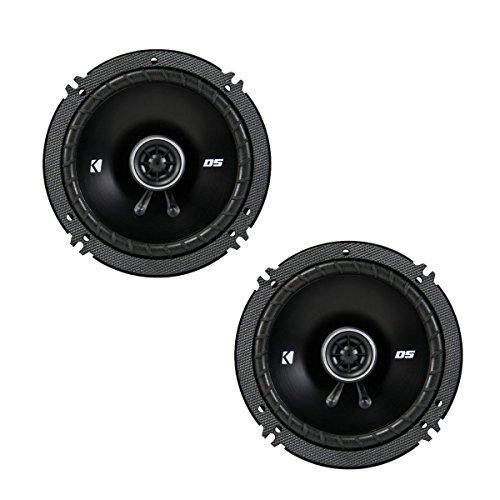
KICKER Dash and Overhead 6.75 Speakers Kit for Jeep Wrangler 2007-2017 — Best JK full-layout kit
For a JK owner, this is the shape of the correct answer: one kit, titled for 2007–2017, covering the dash and the overhead bar together at 6.75 inches. Most JK audio complaints are really two complaints — a front stage that sounds like it is playing through a pillow and an overhead bar that contributes rattles instead of music. Replacing only one end leaves the other end exposed, and the mismatch between fresh speakers and tired ones is more annoying than uniform mediocrity. A matched kit keeps the voicing consistent across the cabin, so a voice on a podcast stays the same voice as it pans, and the overhead bar stops sounding like a separate, cheaper radio.
The 6.75-inch size deserves a sentence of its own. Wrangler dash and bar locations accept oversize speakers that a strict 6.5-inch reading would undersell, and Kicker builds this kit around that reality rather than asking you to add adapter rings to a generic set. Because the kit is Wrangler-specific, the connectors and mounting patterns are the point of the product: panels off, old speakers out, new speakers on factory plugs, panels back. Nothing in the title promises an amplifier or a subwoofer, and that restraint is honest — this is a speaker-stage correction for a factory system, and judged on that job it is the most complete JK option in the pool.
- Fitment years: 2007–2017 Jeep Wrangler, per the listing title (JK generation)
- Speaker size: 6.75 inches, dash and overhead locations
- Kit scope: dash and overhead speaker kit
- Power handling: Not stated in the listing title — verify with KICKER documentation
- Amplifier included: Not stated in the listing title — verify with KICKER documentation
Strengths
- Covers both JK problem locations in one matched purchase
- Year range printed in the title, so the JK/JL question is settled before checkout
- Oversize 6.75-inch format uses the Wrangler openings fully instead of adapting down
Trade-offs
- Useless to a JL owner; the 2018 redesign is a hard wall, not a suggestion
- No watt figure in the title, so output comparisons rest on the full listing, not the headline
- Speakers alone cannot add the low-end weight that only a subwoofer supplies
Best for: a JK Wrangler still running its factory dash and overhead speakers, where both locations are equally tired. Not suited for: 2018-and-newer Wranglers, or a JK already running aftermarket speakers that only needs a subwoofer.

KICKER Dash/Overhead 6.75 Speakers Kit for Jeep Wrangler 2007-2017 — Alternate JK listing
Yes, this is the same idea twice, and the guide keeps both listings deliberately rather than pretending they are different products. The title matches the first pick almost word for word — Kicker, dash and overhead, 6.75 inches, Wrangler 2007–2017 — under a separate ASIN. Parallel listings like this exist for mundane reasons: different sellers, different bundle revisions, different stock pools. The practical consequence for you is simple. When one listing is out of stock, priced oddly by a third-party seller, or bundled with extras you do not want, the other listing is the same upgrade wearing a different shop window.
Read the two listings the way you would read two quotes for the same job. Confirm the box contents line by line, because a kit revision can change whether mounting hardware or harness pieces ride along, and the title alone will not tell you. What does not change between them is the fitment promise: JK years only, dash plus overhead, 6.75-inch speakers. If your Wrangler is a 2016 with the factory bar speakers buzzing on bass notes, either listing answers the problem; pick by contents and seller, not by imagining one is a tier above the other.
- Fitment years: 2007–2017 Jeep Wrangler, per the listing title (JK generation)
- Speaker size: 6.75 inches, dash and overhead locations
- Kit scope: dash/overhead speaker kit, second listing of the same concept
- Power handling: Not stated in the listing title — verify with KICKER documentation
- Box contents: Not stated in the listing title — verify with KICKER documentation
Strengths
- A second buying route to the JK dash-and-overhead upgrade when the first listing disappoints
- Identical stated fitment, so cross-shopping carries no generation risk
- Keeps the whole front cabin on one speaker family and one voicing
Trade-offs
- Adds no capability beyond the first listing; it is an alternative, not an upgrade path
- Title gives no way to tell the two listings apart — the detail pages must be compared manually
- Still bounded by the JK years and by factory-system bass limits
Best for: a JK owner who found the first Kicker listing unavailable or oddly bundled and wants the same kit through another door. Not suited for: a JL Wrangler, or an owner hoping the second listing hides a higher specification.

Chrysler Jeep Dodge 6.5inch Kicker Speaker Upgrade Set of 2 Mopar OEM — Factory-channel upgrade
This pair comes at the Wrangler from the parts counter instead of the aftermarket catalogue. It is a Mopar OEM upgrade set — Kicker-built speakers sold through the Chrysler, Jeep and Dodge channel as a set of two, at 6.5 inches. That provenance matters to a particular kind of owner: the one who wants the truck to stay factory in spirit, who values a part that was validated for these vehicles by the people who built them, and who is replacing one location rather than reworking the cabin. A single pair suits a single job — a blown dash speaker, a tired pair in one bar, a modest clarity lift where the factory sound is weakest.
The discipline this pick demands is fitment homework. Its title names three brands and no years, no model and no location. Mopar used Kicker upgrades across a wide span of vehicles, and a 6.5-inch pair that suits one Jeep application may need different brackets or plugs in another. Treat the listing as a strong candidate whose final exam is your exact year and trim: check the fitment notes on the listing itself, match the connector style against your speaker, and only then enjoy the quiet satisfaction of a factory-channel part clicking into a factory harness.
- Fitment years: Not stated in the listing title — verify with Mopar documentation
- Speaker size: 6.5 inches
- Kit scope: set of 2 speakers, Mopar OEM, built by Kicker
- Power handling: Not stated in the listing title — verify with Mopar documentation
- Vehicle range in title: Chrysler, Jeep and Dodge applications
Strengths
- OEM channel part, validated as a factory upgrade rather than a universal guess
- A pair format that matches single-location repairs and modest upgrades
- Kicker voicing pairs naturally with the Kicker kits elsewhere in this guide
Trade-offs
- No years or models in the title — the widest verification burden of any pick here
- One pair cannot refresh a whole Wrangler cabin the way the dash-and-overhead kits do
- OEM packaging rarely courts the spec-sheet reader; details live in the fitment notes
Best for: a Jeep owner replacing one failed pair who prefers a factory-channel Mopar part and will verify fitment by year and trim. Not suited for: a full-cabin JK or JL refresh, or a purchase made without checking the application notes.

Alpine SPV-65-JLT Rear Soundbar Upgrade — Best JL rear soundbar pair
The JL Wrangler’s rear soundbar is where the factory system gives up. Front occupants get a passable stage; everyone behind the front seats gets a thin wash that disappears entirely once the top is down and the road gets loud. Alpine’s SPV-65-JLT is built for exactly that location and states its ground clearly in the title: a rear soundbar upgrade compatible with 2018-and-newer Jeep Wrangler, with a second 2020-and-newer Jeep application named alongside it. That specificity is what a JL owner should demand, because the JL bar is a shaped, model-specific housing — a generic 6.5-inch pair does not simply drop in and behave.
Choose this pick when the front of your JL sounds acceptable and the rear is the complaint. That pattern is common: many owners upgrade in the wrong order, chasing dash speakers while the real deficit sits overhead behind them. A dedicated soundbar upgrade restores the sense that music occupies the whole cabin, gives rear passengers their own near-field sound instead of leftovers, and — with the top off — puts speakers close enough to ears to stay intelligible at highway pace. It is a surgical purchase, and surgery on the correct spot beats a louder operation on the wrong one.
- Fitment years: 2018-and-newer Jeep Wrangler, per the listing title (JL generation); a 2020-and-newer Jeep application is also named
- Location: rear soundbar
- Speaker size: Not stated in the listing title — verify with Alpine documentation
- Power handling: Not stated in the listing title — verify with Alpine documentation
- Kit scope: rear soundbar upgrade pair
Strengths
- Model-specific to the JL soundbar instead of adapted from a universal speaker
- Attacks the location JL owners and their rear passengers actually complain about
- Title states its years outright, removing the generation gamble entirely
Trade-offs
- Rear-only scope: tired JL front speakers stay tired
- Nothing for JK owners, whose overhead bar is a different part entirely
- Size and power go unstated in the title, so the detail page carries those answers
Best for: a 2018-and-newer Wrangler whose front stage is fine and whose rear soundbar is the weak link. Not suited for: JK Wranglers, or a JL needing a whole-system transformation in one purchase.

Alpine PSS-24WRA 300-Watt Complete System Upgrade — Biggest single-step upgrade
Every other pick in this guide replaces speakers. This one replaces the system. The PSS-24WRA is titled as a 300-watt complete system upgrade compatible with 2018-up Jeep Wrangler Unlimited, and that word complete is the whole proposition: instead of asking which factory bottleneck to fix first, Alpine sells the JL Unlimited owner a coordinated answer — amplification and speaker hardware designed together for this cabin, in one purchase, under one warranty, with one installation session. The 300-watt figure is a system figure, and we quote it that way; it is not a per-speaker rating and should never be compared against a single speaker’s number from another listing.
The Unlimited qualifier matters. The four-door’s cabin volume, seating layout and cargo area differ from the two-door’s, and a system tuned and packaged for the Unlimited should not be assumed into a two-door JL. Within its stated ground, though, this is the pick that changes what the Jeep sounds like rather than polishing what it already does — the difference rear passengers notice without being asked, and the difference that survives top-down highway miles. It is also the largest installation in this guide, because a complete system touches more of the vehicle than a speaker swap; budget the afternoon accordingly and read the full listing for exactly which components the box contains before it arrives.
- Fitment years: 2018-up Jeep Wrangler Unlimited, per the listing title
- System power: 300 watts, as stated in the listing title (complete system figure)
- Kit scope: complete system upgrade
- Individual speaker sizes: Not stated in the listing title — verify with Alpine documentation
- Two-door JL fitment: Not stated in the listing title — verify with Alpine documentation
Strengths
- The only pick that lifts the whole JL Unlimited system rather than one location
- Components designed together, so amplification and speakers arrive matched
- Stated system wattage gives a real, title-backed figure to plan around
Trade-offs
- Unlimited-only ground; two-door JL owners must look elsewhere in this guide
- A system installation is a bigger job than any speaker swap listed here
- Overshoots the need when a single location is the entire complaint
Best for: a 2018-up Wrangler Unlimited owner who wants one coordinated purchase to transform the whole cabin. Not suited for: two-door JL or any JK Wrangler, or a single-location repair.
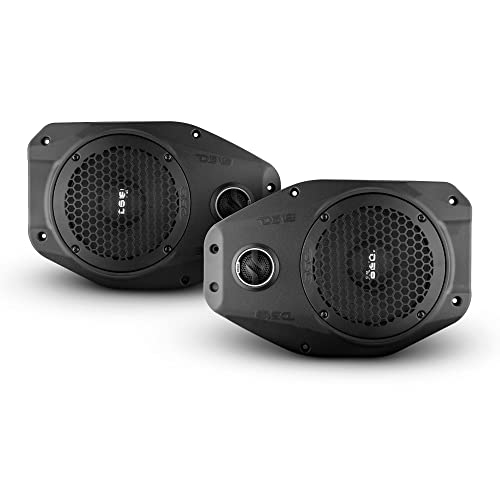
DS18 JLSB6 6.5 inch Plug and Play Overhead Bar System — Overhead bar system
DS18 approaches the Wrangler from the overhead bar and stays there. The JLSB6 is a 6.5-inch overhead bar system whose title carries the words plug and play in its own name — the only pick in this guide that makes the promise that literally. An overhead system is a distinct philosophy from a speaker pair: the bar above the front seats is the closest speaker location to the driver’s ears, so strengthening it has an outsized effect on perceived clarity, especially with the top down, when dash sound has to fight wind arriving from every direction at once. DS18, a brand built on loud and proud car audio, voices for that environment rather than for a quiet studio.
The caution is the mirror of the Mopar pick’s caution. The JLSB6 title names a location, a size and a mounting idea, but no Wrangler years. Overhead bars changed across the JK-to-JL transition, so the year question must be answered from the listing’s fitment detail before money moves. Do that check and the proposition is clean: a focused, single-zone system for owners whose complaint lives above their heads. Skip the check and you may own a handsome bar system shaped for the other generation’s roofline.
- Fitment years: Not stated in the listing title — verify with DS18 documentation
- Speaker size: 6.5 inches
- Location: overhead bar system
- Power handling: Not stated in the listing title — verify with DS18 documentation
- Wiring approach: plug and play, as stated in the listing title
Strengths
- Concentrates on the location nearest the driver’s ears, where gains register fastest
- Plug-and-play wiring is promised in the product’s own title, not implied
- A system approach to the bar rather than a bare pair of speakers
Trade-offs
- No years in the title; generation fit must be proven before ordering
- Overhead-only scope leaves dash and rear locations untouched
- A loudness-first brand voicing may not flatter quiet, detail-focused listening
Best for: a Wrangler owner whose complaint centres on the overhead bar and who confirms the year fit on the listing first. Not suited for: a full-cabin rebuild, or an order placed on the strength of the title alone.
How Do the Six Compare Side by Side?
| Pick | Generation / years in title | Location | Scope |
|---|---|---|---|
| KICKER Dash and Overhead Kit (B0CH7GRKMV) | 2007–2017 (JK) | Dash + overhead | 6.75-inch speaker kit |
| KICKER Dash/Overhead Kit (B0CH7DBPMC) | 2007–2017 (JK) | Dash + overhead | 6.75-inch speaker kit, alternate listing |
| Mopar OEM Kicker Set of 2 | Not stated in title | Single location | 6.5-inch pair |
| Alpine SPV-65-JLT | 2018+ (JL) | Rear soundbar | Soundbar upgrade pair |
| Alpine PSS-24WRA | 2018-up Unlimited | Whole cabin | 300-watt complete system |
| DS18 JLSB6 | Not stated in title | Overhead bar | 6.5-inch bar system |
Read the table by generation first. A JK owner’s real contest is between the Kicker kits, the Mopar pair and a year-verified DS18; a JL owner’s contest is between the Alpine soundbar pair, the Alpine complete system and the same DS18 question. Cross-generation comparisons are entertainment, not shopping.
How Do You Install a Plug-and-Play Kit Without Breaking Trim?
Start by proving the kit matches the Jeep in your driveway: year, door count, and the location you are opening. Then disconnect the battery negative terminal before any connector comes apart — factory harnesses carry more than speaker signal in modern Wranglers, and patience here is cheaper than a warning light. Work one location at a time and finish it before opening the next; a cabin with four open panels invites lost screws and crossed wires.
Trim is where plug-and-play jobs actually fail. Wrangler panels are held by clips that forgive a proper trim tool and punish a flat screwdriver, so buy the plastic pry set if you do not own one. Photograph each connector before unplugging it, keep screws in a magnetic tray sorted by panel, and test each new speaker at low volume before the panel goes back on — a reversed pair of leads or a pinched wire is a two-minute fix with the trim off and a forty-minute fix with it on. Overhead work adds one more rule: support the bar as the last fasteners come out, because a soundbar that drops onto a seat rail can crack its own housing.
Finish with an honest listening check. Play a spoken-word track first — voices expose phase errors and rattles that music hides — then a familiar song at the volume you actually drive at, top on and, if your Jeep lives that way, top off. Chase buzzes while the tools are still out; a foam tape strip behind a panel cures most of them. Reconnect, tidy the removed factory speakers into the kit box, and keep them: a future buyer of a used Wrangler often values the original parts more than your upgrade.
What Mistakes Do Wrangler Speaker Shoppers Make?
The expensive mistake is generation blindness: seeing the word Wrangler, seeing a fair price, and never reading the years. JK and JL hardware shares a badge and almost nothing else, and return shipping on a bulky kit erases the saving that caused the rush. The second mistake is scope confusion — buying a rear soundbar pair to fix a dash problem, or a dash kit to fix rear fill — because the listing photographs looked similar. Name your weak location out loud before you shop; the correct kit is the one titled for that location.
Third, wattage theatre. Five of these six titles state no power figure at all, and the one that does states a system figure. Comparing a complete system’s 300 watts against a bare speaker’s silence and concluding the system is infinitely more powerful is arithmetic without meaning. Judge passive kits by fitment, location and brand voicing; judge the system by its completeness. Fourth, skipping the connector check on the year-silent picks — the Mopar pair and the DS18 — because a famous brand felt like a guarantee. Brands do not guarantee fit; fitment charts do.
Finally, throwing away the factory speakers and the removed hardware the same afternoon. Keep them through a week of driving. If a rattle develops or a connector loosens, the original parts let you isolate the change you made, and that diagnostic value is worth one shelf corner.
What Should You Check on Your Own Wrangler Before Ordering Anything?
Walk out to the Jeep with a torch and a phone before you open a single listing. Confirm the build year from the door sticker rather than from memory or from the year on the registration, because late-year production splits have embarrassed confident owners before. Note the door count: two-door and Unlimited cabins diverge exactly where the Alpine complete system draws its line. Then listen, deliberately, to each location in turn. Fade the factory system fully forward, then fully back, then balance left and right, playing the same thirty seconds of a song you know well. Write down which location disappoints you and how — thin, distorted, silent, rattling — because that note is your shopping list, and it will stop you buying a celebrated kit for a location that was never your problem.
Next, inspect the physical state of what you have. Overhead speakers in older JKs often suffer foam and cone damage from years of heat cycling under a sun-baked top, and a speaker that looks intact can buzz because its surround has quietly perished. A rattle that appears only on bass notes at one corner is usually mechanical, not electronic, and a replacement kit cures it; a rattle everywhere at every volume may be a loose panel that new speakers will not fix. Check whether a previous owner has already been inside the doors or the bar — aftermarket wiring, cut harnesses or non-factory screws change what plug and play can promise you, because the plugs your kit expects may no longer exist.
Finally, decide what your head unit situation really is. A Wrangler still running its factory radio is the audience every pick in this guide was built for. A Wrangler with an aftermarket head unit already fitted changes the arithmetic: output levels differ, factory integration modules may sit in the signal path, and the case for the complete Alpine system weakens or strengthens depending on what that unit already provides. None of that disqualifies any pick here, but it changes which one is the honest recommendation, and it is far cheaper to think it through in the driveway than in the returns queue.
How Does a Speaker Upgrade Behave Differently With the Top Down?
Top-down driving is the Wrangler’s defining audio condition and the one laboratory measurements ignore. At fifty miles an hour with the roof off, the cabin stops being a room and becomes a windsock. Low frequencies that a door speaker worked hard to produce simply leave; they are not absorbed, they are gone, carried off before they can pressurise anything. Fine high-frequency detail fares little better against wind roar. What survives is the midrange — voices, guitars, snare, the intelligibility band — delivered at clean, undistorted levels from speakers close to your ears. That single fact explains the shape of this entire shortlist: overhead and soundbar locations dominate because proximity is the only reliable weapon against moving air.
It also recalibrates what an upgrade should promise. Chasing deep bass in an open Jeep without adding a dedicated subwoofer solution is spending money on sound you will only hear in the driveway. The wins available from these six picks are clarity at real driving volume, freedom from the distortion that factory speakers produce when asked to shout over wind, and a cabin that still sounds composed when the top comes back up in October. Owners who grade their purchase by those wins report satisfaction; owners who expected a concert hall at seventy miles an hour report disappointment with perfectly good hardware.
Volume discipline matters as well. A factory speaker distorts early, so drivers learn to listen loud and strained. Fresh speakers with cleaner output often deliver the same perceived clarity two or three notches lower on the dial, which is better for your hearing on a long trail day and better for the speakers. If your post-install test consists of one song at maximum volume in a quiet garage, you have tested the wrong thing: test at highway pace, top in your usual configuration, with the spoken-word check first and your regular playlist second.
What About the Speakers This Guide Did Not Choose?
Universal 6.5-inch speakers from respected car-audio brands fill most of the internet’s Wrangler threads, and their absence here is a scope decision, not a quality verdict. A universal speaker asks you to solve mounting depth, bracket adaptation and connector wiring yourself; done well, the result can be excellent, and done by a confident installer it may beat a kit on raw specification. The keyword this guide answers, though, contains the words plug and play, and we have held the shortlist to products whose titles promise vehicle-specific fitment, a factory upgrade channel, or an explicit plug-and-play overhead system. That is why a famous universal coaxial you were expecting to see is not here, and why its absence should not be read as a warning against it — only as evidence that it answers a different, more hands-on question.
The same logic excludes the amplifier-and-component-set route. Separates with crossovers, a four-channel amplifier and a powered subwoofer will outplay everything in this guide, at several times the installed cost and with a wiring commitment that cannot be undone with a trim tool. Owners on that path know who they are. Everyone else — the JK driver with buzzing bar speakers, the JL family whose rear passengers cannot hear the film soundtrack on a road trip — is better served by the honest middle these six picks occupy.
How Should JK and JL Owners Each Spend, Step by Step?
For the JK owner, the sensible sequence starts with diagnosis rather than shopping. If both the dash and the overhead speakers are original and tired — the common case in a 2007–2017 Wrangler that has lived outdoors — the Kicker dash-and-overhead kit is the whole first step, and for many owners it is also the last. Live with it for a month of real driving before judging. The cabin will sound clearer and more even, and only then can you tell whether the remaining weakness is genuine missing bass or simply the memory of distortion you have now escaped. Owners who skip that month routinely buy a subwoofer to fix a problem the kit already solved, or blame the kit for a head unit limitation that was there all along.
If the JK’s problem is narrower — one blown speaker, one rattling corner — resist the full kit. The Mopar OEM pair exists for exactly this repair, and matching a factory-channel replacement into an otherwise healthy factory system preserves the balance the vehicle came with. The DS18 enters the JK conversation only after its year fit is proven on the listing, and it suits the owner whose listening happens mostly top-down, where the overhead location earns its keep every mile. What a JK owner should not do is stretch toward JL hardware because a photograph looked modern; the generations do not negotiate.
For the JL owner, the sequence forks on seating. Rear passengers are the JL’s neglected audience, so a family Wrangler should fix the soundbar first with the Alpine SPV-65-JLT and reassess; frequently the front stage, judged fairly once the rear stops dragging the average down, turns out to be adequate. The Unlimited owner whose Jeep is a daily driver, a road-trip vehicle and a trail toy in rotation has the strongest case for the PSS-24WRA: one installation, one matched system, no staged purchases strung across a year. Two-door JL owners should note that the complete system’s title names the Unlimited, and plan around the soundbar upgrade and verified-fitment alternatives instead of assuming coverage the listing never promised.
Both generations share one final step: keep the receipts, the removed speakers and the trim you did not break in a single labelled box until the Jeep has done a few hundred miles in its new voice. Audio satisfaction is a slow verdict. A kit that seems merely good on day one often reveals itself, somewhere on a familiar road with a familiar album, as the upgrade that should have happened years ago.
What Does Ownership Look Like a Year After the Swap?
The first year sorts Wrangler audio upgrades into two piles: the ones that disappear into the vehicle and the ones that keep asking for attention. Kit-based upgrades belong to the first pile when the installation was done carefully. Factory connectors do not work loose the way improvised splices do, matched voicing does not drift, and there is no amplifier gain to readjust after a battery disconnect. The maintenance burden reduces to the Wrangler’s ordinary enemies — water, dust and vibration. Owners who wheel their Jeeps should expect to pop a panel once a season and confirm that connectors are dry and seated, a five-minute ritual that prevents the intermittent crackle people misdiagnose as a dying speaker.
Water deserves its own sentence in a vehicle whose roof is optional. None of the six listing titles in this guide makes a weather-resistance claim, so this guide makes none on their behalf. If your Wrangler regularly sits open under summer storms, raise that question directly on the listing and with the manufacturer before ordering, and consider where each speaker sits: overhead locations shed water differently from dash locations, and a speaker that survives a splash may still suffer a soaked connector. Honest uncertainty here is cheaper than confident damage.
Resale cuts in an interesting direction. A Wrangler with a documented, generation-correct Kicker or Alpine upgrade reads to the next owner as care; a Wrangler with cut harnesses and mystery speakers reads as a project. Keeping the factory parts, as the install section advised, lets you offer both. And if you trade across the generation line yourself — JK out, JL in — nothing in this guide transfers with you except the habit that matters: read the years in the title first, and let the badge come second.
How Do You Judge the Result Honestly Once Everything Is Fitted?
Bring a method to the first drive, because memory is a generous liar and it will tell you the Jeep sounds transformed whether it does or not. Choose three reference tracks before the installation begins and note, in writing, what each one lacks on the factory speakers: the podcast voice that blurs at speed, the acoustic track whose guitar disappears behind tyre roar, the live recording that turns to mush when the whole band arrives. After the swap, play the same three tracks on the same road at the same speeds. The written notes turn a vague glow into a verdict you can trust, and they tell you precisely which location, if any, still deserves money.
Listen for the specific gifts a speaker swap can actually give. Voices should stay intelligible at a lower dial setting than before. Cymbals and consonants should exist without turning harsh when the volume rises to meet the wind. The sound should feel like one cabin rather than two unrelated radios arguing across the seats. Bass should be tighter and less boomy, even though it will not be deeper — a smaller, cleaner low end is the honest signature of better speakers on factory power. If instead you hear a new buzz, a lopsided stage or one corner working harder than the rest, suspect the installation before the hardware: a pinched lead, a connector half-seated, a panel clip resting against a cone surround.
Give the system a week before the final grade. Ears recalibrate; the first day flatters any change, and the fourth day tells the truth. Most owners find the upgrade grows on them precisely because it removes an irritation rather than adding a spectacle — the wince at a distorted chorus, the constant volume fiddling, the rear passengers asking what the presenter just said. When those frictions stop occurring to you, the purchase has done its work, and the remaining appetite, if any remains, will be specific enough to name: usually low end, occasionally a head unit, never another blind round of speakers.
One last discipline protects the result. Resist stacking changes. A speaker kit fitted the same weekend as a new head unit and a borrowed subwoofer teaches you nothing about any of them, and if the combination disappoints you cannot assign the fault. The plug-and-play philosophy is incremental by nature: one verified change, honestly judged, then the next. Wranglers reward that patience more than most vehicles, because every generation, location and top configuration shifts the answer slightly — and the owner who measures twice ends up owning the cabin that the badge promised all along.
Should You Add Sound Treatment While the Panels Are Off?
Since plug-and-play work already removes the trim, owners inevitably ask whether damping material should go in during the same session. The honest answer is measured. A Wrangler’s panels and bar housings are thin and lively, and a modest amount of damping behind a speaker location can calm the buzz that appears on certain bass notes — the kind of rattle owners then blame on the new speakers. Treat that as rattle control, not as a transformation: no sheet of butyl will give an open-top Jeep the hush of a luxury saloon, and money spent chasing silence in a vehicle designed to shed its roof is money spent arguing with the product brief.
Sequencing matters more than quantity. Fit and test the speakers first, drive the Jeep, and note exactly which panel complains and at which moment in which song. Treat only the offenders. Blanketing every surface in advance adds weight, hides the evidence and makes later diagnosis miserable, because a fault you cannot reach is a fault you cannot fix. The same restraint applies to foam rings and baffles: useful against a specific, identified problem, pointless as a ritual. A plug-and-play upgrade earns its name by staying simple, and the owners happiest a year later are usually the ones who added the least beyond the kit itself.
Final Recommendation
JK owners should start with a Kicker dash-and-overhead kit — either listing — because it corrects both tired locations in one matched purchase and states its years outright. JL owners with a healthy front stage should take the Alpine SPV-65-JLT and fix the soundbar the factory neglected, while Unlimited owners chasing a transformation rather than a repair should go straight to the PSS-24WRA complete system. The Mopar pair serves the single-location, factory-spirit repair, and the DS18 rewards the overhead-focused owner who verifies its years first. A Wrangler with its top down on a ridge road, hearing the whole song instead of the half the wind left behind, is the entire argument for choosing by generation and location rather than by badge alone.
Frequently Asked Questions
Will a 2007–2017 kit fit my 2019 Wrangler?
No. The 2018 redesign changed the dash and bar hardware, so JK-titled kits stop at 2017. For a 2019, shop the JL side of this guide: the Alpine soundbar upgrade or, for an Unlimited, the complete system.
Do I need an amplifier with the Kicker or Mopar speakers?
These passive sets are sold as upgrades for the factory system and are designed to run from the head unit’s power. The one pick that changes the amplification picture is the Alpine PSS-24WRA, which is a complete system rather than a speaker set.
Why are there two nearly identical Kicker listings?
Parallel listings for the same kit are common on Amazon and usually reflect different sellers or bundle revisions. Compare the box contents on each detail page and buy the listing whose contents and seller suit you; the stated fitment is the same.
Which pick helps most with the top down?
Speakers nearest your ears hold up best against wind, so the overhead solutions — the DS18 bar system and the overhead half of the Kicker JK kits — register most clearly at open-air highway speed, with the Alpine complete system the broadest answer for an Unlimited.
How do I verify fitment for the Mopar pair or the DS18?
Neither title states years, so use the fitment checker and application notes on the listing itself, matched against your exact year, door count and speaker location, before ordering. If the listing cannot confirm your Wrangler, treat that as a no.
Can I fit just the overhead half of a JK kit and do the dash later?
Staging the work is reasonable and many owners do exactly that, driving a few weeks between locations to judge each change on its own. Keep the remaining speakers from the kit boxed and labelled, keep your notes from the first stage, and expect the cabin to sound slightly uneven in the interval — fresh overhead speakers will expose tired dash speakers more clearly than before, which is information, not failure.
What if my Wrangler already has an aftermarket head unit?
The kits in this guide still fit the same locations and connectors, because fitment is a property of the Jeep rather than the radio. What changes is expectation: an aftermarket unit may already supply cleaner, stronger output than the factory radio, so the gains from a speaker swap can feel larger, and the case for a complete system should be weighed against what your existing unit already does well.
Related Guides
Speakers are one layer of a Wrangler build; our companion coverage looks at the rest of the cabin and the trail. Owners planning a wider refresh often pair this guide with our fitment-first coverage of other vehicles, because the discipline transfers even when the hardware does not: confirm the generation, confirm the location, read the years printed in the title, and only then compare brands, locations and kit scope in that order every single time, whether the vehicle in question wears a Jeep badge, a Ford oval or a pair of Harley wings. See best car speakers for other vehicle fitments, best soundbars and audio upgrades for open-top driving and best amplifiers for factory head units for the next steps once your locations are sorted.