What's inside
- Key Takeaways
- Quick Picks
- How Did We Choose These Picks?
- What Do Aluminum and Glass Each Actually Contribute?
- How Do the Six Options Compare Side by Side?
- How Should You Handle and Maintain Tempered Glass?
- Does a Glass Case Have to Run Hot or Loud?
- What Mistakes Do Material-Focused Buyers Keep Making?
- How Do You Style an Interior That Lives Behind Glass?
- What Lighting Suits a Tempered Glass Build?
- How Heavy Is Too Heavy, and How Do You Move a Glass Case Safely?
- How Do Aluminum Finishes Age Compared With Painted Steel?
- What About Small-Form-Factor Aluminum Cases?
- How Should You Photograph and Share a Finished Build?
- Which Room Styles Suit Which Pick?
- What Should You Verify in the First Week of Ownership?
- How Does a Showcase Case Change Your Upgrade Habits?
- What Is the Honest Case Against This Entire Category?
- How Should You Think About Resale and Longevity in This Category?
- What Does the Build Day Itself Feel Like in a Premium Case?
- Final Recommendation
- Frequently Asked Questions
- Related Guides
As an Amazon Associate I earn from qualifying purchases. This post may contain affiliate links at no extra cost to you.
gizmoverdict.com is reader-supported. When you buy through links on our site, we may earn an affiliate commission.
Where to buy: Linked picks point to Amazon listings from our verified pool. Material claims in this guide follow each listing’s own description, and the sections below explain where aluminum is structural, where it is an accent, and why that distinction matters.
The best aluminum tempered glass PC cases promise a particular kind of object: a computer that looks machined rather than molded, with a window that turns the build itself into the decoration. It is a seductive promise, and an honest guide must begin by translating it. In the current market, a fully aluminum chassis is a rarity bordering on a collector’s item. What most premium cases actually offer is a steel structure wearing aluminum where it counts, front panels, trim, and feet, paired with a tempered glass side that displays the interior. That combination can be genuinely beautiful and genuinely well built, provided the buyer knows which parts are which.
Tempered glass, meanwhile, has become the default window material for good reasons beyond fashion. It resists the scratching that fogged the acrylic windows of earlier eras, it stays optically clear for the life of the case, and its weight and rigidity give a side panel a satisfying, engineered feel. Its costs are equally real: weight, fragility during handling, and fingerprints that announce every touch. This guide weighs those trades pick by pick rather than treating glass as an automatic virtue.
Our six selections divide into five verified listings and one prose-only nod to the true all-aluminum classics that now trade secondhand. Each linked pick is described with material honesty: where the listing itself confirms tempered glass, we say so plainly; where aluminum appears as an accent over a steel frame, we say that instead, because a reader shopping on materials deserves a guide that reads the fine print aloud.
Key Takeaways
- Most current cases pair a steel chassis with aluminum accents; true all-aluminum construction is now a used-market pursuit.
- Tempered glass outlasts acrylic windows by years because it resists scratching and clouding.
- Glass adds real weight, so panel mounting quality decides whether a case feels premium or precarious.
- Dark-tinted glass hides cable imperfections while clear glass rewards meticulous builders.
- Aluminum front panels resist the flex and resonance that thin steel fronts can produce.
- Ventilation design matters more than material: a glass-front showcase can still starve its components.
Quick Picks
| Pick | Badge | Why it earns a place |
|---|---|---|
| Fractal Design North Charcoal TG Dark | Design Leader | Walnut, dark tempered glass, and charcoal tones composed like furniture. |
| Lian Li LANCOOL 216 RGB Black | Glass With Airflow | A mesh front feeding two huge fans, with a glass side for the view. |
| Lian Li LANCOOL 217 | Warm Premium Pick | Walnut detailing and five PWM fans in a composed, grown-up enclosure. |
| Corsair 4000D RS Frame Modular | Modular Showcase | Swappable panels and a deep accessory shelf for evolving display builds. |
| be quiet! Silent Base 802 Black | Quiet Material Pick | Interchangeable fronts and heavyweight construction for a hushed showcase. |
| Classic All-Aluminum Towers (Used Market) | Prose-Only Purist Route | The machined-aluminum originals, for buyers who want the real material story. |
How Did We Choose These Picks?
Material verification came first, an unusual step that this keyword demands. We read each listing’s own description and credited only what it supports: the Fractal North variant here carries its tempered glass designation in its name, TG Dark, while the other linked picks are presented for their glass side panels and metal construction as their makers describe them, without inventing aluminum content the listings do not claim. Where a case’s aluminum is an accent rather than a skeleton, the pick’s section says so, because the difference changes weight, price logic, and expectations.
Beyond materials, we graded the window experience itself: tint, mounting system, and how the interior layout rewards being seen. A glass panel over a cable swamp is a confession, not a feature, so cases with disciplined routing channels and power supply shrouds scored higher. Cooling honesty mattered as always; a display case that cooks its contents is a terrarium, and none of the picks here asks the components to pay for the view with their temperatures.
Finally, we weighed handling. Glass panels are removed for every upgrade and cleaning, so hinge systems, captive screws, and panel weight distribution decide whether ownership feels luxurious or anxious. The picks below handle that recurring moment with varying philosophies, and their sections name the differences plainly.
What Do Aluminum and Glass Each Actually Contribute?
Aluminum’s gifts are tactile and acoustic before they are visual. A machined or thick aluminum front panel does not flex when a hand presses it, does not ring when a fan vibrates against it, and holds its finish for years because the material anodizes beautifully and shrugs off the small abrasions that scar painted steel. It also conducts heat, which a few designs exploit passively, though no buyer should purchase aluminum as a cooling strategy; its honest dividends are rigidity, finish, and feel.
Glass contributes truth. A tempered glass side removes the option of hiding a sloppy build, and in doing so it has quietly raised the standard of the entire hobby: cable routing, component color coordination, and even dust discipline all improved when interiors became displays. Tempered glass itself, heat-treated for strength and designed to crumble into blunt granules rather than shards if it ever fails, is far tougher than its reputation among the nervous, provided its edges are protected and it is never stressed against a hard point.
Together the materials describe an intention, that the computer is a finished object in a finished room. Buyers who feel that intention will find the premium rational. Buyers who do not should save the money without a flicker of guilt, because none of it makes a game run faster, a point this guide will repeat until it stops needing to.

Fractal Design North Charcoal TG Dark — Design Leader
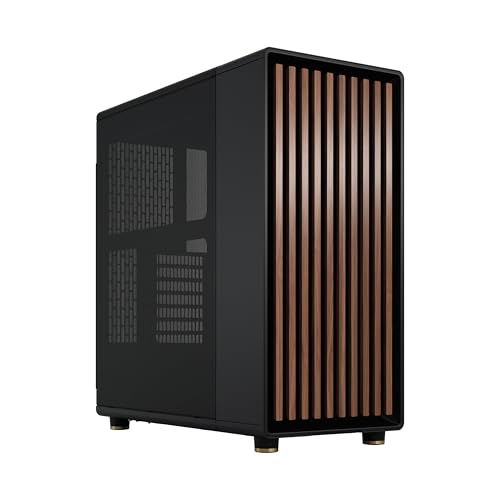
The North in Charcoal with its dark tempered glass is the pick that most fully realizes this keyword’s dream in a current, purchasable product. The listing’s own name confirms the tempered glass, tinted dark, and the walnut front slats set it into a charcoal frame that reads as Scandinavian furniture rather than gaming apparatus. Through the smoked glass, a build appears in low contrast, components suggested rather than shouted, which forgives ordinary cabling while rewarding tidy work with a genuinely gallery-like effect.
It is also a considered ventilation design, breathing through its slatted front and perforated structure rather than suffocating behind a sealed slab, the failure mode of lesser design-led cases. For a living room, a studio, or an adult office where the machine must earn its place among intentional objects, nothing else in this guide competes. The premium is real, and for once it is visibly, materially accounted for.
- Format: ATX mid-tower
- Side panel: tempered glass, dark tint (TG Dark in the listing name)
- Front: walnut slats over ventilated structure
- Finish: charcoal tones throughout
- Character: furniture-grade design object
Strengths
- Dark glass flatters real-world cable work
- Walnut and charcoal compose with adult rooms
- Ventilation respects the components behind the art
Trade-offs
- Design premium over functional equivalents
- Dark tint hides the lighting some builders want to show
- Wood tones will not suit every interior scheme
Best for: living rooms and studios where the PC must look intentional. Not suited for: builders wanting a bright, clear-glass light display.

Lian Li LANCOOL 216 RGB Black — Glass With Airflow
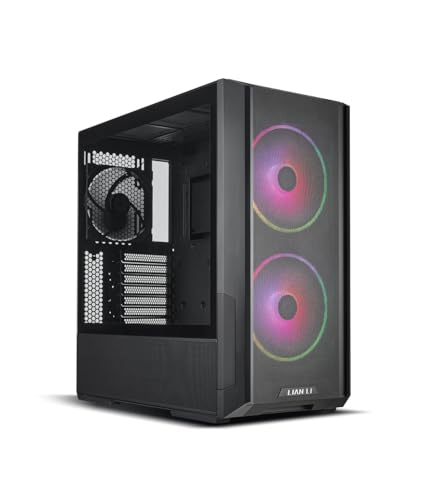
The LANCOOL 216 answers the showcase question from the performance side: yes, you may have your glass side and your temperatures too. Its mesh front and twin 160mm fans deliver the strongest airflow story in this guide, while the glass side panel presents the build honestly under that cooling. Lian Li’s metalwork, long associated with aluminum craftsmanship, gives the enclosure a precision feel in its panel fit that owners notice every time a side comes off and returns without a fight.
This is the pick for the builder whose priorities run performance first, presentation a close second. The interior layout, including support for back-connector motherboards, keeps the visible space unusually clean, and the fans’ lighting can be tuned from subtle to celebratory. If the North is the case as furniture, the 216 is the case as instrument, and many desks honestly prefer the instrument.
- Format: ATX mid-tower
- Front: full mesh with two 160mm ARGB fans per the listing
- Side: glass display panel
- Layout: back-connector motherboard support
- Character: performance-led showcase
Strengths
- Cooling headroom no glass case should apologize for
- Panel fit reflects the maker’s metalworking heritage
- Clean interior layout rewards the glass with a tidy view
Trade-offs
- Mesh front is honest about being a working intake, not sculpture
- Lighting system adds setup decisions for newcomers
- Glass and steel construction still carries real weight
Best for: high-performance builds that also want to be seen. Not suited for: silence absolutists in treated rooms.
Lian Li LANCOOL 217 — Warm Premium Pick
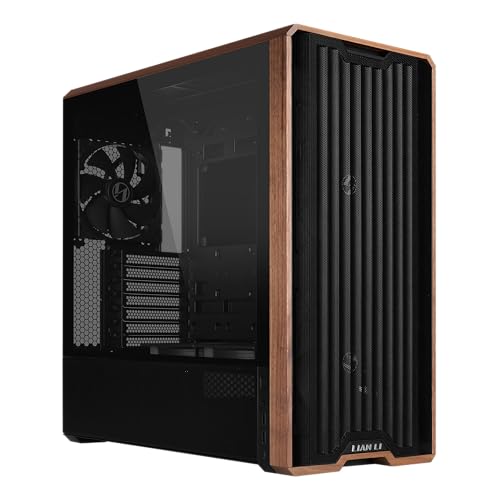
Where the 216 is an instrument, the 217 is an instrument in a wooden cabinet. The listing confirms its walnut wood detailing and its five included PWM fans, a combination that signals its intent clearly: premium materials and complete cooling, delivered together, for a machine meant to live visibly in a grown-up space for a long time. The glass side continues the theme, presenting the build with the same composed restraint the exterior establishes.
Buyers weighing it against the North face a pleasant dilemma between two dialects of the same language. The North leans further into furniture, the 217 further into capability, with its deeper fan provision and cooling headroom for flagship hardware. Either is defensible; the choice is a self-portrait. What neither asks is any apology for the components inside, which is the least a premium material story owes its buyer.
- Format: ATX mid-tower
- Accent: walnut wood per the listing
- Stock fans: five PWM per the listing
- Side: glass display panel
- Character: warm, capable, long-term
Strengths
- Five-fan provision completes the cooling story out of the box
- Wood detailing warms a technical object convincingly
- Headroom suits flagship components without strain
Trade-offs
- Premium tier pricing among these picks
- Capability exceeds midrange builds’ requirements
- Wood narrows its interior-design compatibility
Best for: long-term flagship builds in visible, adult spaces. Not suited for: first builds on disciplined budgets.

Corsair 4000D RS Frame Modular High Airflow — Modular Showcase
Corsair’s modular 4000D variant treats the showcase as a work in progress, which for many builders is the truthful description. Its frame concept lets panels and configuration change as taste and hardware evolve, and its glass-sided presentation sits atop a high-airflow front and three included RS fans, so the display never comes at the components’ expense. The practical dividend is longevity: a case that can change its panels can survive its owner’s changing mind, the most common cause of case replacement in the hobby.
The accessory ecosystem deepens that argument. Replacement glass, alternative fronts, and small fittings remain orderable, so the inevitable accident, a panel meeting a tile floor, becomes a purchase rather than a funeral. For a display build expected to evolve across several hardware generations, that serviceability is a material virtue as real as aluminum, and rarer.
- Format: mid-tower built on a reconfigurable frame
- Cooling supplied: a trio of RS-series fans
- Front: configured for high airflow
- Panels: swappable within the maker’s ecosystem
- Character: evolving showcase with service backup
Strengths
- Modularity lets the look evolve with the build
- Replacement glass is orderable if the worst happens
- Airflow front keeps display builds properly cooled
Trade-offs
- Ecosystem spending can creep beyond the case’s price
- Design language is technical rather than furniture-like
- Glass care routine applies in full
Best for: builders whose systems and tastes evolve yearly. Not suited for: set-and-forget owners who never reopen a case.

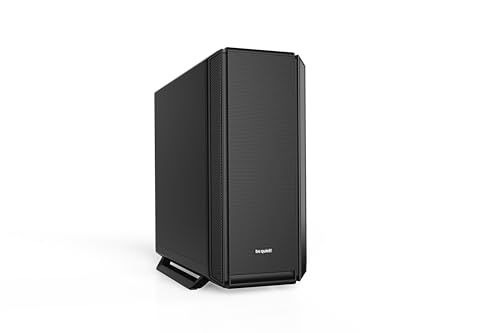
be quiet! Silent Base 802 Black — Quiet Material Pick
The Silent Base 802 brings heft to the materials conversation. Its interchangeable front panels, one for airflow and one for silence, mount on a chassis built with the solidity its maker is known for, and in its glass configuration it offers the showcase experience at the lowest acoustic price in this guide. Three fans are included in the listing configuration, and the whole enclosure feels engineered by people who believe a case should be felt as much as seen.
It suits the reader who wants the window without the soundtrack: a powerful machine in a room used for conversation, music, or sleep-adjacent work. The material story here is less about aluminum specifically than about substance generally, thick panels, careful damping, and hardware that closes with a muted finality. Buyers for whom that substance is the luxury will find this the most satisfying object on the page.
- Format: ATX midi tower with real heft
- Front: two swappable panels, one tuned for silence, one for airflow
- Cooling supplied: a three-fan complement in the box
- Character: silence-led, heavyweight, composed
- Filtration: designed intake filtering
Strengths
- Quietest showcase experience among these picks
- Panel solidity gives ownership a premium feel
- Swappable fronts adapt the case across seasons
Trade-offs
- Weight makes moving and servicing a deliberate act
- Premium positioning within this guide
- Size demands a generous footprint
Best for: quiet rooms wanting a window without the noise. Not suited for: LAN-party portability or small desks.
Classic All-Aluminum Towers (Used Market) — Prose-Only Purist Route
For the reader who wants aluminum as the structure rather than the accent, the honest destination is the used market, where the classic all-aluminum towers of Lian Li’s earlier eras and a handful of rivals still circulate. Those cases were machined when aluminum was the premium default, and a clean example delivers the material experience in its undiluted form: light for its size, rigid, beautifully finished, and utterly indifferent to modern conveniences like cable channels, glass hardware, and radiator mounts.
We list the class without a link because condition varies too wildly for a blanket recommendation. Buy with the used-market discipline this site preaches elsewhere: photographs of every panel, confirmation of all fittings and panel hardware, and a price that remembers the case will need adaptation to current components. For the right buyer, a hobbyist who values the material itself, the hunt is the hobby, and the resulting machine is a small museum that also plays games.
- Construction: structural aluminum, period designs
- Availability: used market only, condition varies
- Modern fit: may need adaptation for current hardware
- Panels: typically solid aluminum rather than glass
- Watch-out: verify every fitting and fastener is present
Strengths
- The genuine all-aluminum construction this keyword imagines
- Light yet rigid in a way modern cases rarely attempt
- Finishes that age with dignity rather than peeling
Trade-offs
- No verified listing in our pool, hence no purchase link
- Modern cable and cooling features are absent
- Condition and completeness are entirely seller-dependent
Best for: material purists and retro-build hobbyists. Not suited for: anyone wanting a warranty and a modern layout.
How Do the Six Options Compare Side by Side?
| Option | Material story | Glass | Cooling character | Ideal role |
|---|---|---|---|---|
| Fractal North Charcoal TG Dark | Walnut, charcoal metalwork | Dark tempered, confirmed | Balanced, ventilated | Furniture-grade display |
| Lian Li LANCOOL 216 | Precision metalwork, mesh front | Glass side | Very strong airflow | Performance showcase |
| Lian Li LANCOOL 217 | Walnut detailing | Glass side | Abundant, five fans | Warm premium build |
| Corsair 4000D RS Frame | Modular frame system | Glass side | High airflow | Evolving display |
| be quiet! Silent Base 802 | Heavyweight damped panels | Glass configuration | Adjustable, quiet | Hushed showcase |
| Classic aluminum towers | Structural aluminum | Usually none | Period design | Purist retro build |
The material-story column is the one to shop by, because it records what each option honestly is rather than what the keyword wishes everything were. Glass is nearly universal among the modern picks; aluminum’s role varies, and knowing its role is the whole game.
How Should You Handle and Maintain Tempered Glass?
Tempered glass is strong in its plane and vulnerable at its edges, and every handling rule follows from that geometry. Remove panels over a bed, a sofa, or a carpeted floor, never over tile or concrete, and lay them on a soft surface rather than leaning them against a wall where a slip becomes a slide. Keep the protective film on until the build is finished and photographed, because build day is when screwdrivers wander.
Cleaning rewards restraint. A microfiber cloth and plain water handle fingerprints and dust; ammonia-based glass cleaners are unnecessary and can mistreat nearby finishes and coatings. Clean the inside face during scheduled dust maintenance, since interior glass accumulates the same film as the components behind it, and a showcase with a fogged window has quietly stopped showcasing anything.
If a panel ever does fail, it will crumble into granules by design, which is safer than shards but still a miserable cleanup that argues for prevention. Replacement panels for the linked picks are orderable through their makers’ ecosystems, one more reason this guide favors manufacturers with real parts support. Note your case’s exact model and panel variant somewhere durable, because ordering the correct glass in year three is easier with the paperwork kept.
Does a Glass Case Have to Run Hot or Loud?
The reputation came from a specific era of design malpractice: sealed glass fronts, token side vents, and fans chosen for their lighting rather than their lungs. Those cases did cook their contents, and the lesson the market learned was not that glass is hot but that intake area is non-negotiable. Every modern pick here feeds its components through mesh, slats, or engineered fronts, and their temperatures behave accordingly.
Noise follows the same logic. A case that breathes easily lets its fans turn slowly, and slow fans behind solid, well-fitted panels make for a quiet machine regardless of the window material. The glass itself is acoustically neutral to mildly helpful, being denser than thin steel. When a glass build is loud, the culprit is almost always an airflow path that forces small fans to work like turbines, a design flaw wearing a material’s reputation as a disguise.
The practical test for any showcase case is therefore simple to state and was applied throughout this guide: find the intake, measure it with your eyes, and ask whether the components behind the glass can actually breathe through it. If the answer is generous and obvious, the glass is innocent.
What Mistakes Do Material-Focused Buyers Keep Making?
The signature mistake is paying for a material story that was never verified, assuming aluminum where the maker used steel with a metallic finish, or assuming glass thickness and tint that the listing never promised. Read the specification the way this guide read its pool, and let the maker’s own words set the expectation. The second mistake is prioritizing the window and neglecting the view: components chosen without a glance at their appearance, cables routed for a closed case, and a glass panel installed over the evidence.
Third, buyers underestimate weight. A glass-paneled, substantially built case is a heavy object, and desks, stands, and the owner’s back all deserve a vote before purchase. Fourth, tint regret is real in both directions: clear glass owners discover their cabling, dark glass owners discover their lighting budget’s invisibility. Choose the tint for the build you will actually assemble, not the one in the advertisement.
Finally, do not let materials crowd out fit. A case that cannot accept your graphics card’s length or your cooler’s height is a beautiful sculpture with a computer problem, and no anodized finish refunds a millimeter.
How Do You Style an Interior That Lives Behind Glass?
A glass side converts component selection into interior design, and the builders who thrive behind glass think in palettes rather than in parts. Choose a dominant tone, usually the motherboard and case interior, a secondary tone for the cooler and memory, and at most one accent, which might be a cable color or a single lighting hue. Builds that assign every component its own color read as noise through the glass; builds that restrain the palette read as intention, and intention is the entire aesthetic product being purchased.
Cable craft is the second discipline. The visible runs, the graphics card’s power feed and the motherboard’s main lead, deserve the care usually reserved for the parts themselves: combed, gently curved, and anchored so they hold their lines. The power supply shrouds in these picks hide the untidy remainder, which is precisely their design purpose, and the rear of the motherboard tray can remain gloriously ordinary because no window exposes it. Perfection is required only where the glass looks, a mercy that makes showcase builds far more achievable than forum photography suggests.
Vertical space is the third consideration. A tall air cooler becomes a tower sculpture behind glass; a liquid loop becomes plumbing art; a low-profile build leaves a void that a horizontal graphics card or a tasteful support bracket fills. Decide what the window’s centerpiece is before buying the supporting cast, because a glass case is a frame, and frames are chosen for their pictures.
Finally, remember that the display is alive. Fan lighting that breathes gently, a temperature display, or components whose finishes catch daylight differently across the day all reward the owner in ways a static photograph cannot. The best showcase builds are composed for the room’s real light, not for a camera, and they are judged every evening rather than once.
What Lighting Suits a Tempered Glass Build?
Restraint is the whole doctrine, and it begins with a single decision: one hue, or one temperature of white, everywhere. Mixed rainbow defaults photograph as chaos and live as visual noise, while a disciplined single tone makes even modest components look curated. Warm white flatters wood-accented cases like the walnut picks here; neutral white flatters monochrome builds; a single saturated accent suits a themed machine. The setting matters less than the consistency.
Brightness deserves the same discipline. Lighting run at moderate intensity reveals components; lighting at maximum turns the case into a lamp that competes with the monitor and tires the eyes across a long evening. Many owners discover that the most luxurious setting is the dimmest one that still reads, a glow rather than a glare, and that discovery tends to be permanent.
Dark-tinted glass, as on the North TG Dark, acts as a lighting filter that deepens colors and hides the fixtures themselves, so the light appears to emanate from the components rather than from visible strips. Clear glass rewards the opposite approach, tidy fixtures and deliberate placement. Either way, the ability to switch lighting off entirely, for films, for guests, for sleep in a shared room, is a feature to verify rather than assume, because a showcase that cannot go dark eventually becomes an imposition.
How Heavy Is Too Heavy, and How Do You Move a Glass Case Safely?
Glass and substantial metalwork produce cases that can weigh as much as a small child once components are installed, and the time to respect that fact is before the desk is chosen. Verify the desk or stand’s rating, position the case so its weight sits over structural support rather than a cantilevered edge, and leave enough clearance behind it that moving it for cable work does not become a weightlifting event performed at arm’s length.
Moving technique is simple and worth stating. Remove the glass panels first and transport them separately, flat, on something soft. Carry the chassis with two hands at its base, never by a front panel or a top handle that was designed for positioning rather than for load. If the machine travels in a vehicle, it rides on its side with the motherboard facing up, cushioned, so the graphics card’s weight presses into its slot rather than levering against it, and the original box, if you kept it, earns its storage space on exactly this day.
Households with frequent moves, students, renters, anyone whose life is periodically boxed, should weigh portability honestly against the materials premium. A steel-and-plastic case forgives the moving life; a glass showcase asks to be treated as furniture. Neither answer is wrong, but the mismatch, a furniture-grade case in a nomadic life, generates the particular heartbreak of a panel lost to a stairwell, and it is avoidable at the shopping stage.
How Do Aluminum Finishes Age Compared With Painted Steel?
Anodized aluminum carries its color in a hard oxide layer grown from the metal itself, which is why quality aluminum panels resist the peeling and edge-wear that eventually expose painted steel’s substrate. Scratches still happen, but they tend to read as bright lines in a durable surface rather than as the beginning of a flake. Owners of decade-old aluminum cases routinely describe finishes that look seasoned rather than tired, a distinction anyone who has owned painted equipment will recognize immediately.
Painted and powder-coated steel has improved enormously and should not be caricatured; a good powder coat on the steel structures of the modern picks here will serve for the case’s whole life without drama. The honest hierarchy is about failure modes under abuse: aluminum dents where steel bends, steel rusts where its coating is breached and aluminum does not, and glass, of course, declines to participate in any of these slow negotiations by being either perfect or replaced.
Care follows from the materials. Aluminum wants a soft cloth and mild cleaners, and dislikes abrasive pads that scar its anodizing in swirls. Glass wants microfiber and patience. Painted steel forgives almost everything except solvents. A case assembled from all three, which describes most picks here, is maintained by its most delicate member’s rules, and those rules are gentle enough to become a five-minute ritual rather than a regime.
What About Small-Form-Factor Aluminum Cases?
Readers drawn to aluminum often discover its last mainstream stronghold in small-form-factor design, where boutique makers machine compact enclosures from aluminum because the material’s rigidity allows thin walls without flex, and thin walls are precious when every millimeter is interior volume. Those cases are beautiful objects and genuine engineering, and they sit outside this guide’s linked picks because our verified pool does not carry them, a boundary we observe rather than decorate.
The small-form-factor bargain deserves honest summary for anyone tempted to detour. Volume constraints turn component selection into a compatibility discipline: cooler heights, card lengths, and power supply formats all shrink to specific families, and the build rewards research with a machine of jewel-like density. Costs per liter run high, acoustics require care, and the first build in the format humbles almost everyone. For the right owner, none of that is a warning; it is the description of the hobby they wanted.
Mainstream ATX cases like the picks here remain the recommendation for most readers precisely because they decline that discipline. They accept the components you already own, forgive a beginner’s cable work behind a shroud, and still deliver the glass and metal experience the keyword promises. The boutique path will still be there, gleaming, when and if its particular challenge starts to look like fun.
How Should You Photograph and Share a Finished Build?
A guide about display cases may fairly end its guidance where many owners do, with the photograph. Shoot the machine in its real home, in the room’s evening light, with the monitor displaying something the machine actually runs, because the honest photograph communicates what the case does for a life rather than for a lens. Angle slightly rather than square-on to let the glass read as depth instead of as a mirror, and turn room lights low enough that the interior, not the reflection of the photographer, occupies the window.
If reflections defeat you, a polarizing filter or a simple change of angle usually restores the interior, and dark-tinted glass forgives more than clear. Share the specifications and the two or three decisions you would change, because build posts that include their regrets teach the community more than flawless galleries do. The cases in this guide built their reputations through exactly those honest reports, materials praised where they earned it and handling quirks named where they did not.
Then close the camera app and use the machine. A showcase build’s final purpose is not its portrait but the small, recurring satisfaction of glancing sideways during an ordinary evening and finding the object still handsome, still quiet, still yours. Materials chosen truthfully deliver that satisfaction for years, which is the return this entire category exists to pay.
Which Room Styles Suit Which Pick?
Interior context breaks ties between beautiful objects, so let the room vote before the cart does. A Scandinavian or Japandi room, pale woods and quiet textiles, receives the walnut-fronted picks as natives; the North was practically composed for that photograph, and the LANCOOL 217 speaks the same language with a slightly deeper voice. A monochrome, industrial, or studio space favors the charcoal and black metalwork of the 216 and the Silent Base 802, whose restraint reads as professionalism rather than as absence.
Eclectic and maximalist rooms, already rich with color and object, often suit a clearer glass and a simpler exterior, because the case joins a conversation rather than starting one; the Corsair’s technical neutrality plays that supporting role well. Traditional rooms with dark woods meet the walnut picks halfway, and gaming rooms, the one context where exuberance is the local dialect, forgive and even request the lighting-forward interpretation of the 216.
None of this is law. It is the recognition that a case large enough to anchor a desk is furniture whether its maker admits it or not, and furniture chosen against its room generates a low, daily friction that specifications never mention. Spend one minute picturing each finalist in the actual room, under the actual light, beside the actual monitor, and the ranking will often settle itself.
What Should You Verify in the First Week of Ownership?
Premium materials deserve a premium inspection while returns are painless. Examine the glass against a bright window for scratches, chips at the edges, and any clouding in the tint, because edge chips in particular are both a cosmetic flaw and the panel’s weakest geometry. Run a fingertip lightly around the glass perimeter; it should feel uniformly finished, with no sharp surprises. Check that the panel mounts and releases repeatedly without force, since a mounting system that fights on day one will not improve with age.
Inspect the metalwork with the same calm rigor: panel gaps even, anodizing or paint consistent across pieces that meet, feet level so the case does not rock on a flat surface. Power the system and listen at idle from your chair’s position, because a panel resonance that exists will exist immediately, and it is far easier to address, by reseating or by exchange, in week one than in month six.
Keep every film, bag, and box until that inspection closes. Materials at this tier are purchased partly for the pleasure of their perfection, and a flaw tolerated at unboxing becomes the flaw the eye finds every evening thereafter. The makers of the linked picks run real support operations; use them promptly and politely, and the object you keep will be the object the advertising described.
How Does a Showcase Case Change Your Upgrade Habits?
Owners of glass cases consistently report a behavioral shift that no one warns them about: they begin choosing components partly by appearance, and they begin cleaning before upgrades rather than after failures. Neither shift is frivolous. A component chosen to harmonize with a build tends to be researched more thoroughly in every dimension, and a machine kept visibly clean reveals its small problems, a fan slowing, a cable chafing, while they are still small. The window, in other words, quietly recruits its owner into better maintenance, which is a strange and genuine performance benefit of an aesthetic purchase.
The shift has a budget shadow worth acknowledging. Once appearance counts, the temptation to replace a working component for its looks enters the hobby, and each owner must decide where their own line sits. A useful rule is to let appearance break ties between components that perform alike, and never to let it outrank performance, acoustics, or reliability. Applied consistently, the rule captures the pleasure of the showcase without letting the showcase start issuing invoices.
There is a social dimension as well. A visible machine invites questions from guests and family, and many owners discover they enjoy being the person who can explain what the parts do. The case becomes a small piece of science communication on the desk, which is perhaps the most unexpected dividend of all: an object bought for its looks, paying rent in curiosity.
What Is the Honest Case Against This Entire Category?
Fairness requires the prosecution’s paragraph. Everything in this guide costs more than a competent steel-and-plastic enclosure that cools the same components to the same temperatures, and the difference, redirected to storage, memory, or a better monitor, would produce measurable improvements in the machine’s work. Glass adds weight and a failure mode. Aluminum accents add cost without adding computation. A buyer whose satisfaction comes from performance per unit of money should close this guide with our blessing and buy the sensible box.
The defense rests on a different theory of value, which is that objects used daily for years owe their owners more than throughput. A chair is not judged against a stool by sitting-per-dollar alone, and a case, the computer’s body and face, is not judged by airflow alone either, though airflow it must have. The readers who belong in this category know who they are: they keep things, they notice materials, and they are willing to pay, once, for an object that will please them daily. This guide was written for them, with the prosecution’s paragraph kept in view the whole time, because a premium defended honestly is worth more than a premium merely asserted.
If you are still reading after the prosecution rested, you have your answer about which theory of value is yours, and the only remaining task is choosing the dialect. Let the room decide between walnut and charcoal, let the workload decide how much airflow the glass must coexist with, and let your tolerance for weight and care set the boundary between the showcase and the purist’s used-market pilgrimage. Decide those three honestly and the specific model almost selects itself, which is how you will know the decision was made correctly.
One practical farewell: photograph your build the week it is finished, from the chair where you will actually sit, and keep that photograph with the build’s records. Years later, when the machine has been upgraded past recognition, that image is the evidence of what the materials were for, a particular evening’s machine, composed with care, doing its work beautifully in a real room.
How Should You Think About Resale and Longevity in This Category?
Material-led cases hold their audience unusually well in the secondhand market, because their appeal does not depreciate with component generations. A beautifully finished enclosure from five years ago still fits current motherboards, still presents a build handsomely, and still photographs like a premium object, so clean examples with complete panels and hardware find buyers quickly. That residual value quietly refunds part of the original premium, a line item that purely functional cases, however excellent, rarely match.
Longevity at home follows the same logic. A case that pleases its owner survives platform changes that would otherwise trigger a full replacement, and each survived generation lowers the true annual cost of the original purchase. The conditions are the ones this guide has repeated: keep the panels safe, keep the accessory box complete, keep the glass clean, and keep the paperwork. A case maintained that way is not consumed by use; it is merely seasoned by it.
When the day eventually comes to part with it, sell it as the object it is, with honest photographs in daylight and a plain list of any marks the years have left. Buyers of material-led cases are connoisseurs purchasing a known quantity, and candor is the currency their market runs on. The machine you sell well is the machine someone else builds in happily, and the category’s whole culture of care continues through your listing.
Notice, finally, what this category teaches about buying anything meant to be kept. The questions that decided this guide, what is it really made of, how does it age, can its parts be replaced, will I still enjoy touching it in five years, are the questions that separate possessions from purchases in every department of life. A computer case is a modest place to practice asking them, and a tempered glass panel, reflecting its owner mid-thought, is a fitting place to learn.
Bring those questions to the checkout, answer them from the maker’s own specifications rather than from the mood of the product photography, and whichever pick follows you home will have been chosen the way its materials deserve: deliberately.
What Does the Build Day Itself Feel Like in a Premium Case?
It feels slower, in the good sense. Panels come off with a deliberate, engineered motion and rest safely on the cloth you laid out because this guide, and every owner before you, insisted. Screws are captive or thoughtfully sorted. The motherboard tray’s edges are finished, the cutouts are where the cables want to go, and the glass waits until the very end, a small ceremony of completion when the protective film peels away and the build appears, finished, for the first time.
Savor that the premium purchased exactly this: not a benchmark, but a series of moments, repeated at every upgrade and cleaning for years, in which the object behaves as if someone cared about the person using it. Someone did. That is what the money bought, and on build day, with the film coming off the glass, it does not feel abstract at all.
Remember that feeling when the first fingerprint lands on the glass, as it will within the hour, and let it make you smile rather than wince. A case that is used will be touched; a case that is loved will be wiped clean and touched again. The materials in this guide were chosen to survive exactly that affection, in quantity, for years.
Affection, maintenance, and honest materials turn out to be the same story told three ways, and it is the only story this category has ever really been selling.
Buy into it with your eyes open, your measurements taken, and your microfiber cloth already in the drawer, and the story will have a long run at your desk.
The desk, after all, is where the machine will spend its life being looked at, touched, cleaned, and occasionally admired by people who know nothing about computers and everything about whether an object belongs in a room. Win that audience and the specifications have done their job.
That is the standard. Hold every finalist to it, in your own room’s light, and choose without hurry.
Unhurried choosing is itself a material virtue, the one that never appears on a specification sheet and decides more purchases than any other.
Practice it here, and it will serve you at every larger purchase the hobby, and the house around it, eventually asks you to make.
Start with the pick whose material story you verified with your own reading, and the rest of the ownership story tends to verify itself, evening after evening.
Evenings are the unit in which cases are truly measured, and a good one accumulates them like interest.
Choose the one whose interest you want to collect.
And when it arrives, give the unboxing the same unhurried attention: inspect the glass in daylight, work the panel mechanisms twice, and only then begin the build. First impressions formed carefully tend to become long relationships with objects, and a case in this category is bought for exactly that duration. Anything less patient wastes the very quality the premium exists to purchase.
Patience at the start, honesty in the middle, and a soft cloth forever after: the whole ownership manual for this category fits in one sentence, and you have now read its long version.
The long version exists because the details are where materials either prove themselves or confess, and you deserve the proof before the purchase rather than the confession after it.
With the proof in hand, the choice is finally simple, and simple choices, made from evidence, are the ones that stay satisfying.
Satisfaction, in this category, is a material property too, and it is the one the whole purchase is finally about.
Choose for it directly, and the glass, the metal, and the machine inside will do the rest.
That is the promise, and unlike most promises in product photography, it is one the right case can actually keep.
Keep it in view while you decide, and decide like someone who intends to be pleased for a long time.
A long time is, after all, the entire point of buying materials like these.
Honor it, and the case will honor you back.
That reciprocity is the category in miniature.
Final Recommendation
For the keyword’s full promise in a current product, the Fractal North Charcoal TG Dark leads: confirmed dark tempered glass, walnut, and a composition that belongs in a considered room. The LANCOOL 216 and 217 serve builders who want the glass with maximum cooling or maximum warmth respectively, the Corsair 4000D RS serves evolving showcases, and the Silent Base 802 serves quiet ones. The purist’s all-aluminum grail waits in the used market, honestly labeled as a hobby rather than a shortcut.
Materials are how a computer feels to live with after the benchmarks fade, so buy the ones whose story checks out, and let the machine be beautiful truthfully.
Frequently Asked Questions
Are any new cases made entirely of aluminum?
Very few, and mostly in small-form-factor or limited-run designs. Mainstream premium cases use steel structures with aluminum panels or accents, which is why this guide describes each pick’s material role individually.
Is tempered glass safe around children and pets?
Tempered glass is engineered to resist impact and to crumble into blunt granules rather than shards if it fails. Sensible placement and careful handling during maintenance remain wise in any household.
Does dark-tinted glass affect component lighting?
Yes, it mutes and deepens it, which many owners prefer. Builders planning a bright lighting display should choose clear glass and budget the extra cable discipline it demands.
Can a glass panel be replaced if it breaks?
For the major makers in this guide, yes, replacement panels are orderable parts. Keep the exact model and variant recorded so the correct panel can be sourced quickly.
Does aluminum construction improve cooling?
Not meaningfully for mainstream builds. Aluminum’s real contributions are rigidity, finish durability, and feel; cooling is decided by intake area and fan design, as the mesh-front picks demonstrate.
How thick is the glass on cases like these?
Thickness varies by model and is listed in each maker’s specifications. What matters practically is the mounting system and edge finishing, which decide how the panel behaves across years of removal, more than a fractional difference in the pane itself.
Can I replace a glass panel with a mesh one later?
On modular designs like the Corsair pick, panel ecosystems make such swaps plausible; on fixed designs, generally not. If ventilation flexibility matters to you, choose the case whose panel options already include it.
Related Guides
Continue with our guide to cable management worthy of a glass panel, the comparison of desk setups for display builds, and our advice on lighting a PC without overwhelming a room.