Our Top Picks
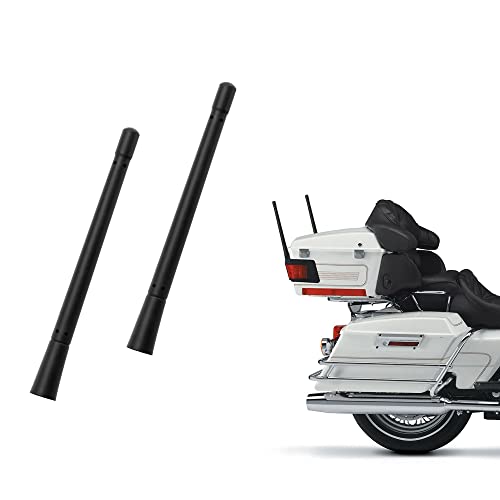 BA-BOLING 7" Motorcycle Antennas Replacement for Harley Davidson7 INCH7 x 0.5 x 0.5 inches0.2 poundsCheck on Amazon



What's inside
- Why the whip is tall in the first place
- Thread fit: the detail that decides whether the part screws on at all
- The reception trade, band by band
- Billet aluminium: machined, rigid, and unapologetically styled
- Flexible rubber and polymer stubs: the forgiving alternative
- Tour-pak position versus fairing position
- The hidden in-fairing antenna: the comparison every buyer should make
- Vibration: the touring motorcycle’s constant companion
- Weather, washing, and the seasons of a short antenna
- Looks, honestly assessed
- Installation, step by step in spirit
- Who should skip the short antenna entirely
- Length classes and what each one really means
- Passengers, luggage, and life around the tour-pak
- Myths that follow this category around
- Four riders, four correct answers
- A short maintenance rhythm that keeps the small part invisible
- The buying checklist, condensed
- How the radio itself changes the verdict
- Travelling beyond the home market
- Check prices on Amazon
- Second motorcycles, borrowed bikes, and resale realities
As an Amazon Associate I earn from qualifying purchases. This post may contain affiliate links at no extra cost to you.
Reader note: a few links on this page are referral links, so this site may receive a commission if a reader purchases through one of them, and that commission never changes the amount the reader pays.
The factory antenna on a Harley-Davidson touring motorcycle is a tall, flexible whip that does its radio job well and pleases almost nobody’s eye. It brushes garage door frames, slaps against covers, catches sleeves during dismounts, and waves in the wind like a flag announcing that styling finished second to reception when the bike was designed. Replacing it with a short stubby antenna has become one of the most common small modifications in the touring world. The swap takes minutes, costs little compared with most accessories, and changes both the silhouette of the motorcycle and the behaviour of its radio in ways every rider should understand before ordering.
This guide treats the short antenna as what it honestly is: a deliberate compromise. A rider gives up a measurable slice of AM and FM reach in exchange for clearance, convenience, and a cleaner rear profile. For some riders that trade is obviously correct, because their radio listening happens near home, their music arrives by phone, and their garage door header sits unforgivingly low. For other riders the trade deserves a second thought, because they cross empty counties where the only company on the dial lives sixty miles behind them. Neither answer is wrong, and the sections below exist to help each rider find their own.
Why the whip is tall in the first place
Antenna length is not a styling whim at the factory, because efficient reception follows wavelength, and radio wavelengths are long. An FM signal near the middle of the band has a wavelength of roughly three metres, which makes a quarter-wave receiving element about seventy-five centimetres long. The factory whip approximates that dimension as closely as packaging on a motorcycle allows. AM wavelengths stretch into the hundreds of metres, so no practical motorcycle antenna approaches resonance there, and AM reception depends heavily on the radio’s internal design and the antenna’s ability to gather whatever field exists.
Shortening the element to a stubby fifteen centimetres or less moves it far away from the FM quarter-wave ideal. Designers compensate partly with loading coils wound into the base or the body of the short mast, which make the antenna behave electrically longer than it measures physically. Loading helps, but it narrows the bandwidth over which the antenna performs evenly and it cannot restore the capture area that physical height provided. Owners frequently report that strong local FM stations sound unchanged after the swap while fringe stations thin out, fade at dips in the road, or disappear entirely, and that pattern matches the physics exactly.
Height above the motorcycle matters alongside raw length. An antenna mounted high on the tour-pak sees over cars, guardrails, and the rider’s own luggage, while the same antenna tucked low behind a saddlebag works in a radio shadow of metal and bodywork. The factory position exploits this advantage deliberately. A short antenna keeps the mounting position but surrenders the reach above surrounding obstacles, which is why two riders with identical stubby antennas can report different results when one rides a faired tourer and the other rides a stripped-down bagger.
Thread fit: the detail that decides whether the part screws on at all
Touring Harleys have used more than one antenna stud arrangement across their production history, and assuming fitment from a photograph is the most common ordering mistake in this category. Many long-running touring models carry a threaded stud on the mount that accepts a replacement mast with a matching female thread, commonly specified in accessory catalogues as a quarter-inch coarse thread pattern. Later and earlier variations exist, some mounts present the opposite arrangement, and adaptors bridge a few of the gaps. The only reliable approach is checking the fitment chart against the exact model and year of the motorcycle in the garage.
Accessory makers publish fitment tables organised by model family and production year, and those tables deserve reading down to the footnote. A mast listed for a broad span of Electra Glide, Street Glide, Road Glide, and Ultra models may still exclude particular special editions whose mounts differ. Riders who buy by headline compatibility alone sometimes receive a handsome part that spins loosely on the stud or refuses the last two turns. Cross-threading a forced fit damages both the new mast and the mount, converting a five-minute cosmetic job into a parts-counter visit.
Measuring the existing stud settles most doubts before money moves. A thread gauge or a known nut from the toolbox identifies the pattern in seconds, and callipers confirm the diameter without guesswork. Riders without measuring tools can carry the removed factory whip into a hardware shop and match its base against loose fasteners on the rack. That humble errand has saved more weekends than any premium finish ever will, because a correct thread turns a replacement into the trivial job the advertisements promise.
Adaptors, set screws, and other mounting variations
Not every short antenna threads directly onto the factory stud. Some designs clamp with a set screw onto a smooth post, others include a short adaptor stud that converts one thread pattern to another, and a few replace the entire base fitting. Each extra joint introduces a place where vibration can loosen the assembly and where water can creep toward the connection. Riders choosing an adaptor-based design should plan on thread-locking compound and a periodic snugness check, both discussed later in this guide.
The reception trade, band by band
FM suffers first and most predictably when a mast shrinks. Local stations with strong signals continue to arrive cleanly, because the radio needs only a modest amount of captured energy to lock onto a powerful transmitter. The losses appear at the edges of each station’s territory, where hills, buildings, and distance already thin the signal. A commute that ends with ten minutes of crackling fringe reception on the factory whip may end with twenty minutes of it on a stubby, and a rural route may lose a favourite station an entire county earlier than before.
Stereo behaviour makes FM degradation more noticeable than the raw signal figures suggest. Radios blend toward mono and soften high frequencies as signal quality falls, which protects intelligibility while draining music of its sparkle. A rider may therefore perceive a short antenna as making stations sound dull before those stations become unlistenable. Talk programming tolerates this decline gracefully, while music programming exposes it immediately. Riders whose listening leans toward sport and news often judge the stubby compromise far more kindly than riders devoted to music stations.
AM behaves differently because the band was never well served by any motorcycle-length antenna in the first place. The factory whip already operates as a compromise there, gathering a small fraction of what a resonant element would collect. Shortening the mast still costs AM sensitivity, particularly for distant daytime stations and the low end of the dial, yet the proportional loss often feels smaller than the FM loss. Night-time AM, when atmospheric conditions carry signals enormous distances, can surprise riders pleasantly even on a stub, although interference from the motorcycle’s own electrical system may matter more than antenna length after dark.
Weather band reception, where the motorcycle radio supports it, sits in the VHF range near FM and follows similar rules. Alerts originate from transmitters serving defined areas, and a rider travelling between coverage zones needs margin to hear the station meant for the county ahead. Losing weather-band fringe performance deserves a mention in any honest buying decision for riders who tour through storm country. A stubby that keeps local FM pleasant may still surrender the early warning that a longer mast would have delivered at the edge of the next transmitter’s reach.
Billet aluminium: machined, rigid, and unapologetically styled
Billet antennas are machined from solid aluminium stock and finished in black, chrome, or machined-contrast styles that echo the engine and trim finishes elsewhere on the bike. The material gives the short mast a precise, jewellery-like quality that flexible rubber cannot imitate. Fluted, spiral, and bullet profiles all appear in catalogues, and the differences among them are overwhelmingly cosmetic. Reception among billet models of similar length varies far less than their photographs suggest, because the conductive element inside or forming the body obeys the same length limits regardless of decoration.
Rigidity defines the billet ownership experience. A machined mast does not bend when it meets a garage door header, a low branch, or a carelessly thrown cover, so the energy of the impact travels into the mount and the tour-pak instead. Most encounters are harmless brushes, yet a solid strike can crack a mounting base or scar a finish that cost real money. Riders who park under low obstacles daily should weigh that rigidity honestly rather than discovering it during the first week of ownership.
Finish durability separates the good billet antennas from the disappointing ones. Quality anodising resists ultraviolet fading and road grime for years, while thin decorative coatings can chalk, flake, or shift colour after a single hot summer. Black finishes show the contrast most dramatically when they fade toward bronze or purple at the tip. Owners frequently report that reputable machined brands hold their appearance across several seasons, whereas bargain imports sometimes look tired before the second oil change, a pattern worth remembering when prices within the category vary widely.
Weight differences among short antennas are trivial in riding terms, but billet construction does place more mass at the top of the mount than a hollow or rubber design of equal length. That mass works on the threaded joint with every vibration cycle the road delivers. A properly torqued billet mast with a drop of thread locker stays put indefinitely, while a casually finger-tightened one can walk itself loose over a long weekend. The installation section below returns to this point with practical detail.
Flexible rubber and polymer stubs: the forgiving alternative
Flexible short antennas mould a conductive core inside rubber or modern polymer, producing a mast that bends double without damage and springs back without memory. The type suits riders whose motorcycles live under covers, squeeze beneath low doors, or travel on trailers where a rigid mast would snag tie-downs and bodywork. A flexible stub also forgives the walk-by hip check in a crowded garage, which is how many rigid antennas meet their end. For daily-used machines stored in tight spaces, forgiveness often outranks appearance in the long run.
The rubber surface ages in recognisable stages. Sunlight and ozone gradually dull the finish, fine cracks appear at the base where flexing concentrates, and the mast may take a slight permanent lean after years of highway wind. None of these changes arrives quickly on a quality part, and the antenna usually remains electrically serviceable long after it stops looking new. Riders in harsh sun climates report shorter cosmetic life from rubber than from billet, while riders in mild climates may never see meaningful deterioration at all.
Flexibility interacts with reception in a subtle way at highway speed. A very soft mast bends backward in the wind, lowering its tip and altering its effective height above the tour-pak. The change is modest and matters only at the fringe, but riders chasing a distant station sometimes notice reception improving at town speeds and thinning as speed rises. Stiffer flexible designs with a thicker base section reduce this behaviour while keeping most of the impact forgiveness. Product descriptions rarely mention wind deflection, so owner feedback patterns provide the best evidence about which models hold their posture at speed.
Tour-pak position versus fairing position
Most touring models carry the radio antenna at the rear, mounted to the tour-pak or a bracket near it, and that position shapes everything about the stubby decision. The rear mount stands high, clears the rider’s body, and keeps the antenna away from the electrical noise of the engine and ignition. Replacing the rear whip with a stub preserves those positional advantages while surrendering height. For the majority of riders who change one part and stop, the rear stub is the whole story, and its performance reflects the best case a short antenna can offer on these motorcycles.
Fairing-mounted antennas appear on models and accessory setups that place reception hardware up front, sometimes for a second band or a citizens-band radio on suitably equipped machines. A stub in the fairing position works closer to the rider, the instruments, and the ignition system, all of which can raise the noise floor for weak signals. The fairing position does offer shelter from luggage straps and passenger contact. Riders comparing positions should remember that moving a short antenna forward rarely improves its fringe performance, whatever the styling gains may be.
Some touring setups carry two antennas, one serving the main radio and another serving an auxiliary function depending on equipment. Replacing only the radio antenna while leaving a tall auxiliary whip produces an asymmetric rear view that bothers some owners more than the original pair did. Matching lengths across both positions restores visual balance, but the auxiliary system’s performance follows its own rules and may suffer more from shortening than the radio does. Checking what each mast actually serves, by consulting the owner’s documentation for the specific motorcycle, prevents an uninformed cosmetic decision from disabling a function the rider values.
Other electronics competing for space and attention
Touring riders often plan several small electronics upgrades in the same season, and antenna work pairs naturally with camera research such as best 2 channel dash cameras for riders who want front and rear coverage on the road. Keeping the projects conceptually separate helps, because camera wiring routes and antenna mounting points obey different rules. A tidy plan lists each device, its power source, and its mounting location before any panel comes off the motorcycle.
Riders who record their touring days also compare panoramic options like best 360 degree dash cameras when a single viewpoint feels too narrow for mountain roads. Such cameras mount high and central, which occasionally places them near antenna sight lines on faired machines. Checking the proposed camera position against the antenna position on paper avoids discovering a visual or physical clash after adhesive pads have cured. Small planning habits like this separate calm installations from frustrating ones.
The hidden in-fairing antenna: the comparison every buyer should make
Hidden antennas take the clean-profile idea to its logical end by moving the receiving element inside the fairing entirely. These units are usually amplified, drawing power from the motorcycle’s electrical system, and they present adhesive or bracket-mounted elements that follow the inner contour of the fairing shell. Nothing protrudes, nothing snags, and the rear of the motorcycle can go completely bald for the smoothest possible silhouette. Riders building a fully shaved custom tourer often regard this category as the natural finishing step.
Performance expectations need careful calibration here. An amplified hidden antenna can deliver satisfying local FM reception that surprises riders who assumed the concept was pure cosmetics. Its amplifier, however, amplifies the noise environment inside the fairing along with the signal, and the element sits low, horizontal in many installations, and surrounded by wiring and instruments. Fringe performance generally trails even a modest external stub, because the stub at least stands in open air above the bodywork. Owners frequently report that hidden antennas delight in town and disappoint on the open highway, which summarises the category fairly.
Installation effort differs sharply from the screw-on stub. The fairing must open, the element must be positioned and secured, and power and ground connections must join the motorcycle’s harness correctly. That work remains well within a careful home mechanic’s ability, but it is an afternoon project rather than a five-minute swap. Reversibility also changes, since returning to the factory whip after fairing work involves reopening the shell. Riders who are unsure about the reception compromise should therefore try a stub first, because the stub answers the same question reversibly and cheaply.
Comparing the three paths side by side clarifies the decision. The factory whip maximises reception and minimises effort while offending the eye. The external stub balances appearance, effort, and reception in the middle ground where most riders happily live. The hidden antenna maximises cleanliness at the highest installation effort and the lowest fringe performance. None of these positions is irrational, and the right one depends on how the individual motorcycle is actually used across a riding season rather than how it looks in a single photograph.
Vibration: the touring motorcycle’s constant companion
A big V-twin at cruising speed delivers a steady diet of vibration to everything bolted on the motorcycle, and threaded accessories live or die by how their owners respond to that fact. A short antenna presents less leverage than the tall whip, which helps it, but its joint still experiences thousands of small rotational nudges per mile. The factory whip’s base was designed with this environment in mind, while some accessory masts rely on smooth threads and optimism. Optimism is not a retention strategy, and the aftermarket’s recurring loose-antenna stories prove the point season after season.
Medium-strength thread-locking compound is the standard remedy and deserves its reputation. A small drop on clean threads, followed by firm hand tightening and the manufacturer’s suggested additional turn where specified, keeps a mast seated through long tours. The compound still permits removal with ordinary tools when the rider wants the factory whip back for a rural trip. Heavy-strength compounds belong elsewhere on the motorcycle, because future removal of a small antenna should never require heat or heroic torque near painted bodywork.
Riders should also inspect the mount itself rather than blaming the mast for every looseness. The stud fitting on the tour-pak or bracket can loosen in its own housing, and a replacement antenna threaded onto a wobbling stud will wander no matter how carefully it is installed. Checking the base for play before fitting the new part takes seconds. Tightening or reseating a tired mount at the same time turns one small job into a complete repair, and the new antenna then gets judged on its own merits instead of inheriting an old fault.
Rubber washers and fibre washers sometimes appear in antenna kits as anti-vibration measures. Used correctly, a washer adds friction and seals the joint against water entry at the same time. Stacked excessively, washers can reduce thread engagement to a dangerous few turns, so the stack should never substitute for proper engagement depth. If a mast seats with fewer than several full turns of thread, the fitment is wrong regardless of how snug the washer makes it feel in the driveway.
Weather, washing, and the seasons of a short antenna
Rain itself barely troubles a short antenna electrically, because the element is a simple conductor and water films change its behaviour only marginally. The real weather enemy is corrosion at the threaded joint, where road spray carries salt and grit into the connection. A corroded joint adds resistance exactly where the signal enters the cable, and reception degrades so gradually that riders often blame the radio or the stations. A smear of dielectric protection at installation, plus an annual inspection, keeps the joint bright and the signal path honest.
Winter storage introduces its own small hazards. Covers dragged across a rigid billet mast concentrate force at the base, and a motorcycle stored under a low shelf can meet that shelf every time the suspension settles or the bike rolls a few centimetres. Flexible stubs shrug off both encounters, which is part of their quiet appeal for machines stored in working garages rather than display spaces. Riders who remove the antenna for winter should cap or tape the exposed stud, because an open stud collects moisture and dust all season and greets the spring installation with a dirty thread.
Washing day deserves a sentence of respect as well. Pressure washers aimed carelessly at the tour-pak can drive water past seals that ordinary rain would never challenge, and the antenna base sits directly in that firing line. Hand washing around the mount, or at least keeping the pressure nozzle at a respectful distance, protects the connection. The same caution applies to the fairing seams on machines running a hidden antenna, since its internal connections were sealed against weather rather than against a jet of pressurised water.
Garage sound and charging: the other small upgrades
Many touring owners split their accessory budget between road equipment and garage equipment, and compact audio such as best 2 1 bluetooth speakers often joins the same shopping list for workshop listening. The antenna decision remains independent of that purchase, but planning both together helps a rider see the whole season’s spending at once. A written list prevents the common pattern of buying four small items and discovering the total only on the statement.
Phone power on long riding days raises a similar planning point, and riders comparing best 18w car chargers for the support vehicle or the tour-pak outlet should confirm connector compatibility before a trip rather than at a fuel stop. Charging gear and antenna gear share one virtue when chosen well: both disappear into the background of a ride. The best accessories are the ones a rider stops thinking about entirely, and that standard is worth applying to every item in this guide.
Looks, honestly assessed
Styling motivated this entire product category, so the subject deserves direct treatment rather than embarrassed footnotes. A short antenna cleans the rear profile of a touring motorcycle in a way that photographs flatter and owners notice every time they walk up to the bike. The tall whip visually interrupts the line from fairing to tour-pak, and removing that interruption makes even a stock motorcycle look deliberately finished. There is nothing shallow about valuing that result, provided the buyer walks in knowing the reception price attached to it.
Proportion matters more than absolute shortness. An extremely tiny stub can look like a missing part rather than a design choice, especially on a large tourer whose scale dwarfs it. A mid-length short antenna, long enough to read as an intentional mast and short enough to clear obstacles, usually achieves the visual goal with less reception sacrifice. Riders torn between two lengths should remember that the longer option almost always listens better while looking nearly identical in photographs. Vanity rarely rewards the final centimetre of reduction, but reception reliably punishes it.
Finish coordination completes the picture. A blacked-out motorcycle accepts a black billet or rubber mast without visual argument, while chrome-heavy tourers can look unfinished with a matte black stub interrupting their brightwork. Contrast-cut machining offers a middle path for bikes mixing both finishes. These judgements are personal, but they are also permanent in the sense that the rider will see the result daily, so choosing the finish with the same care as the length is simply good buying.
Installation, step by step in spirit
The physical swap ranks among the easiest jobs on a touring motorcycle, and describing it honestly takes only a short paragraph. The factory whip unscrews by hand from its stud, sometimes with the help of a cloth grip if road grime has stiffened the joint. The stud gets a quick cleaning and inspection, the new mast receives its drop of thread locker, and the part threads on until snug. The radio then provides the verdict through a scan across the dial, ideally including the weakest station the rider regularly enjoys.
That first reception check should happen before the packaging goes into the recycling. A rider who discovers unacceptable fringe loss in the driveway can return or exchange the part with minimal friction. A rider who discovers the same loss three counties away has simply bought a lesson. Testing in the driveway is imperfect, because a garage structure and neighbourhood buildings shade the signal, but rolling the motorcycle outside and scanning the familiar stations gives a fair early indication of what changed.
Keeping the factory whip afterwards is a mark of wisdom rather than indecision. The whip stores easily in a saddlebag corner, a garage drawer, or the tour-pak itself on machines with room. Swapping back before a long rural tour takes two minutes and restores full reception exactly when reception matters most. Many experienced tourers run exactly this two-antenna system, stub for daily life and whip for the open road, and their arrangement deserves imitation by anyone whose riding mixes both worlds.
Who should skip the short antenna entirely
Some riders should leave the factory whip alone, and naming them protects those readers from a purchase they would reverse. Rural riders whose favourite stations already flicker at the edge of coverage have no margin to donate to styling. Riders who depend on weather-band alerts in tornado or hurricane country should protect every decibel of VHF reach they own. Anyone whose motorcycle serves as their only vehicle and radio as their only news source during long commutes sits in the same cautious category.
A different group should hesitate for mechanical rather than radio reasons. Motorcycles with damaged, corroded, or non-standard antenna mounts need the mount repaired before any accessory mast can be judged fairly. A new antenna threaded onto a failing base produces confusing results and sometimes finishes the base off entirely. Sorting the foundation first costs a little patience and occasionally a modest parts bill, after which the cosmetic decision becomes the simple five-minute affair it was always supposed to be.
Length classes and what each one really means
Short antennas cluster into rough length families, and understanding the families helps a rider shop without memorising individual models. The shortest stubs measure only a few centimetres and function mostly as styling caps with a receiving element attached. Mid-length options occupy the ground around fifteen to twenty centimetres and represent the category’s centre of gravity for most touring riders. Longer short antennas stretch toward thirty centimetres, still far below the factory whip, and they quietly deliver the best reception available in this entire discussion.
Reception does not improve in a straight line as length grows within these families. The jump from a decorative cap to a mid-length mast usually produces a clearly audible difference on fringe FM stations. The jump from mid-length to the longest short option produces a smaller but still worthwhile gain, most noticeable on the weakest stations and in broken terrain. Riders who listen mainly to powerful local stations may hear no difference between any of the families, which explains why owner opinions about specific lengths contradict each other so cheerfully online.
Loading-coil design explains part of the variation among antennas of identical length. A well-designed coil concentrates its compensation where the band needs it and keeps losses modest across the FM range. A poorly designed coil can make a longer mast perform like a shorter one, particularly at the band edges. Manufacturers seldom publish enough electrical detail for buyers to compare coils on paper, so aggregated owner feedback about fringe behaviour carries unusual weight in this category. Patterns across many riders in many towns reveal more than any single enthusiastic review.
Passengers, luggage, and life around the tour-pak
The rear antenna shares its neighbourhood with everything a touring motorcycle carries, and daily friction in that neighbourhood motivates many purchases. Passengers mounting from the left side swing a leg through the space the whip occupies, and a tall flexible mast eventually collects a boot, a rain suit, or a helmet strap. Luggage straps and bungee nets stretched across the tour-pak lid lean on the whip and hold it bent for hours at a time. A stub removes the mast from those negotiations entirely, and riders who tour two-up often cite passenger convenience ahead of appearance when explaining the change.
Tour-pak lid operation also improves in a small but satisfying way. The factory whip flexes against walls, garage doors, and the rider’s own arm when the lid opens in confined spaces. None of these contacts damages anything important, yet each one registers as a minor annoyance repeated across years of ownership. Short antennas accumulate their value through hundreds of these avoided annoyances rather than through any single dramatic benefit. That is worth stating plainly, because it explains why owners defend a purchase whose reception figures look unimpressive on paper.
Motorcycle covers deserve a final mention in this section. A fitted cover draped over a tall whip tents upward, pools rainwater, and stresses its own seams at the antenna point. The same cover over a stub lies flat, sheds water properly, and lasts longer before its stitching complains. Riders who store the motorcycle outdoors under a cover receive a genuine practical dividend from the swap. Few accessory purchases improve two unrelated ownership chores at once, and the cover behaviour is one of the stub’s least advertised virtues.
Myths that follow this category around
The most persistent myth claims that a short antenna loses no reception at all because modern radios are powerful enough to compensate. Radios cannot manufacture signal that the antenna never captured, and no receiver sensitivity figure repeals the physics of a shortened element. What modern radios do provide is graceful degradation, blending and muting so skilfully that casual listeners in strong-signal areas never notice the change. The myth survives because it is true in town and false in the countryside, and many riders rarely leave the territory where it holds.
A second myth promises that an amplifier cures every shortcoming of a stub or a hidden element. Amplification raises signal and noise together when the noise arrives through the antenna, and it adds distortion risk when strong local stations dominate. Amplified hidden antennas earn their place for local listening, as discussed earlier, but no amplifier restores the capture area surrendered when a mast shrinks. Buyers who understand that sentence are immune to most of the category’s disappointing purchases.
A third myth blames every reception complaint on the antenna when the motorcycle itself often contributes. A failing ground at the mount, a pinched coaxial lead inside the tour-pak, or a radio ground shared with a noisy accessory can all masquerade as antenna weakness. Swapping a new mast onto a system with such a fault produces the same complaint in a prettier package. Riders experiencing reception far worse than other owners of the same model should suspect the installation chain before suspecting the laws of physics.
Four riders, four correct answers
Concrete cases settle arguments that general advice leaves open, so consider how the decision lands for different owners. A city commuter rides eight miles each way, listens to two powerful local stations, and parks beneath a door header that has scarred two factory whips. That rider should buy a mid-length flexible stub without a moment of guilt, because the reception surrendered sits entirely in territory the commute never visits. The clearance gained will be appreciated twice daily for years.
A retired tourer crosses three states monthly, navigates by weather radio during storm season, and treats distant public-radio stations as travelling companions. That rider should keep the factory whip, or at most experiment with the longest short option while retaining the whip for serious trips. The styling gain cannot repay losing a station that structures a long afternoon in the saddle. Motorcycles earn their keep in different currencies, and for this owner the currency is companionship at distance.
A custom builder is finishing a blacked-out bagger for weekend shows and short evening rides with friends. The hidden in-fairing antenna matches the build’s shaved aesthetic, and the owner’s listening comes mostly from a phone connection anyway. That rider can choose the hidden route with open eyes, accepting its local-only radio manners as the price of the cleanest possible result. Show motorcycles live by visual rules that touring motorcycles are free to ignore.
A two-up couple tours regionally, listens to FM constantly, and stores the motorcycle in a garage shared with bicycles, ladders, and a workbench. Their answer is probably a quality billet or stiff flexible mast in the mid-to-long short range, fitted with thread locker and checked each spring. They gain clearance where the garage demands it and surrender only the fringe reception they seldom used. Most real households resemble this fourth case, which is why the middle of the category sells so steadily.
A short maintenance rhythm that keeps the small part invisible
Short antennas ask for almost no care, and the little they ask for repays itself in reliability. A spring check takes under a minute: grip the mast, confirm it is snug, look for corrosion blooming at the joint, and inspect rubber for cracks or billet finishes for chips. A mid-season check after any long tour repeats the same inspection while the rider is already cleaning the motorcycle. Any looseness found during these checks calls for cleaning the threads and renewing the locking compound rather than simply tightening harder.
Electrical contact surfaces benefit from occasional attention that cosmetics-focused owners overlook. Unscrewing the mast once a year, wiping the stud and the mast’s internal thread with a clean cloth, and reassembling with fresh compound keeps the connection bright. Riders in coastal or winter-salted regions should shorten that interval, because their environment attacks every exposed junction on the motorcycle with unusual enthusiasm. The radio will repay this tiny ritual with fringe performance that stays stable instead of mysteriously thinning year by year.
Documentation helps here as it helps everywhere in motorcycling. Noting the antenna’s brand, length, and thread specification in the owner’s manual folder saves a future owner, or a future self, from repeating the fitment investigation. If the motorcycle is sold with both the stub and the factory whip included, a sentence explaining which is which and why both exist turns a confusing spare part into evidence of a thoughtful previous owner. Small courtesies of that kind travel well in the used-motorcycle world.
The buying checklist, condensed
Everything in this guide compresses into a short sequence of verifications that a careful buyer can complete in one sitting. Confirm the thread pattern for the exact model and year from a fitment chart, not from a photograph or a forum signature. Decide the honest reception budget by listing the weakest stations that genuinely matter and how often they get played. Choose length before style, material before finish, and only then compare the decorative details that make one part feel right on a particular motorcycle.
After the part arrives, inspect the threads before the motorcycle ever sees them, because a damaged thread on a new part is a return rather than a repair project. Fit the mast with locking compound, verify snugness by hand, and scan the dial outside the garage while the packaging still sits intact on the workbench. Ride the familiar commute or loop before judging the result, since driveways flatter and slander antennas with equal unreliability. Keep the factory whip either way, labelled and stored, because options retained are options available on the morning of a long ride.
The short antenna will never be the most important component on a touring Harley, and that is precisely its charm when chosen well: a five-minute change that removes a daily annoyance, tidies a silhouette its owner sees every day, and asks in return only for reception the rider may never miss. Choose the thread correctly, choose the length honestly, secure the joint against vibration, and the smallest part on the motorcycle will quietly justify itself on every ride that follows.
How the radio itself changes the verdict
Two motorcycles wearing identical antennas can deliver noticeably different reception because the radios behind them differ. Receiver sensitivity, the quality that decides how weak a signal remains listenable, varies across model years and between factory and aftermarket head units. A sensitive receiver stretches a short antenna’s useful territory, while an indifferent receiver surrenders fringe stations that the antenna actually captured. Riders upgrading a head unit sometimes discover that the stub they blamed for a year was innocent all along, which is a pleasant surprise and a useful warning against premature conclusions.
Digital radio services add another layer to the comparison where they operate. A digital signal decoded successfully sounds identical whether the antenna is long or short, right up to the threshold where decoding fails and the audio mutes or falls back to the analogue layer. That cliff makes short-antenna losses feel abrupt on digital stations, because the listener hears perfection and then absence with little warning between. Riders whose favourite stations broadcast digitally should test those specific stations during the driveway check rather than judging by the strongest analogue signal on the dial.
Seek and scan behaviour also shapes everyday satisfaction in ways specifications ignore. A radio hunting for the next listenable station applies its own threshold, and a short antenna lowers many stations below that threshold even when manual tuning could still make them enjoyable. The result is a dial that feels emptier than it truly is, particularly in unfamiliar territory where a travelling rider relies on scanning. Knowing this quirk lets a rider tune manually at fuel stops before concluding that a region has nothing worth hearing.
Travelling beyond the home market
Home-market testing flatters every antenna, because familiar stations, familiar terrain, and familiar interference paint the rosiest available picture. The honest test of a stub arrives two hundred miles from home, where transmitter spacing widens and the rider’s local knowledge disappears. Riders planning a long tour on a newly fitted stub should treat the first day as an evaluation rather than a verdict, noting where stations fade and whether the pattern matches their tolerance. Carrying the factory whip in the tour-pak during that first tour converts any disappointment into a two-minute roadside correction.
Mountainous regions stress short antennas hardest of all the common touring environments. Valleys shadow transmitters, ridges create sudden transitions between strong and absent signals, and a station may appear and vanish with every bend in the road. The factory whip suffers in this terrain too, but its extra capture softens the transitions and holds marginal stations through dips that defeat a stub. Riders whose touring concentrates in mountains should weight the length decision toward reception more heavily than riders crossing open plains, where signals travel far and forgive small antennas generously.
Coastal riding offers the opposite temperament. Signals propagate well over water, harbours concentrate transmitters, and a short antenna often performs beyond expectations along shore roads. Riders relocating between regions sometimes find that a stub which disappointed inland suddenly feels adequate beside the sea. Geography, as with the home antenna decisions in other guides, quietly referees every argument about hardware, and the wise rider lets local evidence overrule general reputation.
Check prices on Amazon
Live listings for the shortlist in this guide are pulled from Amazon below, so prices and availability are always current at the moment you look.


Second motorcycles, borrowed bikes, and resale realities
Households with two touring motorcycles quickly learn that one rider’s perfect stub is the other rider’s disappointment, because listening habits differ even when garages and routes are shared. Swapping antennas between the two machines for a week costs nothing and produces better evidence than any catalogue description. The rider who streams everything may happily inherit the shortest mast in the house, freeing the longer option for the rider who still lives on broadcast radio. Fleet thinking, applied at the scale of a family garage, turns individual compromises into a shared optimum.
Borrowed and rented motorcycles introduce the factory whip back into many riders’ lives, and the comparison is instructive. A week on a rental with the tall mast reminds a stub owner exactly how much fringe reception was surrendered, and sometimes that reminder changes the next purchase. Just as often it confirms the original decision, because the rider notices the whip’s annoyances returning long before its reception advantage becomes relevant. Either outcome is valuable information purchased at no cost beyond attention.
Resale considerations are minor but real for a part this visible. A motorcycle offered for sale with only a stub fitted may prompt questions from a broadcast-loving buyer who wonders where the original antenna went. Including the factory whip in the sale, as suggested earlier, dissolves that concern instantly and signals careful ownership. Dealers appraising a trade-in will not adjust value over an antenna, yet private buyers read small details as evidence about large ones, and a complete set of original parts tells a reassuring story.
Gift purchases deserve one caution, because short antennas circulate as easy presents for riders whose machines the giver may not know intimately. Thread patterns and model years defeat guesswork, as this guide has emphasised, and a gift card toward the rider’s chosen part serves better than a beautifully wrapped mast that will not thread on. If the giver does know the exact motorcycle and its year, a mid-length flexible stub in a finish matching the bike is among the safest accessory gifts in the touring world. The recipient gains the look, keeps a reversible path back, and loses nothing that cannot be restored in minutes.
In the end the decision stays refreshingly small compared with most motorcycle purchases: a few centimetres of metal or rubber, one threaded joint, and an honest account of how the rider actually listens. Get those three things right and the rear of the motorcycle looks the way its owner always pictured, the garage door stops collecting souvenirs, and the radio keeps faith with every station that truly matters on the roads that rider really travels.
One more consideration belongs to riders who split their year between the motorcycle and winter storage in regions where the machine sleeps for months. A stub fitted in autumn and forgotten until spring should greet the new season with the same snug joint it had when the cover went on, and a thirty-second check during the first spring wash confirms that nothing relaxed, corroded, or cracked while the garage sat cold. Riders who build that glance into their existing spring routine of tyre pressures, fluid levels, and battery checks will never think about the antenna separately at all. The part simply joins the short list of things verified once, trusted all season, and verified again when the leaves turn. That rhythm, repeated year after year, is what ownership of a well-chosen accessory is supposed to feel like: no drama, no recurring purchases, and no lingering suspicion that a five-minute decision in a catalogue deserves a second thought. The motorcycle rolls out, the radio finds its stations, the mast clears the door header without ceremony, and the smallest modification on the bike disappears into the background of another riding season exactly as intended.
Riders who want a single sentence to carry away from all of this can take the following one. Measure the stud, respect the fringe stations that genuinely matter, pick the longest short antenna vanity permits, lock the threads against vibration, and keep the old whip somewhere reachable for the rides where distance outranks appearance every time.