What's inside
- Key Takeaways
- Quick Picks
- How Did We Select Cameras for Gardens Rather Than Hunting?
- What Makes a Garden Different From a Woodlot, for a Camera?
- How Does the Garden’s Year Change What the Camera Sees?
- Where the Six Garden Cameras Stand, Side by Side
- How Do You Mount a Camera So It Survives the Winter?
- Which Settings Should You Dial In on the First Evening?
- How Do You Place a Garden Camera So Animals Keep Coming?
- Can You Learn to Recognise Individual Animals on Camera?
- Which Garden Camera Habits Waste Cards and Miss Animals?
- What About Neighbours, Privacy and the Law of the Fence Line?
- What Does a Season of Footage Teach You About Helping Wildlife?
- Should a Keen Garden Run Two Cameras?
- Which Pick Suits a Small Urban Garden, a Suburban Plot and a Rural Acre?
- Final Recommendation
- Frequently Asked Questions
- Related Guides
As an Amazon Associate I earn from qualifying purchases. This post may contain affiliate links at no extra cost to you.
gizmoverdict.com is reader-supported. When you buy through links on our site, we may earn an affiliate commission.
Where to buy: each of the six cameras in this guide to the best garden wildlife cameras links to its own Amazon listing from the quick picks and from its detailed review, and the listing is where card inclusions, power details and today’s buying terms can be checked before you check price on Amazon.
A garden at night is a busier place than most of its owners ever suspect. The hedgehog works the lawn’s edge in a slow, deliberate patrol. A fox crosses the fence line at the same minute on successive nights, regular as a bus route. Badgers, deer, pine martens where they live, the neighbour’s cat pretending it owns nothing — all of it happens after dark, unobserved, a few metres from the kitchen window. A garden wildlife camera is how that hidden shift becomes visible, and the six cameras below are the trail cameras we would actually strap to a fence post or a fruit tree for the job.
Garden duty is a specific discipline, different from the hunting-scout role these cameras were originally bred for, and this guide frames them accordingly. In a garden, the camera lives close to the house and close to your neighbours. Its infrared must be the no-glow kind, invisible to animals and humans alike, because a camera that flashes a visible red array at 2 a.m. disturbs the wildlife you came to watch and advertises itself to every passer-by. Its trigger must be fast enough to catch a fox mid-stride rather than photographing its tail leaving the frame. And it does not need a cellular plan: a garden camera sits within walking distance, often within WiFi reach of the house, so the pool deliberately leaves cellular models out — paying a monthly fee to send photographs fifty feet is a solution to a problem a garden does not have.
One honesty rule governs every number in this guide. Trail-camera megapixel figures are interpolated marketing: the cameras below advertise figures as high as 64MP, produced by software enlargement from far smaller native sensors. That does not make the cameras bad — their real photographs are detailed enough to identify species, individuals and behaviour, which is the garden job — but it does mean you should never read 64MP as native resolution, never compare it with a real camera’s sensor figure, and never let it outrank trigger speed, night range and infrared behaviour in your decision. This guide quotes the figures as the listings state them and judges the cameras on the axes that decide what you actually see.
Power is the other garden-specific pleasure. A camera near the house can be visited easily, but the best garden setups are the ones you forget about for weeks — and that is where the solar-assisted MAXDONE and the big-battery designs earn their keep. The ranking below weighs that forgettability heavily, alongside the no-glow infrared, the stated trigger speeds and night ranges, and the simple question of whether retrieving your photographs requires disturbing the very corner of the garden the animals have learned to trust.
Do not overlook what the camera does to the gardener. People who install one report the same quiet change: the garden stops being a backdrop and becomes a neighbourhood. You start leaving the corner by the compost heap untrimmed because the footage showed a hedgehog hunting there. You fill the shallow dish in a dry week because you have seen the queue. You learn the fox’s minute of arrival the way you once learned a train timetable, and you find yourself, at 23:40 on a wet Tuesday, standing at the dark kitchen window doing nothing but being present for a crossing you could watch later on a screen — because being there, even unseen, feels like part of the arrangement now.
That relationship is why this guide ranks reliability and discretion above spectacle. A camera that startles its subjects, dies quietly, or demands constant attention breaks the arrangement from the human side. The six below keep it: they watch invisibly, they endure weather, and they ask for no more care than a garden already gives its tools. What they return — a cast of neighbours you never knew you had — is out of all proportion to the strap, the post and the modest hardware involved.
Key Takeaways
- No-glow infrared is the garden essential: every pick here watches in darkness without a visible flash that would startle animals or announce the camera.
- Megapixel figures on trail cameras are interpolated — the advertised 64MP class numbers are software enlargement, not native sensor resolution, so judge by trigger, range and night picture instead.
- Trigger speed decides whether you get the fox or its absence: listings here claim 0.1s on the GardePro pair and KJK, and 0.2s on the WOSPORTS.
- Night range is stated at 100ft for both GardePro models; in a real garden the useful, well-lit portion of that range is the nearer half, which still covers any lawn.
- No cellular models are included on purpose — a camera within reach of the house does not need a data plan, and two picks add WiFi or Bluetooth for armchair retrieval.
- Solar assistance on the MAXDONE turns power from a chore into a background fact, the single biggest quality-of-life upgrade in garden use.
Quick Picks
| Pick | Badge | Why it earns its place |
|---|---|---|
| MAXDONE Solar Trail Camera | Best set-and-forget power | Solar charging over a 6000mAh battery, 4K video, WiFi and Bluetooth, and a 32GB card in the box. |
| GardePro E5S | Best all-round garden camera | A 0.1s trigger, 100ft no-glow night vision and 1296P video from the most garden-minded maker here. |
| GardePro A3S | Best proven value | The long-running A3 formula with sound recording, the same fast trigger and no-glow range as its sibling. |
| KJK Trail Camera 4K | Best wide view | A 130-degree eye, 4K video, WiFi and Bluetooth, IP67 sealing and a 32GB card included. |
| Meidase P70 | Best simple card-based camera | No WiFi, no app, no fuss: a waterproof non-cellular camera for the classic swap-the-card routine. |
| WOSPORTS 64MP Trail Camera | Best screen-on-camera pick | A 2.0-inch viewing screen on the camera itself, 4K video and a 120-degree view for quick in-garden checks. |
How Did We Select Cameras for Gardens Rather Than Hunting?
The pool was built by filtering the trail-camera market through a garden’s priorities, and the exclusions are as instructive as the picks. Cellular cameras went first: excellent on a remote lease, pointless on a fence post within sight of the kitchen. Models whose infrared was the visible low-glow kind went next, because garden wildlife watching is a long game played on trust — a hedgehog that learns the corner by the compost heap flashes red at night will simply route around it, and your camera will photograph an empty path with great reliability. What survived were non-cellular cameras with no-glow night vision, fast stated triggers and weather sealing suited to living outdoors through a British or northern-European winter as happily as a mild one.
Within that filter, we ranked on the experience of ownership. How do the photographs reach you? The MAXDONE and KJK answer with WiFi and Bluetooth to a phone, which suits a camera mounted high or in a thorny corner. The WOSPORTS answers with a screen on its back, which suits a camera at knee height by the bird table. The GardePro pair and the Meidase answer with the card-swap ritual, which suits a camera you pass daily on the way to the shed. None of these is the correct answer for everyone, and the reviews below argue each case on its own terms. Gardeners who also keep an eye on outbuildings may cross-read our guide to the best barn cameras, and those whose visitors are mostly feathered should see the best trail cameras for wildlife viewing for the wider field.
What Makes a Garden Different From a Woodlot, for a Camera?
Distances shrink and expectations change. In a woodlot a camera watches a trail crossing at twenty metres; in a garden it watches a bird bath at four. That closeness flatters every camera here — night illumination that would thin out across a clearing is generous across a lawn — but it also exposes focus and exposure habits tuned for longer ranges, which is why placement advice later in this guide matters as much as the hardware. Gardens also offer something woodlots do not: power and shelter within metres. A camera under the eaves or on a shed wall lives a softer life than one on a deer trail, and mounting options multiply — posts, fences, trees, the washing-line pole that gives a perfect angle on the lawn’s edge.
The subjects differ too. Garden wildlife is habitual. The same hedgehog, the same fox, the same blackbird with the white feather return night after night, and a camera turns those repetitions into knowledge: arrival times, routes, feeding order, the night the youngsters first appear. That longitudinal pleasure — recognising individuals across a season — is the real product a garden camera sells, and it is why reliability and power stamina outrank raw specifications here. A camera that misses three nights to a flat battery does not just lose three nights; it breaks the story you were following.
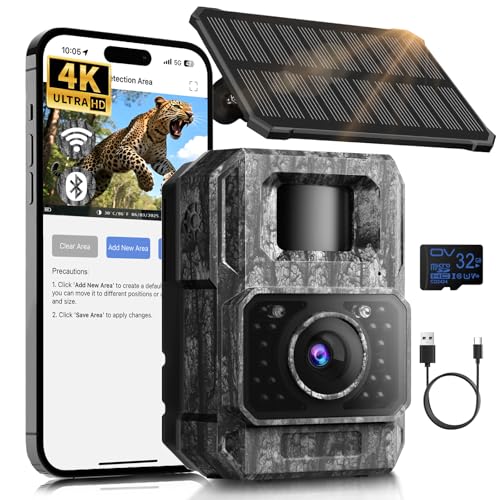
MAXDONE Solar Trail Camera — Best set-and-forget power
The MAXDONE attacks the garden camera’s oldest enemy: the dead battery discovered a week too late. Its solar panel keeps a 6000mAh built-in battery topped up, and in a garden — where the camera can be sited with a thought for the sun rather than hidden deep in a thicket — that pairing changes the ownership experience fundamentally. Weeks pass. The camera watches. You scroll through fox visits from the sofa via its WiFi or Bluetooth connection, pull the clips you love, and the battery simply never becomes your problem. For anyone who has ever climbed to a camera in the rain to find it died during the one interesting night of the month, this is the pick that ends that story.
The rest of the specification supports the headline act: 4K video, the class-typical advertised 64MP stills figure — interpolated, as this guide keeps insisting, and perfectly adequate for identifying your regulars — motion-activated night vision, IP66 weather sealing, and a 32GB card included so the camera works out of the box. Its garden fit is completed by placement freedom: freed from battery anxiety, you can mount it for the picture rather than for your convenience in reaching it, high on the shed gable watching the whole lawn, or deep in the hedge line where the animals actually travel.
- Power: solar-assisted 6000mAh battery
- Video: 4K; stills advertised in the 64MP class (interpolated)
- Retrieval: WiFi and Bluetooth to phone
- Sealing: IP66
- Included: 32GB card
Strengths
- Solar top-up makes battery life a background fact rather than a chore rota.
- Phone retrieval means the camera can live in awkward, animal-trusted corners.
- Card included and IP66 sealing make it a complete, weather-ready start.
Trade-offs
- A deeply shaded north-facing site starves the solar panel of its advantage.
- WiFi retrieval still means standing within range, not checking from holiday.
- Built-in battery designs trade field-swappable cells for that solar convenience.
Best for: gardeners who want the camera to simply always be watching. Not suited for: heavily shaded plots where the panel would rarely see direct sun.
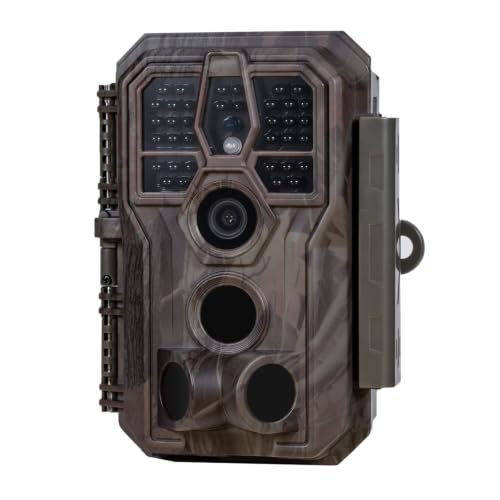
GardePro E5S — Best all-round garden camera
GardePro has built its reputation in the part of the trail-camera world that cares about the picture rather than the brochure, and the E5S is its garden case in one product: a trigger stated at 0.1 seconds, no-glow night vision stated to 100 feet, 1296P video with the detail that implies, and the advertised 64MP stills figure that this guide files, as ever, under interpolated marketing rather than sensor truth. What matters is what those first two numbers do in a garden. A tenth of a second is the difference between a fox photographed and a fox inferred; a hundred feet of invisible infrared is the whole lawn, lit, without a single visible blink.
The E5S is a non-cellular, card-based camera, and there is a discipline to that which many gardeners prefer: the weekly card swap becomes a small ritual, a walk down the garden with a mug in hand, and the photographs arrive in bulk like a developed film. Owners who keep a garden nature diary — and this camera encourages exactly that habit — will find the E5S the most satisfying partner here. It lacks the MAXDONE’s solar trick and the KJK’s phone link, but as a pure instrument for watching a garden thoroughly and reliably, it is the roundup’s centre of gravity.
- Trigger: 0.1s as stated
- Night vision: no-glow, stated to 100ft
- Video: 1296P HD; stills advertised in the 64MP class (interpolated)
- Connectivity: non-cellular, card-based
- Maker: GardePro
Strengths
- The joint-fastest trigger here catches animals mid-stride, not mid-exit.
- No-glow illumination covers a whole garden without disturbing it.
- Video resolution above the 1080p norm shows in fur and feather detail.
Trade-offs
- Card retrieval means visiting the camera; no phone shortcut exists.
- Battery power is conventional — stamina depends on your cell discipline.
- No solar option in this model for the truly forgetful owner.
Best for: serious garden watchers keeping a season-long record. Not suited for: owners who want photographs delivered to the sofa with no walk.
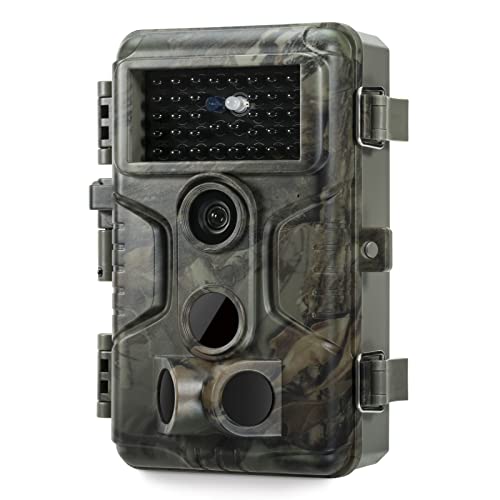
GardePro A3S — Best proven value
The A3 line has been the recommendation of patient trail-camera people for years, and the A3S carries the formula that earned that standing: the same 0.1s stated trigger and 100ft no-glow night vision as its E5S sibling, 1296P video — with sound, a detail worth pausing on — and the family stills figure in the advertised 64MP class, interpolated as always. Sound changes garden footage more than resolution does. The rustle of a hedgehog in dry leaves, the bark of a fox in January, owls arguing over the roof: an A3S by the fence records the garden’s audio life alongside its pictures, and owners consistently report the soundtrack becoming the part they share.
As the older, proven design, the A3S also carries the confidence of a long production life: mounts, cases, settings advice and troubleshooting lore exist in depth, because thousands of gardens and woodlots already run this camera. If the E5S is the roundup’s all-rounder, the A3S is its wise buy — the camera for the gardener who reads the small print, distrusts novelty, and wants the season’s story captured by a tool whose behaviour is known to the last menu screen.
- Trigger: 0.1s as stated
- Night vision: no-glow, stated to 100ft
- Video: 1296P HD with sound
- Stills: advertised 64MP class (interpolated)
- Connectivity: non-cellular, card-based
Strengths
- Sound recording adds the garden’s whole audio dimension to the record.
- A long-proven platform with deep owner knowledge behind it.
- Matches its sibling’s trigger and night range, the two garden-critical figures.
Trade-offs
- An older design language; no app retrieval or solar option.
- Card-swap routine required, like its sibling.
- Video tops out at 1296P where two rivals here offer 4K.
Best for: value-minded watchers who prize sound and a proven platform. Not suited for: buyers who want 4K video or phone-based retrieval.

KJK Trail Camera 4K — Best wide view
The KJK’s signature is breadth: a 130-degree field of view, the widest in this group, on a camera with 4K video, WiFi and Bluetooth retrieval, IP67 sealing and a 32GB card in the box. In garden geometry that width is a genuine strategy. A wide camera on the shed corner can hold the bird table, the lawn’s edge and the gap in the fence in a single frame — three storylines in one watch — where a narrower camera forces you to choose which one to follow. For small gardens especially, where the whole plot might be twelve metres long, one wide camera can do the work of two.
The stated trigger matches the GardePro pair at 0.1 seconds, and the night-vision array works in the same invisible spirit this guide demands for gardens. The advertised stills figure sits in the 64MP class, interpolated as this guide has explained, and the 4K video is the honest headline instead: motion is where garden stories live, and the KJK’s combination of width and resolution makes its clips the most cinematic here. Its sealing, at IP67, is the strongest rating in the roundup — a camera for the exposed fence line in a wet climate, not just the sheltered eave.
- Field of view: 130 degrees
- Video: 4K; stills advertised 64MP class (interpolated)
- Trigger: 0.1s as stated
- Retrieval: WiFi and Bluetooth
- Sealing: IP67; 32GB card included
Strengths
- The widest view here covers multiple garden storylines in one frame.
- 4K video plus phone retrieval is the most modern pairing in the group.
- IP67 sealing suits exposed, wet-climate mounting points.
Trade-offs
- Wide views shrink distant subjects; a small bird at the far fence stays small.
- App-based retrieval adds setup steps the card cameras avoid.
- Conventional battery power; no solar assistance on this model.
Best for: small gardens and wide lawns watched from a single corner. Not suited for: close-up portrait work on one distant feeding station.
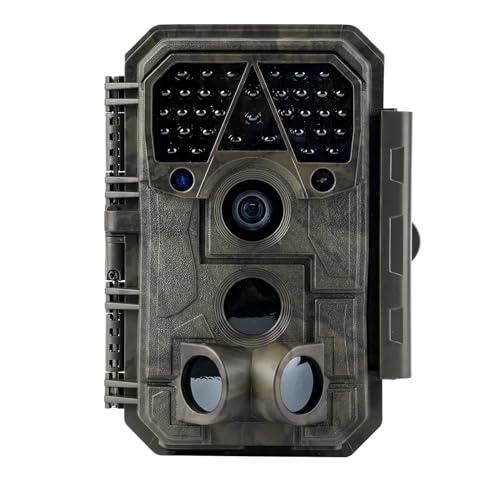
Meidase P70 — Best simple card-based camera
The P70 is the roundup’s argument for simplicity. It is non-cellular and non-WiFi by design, waterproof, motion-activated, and content to do one job — record the garden to a card — without apps, accounts or connections of any kind. Its stated figures sit in the family pattern: stills in the advertised 64MP class, interpolated as this guide has explained throughout, and 1296P video. What the P70 offers instead of connectivity is a particular peace of mind: nothing to pair, nothing to update, nothing to stop working because a phone changed its permissions.
There is also a privacy elegance to it that garden owners near neighbours appreciate. A camera that stores its pictures on a card inside itself, visible to nobody until you walk down and collect them, is a camera whose manners are beyond argument. Meidase’s garden following tends to be exactly the people who value that: allotment holders, rural gardeners, anyone whose relationship with technology is respectful but arm’s-length. If your ideal camera is the one you forget exists until the weekly card swap, the P70 was designed by people who understand you.
- Connectivity: none — non-cellular, non-WiFi by design
- Video: 1296P; stills advertised 64MP class (interpolated)
- Activation: motion-activated with night vision
- Build: waterproof trail camera body
- Retrieval: memory card only
Strengths
- Zero connectivity means zero setup friction and total retrieval privacy.
- A straightforward, waterproof build suited to allotments and rural plots.
- The card ritual suits gardeners who pass the camera daily anyway.
Trade-offs
- No way to check the camera without visiting it in person.
- A stolen camera takes its card and pictures with it.
- Fewer refinements than the GardePro pair at the same core job.
Best for: technology-minimal gardeners and allotment holders. Not suited for: owners who want to browse last night’s visitors from indoors.

WOSPORTS 64MP Trail Camera — Best screen-on-camera pick
The WOSPORTS makes its case with a feature the others mostly skip: a 2.0-inch LCD on the camera itself. That little screen changes the garden routine in a way that is easy to underestimate. You can frame the shot properly at setup — actually seeing that the bird table sits centre-frame rather than trusting and hoping — and you can review last night’s highlights standing in the garden, camera in hand, without a card reader, a phone pairing or a trip back indoors. For a camera mounted low by a pond or a feeding station, that immediacy is the whole ballgame.
Around the screen sits a competent specification: 4K video, the advertised 64MP stills figure — interpolated, as this guide states for every trail camera — no-glow night vision, a 120-degree view and a stated trigger of 0.2 seconds, a beat slower than the 0.1s trio but still quick enough for garden work, where subjects linger rather than sprint. It is a non-cellular, non-WiFi design, so its world is the garden itself: set it, check it on its own screen, swap its card when the season’s story needs archiving. As the roundup’s most tactile camera, it suits owners who like their gadgets self-contained.
- Screen: 2.0-inch LCD on the camera
- Video: 4K; stills advertised 64MP class (interpolated)
- Trigger: 0.2s as stated
- Field of view: 120 degrees
- Night vision: no-glow
Strengths
- On-camera screen makes framing and instant review effortless.
- 4K video and a wide 120-degree view in a self-contained body.
- No-glow night work keeps the garden’s trust intact.
Trade-offs
- A 0.2s trigger is the slowest here; fast crossings may clip a frame.
- Reviewing on a 2-inch screen is a highlight check, not detailed study.
- No phone retrieval; the camera must be visited like the card models.
Best for: hands-on gardeners who frame and review at the camera. Not suited for: distant mounting points where walking to check is a chore.
How Does the Garden’s Year Change What the Camera Sees?
Spring is emergence. The hedgehogs come out of hibernation thin and hungry, and a camera over a feeding station records the season’s first wobbly visits and the steady thickening that follows. Frogs return to the pond on mild, wet nights — pond-level cameras earn their keep in a fortnight — and the first youngsters of several species appear as the season turns: fox cubs above ground by late spring, tumbling in the exact corner of the lawn the camera has been watching, which is the moment a garden camera pays for itself in a single clip.
Summer is abundance and drought management. In a dry spell the pond and the water dish become the garden’s parliament, and a camera on the water films the queue: blackbirds at dawn, wasps at noon, hedgehogs at midnight, everyone negotiating. Long evenings mean the infrared hours shrink, and crepuscular colour footage — the fox crossing in golden light — becomes possible for the cameras with good daylight video, the KJK’s 4K especially. Summer is also when vegetation grows into every frame, so the monthly trim in front of the lens matters most exactly when the garden is most alive.
Autumn is fattening and farewell. Hedgehogs feed with an urgency the camera makes poignant, because weight gained now is survival later; swallows gather and go; the fox’s coat thickens visibly week by week in a way only a fixed camera, filming the same individual against the same fence, can show. Winter is the sparse, honest season: fewer visits, longer nights, batteries working hardest in the cold, and the infrared picture becoming the whole record. The cameras that shine in winter are the reliable ones — solar still helping on bright cold days for the MAXDONE, fresh cells in the card cameras — and the watcher who keeps the camera running through January owns the year’s complete story, including the badger’s snow prints filmed at 3 a.m. in an empty, white garden.
Where the Six Garden Cameras Stand, Side by Side
| Camera | Trigger (stated) | Night vision | Retrieval | Power character | Signature |
|---|---|---|---|---|---|
| MAXDONE Solar | Motion activated | Night vision array | WiFi and Bluetooth | Solar plus 6000mAh | Set-and-forget stamina |
| GardePro E5S | 0.1s | No-glow to 100ft | Card | Conventional cells | All-round picture quality |
| GardePro A3S | 0.1s | No-glow to 100ft | Card | Conventional cells | 1296P video with sound |
| KJK 4K | 0.1s | Night vision array | WiFi and Bluetooth | Conventional cells | 130-degree wide view, IP67 |
| Meidase P70 | Motion activated | Night vision array | Card only | Conventional cells | Deliberate simplicity |
| WOSPORTS | 0.2s | No-glow | Card, plus on-camera screen | Conventional cells | 2.0-inch review screen |
How Do You Mount a Camera So It Survives the Winter?
The strap that comes in the box is a beginning, not a destiny. On a tree or post it works well enough, but gardens offer better: a screw-in mount or a small bracket on the fence gives a firmer, more repeatable aim than webbing that slackens as it wets and dries, and firmness is framing — a camera that sags two degrees a week slowly re-aims itself at the soil. Whatever you use, mount the camera so its removal for the card swap does not disturb its aim: a bracket that stays, a camera that unclips. The WOSPORTS, checked on its own screen in place, disturbs least of all; the app models can be verified from the ground; the card cameras reward a mount with a memory.
Weather discipline is simple and total. Every camera here is sealed for outdoor life — IP66 on the MAXDONE, IP67 on the KJK, waterproof builds elsewhere — but seals age, and a camera mounted with its lens tilted slightly down sheds water instead of pooling it on the glass. Keep the solar panel of the MAXDONE wiped as you would a window; a leaf-pasted panel is a battery charger on strike. In frost, do not force a frozen strap or pry a stiff case with a screwdriver at midnight; bring the whole camera indoors, let it thaw, swap the card at the kitchen table, and remount it in the morning. Cameras forgive cold readily. They forgive impatience with cold much less.
Security of the camera itself deserves one thought in front gardens and allotments: a camera visible from the path should be a camera locked or at least cable-tied to something unhelpful to carry away, and the no-glow discretion of these models is again an asset, since a camera nobody notices at night is a camera nobody covets. The P70’s card-inside design means a stolen camera loses its archive too — one more reason allotment holders often favour a discreet mount and a camera whose absence would be noticed by its owner within a day.
Which Settings Should You Dial In on the First Evening?
Out of the box, most trail cameras default to a compromise that suits nobody’s garden, so spend ten minutes in the menus before the first night. Choose video over stills if your camera offers both and your curiosity is behavioural — gardens are theatres, and a ten or twenty-second clip tells a story a photograph only hints at — but choose stills in burst if card space or battery is tight, because a burst catches the stride a single frame misses. Set the trigger interval short for a busy feeding station and longer for a quiet crossing, so one lingering badger does not fill the card with four hundred portraits of itself, charming as the first dozen are.
Sensitivity is the setting that rewards experimentation. High sensitivity catches the field mouse and also every wind-blown branch; medium is the garden default that suits the GardePro pair and the P70 for most plots; low is for exposed, breezy sites where the vegetation will not sit still. Run the first week at medium, review what triggered, and adjust with evidence rather than theory. Timestamping should be on and the clock correct — half the value of the archive is knowing the fox comes at 23:40, and a camera whose clock drifted in October will lie to you charmingly all winter.
Night settings deserve a gentler hand than the maximums suggest. The strongest infrared illumination reaches furthest but can blow out a close subject to a white ghost — a real risk in gardens, where subjects pass at two metres, not twenty. If your model offers illumination strength, start in the middle. The WOSPORTS’ on-camera screen makes this calibration easy, since you can review tonight’s exposure standing at the camera tomorrow; app models let you judge from the sofa; card models ask for one iteration of patience. Two evenings of adjustment, done once, pay for a season of well-exposed regulars.
How Do You Place a Garden Camera So Animals Keep Coming?
Placement is a negotiation with the animals, conducted in scent and sightlines. Start by reading the garden as they do: the gap under the fence, the run along the hedge base, the worn path through the flower bed you had blamed on the wind. Mount the camera low — knee to waist height suits most garden mammals — angled slightly down at the crossing point, three to five metres back from where the action happens. That distance fills the frame without triggering the camera on every passing moth, and it sits inside the strongest part of any of these cameras’ night illumination.
Face the camera north where you can, so dawn and dusk sun never blast straight into the lens and white out the crepuscular hours when gardens are busiest. Clear the metre in front of it of the grass stems and loose leaves that wave in wind and fill cards with empty triggers; a garden camera’s commonest enemy is not weather but vegetation doing a convincing impression of an animal. Then be patient in a specific way: leave a new camera alone for a week before judging its spot. Animals inspect new objects, route around them, and then — if the camera is quiet, dark and scent-faded — incorporate them into the furniture of the night. The second week’s pictures are the honest ones.
Height and angle deserve one experiment each. A camera at pond level films frogs, drinking birds and hedgehogs at their own eye line, and the resulting footage has an intimacy that fence-top angles never achieve. A camera high on the shed, like the wide KJK looking down the lawn, maps routes and relationships — who follows whom, which corner the fox checks first. Many two-camera gardens run one of each, which is a legitimate strategy the encrypted-monitor crowd would recognise from our guide to the best encrypted baby cameras: different vantage points answer different questions, indoors and out.
Can You Learn to Recognise Individual Animals on Camera?
Yes, and it is the deepest pleasure this hobby offers. Individuals announce themselves in the details a season of footage reveals: the fox with the kinked tail tip, the badger whose left ear folds, the hedgehog that always arrives from the compost corner and always leaves by the gate. Resolution matters less here than consistency — the same camera, in the same spot, filming the same routes — which is why this guide keeps steering you toward patience with placement. A wandering camera collects strangers; a settled camera builds a cast.
Keeping a light-touch diary multiplies the effect. Note the first hedgehog of spring, the last before hibernation, the cubs’ debut, the night the owl took the mouse on the lawn. The A3S’s sound recording adds signatures of its own — one fox’s bark is not another’s — and the diarist who pairs clips with dates ends the year owning something no single photograph can be: a biography of a garden. Citizen-science projects welcome exactly this kind of record, and several of the species a garden camera films are species whose numbers conservationists genuinely need help counting. Your fence-post camera, diligently kept, is data.
There is a discipline of kindness inside this, too. A feeding station filmed nightly should be a supplement, not a dependency — varied, modest, cleaned regularly — and a camera should never become a reason to lure animals into a road’s path or a neighbour’s dog’s territory. Watch, record, learn, and let the garden’s residents remain wild tenants rather than performers; the footage is better for it, because unselfconscious animals doing ordinary things at 2 a.m. are the entire charm of the genre.
Which Garden Camera Habits Waste Cards and Miss Animals?
The classic error is aiming at the view you enjoy rather than the route the animals use — a beautiful frame of the whole lawn in which a hedgehog occupies eleven pixels. Get close, get low, aim at crossings. The second error is impatience with placement: moving the camera every two nights resets the animals’ acceptance each time, so the camera photographs a garden of suspicious, camera-shy wildlife forever. Give a spot a week. The third error is ignoring the trigger’s blind spots — mounting so high that a hedgehog passes beneath the detection zone, or so close to a wall that infrared bounces back and whites out the frame.
Battery neglect is the fourth, and the MAXDONE’s solar design exists because of it; card-based owners should build the swap-and-check into an existing garden round rather than relying on memory. Fifth is the visible-light mistake in reverse: assuming no-glow means no consideration. A camera is still a new object with a human scent and a faint electronic presence; gloves when handling it and a settled position respect the animals’ caution. Sixth, and most human, is never reviewing the archive. A season of garden footage, skimmed monthly, teaches you your own plot’s ecology — the week the youngsters emerged, the night the badger and the fox negotiated the lawn — and that knowledge, not any single clip, is what the camera was for.
What About Neighbours, Privacy and the Law of the Fence Line?
A garden camera points at your garden, but its edges may catch a neighbour’s path, a shared alley or the pavement beyond the fence, and good manners — in many places, data-protection law as well — ask for care. Angle the camera into your own plot, use any masking or privacy-zone settings the model offers, and tell the neighbours what the camera is for; most, on hearing it films hedgehogs, will ask to see the fox clips. The no-glow discretion of every pick here helps: a camera that never flashes and never announces itself is a camera that stays a wildlife tool rather than becoming a neighbourhood topic.
The retrieval method has a privacy dimension of its own. The Meidase P70’s card-only design keeps every image inside the camera until you collect it — nothing transmitted, nothing uploaded. The WiFi models keep their traffic local to your phone at the fence, not in a cloud account. None of the six requires an account with a distant server to function, which in this category is a quiet virtue worth valuing: the garden’s night life is your business, and these cameras, properly set up, keep it that way.
Finally, share footage with a thought for the animals. Exact locations of sensitive species — a badger sett entrance, a nesting site — are information poachers and the merely careless can misuse. Post the fox, by all means; keep the sett’s address to yourself. The watcher’s ethic is simple: the camera reveals the garden to you, and in return you keep the garden’s secrets from everyone the revelation might harm.
What Does a Season of Footage Teach You About Helping Wildlife?
The camera starts as entertainment and ends as instruction. A summer of clips shows you exactly where animals drink, and a shallow dish added at that spot — filmed filling with birds the next dawn — is help aimed by evidence rather than guesswork. Autumn footage of a thin hedgehog argues for the feeding station and, if an individual looks truly poor, a call to a local rescue while intervention can still work. Winter clips of birds queuing at a frozen pond make the case for the daily ice-breaking ritual more eloquently than any article.
It also teaches restraint. The camera reveals how much of the garden’s night traffic uses the messy corners — the log pile, the untrimmed hedge base, the leaf litter under the shrubs — and a gardener who has watched a hedgehog hunt through leaf litter for twenty minutes stops tidying that corner with quite the same zeal. Wildlife gardening stops being a style and becomes a set of decisions your own footage justifies. That feedback loop, camera to conscience and back, is the deepest reason this category has grown from a hunting accessory into a household instrument, and it is available from every pick in this guide, from the solar MAXDONE watching for months unattended to the humble P70 waiting for its weekly card swap.
Should a Keen Garden Run Two Cameras?
Eventually, many do — and the six picks here pair naturally. The classic combination is one storyteller and one sentinel: a GardePro by the feeding station or pond, filming the cast at close range, and a wide KJK or the solar MAXDONE covering the lawn’s routes from the shed. The close camera gives you faces; the wide camera gives you plot. When the wide shot shows the fox arriving at 23:40 and leaving by the gate at 23:52, and the close camera holds what it did at the pond in between, you own an edited film of the night rather than a pile of clips.
Budget the second camera the way you would any garden tool: after the first has proven the hobby. A season with one well-placed camera tells you where the second belongs — the corner the first camera’s footage keeps gesturing toward, the route whose beginning you see but never its end. Buy the second for that specific gap, not from general enthusiasm, and the pair will feel designed rather than accumulated. And involve the household: children who check the WOSPORTS’ little screen on a Saturday morning, grandparents sent the week’s best clip, a neighbour drawn into the fox’s story — a garden camera’s audience is part of its yield, and the cameras here, from solar to screen-backed, each give that audience a slightly different way in.
Which Pick Suits a Small Urban Garden, a Suburban Plot and a Rural Acre?
The small urban garden is a study in closeness. Distances are short, walls bounce infrared, and the cast is intimate: mice, rats where they live, hedgehogs on their rounds, foxes that treat fences as suggestions, birds in numbers. The WOSPORTS earns a special mention here — its on-camera screen suits a camera you pass daily at arm’s length, and its wide view holds a whole courtyard plot — while the KJK’s 130 degrees can genuinely cover a small garden entire from one corner. Modesty of illumination matters most in town: a close-range subject lit by a strong array whites out, so start the night settings low, and value the neighbourly invisibility of no-glow above every other figure on the box.
The suburban plot is the category’s heartland and the E5S’s natural home: lawns big enough for routes, fences with gaps, a shed for mounting, a pond if fortune smiles. This is the garden where the longitudinal story runs richest — the same fox for three years, cubs in the same corner each May — and where the card-swap ritual fits the rhythm of weekend gardening. Suburban owners adding a second camera should put the MAXDONE’s solar stamina on the far, rarely visited boundary, where its forgettability solves the one problem distance creates.
The rural garden and the allotment invert the priorities again. Distances grow, visits from the owner shrink, and weather arrives unfiltered. Stamina and sealing lead: the MAXDONE where sun reaches, the IP67 KJK where the rain drives sideways, the P70 where simplicity and privacy rule a shared allotment site. Rural casts are wilder — deer at the fence, badgers in force, perhaps martens or otters near water — and triggers earn their keep at crossings you cannot watch from any window. In every setting the principle survives translation: place for the animals’ routes, power for your own habits, and retrieval for the distance you will actually walk in February.
Final Recommendation
For most gardens, start with the GardePro E5S: its trigger, its invisible night range and its picture quality define the centre of this category, and a season with it will teach you what your garden actually does at night. Choose the MAXDONE instead if your honest weakness is battery discipline — its solar stamina forgives it completely. Take the A3S for sound and proven value, the KJK for a small garden one wide eye can hold, the P70 for principled simplicity, and the WOSPORTS if you want to frame and review at the camera itself. But whichever you mount, give it the gardener’s virtues: a considered spot, a week’s patience, and a season’s attention. The garden you thought you knew is about to introduce you to its night shift, and the regulars — the punctual fox, the methodical hedgehog, the badger with the torn ear you will come to recognise on sight — are worth every frame of the introduction.
A final word on expectations, because gardens reward the calibrated kind. Your first week will include empty triggers, a cat you did not know visited, and probably one tantalising half-animal at the frame’s edge. Your first month will include a moment — the cubs, the owl, the badger in the snow — that rearranges your sense of where you live. Both weeks are the hobby working as intended. Buy the camera whose routine you will actually keep, mount it where the animals already go, and let the garden make its introductions at its own pace; it has been rehearsing them, nightly and unwatched, for as long as you have lived there.
Frequently Asked Questions
Will a trail camera scare the wildlife in my garden?
A no-glow camera, settled in place, rarely does. The infrared on every pick here is invisible to animals and people, there is no flash of white light, and after an inspection period most garden mammals treat the camera as furniture. Visible low-glow arrays and constant repositioning are what disturb animals — both are avoidable, and this guide’s pool avoids the first by design.
Are the 64MP photographs really 64 megapixels?
No. Trail-camera megapixel figures are produced by interpolation — software enlargement from a much smaller native sensor. The resulting images are detailed enough to identify species and individuals, which is the garden requirement, but the figure should never be compared with a conventional camera’s native resolution or used as the reason to buy.
Do I need a cellular camera for a garden?
Almost never. Cellular makes sense for remote land you visit monthly. A garden camera is steps from your door, and two picks here — the MAXDONE and the KJK — offer WiFi or Bluetooth retrieval for the walk-to-the-fence distance involved. The rest use the perfectly serviceable card swap. Save the subscription.
How long will the batteries last?
It depends on trigger traffic, night activity and temperature, but garden cameras are among the most frugal devices made, sipping power between motion events. The MAXDONE’s solar-assisted 6000mAh battery stretches intervals the furthest. For the cell-powered models, a monthly check rhythm — combined with the card swap — prevents the dead-camera discovery entirely.
Where is the single best spot in a typical garden?
The crossing point where a fence gap, hedge line or path meets a resource — water, food, shelter. Mount low, a few metres back, facing along the route rather than at the view, and give the spot a full week before judging it. A pond edge at animal eye level is the other classic, and the most charming footage in most gardens comes from it.
Can I use one of these as a security camera too?
As a wildlife-first deterrent and witness, yes — several owners do exactly that, and the no-glow discretion helps. But a trail camera is a motion-triggered recorder, not a live-view security system; for sheds and outbuildings as the primary job, compare the dedicated options in our barn and outdoor security guides, starting with the best affordable outdoor security cameras.
If the budget stretches to only one decision this season, make it the decision to start. A mid-priced camera mounted this week, imperfectly placed and patiently left alone, will teach you more about your garden by spring than a year of deliberation over the perfect model — and every lesson it teaches transfers intact when you upgrade, because routes, seasons and regulars do not change when the hardware does. The night shift is already on duty; all that is missing is your witness.
Mount it this weekend. The animals will need their week to forgive the new object on the fence, and every week of delay is a week of the garden’s story told without you — the season does not rerun its best scenes for latecomers, and the cubs, when they come, come once.
And if the first fortnight brings only the neighbour’s cat, take heart: the cat is the garden’s most honest reviewer, visiting everything, trusting slowly — when the cat relaxes in front of your lens, the wildlife is not far behind, and the night the fox first crosses your frame you will understand why nobody who starts this hobby ever quite stops, season after season, year after year.
Related Guides
Watchers whose gardens host smaller, quicker visitors should also read the best cameras to watch your pets and the best affordable trail cameras roundups.
Two watching posts are better than one, outdoors and in; our guide to the best baby monitor with 2 cameras makes the same argument for the nursery.
The same trail-camera patience, pointed at the reef instead of the lawn, is what our guide to the best underwater cameras scuba is built around.


