What's inside
- Key Takeaways
- Quick Picks
- How Did We Judge Speakers Against a Frame Instead of a Price?
- The Six Picks in Detail
- Comparison Table
- Why Are the Best 50 Dollar 6×9 Speakers Easier to Find Than Most Budget Buys?
- What Does the Budget Frame Honestly Not Buy?
- Where Do Budget 6×9 Speakers Live, and Does It Matter?
- How Do You Fit 6x9s Without Spending the Savings?
- What Mistakes Do Budget 6×9 Buyers Make?
- How Should You Set Expectations for the First Month?
- How Do You Compare Two Budget 6x9s When You Cannot Hear Either?
- What Happens When a Budget Speaker Fails?
- How Does the Front Stage Change the Budget Calculation?
- What About Used and Open-Box 6x9s at This Tier?
- How Long Should a Frame-Budget 6×9 Last?
- Why Does This Guide Spend So Long on Classes It Cannot Link?
- How Do You Get the Most From Frame Speakers You Already Bought?
- What Should Gift Buyers and Parents Know?
- How Does Climate Rewrite the Frame’s Arithmetic?
- What Is the Upgrade Path From a Frame System?
- How Do You Read a Budget Listing’s Photographs?
- What Role Does the Rear Window Play in Deck Sound?
- When Is the Frame the Wrong Tool Entirely?
- How Should You Split a Frame Budget Between Two Cars?
- A Short Defence of the Humble Budget Speaker
- What Does a Week-One Checklist Look Like at This Tier?
- Final Recommendation
- Frequently Asked Questions
- Related Guides
As an Amazon Associate I earn from qualifying purchases. This post may contain affiliate links at no extra cost to you.
gizmoverdict.com is reader-supported. When you buy through links on our site, we may earn an affiliate commission.
Where to buy: Links to pool-verified listings sit under three picks below; three more are prose-only class recommendations. One rule governs the page, stated now and kept throughout: no product prices are printed anywhere in this guide. The figure in the keyword is a budget frame, not a price tag — picks are described by their position relative to that frame in qualitative terms only. Check the linked listings for current figures.
The search for the best 50 dollar 6×9 speakers is really a search for honesty about what a strict budget buys in the most forgiving size in car audio. The 6×9 format — the big oval that has filled rear decks for half a century — is a gift to the budget buyer: its large cone area produces real volume and genuine midbass from very little power and very simple engineering, which means the cheap end of this size class is far more musical than the cheap end of almost any other. A modest 6×9, decently made, will embarrass a costly small speaker on loudness and low-end ease. That is the good news, and it is considerable — it means this keyword, unlike most budget keywords in audio, does not require its readers to choose between a speaker that works and a speaker they can afford, because at this size the affordable ones genuinely work, and the guide’s task is refinement of choice rather than rescue from it.
The harder news is about what the budget frame cannot buy, and this guide will not pretend otherwise. At the strict end of the frame, the sacrifices live in refinement: treble that can turn coarse, cones and surrounds built to a price, terminals and baskets that assume a gentle life, and quality control that varies between examples of the same model. The art of shopping this keyword is knowing which of those sacrifices your listening will actually notice — in a rear deck, at cruising noise, behind the front seats, many of them vanish — and which will follow you home. The picks below are arranged to make that judgement easy: two verified Kicker options at or near the frame, one verified Kenwood clearly labelled as sitting above it for buyers who can stretch, and three prose-only picks describing the true budget classes, Boss and Pyle territory, with their trade-offs stated as plainly as their virtues and their buying hygiene taught rather than assumed.
Positioning language in this guide is deliberate, and it is worth a moment of the reader’s trust, because every other page competing for this keyword will make its own quieter choices about how to talk around money. “Near the frame” means a pick lives in the budget’s neighbourhood as this guide was assembled; listings drift, and the frame in the keyword is a planning tool, not a promise extracted from any seller. “Above the frame” means the pick asks more than the keyword’s budget and is included only because some readers arrive with a flexible ceiling and deserve to know what the stretch buys. No pick is described with a number attached, because a printed figure would be stale before the season turned — the frame is yours to apply at the listing, today, with your own eyes. That discipline also protects the comparison itself: a guide that ranks by a figure captured on one afternoon teaches its readers to shop by archaeology, while a guide that ranks by position, role and construction teaches a method that still works next year, when the listings have drifted and the frame in the keyword is the only number that has not moved.
Key Takeaways
- No prices are printed in this guide — the keyword’s figure is a budget frame, and every pick is positioned relative to it in words, not numbers.
- The 6×9 format is the budget buyer’s friend: big cone area means real volume and midbass from simple, inexpensive engineering.
- Kicker’s DSC6930 sits near the frame as the value anchor; the Kicker CS Series 6×9 is the near-frame step in refinement — listed under that title, with no model code claimed beyond it.
- Kenwood’s KFC-6996PS is labelled above the frame throughout: it is the stretch pick, included for flexible budgets only.
- Three prose-only picks map the true budget classes — Boss-class, Pyle-class and the high-way-count value class — with their compromises stated openly.
Quick Picks
| Pick | Badge | Why it earns its place |
|---|---|---|
| Kicker DSC6930 6×9-Inch 3-Way Speakers | Near the frame — the value anchor | Kicker’s DS-series oval brings the brand’s warm, full voicing to the budget frame, with 3-way coverage for rear-deck duty. |
| Kicker CS Series 6×9 Coaxial Speakers | Near the frame — the refinement step | Listed simply as Kicker’s CS Series 6×9 pair; the CS line’s control and composure for buyers staying close to the frame. |
| Kenwood KFC-6996PS 6×9-Inch Speakers | Above the frame — the stretch pick | A 5-way Kenwood from the PS stable for readers whose budget flexes; labelled above-frame everywhere it appears in this guide. |
| Boss-class budget 6×9 speakers (prose-only) | True budget class — no verified listing | The volume-per-money champions of the class, with the class’s compromises described without varnish. |
| Pyle-class budget 6×9 speakers (prose-only) | True budget class — no verified listing | The other great budget badge, strongest where choice and availability matter more than refinement. |
| High-way-count value 6×9 class (prose-only) | True budget class — no verified listing | The 4-way and 5-way value designs whose extra drivers promise more than physics delivers — read before buying the count. |
How Did We Judge Speakers Against a Frame Instead of a Price?
By position and by role rather than by figures. Each verified pick was placed relative to the keyword’s budget frame as the pool was assembled — near it, or clearly above it — and that placement is printed in its badge, its section and its verdict, so no reader mistakes the stretch pick for a budget pick. Within the frame, judgement ran on the things budget buyers actually live with: output per watt, because budget systems run on factory power; midbass honesty, because the 6×9’s cone is the whole point of the size; build that survives a rear deck’s heat and sun; and a voicing forgiving enough for the mixed, compressed, real-world audio that budget systems play.
The prose-only classes were held to a different duty: not recommendation of a listing, but an honest map of the territory where most strict-budget shopping actually happens, including the compromises that listings in that territory prefer not to headline. A guide that only blessed the verified three would abandon the very readers the keyword describes — the owners counting a repair bill against a stereo bill, the parents equipping a first car, the drivers of work vehicles whose radios are their only company across long counties of road. Serving those readers honestly, at their frame, with their compromises named and their options mapped, is not a lesser form of the guide-writer’s job; on the evidence of how cars are actually used, it is the job’s centre of gravity.
The Six Picks in Detail

Kicker DSC6930 6×9-Inch 3-Way Speakers — Near the frame: the value anchor
The DSC6930 is what the budget frame looks like when a serious brand builds to it. As a 3-way design it covers the range with a large oval woofer for the low end and dedicated drivers above it, and Kicker voices the DS series the way it voices everything — warm, full, and friendly to the factory radios that will power most of these. On a rear deck, which is where budget 6x9s overwhelmingly live, that recipe is close to ideal: the cabin fills, the low end arrives with genuine body thanks to the big cone, and the front passengers hear a system that sounds larger than its budget from every seat.
Judge it by budget standards and it shines; judge it by flagship standards and you will find the usual frame taxes — treble that is present rather than polished, and a presentation that favours energy over analysis. In its actual habitat those taxes are nearly invisible: road noise edits out fine detail long before the speaker does, and rear-deck duty asks for body and reliability far more than for the last degree of refinement. For a strict-frame buyer who wants a brand with a reputation to protect standing behind the product, this is the anchor pick of the page.
- Format: 6×9-inch (160x230mm) 3-way coaxial pair
- Position vs frame: near the frame — the guide’s verified value anchor
- Impedance: 4-ohm, per the verified listing
- Series character: DS — the value end of Kicker’s house, tuned warm and easygoing
- Best habitat: rear decks and rear locations on factory power
Strengths
- A real brand’s engineering and consistency at the budget frame’s address
- Big-cone ease — volume and midbass without amplification or effort
- Warm voicing that flatters the compressed, everyday audio budget systems play
Trade-offs
- Treble polish is budget-grade; detail hunters will hear the ceiling
- 3-way coverage at this tier is about breadth, not finesse
- Rear-deck sun and heat will age it like any speaker in this class
Best for: strict-frame buyers who want the safest pair of hands in the budget class. Not suited for: listeners building a refined front stage, where the frame itself is the wrong starting point.
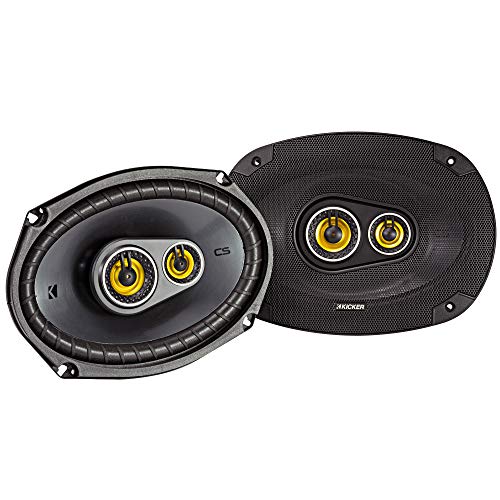
Kicker CS Series 6×9 Coaxial Speakers — Near the frame: the refinement step
A naming note first, because precision is this guide’s habit: the verified listing for this pick titles it simply as Kicker’s CS Series 6×9 coaxial pair, without printing a model code, so this guide calls it exactly that and claims no code beyond the title. What the CS badge does tell you is where it sits in Kicker’s own house — a step above the DS line in cone and motor refinement — and that step is audible in the ways budget systems benefit from most: cleaner output as volume rises, midbass with better definition, and a top end that stays composed when the road gets loud and the dial follows it.
Relative to the frame, this pick lives in the same near-frame neighbourhood as its DS sibling while asking the modest premium that Kicker’s internal ladder always asks — the classic budget dilemma in miniature. The honest counsel: if the speakers are going somewhere your ears live — front doors in the few cars that take 6x9s there, or a rear deck in a quiet car you keep — the CS step is the better spend. If they are going under a parcel shelf in a workhorse, the DS anchor delivers most of the joy and the difference funds the fitting kit. Either way, you are choosing between two verified Kickers, which is the happiest problem this keyword offers.
- Format: 6×9-inch coaxial pair, CS Series
- Position vs frame: near the frame, at the refinement end of it
- Naming: listed as “Kicker CS Series 6×9” — the listing title prints no model code, and none is claimed here
- Series character: CS — control and composure above the DS tier
- Best habitat: quieter cars, keeper cars, front 6×9 locations where fitted
Strengths
- CS-line composure at volume, where budget speakers usually unravel
- Better-defined midbass for listeners who follow bass lines
- Same forgiving, factory-friendly nature as the DS anchor
Trade-offs
- Asks the ladder premium over the DSC6930 for gains some habitats cannot reveal
- Still a budget-frame speaker — refinement is relative, not absolute
- The listing’s title-only naming means checking the box contents carefully on arrival
Best for: near-frame buyers whose ears live near the speakers. Not suited for: hidden rear-deck duty in noisy cars, where the DS anchor’s value rules.
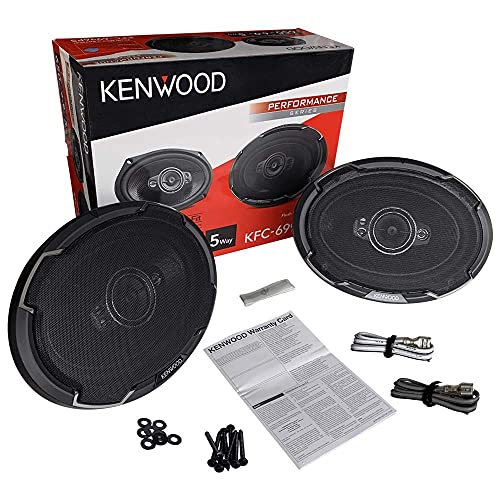
Kenwood KFC-6996PS 6×9-Inch Speakers — Above the frame: the stretch pick
The label leads, as it must in a budget guide: the KFC-6996PS sits above this keyword’s frame. It is included because a real slice of this keyword’s readers have a soft ceiling — a frame they would prefer to meet but will cross for a clearly better product — and they deserve a verified destination for that stretch rather than a shrug. The Kenwood is a 5-way design from the PS stable, which means a large oval woofer supported by an array of smaller drivers covering the midrange and treble in slices. Kenwood’s tuning is even-handed, the build is a visible step above the frame’s neighbourhood, and the whole product feels like what it is: the first rung of the serious ladder.
What does the stretch actually buy? Composure, chiefly — output that stays organised at volumes where frame speakers harden — plus broader, smoother coverage from the multi-driver array, and materials that promise a longer life on a sun-beaten deck. What it does not buy is a different category of experience: the cone is the same size, the physics the same physics, and a strict-frame buyer who cannot stretch loses refinement, not music. Read this pick as the guide’s controlled experiment — the clearest available statement of what one step above the frame is worth — and decide with your own ceiling, honestly stated, whether the experiment is yours to run.
- Format: 6×9-inch 5-way coaxial pair
- Position vs frame: ABOVE the frame — the stretch pick, labelled as such throughout
- Series character: PS — Kenwood’s mainstream performance line
- Coverage: multi-driver array for broad midrange and treble coverage
- Best habitat: keeper cars whose owners can flex the budget once
Strengths
- Composure and coverage a clear class above the frame’s neighbourhood
- Build quality that promises a longer rear-deck life
- The honest benchmark for what stretching the budget buys in this size
Trade-offs
- It breaks the frame — strict-budget readers should pass it by, as labelled
- 5-way complexity at any tier is coverage engineering, not magic
- Its advantages shrink in noisy cars and hidden locations
Best for: flexible budgets wanting the verified step up. Not suited for: the strict frame this keyword names — the two Kickers and the classes below exist for you.
Boss-Class Budget 6×9 Speakers (Prose-Only) — The volume-per-money champions
Now the territory where strict budgets actually shop. The Boss class of 6×9 speakers built its empire on one proposition: maximum apparent speaker — big oval, multiple drivers, dramatic wattage claims — for the least money in the shop. This pick describes that class without a link, because the pool’s verification never landed on an example of it, and because class-level honesty serves the buyer better than a pretend listing. The proposition is not fraudulent, exactly: these speakers play loudly, fill a cabin, and survive in cars whose owners ask for presence rather than polish. In a noisy work truck or a first car, that presence is a legitimate form of success.
The compromises, stated as the class deserves: the wattage figures printed on this class’s boxes belong to marketing rather than engineering, so judge by sensitivity and by ear; the treble can be coarse and the midrange congested when several voices compete; and consistency between examples varies, making the seller’s returns policy part of the product. Buy the class knowingly — as the loud, cheap, cheerful consumable it is — and it delivers its promise. Buy it believing the box’s arithmetic, and disappointment is scheduled. The class’s true rival is not the Kenwood above; it is the verified DSC6930, whose brand discipline is what the frame’s small premium purchases.
- Format: budget 6×9 multi-way coaxial class
- Position vs frame: the heart of the frame — the strict-budget class
- Listing status: a class portrait, not a linked product — nothing in the pool verifies it
- Shopping tests: sensitivity over wattage claims; seller returns; sample consistency
- Best habitat: work vehicles, first cars, presence-over-polish briefs
Strengths
- The loudest, fullest sound available at the strictest end of the frame
- Ubiquitous availability through every channel a budget buyer uses
- Cheap enough that replacement is a shrug, not a savings plan
Trade-offs
- Printed power figures are fiction — the class’s open secret
- Coarse treble and congested midrange under complex material
- Example-to-example consistency varies; buy where returns are easy
Best for: strict budgets prioritising volume and presence. Not suited for: quiet cars and careful listeners, who will hear every compromise daily.
Pyle-Class Budget 6×9 Speakers (Prose-Only) — The other great budget badge
The Pyle class is the budget world’s other institution: an enormous catalogue, a model for every conceivable oval, and availability that reaches places the bigger brands never ship to. In 6×9 form the class offers the same essential bargain as its Boss-class rival — big cone, lively output, minimal money — with its own flavour: a slightly softer presentation in many examples, and a range so wide that the real skill lies in choosing within it. This pick is prose-only for the standing reason — no verified listing in this batch’s pool — and the guidance is therefore about navigating the class rather than blessing a box.
Navigate it by specification hygiene. Prefer the examples whose listings state sensitivity and honest construction details over those leading with wattage theatre; prefer sellers who publish dimensions and templates, because budget ovals vary in their cut-outs more than the size name suggests; and expect the class’s standard taxes — treble simplicity, surround longevity measured in seasons of sun, and grilles that are styling first and protection second. For a car whose stereo budget competes with its repair budget, a wisely chosen example of this class is not a compromise to apologise for; it is the rational allocation, and it will make music for years while the perfect remains unaffordable.
- Format: budget 6×9 coaxial class, wide model range
- Position vs frame: squarely within the frame
- Listing status: prose-only by design — the pool contains no listing to attach
- Shopping tests: published dimensions, sensitivity stated, seller credibility
- Best habitat: cars where the stereo budget queues behind the repair budget
Strengths
- Availability and range that reach buyers other brands never serve
- The essential 6×9 bargain — size, output, ease — at frame prices
- A softer class voicing that some ears prefer to its rival’s edge
Trade-offs
- Range width is a maze; the class’s best and worst wear similar badges
- Longevity under deck sun is the class’s known tax
- Specification theatre requires the hygiene described above
Best for: pragmatic buyers who will shop the class carefully. Not suited for: buyers wanting a single verified answer — that is the DSC6930’s job on this page.
High-Way-Count Value 6×9 Class (Prose-Only) — Read the driver count sceptically
The final prose-only pick is a class defined by a number: the 4-way and 5-way value 6x9s whose boxes count drivers like achievements. The scepticism this guide applies is simple physics — in a coaxial oval, the woofer does the overwhelming majority of the work, and each additional tiny driver subdivides the treble rather than multiplying the music. A well-executed 2-way or 3-way (the DSC6930 is the page’s example) routinely outperforms a chaotic 5-way at the same money, because its budget went into one good tweeter instead of three decorative ones. The Kenwood above shows the count done by a serious brand; the value class too often shows it done by a spreadsheet.
None of this makes the class unbuyable — it makes it a class to buy by ear and by construction rather than by arithmetic. If an example sounds clean at your volume, seals well, and comes from a seller who will take it back, its way-count is a harmless eccentricity. But let the count never be the reason: in this size, money spent on cone quality, sensitivity and build returns music, while money spent on driver census returns a number for the box. That distinction, learned once, will serve you in every speaker aisle you ever walk down, at every budget you ever shop with.
- Format: budget 6×9 class marketed on 4-way and 5-way driver counts
- Position vs frame: within the frame, priced on the count
- Listing status: described, not linked — no pool-verified example exists for it
- Shopping tests: judge by ear and build; ignore the census; verify returns
- Best habitat: buyers who audition first and count never
Strengths
- Broad on-paper coverage can suit listeners who like a busy top end
- Aggressive pricing within the frame, driven by the count competition
- Harmless when bought by ear from a return-friendly seller
Trade-offs
- The driver count is marketing arithmetic, not an engineering result
- Budget spread across many small drivers starves the one that matters
- Crossover simplicity in this class can leave the array sounding disjointed
Best for: audition-led buyers immune to box arithmetic. Not suited for: anyone shopping by specification tables alone.
Comparison Table
| Pick | Position vs the budget frame | Format | Character | Choose it when |
|---|---|---|---|---|
| Kicker DSC6930 | Near the frame | 6×9 3-way, verified link | Warm, full, dependable | You want the branded value anchor |
| Kicker CS Series 6×9 | Near the frame, refinement end | 6×9 coaxial, verified link | Controlled, composed | Your ears live near the speakers |
| Kenwood KFC-6996PS | ABOVE the frame | 6×9 5-way, verified link | Even, broad, serious | Your ceiling flexes for quality |
| Boss-class 6×9 | Heart of the frame | Budget class, prose-only | Loud, present, coarse | Volume per money rules |
| Pyle-class 6×9 | Within the frame | Budget class, prose-only | Available, softer, varied | You will shop the range carefully |
| High-way-count class | Within the frame | Budget class, prose-only | Busy, variable | You buy by ear, never by count |
Why Are the Best 50 Dollar 6×9 Speakers Easier to Find Than Most Budget Buys?
Geometry again, working this time in the buyer’s favour. The oval’s cone area rivals much larger round speakers, so it moves serious air with modest excursion — and modest excursion is exactly what inexpensive motors and cones can deliver without distress. Sensitivity follows the same logic: big area converts watts to volume efficiently, which is why frame-budget 6x9s on factory power routinely outplay premium small speakers in the loudness-and-fullness contest that dominates real car listening. The size also lives in forgiving locations — rear decks with the whole boot as a rough enclosure behind them — where its output blooms. No other common size lets so little money sound like so much speaker, which is why this keyword, alone among budget keywords, can be answered with genuine enthusiasm.
What Does the Budget Frame Honestly Not Buy?
Refinement, longevity and consistency — the three taxes, named. Refinement: the fine structure of treble and the separation of dense midrange passages are engineered with money, and at the frame they are simplified. Longevity: surrounds, cones and terminals built to a price age faster under a rear deck’s ultraviolet furnace, so frame speakers are semi-consumables in a way the stretch pick resists. Consistency: quality control is a budget line too, and the prose-only classes vary between examples in a way the verified brands work to prevent. None of these taxes is hidden in this guide, and none is fatal — they are simply the frame’s terms, and a buyer who accepts them knowingly, for a car whose use matches them, has made a good bargain rather than a cheap mistake.
Where Do Budget 6×9 Speakers Live, and Does It Matter?
Overwhelmingly on rear decks, and the location is the budget’s silent ally. Deck speakers serve passengers and cabin-fill more than critical listening; their output reflects off the rear glass into the cabin; and the driver’s ear, metres away and facing forward, receives their contribution as body rather than detail. That is why frame speakers satisfy so completely in situ while disappointing on a demo board: the job description forgives their taxes. The exceptions — the minority of cars with 6×9 front doors, and quiet keeper cars where the deck is a listening position — are where the CS step and even the above-frame Kenwood earn their consideration. Match the spend to the seat you listen from, not to the seat the speaker sits in.
How Do You Fit 6x9s Without Spending the Savings?
The fitting budget is where frame purchases quietly double, so plan it like a miser. Most 6×9 swaps are mechanically simple — four screws, two connections — but decks hide their fasteners under trim that resents haste, and some cars mount their ovals from below, turning a ten-minute job into a boot-diving exercise. Research your exact car’s arrangement before ordering, assemble the few tools and any harness adapters in advance, and reuse the factory grilles and hardware wherever they serve. Resist the accessory upsell entirely at this tier: damping, baffles and premium wire are refinements for systems above the frame, and at the frame the money they cost is the difference between the DSC6930 and the classes below it. Fit simply, seal the mount with whatever foam the car provides, and let the big cones do the rest.
What Mistakes Do Budget 6×9 Buyers Make?
Believing the box’s wattage is the founding error — in this class the printed figure is a genre of fiction, and sensitivity is the only number with a job. Chasing driver counts follows close behind, taxed in the prose-only section above. Third is buying the stretch pick while calling it a budget pick, a self-deception this guide’s labelling exists to prevent: if the frame matters, honour it; if it flexes, flex it openly. Fourth is ignoring the cut-out — budget ovals vary in their true dimensions more than branded ones, and a deck is an unforgiving place to discover it. And fifth is powering frame speakers with a boosted, distorted signal in pursuit of volume their sensitivity already provides, cooking voice coils that clean power would have kept for years.
How Should You Set Expectations for the First Month?
Expect the transformation and forgive the texture. The first drive on any pick here will feel like a new car — the cabin full, the low end present, the radio suddenly a pleasure — because the comparison is the dead speakers you replaced. Over the following weeks the ear calibrates: you will notice the class’s treble character, the deck’s rattles on particular notes, the balance between front and rear. Cure the rattles with foam, set the fader for the driver’s seat, keep the equaliser’s boosts small, and the system settles into its honest long-term personality. Judge the purchase at the month, not the minute — and judge it against the frame you set, not against the system in a car that cost five times more.
How Do You Compare Two Budget 6x9s When You Cannot Hear Either?
Most frame purchases are made from a screen, so develop a screen discipline. Read sensitivity first and treat its absence as information. Read the dimensions and template second, because fit is binary and unforgiving. Read the construction notes third — cone and surround materials, terminal type, whether grilles are included or decorative. Then read the seller: dispatch speed matters less than returns behaviour, which at this tier is the real warranty. Finally, read reviews for the failure words of the class — buzzing, blown, faded, cracked — rather than for praise, because budget speakers fail in patterns and the patterns are documented by strangers for free. A pick that survives that five-step reading, at the frame, from a seller who takes returns, is as de-risked as this class allows.
What Happens When a Budget Speaker Fails?
Knowing the failure modes turns anxiety into planning. The surround perishes first under deck sun, announcing itself as a buzz on bass notes; the voice coil fails second, usually after a season of distorted, boosted volume, and takes the speaker silent or scratchy; terminals corrode in damp boots and steal volume intermittently before anyone suspects them. None of these is a tragedy at the frame — replacement is the class’s business model — but each is postponable: clean power, small equaliser boosts, sealed connections and a grille between the cone and the sun. The verified brands slow all three clocks with better materials and consistency, which is the unglamorous substance of what the frame’s small premiums actually purchase.
How Does the Front Stage Change the Budget Calculation?
A 6×9 purchase rarely lives alone, and its value depends on the company it keeps. Behind a strong front stage, a frame deck pair is the perfect supporting act — the fronts carry detail, the ovals carry body, and nobody audits the ovals’ treble. Behind tired factory fronts, the same deck pair will dominate the car’s sound by sheer output, dragging the perceived stage backwards and exposing its own coarseness to the driver’s ear. In that car, the honest budget move may be to split the spend — modest fronts first, frame 6x9s when funds recover — rather than to crown the rear deck. Budget is a system property, not a product property, and this keyword’s happiest owners are the ones who spent theirs in the order their ears sit.
What About Used and Open-Box 6x9s at This Tier?
The secondary market in budget ovals is a false economy with narrow exceptions. A used frame speaker has already spent part of its surround life in someone else’s sun, its history of distorted volume is unknowable, and its price rarely falls far enough below new to compensate — because new is already the frame. The exceptions: verified-brand models like the DSC6930 from a seller who can demonstrate them working, bought at a fraction of their street position, for a car whose remaining life is also short. Outside that pattern, the frame’s whole point is that new, warranted and consistent is affordable; surrendering those properties to save a sliver of an already-small sum misunderstands what the budget was protecting.
How Long Should a Frame-Budget 6×9 Last?
Set the expectation by class and by climate. In a garaged car in a temperate zone, even the prose-only classes can serve for many years, because their enemies — ultraviolet, heat cycling, damp — are all rationed. On an outdoor-kept car under a southern sun, the same speakers are a few-seasons purchase, and the verified brands’ materials buy perhaps double the patience rather than immunity. The stretch pick exists partly in this arithmetic: its build converts directly into seasons, and owners who keep cars long can find the above-frame speaker the cheaper one per year of service. Run your own version of that sum — years you will keep the car, severity of its parking life — before deciding which side of the frame your money belongs on.
Why Does This Guide Spend So Long on Classes It Cannot Link?
Because that is where the keyword’s readers actually are. A guide that blessed three verified listings and stopped would serve the minority who can reach them and abandon the majority shopping the budget classes in chandleries, marketplaces and big-box aisles. The prose-only sections are the guide keeping faith with its own keyword: no invented listings, no borrowed ASINs, but a full map of the territory with its taxes itemised and its buying hygiene taught. If those sections send you back to the verified DSC6930, they have done one kind of job; if they send you into the Boss or Pyle classes with your eyes open and your returns policy checked, they have done the other. Both are the guide working as intended.
How Do You Get the Most From Frame Speakers You Already Bought?
Ownership technique is worth more at this tier than at any other, because the speakers have no refinement to spare and every free gain is pure profit. Seal the mount so the deck’s air works for the cone instead of leaking past it. Keep the signal clean — a factory radio at honest volume outplays a boosted, clipping one at indicated volume, and the voice coils know the difference even when the ears argue. Set the fader so the deck supports rather than swamps the front stage. Shade the cones where a grille or shelf cover allows it, because ultraviolet is the class’s landlord and it collects rent in surround life. And clean the terminals once a year; in damp boots that minute is worth a surprising number of decibels. A frame system maintained like this embarrasses neglected systems at several times its cost, which is the budget hobby’s favourite result.
What Should Gift Buyers and Parents Know?
A large share of frame 6x9s are bought for someone else’s car — a teenager’s first vehicle, a partner’s runabout, a family wagon — and the gift context changes the right answer. Favour the verified anchor: the DSC6930’s consistency and brand support protect a buyer who cannot audition and a recipient who will not troubleshoot. Include the fitting in the gift if you can, because a speaker in a box in a hallway is a chore wearing a ribbon, while the same speaker installed is a transformation. And set the recipient’s expectations with the guide’s own honesty — these are the best the frame buys, which at this size is a genuinely good pair of speakers — rather than with the box’s wattage poetry, which sets a standard no budget speaker can meet and poisons a good gift with an impossible comparison.
How Does Climate Rewrite the Frame’s Arithmetic?
The same speaker is a different purchase in different weather. Under mild skies and garage life, the frame’s taxes arrive so slowly that the budget classes are simply correct — why buy longevity the climate will never test? Under severe sun, coastal damp or freeze-thaw winters, the taxes compound, and the calculation slides towards the verified brands’ materials and, for keeper cars, towards the stretch pick’s build. Read your own forecast into the shortlist before your taste: a DSC6930 in Phoenix and a DSC6930 in Portland are the same speaker living different lives, and the honest guide prices the life, not just the speaker. This is also why national review scores for budget speakers disagree so cheerfully — the reviewers are often describing different climates wearing the same product.
What Is the Upgrade Path From a Frame System?
Frame systems upgrade gracefully because their foundation — big, efficient cones in forgiving locations — is sound. The first upgrade is never another speaker: it is the front stage, if the fronts are still factory, because that is where the driver’s ears live. The second is signal hygiene — a head unit with honest power and useful tone controls transforms what the ovals can do with their input. Amplification comes third, and at this size it buys composure rather than transformation. The deck speakers themselves are upgraded last, and often only when age rather than ambition calls — at which point the owner, now experienced, will know whether the frame still fits their life or whether the Kenwood’s rung has become their natural address. A budget spent in that order is never wasted, because each step remains in service when the next arrives.
How Do You Read a Budget Listing’s Photographs?
At the frame, photographs are evidence and should be cross-examined. Look at the terminals: sprung, soldered-looking connections suggest a maker who finished the job; thin bent tabs suggest the opposite. Look at the surround’s material and the cone’s edge finish, the grille’s fixing method, and whether the magnet and basket look like engineering or like costume. Check that the photographs agree with each other and with the text — a listing whose images show two different speakers is telling you how its seller works. And count what is actually in the box in the contents list: grilles, wire and screws are each a small cost transferred to you when absent. None of this requires expertise, only the willingness to zoom — and at the frame, zooming is the audition.
What Role Does the Rear Window Play in Deck Sound?
A small acoustics lesson with practical value: the rear glass is a reflector aimed at the cabin, and deck speakers play into it as much as they play into the car. That reflection adds presence and a slight smear, which is why deck locations forgive budget treble and why chasing deck refinement past the CS step yields diminishing returns — the glass edits everyone equally. It also means deck speakers should be balanced a touch lower than instinct suggests, since the reflection returns more of their output to the front seats than a door speaker’s direct fire would imply. Set the fader from the driver’s seat, on the road, and let the glass take its share of the credit for how large a frame system can sound.
When Is the Frame the Wrong Tool Entirely?
Honesty about the frame includes its borders. If the car is a quiet, kept, front-stage-focused machine whose owner listens closely, the frame is not a bargain but a delay — the money will be spent twice, once here and once at the level the listener actually wanted. If the speakers must survive a decade of outdoor life in severe climate, the frame’s materials are the wrong purchase however the arithmetic flatters them. And if the brief is a front-door 6×9 in a car where those doors are the whole system, the near-frame CS step or the stretch pick deserves the money first. The frame is a superb tool for the jobs this guide describes; recognising the jobs it does not describe is the final piece of shopping wisdom the page has to offer.
How Should You Split a Frame Budget Between Two Cars?
Households with two ageing cars and one frame-sized pot face a version of the same decision, and the guide’s logic scales to it. Give the better verified pick to the car that carries the family’s listening — the daily driver, the holiday car — and serve the second car from the honest budget classes, fitted with the same care. The reverse distribution, two identical mediocre pairs, satisfies a tidiness instinct while serving neither car’s actual life. Revisit the split annually rather than treating it as permanent: cars change roles, a runabout becomes a teenager’s first car, and the speakers can migrate with the roles if the fitments allow. Budget thinking is portfolio thinking at kitchen-table scale, and the frame is simply the discipline of spending where the hours are.
A Short Defence of the Humble Budget Speaker
It is worth ending the analysis with respect, because this class is easy to condescend to and wrong to. The frame 6×9 has put music into more cars, for more people, at more moments that mattered — first cars, work commutes, family holidays, the radio keeping a driver awake across a night motorway — than every flagship component set combined. Its virtues are democratic ones: it asks little money, little power, little skill, and returns a cabin full of sound. This guide’s honesty about its taxes was never a sneer; it was the respect of taking the class seriously enough to describe it accurately. Buy it well, fit it kindly, maintain it lightly, and it will repay you in the only currency that ever mattered in a car — journeys that sounded better than they would have.
What Does a Week-One Checklist Look Like at This Tier?
Small, because the tier rewards simplicity. Day one: both speakers playing, balanced left and right, no buzz at moderate volume, grilles seated and trim whole. Day three: a familiar drive at working volume, fader set for the driver’s seat, equaliser flat or nearly so, and a note — mental is fine — of any note or lyric that rattles a panel. Day seven: cure the one rattle you found with foam tape, re-check a terminal if one side ever sounded thinner, and then stop. The discipline is the stopping: a frame system tuned endlessly is a hobby wearing a budget costume, and the class’s whole promise is music without a second job. Owners who run this short checklist get the system’s best years; owners who skip it spend those years blaming speakers for a loose screw’s opinion.
Final Recommendation
Hold the frame and buy the DSC6930 — it is the budget honoured by a brand with something to lose. Stay near the frame with ears that live close to the speakers, and the Kicker CS Series 6×9 is your step. Flex the frame knowingly, and only then, for the Kenwood KFC-6996PS and the composure it buys. And if the strictest end of the frame is your true address, shop the Boss and Pyle classes with this guide’s hygiene — sensitivity over wattage, returns over promises, ears over driver counts — because at this size, an honestly bought budget speaker is not the cheap version of the hobby; it is the hobby at its most sensible.
Frequently Asked Questions
Why are there no prices in this guide?
Because printed prices go stale and mislead. The keyword’s figure is used as a budget frame throughout, and each pick is positioned relative to that frame in words — near it, within it, or above it. Check the linked listings for the current figures and apply your frame with today’s numbers.
Which pick is the safest buy at the frame?
The Kicker DSC6930 — a verified listing from a brand with consistency to protect, sitting near the frame as the guide’s value anchor. The Kicker CS Series 6×9 is the near-frame alternative when refinement matters more.
Is the Kenwood KFC-6996PS a budget speaker?
No, and this guide labels it accordingly: it sits above the keyword’s frame. It is included as the verified stretch pick for readers whose ceiling flexes, and its section explains exactly what the stretch buys — composure, coverage and build — so the decision is made with open eyes.
Why is the Kicker CS pick not given a model code?
Because its verified listing title does not print one — it is listed simply as Kicker’s CS Series 6×9 coaxial pair. This guide names products the way their listings name them and does not assert codes the title does not contain.
Are more drivers better in a 6×9?
Rarely at this tier. The woofer does most of the work; extra small drivers subdivide the treble and the budget. A clean 3-way like the DSC6930 usually outperforms a chaotic higher-count design at similar money. Buy by ear and construction, never by census.
How do I know if a 6×9 will fit my rear deck?
Measure the existing speaker’s cut-out and the depth beneath the deck before ordering, and compare both against the candidate’s published template — budget ovals vary in their true dimensions more than their size name admits. Check also whether your car mounts its speakers from above or below the deck, since that decides whether the job is ten minutes or an afternoon, and confirm the grille arrangement your trim expects.
Is it worth paying for installation at this tier?
Usually not, if you are handy: the swap is among the simplest in car audio, and professional fitting can cost a large fraction of the frame itself. Pay gladly, though, if your car’s deck hides its fasteners under fragile trim or mounts from below in a cramped boot — in those cars the professional’s knowledge of the panel is the product, and a broken trim clip costs more than the labour would have.
Can budget 6x9s run on a factory radio?
Yes — that is the size’s great virtue. The large cone’s efficiency turns factory power into real volume and midbass. Every pick and class in this guide assumes head-unit power as the default case, with amplification an optional refinement rather than a requirement.
Related Guides
For neighbouring sizes and briefs, see 5×7 car speakers and the shared Ford-pattern fitment, the general survey of the best 5.25-inch speakers, and our format guide to the best 5.25-inch component speakers.


