What's inside
- Key Takeaways
- Quick Picks
- How Did We Judge This Class?
- What Do Waterproof Ratings and Playtime Figures Actually Promise?
- How Do You Choose Between Tone, Output and Endurance?
- How Do These Speakers Behave Outdoors, at Work and at Home?
- What Should You Know About Charging, Pairing and Daily Manners?
- How Does Stereo Pairing and Multi-Speaker Life Fit In?
- What Is the Right Way to Buy a Renewed Speaker in This Class?
- Which Speaker Suits the Traveller, the Host and the Homebody?
- How Long Will a Speaker in This Class Serve?
- What About Sound Quality Claims — How Should a Buyer Read Them?
- Comparison Table
- What Are the Most Common Mistakes in This Class?
- Final Recommendation
- Frequently Asked Questions
- Related Guides
As an Amazon Associate I earn from qualifying purchases. This post may contain affiliate links at no extra cost to you.
gizmoverdict.com is reader-supported. When you buy through links on our site, we may earn an affiliate commission.
Where to buy: All six speakers below link to listings verified through this site’s product pool. One of them is a Renewed unit and is labelled that way at every appearance; the rest are current listings, including two generations of one Marshall design and the second generation of a Bose favourite, each identified by its generation so nobody buys the wrong year’s model by accident.
The best $200 Bluetooth speakers — the figure being the budget frame of the search, never a price printed beside a product in this guide — occupy the most competitive territory in portable audio. This is the class where the big brands spend their real engineering: waterproofing that survives a dropped speaker in a pool, batteries that run a full day of listening, drivers that keep their composure outdoors, and build quality meant to be carried, knocked and carried again. It is also the class where positioning matters most, because the frame contains multitudes: a rugged cylinder built for volume and endurance, a premium compact built for tone, a retro-styled design object, and a renewed large-format veteran — all legitimately answering the same search with different virtues.
This guide sorts them by the life they are built for rather than by a single league table. Positions relative to the frame are given in words — in frame, under frame, premium within the class — because figures printed here would date instantly and because the honest differences between these speakers are not numerical. One pick is deliberately under the frame and smaller, included because many readers in this search are really shopping for its size and would be served better by it than by spending the whole frame. One pick is a Renewed unit, labelled throughout, because its new listing no longer exists through the checked channel and its refurbished form is the honest way to buy a design that remains excellent.
Two generations appear twice in this list, and that is a feature of the present market rather than a padding trick. Marshall sells two Emberton generations side by side, and they differ in waterproofing and battery endurance in ways the pool’s verified titles make concrete. Bose’s SoundLink Flex appears here in its second generation, identified as such, because the newer model is the one a buyer today should consider. Where generations matter, the guide names them every time; portable speakers are bought by model name far too casually, and the wrong generation is the most common disappointment in the class.
Key Takeaways
- The budget figure is a frame, not a price tag: positions in this guide are stated qualitatively — in frame, under frame, premium — and no product prices are printed.
- The JBL Charge 5 is the class’s endurance all-rounder: IP67 waterproofing and a twenty-hour playtime figure in its verified listing title.
- Bose’s SoundLink Flex appears in its 2nd Gen form — USB-C and up to twelve hours in the verified title — and leads on tone and pocketable premium feel.
- Marshall’s Emberton III brings IP67 and a thirty-two-plus-hour playtime figure, while the Emberton II remains the slightly softer-priced retro alternative within the class.
- The Ultimate Ears Megaboom 3 listing verified here is Renewed — labelled Renewed throughout — and remains the big-sound, 360-degree option.
- The JBL Flip 6 is the under-frame, smaller pick: IP67 and twelve hours in its title, for buyers whose real brief is portability.
Quick Picks
| Pick | Badge | Why it is here |
|---|---|---|
| JBL Charge 5 | In-frame all-rounder | The endurance benchmark of the class — waterproof, long-running, and loud enough for a garden full of people. |
| Bose SoundLink Flex (2nd Gen) | Premium compact — generation two | The tone-first pick, pocketable and refined, in its current second-generation form. |
| Marshall Emberton III | Premium retro — generation three | The design-led flagship of its line, with the strongest endurance figures in its verified title. |
| Ultimate Ears Megaboom 3 (Renewed) | Big 360 sound — Renewed | The large-format veteran, available through a Renewed listing and labelled accordingly. |
| JBL Flip 6 | Under frame — smaller pick | The portable sibling in JBL’s line, for buyers whose real brief is a bag-friendly speaker. |
| Marshall Emberton II | Retro value — generation two | The previous Emberton generation, still current in the line-up and the softer-priced way into the design. |
How Did We Judge This Class?
Four tests, in the order real owners feel them. First, endurance as the verified titles state it: playtime figures and waterproof ratings are the class’s hard currency, and this guide uses only the figures the pool’s listings themselves carry — twenty hours and IP67 for the Charge 5, twelve hours for the Flip 6, up to twelve hours for the second-generation Flex, thirty-two-plus hours and IP67 for the Emberton III — rather than importing numbers from memory or from other regions’ listings. Second, sound at outdoor volumes, where portable speakers either keep their balance or fall into shout and boom. Third, the carrying life: size, weight, grip, and whether the design invites being taken along or quietly discourages it. Fourth, honesty of status — generation and condition — because in this class those two labels decide whether a purchase delights or disappoints before the first song plays.
What the judging deliberately excludes is price arithmetic. The frame in the keyword sets the territory; within it, speakers are ranked by fitness for a life — the beach day, the workbench, the bookshelf, the backpack — and their positions are described in words. A reader who knows their life from the descriptions below will choose better than a reader armed with a table of figures that will have changed by the time the speaker ships. The class is mature, the brands are serious, and the differences that remain are differences of character, which is what the reviews concentrate on.

JBL Charge 5 — In-frame all-rounder
The Charge 5 is the speaker this class is benchmarked against, and its verified listing title states the two numbers that built its reputation: IP67 waterproofing and twenty hours of playtime. Around those numbers JBL wraps the formula it has refined across generations — a cylindrical body that shrugs off weather and knocks, a sound signature tuned to stay full and forward outdoors, and enough output to anchor a garden gathering without straining. It sits squarely in the frame’s territory, the mid-to-upper mainstream of the class, and it earns that position by having no weak flank: it is the speaker recommended to the buyer who asks for one portable speaker, full stop.
The listening character suits its mission. Bass is generous and controlled, giving outdoor music the foundation that indoor listening gets from walls; voices and instruments stay clear on top of it at the volumes a patio actually uses. The IP67 rating, as stated in the title, means dust-tight construction and immersion resistance — rain, splashes and a brief dunking are survivable events rather than obituaries — which changes how owners treat it: the Charge lives by the pool, in the bathroom, on the boat, without ceremony. Twenty hours of playtime, again as the title states, converts battery anxiety into a weekly charging habit rather than a daily one.
Its compromises are those of its size class. It is a two-hand, bag-or-carry speaker rather than a pocket one, and listeners who prize tonal refinement over outdoor authority may find its presentation enthusiastic where the Bose below is composed. It also belongs to a line whose naming invites generational confusion across the wider market, so the discipline of this guide — buy the exact model whose listing is verified here — applies with its usual force. Within its brief, though, the Charge 5 remains the class’s safest pair of hands: the all-rounder against which specialists must justify their specialisation.
Ownership rhythm is where the Charge’s figures become feelings. A speaker charged roughly weekly, carried without a protective case, and rinsed when it comes home dusty stops being electronics and becomes equipment — the category’s highest compliment. Owners consistently describe that transition with this line: the speaker lives where life happens rather than where it is stored. Rivals in this guide beat it on individual virtues, tone or style or spread, but the all-rounder’s virtue is the absence of occasions it must decline, and that absence is what most households are actually buying.
- Format: portable Bluetooth speaker, cylindrical rugged body
- Rating and endurance: IP67 and 20-hour playtime, per the verified listing title
- Position: in frame — the class’s mainstream benchmark
- Character: full, forward outdoor tuning with strong bass foundation
- Carrying life: bag and hand carry, weatherproof daily duty
Strengths
- The most complete endurance package in the guide, as its own title states it.
- Outdoor composure — it stays balanced where smaller speakers strain.
- Weatherproofing that changes how casually the speaker can be lived with.
Trade-offs
- Too large for pockets and light bags; it is carried deliberately.
- Its enthusiastic tuning is a flavour the tone-first listener may not choose.
- Line naming across the market invites generation confusion — verify the model.
Best for: one-speaker households wanting outdoor authority and endurance. Not suited for: pocket carry or listeners who rank refinement above presence.
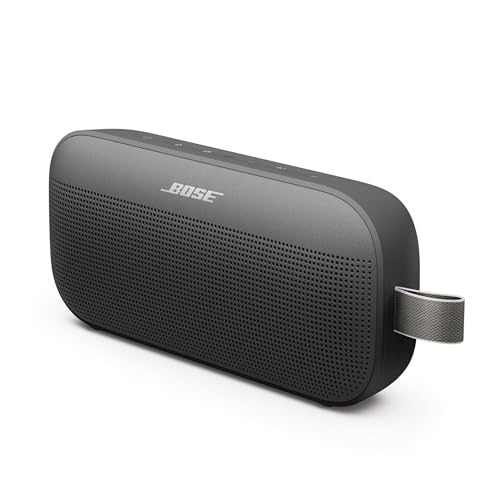
Bose SoundLink Flex (2nd Gen) — Premium compact — generation two
Generation first, because Bose sells continuity of name across years: the SoundLink Flex linked here is the 2nd Gen model, and its verified listing title says so, adding USB-C charging and up to twelve hours of playtime. The first-generation Flex also exists in the wider market — it sits in the same product pool’s records as a separate listing — so a buyer comparing coverage elsewhere should check which generation a given review or listing describes. The speaker in this section is the current, second-generation one, and its brief within the class is precise: premium tone and finish in a body small enough to be carried without planning.
Bose’s tuning philosophy shows immediately. Where the JBL leads with presence, the Flex leads with balance: voices are natural, instruments keep their timbre, and the speaker sounds composed at the modest volumes of a kitchen, a desk or a hotel room, which is where premium compacts actually live. The build matches the sound — dense, tidy, with the soft-touch confidence of a product meant to be handled daily. Up to twelve hours, per the title, is a working day and an evening rather than a weekend, and the honest reading is that this speaker trades the endurance crown for its size and tone, a trade its buyers make knowingly.
Its position in the frame is premium compact: the money buys refinement and portability rather than output or marathon battery. For the traveller, the commuter and the listener whose speaker moves between rooms more than it visits beaches, that is the correct allocation. For the buyer whose speaker must fill a garden, the Charge above is the honest recommendation. The Flex does not pretend to be both, and this guide respects it for knowing its life.
The Flex also rewards a quieter kind of attention: it is the speaker in this guide most likely to be chosen by people who listen to voices for a living — podcast devotees, audiobook listeners, radio households — because its balance keeps narration natural over hours without the listening fatigue that forward tunings accumulate. That endurance is of the ear rather than the battery, and it never appears in a specification. Buyers who recognise themselves in that description should weight this section heavily; the twelve-hour figure in the title will rarely be the limit that matters to them.
- Format: portable Bluetooth speaker, premium compact body
- Generation: 2nd Gen — identified as such in the verified listing title
- Endurance: up to 12 hours, per the verified listing title; USB-C charging
- Position: premium within the class
- Character: balanced, natural, tone-first tuning
Strengths
- The most natural voice and instrument reproduction in this guide.
- A size and finish that invite daily carrying rather than occasional outings.
- Current-generation hardware with modern charging, verified as listed.
Trade-offs
- Playtime is a day, not a weekend — endurance belongs to other picks.
- Maximum output is compact-class; gardens belong to the larger speakers.
- Generation confusion with the first Flex is a real shopping hazard elsewhere.
Best for: tone-first listeners who carry their speaker daily. Not suited for: buyers needing maximum volume or multi-day battery.

Marshall Emberton III — Premium retro — generation three
Marshall’s Emberton line sells a silhouette as much as a speaker — the guitar-amplifier heritage rendered in miniature, black and brass, instantly recognisable on a shelf. The Emberton III is the line’s current generation, and its verified listing title carries the figures that make it more than a styling exercise: IP67 waterproofing and a playtime figure of thirty-two-plus hours, the strongest endurance claim among this guide’s titles. Generation discipline matters here too: the Emberton II appears separately below, the original Emberton no longer holds a listing through the checked channel, and the III is the model for buyers who want the line’s present tense.
The sound honours the badge with a warm, confident balance that flatters guitar music, soul and anything recorded with a room around it, while the compact body keeps the presentation intimate rather than stadium-sized. The waterproofing in the title extends the design’s life beyond the shelf: this generation can follow its owner to the poolside and the picnic without the anxiety its retro looks might suggest. Thirty-two-plus hours, as stated, is a long weekend and then some — the kind of endurance that makes charging an occasional event and the speaker a fixture rather than a gadget.
Its position is premium retro: within the frame’s territory, at the end where design and brand heritage carry part of the value. Buyers are paying for an object they enjoy looking at, from a marque they enjoy owning, that also happens to post the guide’s best endurance figures. Listeners indifferent to styling will find the same money buys more raw output elsewhere in this list; listeners who smile at the brass grille every morning are buying exactly what they value, and the III is the generation that asks the fewest compromises of them.
There is a shelf-life argument for the third generation that goes beyond its figures. Buying the current generation of a design line buys the longest support horizon — accessories, firmware attention, and a resale value that holds while the generation is current. The Emberton III’s stated waterproofing and endurance would justify it alone; the generational timing is a second, quieter reason that experienced buyers of this class weigh automatically. A design object is kept for years, and years are exactly what a current generation is for.
The second generation also makes a quietly excellent gift within the design-conscious household, for a reason the figures cannot capture: it is the version a recipient can be given without the giver performing a lecture on waterproof ratings. It looks right, it sounds warm, it sits on a shelf like furniture, and its compromises belong to journeys the recipient may never ask of it. The third generation is the better traveller; the second remains the better ornament that also plays — and for a great many shelves, that is the entire job description, honourably filled.
- Format: portable Bluetooth speaker, retro amplifier styling
- Generation: III — the current Emberton generation in this guide
- Rating and endurance: IP67 and 32+ hour playtime, per the verified listing title
- Position: premium within the class
- Character: warm, confident, shelf-friendly presentation
Strengths
- The strongest endurance figures in the guide, straight from its verified title.
- Design that earns its place in a room rather than hiding from it.
- Waterproofing that frees the retro styling for outdoor life.
Trade-offs
- Part of the value is heritage and looks — output-per-frame favours the JBL picks.
- Compact body means compact absolute volume, however confident the tuning.
- Generation discipline is essential; the line’s names are easily confused.
Best for: design-conscious listeners who want endurance with their heritage. Not suited for: buyers who value only output and features per unit of budget.
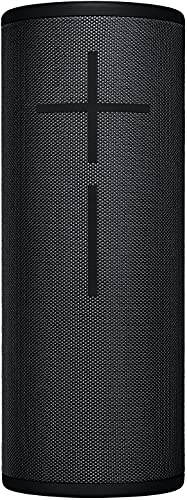
Ultimate Ears Megaboom 3 (Renewed) — Big 360 sound — Renewed
Condition leads this section, as it must: the Megaboom 3 listing verified in this guide’s pool is a Renewed unit, and the model is labelled Renewed in the table, in this heading and throughout its coverage. The new version no longer holds a listing through the checked channel, so the honest way to buy this design today, through the verified route, is refurbished. That status frames everything else: the Megaboom 3 itself is a large-format portable with a 360-degree sound signature — the pool’s title describes it as a portable waterproof Bluetooth speaker — built to stand in the middle of a gathering and fill every direction at once.
The 360-degree character is the design’s reason to exist. Most portable speakers are directional, aimed like small flashlights of sound; the Megaboom radiates around itself, so a group seated in a circle hears the same presentation from every chair. Its size gives it the bass foundation and volume headroom that compact speakers borrow against distortion, and its waterproof identity — carried in the title — suits the poolside and garden duty its shape invites. As a Renewed purchase, it offers that large-format experience at a position in the frame that its original launch status would not have allowed, which is precisely the refurbished market working as it should.
The Renewed disciplines from elsewhere in this batch apply in full: test the battery through a long session on arrival, check every control and the charging connection, listen for rattles at volume, and keep the returns window sacred. A unit that passes is a big, characterful speaker bought shrewdly. A unit that fails goes back, and the in-frame new picks remain. What the Megaboom should never be bought as is a new speaker at new-speaker expectations — the label is the deal, and this guide keeps it visible so the deal is made knowingly.
A word about the battery test this pick deserves, since it is the one Renewed-specific skill that matters most. Charge the unit fully on arrival, then play it at a moderate, realistic volume and note the hours it delivers across its first days, comparing the experience against the design’s reputation rather than against a new unit’s promise. A healthy refurbished battery announces itself quickly; a tired one does too, while the returns window is still wide open. That single act of diligence converts the Renewed label from a risk into what it is meant to be — a discount with a verification step.
- Format: large portable Bluetooth speaker, 360-degree radiation
- Listing status: Renewed — refurbished, labelled Renewed throughout this guide
- Rating: waterproof, per the pool’s verified title description
- Position: in frame via its Renewed status
- Character: room-and-garden filling, direction-free presentation
Strengths
- 360-degree sound serves a gathered group better than any directional rival.
- Large-format bass and headroom the compacts cannot match.
- Renewed status brings a premium design into the frame’s reach.
Trade-offs
- It is a Renewed unit — battery and condition must be tested on arrival.
- The largest carry in the guide; it travels by decision, not by habit.
- No new listing exists through the verified channel for this design.
Best for: gatherings and gardens, bought with the Renewed checks performed. Not suited for: buyers who require factory-new stock or pocket portability.

JBL Flip 6 — Under frame — smaller pick
The Flip 6 carries this guide’s most useful label: under frame, and smaller. It sits a step below its Charge sibling in JBL’s own line — the pool’s notes place it a rung down in the family — and its verified listing title states IP67 waterproofing and twelve hours of playtime. It is included because a large share of readers in this search do not actually need the full frame’s worth of speaker; they need a bottle-sized companion for a backpack, a bicycle bottle cage, a work van’s dashboard. For those readers, the Flip is not the budget option — it is the correct option, and spending the whole frame on a larger speaker would buy size they then have to carry.
The sound is the family character in miniature: punchy, clear, and braver than its dimensions suggest, with the waterproofing in its title freeing it for the same wet and dusty life as its sibling. Twelve hours covers a long day out with margin. What it cannot do is fill a garden party or anchor a room — physics again — and buyers whose gatherings are the point should let the Charge’s section reclaim them. The Flip’s honesty is that it never pretends otherwise: it is the portable end of a serious line, engineered to be taken everywhere rather than to be heard across a field.
As a purchase, it also reframes the frame itself. A budget is a ceiling, not a target, and the reader who buys the Flip and keeps the difference has not under-bought — they have matched the product to the life. This guide includes one such pick in every class where the pattern holds, labelled plainly, because the most common overspend in portable audio is buying the class’s benchmark for a life that needed its smaller sibling.
The Flip’s size creates one more use its bigger rivals cannot serve: the speaker as a permanent resident of a bag rather than an item packed for occasions. A speaker that is always there gets used for the unplanned moments — the picnic that extends, the site visit that turns social, the hotel room that needs music — and those unplanned moments are a large share of portable audio’s actual value. Owners of benchmarks often report their speaker is excellent and at home; owners of the Flip report theirs is good and present. Presence, in this class, is a specification too.
- Format: portable Bluetooth speaker, bottle-sized body
- Rating and endurance: IP67 and 12-hour playtime, per the verified listing title
- Position: under frame — a rung below the Charge in JBL’s line
- Character: punchy miniature of the family tuning
- Carrying life: backpacks, bottle cages, daily travel
Strengths
- The most carryable serious speaker in this guide.
- Full waterproofing and a day’s playtime, as its title states.
- Lets a portability-first buyer stay under the frame without leaving quality behind.
Trade-offs
- Absolute volume and bass are the guide’s most modest among linked picks.
- Gatherings and large rooms belong to its bigger sibling.
- Buyers who later want party output will outgrow it.
Best for: travellers, cyclists and daily carriers whose brief is portability. Not suited for: garden parties or room-filling duties.

Marshall Emberton II — Retro value — generation two
The Emberton II is the previous generation of Marshall’s compact line, still listed in the pool alongside its successor, and its presence here is a study in generational value. The verified title identifies it plainly as the Marshall Emberton II portable Bluetooth speaker in black and brass — the same silhouette, the same heritage styling, the same warm Marshall character that made the line a design fixture. What it does not carry, in the title available to this guide, are the third generation’s headline figures: no IP67 claim and no thirty-two-hour endurance are stated for the II in the pool’s record, and this guide will not lend it its successor’s numbers. The distinction is the entire point of listing both generations honestly.
As a listening proposition, the II remains thoroughly itself: a compact, characterful speaker for shelves, desks and bedside tables, tuned warm, built to be looked at, and sized for rooms rather than fields. Buyers choosing between the generations should weigh exactly what the III adds — the stated waterproofing and the long endurance in its title — against the II’s position as the softer-priced route into the same design. For a speaker that will live indoors, on a shelf, within reach of a charger, the II’s compromises may never be felt. For a speaker that will travel to water and weekends, the III’s stated figures earn their premium.
That is the honest shape of a two-generation shortlist: not a winner and a loser, but a feature border, clearly drawn from the listings themselves. The II is the retro pick for the indoor life; the III is the retro pick for every life. Either way, the buyer is choosing a generation with its facts attached, which is all this guide ever asks.
- Format: portable Bluetooth speaker, retro amplifier styling
- Generation: II — the previous Emberton generation, still listed
- Endurance and rating: not stated in the pool’s title — not borrowed from the III
- Position: the softer-priced route into the Emberton design
- Character: warm, compact, shelf-and-desk oriented
Strengths
- The same beloved design language as its successor, at the gentler position.
- Warm, characterful sound for indoor rooms and desks.
- A current listing in its own right — no refurbished caveats apply.
Trade-offs
- Its successor’s stated waterproofing and endurance are not part of this listing.
- Outdoor and travel duty favour the third generation’s figures.
- Generation confusion in the wider market demands careful model checking.
Best for: indoor, shelf-based listeners who love the design and accept its border. Not suited for: buyers who need the successor’s stated waterproofing and endurance.
What Do Waterproof Ratings and Playtime Figures Actually Promise?
Two specification families dominate this class, and both reward plain reading. A waterproof rating such as the IP67 carried in several verified titles here describes tested resistance: the first digit addresses dust, the second water immersion under defined conditions. In owner language, IP67 speakers survive rain, splashes, poolside accidents and a rinse under a tap; they are not diving equipment, and their charging ports and seals deserve the respect of being closed and intact. Playtime figures, likewise, are measured at moderate volumes — the twenty, twelve and thirty-two-plus hours in this guide’s titles are honest under those conditions and shorter at party volume, because moving more air costs more energy. Neither figure is a lie; both are laboratory truths that real life discounts gently.
The practical use of the figures is comparative, within the titles themselves. A speaker stating thirty-two-plus hours will outlast one stating twelve across any identical weekend; a speaker stating IP67 can be carried to the water with a confidence a splash-resistant one cannot. Read the titles as this guide has — as the claims the listings themselves make — and the class sorts itself without a single invented number.
How Do You Choose Between Tone, Output and Endurance?
Every pick in this guide is a different answer to a three-way trade. Output — the Charge’s garden authority, the Megaboom’s 360-degree spread — serves gatherings. Tone — the Bose’s balance, the Marshalls’ warmth — serves listening. Endurance — the Emberton III’s stated marathon, the Charge’s stated twenty hours — serves freedom from the charger. No compact body maximises all three, because each draws on the same budget of size, battery and money. The buyer’s task is to rank the three by their own calendar: the speaker that travels to gatherings ranks output first; the speaker that lives on a desk ranks tone; the speaker that leaves for weekends ranks endurance.
Ranked honestly, the shortlist collapses quickly, which is the sign of a healthy class. Ranked by habit — buying the benchmark because it is the benchmark — it produces the class’s characteristic disappointment: a superb speaker mismatched to a life. The reviews above were written to make the ranking easy, with each speaker’s centre of gravity named in its first paragraph.
How Do These Speakers Behave Outdoors, at Work and at Home?
Outdoors is the class’s examination hall. Wind steals bass, open air removes the walls that indoor listening borrows, and a speaker’s true output and tuning are exposed within a minute. The Charge and the Megaboom were built for that hall — one by authority, one by radiation in every direction — and the Flip passes it at conversational scale. Indoors, the examination changes: reflections return, volumes drop, and tone takes the marks, which is the Bose’s and the Marshalls’ home ground. At work — the site, the studio, the workshop — the examination is durability and endurance, where waterproofing and long stated playtimes stop being specifications and become the difference between a speaker that is present and one that is being charged indoors.
Most owners live in all three halls across a week, which is why the all-rounder leads this guide and why the specialists are described by their halls rather than ranked beneath it. The honest purchase is the speaker whose best hall matches the buyer’s most frequent one; the rest of the week, every pick here is at least competent, and competence across the other halls is what separates this class from the budget territories.
What Should You Know About Charging, Pairing and Daily Manners?
Modern portable speakers are appliances of few demands, but their manners differ. Charging has standardised around USB-C in the current generations represented here — the second-generation Flex’s title states it explicitly — which means one cable serves the speaker, the phone and the laptop, and a forgotten charger is a borrowed cable away. Pairing is remembered across sessions in all of these designs, and reconnection on waking is the norm; the friction that remains is household-shaped, several phones competing for one speaker, solved by the ancient ritual of pausing before someone else presses play.
Battery care is the one habit worth forming: these speakers prefer to live between empty and full rather than at either extreme for months, and a speaker stored for a season should be stored with a partial charge and woken occasionally. None of that requires an app or a schedule — a speaker used weekly, as every pick here invites, maintains itself by being used. The class’s engineering goal, largely achieved, is that ownership feels like owning a good bag rather than maintaining a device.
How Does Stereo Pairing and Multi-Speaker Life Fit In?
Several designs in this class can pair with a twin for true stereo or join siblings for a larger spread, and the feature deserves a measured word. As an upgrade path it is genuine: a buyer who starts with one Charge-class speaker can later add a second and gain a stereo image no single box can produce. As a day-one purchase it is usually premature — two speakers double the carrying, the charging and the cost, while most rooms and gatherings are honestly served by one well-chosen unit. The guide’s advice is to buy the single speaker that fits the life now, from a line whose pairing options keep the door open, rather than buying the pair for a life that exists mainly in the product video.
Households should also note that pairing ecosystems are brand-shaped: a speaker’s twin must be its own kind. That is one more reason the first purchase in a line deserves the care this guide gives it — it quietly selects the household’s future expansion path, whether the buyer thinks of it that way or not.
What Is the Right Way to Buy a Renewed Speaker in This Class?
The Renewed Megaboom in this guide is the class’s standing lesson, so its method belongs in a section of its own. Buy only where the refurbishment is described by the programme selling it; treat the returns window as part of the specification; and run the arrival protocol in the first days — full charge, long play session, every control exercised, a listen at volume for rattles, a check of the charging port’s grip on its cable. Document nothing, photograph nothing — simply decide, inside the window, whether this individual unit earns its place. Refurbished audio rewards that diligence disproportionately, because speakers are durable goods whose failure modes are obvious within a week.
What the method must never become is a hunt for the cheapest possible version of a famous name through channels with no described condition and no returns. That is not the Renewed route; it is gambling wearing the route’s clothes. The distinction — programme, description, window — is the whole skill, and it transfers to every refurbished purchase a reader will ever make.
Which Speaker Suits the Traveller, the Host and the Homebody?
Three calendars make the shortlist concrete. The traveller’s speaker flies, rides and checks into rooms: it must be carry-on friendly, charge from the same cable as everything else, and sound composed at hotel volumes — the second-generation Flex is that speaker, with the Flip as the lighter, hardier alternative for rougher itineraries. The host’s speaker works weekends: gardens, kitchens full of people, music that must reach the far chair — the Charge owns that calendar, with the Megaboom’s 360-degree spread as the gathering specialist’s alternative. The homebody’s speaker lives in the house and moves between rooms: tone and looks outrank endurance and armour, which is the Marshalls’ territory, generation chosen by how often the speaker will meet water.
Most households contain all three people at different hours, which returns the decision to frequency: which calendar fills most of the week? Buy for that calendar and let the other two be served competently rather than perfectly — the class’s depth means no pick embarrasses itself in a neighbouring role. It is only the extreme mismatch, the party speaker bought for a bedside or the premium compact bought for a building site, that this guide exists to prevent.
How Long Will a Speaker in This Class Serve?
These are durable goods by design — sealed, battery-powered, built for weather — and their service life is set by two clocks. The battery clock runs in years of charge cycles; a speaker used weekly will hold a useful charge for a long span, and when its endurance finally shortens, it usually remains a fine mains-adjacent speaker for a kitchen or a workshop. The relevance clock runs slower than owners fear: Bluetooth compatibility is conservative, and a speaker bought today will pair with phones for the foreseeable future of the standard. What dates a portable speaker fastest is not its electronics but its owner’s life changing — the traveller who settles, the homebody who buys a boat — which is a pleasant failure mode, and one the second-hand market absorbs happily.
Care is minimal and mostly physical: rinse salt and sand away after the beach, let a wet speaker dry before charging, keep it out of sealed cars in summer heat, and store it with some charge in the battery. A speaker treated that way in this class is not an annual purchase but a piece of kit, and the frame’s money is best understood as buying years of that kit’s service rather than a season of novelty.
What About Sound Quality Claims — How Should a Buyer Read Them?
Portable speaker marketing speaks in superlatives because the products genuinely improved quickly for a decade; now that the class is mature, the honest differences are of tuning philosophy rather than of capability. One maker’s warmth is another’s muddiness in a hostile review, and one maker’s clarity is another’s harshness — which is why this guide describes each speaker’s centre of gravity in listening language and ties every hard figure to the listing that states it. A buyer reading any coverage of this class, this guide included, should translate adjectives into the life they describe: forward tunings serve outdoors, balanced tunings serve rooms, warm tunings serve long indoor listening. The translation, not the adjective, is the information.
And a buyer should distrust any source — again, this guide included — that reports figures the listing itself does not state. Endurance and waterproofing are checkable facts with a source; the discipline of citing only what the verified title carries is what separates a guide from a rumour, and it is the standard this batch has applied to every generation and condition label in the list above.
A final practical habit for whichever speaker is chosen: spend its first charge deliberately. Take it to the place it was bought for — the garden, the desk, the road — at the volume that place actually uses, and let it play the music that household actually loves, rather than a demonstration playlist of spectacular recordings. Every speaker in this guide will pass that test in its own hall; the test’s real purpose is to confirm the match between the speaker’s centre of gravity and the buyer’s calendar while the returns window is open and the decision is still reversible. Matches confirmed that way tend to last for years, because they were made by the ear that has to live with them, in the room that has to hold the sound.
Gifting in this class follows the calendar rule with a ribbon on it: give the traveller the compact that charges like their phone, give the host the all-rounder that can run a garden, give the design lover the generation of Emberton that matches where it will live — and include the receipt without embarrassment, because in a class where generations share names, the receipt is the giver’s proof that the right year’s model was chosen on purpose.
And if the recipient is yourself, apply the same generosity in reverse: buy once, buy the generation and condition you actually chose, and let the speaker disappear into the soundtrack of the places it was bought for — which is where every product in this guide, from the benchmark to the under-frame traveller, is ultimately trying to end up.
That disappearance — speaker as soundtrack rather than as gadget — is the real finish line of the class, and every pick above has its own honest road, walked at its own pace, that leads there eventually, by design rather than by luck or by accident.
Comparison Table
| Speaker | Position | Stated endurance / rating | Generation / condition | Best life |
|---|---|---|---|---|
| JBL Charge 5 | In frame | 20 hours, IP67 — per title | Current listing | Gardens, pools, one-speaker homes |
| Bose SoundLink Flex (2nd Gen) | Premium compact | Up to 12 hours — per title | 2nd Gen, current listing | Daily carry, tone-first rooms |
| Marshall Emberton III | Premium retro | 32+ hours, IP67 — per title | Generation III, current listing | Design-led homes and weekends |
| Ultimate Ears Megaboom 3 (Renewed) | In frame via Renewed | Waterproof — per title | Renewed listing | Gatherings needing 360-degree sound |
| JBL Flip 6 | Under frame | 12 hours, IP67 — per title | Current listing | Backpacks and daily travel |
| Marshall Emberton II | Retro value | Not stated in title | Generation II, current listing | Shelves and indoor rooms |
What Are the Most Common Mistakes in This Class?
The generation mistake leads, because this class sells the same names for years: a buyer reads a review of one Emberton or Flex generation and purchases another, then judges the product by facts it never claimed. The condition mistake follows — missing the word Renewed on a listing like the Megaboom’s here, and grading a refurbished unit by new-product expectations. Third is figure inflation in reverse: assuming a successor’s stated endurance or waterproofing applies to its predecessor, an error this guide has been careful not to commit on the Emberton II’s behalf.
Fourth is buying output for a tone life or tone for an output life — the garden host with a premium compact, the desk listener with a party cylinder — when the reviews’ first paragraphs name each speaker’s centre of gravity. Fifth is treating the frame as a target rather than a ceiling, and walking past the under-frame Flip that fitted the actual brief. And sixth is neglecting the arrival test on the one Renewed pick, the class’s only purchase where condition, not specification, is the variable. All six mistakes are reading mistakes before they are buying mistakes, which is why this guide repeats its labels until they cannot be missed.
Final Recommendation
Match the speaker to the calendar it will live. The Charge 5 is the default for a reason — endurance, waterproofing and outdoor authority in one in-frame package — and buyers without a more specific brief should start and probably finish there. The tone-first should take the second-generation Flex; the design-conscious should choose between the Embertons by the border this guide drew, III for water and weekends, II for the shelf; the gathering host should take the Megaboom 3 as the Renewed purchase it honestly is, tested on arrival; and the traveller should take the Flip 6, stay under the frame, and spend the difference on the journeys the speaker was bought to accompany. Whichever name is embossed on the grille, the right speaker is the one whose stated figures and stated status match the life in front of it — and in this class, read carefully, that speaker is always on this list.
Frequently Asked Questions
Why are positions given in words instead of prices?
Because prices in this class move with seasons, colours and channels, and a figure printed here would mislead within weeks. Positions — in frame, under frame, premium — describe each speaker’s standing in the class durably, and the listings themselves carry the current figures for buyers ready to purchase.
Is the Megaboom 3 in this guide new?
No. Its verified listing is a Renewed one, labelled Renewed in the table, its heading and its review. The new version does not hold a listing through the checked channel, so the refurbished route — with prompt arrival testing — is the honest way to buy the design.
Which SoundLink Flex should I buy, the first or second generation?
This guide links and recommends the 2nd Gen model, whose verified title states USB-C charging and up to twelve hours of playtime. The first generation exists separately in the market; if you encounter it, compare its stated figures rather than assuming the generations are interchangeable.
Emberton II or Emberton III?
The III’s verified title states IP67 waterproofing and thirty-two-plus hours of playtime; the II’s title states neither, and this guide does not transfer the figures. Choose the III for travel and water, the II for an indoor shelf life where those figures would never be used.
What does IP67 let me actually do?
Use the speaker in rain, at the poolside and around splashes with confidence, and rinse it clean under a tap with its ports closed. It describes tested resistance to dust and brief immersion, not a licence for diving or for charging while wet.
Is the Flip 6 a compromise too far under the frame?
No — it is a different brief, not a lesser product. Its title states the same IP67 family protection and twelve hours of playtime, in a body built to be carried daily. Buyers whose gatherings need volume should choose its sibling; buyers whose lives need portability are served exactly.
Can I use these speakers while they charge?
Yes — plugged-in play is normal across this class, and it is how many of these speakers live their indoor lives on a counter or a desk between outings. Let a wet speaker dry fully before connecting a cable, keep the charging lead’s path trip-free in a busy kitchen, and the habit is harmless. A speaker that spends most of its life plugged in is also a speaker whose battery ages gently, since it is spared the deep cycles of constant travel duty.
Related Guides
For the stay-at-home end of the speaker world, see our roundup of best 2.1 speakers, our desk-focused guide to best 2.1 computer speakers, and our honesty-first look at best 2.1 Bluetooth speakers.



[…] the budget grows, the natural next reads are our roundup of best 2.1 computer speakers for the subwoofer classes, our guide to best 2.1 speakers for desk-versus-room advice, and our […]