Our Top Picks
 SNAP CIRCUITS Explorer SC-100 STEM Electronics Kit100 Projects12 x 9.5 x 1.75 inches1.4 poundsCheck on Amazon
 20 Sets STEM Electric Circuit Kit for Kids4.9 x 7.8 x 2.5 inches7.8 x 4.9 x 2.5 inchesCheck on Amazon
 National Geographic Circuit Kit for Kids with 120One Size12 x 3 x 14.75 inches2.71 poundsCheck on Amazon
 SNAP CIRCUITS Arcade SCA-200 STEM Electronics Kit forMittel15.5 x 2.5 x 11.9 inches1.3 poundsCheck on Amazon
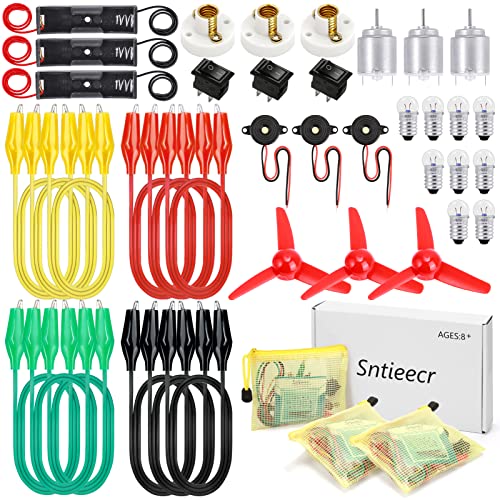

What's inside
- The gap between a toy kit and real electronics
- Two system families: snap connectors and breadboards
- Components that mark a teen-level kit
- Concepts and measurement skills the kit should teach
- Manuals, experiment depth and what project counts mean
- Power sources and the safety architecture
- Durability, lost parts and the economics of spares
- Choosing by interest: sound, light, motion and radio basics
- What to check in a listing before buying
- Progression beyond the first kit
- Three archetypal projects and what each one really teaches
- Fault-finding as a taught skill, not a frustration
- A realistic first month with a kit
- Comparing two candidate kits side by side
- Check prices on Amazon
- Common buying mistakes in this category
As an Amazon Associate I earn from qualifying purchases. This post may contain affiliate links at no extra cost to you.
There is a particular birthday age where a circuit kit can go wrong in two opposite directions. Buy too young and the teenager gets chunky plastic pieces, three projects and a buzzer, mastered in an afternoon and shelved by the weekend. Buy too advanced and they get a bare board, a bag of unlabelled components and a manual that assumes knowledge nobody has taught them yet. The sweet spot between those failures is real, and it is wider than most listings suggest. Teen-level circuit sets, the ones aimed roughly at ages thirteen and up, occupy a distinct category with its own markers: genuine components with genuine values, schematics that use real symbols, experiments that explain why a circuit behaves as it does, and enough depth to occupy months rather than days.
This guide explains how to recognise that category and how to choose inside it. It compares the two great system families, snap-together modules and breadboards with jumper wires, and describes the different skills each one builds. It walks through the components that signal a serious kit, the circuit concepts a good manual should teach, the measurement habits that separate building from understanding, and the safety architecture that keeps everything at harmless low-voltage direct current. It also covers the unglamorous realities that decide whether a kit is still in use a year later: lost parts, replacement availability, manual quality, and a progression path that leads onwards to soldering and microcontrollers without pretending the first kit has to do everything.
The gap between a toy kit and real electronics
A young-child circuit toy is designed around success without understanding. Pieces are large, connections are foolproof, projects are few, and the manual shows pictures of finished arrangements to copy. None of that is a criticism; for a six-year-old, copying a picture and being rewarded with a spinning fan is exactly the right experience. The limitation is that the knowledge does not transfer. A child who has completed every project in a pictorial kit may still be unable to say what a resistor does, because the kit never asked the question. Components in such kits are often disguised inside decorated blocks, values are hidden, and the circuit is treated as a puzzle with one correct answer rather than a system with behaviour that can be predicted, measured and changed.
A teen-level kit inverts those priorities. Components appear as themselves, or as modules clearly labelled with the component they contain and its value. A resistor is a resistor, marked in ohms, and the manual expects the builder to choose between two resistors and observe the difference. Projects are starting points for variation rather than finished answers. The manual introduces the schematic, the standard symbolic drawing of a circuit, and teaches the builder to read it, because the schematic is the language every other electronics resource in the world is written in. A teenager who can follow a schematic can use library books, school materials and community documentation for the rest of their life. A teenager who can only follow pictures can only use that one kit.
Component count is the crudest marker of the difference and still a useful first filter. Toy kits contain a handful of functional pieces. Teen kits, as a published class, contain dozens of distinct components and support project counts that run into the hundreds in the larger snap systems, or dozens of structured experiments in breadboard kits where each experiment is longer and more analytical. Count alone does not guarantee depth, since a kit can pad its inventory with decorative pieces, but a very small component list cannot support genuine variety no matter how the manual is written. The listing check later in this guide explains how to read a component list for substance rather than bulk.
Age grading on the box is a starting signal, not a verdict. A grading of thirteen plus or fourteen plus usually reflects smaller parts, more abstract instructions and less hand-holding, all of which correlate with the serious end of the market. Some excellent kits carry a lower grading because their connector system is physically easy, while still containing integrated circuits, transistors and real theory. Conversely, a high age grading on a kit with pictorial-only instructions and no component values may reflect nothing more than small screws. The grading opens the conversation; the component list and a sample manual page settle it.
Two system families: snap connectors and breadboards
Nearly every teen circuit set belongs to one of two families, defined by how connections are made. Snap-together systems mount components on modules that connect with press studs or similar mechanical fasteners on a grid base. Breadboard systems push component leads and jumper wires into the rows of holes on a solderless breadboard, the standard prototyping tool of working electronics. Both are legitimate. They build different strengths, suit different temperaments, and lead to different next steps.
Snap systems excel at speed and confidence. A circuit can be built, tested, modified and rebuilt in minutes, with no fiddly leads and no doubt about whether a connection is made. That speed changes behaviour: builders experiment more, because the cost of trying an idea is seconds. Large snap systems layer impressively, stacking components in three dimensions to form radios, alarms and sound generators of real complexity, and their manuals can carry a builder a long way. The weakness is abstraction. The connector hides the contact itself, component leads are pre-mounted, and the grid layout does not resemble the way circuits are built anywhere else. A builder can complete advanced snap projects and still find a bare transistor, with its three loose leads, oddly unfamiliar.
Breadboards teach the physical reality of circuits. Every connection is a lead in a hole, every mistake is findable, and the layout on the board corresponds, row by row, to the schematic in a way that builds genuine intuition. Breadboard skills transfer directly: the same board, the same jumper discipline and the same component handling apply to school courses, hobby projects and eventually microcontroller work. The costs are patience and fragility. Leads bend, jumpers work loose, a single misplaced row produces a circuit that does nothing, and fault-finding becomes a core skill whether the builder wanted it or not. For a methodical teenager that friction is the education. For a restless one it can be the reason the kit goes back in the box, which is why temperament, honestly assessed, belongs in the buying decision alongside every technical factor. The same honest matching of tool to user appears in other categories, from study gear in guides such as best 100 dollar headsets to power equipment, because the best specification is wasted on a product its owner finds miserable to use.
Hybrid paths and second kits
The families are not rivals in a war with one winner. A common and sensible sequence starts a younger teen on a substantial snap system, where success and breadth come quickly, then adds a breadboard kit a year or two later, when the concepts are familiar and only the physical technique is new. The concepts transfer completely; series and parallel circuits do not care how they are connected. Other teenagers, particularly those already building models or writing code, thrive by starting directly on a breadboard and skipping the snap stage entirely. What rarely works is buying both at once, which splits attention and leaves two half-finished manuals competing on the same desk.
Components that mark a teen-level kit
Read a component list the way an electrician reads a parts manifest, looking for the items whose presence proves the kit intends to teach electronics rather than simulate it. Resistors in several values are the first sign, because a single fixed resistor teaches connection while a range of values teaches control: brightness, speed, volume and timing all become adjustable ideas once resistance can be chosen. Capacitors in more than one value do the same for timing and filtering, and a kit that includes them alongside an explanation of charge and discharge has crossed from toy territory into physics.
Transistors are the clearest dividing line. A transistor is the component that lets a small current control a larger one, which is the principle behind switches that respond to light, touch and other sensors, behind amplifiers, and behind essentially all modern electronics. Toy kits omit transistors or bury them invisibly inside a multifunction block. Teen kits name them, show their symbol, explain their three terminals in age-appropriate terms, and build projects where the transistor is visibly the decision-maker in the circuit: a lamp that lights when a sensor darkens, a fan that starts when a temperature or light threshold is crossed. A kit with transistors and the projects to use them is teaching the central idea of the field.
Integrated circuits raise the ceiling further. An IC packages a whole circuit, a timer, an amplifier, a sound generator, a logic function, into a single chip with numbered pins. Teen kits that include ICs expose teenagers to the reality that modern electronics is built from functional blocks as much as from individual components, and their manuals usually introduce pin diagrams and the discipline of connecting power to the correct pins. IC-based projects, alarms with timed outputs, sound modules that play tones, light displays that sequence, tend to be the projects teenagers remember and show other people, because the behaviour feels disproportionately impressive relative to the handful of parts on the board.
Sensors and transducers round out a serious inventory. Photoresistors that change resistance with light, thermistors that respond to temperature, reed switches that react to magnets, microphones, speakers, buzzers, motors, lamps and light-emitting diodes in several colours each convert between electricity and the physical world in one direction or the other. A kit rich in these parts supports projects that interact with the environment rather than merely blinking in isolation, and interaction is what sustains interest across months. Motors deserve a specific check: a kit with a motor should also teach the suppression and switching considerations motors demand, since a motor is an inductive, noisy load quite unlike a polite resistor, and powering one through a transistor is among the most instructive circuits a teenager can build.
Meters, measurement parts and the supporting cast
Some kits include a simple meter module, and many breadboard kits expect a basic multimeter to join the household toolkit. Either way, the presence of measurement in the parts list signals intent. Shunts, known-value resistors for current sensing, and projects that call for recording readings in a table all point the same direction. The supporting cast matters as well: battery holders with proper switches, a good stock of jumper wires in varied lengths, spare fuses or resettable protection where the design uses them, and a baseboard or storage tray that keeps the system usable. A kit can have an admirable headline inventory and still frustrate daily use with three jumpers too few.
Concepts and measurement skills the kit should teach
The conceptual spine of a teen kit is short and powerful. Voltage as electrical pressure, current as flow, resistance as opposition, and the relationship among the three, commonly introduced as Ohm law in school physics, turn random building into prediction. A manual that has the builder calculate an expected current, build the circuit, measure the result and reconcile the difference has taught the scientific method inside electronics. Series circuits, where components share one path and divide voltage, and parallel circuits, where paths branch and share voltage while dividing current, form the second pillar. Nearly every later idea, from why one failed lamp kills a series string to why household circuits are wired in parallel, is an application of those two arrangements.
Switches seem too simple to teach and are not. Beyond the plain manual switch, teen kits introduce momentary pushbuttons, slide switches, reed switches worked by magnets, tilt switches and transistor switches controlled by sensors. Arranged thoughtfully, switch projects teach logic without naming it: two switches that must both close, two switches where either will do, a switch that turns something off when pressed rather than on. Those are the AND, OR and NOT patterns that digital electronics and programming both rest on, absorbed through the fingers before they are ever formalised.
Capacitors bring time into circuits. Charging and discharging through a resistor produces delays, flashes, beeps and fading lights, and the pairing of resistor and capacitor values to a duration is a first taste of design, choosing values to achieve an intended behaviour rather than following a recipe exactly. Photoresistors bring in sensing and voltage division, the elegant arrangement where two resistances share a voltage in proportion, which is how a great many real sensors are read. Sound and light modules, tone generators, simple amplifiers, light organs and alarms then combine these ideas, and a good manual says so explicitly, pointing back to the earlier experiments each new project depends on. That cross-referencing is a hallmark of manuals written to teach rather than merely to instruct.
Measurement deserves its own emphasis because it is the skill schools and employers value most and kits most often skimp. A teenager who finishes a kit should be able to measure the voltage across a component without disconnecting the circuit, measure current by placing a meter in series and understand why the distinction matters, check a resistor value against its colour code or label, and test continuity to find a break. They should also have met the idea of a loaded measurement, where the act of measuring slightly changes the circuit, at least as a caution. None of this requires laboratory equipment. It requires a manual that assigns readings as part of projects rather than treating the meter as an optional accessory, and a household norm that the meter lives with the kit, alongside the chargers and cables that guides such as best apple watch chargers exist to organise, rather than migrating to a kitchen drawer.
Manuals, experiment depth and what project counts mean
Project counts dominate listings and mislead more than any other figure in this category. A large snap system may advertise projects in the hundreds, and the number can be honest while still flattering the content, because variations count as projects: the same circuit with a different resistor, a swapped sound module or an added lamp may each carry their own number. A breadboard kit advertising forty experiments may deliver more total learning, because each experiment includes a build, a measurement task, an explanation and a challenge variation. Neither number is a lie. They are different currencies, and comparing them directly is the category error most buyers make.
The better test is to read one complete project from the manual before buying, since many makers publish sample pages or full manuals as documentation. A strong project entry contains a schematic, a build layout, a parts list for that project, an explanation of operation written in connected prose, at least one predicted measurement or observable behaviour to check, and a what-if variation. A weak entry contains a picture and a paragraph of celebration. Three pages per project is a good sign; a single page per project across a thick manual usually means the thickness is project count rather than depth. Theory boxes, short sections explaining a component or principle away from any specific build, are another strong signal, because they show the maker expects the reader to pause and understand, and they give a stuck builder somewhere to turn that is not a video search.
Manual language matters for teenagers in a specific way. Writing that respects the reader, explains without condescension and admits that fault-finding is normal keeps a fourteen-year-old engaged where either babyish cheer or unexplained jargon loses them. Troubleshooting sections deserve particular respect. A manual with a structured fault-finding checklist, check power first, check polarity, check each connection against the schematic row by row, teaches the single most transferable skill in practical electronics. Professionals find faults by method, not by inspiration, and a kit that instils the method early has done its owner a lasting favour.
Digital support varies and should be weighed soberly. Some kits add simulations, downloadable extra projects or video walkthroughs. These help when they mirror the physical manual and extend it. They help less when the physical manual is thin because the maker assumed the videos would carry the teaching, since a teenager mid-build, with parts spread across a table, needs the book open beside the board, not a screen demanding attention and clean hands. Paper that lies flat, tolerates a knock and can be annotated in pencil remains a genuinely functional technology in this setting.
Power sources and the safety architecture
Every legitimate teen circuit kit runs on low-voltage direct current, and that fact is the foundation of its safety. Typical systems use AA battery packs producing a few volts, sometimes a nine-volt battery for particular modules, or a USB supply at five volts from a computer port or a regulated adapter. At these levels, the electricity in a kit cannot drive a harmful current through intact skin, and the realistic hazards are modest and manageable: short circuits that heat a wire or flatten a battery, reversed polarity that damages a component, and the small burns that a genuinely abused short can produce on a fingertip that grabs it. A well-designed kit treats those hazards seriously without drama, through current limiting, clear polarity markings and manuals that explain why a short circuit matters.
Current limiting is the quiet hero. Battery packs have some natural limit, but a good kit adds deliberate protection, through series resistors in early experiments, protected power modules, or resettable fuses in the supply path, so that a beginner mistake results in a circuit that does not work rather than a component that cooks. When reading a listing, any mention of short-circuit protection or current-limited supply modules is worth more than another dozen project claims. It indicates the maker designed for the mistakes beginners reliably make, which include bridging power rails with a misplaced jumper and reversing an IC in its socket.
The boundary that must never blur is mains electricity. No teen kit involves household alternating current, wall outlets as a power source for experiments, or opening mains-powered devices, and any resource that drifts in that direction should be closed immediately. USB power comes from a certified adapter or a computer, used as a supply only, exactly as its makers intended. Batteries are the other boundary item: they should be the type the manual specifies, rechargeable cells should be charged in their proper charger rather than improvised arrangements, and swollen, leaking or damaged cells leave service at once. Households that already keep order among chargers for other gear, the territory of roundups like best 12 volt battery chargers and best 10 amp battery chargers, will find kit batteries slot into the same routine without new habits. Those larger chargers, it should be said plainly, belong to vehicle and workshop batteries and are never a power source for a circuit kit; the kit uses its own specified cells and its own specified charging method, full stop.
Supervision, workspace and habits
Supervision for a teen kit is less about standing guard and more about setting the workspace norms once. A clear table, good light, components returned to their tray at the end of a session, no food or drink over the board, and a rule that a circuit is disconnected before it is rewired will prevent nearly every mishap the category offers. Soldering, when it arrives later in the progression, changes the supervision picture and is covered below. For snap and breadboard work, the adult role that helps most is interested audience: asking what a project does, why a value was chosen, and what the builder would change. Those questions reinforce exactly the reflective habits the manual is trying to build.
Durability, lost parts and the economics of spares
Circuit kits live hard lives in ordinary ways. Snap studs are pressed thousands of times, breadboard contacts grip and release until some holes loosen, jumper wires fatigue at the point where the wire meets its pin, and small components emigrate. Any realistic guide must say plainly that parts will be lost, because a teenager builds on beds, floors and sofas despite every adult preference, and a two-legged component the size of a grain of rice has a survival advantage over every search ever mounted for it. The buying question is therefore not whether a kit is immortal but whether its maker planned for mortality.
Replacement availability is the decisive factor and the least advertised. Makers of established snap systems commonly sell replacement parts individually or in small packs, publish part numbers in the manual, and keep those parts available across years because their systems are stable platforms. Breadboard kits have a different advantage: their components are standard electronic parts, available from any electronics supplier in the world, identified by value rather than by a proprietary code. A lost resistor from a breadboard kit is replaceable for pennies in a handful of identical parts. A lost proprietary module from a closed system, if the maker has discontinued it, can orphan every project that used it. Checking, before purchase, that a replacements page or parts list exists is a five-minute task that protects the whole value of the kit.
Durability differences between systems are worth understanding rather than merely fearing. Quality snap modules tolerate years of use because their contacts are large and their housings protect the component inside; cheap imitations crack at the stud and develop intermittent connections that make fault-finding miserable, since the fault hides inside a sealed piece. Breadboards vary too, with contact quality separating boards that grip firmly for years from boards that go slack in months. In both families the manual and parts support reveal the maker seriousness more reliably than the box art. Storage is the owner contribution: a compartmented box, components sorted by type, the manual kept with the kit, and a household rule that the kit travels as a kit rather than as loose handfuls. Ten minutes of sorting after a big build is also, quietly, revision, since handling every part and naming it fixes the inventory in memory.
Choosing by interest: sound, light, motion and radio basics
Teenagers rarely fall for electronics in the abstract. They fall for something electronics does, and the right kit leans into the specific fascination already visible. Choosing by interest is not indulgence; it is the most reliable predictor of whether a kit gets finished, because the projects a builder wants to show someone are the projects that carry them through the dull fault-finding sessions in between.
Sound draws builders who live in music. Kits strong in audio include speakers and buzzers, tone and melody ICs, simple amplifiers, microphone inputs and projects that generate, modify or respond to sound: alarms, doorbells with personality, electronic instruments with pitch controlled by light or touch, metronomes and sound-activated switches. The concepts underneath, frequency, amplification, oscillation, arrive attached to results the builder can hear across a room. A teenager who records or plays an instrument will often grasp feedback, gain and distortion from a kit amplifier faster than from any textbook, because the vocabulary names things their ears already know.
Light suits visual builders. Multi-colour LEDs, fibre-optic and lamp modules, light sensors, sequencers and displays support projects from colour-mixing experiments to light-sensitive alarms and simple optical communication, sending a signal down a beam between two circuits. Photoresistor work teaches voltage division in its most satisfying form, since the builder watches a voltage steer behaviour as a hand shadows a sensor. Motion points towards motors, fans, gears and vehicles: kits with strong motor control, transistor drivers, speed control through resistance or pulse methods, and mechanical parts that let a circuit move something in the world. A spinning, driving or lifting result converts abstract current into visible work, and the motor circuits teach real lessons about load and power that a diet of LEDs never raises.
Radio basics fascinate a particular kind of teenager, the one who wants signals from the air itself. Within legal toy limits and at kit scale, this means crystal-style and simple receiver projects, basic transmitter-and-receiver pairs operating in permitted low-power ways as the manual defines them, and experiments with coils, tuning and antennas that reveal what frequency selection means. The honest framing matters: a kit receiver that pulls a local station out of the air with a handful of parts is a small marvel and a complete education in resonance, while no kit turns a bedroom into a broadcast station, and listings implying otherwise should be read with suspicion. What the category legitimately offers is reception, short-range signalling between kit modules, and the theory that explains both.
Matching the kit to the school and the shelf
School alignment is a legitimate secondary factor. A teenager meeting circuits in physics within a year or two benefits from a kit whose symbols, terminology and meter practice match the classroom, which breadboard kits and schematic-led snap systems both generally do. The kit then becomes revision equipment that happens to be enjoyable, and classroom theory becomes the explanation of things already seen at home. There is also a shelf question: a kit that will share a teenager with exam years should be one that rewards short sessions, with projects that complete in an evening and a manual that can be reopened after a month away without penalty. Systems with numbered, self-contained experiments forgive absence. One giant cumulative project does not.
What to check in a listing before buying
A disciplined listing check takes ten minutes and prevents nearly every disappointment in this category. Start with the component list, in full, and look for the markers described earlier: resistors in several values, at least one capacitor range, transistors named as transistors, any integrated circuits identified by function, sensors among the parts, and a meter or meter provision. Count functional components rather than total pieces, discounting bases, cases and decorative elements. Then find the manual, or at least sample pages, and read one project end to end, judging explanation depth, schematic use and whether measurements are assigned. A maker unwilling to show any manual pages is asking for trust that better makers do not require.
Check the power specification next. The listing should state plainly what batteries or supply the kit needs, whether they are included, and what protection the design includes. Check the age grading and treat it as the maker statement of intended reader, then check dimensions and part sizes against the teenager in question, since small breadboard parts demand a dexterity most teens have and some do not. Check replacement parts support, through a parts page, a spares listing or a manual that prints part numbers. Check, finally, the returns and completeness picture if buying a used kit, which is a genuinely good route in this category: used sets are common because teenagers age out of them, but a used kit should be sold against its component list, and a buyer should count the ICs, sensors and special modules on arrival, since those are the pieces whose absence disables whole chapters of the manual.
Reviews need reading with the category in mind. Complaints that a kit was too hard for a nine-year-old say nothing about its fit for a fourteen-year-old, and praise from a parent whose child built three projects says less than a detailed account from a family six months in. Look for mentions of manual clarity, parts still available, projects still being built after the first month, and any pattern of a specific component failing. A pattern of one weak part, in a kit with good spares support, is a manageable flaw. A pattern of confusion about the same project, across many accounts, identifies a manual gap no enthusiasm can fix.
Progression beyond the first kit
A good first kit is a beginning with exits. The natural next step from a snap system is a breadboard, reusing every concept and adding physical technique. The natural step from breadboard experiments is a small stock of loose components, a multimeter of their own, and project books or documentation that assume a breadboard and a parts box rather than a kit. From there, soldering arrives as a distinct skill with its own safety discipline: a temperature-controlled iron, ventilation, adult involvement at the start, and simple permanent projects, a flashing badge, a small amplifier, a repaired cable, that reward the leap from temporary to lasting circuits. Soldering should be presented as an earned upgrade, not bundled into a first kit as an afterthought, because the iron changes the risk profile of the whole activity and deserves its own unhurried introduction.
Microcontrollers form the other branch of the path, where code enters and circuits become programmable. This guide deliberately stops at their border, because choosing a microcontroller platform is a subject of its own, with its own ecosystems and languages. What matters here is preparation: a teenager who arrives at that border able to read a schematic, wire a sensor through a voltage divider, drive a motor through a transistor and measure what a circuit is actually doing will find the programmable stage dramatically easier than one who arrives with coding skill alone. The analogue foundations are not a detour from the digital destination. They are the ground it stands on, and they remain useful for as long as physical things are connected to code, which is to say permanently.
There is also a quieter progression, from builder to explainer. Teenagers who teach a younger sibling a project, write up an experiment for a school fair, or document a modification they devised have consolidated knowledge in the way examinations rarely manage. A kit supports that progression when its manual models explanation, when its projects invite variation, and when the household treats the inevitable question, can it also do this, as the start of a design conversation rather than a request for the next purchase. Many of the best second projects are first-kit projects modified: an alarm given a delay, a lamp given a sensor, a tone generator given a keyboard of resistors. Modification is where ownership of the ideas begins.
Three archetypal projects and what each one really teaches
Abstract claims about depth become concrete when three typical projects are unpacked. The first is the light-controlled lamp, found in some form in nearly every serious kit. A photoresistor and a fixed resistor form a voltage divider. As light falls, the voltage at their junction moves, and a transistor, or in larger kits an IC input, responds by switching a lamp or LED on. On the surface it is a night light. Underneath, it teaches sensing, division, thresholds and switching in a single build of perhaps eight components, and it invites the best kind of variation: change the fixed resistor and the lamp triggers at a different darkness, move the sensor and the behaviour follows the room, cover the sensor slowly and the transition can be watched on a meter. A manual that walks through those variations has converted one project into an afternoon of genuine investigation.
The second archetype is the timed alarm or delay circuit, built around a capacitor charging through a resistor into a transistor or timer IC. A door contact or a pushbutton starts the process, a buzzer sounds after a delay or for a set duration, and the builder discovers that time in electronics is often just resistance and capacitance multiplied together in effect. The teaching value lies in prediction. Double the resistance and the delay should roughly double; swap the capacitor and it changes again in proportion. When a teenager writes down a predicted delay, times the real one with a phone stopwatch and explains the gap by component tolerance, they are doing engineering in miniature, complete with the discovery that real parts carry tolerances and that a design must work across them rather than at one perfect value.
The third archetype is the two-transistor or IC sound generator, a circuit that oscillates and drives a speaker. Pitch changes with resistance or capacitance, volume with supply or amplifier stage, and suddenly frequency is something a hand can sweep by shading a sensor or turning a control. Projects in this family, light-controlled tones, simple sirens, electronic birdsong and metronomes, teach oscillation, the idea of a circuit feeding its own output back to sustain a repeating cycle. Feedback is one of the deepest ideas in technology, appearing everywhere from audio amplifiers to climate systems, and meeting it first as a wail that rises when a hand approaches a sensor makes the abstraction permanently memorable.
Fault-finding as a taught skill, not a frustration
Every builder, professional or beginner, spends a large share of bench time on circuits that did not work first time. Kits differ enormously in whether they prepare a teenager for that reality or leave them to conclude, wrongly, that failure means personal incompetence. The method worth teaching is unglamorous and completely reliable. Confirm power at the source and at the board. Confirm polarity on every part that has one, since LEDs, electrolytic capacitors, transistors and ICs all care about direction and all punish reversal, some silently and some permanently. Compare the build against the schematic one node at a time, physically touching each connection as it is checked, because eyes alone glide over the very error they are hunting. Change one thing at a time, and note what changed, so that the circuit cannot become a moving target where three simultaneous fixes hide the one that mattered.
Breadboard builders add a specific discipline: suspect the contact before the component. A lead that looks inserted may sit in a worn hole or beside the intended row, and a jumper nudged during an adjustment can open a whole branch. Snap builders have the mirror-image discipline: suspect the module that was reused from the previous project, since a piece carried over can silently belong to the old circuit layout rather than the new one. Both families benefit from the halfway technique, dividing a dead circuit into sections and checking the signal or voltage at the midpoint, then at the midpoint of the failing half, until the faulty region is small enough to inspect part by part. That binary search is exactly how technicians approach large systems, and a teenager who absorbs it owns a method that scales from a buzzer circuit to a car electrical fault.
Parents and gift-givers can support this more than they realise. The helpful response to a dead circuit is a question about the last check performed, not a hand reaching in to fix it. A circuit rescued by an adult teaches dependence; a circuit rescued by method, after twenty stubborn minutes, teaches the builder that persistence has a procedure. Kits whose manuals include a troubleshooting table, symptom by symptom with probable causes ordered by likelihood, deserve real preference for exactly this reason. The table normalises failure as a stage of the work rather than an exit from it.
A realistic first month with a kit
Expectations for the first month shape whether a kit survives it. The first session should end with something working, however small, and good manuals are sequenced to guarantee that: a lamp, a switch, a measured voltage, proof that the system and the builder can succeed together. The sessions that follow climb deliberately, adding one new component family at a time, and the healthy pattern is a builder who revisits earlier projects with new understanding rather than one who races the project numbers. A teenager who rebuilds the third experiment in week three, unprompted, to check whether a different resistor behaves as the theory now predicts, is learning faster than one who has reached experiment thirty by copying layouts.
Session length matters less than session endings. Leaving a circuit half-built across a school week invites lost parts and lost threads, so projects sized to a single sitting, or manuals that mark natural stopping points with a photograph of the expected state, suit term-time life. A small notebook, or notes in the manual margins, recording which projects are done, which readings surprised the builder and which parts are missing, turns a pile of sessions into a visible accumulation of skill. That record also solves the gift problem a year later, because it shows precisely which direction the interest grew, towards sound, towards sensing, towards motion, and therefore which second kit, parts stock or course would land best.
Interest will not burn evenly, and that is normal. A kit may sit untouched through an exam season or a sporting term and then be dismantled and rebuilt across one absorbed holiday week. Durable systems with good storage forgive those rhythms; nothing in a snap grid or a breadboard degrades because a month passed. The kits that die are usually the ones whose parts scattered during the fallow period, which returns the whole question, once again, to the compartmented box and the habit of putting the kit away as a kit. Longevity in this category is less a property of electronics than of housekeeping, and it can be designed for at the moment of purchase by choosing the set whose storage, spares and manual make the tidy outcome the easy outcome.
Comparing two candidate kits side by side
When two kits both pass the basic checks, a structured comparison settles the choice better than further browsing. Lay the two component lists next to each other and mark, line by line, which components appear in one and not the other. Differences at the level of transistors, IC functions and sensors predict differences in the projects that can be built far more reliably than differences in total piece count. Then compare the manuals by weight of explanation: sample the same concept in both, resistance or capacitance, and read which account leaves a reader able to predict a new circuit rather than merely repeat a built one. Finally compare the support trail for each maker: a current parts page, a downloadable manual that matches the edition on sale, and evidence that the system has existed in a stable form for several years, so that spares and community knowledge will still exist when they are needed.
Price comparisons, where families make them, should be made on cost per year of use rather than cost per box. A kit that occupies a teenager for two years, accepts standard replacement parts and leads naturally into a parts box and a meter is inexpensive in the only sense that matters, whatever its shelf ticket said. A cheaper kit abandoned in a month because its manual ran dry is the expensive outcome wearing a modest disguise. This is also why borrowing or buying used, where the completeness can be verified against a printed list, is such a rational route in this category: the electronics do not wear out on any schedule that matters to a second owner, and a proven system with a known manual transfers almost all of its value intact.
Check prices on Amazon
Live listings for the shortlist in this guide are pulled from Amazon below, so prices and availability are always current at the moment you look.


Common buying mistakes in this category
The most frequent mistake is buying for the age on the calendar rather than the experience in the room. A thirteen-year-old who has spent two years building models, coding or dismantling household gadgets may be ready for a breadboard kit graded well above their age, while a sixteen-year-old encountering circuits for the first time deserves the confidence-building sequence of a structured system and will not be insulted by it if the projects themselves are substantial. The second mistake is the opposite pair: buying a kit so complete that its size intimidates, where the sheer spread of parts across a table makes starting feel like an event requiring a free afternoon, rather than a pleasure available in twenty minutes. Medium, well-organised systems get opened on ordinary evenings, and ordinary evenings are where skills are actually built.
A third mistake is neglecting the meter question until a project demands one, at which point a household either stalls for a week or buys in a hurry. Deciding at purchase whether the kit includes measurement, expects a separate basic multimeter, or defers measurement entirely, and acting on that decision the same day, keeps the momentum the first projects create. A fourth is overlooking the physical setting: breadboard work needs a stable surface and reasonable light, snap systems need floor or table room for a grid that can grow large, and both need storage near where building happens. A kit exiled to a distant cupboard because its box fits nowhere sensible will be built less, through no fault of its electronics.
The final mistake is treating the kit as a test the teenager passes or fails. Some teenagers will build every project and move on to soldering and code. Others will build a dozen projects, keep the alarm they designed beside their bed for a year, and carry the underlying understanding, what voltage means, why a sensor divider works, how to find a fault by method, into physics lessons and practical life without ever wanting a second kit. Both outcomes are successes. The kit has done its work when a young person who meets an unfamiliar circuit, in any context, feels recognition instead of bewilderment, and that outcome is available from every well-chosen set described in this guide.
One last consideration belongs to the adults who will live alongside the kit. A circuit set generates questions at unpredictable moments, half of them at bedtime, and it generates small triumphs that deserve an audience of at least one person willing to be shown a lamp responding to a shadow. Households do not need an engineer in residence for any of this. They need a table that can be claimed for an evening, a tolerance for components underfoot during a build, and a willingness to ask what a project does before asking whether it is finished. Given those modest conditions, the kits described here repay their space generously, because the competence they build is visible, audible and demonstrable in a way very few educational purchases ever manage.
Choose the kit whose manual you would happily read yourself, whose parts can be replaced next year as easily as this one, and whose hardest project looks just beyond reach today, because that small gap is precisely where a teenager grows.
For the teenager who started with three chunky pieces and a buzzer years ago, a real kit on the table, dense with parts and possibilities, is the moment electronics stops being a toy and becomes a trade they can grow into.
Nothing in the preceding pages depends on handling any particular set; the whole discussion is built from published kit documentation, component lists and manual conventions across the snap and breadboard classes, read against standard school-level circuit theory. The retailer page for any individual kit remains the place to verify its current component list, age grading and power requirements before a purchase, since editions change and listings occasionally lag the box contents. Where a listing and a manual disagree, trust the manual, and where both are silent on a component claimed in marketing copy, treat that component as absent until the maker confirms otherwise in writing.


