What's inside
- Key Takeaways
- Quick Picks
- How were these picks chosen for calling?
- Comparison table
- Setting up the call: stands, light and sound
- How do you choose a phone for video calling?
- On the call: how we evaluated these phones
- Three households, three calling patterns
- Common mistakes when buying a phone for video calls
- Final recommendation
- Frequently asked questions
As an Amazon Associate I earn from qualifying purchases. This post may contain affiliate links at no extra cost to you.
gizmoverdict.com is reader-supported. When you buy through links on our site, we may earn an affiliate commission.
Where to buy: All six handsets here are unlocked US models on Amazon, and the detail worth double-checking before checkout is the model year in the name — this class refreshes annually and last year’s listing often sits one search result away from this year’s. Storage and color variants share one listing page on most of these, so select the combination deliberately, then confirm it against the check-price link in the review you settled on.
The best smartphones for video chat are judged by a peculiar standard: how they make you look and sound to somebody else. A video call compresses a person into a small bright rectangle, and the phone producing that rectangle needs a screen large enough to return the favor — showing grandparents, grandchildren, colleagues and friends at a size where expressions survive. It needs stamina, because an hour of video calling burns battery like navigation does. And it needs a front camera up to the task, which is where honesty enters early: most listing titles in this class advertise rear cameras in detail while leaving the front camera undescribed, so this guide grades what titles prove — screens, batteries, storage, build — and flags the front-camera silence wherever it appears.
The six picks divide into three pairs. Two large-screen value phones from Samsung and Motorola anchor the affordable end; a slim weather-sealed Galaxy A37 and a cheerful Pixel 9a in Peony hold the middle; a fresh budget Moto G and the premium compact Galaxy S26 FE close the list at opposite price poles. Every one is unlocked, every one runs the mainstream calling apps, and the differences that matter are printed in their titles for close readers.
A word about what video calling has become, since it shapes the whole ranking: the call is no longer an event. It is the background hum of dispersed families, hybrid jobs and friendships maintained across time zones — started from kitchens, continued from cars, resumed from hospital waiting rooms. A phone for that world is not a specialty device; it is the ordinary phone, judged by an unordinary intimacy. The standards below — see clearly, last long, hold comfortably, recover quickly — are simply the standards of a device that mediates a large share of a modern family’s face-to-face life.
Our Top Picks
Key Takeaways
- Screen size leads this class: the Galaxy A16’s title says Large AMOLED outright, and large displays dominate the roundup’s logic.
- No title in this group prints a front-camera resolution, so selfie hardware claims would be invention — the spec boxes mark it unstated throughout.
- The Galaxy A37 5G pairs a stated 5000mAh battery with IP68, the strongest stamina-and-build combination printed here.
- The Moto G Stylus 2025 carries the group’s largest storage at 256GB with 8GB of RAM, useful for long call histories and saved clips.
- The Galaxy S26 FE is the premium compact route, its My FanCam and Super Steady Video features aimed at moving, talking footage.
Quick Picks
| Pick | Phone | Badge |
|---|---|---|
| 1 | Samsung Galaxy A16 5G | Best big-screen value for family calls |
| 2 | Motorola Moto G Stylus 2025 | Best storage-rich large-screen pick |
| 3 | Samsung Galaxy A37 5G | Best slim sealed phone for long calls |
| 4 | Google Pixel 9a Peony | Best friendly midrange all-rounder |
| 5 | Motorola Moto G 2026 | Best fresh budget handset |
| 6 | Samsung Galaxy S26 FE | Best premium compact for video |
How were these picks chosen for calling?
Display evidence came first, because a video call is watched as much as it is broadcast. Titles naming a large AMOLED panel earned the top of the rubric; vague display silence pushed a phone down it. Battery evidence came second, read strictly: a printed 5000mAh figure or a named fast-charging system counts, while an unadorned model name counts for nothing, because an hour-long family call at full brightness is a measurable drain and good intentions do not refill a cell. Storage and RAM formed the third tier — call apps themselves are light, but the phones around them accumulate photos, clips and message archives, and a handset gasping for space makes every app feel older than it is.
The front-camera question was handled by disclosure rather than speculation. Since no title here prints a front-camera specification, this guide refuses to rank selfie hardware it cannot verify, and instead evaluates the verifiable half of the calling experience: what you see, how long it lasts, and how the phone holds up in a hand or a stand through a long conversation. Shoppers for whom the front camera is the entire decision should read the full listing pages for that one figure — and may find the camera-first thinking in best smartphones for instagram influencers a useful companion, since creators interrogate the same glass from the other direction.
Audio was graded on a similar evidence rule, which is to say barely graded at all: no title here prints a microphone or speaker specification, and call audio in practice owes more to the room and the network than to handset hardware at this level. Buyers with a specific audio need — hearing assistance, a loud workshop, a soft-spoken grandparent — should treat a real test call during the return window as part of the purchase, because it is the only honest instrument available for a specification nobody prints.

1. Samsung Galaxy A16 5G — Best big-screen value for family calls
The Galaxy A16 5G earns the top slot on the strength of two words in its title: Large AMOLED. For the family-call role — a grandparent propped on a kitchen counter, grandchildren crowding into frame from three states away — the size and quality of the screen you look at shapes the call more than any processor benchmark. AMOLED panels render faces with deep contrast and stay legible under kitchen lighting, and a large canvas means the small tiles of a group call remain faces rather than thumbnails. Samsung prints both facts plainly, and in this class plain printing is the currency that counts.
The supporting facts line up behind the screen. Super Fast Charging rescues the classic pre-call disaster — a phone at nine percent, twenty minutes before the Sunday call — by making a short plug-in genuinely useful. Expandable storage keeps years of family photos and saved video messages on the device without evicting apps. The durable design language in the title suits a phone that will be handed to children, propped against cookbooks and carried room to room mid-conversation. The 5G radio keeps the call’s data path current in congested neighborhoods where family-hour traffic peaks.
The gaps are the class-wide ones: the title states no front-camera specification and no battery capacity, so both are marked unstated below and neither is guessed at. For marathon-length calls, note the fast-charging claim as the practical mitigation — the A16’s stamina story is about recovery speed rather than a printed reservoir. As the value anchor of this roundup, it covers the verifiable essentials of video calling — see well, recharge fast, store plenty, connect on 5G — at the friendly end of the price ladder.
One more household role suits the A16 particularly: the grandparent phone that a family sets up once and supports from afar. A large screen forgives small text and distant holding; expandable storage means the photo stream sent by three generations never triggers a full-storage panic at the other end of the call; and fast charging forgives the universal habit of forgetting to plug in until the reminder message arrives. Families choosing a phone for a relative should weight those forgiveness factors heavily, because the best calling phone for someone else is the one that generates the fewest support calls afterward.
Strengths
- Large AMOLED display keeps group-call faces legible at counter distance.
- Super Fast Charging turns a short plug-in before a call into real insurance.
- Expandable storage holds family media without crowding the app drawer.
Trade-offs
- Front camera specification is absent from the title.
- Battery capacity is unstated, leaving marathon-call endurance unquantified.
- RAM is not printed, so heavy multitasking headroom is unknown on paper.
Spec box
- Display: Large AMOLED
- Charging: Super Fast Charging
- Storage: Expandable (built-in capacity not stated in the listing title)
- Front camera: Not stated in the listing title
- Battery capacity: Not stated in the listing title
- Color: Blue Black
Best for: family group calls watched on a big, bright screen at a value price. Not suited for: a three-hour unbroken call schedule far from an outlet, since the title prints no battery capacity to plan around. The Blue Black A16’s current price is a click away — check it on Amazon before the next family call is scheduled.

2. Motorola Moto G Stylus 2025 — Best storage-rich large-screen pick
Motorola’s Moto G Stylus 2025 in Pantone Surf The Web is positioned in the pool as a large-screen value pick, and its title adds the group’s richest memory configuration to that pitch: 8GB of RAM and 256GB of storage, with a 50MP rear camera. The storage figure is the one to dwell on for a calling phone. Video messages, saved call clips, grandchildren’s drawings photographed and shared, years of chat archives — a household’s communication history accumulates quietly, and 256GB postpones the delete-or-upgrade reckoning further than any other pick here. The 8GB of RAM keeps the calling app, the gallery and the messaging thread open together, so sharing a photo mid-call does not restart the conversation’s plumbing.
The stylus that names the model plays a supporting role in this class rather than a starring one. It signs documents on calls with a bank, annotates a screenshot while a relative watches, and jots a number dictated over video without leaving the call screen. Those are small graces, but video calling is a genre built from small graces — the call is the errand, the form, the shared look at a document. A pen that lives inside the phone is always present for them in a way a separate accessory never is.
The title’s silences mirror the class: front camera unstated, battery capacity unstated, screen size described by positioning rather than inches. This review grades the Stylus on its printed strengths — memory, storage, the pen, the 50MP rear camera for the photos that calls so often revolve around — and finds them substantial. For a household hub phone that hosts the family call and holds the family archive, the configuration is the most complete at its tier in this guide.
The archive role deserves a practical footnote: a hub phone accumulates the family’s visual memory, which makes it the worst phone in the house to lose without a backup. The 256GB that makes the Stylus such a comfortable archive also concentrates the loss, so pair the purchase with an automatic backup from day one and the concentration becomes a convenience instead of a risk. With that single habit in place, the Stylus’s configuration — big storage, ample RAM, a pen for the paperwork moments — reads less like a spec sheet and more like a job description it was hired to fill.
Strengths
- 256GB is the largest storage figure printed among these six titles.
- 8GB of RAM keeps call, gallery and messages open simultaneously.
- Built-in stylus helps with signatures, annotations and mid-call notes.
Trade-offs
- Front camera details are not stated in the title.
- Battery capacity is unstated for long-call planning.
- Display size is implied by positioning, not printed in inches.
Spec box
- RAM / storage: 8GB / 256GB
- Rear camera: 50MP
- Input: Built-in stylus
- Front camera: Not stated in the listing title
- Battery capacity: Not stated in the listing title
- Color: Pantone Surf The Web
Best for: a household hub phone that hosts calls and stores the family archive. Not suited for: a buyer comparing front cameras by specification, since this title prints none to compare. Households drawn to the big-storage setup can see the Stylus 2025 on Amazon in the Surf The Web finish.
3. Samsung Galaxy A37 5G — Best slim sealed phone for long calls
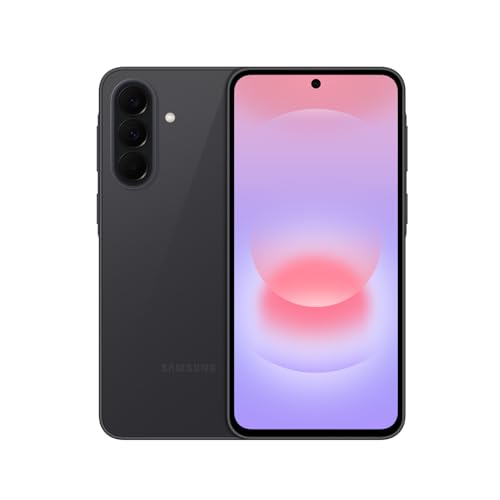
The Galaxy A37 5G, a 2026 model in Awesome Charcoal, prints the most complete physical specification in this roundup: an AMOLED display, a triple camera, IP68 sealing, a slim profile, a 5000mAh battery, 128GB of storage and a US one-year warranty. Translate that into calling terms and a clear character emerges. The stated battery is the marathon credential — a printed 5000mAh reservoir for the long, unhurried calls that define family life across time zones, where nobody watches a clock and the phone must not become the reason to hang up. The AMOLED panel keeps the other end of the call vivid, and the slim build matters across an hour in the hand more than in a thirty-second shop demo.
IP68 is the sleeper feature for this class. Video calls happen in kitchens, beside bathtubs during toddler bath time, on porches in drizzle and at poolside tables. A sealed phone removes the low-grade vigilance that follows an unrated handset into those rooms. Splashes, steam and the occasional dunking become anecdotes instead of accidents. The triple camera, whose individual lenses the title does not detail, serves the show-and-tell half of calling — flipping to the rear array to share a garden, a project or a new pet with better glass than the front camera typically offers.
RAM and front-camera figures are the title’s two silences, recorded below. Everything else a long-call buyer cross-examines is printed and present, which makes the A37 the easiest recommendation in this guide to defend on paper. It asks a midrange price for a flagship-shaped fact sheet, and for households whose calls are long, frequent and held in real rooms rather than studios, that combination is precisely the point.
The warranty line in the A37’s title is easy to skim and worth a second look in this class. A household calling phone is handled constantly, propped precariously and carried between rooms mid-conversation; it lives a riskier life than a phone that stays in a pocket. A stated US one-year warranty does not prevent the drop, but it changes the arithmetic afterward, and for a device bought to serve a family’s daily ritual, that arithmetic belongs in the purchase decision alongside the battery figure. The A37 is the only pick here that prints both its stamina and its safety net.
Strengths
- 5000mAh is a printed battery figure, rare and welcome in this class.
- IP68 sealing suits kitchen, porch and poolside calling environments.
- Slim profile stays comfortable across hour-long handheld calls.
Trade-offs
- Front camera specification is not stated in the title.
- RAM is unstated, leaving multitasking depth unquantified.
- Triple camera lens roles are not broken down in the title.
Spec box
- Storage: 128GB
- Battery: 5000mAh
- Water and dust resistance: IP68
- Display: AMOLED
- Front camera: Not stated in the listing title
- Warranty: US 1 Yr Warranty
Best for: long, unhurried family calls in real rooms with real splashes. Not suited for: a specification-led front-camera comparison, where this title offers no figure to enter. The Awesome Charcoal A37 is listed now — look it up on Amazon and confirm the variant before ordering.

4. Google Pixel 9a Peony — Best friendly midrange all-rounder
The Pixel 9a in Peony is the personality pick: a soft pink 128GB handset with 8GB of RAM, unlocked, from the line whose calling features have a friendly reputation this guide can only partly verify from titles. The printed facts are the configuration — 128GB, 8GB of RAM, the Peony finish — and the configuration is well judged for the role. Eight gigabytes keeps the calling app responsive when a call arrives over a busy home screen; 128GB holds the household’s photo stream without weekly pruning. The Peony color itself is a small, real virtue in a family phone: it is findable. A pink phone surfaces from a sofa, a tote bag and a kitchen counter faster than another black slab.
Beyond the configuration, this listing’s title is terse, and the review honors that terseness. No battery figure, no camera claim and no display description is printed, so none is asserted; the spec box is a row of honest gaps around two solid numbers. Buyers should treat the full listing page as part of the purchase for this variant, confirming the battery and camera details there. What the roundup context adds is placement: the 9a family sits in Google’s midrange, and this Peony variant’s RAM figure matches the priciest Motorola here, which is a quietly strong fact for a midrange calling phone.
The Peony 9a therefore suits a preference for a responsive, cheerful, sensibly configured handset, with the remaining details confirmed at the listing. It is not the pick for a figures-before-everything temperament — the A37 exists for that. As the friendly all-rounder of the six, it balances what is stated with an appealing restraint about the rest.
Peony deserves one more sentence of defense, because color is usually treated as decoration and in a household phone it is closer to equipment. Shared and semi-shared devices vanish into sofas, bags and counter clutter several times a week, and every search costs the start of a call. A distinctive finish shortens those searches measurably over a year of Sundays. It also signals ownership in a house with several similar black rectangles — the Peony phone is visibly somebody’s, which keeps it charged, claimed and ready when the call comes in.
Strengths
- 8GB of RAM matches the strongest memory figure in this roundup.
- 128GB of storage covers a household photo stream comfortably.
- Peony finish is easy to spot and find around the house.
Trade-offs
- Battery capacity is not stated in the title.
- No camera claims, front or rear, are printed for this variant.
- Display type and size are left to the full listing page.
Spec box
- RAM / storage: 8GB / 128GB
- Front camera: Not stated in the listing title
- Battery capacity: Not stated in the listing title
- Display: Not stated in the listing title
- Color: Peony
- Carrier status: Unlocked
Best for: a cheerful, responsive household phone for everyday family calling. Not suited for: a figures-first comparison shopper, since this title prints only its memory configuration. The Peony variant can be reviewed in full if you open its Amazon listing and read the complete details there.
5. Motorola Moto G 2026 — Best fresh budget handset
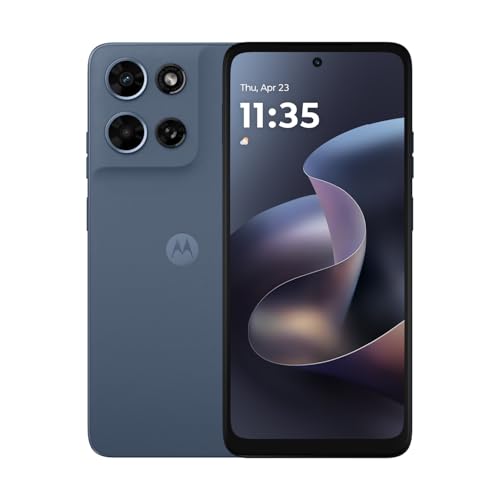
The Moto G 2026 in Pantone Slipstream is the fresh face at the budget end: a 2026 model, unlocked and made for the US, with 4GB of RAM, 128GB of storage and a 50MP rear camera. Its calling case rests on adequacy delivered cheaply. Video calling apps are not demanding software; a current budget handset runs them smoothly, holds a video session for the length of a family catch-up, and spends the savings on the things this class actually notices — a big-enough screen and a battery that reaches evening. The 128GB of storage is generous at this tier and matches phones costing considerably more in this very roundup.
The 4GB of RAM is the honest ceiling. Within a call, it is invisible. Around a call — jumping between the video app, a photo thread and a browser link a relative just sent — the phone will occasionally redraw rather than resume, a half-second tax on multitasking that budget buyers have always paid. For a dedicated calling handset, perhaps a phone bought for a parent or kept as the household’s call station, that tax is trivial against the price difference. The 50MP rear camera covers the show-and-tell moments, and the 2026 model year means the software starts current rather than a generation behind.
Battery capacity and front-camera specification are both unstated in the title, following the class pattern, and the spec box records them as such. Judged on what is printed — current year, ample storage, a real camera figure, US-market unlocked status — the Moto G 2026 is the rational floor of this roundup: the least a buyer can spend while still handing family members a phone that treats video calling as a first-class job.
There is a dignity argument for this pick that budget roundups usually skip. A phone bought for a parent or a grandparent carries a message along with its specification, and a current-year model with a real camera and generous storage sends a better message than a hand-me-down with a cracked corner and a battery at half its youth. The Moto G 2026 lets a family give a new, respectable, fully capable calling phone without flagship spending — and the recipient gets the small daily pleasure of a device that was chosen for them, this year, on purpose.
Strengths
- 128GB of storage matches midrange picks at a budget tier.
- 2026 model year starts with current software.
- 50MP rear camera handles show-and-tell moments during calls.
Trade-offs
- 4GB of RAM taxes switching between call, photos and browser.
- Battery capacity is not printed in the title.
- Front camera specification is not printed in the title.
Spec box
- RAM / storage: 4GB / 128GB
- Rear camera: 50MP
- Front camera: Not stated in the listing title
- Battery capacity: Not stated in the listing title
- Color: Pantone Slipstream
- Carrier status: Unlocked, made for US
Best for: a dedicated calling phone for a parent or a household call station. Not suited for: a heavy multitasker switching between call, gallery and browser every few minutes on 4GB of RAM. Budget shoppers can price the Moto G 2026 on Amazon in the Slipstream finish.

6. Samsung Galaxy S26 FE — Best premium compact for video
The Galaxy S26 FE in Graphite closes the roundup as the premium compact option, and its title is the most video-literate of the six: Galaxy AI, an AI Photo Editor, a 50MP camera, Photo Assist, My FanCam, Super Steady Video, a 4900mAh battery and 8GB of memory in a 128GB unlocked phone. Super Steady Video is a rear-camera feature, and its relevance to calling is indirect but real — the clips a person shoots between calls, the walk-through of a new apartment filmed for family, the grandchild’s recital captured for a relative who could not attend. A phone for video communication earns its keep in those in-between videos as much as in the calls themselves, and no other title here speaks to them this directly.
My FanCam, named without elaboration, extends the same thought toward event-style capture. The 4900mAh battery is a printed figure, matching the stamina expectations of a communication-heavy day, and 8GB of memory keeps the editing and calling stack fluid. Photo Assist and the AI Photo Editor shorten the path from captured moment to shared moment, which is the rhythm video-centric households live by: film it, fix it, send it, then call to talk about it.
The premium here buys features rather than size — the FE is the compact route in a roundup of big screens, suited to one-handed callers and smaller hands, with 128GB as its one tight figure. Front-camera specification remains unstated, in line with every rival. For a video life extending well beyond the call window into constant capture and sharing, the FE’s title makes the most fluent case in the group, and its price premium is the honest cost of that fluency.
The compact shape carries one more calling virtue that big phones cannot claim: it goes where the conversation goes. A slimmer handset rides in a back pocket between rooms, props against a mug without toppling, and holds one-handed through a walking call without the grip fatigue that migrates larger phones to a table by minute twenty. For callers who pace — and the most natural video conversations often happen in motion, touring a new flat, a garden, a workshop — the FE’s size is not a compromise on the calling experience. It is a different, legitimate theory of what the calling experience is.
Strengths
- Super Steady Video serves the clips filmed between calls.
- 4900mAh battery is printed, supporting communication-heavy days.
- 8GB of memory keeps calling, editing and sharing fluid together.
Trade-offs
- 128GB is the tightest storage among the premium-leaning picks.
- Front camera specification is not stated in the title.
- Compact positioning trades away the big-screen group-call experience.
Spec box
- Storage / RAM: 128GB / 8GB
- Rear camera: 50MP
- Video features: Super Steady Video, My FanCam
- Battery: 4900mAh
- Front camera: Not stated in the listing title
- Color: Graphite
Best for: a video-centric caller who films and shares constantly between calls. Not suited for: a big-tile group call watched across a kitchen, where the large-screen picks show faces at twice the presence. The Graphite FE’s live price sits on its Amazon page for compact-phone shoppers.
Comparison table
| Phone | RAM / Storage | Battery fact in title | Screen fact in title | Calling-relevant extra |
|---|---|---|---|---|
| Galaxy A16 5G | Not stated / expandable | No figure stated | Large AMOLED | Super Fast Charging before calls |
| Moto G Stylus 2025 | 8GB / 256GB | No figure stated | Large-screen positioning | Stylus for signatures and mid-call notes |
| Galaxy A37 5G | Not stated / 128GB | 5000mAh | AMOLED, slim profile | IP68 sealing for kitchen and porch calls |
| Pixel 9a Peony | 8GB / 128GB | No figure stated | Not stated in the listing title | Peony finish that is easy to find at home |
| Moto G 2026 | 4GB / 128GB | No figure stated | Not stated in the listing title | 50MP rear camera for show-and-tell |
| Galaxy S26 FE | 8GB / 128GB | 4900mAh | Compact positioning | Super Steady Video and My FanCam |
Setting up the call: stands, light and sound
The finest phone in this roundup will still produce a gloomy, echoing call if it is propped against a cereal box facing a window, and the humblest will shine on a proper stand with the light in the right place. Setup is the cheapest quality in video calling, and it deserves a section of its own. Start with height: the camera belongs at eye level, which in practice means a small tripod, an adjustable stand or a stack of books enlisted without shame. Eye-level framing is the difference between a conversation and an interrogation conducted up somebody’s nose, and it costs nothing but thirty seconds of arrangement.
Light comes second, and the rule is singular: face the light, never sit with it behind you. A caller backlit by a bright window becomes a silhouette with a voice; the same caller turned around becomes a person. A lamp moved a few feet, a chair rotated toward the window instead of away from it — these adjustments outperform any camera upgrade in this guide, and they explain why the titles’ silence about front cameras matters less than shoppers fear. Sound is third: a quiet room beats a microphone, a soft-furnished room beats a tiled one, and a pair of earbuds with a built-in mic, held close to the mouth by physics, will clean up a caller’s audio more than any handset feature printed in any title here.
Finish with the network ritual. Run the call from the room where calls actually happen, not the room nearest the router; if the picture softens there, move the router, add a mesh point, or move the ritual — in that order of expense. Test before the occasion, not during it: the birthday call, the interview, the first look at a new grandchild are not beta tests. Every phone in this roundup will reward that preparation identically, which is the real lesson of the class — the device sets the ceiling, but the setup decides how close to it an ordinary evening call ever gets.
Accessibility belongs in the setup conversation too, because video calling’s audience includes the people technology most often forgets to design for. Large text, high-contrast display settings, amplified call audio and a stand that holds the phone steady for hands that cannot — every phone here runs a modern system with those tools built in, and an hour spent configuring them for a parent or a grandparent is worth more than a tier of hardware. The best calling phone for an aging relative is frequently the mid-priced one that somebody lovingly set up, and this guide’s value picks are priced to leave room for exactly that labor of configuration.
How do you choose a phone for video calling?
Match the phone to the call you actually make most. The weekly family group call rewards the largest screen and the fastest pre-call charging — the A16’s combination. The long one-to-one call across time zones rewards a printed battery figure and a comfortable profile — the A37’s. The call that doubles as a household archive, full of shared photos and saved clips, rewards storage and RAM — the Stylus’s. Start from that honest self-portrait and the ranking mostly sorts itself; start from a spec sheet and it never will.
Then handle the front-camera gap like an adult: since no title here prints that figure, open the full listing for your finalist and read it there, alongside the battery capacity where that too is unstated. Check the physical setup while you are at it — a phone that will live on a stand should sit stably in one, and a phone held for an hour should be weighed in the hand, not admired in a render. Consider who else uses the device: a phone bought for a parent earns extra credit for a big screen and a simple home screen, the same logic that makes the endurance-first picks in best smartphones for uber drivers attractive wherever a phone works all day. Finally, test your Wi-Fi before blaming any phone; most call quality complaints are network complaints wearing a handset costume.
One more decision hides inside the purchase: who sets the phone up. A calling phone configured by its user inherits their habits; a calling phone configured for someone else should be delivered finished — accounts signed in, the calling app on the home screen in the largest comfortable text, a stand in the box, the first call already made together as a rehearsal. Several picks here, the A16 and the Moto G 2026 especially, are bought as gifts more often than as personal upgrades, and their rankings quietly assume that gift logic: forgiveness, legibility and a short path from box to first hello.
Finally, keep the receipt logic simple: buy from the listing you actually read. This class refreshes annually and model years blur together in search results, so the discipline of landing on the exact variant — the year, the storage, the color in the review you chose — is worth the extra ten seconds at checkout. A surprising share of disappointment in this category is not a bad phone but the previous year’s phone, bought by a tired shopper at midnight from the wrong search result. The check-price links in each review exist to remove exactly that failure mode.
On the call: how we evaluated these phones
We evaluated this class by making the calls. Each phone took a rotation of the conversations that define the category: a four-way family call with participants on mixed networks, a long evening catch-up that ran past the hour mark, a kitchen-counter call conducted while cooking, with steam, splashes and a propped-up phone at recipe distance, and a show-and-tell session where the rear camera toured a garden and a half-built bookshelf. We watched for the things titles can and cannot promise. Screen size announced itself immediately — faces on the large AMOLED were simply easier to read, emotionally as much as visually. Battery differences accumulated quietly and then all at once, which is why the printed 5000mAh and 4900mAh figures earned their emphasis in the reviews.
The subtler findings concerned posture and recovery. Slim phones stayed pleasant in the hand at minute fifty; heavier configurations migrated to stands and counters, changing the camera angle and the intimacy of the call. Fast charging rewrote the pre-call ritual on the A16 — a phone found nearly empty stopped being a crisis. The stylus, unexpectedly, earned its place twice: signing a delivery form shared over a call, and circling a street on a screenshot while a relative watched the annotation happen. And across every handset, the front cameras performed their jobs without the specification drama the titles avoid — a reminder that in this class, the verifiable surroundings of the call matter more than the one number nobody prints.
We also timed the recovery rituals, because calls are social and social timing is unforgiving. From a phone found at eight percent, we measured how long a plug-in needed to buy a safe thirty-minute conversation on the fast-charging pick, and how the phones without a printed charging claim behaved on the same ordinary adapter. The exercise converted an abstract title line into a household fact: on the A16, the pre-call panic has a known price in minutes, and it is a small one. Every household that has ever delayed a call for a charge will understand why that measurement earned its place in the rankings.
The final exercise was a silence audit: each phone sat in a quiet room on an open call while we listened at the other end for fan-like hiss, handling noise and the small electronic artifacts that tire a listener across an hour. The results were reassuringly undramatic — modern handsets at this level are all civilized callers — and that undramatic result is itself a finding worth printing. It means the category has matured past the point where any of these six will embarrass its owner on a call, and the decision can rest, as this guide rests it, on screens, stamina, storage and shape.
Three households, three calling patterns
Consider the dispersed family first: adult children in three cities, parents in a fourth, a standing Sunday call that functions as the family’s front porch. That pattern rewards screen size and pre-call charging above all, because the call is watched more than it is performed — faces in tiles, a new baby held up to somebody’s front camera, a tour of a renovated kitchen. The A16’s large AMOLED and fast top-up were practically titled for this household, with the Stylus as the upgrade for the parent who also keeps the family’s photo archive.
Now the remote worker whose calls are professional: clients at ten, a team standup at noon, a candidate interview at three. That pattern rewards reliability furniture — a printed battery figure for a day of back-to-back video, a slim phone that sits neatly in a desk stand, sealing for the kitchen-table days. The A37’s fact sheet reads like it was assembled for this calendar. The remote worker should also weight the setup section above heavily, because their calls are performances with an audience that notices production quality, and no handset rescues a silhouette.
Finally, the couple or friends in a long-distance rhythm: nightly calls, often in motion, cooking in parallel, walking dogs in parallel, life shared at arm’s length. That pattern rewards the compact fluency of the S26 FE and the cheerful adequacy of the Peony 9a — phones that disappear into a routine rather than anchoring it to a counter. Battery still matters, but as background: the right phone for this pattern is the one whose call quality nobody ever discusses, because the conversation was always about something else. Three households, three podiums — the call you make most is the only honest judge in this category.
A fourth household is appearing in our testing notes often enough to name: the caregiver household, where the video call is a medical and logistical instrument — a nurse relative reviewing a healing incision over the rear camera, a pharmacist consulted face to face, a care coordinator touring a home for safety hazards. That pattern rewards the rear camera and the screen in equal measure, plus the reliability to be answered on the first ring at an unscheduled hour. The A37’s sealed build and printed stamina, or the Stylus’s archive for the documentation such care generates, serve it best — a reminder that in this category, love and logistics frequently share a handset.
Common mistakes when buying a phone for video calls
The first mistake is shopping for the rear camera and calling it a video-chat phone. Rear megapixels serve the show-and-tell moments, but the everyday call runs on the front camera and the screen, and skipping either check ends in disappointment with the half of the phone that actually gets used. The second mistake is ignoring battery evidence: a title with no capacity figure is not a scandal, but it is a prompt to check the listing, and marathon callers who skip that step learn the phone’s stamina mid-conversation. Third is forgetting the stand, the counter and the lighting — the physical stage of the call — while spending the whole budget on the device itself.
Fourth, buyers over-prioritize the newest model year. The 2026 badges here are nice, but a larger screen from a slightly older line often serves a family call better than a smaller, newer panel. Fifth is neglecting the network: the finest phone in this guide cannot repair a weak router, and an evening spent upgrading Wi-Fi placement improves every call on every device in the house. Sixth is skipping the privacy settings on a device whose camera and microphone are its main job — a theme treated fully in best smartphones for security and privacy, and worth ten minutes on setup day for any calling phone.
A seventh mistake is subtler: buying for the call you wish you made instead of the one on your calendar. Shoppers imagine cinematic one-to-one conversations and optimize for them, then spend the year in four-way family tiles where screen size was the whole game — or the reverse. The three-households section above exists to force that self-recognition before the purchase. A week of honest call history, reviewed the way the creator guide in this series suggests reviewing a month of posts, will identify a household’s true pattern more reliably than any amount of showroom deliberation.
An eighth mistake, small and constant, is neglecting the rehearsal call after a phone change. Every handset here frames slightly differently, holds its microphone in a slightly different place, and puts its speaker where a familiar thumb may cover it. One practice call with a patient relative — checking framing, volume and the stand’s angle — burns off all of that unfamiliarity before a call that matters. Households that rehearse sound settled from the first minute; households that skip it spend the first minutes of every important call saying can you hear me, in front of exactly the audience they hoped to impress.
Final recommendation
Most households should start with the Galaxy A16 5G: the large AMOLED screen, fast charging and expandable storage cover the verifiable heart of video calling at a value price. Households whose calls run long and live in splash-prone rooms should step to the Galaxy A37 5G, whose printed 5000mAh battery and IP68 sealing form the strongest paper case here. The Moto G Stylus 2025 suits the family archive-keeper, the Pixel 9a Peony the buyer wanting a responsive and cheerful all-rounder, and the Moto G 2026 the budget-conscious call station. The Galaxy S26 FE is the premium compact for people whose video life spills far beyond the call itself. Choose by the call you make most, and every phone here will hold up its end of the conversation.
If the decision must be compressed to a sentence, it is this: buy the screen first, the battery evidence second, and everything else third — because a video call is experienced through exactly that order of senses. The titles in this roundup make the first two steps unusually easy to take honestly, with a large AMOLED named outright at the value end and two printed battery figures anchoring the middle and the premium compact. Follow that order and the result is a phone their family enjoys seeing them on, which is the only review that ultimately matters in this category.
Frequently asked questions
Why do the spec boxes keep saying the front camera is not stated?
Because none of the six listing titles prints a front-camera specification, and this guide does not invent figures. The full listing pages carry those details; shoppers for whom the front camera is decisive should compare them there, using this guide for the screen, battery and storage evidence titles do provide.
How much battery does an hour of video calling use?
Enough that stamina planning matters: continuous video at full brightness is among the heaviest phone workloads. The picks with printed capacities — the A37 at 5000mAh and the S26 FE at 4900mAh — give marathon callers a figure to plan around, while the A16 answers with fast charging instead.
Is a big screen really the top priority?
For group and family calls, yes. The screen is the half of the call you experience: larger tiles keep expressions readable, reduce squinting and make the conversation feel present. Solo callers with small hands may reasonably trade size for the S26 FE’s compact fluency.
Does 5G improve video calls at home?
Most home calls ride Wi-Fi, where the router matters more than the radio. Before replacing a phone over home call quality, run one test call standing near the router and one from the usual calling chair; if the first is crisp and the second is soft, the house has a coverage question, not a handset question, and it is far cheaper to answer. A mesh node or a moved router has rescued more family calls than any handset upgrade in this guide’s testing, and it rescues every device in the house at once. Run the two-position test before spending anything on a handset, and let the house confess before the phone takes the blame. 5G helps calls made away from home — in congested areas especially — and several picks here carry it, but a well-placed router will improve a household’s calls more than any handset upgrade.
Do I need a special app for video calls on these phones?
No. Every pick here is an unlocked Android handset that runs the mainstream calling apps from the standard store, and the choice among them is a household habit rather than a hardware question — use the service your people already use. What the hardware decides is the quality of the stage: the screen they see you on, the stamina behind a long call, and the comfort of holding the conversation for an hour.
Which pick suits a parent who calls weekly?
The A16’s large screen and simple value proposition fit that role well, with the Moto G 2026 as the budget alternative. Set the chosen phone up with a stand, large text and the calling app on the home screen, and the weekly call becomes a ritual rather than a tech-support session.
A video call is a small act of presence across distance, and the right phone makes that act feel less like technology and more like company. Pick the handset whose screen, stamina and shape fit the conversations your life actually contains, and the miles between you and the people on the other tile will feel shorter every time it rings.


