What's inside
- Where to buy
- Key Takeaways
- Quick Picks
- How did we choose the best 48 mp camera phones right now?
- How do these 48 mp camera phones compare side by side?
- What is pixel binning, and why does it matter more than the headline number?
- How do you get better photographs from a 48 mp camera phone?
- How well do these phones handle video, not just stills?
- What actually happens inside these cameras at night?
- What should you check when buying a renewed camera phone?
- What mistakes do buyers make when shopping by megapixels?
- Which of these cameras suits which kind of photographer?
- Final Recommendation
- Frequently Asked Questions
- Related Guides
As an Amazon Associate I earn from qualifying purchases. This post may contain affiliate links at no extra cost to you.
gizmoverdict.com is reader-supported. When you buy through links on our site, we may earn an affiliate commission.
Where to buy
Each phone below is linked on its name to a listing verified for this guide, and several of those listings describe renewed rather than factory-fresh stock, so read the condition notes and the seller’s own warranty wording before you commit. Camera phones are unusually sensitive to which exact variant you receive: storage fills fast with full-resolution files, and some regional versions differ in band support, so confirm the model, the storage size and the network compatibility on the listing itself rather than assuming the headline tells the whole story. If you prefer to buy in person, the Google and Samsung names here are widely stocked, while the Sony at the top of this list is mostly a mail-order purchase in the US.
There is a number that keeps appearing on camera phone boxes this year, and it is neither the biggest nor the smallest on the shelf: 48 megapixels. The best 48 mp camera phones right now occupy a sweet spot that took the industry years to find. Their sensors are large enough to gather serious light, their resolution is high enough to crop into a scene after the fact, and — through a trick called pixel binning, explained properly further down — they spend most of their time behaving like a lower-resolution camera with unusually big, light-hungry pixels. Two of the six phones below carry a main sensor of exactly that size. The others are close neighbours in spirit: phones whose main cameras sit in the same practical class, bin their pixels the same way, and were included because a buyer shopping this category today will cross-shop them whether purists approve or not. Where a pick’s sensor differs from the headline figure, the review says so openly rather than rounding it into the title.
Why does the exact count matter less than the behaviour? Because a photograph is not made by a number. It is made by a lens, a sensor, a processor and a piece of software deciding, in a fraction of a second, what your shaky hand and a dim restaurant actually meant. The phones in this guide were chosen for how those pieces work together: how reliably they focus on a moving child, how honestly they render skin under yellow light, how much detail survives when you zoom with your fingers instead of your feet. Megapixels open the door to that conversation; they do not finish it. Read the picks with that in mind and you will understand why a mid-priced phone with a well-tuned 48-megapixel camera so often embarrasses a flagship that shouts a bigger number.
Key Takeaways
- The Google Pixel 9a is the most convincing true 48-megapixel camera here, pairing its sensor with the most reliable point-and-shoot processing in the group.
- Sony’s Xperia 1 VIII is the photographer’s tool of the six, with manual controls and a viewfinder mindset the others do not attempt.
- Pixel binning, not raw resolution, is what you actually use daily: most shots from these phones are saved at roughly a quarter of the headline count, and they are better for it.
- The Pixel 8a and Pixel 7a show how far last-generation camera tuning travels — their sensors differ in size from the headline figure, but their processing keeps them competitive.
- Samsung’s Galaxy A56 brings the brightest screen and the longest software runway of the group to the same camera conversation.
- Motorola’s Moto G Power 2025 is the battery-first route into this class, for people whose camera fails them by dying at 6 p.m., not by lacking detail.
Quick Picks
| Pick | Badge | Why it earns its place |
|---|---|---|
| Google Pixel 9a | Best true 48MP camera | The headline sensor size, married to processing that rescues ordinary light better than anything else at its level. |
| Sony Xperia 1 VIII | Best for photographers | A 48MP main camera in a phone built around manual control, fast bursts and a creator’s video toolkit. |
| Google Pixel 8a | Best value Pixel camera | A higher-resolution main sensor than the headline class, with Pixel processing at a gentler renewed price point. |
| Samsung Galaxy A56 5G | Best screen and support | A bright AMOLED display for reviewing shots and a long update promise behind a versatile camera system. |
| Motorola Moto G Power 2025 | Best battery for shooters | A big battery and a capable main camera for people whose photo days run from morning hikes to evening streets. |
| Google Pixel 7a | Best budget processing | The older Pixel recipe — strong sensor for its era, superb software — at the friendliest entry point in this guide. |
How did we choose the best 48 mp camera phones right now?
We anchored the list on phones whose main camera genuinely sits at 48 megapixels and can still be bought new or as quality renewed stock today, then admitted close-class rivals only where a real shopper’s shortlist would include them anyway — and labelled them honestly. Every linked pick was verified against a live listing through this site’s checks, so the phone named in each review is a phone that exists to be bought, in the condition the listing describes. Several listings here are renewed units; renewed condition affects battery health and cosmetics, not the camera hardware, but we flag it wherever it appears rather than letting readers assume factory-fresh stock.
The judging criteria were photographic, in a deliberate order. First, consistency: does the camera produce a good photograph the first time, in mixed light, without the owner thinking about it? Second, low-light behaviour, because that is where sensor size and binning earn their keep and where cheap cameras fall apart into watercolour smearing. Third, colour honesty — skin that looks like skin, skies that stay blue rather than teal. Fourth, the supporting act: focus speed, shutter responsiveness, and how much the ultra-wide and selfie cameras let the main sensor down. Raw resolution was considered last, which may seem odd in a guide named after a resolution, but reflects how these phones are actually used: almost nobody prints billboards, and almost everybody crops, shares and views on screens. A camera that wins the first four tests and ties the fifth is the better camera, whatever the box says.
One more filter deserves stating. We excluded phones whose headline camera number is achieved mainly through marketing arithmetic — sensors advertised by their maximum mode while defaulting to something far weaker in practice, or budget models whose high pixel counts sit behind poor lenses and older processing. The six phones below all have main cameras with genuine optical and computational substance behind the number, which is precisely why the number, in their case, is worth shopping by.

Google Pixel 9a — Best true 48MP camera
The Pixel 9a is the phone this category was invented for. Its main camera is built around a 48-megapixel sensor — the listing for this very model says so in plain language — and Google surrounds that hardware with the most forgiving photo processing in the business. Forgiving is the right word. The 9a assumes your light is bad, your subject is moving and your hands are not tripods, and it quietly stacks exposures, balances colour and rescues shadow detail until the photograph looks like the moment felt. Portraits of people keep their skin texture instead of being smoothed into wax. Night scenes keep their darkness instead of being brightened into fake noon. For the overwhelming majority of buyers, who want to raise the phone, tap once and trust the result, nothing else in this guide is as consistently right.
The honest limitations are the familiar Pixel a-series ones. There is no dedicated telephoto lens, so distant subjects are a crop from that generous sensor — a good crop, thanks to the resolution headroom this guide is about, but a crop nonetheless, and it softens sooner than an optical zoom would. Charging is unhurried, the design is deliberately plain, and the renewed listing linked here means you should check the seller’s condition grading and battery policy before buying. None of that dents the central argument: if the phrase “48 mp camera phone” brought you here, this is the purest expression of the idea currently on sale — the exact sensor class, the best software wrapped around it, and a price that leaves room in the budget for the case and cloud storage you will actually need.
- Main camera: 48MP, as stated in the verified listing
- Chip and memory: Google Tensor family processor, 8GB RAM, 128GB storage in the listed configuration
- Display: bright OLED panel suited to reviewing shots outdoors
- Extras: 5G, unlocked for GSM networks, AI-assisted photo features
- Condition note: listed unit is renewed stock — check grading and seller warranty
Strengths
- Point-and-shoot reliability in poor light is the best in this guide.
- Resolution headroom makes digital crops of distant subjects genuinely usable.
- Colour rendering stays honest on faces, food and grey winter skies alike.
Trade-offs
- No optical telephoto; zoom is computational beyond a modest range.
- Charging speeds trail the faster-charging rivals here.
- Renewed stock varies in cosmetic condition between sellers.
Best for: anyone who wants the definitive 48MP camera phone without flagship money or flagship fuss. Not suited for: keen zoom photographers or buyers who insist on factory-sealed stock only.

Sony Xperia 1 VIII — Best for photographers
Sony makes the only phones in this guide designed by people who also make standalone cameras, and the Xperia 1 VIII wears that heritage openly. Its main camera is a 48-megapixel unit, as the verified listing states, sitting in a body that offers the things photography enthusiasts keep asking other brands for: a proper multi-level camera interface with manual exposure controls, fast continuous shooting that tracks moving subjects the way a dedicated camera would, and a tall, colour-accurate OLED display that doubles as a serious monitor for reviewing work in the field. Where the Pixel automates, the Xperia invites. It assumes you might enjoy choosing your shutter speed, and it rewards that interest with files that hold up beautifully to editing.
That invitation defines both its appeal and its limits. In automatic mode the Xperia is perfectly capable, but it does not hold your hand the way the Pixels do, and a casual shooter may find its results less instantly punchy because Sony favours a natural rendering over a processed one. The phone is also an international GSM model in this listing, so US buyers must confirm band compatibility with their carrier before ordering, and its tall, narrow shape polarises opinion in the hand. Video creators, though, should linger here: Sony’s video toolset, microphone handling and display quality make this the strongest filmmaking phone in the guide by a distance. Buy it as a camera that makes calls, and it will delight you; buy it as a casual snapper, and the Pixels will serve you better.
- Main camera: 48MP, as stated in the verified listing
- Display: 6.5-inch 120Hz OLED
- Memory and storage: 12GB RAM, 256GB storage in the listed configuration
- Extras: 5G, dual SIM plus eSIM, factory unlocked GSM
- Condition note: international version — verify carrier bands before purchase
Strengths
- Manual camera controls and burst performance are unmatched among these six.
- Natural colour science rewards editing and pleases photographers who dislike heavy processing.
- Video toolkit and display quality lead the group for creators.
Trade-offs
- Less hand-holding in auto mode than the Pixels provide.
- International GSM listing demands a careful carrier check in the US.
- Tall, narrow design will not suit every hand or pocket.
Best for: photography enthusiasts and video creators who want camera-first hardware. Not suited for: set-and-forget snappers or buyers on CDMA-based networks.

Google Pixel 8a — Best value Pixel camera
Honesty first: the Pixel 8a’s main sensor is not a 48-megapixel unit — it is a higher-resolution sensor, and it earns its place here because it plays exactly the same game. It bins its pixels down for everyday shooting, produces the same class of bright, detailed 12-megapixel-class output, and offers a full-resolution mode when you want maximum crop room. Shoppers cross-shop it against true 48MP phones constantly, and on results, it belongs in the conversation: the 8a carries Google’s mature processing, with the same instinct for tricky light and moving subjects as its newer sibling, at a renewed price point that undercuts the 9a while giving away surprisingly little in the viewfinder.
Where the 8a does give ground is in the margins rather than the middle. Its design is a generation older, its charging is leisurely, and as renewed stock its battery health depends on the individual unit and the seller’s grading, so buy from a listing whose returns policy you have actually read. The camera story, though, is close to the 9a’s: reliable focus, honest colour, night results that shame phones costing far more, and an ultra-wide that is genuinely useful rather than decorative. If your budget will not stretch to the newer phone, the 8a is the value pick of this guide — the one where the compromise lives in the spec sheet margins instead of in your photographs.
- Main camera: higher-resolution sensor with pixel binning (not a 48MP unit — see review)
- Chip and memory: Google Tensor family processor, 8GB RAM, 128GB storage in the listed configuration
- Display: OLED with high refresh rate for its class
- Extras: 5G, unlocked, Google photo and AI editing features
- Condition note: listed unit is renewed stock — check grading and returns terms
Strengths
- Pixel processing maturity at a gentler price than the current model.
- Full-resolution mode offers serious cropping room for a phone of its price.
- Compact size suits one-handed shooting better than the larger picks.
Trade-offs
- Not literally a 48MP camera, for buyers who want the exact headline figure.
- Slow charging by current standards.
- Renewed condition varies; battery health is unit-dependent.
Best for: value hunters who want Pixel photographs without Pixel 9a money. Not suited for: spec purists shopping strictly by the 48MP label.

Samsung Galaxy A56 5G — Best screen and support
Samsung’s Galaxy A56 approaches the camera question from the photograph’s destination rather than its capture. Yes, its main camera sits in the same high-resolution, pixel-binning class as the rest of this guide — Samsung’s A-series flagships have standardised on that recipe — but the A56’s real argument is everything around the sensor: a big, bright AMOLED screen that makes reviewing and editing shots outdoors a pleasure instead of a squint, water resistance for shooting in weather that sends other phones into pockets, and a software support runway measured in years, which protects your camera’s processing improvements long after purchase. The listed model is an international dual-SIM variant, so US buyers should confirm network compatibility — the listing itself notes broad compatibility, but bands are a check, not an assumption.
Photographically, Samsung tunes warmer and more vivid than Google, which flatters landscapes and food and occasionally over-sweetens skin tones; tastes differ, and plenty of people prefer it. The camera system is versatile, the ultra-wide is respectable, and Samsung’s editing tools are the most playful here. Against that, the A56 lacks the Pixel’s low-light sorcery and the Xperia’s manual depth, and its international-variant status in this listing means warranty arrangements differ from a US-retail purchase. Buy it if your phone is a five-year companion and its screen is where your photos will mostly live — on that ownership story, it is the strongest pick in the guide.
- Main camera: high-resolution sensor with pixel binning, in the same class as this guide
- Display: 6.7-inch 120Hz AMOLED
- Memory and storage: 8GB RAM, 256GB storage in the listed configuration
- Extras: water resistance, dual SIM, long software update commitment
- Condition note: international variant — verify US carrier bands and warranty terms
Strengths
- Best display in the guide for reviewing, editing and sharing photographs.
- Long update runway keeps camera processing improving for years.
- Water resistance encourages shooting in weather others avoid.
Trade-offs
- Colour tuning runs vivid; purists may find skin tones over-warmed.
- Low-light results sit a step behind the two Pixels.
- International variant requires homework on bands and warranty.
Best for: long-term owners who review and edit on the phone itself. Not suited for: buyers who want the most natural colour science or a US-retail warranty by default.

Motorola Moto G Power 2025 — Best battery for shooters
Ask travelling photographers what actually ruins their photo days and few will say resolution. They will say the battery warning at golden hour, three valleys from the nearest socket. The Moto G Power 2025 is built for that complaint: a large battery, an efficient processor and Motorola’s uncluttered software stretch its working day far beyond the other picks here, and its main camera — a 50-megapixel-class unit that bins down for daily shooting, close enough to this guide’s theme to be cross-shopped constantly — delivers bright, likeable photographs in good and moderate light. It is the pragmatic pick: not the best camera here, but the camera most likely to still be alive when the light turns beautiful.
Set expectations accordingly and the Moto rewards them. In dim interiors its processing works harder and shows it, with more noise and softer detail than the Pixels produce, and its supporting cameras are modest. The listed model is made for US networks and unlocked, which removes the compatibility homework the international picks demand. Charging, when you finally need it, is respectable rather than rapid. For hikers, festival-goers, delivery drivers documenting their day, and parents whose phones double as the family camera from breakfast to bedtime, the trade is a good one: a small step down in ultimate image quality for a large step up in the number of moments the camera is present for. A photograph that exists beats a perfect sensor that stayed home on a charger.
- Main camera: 50MP-class sensor with pixel binning, per the verified listing
- Battery: large-capacity cell, the endurance leader of this guide
- Memory and storage: 8GB RAM, 128GB storage in the listed configuration
- Extras: unlocked, made for US networks, clean near-stock Android
- Display: large panel suited to reviewing the day’s shots
Strengths
- Battery endurance outlasts every other pick here by a wide margin.
- US-focused unlocked listing removes carrier compatibility guesswork.
- Clean software keeps the camera app fast to open and shoot.
Trade-offs
- Low-light processing trails the Pixels noticeably.
- Supporting cameras are basic compared with Samsung’s set.
- It is a larger, heavier phone than the compact Pixels.
Best for: long active days where the camera must survive to sunset. Not suited for: night photographers who judge a phone by its darkest-room results.
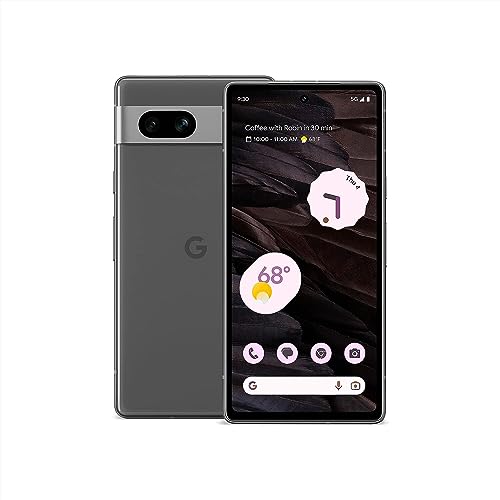
Google Pixel 7a — Best budget processing
The Pixel 7a is the elder statesman of this guide, and its presence makes an important point about camera phones: processing ages more gracefully than hardware. Its main sensor belongs to the same high-resolution, binning family as the 8a’s, and while the phone itself is a couple of generations old, the photographs it produces still embarrass many newer rivals, because Google’s computational recipe — the exposure stacking, the tone mapping, the night mode patience — was already mature when this phone launched. As renewed stock, it is also the gentlest entry price in this guide, which makes it the pick for a teenager’s first serious camera phone, a backup travel phone, or anyone who wants Pixel pictures while spending as little as possible.
Age shows in the expected places. The design and display belong to its era, charging is slow, software support has less road ahead of it than the newer Pixels offer, and renewed units vary — inspect the grading, the battery policy and the returns terms with more care than you would for new stock. The camera itself, though, remains the reason to buy: dependable focus, flattering portraits, night shots that still surprise people who have not used a Pixel. If your question is how little you can spend while still carrying a camera that rarely disappoints you, the 7a is the answer this guide gives, with the caveat that its remaining support life makes it a two-to-three-year companion rather than a five-year one.
- Main camera: high-resolution sensor with pixel binning, Pixel processing
- Chip and memory: Google Tensor family processor, 8GB RAM, 128GB storage in the listed configuration
- Display: compact OLED, comfortable for one-handed use
- Extras: 5G, unlocked, wireless charging (unusual at this level)
- Condition note: listed unit is renewed stock — grading and battery terms matter
Strengths
- Photograph quality per pound spent is the best in this guide.
- Wireless charging at this price remains a pleasant rarity.
- Compact body suits smaller hands and lighter pockets.
Trade-offs
- Shorter remaining software support than the newer Pixels.
- Slow wired charging and an older-generation display.
- Renewed condition is a lottery softened only by the seller’s grading.
Best for: budget buyers who prioritise photograph quality above all else. Not suited for: anyone planning to keep the same phone for five years.
How do these 48 mp camera phones compare side by side?
| Pick | Camera character | Standout trait | Watch out for |
|---|---|---|---|
| Google Pixel 9a | True 48MP, heavily assisted | Most reliable results in bad light | No optical zoom |
| Sony Xperia 1 VIII | True 48MP, manual-first | Photographer controls and video tools | GSM international listing |
| Google Pixel 8a | Higher-res sensor, binned output | Value with Pixel processing | Renewed stock variation |
| Samsung Galaxy A56 5G | High-res class, vivid tuning | Screen and update runway | International variant checks |
| Motorola Moto G Power 2025 | 50MP-class, endurance-first | Battery for all-day shooting | Weaker low-light work |
| Google Pixel 7a | High-res sensor, older generation | Cheapest route to Pixel photos | Shorter support horizon |
The table exposes the guide’s real structure: two phones that are literally what the title promises, and four neighbours that a sensible shopper will compare them against. If the exact sensor class is your priority, your shortlist is the Pixel 9a and the Xperia, and the choice between them is temperament — automation versus control. If photographs per pound is the priority, the renewed Pixels argue loudly. If the phone around the camera matters most — screen, battery, support years — Samsung and Motorola make their cases. None of these is a wrong answer; they are answers to slightly different questions, and the sections that follow help you work out which question is yours.
What is pixel binning, and why does it matter more than the headline number?
Pixel binning is the quiet trick that makes modern high-resolution phone cameras work. A 48-megapixel sensor has very small individual pixels, and small pixels gather little light each, which would make for noisy photographs in dim conditions. So the camera groups neighbouring pixels — typically four of them, sharing the same colour filter — and treats the group as one larger, more light-sensitive pixel. The everyday result is a photograph of roughly a quarter the headline resolution, around 12 megapixels from a 48-megapixel sensor, but with far better brightness, less noise and wider dynamic range than a single small pixel could manage. When light is plentiful and you ask for it, most of these phones can also record a full-resolution shot using every pixel separately, trading some low-light grace for maximum detail and cropping room.
Understanding binning reframes how you should shop. The everyday photographs from a 48MP phone and a 200MP flagship are closer in resolution than the boxes suggest, because both are usually binned down to a similar output size; the differences that remain are sensor physical size, lens quality and processing taste. It also explains why the neighbours in this guide belong here: a sensor somewhat above the headline figure, binned the same way, produces materially the same everyday photograph. Judge these phones by their binned results in poor light and their full-resolution results in good light, and you are judging the two modes you will actually use, rather than a number chosen for packaging.
How do you get better photographs from a 48 mp camera phone?
Start with the lens, which on a phone is small, exposed and almost always carrying a fingerprint. Wipe it on a soft cloth before any shot you care about; the improvement, especially at night when smearing turns lights into fog, is larger than any settings change. Next, give the camera time. These phones build their best images from multiple exposures, so hold still for a beat after tapping the shutter, particularly in night mode, and brace the phone against a wall, a table or your own chest when the light drops. Moving subjects in dim rooms remain the hardest test in phone photography; where the scene allows, add light rather than ISO — a lamp switched on beats every computational rescue.
Then use the resolution you paid for deliberately. Switch to the full-resolution mode for landscapes, architecture and group shots in good light, where the extra detail survives and cropping later becomes a real option; leave the default binned mode for everything else, especially indoors and at night. Compose with the crop in mind: because a 48-megapixel file tolerates being trimmed, you can shoot a little wider than the final frame and correct horizons and edges afterwards without the quality falling apart. Finally, review honestly. Zoom into your shots at full size occasionally, learn what your particular phone does to faces, foliage and skies, and adjust your habits to its taste — every camera in this guide has a personality, and the photographers who get the most from them are the ones who learned it.
How well do these phones handle video, not just stills?
A camera phone earns its keep twice: once in the gallery, once in the video library, and the two talents do not always travel together. Video leans on stabilisation, autofocus that does not hunt, microphones that survive wind, and processing that can hold exposure steady as you pan from shadow to sunlight. The Xperia 1 VIII leads this group for video by intention — Sony builds it for creators, with manual video controls, strong stabilisation and a display and audio path designed for monitoring what you record. The Pixels counter with computational steadiness and excellent automatic exposure; their footage looks right with no intervention, which for a school play or a birthday is worth more than a manual focus ring. Samsung sits between the two philosophies, vivid and versatile, while the Moto G Power’s video is serviceable rather than special — a fair trade for its battery, provided you know it before a once-only event.
Resolution choices matter less in video than stability does. All of these phones record high-quality video at mainstream settings, and the practical advice is consistent across them: choose the smoother frame rate for movement, lock exposure when filming a speaker against a bright window, and keep clips short and deliberate rather than filming everything and editing nothing. Storage, again, is the hidden constraint — an afternoon of enthusiastic video can consume more space than a month of photographs, which loops back to the storage advice elsewhere in this guide. Judge video by the steadiness of a walking shot and the honesty of skin tones under indoor light, and the rankings in this section will match what your own eyes tell you in the shop.
What actually happens inside these cameras at night?
Night photography is where the engineering in this guide stops being theoretical. When light falls, a phone camera faces a brutal triangle: a tiny sensor, a subject that will not hold still, and an owner whose hands move. The modern answer is computational patience — the camera captures a rapid sequence of short exposures, aligns them against each other to cancel hand movement, and merges them into a single image with far less noise than any one frame contained. Pixel binning assists by making each effective pixel more light-sensitive, and the processor’s judgement about colour — how much of the sodium streetlight’s orange to keep, how much to correct — decides whether the result feels like the night you remember or like a floodlit forgery.
The Pixels built their reputation on exactly this judgement, and it is why they top this guide despite rivals with comparable hardware: their night images keep darkness in the shadows and faces recognisable in the foreground. Sony takes the opposite philosophical route, favouring a natural rendering and giving manual users the tools to expose deliberately, which rewards skill and punishes haste. Samsung brightens aggressively, which some people love for social sharing. The practical test, if you are comparing in a shop or during a returns window, is a dim room with one lamp and a person in it: check the face for waxy smoothing, the lamp for blooming halos, and the corners for smearing. That single scene separates these six phones more honestly than any specification table.
What should you check when buying a renewed camera phone?
Several picks in this guide are renewed listings, and renewed can be the smartest money in phone buying — or a small lesson in reading carefully. Start with the grading language: what does this seller mean by their top grade, and is the screen guaranteed free of significant marks, since the screen is both your viewfinder and your photo album? Ask how battery health is assessed and what minimum the seller commits to, because a camera phone with a tired battery shortens every shooting day. Confirm the returns window is long enough to test the camera properly, then actually use it: photograph a dim room, a bright sky, a moving pet, a page of text; record a minute of video with sound; check every lens, including the ultra-wide and selfie cameras people forget.
Accessories and provenance deserve a sentence each. Renewed phones may arrive with a generic cable rather than the original charger, which matters if the model supports faster charging speeds with its own adapter. Confirm the phone is fully unlocked and not tied to a previous owner’s account — a factory-reset, activation-ready unit is the baseline, and any listing vague on that point should be passed over. Finally, keep perspective: the camera system itself does not wear out in normal use, lenses do not lose sharpness with age, and a well-graded renewed Pixel or Galaxy will out-photograph a new budget phone at similar money. That asymmetry is precisely why renewed flagships anchor so many of this site’s camera guides.
What mistakes do buyers make when shopping by megapixels?
The founding mistake is treating the number as a quality score. A large pixel count behind a small, cheap lens with weak processing produces large, disappointing files, while a modest count with a big sensor and mature software produces photographs people frame. The second mistake is ignoring the supporting cameras: many buyers choose on the main sensor, then spend years frustrated by a poor ultra-wide at family gatherings where the main lens is too tight for the room. The third is forgetting storage arithmetic — full-resolution files and 4K video eat space quickly, so a phone bought at its smallest storage size can become a weekly deletion chore. The fourth, specific to listings like several in this guide, is skipping the condition and compatibility homework on renewed or international stock, where the camera is identical but the warranty and network experience are not.
A subtler mistake deserves its own sentence: judging a camera by specification comparisons instead of by the photographs you personally take. If your gallery is children indoors, pets at dusk and documents on desks, low-light consistency and focus speed are your whole world, and they are the Pixel’s home ground. If your gallery is coastlines and cathedrals, resolution headroom and colour in good light matter more, and the Xperia and Samsung argue their cases. The right camera is the one matched to your actual gallery, and a few minutes scrolling your own photo history will tell you more than any comparison chart — including the one in this guide.
Which of these cameras suits which kind of photographer?
Match the phone to the gallery you already have. Parents and pet owners live in the hardest photographic conditions that exist — small subjects, poor indoor light, no second takes — and they should weight focus reliability and night processing above everything, which points at the Pixel 9a first and the 8a second. Travellers split two ways: those who shoot landscapes and architecture in generous daylight benefit from resolution headroom and a strong ultra-wide, favouring the Xperia and the A56, while those who travel light and shoot all day on foot should seriously consider the Moto G Power’s endurance, because a dead flagship photographs nothing. Social sharers, who edit inside apps and post within the hour, will get the most visible pleasure from the Samsung’s screen and vivid output. Hobbyists who already own a camera vocabulary — aperture, shutter, ISO — are the Xperia’s natural audience and will feel patronised by everything else here.
There is also the second-phone case, more common than marketing admits. A renewed Pixel 7a bought purely as a camera for travel, concerts or a child’s first phone carries a photographic capability that would have headlined a flagship launch not long ago, at a price where a loss is annoying rather than ruinous. And for anyone upgrading from a phone four or more years old, every pick in this guide will feel like a generational leap in low light specifically — the area where computational photography has advanced fastest — even when daylight results look merely better rather than transformed. Set your expectations there, and none of these six will disappoint you.
How important is the ultra-wide camera in this class?
More important than its specifications suggest, because it serves the photographs the main camera physically cannot take: the whole room at a family gathering, the whole building from a narrow street, the whole group without the photographer standing in a flowerbed. In this guide the supporting cameras vary more than the main ones — Samsung equips its A56 generously, the Pixels keep their ultra-wides competent rather than lavish, and the Moto’s is a basic tool. If your photo history is full of interiors and groups, weight this camera heavily; if it is full of faces and places at arm’s length and beyond, the main sensor deserves your whole budget of attention.
Can these phones replace a dedicated camera?
For most people’s actual photography, they already have. A dedicated camera still wins on optical zoom reach, on large-sensor image quality in the dark, on handling and on battery endurance across a long shooting day — which is why the Xperia, designed by a camera company, borrows so many of those virtues. But the phone is carried always, edits instantly and shares immediately, and its computational tricks rescue scenes a traditional camera would simply record badly. The honest division of labour in 2026 is that phones own everyday photography outright, and dedicated cameras earn their bag space for deliberate outings, wildlife, sport and the pleasure of the craft itself.
One habit ties all of this together, and it costs nothing: back up your photographs automatically from the first day you own the phone. A camera this capable fills with images that matter — first steps, last holidays, the ordinary Tuesdays that turn out to be the ones you miss — and a phone is a fragile, losable, stealable object. Every pick here supports automatic cloud backup, and most buyers should also keep a periodic copy somewhere they control outright, whether that is a computer drive or a second cloud service. Storage inside the phone is working space, not an archive. The photographers who never lose a picture are not luckier than everyone else; they are simply the ones who set up the backup before they needed it, on the day the phone arrived, while the intention was still fresh.
Accessories, chosen sparingly, extend a camera phone more than settings menus do. A slim case with a raised lip protects the lens cluster that now protrudes from every phone in this guide; a small clip-on tripod transforms night mode and group shots alike; a pocketable power bank answers the Moto G Power’s challenge on behalf of the shorter-lived picks. What you do not need is a drawer of clip-on lenses and filters, which mostly degrade the optics the manufacturers engineered so carefully. Spend on protection, power and stability, in that order, and let the sensor you researched so thoroughly do its own work.
Finally, a note on timing a purchase in this category. Camera phones refresh on a yearly rhythm, and the arrival of a new generation reliably softens prices on the one before it — which is exactly the dynamic that makes the renewed Pixel 8a and 7a in this guide such strong value. If your current phone still serves you, buying the outgoing generation just after its successor launches is the most dependable saving in the whole category. If your current phone has died, ignore the calendar entirely: the best camera is the one in your hand at the next family gathering, and every pick here is ready to be that camera today.
And if you are buying for someone else — a parent, a teenager, a partner whose current phone predates this entire category — weight simplicity over ceiling. The phone that gets used is the one whose camera opens fast, focuses without pleading and produces a good photograph from a single tap. That is the Pixel recipe, and it is why the 9a, for all the Xperia’s brilliance, sits at the top of this guide for the majority of households.
Whichever you choose, spend the first evening with it deliberately: walk your own street at dusk, photograph your own people in your own kitchen light, and learn its habits while the returns window is still open and the stakes are still low, and the lessons stay with you for the whole life of the phone.
Final Recommendation
Buy the Pixel 9a if you want the genuine article: a true 48-megapixel main camera wrapped in the most dependable processing on sale, at a price that respects your budget. Choose the Xperia 1 VIII instead if photography is your hobby rather than your habit, because its controls and video tools open doors the Pixel deliberately keeps closed. Let the Pixel 8a tempt you if value matters more than vintage, the Galaxy A56 if the phone around the camera matters most, the Moto G Power if your shooting days are long, and the Pixel 7a if the budget is the first constraint. The number on the box started your search, but the photographs on your wall will be made by light, lenses and software — and on those terms, the 9a is the 48 mp camera phone we would hand to a friend.
Frequently Asked Questions
Is a 48MP phone camera actually better than a 12MP one?
In everyday use, the advantage is flexibility rather than a twelve-versus-forty-eight leap in visible quality. Because of pixel binning, both usually deliver photographs of similar output size, but the 48MP sensor’s binned pixels gather light more cleverly, and its full-resolution mode offers cropping room a native 12MP camera cannot match. Where the older, larger-pixel 12MP designs still compete is in simplicity and sometimes in shutter speed. For most buyers today, a well-implemented 48MP camera is the better tool — provided the lens and processing behind it are sound, as they are on the picks in this guide.
Should I shoot in full 48MP mode all the time?
No. Full-resolution mode shines in bright light on static subjects — landscapes, buildings, group portraits you may crop later — where its extra detail is real. Indoors, at night, or with anything moving, the default binned mode will give you cleaner, brighter, more reliable results, and its files are smaller and faster to share. Treat full resolution as a specialist setting you reach for deliberately, the way a camera owner changes a lens, rather than as the phone’s permanent state.
Do renewed camera phones take worse photographs?
The camera hardware in a renewed phone is the same hardware it shipped with, so a properly graded renewed unit photographs identically to a new one. What varies is everything around the camera: battery health, which affects how long you can shoot; cosmetic condition; and the seller’s warranty if something fails. Buy renewed from listings with clear grading and returns terms, test the camera thoroughly in the return window — including night mode and video — and the photographic risk is small. Several picks in this guide are renewed listings, flagged as such in their reviews.
How much storage do I need for a high-resolution camera phone?
More than you think, if you use full-resolution modes or shoot much video. Binned everyday photographs are modest, but full-resolution files are several times larger, and a minute of high-quality video can consume more space than a hundred ordinary photos. For most people, the mid storage tier of any phone in this guide is the comfortable choice; the smallest tier suits only light shooters who offload to cloud storage religiously. Running out of space mid-holiday is the most preventable disappointment in phone photography.
Does a 48MP main camera mean the other cameras are good too?
Not automatically, and this is where spec-sheet shopping misleads. The ultra-wide and selfie cameras on phones in this class are usually lower-resolution and less capable in poor light than the main unit, and the gap varies by model — Samsung’s supporting set is comparatively strong here, while the Pixels lean more heavily on their main camera’s excellence. If group shots in tight rooms or video calls in dim spaces matter to you, weigh the supporting cameras explicitly rather than assuming the headline number covers them.
What about portrait mode — is it still worth using?
Portrait mode, which uses depth information to blur a background artificially, has matured from a novelty into a genuinely useful tool on the phones in this guide, and the high-resolution main sensors help it: finer detail around hair and glasses gives the software cleaner edges to work with. It remains a effect to use with judgement. Outdoors against a simple background it flatters almost everyone; indoors against a cluttered kitchen it can mangle ears, spectacles and stray hair into obvious artefacts. The craft answer is to take the portrait both ways — one frame with the effect, one without — whenever the moment allows, because storage is cheap and retakes are impossible. On the Pixels the effect can also be adjusted or applied after the fact, which is the most forgiving arrangement of all and another quiet reason their processing leads this class.
How do I keep a camera phone performing well for years?
Protect the two things that degrade: the battery and the lens surface. Avoid leaving the phone on hot dashboards and windowsills, since heat is the battery’s fastest enemy, and use a case that keeps the raised camera cluster from grinding against tables and pocket grit. Keep storage from filling completely, because a phone with no working room slows its camera and its processing together. Update the software when updates arrive — on the long-supported picks here, those updates periodically include camera improvements, not just security patches — and restart the phone occasionally to clear the accumulated oddities of weeks of uptime. Do those unglamorous things and a phone from this guide will photograph a child’s whole primary-school career without complaint.
Related Guides
Continue comparing cameras with our round-up of affordable 5G camera phones, browse the bargain smartphone camera guide for renewed deals, or step back with our wider look at the best Android phones for photography. You may also want our guide to best 1-inch CMOS sensor cameras.
Related guides
- Best Basic Phones Camera Buyers Can Trust: Flip Phones and Simple Handsets That Still Take a Photograph
- Best 3 Camera Cell Phones: Six Triple Systems Where Every Lens Earns Its Place
- Best 10MP Camera Phones: Why the Honest Answer Is a Simple, Modern Camera
- Best Bargain Smart Phones With Camera: Real Photographs Without the Flagship Bill


[…] the camera tiers around this one? Our best affordable camera mid range phones guide covers the step up, the best 3 camera cell phones roundup examines true triple systems, and […]