What's inside
- Key Takeaways
- Quick Picks: Best 6×9 Car Speakers
- How Did We Choose These Six 6×9 Pairs?
- Why Does the Oval Shape Keep Winning?
- How Do the Six 6×9 Pairs Compare Side by Side?
- What Makes a Rear Deck a Good or Bad Home for a 6×9?
- How Do 6x9s Behave in Truck Doors Compared With Rear Decks?
- What Changes When the Factory System Has Its Own Amplifier?
- How Should You Set Up a Deck Pair After Installation?
- Why Do Deck Speakers Fade and Crack Before Door Speakers Do?
- Does a 6×9 Upgrade Make Sense in a Car You Might Sell?
- What Should You Check Before Assuming Your Openings Are 6×9?
- How Do You Stop a Big Oval From Rattling the Car Around It?
- What Is the Sensible Upgrade Path Beyond a 6×9 Pair?
- How Long Should a Good 6×9 Pair Last?
- Why Do Some 6×9 Systems Sound Boomy, and How Is It Fixed?
- How Do You Choose Between the Two Kicker Pairs?
- What Mistakes Do 6×9 Buyers Keep Making?
- Final Recommendation
- Frequently Asked Questions
- Related Guides
As an Amazon Associate I earn from qualifying purchases. This post may contain affiliate links at no extra cost to you.
gizmoverdict.com is reader-supported. When you buy through links on our site, we may earn an affiliate commission.
Where to buy: Every pick in this guide carries a link to a listing verified through this site’s own product pool — six genuine 6×9 pairs from Kicker, Infinity, JBL, Pioneer and Kenwood, with no prose-only seats needed. Two naming disciplines apply throughout. The Kicker CS-series pick is called exactly what its listing calls it, Kicker CS Series 6×9, because its title does not print a model code and this article does not invent one. And the Pioneer pick is the TS-A6961F, the current model and successor to the discontinued TS-A6960F, named as the 6961F at every mention.
The best 6×9 car speakers hold a special place in car audio, because the 6×9 is the closest thing a simple speaker swap offers to a system. The oval cone carries the area of a much larger round speaker, which means genuine low-end weight from a rear deck or a door without a subwoofer anywhere in the car. Generations of sedans were built around exactly this bargain: two 6x9s on the parcel shelf, fed by the radio, producing the full, bass-rich sound that sold the car on the test drive. The format survives because the physics survives — area is bass, and the 6×9 has the most area that fits a standard factory opening.
What has changed is the sophistication stacked on top of that cone. The six pairs here divide into philosophies as much as specifications. Two-way designs bet everything on one good tweeter and a clean crossover point. Three-ways add a midrange driver for the vocal band. The Kenwood goes further still, to a five-way array that covers the top of the range with a committee of small drivers. Kicker fields two pairs at different tiers of its own catalogue. Each architecture has a cabin and a listener it serves best, and this guide’s job is to match them honestly rather than to crown a driver count.
Placement shapes the verdicts as much as product does. Most 6x9s live on rear decks, where they work as the system’s foundation — bass, fill and rear-passenger coverage — while a growing minority serve in the deep doors of trucks and SUVs as primary speakers. A pair judged as foundation is judged on weight and composure; a pair judged as the main event is judged on the clarity of everything above the bass as well. The picks below are read through both lenses, and their verdicts say which placement each serves best.
Key Takeaways
- The 6×9 oval offers the most cone area of any standard factory size, which is why it remains the no-subwoofer shortcut to real low-end weight.
- All six picks are verified linked pairs; there are no prose-only seats in this guide.
- Driver count is a philosophy, not a score: two-way clarity, three-way midrange body and the Kenwood five-way array each serve different listeners.
- The Kicker CS pick is named by its listing title only — no model code is claimed for it — and the Pioneer is the current TS-A6961F, successor to the TS-A6960F.
- Rear-deck pairs are judged as foundations; door-mounted 6x9s are judged as main speakers, and the verdicts below separate the two briefs.
- A rigid, sealed rear-deck mount matters enormously, because the boot or trunk behind the deck is the cabinet the bass is played into.
Quick Picks: Best 6×9 Car Speakers
| Pick | Badge | Why it earns its place |
|---|---|---|
| Kicker DSC6930 6×9-Inch 3-Way Speakers (Pair) | Best all-round 6×9 | The balanced DS-series answer: three-way body, factory-power manners and low-end weight that suits deck and door alike. |
| Kicker CS Series 6×9 Coaxial Speakers (Pair) | Best step-up Kicker | The CS tier adds refinement and control over the DS balance for owners who want the family sound, polished. |
| Infinity Reference 9632IX 6×9 Speakers (Pair) | Best two-way clarity | Reference voicing in the big oval: the cleanest top end on the bench from a disciplined two-way design. |
| JBL Club 9632 6×9 Three-Way Speakers | Best for lively systems | Club-series energy with a three-way layout, voiced to keep a full car sounding awake at cruising volume. |
| Pioneer TS-A6961F 6×9 4-Way Speakers | Best current Pioneer | The present A-series four-way, successor to the TS-A6960F, with layered drivers covering the range in slices. |
| Kenwood KFC-6996PS 6×9 5-Way Speakers | Most drivers, widest coverage | A five-way array that divides the top of the range among specialists, for listeners who want everything covered. |
How Did We Choose These Six 6×9 Pairs?
The pool offered a rare luxury in this programme: a full bench of verified 6×9 pairs, so this guide needed no prose-only seats and no size apologies. Selection therefore turned entirely on coverage of philosophies. We took both Kicker tiers because the step between them is the most common real-world decision in this size. We took the Infinity because a great two-way disciplines any comparison. We took the JBL for the lively mainstream, the current Pioneer four-way because layered-driver designs have their believers, and the Kenwood five-way because it is the architecture’s logical extreme and deserves a fair hearing rather than a dismissive one.
Judging weighted the rear-deck reality first. A deck pair plays into the boot volume, works against road noise from behind, and must produce bass that reaches the front seats with its weight intact. Composure at volume mattered more than brilliance at rest, because deck speakers live at the volumes motorway listening sets. For door duty, the lens shifted: imaging and vocal clarity rose in importance, and pairs were read again as main speakers. A pick could be recommended for one placement and cautioned for the other, and several verdicts below do exactly that.
What we did not do is rank by driver count or by the wattage theatre on the cartons. In this size especially, peak figures are decorative. The honest separators are cone control at travel, the quality of the division between drivers, and whether the voicing survives an hour of real driving. Those are the tests the following sections apply, pick by pick.
Why Does the Oval Shape Keep Winning?
Geometry, mostly. A 6×9 oval packs a cone area comparable to an 8-inch round speaker into an opening whose smaller dimension fits shallow decks and doors. Area is the raw material of bass, so the format starts every comparison with an advantage no crossover trick can copy. The oval shape also spreads flexing modes differently from a round cone, which is one reason large ovals can play low with less audible strain than their price suggests — the shape itself helps the cone stay composed where a cheaper round design of similar cost begins to protest.
The shape’s weakness is the mirror of its strength: it is a specialist. It fits where it fits — decks stamped for it, doors designed around it — and adapts poorly elsewhere, which is why this guide assumes you already own the openings. Within those openings, though, the 6×9 remains the highest-value transducer in car audio: the only common size where a speaker swap alone can plausibly retire the idea of adding a subwoofer, for listeners whose bass standards are musical rather than theatrical.

Kicker DSC6930 6×9-Inch 3-Way Speakers (Pair) — Best all-round 6×9
The DSC6930 is the 6×9 this guide would install in the widest range of cars without a second thought. From Kicker’s DS line, it is a three-way pair that combines the oval’s natural low-end advantage with a dedicated midrange driver, so the format’s famous bass arrives with its vocal band properly supported rather than squeezed out of the woofer’s top end. On a rear deck it is the complete foundation: weight below, intelligible voices above, and no subwoofer-shaped hole in the middle of the music.
Its manners on factory power are the DS family trait — sensitive enough to wake up on a standard head unit, warm enough to forgive the compressed sources most deck systems live on, and composed when motorway volume asks the big cone to work. In doors, the same balance makes it a credible main speaker, though its warmth means absolute detail sits a step behind the Infinity. As an all-rounder that asks nothing of the car and gives back the full 6×9 argument, it sets the standard the rest of this bench is measured by.
Practical ownership is equally untroubled. The DS line’s long run means deck and door fitment notes are plentiful for the sedans and trucks that carry this size, and the three-way cluster’s clearance needs are modest by the standards of the format. If the brief is one pair, any placement, no amplifier, no regrets, this is the purchase the article keeps returning to.
At a glance
- Size and format: 6×9-inch three-way coaxial, sold as a pair
- Role: rear-deck foundation or door main speaker on factory power
- Character: warm, full, with midrange support over the big cone
- Installation posture: standard 6×9 footprint; check cluster clearance under deck grilles
- Ownership note: DS-line longevity with deep fitment documentation
Strengths
- Complete foundation sound: bass weight with the vocal band supported
- Factory-power sensitivity suits the head units these cars actually have
- Works credibly in both placements this size serves
Trade-offs
- Absolute detail trails the two-way Infinity at the top end
- Warmth can thicken in small, reflective cabins at high volume
- Three-way cluster needs the usual clearance check in tight doors
Best for: deck and door owners alike who want the full 6×9 effect from one safe, balanced pair.
Not suited for: detail absolutists building a clarity-first front stage; the Infinity two-way argues that brief better.
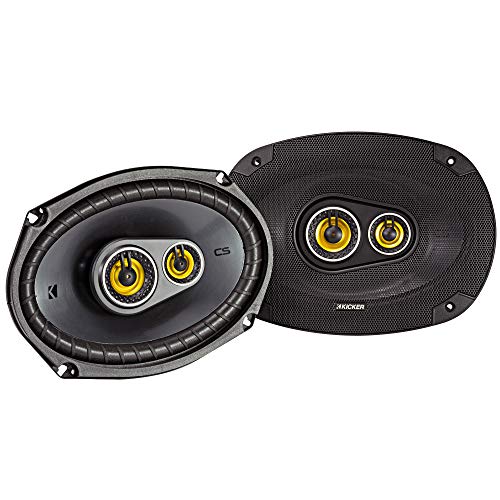
Kicker CS Series 6×9 Coaxial Speakers (Pair) — Best step-up Kicker
First, the name, because precision is a policy in this article: the verified listing calls this product the Kicker CS Series 6×9, and that is what it is called here — no model code is printed in its title, and none will be claimed for it. What the listing does establish is its tier: this is the CS series, Kicker’s step above the DS line, in the 6×9 size, sold as a pair. Buyers comparing it against the DSC6930 above are making the classic within-brand decision, and it deserves an honest answer.
The CS step buys refinement rather than a new character. Control at the top of the cone’s travel is better mannered, the top end is cleaner, and the whole presentation feels like the DS balance after a course of finishing school. On a rear deck the difference registers as tidiness at volume — bass that stays shaped when the road gets loud — and in doors it registers as a midrange that keeps its composure in dense mixes. Owners who already know they like the Kicker family sound, and who keep cars long enough to hear a tier difference amortise itself, are the natural buyers.
Against its sibling, the question is purely whether the polish is worth the step in your cabin. In a quiet sedan used for long drives, yes, the refinement is audible daily. In a work truck whose deck speakers compete with a load bed and all-terrain tyres, the DS pair’s value may be the smarter spend. Either way, the family resemblance means the choice is about degree, not direction — the safest kind of upgrade decision there is.
At a glance
- Size and format: 6×9-inch coaxial, sold as a pair
- Listing name: Kicker CS Series 6×9 — no model code printed in its title, none claimed here
- Character: the Kicker balance with CS-tier control and a cleaner top end
- Installation posture: standard 6×9 fitment for decks and deep doors
- Ownership note: CS is the established step above the DS line in Kicker car audio
Strengths
- Refinement at volume: bass stays shaped when the road gets loud
- Cleaner top end than the DS sibling without losing family warmth
- Same fitment familiarity as the rest of the Kicker bench
Trade-offs
- The improvement is polish, not transformation — DS owners should expect degree, not revelation
- Value hunters may find the DSC6930 answers their cabin just as well
- Listing title gives no model code, so verify the exact product on the page before ordering
Best for: Kicker loyalists and long-term keepers who will hear a tier of refinement every day they own the car.
Not suited for: rough-and-ready work vehicles where road noise will mask the polish the step buys.

Infinity Reference 9632IX 6×9 Speakers (Pair) — Best two-way clarity
The 9632IX is the bench’s argument that two drivers, properly executed, beat a crowd. Infinity’s Reference line voices for clarity, and in the 6×9 format that clarity sits on top of the oval’s natural bass foundation, producing the most articulate full-range presentation in this article. Voices separate, cymbals resolve into metal rather than hiss, and the big cone underneath keeps the low end honest. On a rear deck it is the pair that makes rear passengers ask what changed; in a door it is the pair that makes the front stage sound expensive.
The two-way architecture concentrates its budget where it counts: one substantial tweeter handling everything above the crossover with room to breathe, rather than several small drivers dividing the same money. The trade appears at the extremes of volume and taste — the midrange, covered by the woofer’s top end, has slightly less dedicated body than the three-way Kickers give it, and listeners who prize vocal thickness over vocal clarity may prefer them. At sane volumes, in real cabins, the Infinity’s discipline usually wins the argument within one song.
It is also the pick that most rewards a clean installation. Reference voicing assumes a sealed, rigid mount; give it a rattling deck and it will report the rattle faithfully along with the music. Owners willing to do the deck work described later in this guide will hear the best version of the most resolving pair here, and for clarity-led systems that exchange is the whole point.
At a glance
- Size and format: 6×9-inch two-way coaxial, sold as a pair
- Role: clarity-led deck foundation or front-stage door speaker
- Character: articulate and resolving over a full, honest low end
- Installation posture: standard footprint; rewards rigid, sealed mounting
- Ownership note: Reference is Infinity’s established step-up car line
Strengths
- Most resolving top end and separation on the bench
- Two-way discipline concentrates budget on one capable tweeter
- Bass foundation stays honest beneath the clarity
Trade-offs
- Midrange body is a shade thinner than the three-way pairs offer
- Faithfully reports rattles and leaks in a poorly prepared deck
- Brightness can tip forward in very reflective cabins
Best for: clarity-first listeners, in decks or doors, who prepare the mount properly and listen closely.
Not suited for: listeners who want vocal thickness above all, or whose decks will stay rattly; the Kickers forgive more.
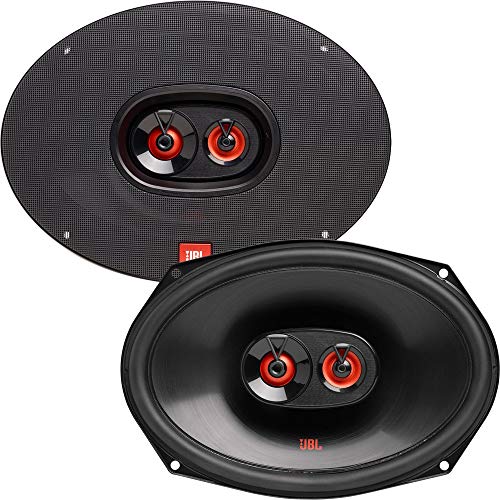
JBL Club 9632 6×9 Three-Way Speakers — Best for lively systems
JBL’s Club line is built for the mainstream of the market, and the Club 9632 three-way brings the brand’s characteristic liveliness to the big oval: a present, energetic balance that keeps music awake at the volumes real driving demands. Where the Infinity resolves, the JBL animates. Pop, rock and electronic material come through with a sense of occasion, and on a rear deck it has the knack of making a whole system feel younger — the pair you fit when the car’s sound has gone dull and you want it back with interest.
The three-way layout supports that energy with a dedicated midrange, so the liveliness does not come at the vocal band’s expense. Its low end is full and enthusiastic rather than the last word in control; bass-heavy material at high volume can warm up the presentation in a way the Kicker CS tidies better. But as a like-for-like rescue of a tired deck system, judged by the smile-per-mile standard most owners actually apply, the Club 9632 is a formidable pick.
Club-series ownership is deliberately uncomplicated: mainstream fitment, mainstream power requirements, and a tuning that flatters the factory head units it will almost always be paired with. It asks the least interpretation of any pick here — fit it, seal it, play something you love — and for the majority of 6×9 owners that directness is not a limitation but the entire appeal.
At a glance
- Size and format: 6×9-inch three-way coaxial, sold as a pair
- Role: lively deck or door upgrade on factory power
- Character: energetic and present, with midrange support
- Installation posture: mainstream 6×9 fitment, undemanding of the car
- Ownership note: Club is JBL’s mainstream car line beneath its premium ranges
Strengths
- Liveliness that revives dull factory systems immediately
- Dedicated midrange keeps vocals present inside the energy
- Tuned to flatter the factory head units it will actually meet
Trade-offs
- Low-end control at high volume trails the Kicker CS
- Energetic top end can fatigue on bright material over long drives
- Subtlety and fine resolution are not its first language
Best for: owners rescuing a dull deck system who want the car to sound awake again from the first track.
Not suited for: quiet-cabin listeners chasing resolution; the Infinity pair serves that brief with more discipline.

Pioneer TS-A6961F 6×9 4-Way Speakers — Best current Pioneer — successor model
Name discipline first: this is the Pioneer TS-A6961F, the current A-series 6×9 four-way and the successor to the TS-A6960F, which no longer has a listing. The distinction matters because older reviews, listings and advice describe the 6960F; the speaker you can actually buy is the 6961F, and it is the 6961F this article assesses, at every mention. Shoppers who meet the older model name in the wild should read those sources as history, not as a description of this product.
The four-way architecture divides the range into more slices than any pick here except the Kenwood: woofer, midrange, tweeter and an additional high-frequency driver each handling a narrower band. Pioneer’s A-series voicing leans lively and detailed, and the layered drivers give the top of the range a spread-out, airy quality that some listeners prefer to a single tweeter’s point of view. On a deck it produces a big, complete sound; in doors it offers the most apparatus per opening on the bench.
The honest reservation is complexity’s usual one: more drivers share the budget, and the benefit of the fourth driver lives in a frequency region that road noise and ageing ears both erode. In a quiet cabin with a younger listener the layering earns its keep; in a loud truck it may be apparatus the environment never lets you hear. Judged as the current Pioneer, on its own terms, it is a capable and complete 6×9 — bought, as it should be, under its correct name.
At a glance
- Size and format: 6×9-inch four-way coaxial, sold as a pair
- Model truth: TS-A6961F, current successor to the discontinued TS-A6960F
- Character: lively, layered, airy at the top of the range
- Installation posture: standard footprint; check the taller driver cluster clearance
- Ownership note: A-series is Pioneer’s mainstream step-up car line
Strengths
- Four-way layering gives the top end an airy, spread quality
- Current model with a live listing — not a discontinued name
- Big, complete deck sound with detail to spare
Trade-offs
- Fourth driver’s benefit fades under road noise
- More drivers share the budget than in simpler designs
- Older TS-A6960F reviews do not describe this speaker; read them as history
Best for: listeners who enjoy layered-driver designs and want the current Pioneer under its correct name.
Not suited for: loud-cabin owners who will never hear the top driver work; simpler pairs spend better there.
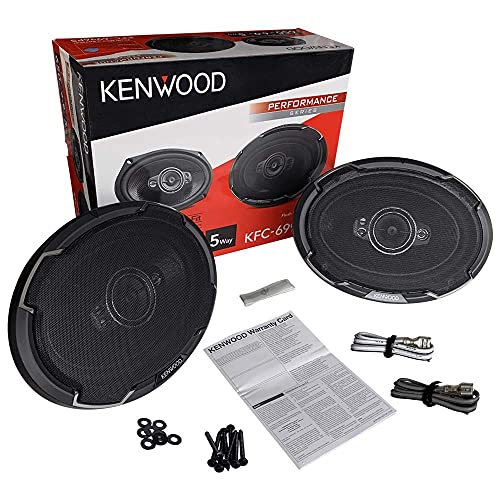
Kenwood KFC-6996PS 6×9 5-Way Speakers — Most drivers, widest coverage
The KFC-6996PS takes the multi-way idea to its conclusion: a five-way 6×9 in which the range above the woofer is divided among a committee of specialised drivers, each responsible for a narrow slice. Kenwood’s PS-series tuning aims for a complete, covered sound — nothing missing, nothing shouting — and in the right cabin the effect is genuinely satisfying: a deck system that sounds finished, with the top end extended and the midrange supported from several directions at once.
The case for five ways is coverage and smoothness at moderate volumes; the case against is the same arithmetic that shadows the Pioneer, one step further. Each additional driver is small, the crossover network dividing five ways is necessarily simple at this level, and the highest slices live where road noise rules. Listeners whose driving is urban and moderate, whose cabins are quiet, and whose music values completeness over punch are the audience this design has always served best.
Within this bench it plays a useful role: it is the pair for the owner who reads two-way designs as under-equipped and wants the fullest specification the size offers from an established brand. That owner exists in large numbers, and this Kenwood serves them with a coherent, finished sound rather than a gimmick. Buy it for coverage at sane volumes, not for output heroics, and it will not disappoint.
At a glance
- Size and format: 6×9-inch five-way coaxial, sold as a pair
- Role: coverage-led deck speaker for moderate-volume listening
- Character: complete and smooth, with the range divided among specialists
- Installation posture: standard footprint; tallest cluster here, so check grille clearance
- Ownership note: PS series is Kenwood’s performance mainstream line
Strengths
- Widest driver coverage in the size; nothing in the range is left homeless
- Smooth, finished presentation at urban and moderate volumes
- Established brand support behind an ambitious design
Trade-offs
- Highest-frequency slices are the first thing road noise deletes
- Five small drivers and a simple network share a finite budget
- Output heroics are not its brief; loud cabins should look elsewhere
Best for: moderate-volume listeners in quiet cabins who value completeness and coverage above punch.
Not suited for: highway-loud listeners; the Kicker and JBL pairs spend their budgets where road noise cannot erase them.
How Do the Six 6×9 Pairs Compare Side by Side?
| Pick | Architecture | Leads on | Gives away |
|---|---|---|---|
| Kicker DSC6930 (Pair) | Three-way, linked | All-round foundation sound | Absolute detail |
| Kicker CS Series 6×9 (Pair) | Coaxial, CS tier, linked | Control and polish at volume | Value simplicity |
| Infinity 9632IX (Pair) | Two-way, linked | Clarity and separation | Midrange thickness |
| JBL Club 9632 | Three-way, linked | Liveliness and presence | Low-end tidiness at volume |
| Pioneer TS-A6961F | Four-way, linked | Layered, airy top end | Benefit under road noise |
| Kenwood KFC-6996PS | Five-way, linked | Coverage and completeness | Output headroom |
The architecture column is a map of bets, not a league table. Each brand wagered its budget on a different theory of what a 6×9 listener misses most, and the right pick is the one whose bet matches your cabin, your volumes and your music. Everything else in this article is an attempt to make that match honestly.
What Makes a Rear Deck a Good or Bad Home for a 6×9?
The deck is a baffle with a boot behind it, and that boot is the cabinet. A large, reasonably sealed trunk gives the cone the air volume it needs to produce low end without strain, which is why deck 6x9s have always punched above their size. The enemies are leaks and rattles: parcel-shelf panels that flex, mounting holes that do not seal, and the dozen trim pieces a big oval can excite into sympathetic buzzing. A rigid mounting surface — reinforced if the shelf is thin — plus a proper gasket under each basket is the difference between the same pair sounding rich or sounding troubled.
Sunlight is the deck’s second enemy. Rear glass turns the shelf into a greenhouse, and the speakers living there endure ultraviolet and heat cycles that door speakers never meet. Established lines build for that punishment, but owners can help: keep the factory grilles or equivalent shading in place rather than running exposed cones under glass, and inspect the surrounds when a deck pair passes middle age. The 6x9s that die young almost always die of environment, not of music.
Finally, remember what the deck is for in the system as a whole. It is the foundation and the rear passengers’ main source, not the soundstage — that belongs to the front of the car. Tuning a deck pair to dominate the cabin drags the music backwards and exhausts the front listeners. Set the fader so the deck underpins rather than leads, and the 6×9 does the job sixty years of sedans designed it to do.
How Do 6x9s Behave in Truck Doors Compared With Rear Decks?
The same pair is two different speakers depending on which home it gets. On a deck, the boot supplies a large air volume and the pair works as a foundation, heard mostly through the cabin as weight and warmth. In a truck door, the air volume is smaller and sealed by the door structure, the listeners sit close, and the pair becomes the main event: imaging, vocal clarity and top-end behaviour all step forward in importance, while the bass tightens and loses a little of the deck bloom. Neither personality is better; they are different assignments, and the verdicts in this guide were written to keep them separate.
Door duty also raises the stakes on depth and water. Truck doors that swallow a 6×9 are deep, but the window mechanism still travels behind the speaker, and doors admit weather in ways a parcel shelf never does. A door-bound pair deserves the moisture discipline of any door speaker: intact barriers, drainage paths left clear, and terminals protected. Owners moving a beloved deck pair into doors during a vehicle change should expect to re-judge them entirely, because the cabin will.
What Changes When the Factory System Has Its Own Amplifier?
A meaningful share of 6×9 cars — particularly the premium-trim sedans that showcased the size — run factory amplifiers with their own equalisation and sometimes low-impedance speakers. Replacing the speakers in such a system is not the plug-and-play swap the base trims enjoy. The factory tuning was drawn around the original speakers, so a replacement pair inherits an equalisation curve meant for someone else, and low-impedance originals replaced by standard-impedance pairs will play quieter at the same volume setting, which owners often misread as the new speakers being worse.
None of this forbids the upgrade; it disciplines it. Identify the system before ordering, through the trim documentation or a look at the factory speaker labels. Expect to spend more time on settings afterwards, and favour the smoother, more sensitive pairs on this bench, which integrate most gracefully with tuning you cannot change. Where the factory amplifier is failing or the system is deeply proprietary, the honest project may be a fuller rework — and a guide that pretends otherwise would be selling you a Saturday of confusion.
How Should You Set Up a Deck Pair After Installation?
Start from flat: tone controls centred, loudness off, fader set so the front stage leads and the deck underpins. Then raise the deck contribution slowly across several familiar tracks until the bass foundation feels present from the driver seat without the image collapsing backwards. Most owners overshoot on the first day, seduced by the new weight behind them, and quietly correct it within a week; starting conservative simply skips the seduction phase.
Give the setup a road test before declaring it finished, because the balance that flatters a parked car is not the balance that survives seventy miles an hour of tyre and wind. At speed, the deck needs to be a little more present than the driveway suggests, and the top end of the front stage does more work than it did at rest. Two or three small adjustments across the first week of real driving will land the system where a single afternoon of driveway tuning cannot.
Why Do Deck Speakers Fade and Crack Before Door Speakers Do?
Ultraviolet light and heat are the executioners, and the rear deck is where they work. Sun through the back glass bakes the cones and surrounds daily, and the thermal cycling between a frozen morning and a sun-soaked afternoon fatigues adhesives and materials faster than mileage ever could. The classic deck-speaker death — a surround crumbling at a touch, a cone gone brittle — is an environmental obituary, and it explains why two identical pairs fitted the same day can age at visibly different rates in deck and door.
The countermeasures are humble. Keep grilles or shade in place rather than displaying bare cones to the glass. When replacing a faded pair, inspect the mounting surface and the wiring insulation while you are there, because the same sun has been working on them too. And when a deck pair begins to buzz only on hot afternoons, read the symptom correctly: the materials are announcing their retirement, and the replacement pair deserves the shaded, sealed home the first pair may never have had.
Does a 6×9 Upgrade Make Sense in a Car You Might Sell?
More than most upgrades, yes, because the audience for the result is broad. A tired deck system is one of the first things a test drive notices, and a fresh pair from an established line restores the impression of a cared-for car for modest money and an afternoon of labour. Keep the receipts and the removed factory speakers; originality-minded buyers can be offered the old pair, and everyone else simply hears a car that sounds looked after.
The discipline is to buy for the car rather than for your ambitions. The balanced pairs on this bench — the Kicker all-rounder above all — are the resale-friendly choices, because their sound pleases strangers immediately and their installation is reversible and tidy. Exotic architectures and heavy door modification impress nobody at a valuation. In the 6×9 class, the sensible pair is usually also the valuable one, which is a rare and pleasant alignment.
What Should You Check Before Assuming Your Openings Are 6×9?
The size has neighbours that invite confusion: 5×7 and 6×8 ovals share the family look, some decks were stamped for 6.5 rounds with adapter plates that imitate an oval from above, and a previous owner may have cut or plated anything. The reliable evidence is the factory speaker itself — its frame dimensions and mounting-hole pattern — or the bare opening measured with the speaker removed. Fitment guides are a good first draft and a poor final authority, particularly across trim levels of the same model.
Depth deserves the same scepticism. Decks hide bracing, torsion bars for the boot lid and wiring looms beneath the shelf, and a deeper replacement magnet can meet any of them. Measure the clearance below the mounting face before ordering, especially in cars where the boot lid springs run close under the deck. Ten minutes with a tape measure is the cheapest insurance in this entire article, and it protects the one fact every other decision depends on.
How Do You Stop a Big Oval From Rattling the Car Around It?
Output finds weakness. A 6×9 moves enough air to excite number-plate frames, parcel-shelf trim, boot-lid skins and the third brake light housing, and each of those sympathetic buzzes will be blamed on the speaker until it is hunted down. The hunt is methodical: play a bass-heavy track at the volume where the noise appears, then move around the car pressing panels with a fingertip until the buzz stops. The panel that stops under your finger is the culprit, and it almost always wants one of three cheap things — a foam pad, a tightened clip, or a strip of deadening.
Do the hunting with the engine off in a quiet place, because road noise masks the small rattles that will drive you mad on a smooth motorway at midnight. Work from the speaker outward: mounting screws even and snug, gasket compressed uniformly, grille seated on all its clips, then trim, then the boot contents themselves. A surprising share of deck rattles turn out to be a loose jack or a forgotten tool in the spare-wheel well, faithfully amplified by the new pair.
Prevention during installation is cheaper than the hunt afterwards. Deadening the shelf around the cutouts, foam-taping every hard plastic contact the grille makes, and checking the boot-lid torsion bars for play takes twenty minutes while the shelf is exposed. Owners who invest those minutes rarely meet the rattle at all, and owners who skip them usually meet it on the first long drive, when the fix requires taking everything apart again.
What Is the Sensible Upgrade Path Beyond a 6×9 Pair?
The pair is stage one, and for many cars it is also the final stage, which is fine. For owners who continue, the order that respects the physics is: front stage next, because the deck you have upgraded is a foundation waiting for something to found; then amplification, because both ends of the car now deserve control; then, only if the deepest octave still feels absent, a subwoofer — at which point the deck pair should be crossed over to relieve it of the lowest work and let it shine in the range where it is strongest.
What the path should not do is circle back and replace the deck pair again at each stage. A good 6×9 bought once, on the reasoning in this guide, serves through every later stage: it fills, it founds, and eventually it hands the deepest notes to a subwoofer without complaint. Churning the deck pair at every upgrade is how budgets evaporate while systems stay the same size.
There is also a legitimate stopping point at every stage, and recognising it is a skill. If the car sounds balanced at speed, if voices are clear and the bass holds together, the system is done — whatever the forums are selling this season. The 6×9 format has satisfied listeners for decades at stage one alone, and satisfaction, not completeness, is the correct finish line.
How Long Should a Good 6×9 Pair Last?
In a door, protected from the worst of the sun, a quality pair from the lines on this bench should serve for many years of daily driving. On a deck, the environment taxes that expectation, and the honest answer is that lifespan there is measured in summers as much as in miles. Heat-hardened surrounds and faded cones are the usual end, arriving gradually: a slow loss of bass suppleness, a faint buzz on loud passages, a top end that dulls as materials stiffen.
The end rarely arrives for both speakers on the same day, which creates the temptation to replace only the worse one. Resist it beyond a short grace period. The surviving speaker has lived the same summers, its balance no longer matches a fresh partner, and the stereo image across the deck will tell on the mismatch every day. Pairs are sold as pairs because they age as pairs.
You can extend the life you get with almost no effort: shade the deck where you can, keep volumes sane on the hottest afternoons when materials are at their most stressed, and treat the first hot-day buzz as information rather than as a challenge to play louder. The pairs in this guide come from lines with long production histories precisely because longevity in this size is a track record, not a promise.
Why Do Some 6×9 Systems Sound Boomy, and How Is It Fixed?
Boom is what happens when the boot, the deck and the speaker agree too enthusiastically at one low frequency and shout it over the rest of the music. The usual accomplices are a large empty trunk acting as a resonant chamber, bass boost applied at the head unit, and a mounting leak that lets the cone move without control. The result is the one-note bass that makes every recording sound like the same song wearing different clothes.
The fixes run from free to cheap. Flatten the bass controls and disable loudness first, because factory curves drawn for weak speakers exaggerate exactly the region a big oval already supplies generously. Seal the mounting properly so the cone works against controlled air rather than a leak. If the boot is a bare metal drum, a modest amount of deadening or even the ordinary contents of a used trunk — luggage, a blanket, the spare wheel cover properly seated — will calm the chamber more than any electronic tweak.
Judge the result with recordings whose bass you know is tidy. If tidy recordings sound tidy and only genuinely boomy productions boom, the system is honest and the recordings are the story. The goal was never to delete bass character; it was to return the choice of bass to the music, where it belongs.
How Do You Choose Between the Two Kicker Pairs?
It is the decision this bench will most often be used for, so it deserves a direct answer. The DSC6930 and the CS Series pair share a family balance, a fitment philosophy and a maker; they differ in the tier of control and polish their budgets bought. The practical test is the cabin they will serve. A quiet sedan or a well-kept truck with modest road noise will reveal the CS pair refinement daily, in the tidiness of loud bass and the cleanliness of the top end. A working vehicle, a loud cabin or a car whose deck competes with all-terrain tyres will mask most of that polish, and the DS pair value becomes the intelligent spend.
Ownership horizon votes too. The refinement premium amortises across years of listening, so keepers gain more from it than owners refreshing a car for sale. And there is no wrong answer hiding here: both pairs fill the opening properly, both run happily on factory power, and both come from lines with the production history this guide insists on. When two options are both right, choose by the cabin you actually drive, not by the tier you feel you ought to buy.
One more consideration belongs in this section because it decides real purchases: if the car will gain a front-stage upgrade later, buy the deck pair for the system it will join, not the system it replaces. A clarity-led deck under a future clarity-led front stage compounds; a bass-heavy deck under a future delicate front stage will spend years being faded down. The six pairs above were described with their system personalities in plain language precisely so that this kind of forward matching is possible.
What Mistakes Do 6×9 Buyers Keep Making?
Ranking by driver count. Five ways is a design, not a victory. The two-way Infinity out-resolves pairs with twice its drivers, and the right architecture is the one that matches your cabin and volume, not the largest number on the box.
Buying the discontinued name. Advice written about the Pioneer TS-A6960F describes a speaker that no longer lists. The current model is the TS-A6961F; check the name on the listing against the name in the review before trusting either.
Assuming a model code the listing never printed. The Kicker CS pick in this guide is sold under a title without a code. Sellers and forums may attach one; your order should rest on the listing itself, verified on the page.
Mounting into a flexing shelf. A big oval screwed into a thin, rattling deck will sound like the deck, not like the speaker. Reinforce, gasket and deaden first — the pair you bought is only the pair the shelf allows.
Judging from the back seat. Deck speakers sound most impressive where they are aimed. Judge the system from the driver’s seat at driving volume, because that is the seat the system serves for most of its life.
Final Recommendation
For most 6×9 owners the DSC6930 remains the first recommendation: the complete foundation, on factory power, in either placement. Step to the CS Series pair if your cabin is quiet and your ownership long, to the Infinity if clarity is your religion, and to the JBL if the car needs waking up. The Pioneer TS-A6961F and the Kenwood five-way serve their philosophies honestly for listeners who share them. Whichever pair earns the deck, spend the saved effort on the shelf beneath it — in the 6×9 world, the mount is half the speaker, and the other half was decided the day the oval was drawn.
A word about patience with new deck speakers, because the format invites hasty verdicts: a fresh pair on its first afternoon is playing with stiff surrounds, an unsettled mount and a listener whose ears are calibrated to years of the old sound. The honest audition is the third or fourth drive, on roads you know, with music you know, at the volume the motorway sets. Every pair in this guide was assessed in that spirit, and owners who judge in that spirit rarely return speakers that were about to become favourites.
Keep the packaging and the factory pair until the new speakers have survived a fortnight of ordinary use, including at least one hot afternoon parked in the sun and one long motorway run. Those two conditions expose more installation sins — a heat-softened rattle, a mount that loosens as materials cycle — than any amount of driveway listening. If the fortnight passes clean, the upgrade is finished in the only sense that matters, and the old pair can be stored, sold or passed on with the story of the car intact.
Frequently Asked Questions
Do 6×9 speakers still need a subwoofer?
For most listeners, no — that is the format’s founding promise. A well-mounted 6×9 pair produces the full midbass and enough low-end weight to satisfy musical bass standards in a sedan or truck. Listeners devoted to the deepest octave in electronic or film-score material will still want a subwoofer, but they are adding a foundation beneath an already complete sound, not rescuing an incomplete one. Seal the deck first; many subwoofer plans die of satisfaction at that point.
Are more drivers always better in a 6×9?
No. Driver count divides a fixed budget more ways, and the benefit of the highest, smallest drivers is the first casualty of road noise. Two-way, three-way, four-way and five-way designs on this bench each win a real brief — clarity, body, airiness and coverage respectively. Match the architecture to your cabin and volume rather than to the size of the number.
Is the Pioneer TS-A6961F the same speaker as the TS-A6960F?
It is the successor, not the same speaker. The TS-A6960F no longer has a listing; the TS-A6961F is the current A-series 6×9 four-way sold in its place. Reviews of the older model describe its predecessor’s design and tuning, so treat them as background and judge the 6961F by current listings and current ears — as this guide does.
Why does this guide not give a model code for the Kicker CS 6×9?
Because its verified listing title does not print one, and inventing or importing a code from elsewhere would risk identifying the wrong product. The listing name — Kicker CS Series 6×9 — is the accurate identifier, and the product page itself is the place to confirm every detail before ordering. Precision about names is how buyers avoid receiving a near-namesake.
Can 6×9 speakers work as front speakers?
Yes, in the vehicles designed for them — chiefly trucks and SUVs with deep doors stamped for the size. There they are judged as main speakers, which promotes clarity in the decision: the Infinity and the Kicker pairs lead that brief on this bench. In cars whose doors were never shaped for an oval, forcing the fit with fabrication is rarely worth it when excellent round sizes exist for those openings.
How much power does a 6×9 pair need?
Less than the cartons imply. Every pair here was chosen to perform on factory head-unit power, and the format’s large cone is efficient at turning modest power into satisfying volume. Amplification adds control and is a legitimate later stage, but the order of operations matters: speakers, sealing, settings, then power. Most disappointment blamed on wattage is actually leakage wearing a disguise.
Related Guides
More guides from the speaker shelves: best 6.75 car speakers for quality and bass best 6 by 8 speakers best 6.5 speakers for less than 100 dollars.


